
Table of Contents
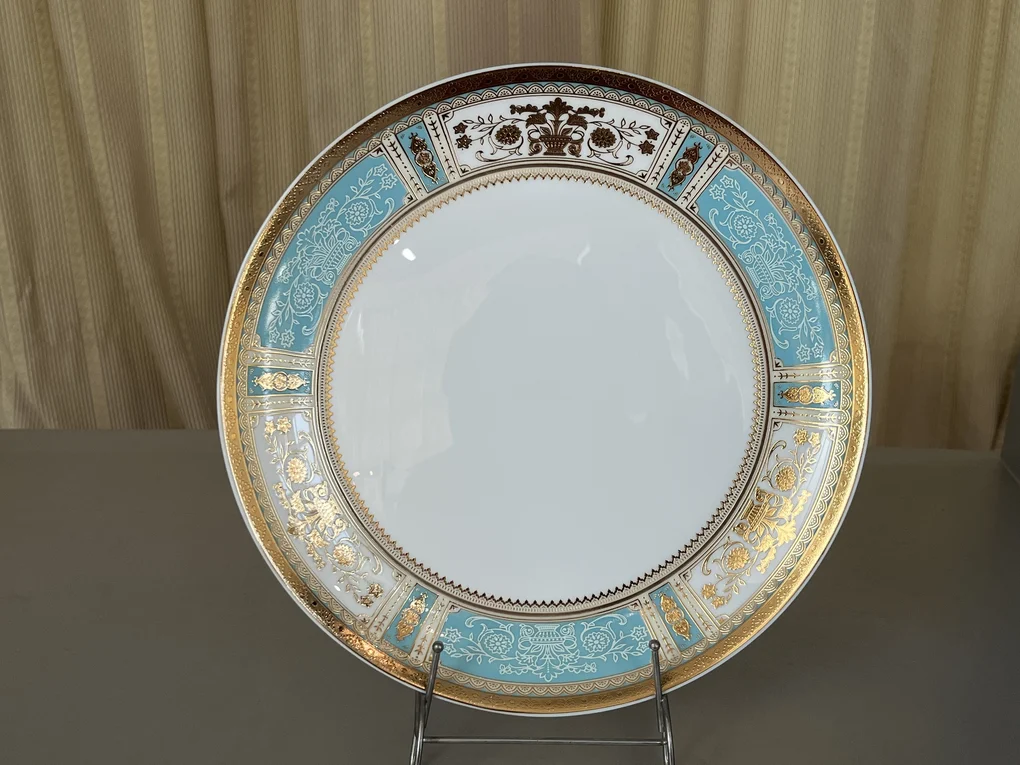
Is Bone China Compatible With the Vegan Market?
There is a fundamental divide between bone china and the vegan market — one that is difficult to bridge.
As the name suggests, the manufacturing process of bone china involves animal bone ash, typically sourced
from cattle bones, which generally accounts for 30% to 50% of the ceramic composition. Animal bones are
calcined at extremely high temperatures, ground into a fine white powder, and then blended with clay and
other materials before shaping.
It is worth noting that even though this bone ash has undergone complete sterilisation and no longer
bears any visible trace of bone, it remains fundamentally a by-product of slaughtered animals. It is
precisely this core ingredient that makes bone china irreconcilably at odds with vegan values — and
increasingly incompatible with the modern market for animal-free tableware.
In short, bone china is not compatible with the vegan market. This incompatibility is most clearly expressed across three dimensions:
- The material itself contains animal-derived components.
In the traditional bone china formula, animal bone ash is not an optional additive — it is an
indispensable core ingredient. No matter how brilliantly white and refined the finished product may
appear, the bone ash used during firing always traces back to the skeletal remains of slaughtered
animals. This is a fundamental distinction from ceramic or glass dinnerware made entirely from
plant- or mineral-based raw materials, which involve no animal components whatsoever throughout the
entire production chain. Bone china, by contrast, cannot be de-animalised while retaining its
defining process characteristics. - It is fundamentally in conflict with the guiding principles of veganism.
Veganism is not simply a dietary preference at the dinner table — it is an ethical framework
governing consumption across every aspect of daily life, encompassing food, clothing, and household
goods. For consumers who strictly practise veganism, purchasing a dinner plate made with animal bone
ash is ethically no different from buying a leather product: both represent a direct financial
contribution to the commercial exploitation of animal by-products. Bone china is therefore not a
category that vegan consumers weigh up as an option; it is one they actively exclude on value-system
grounds. This is exactly why cruelty-free dishware made from mineral ingredients has
emerged as the preferred replacement across multiple consumer segments. - Market perception has already classified it as a non-vegan product.
Mainstream vegan certification standards, consumer guides, and community discussions have all
explicitly categorised traditional bone china as a product that does not meet vegan criteria. The
Vegan Trademark certification system explicitly requires that products must not involve animal
components or animal by-products at any stage of manufacturing — a standard that categorically
excludes traditional bone china from its scope. At the same time, consumer expectations for
ingredient transparency are rising in parallel, as highlighted by a
deep-dive investigation into what your dinner plate is really made of,
which notes that “Beyond ethics, there are also questions about the traceability and cleanliness of
raw materials, as not all producers maintain rigorous transparency or quality control.” The lack of
traceability and production transparency is further deepening consumers’ distrust of bone china
brands and materially constraining its sales potential within the vegan segment.
| Comparison Dimension | Traditional Bone China | Opal Glass / Bone-Ash-Free Alternatives |
|---|---|---|
| Core Ingredients | Contains animal bone ash (30%–50% of composition) | Pure mineral raw materials — zero animal components |
| Vegan Certification Eligibility | Ineligible — cannot obtain Vegan Trademark certification | Eligible — can apply for vegan certification |
| Vegan Market Compatibility | Incompatible | Fully compatible |
| Consumer Transparency Risk | High (non-transparent ingredient sourcing) | Low (ingredients clear and fully traceable) |
| Ethical Consumption Alignment | Conflicts with vegan principles | Consistent with vegan principles |
Opal Glass Meets the Animal-Free Material Standards Modern Buyers Demand
In today’s consumer market, a growing number of buyers actively scrutinise the origin of raw materials
when purchasing kitchenware and tableware. For vegetarians and those practising a vegan lifestyle,
“animal-free” has long since ceased to be merely a dietary requirement — it extends into every detail
of daily household goods, and the choice of dinnerware material is no exception.
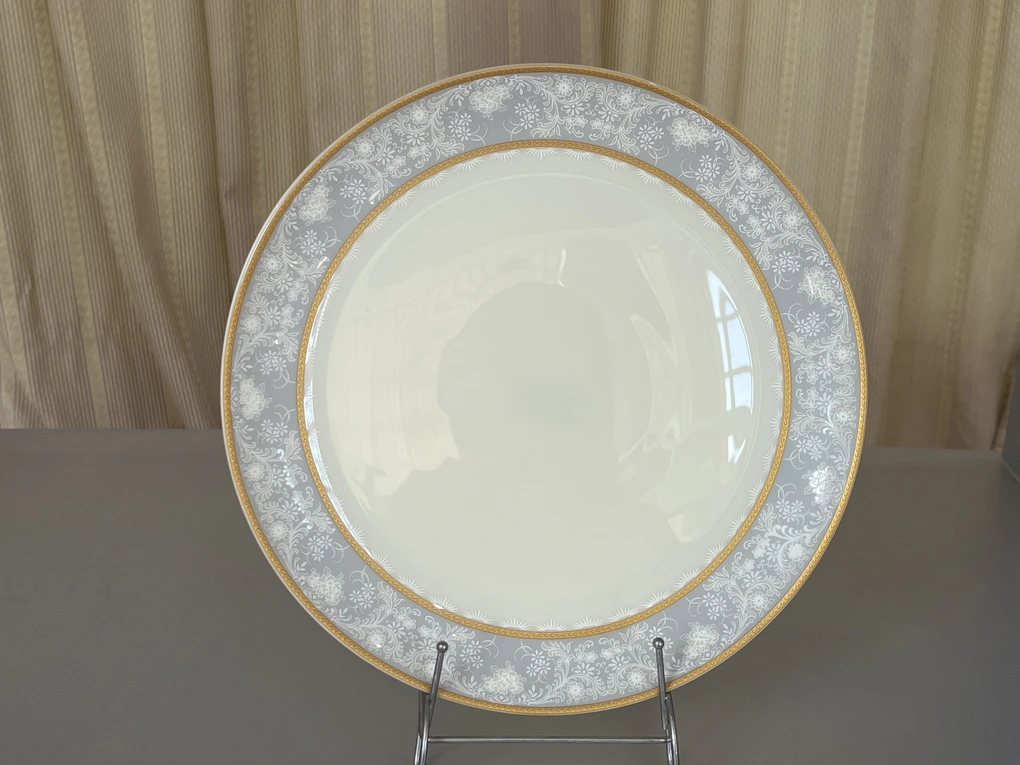
Bone ash free opal glass dinnerware is emerging in precisely this context, meeting
modern buyers’ urgent demand for animal-friendly material standards through its entirely
mineral-based composition. Its credentials can be examined across three clearly defined dimensions:
① Raw Materials Are 100% Mineral-Based — Zero Animal Components
The primary raw materials used in opal glass are silica sand (silicon dioxide), soda ash, and
limestone — all inorganic minerals. No bone ash, bone powder, or any animal by-product is added
during production, making it a genuinely credible choice for anyone sourcing plant-based crockery
for home, hospitality, or retail use. From the very source of its formula, opal glass is entirely
unrelated to animals.
By contrast, the bone ash content in traditional bone china typically accounts for 25% to 50% of the
total raw material, sourced directly from cattle bone waste generated at slaughterhouses and processed
through calcination and grinding at temperatures exceeding 1,000°C. The fundamental difference in raw
materials between the two determines their essential divergence on vegan standards. Every ingredient
in opal glass has a clear mineral origin that can be verified item by item in product formulation
documents, with no possibility of any animal component being introduced.
② The Entire Production Process Involves No Animal Participation
The complete melting and forming process for opal glass takes place in high-temperature furnaces
operating between 1,400°C and 1,500°C, with all input materials being inorganic compounds. There is
no step in the production chain that requires the introduction of any animal-derived ingredient. From
raw material batching, high-temperature melting, and mould forming, through to annealing, cooling,
and edge polishing — every production step can be fully documented and traced.
This stands in sharp contrast to the logic of bone china production, where one of the core
dependencies is the mandatory addition of bone ash during the raw material mixing stage — a step that
cannot be bypassed, as without it the finished product would no longer qualify as bone china by
definition. In other words, the “animal involvement” in bone china is process-intrinsic and
structural, just as the “zero animal involvement” in opal glass is equally process-intrinsic and
structural. Neither can be altered through post-production treatment.
③ No Additional Certification Required — The Material Itself Is the Proof
Unlike certain products that rely on third-party certification labels to claim “vegan-friendly” status,
the animal-free nature of opal glass is determined directly by its material chemical composition.
Silica sand, soda ash, limestone, fluoride or phosphate — this ingredients list is itself the most
direct answer. Anyone familiar with the formula can independently verify it, without relying on any
revocable external certification.
This is particularly important for vegan consumers who place high value on product authenticity. Such
buyers, when making purchasing decisions, will typically seek out ingredient lists and enquire about
production processes rather than making judgements based solely on packaging labels. Opal glass
naturally withstands this level of deep scrutiny — its animal-free conclusion is not subject to change
with shifts in certification bodies or adjustments to standards.
The reason traditional bone china dinnerware has long been a source of controversy among vegan
communities lies in one indispensable ingredient in its production process: bone ash. This bone ash,
typically derived from cattle bones and added to the ceramic formula after high-temperature
calcination, is what gives bone china its signature translucency and refined lustre. Yet it is
precisely this process that fundamentally prevents bone china from conforming to the core principle
of veganism — “do not use or consume any animal by-products.”
This confusion is not an isolated phenomenon. In a
widely cited Reddit r/vegan thread on whether bone china is truly vegan,
a user with a ceramics background noted: “Bone ash is tricalcium phosphate which in modern times
can be made synthetically. I have no idea if lab made bone ash or real bone ash is more common in
commercial industries.” This illustrates that even consumers with professional knowledge find it
impossible to reach a definitive conclusion about the origin of bone ash in bone china. For strictly
vegan buyers, this kind of untraceable uncertainty is itself sufficient reason to reject the product
entirely.
| Comparison Dimension | Opal Glass | Traditional Bone China |
|---|---|---|
| Primary Raw Materials | Silica sand, soda ash, limestone (all inorganic minerals) | Clay, kaolin, bone ash (contains animal-derived components) |
| Bone Ash Content | 0% | Typically 25%–50% of total raw materials |
| Source of Bone Ash | None | Cattle bones from slaughterhouses, processed by calcination and grinding |
| Animal Involvement in Production | No — entirely inorganic compounds throughout | Yes — bone ash is a process-essential raw material |
| Basis for Vegan Eligibility | Proven directly by material chemical composition | Requires certification or process substitution to claim vegan status |
| Raw Material Traceability | High — each item verifiable in formulation documents | Low — bone ash origins are complex; difficult for consumers to verify independently |
Opal Glass Is Becoming a High-Demand SKU Among Plant-Based Consumers
Across the entire home dinnerware category, opal glass is emerging as a high-demand SKU at a pace
that is difficult to ignore — particularly among plant-based consumers, where this trend is evolving
from a niche preference into purchasing behaviour with substantial market influence. From search volume
data on e-commerce platforms to inventory strategies at independent kitchenware retailers, the
strategic importance of opal glass dinnerware as a SKU is being re-evaluated and elevated by a growing
number of brands and channels.
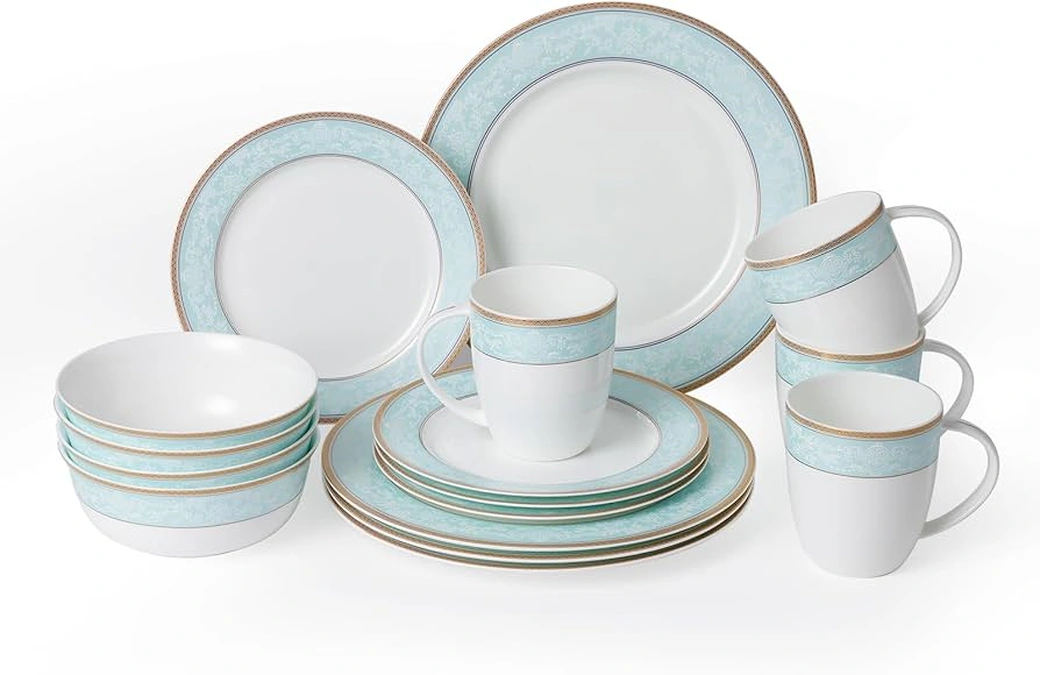
Simply put, a growing number of consumers choosing a plant-based lifestyle are actively adding opal
glass dinnerware to their shopping carts. The following are the key factors driving this phenomenon:
- Contains zero animal-derived components.
Traditional bone china requires the incorporation of approximately 30%–45% animal bone ash (typically
from cattle bones) during the firing process — a requirement that fundamentally excludes it from the
consideration set of vegan consumers. A well-specified opalware dinner set, by
contrast, is based on inorganic minerals such as silicon dioxide, aluminium oxide, and fluorspar, with
no animal by-products involved at any point in the entire production chain. For vegan consumers who
treat “animal-free” as a baseline requirement for everyday purchasing decisions, this is not a bonus
feature — it is the entry ticket. Opal glass clears this bar naturally. - Aligns with the “full-chain” vegan philosophy.
The ethical scrutiny of modern vegan consumers extends well beyond food. They ask: Does this pair of
shoes use leather? Does this jacket contain wool? Were animal materials used in manufacturing this
set of dinnerware? This “full-chain” extension of values makes the material composition of dinnerware
an integral part of practising a vegan lifestyle. Opal glass holds a natural narrative advantage
within this logic — its very existence supports the idea that “every object on the table can be
vegan.” This ethos is increasingly being embraced by younger consumers as an expression of the
wholeness of their lifestyle. - Retailers are actively selecting it for their ranges.
This trend has already transmitted from the consumer side to the supply side. A growing number of
brands and e-commerce platforms are proactively categorising opal glass dinnerware under
“vegan-friendly” or “animal-free” product lines, explicitly labelling product descriptions with
keywords such as “bone ash free” to precisely reach their target consumer groups. This shift from
passive stocking to active product selection signals that the retail market has registered the real
demand from plant-based consumers for this category and is now endorsing that demand through
commercial action. When the selection logic of retailers shifts in this direction, it typically
indicates that a SKU has graduated from a growth prospect to a mainstream shelf fixture.
| Comparison Dimension | Traditional Bone China | Opal Glass |
|---|---|---|
| Contains Animal Components? | Yes — contains bone ash (approx. 30%–45%) | No — completely free of animal components |
| Meets Vegan Standards? | ❌ Does not comply | ✅ Compliant |
| Retailer Active Classification | No dedicated vegan label | Already incorporated into vegan-friendly product lines |
Conclusion
The shift away from bone china among vegan and ethically minded consumers is not a passing trend —
it is a structural realignment of purchasing values that is reshaping the dinnerware category from
the ground up. For buyers who demand full transparency at every point in the supply chain,
bone ash free opal glass dinnerware is not simply a vegan-compatible alternative:
it is the logical default. Its mineral-only composition eliminates the ethical ambiguity that has
long shadowed bone china, while its durability, aesthetic versatility, and growing retail presence
make it a commercially sound choice for households, hospitality operators, and wholesale buyers
alike. As the definition of responsible consumption continues to broaden, opal glass is
well-positioned to become the standard-bearer for a generation of consumers who expect their
entire table — not just the food on it — to reflect their values.
FAQ
Q1: I want to stock vegan-friendly dinnerware in my café or restaurant — does opal glass require any special certification before I can label it as animal-free on my menu or website?
No special certification is required in order to accurately describe opal glass as animal-free,
because that claim is substantiated by the material’s chemical composition rather than by a
regulatory label. Opal glass is manufactured exclusively from inorganic minerals — silica sand,
soda ash, and limestone — and contains no bone ash, no animal by-products, and no animal-derived
processing aids at any stage of production. This means that, unlike some food products where
“vegan” labelling must be backed by third-party audit, the animal-free status of opal glass can be
independently verified from the manufacturer’s formulation documents at any time. That said, if
your business is pursuing formal vegan certification for your premises or product range — such as
the Vegan Trademark — using opal glass as your dinnerware of choice actively supports that
application, since it eliminates one common material-sourcing objection from the outset. For buyers
who need supplier-level documentation confirming the absence of animal-derived ingredients, this
information is typically available directly from the manufacturer on request.
Q2: I’m currently using bone china in my home and considering switching — will opal glass actually hold up to daily use, or am I trading durability for ethics?
This is one of the most common concerns buyers raise before switching, and the practical answer is
that opal glass does not require any trade-off between durability and ethical sourcing. Opal glass
is manufactured through a high-temperature melting process that produces a non-porous, thermally
stable material engineered specifically for repeated everyday use. It is microwave-safe,
dishwasher-safe, and significantly more resistant to chipping than conventional porcelain or
stoneware. In commercial settings such as hotels and restaurants — environments where durability
is non-negotiable — opal glass dinnerware is routinely specified precisely because of its
performance consistency across thousands of wash cycles. Bone china, while admired for its
translucent aesthetic, is comparatively fragile and is often reserved for decorative or
occasional-use purposes. Switching to opal glass therefore represents an upgrade in functional
performance for most households, while simultaneously resolving the ethical sourcing question —
making it a genuinely practical choice rather than a compromise.