
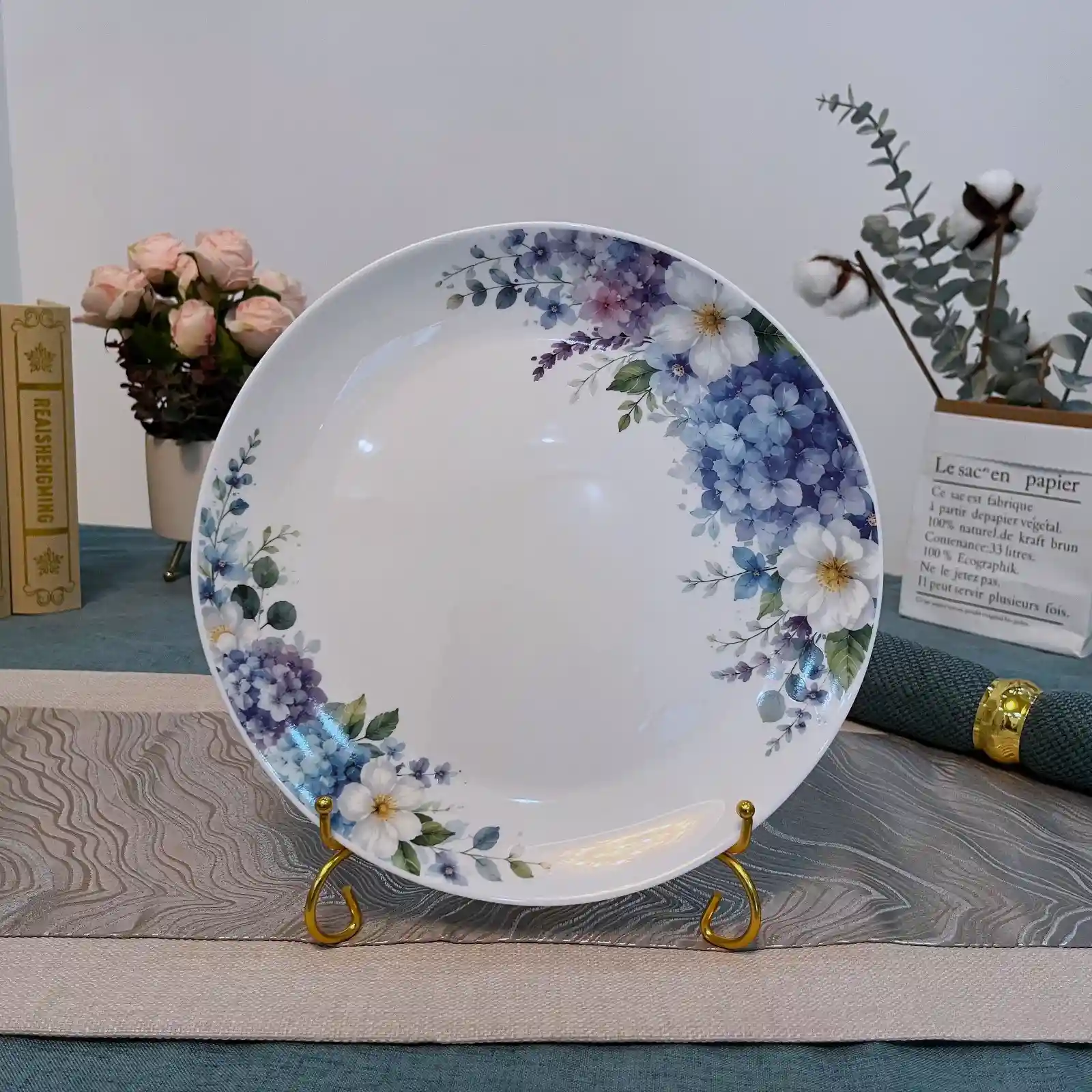
Microwave Safe Opal Glass Plates

FeatureDescription
Microwave Safe – No Chemical LeachingInorganic tempered opal glass stays chemically inert under microwave heat. No toxins released. FDA food-contact compliant.
Fridge to Microwave – No CrackingReheat refrigerated leftovers directly on the plate. Low thermal expansion prevents cracking from sudden temperature changes.
Safer Than Melamine for ReheatingMelamine releases formaldehyde when microwaved. Opal glass contains zero resin—completely non-reactive during microwave use.

Video and What We Can Customize for you

Size Customization

Plates available in 7.5″, 8″, 8.5″, 9″, 9.5″, 10″, 10.5″, 11″, and 12″ to suit different microwave sizes and serving portions.

Offered in white, black, jade green, topaz yellow, and milky white. All solid colors—no metallic content, fully microwave safe.

Decal printing and low-temperature embossing available. Avoid gold/silver metallic edges to keep plates microwave compatible.

Round, square, oval, coupe, and rimmed styles available. All shapes made from tempered opal glass for uniform microwave heating.

Brand-labeled retail boxes or bulk shipping cartons configured to your distribution and market requirements.

Four Best-Selling Decal Designs

The four designs on the right are the best-selling in this series so far, and here are the top 5 countries that have been inquiring the most:

  1. USA – reheating pasta, casseroles, and weekly meal-prep portions in microwave.
  2. UK – warming baked beans, shepherd’s pie, and roast dinner leftovers.
  3. Germany – microwaving soups, sausage plates, and pre-cooked meal kits.
  4. Saudi Arabia – reheating kabsa, rice dishes, and grilled meats from fridge.
  5. Australia – heating meat pies, stir-fry leftovers, and kids’ dinners.

FAQs

Contact Person Icon

Commernts Question People Often Curious

It gathers the five most frequently asked questions by users regarding this product. If you are also interested, you can click to have a look.

Is opal glass microwave safe?
Yes. Opal glass is made from silica, soda ash, and limestone—all inorganic. It contains no resin or plastic compounds, so nothing leaches into food during microwave heating. Its low thermal expansion also prevents cracking under temperature changes. Compliant with FDA 21 CFR food-contact standards. One rule: avoid plates with gold or silver metallic rims, as metal causes sparking.
Melamine is a plastic resin made with formaldehyde. Above 70°C, free monomers migrate into food—the FDA bans microwaving melamine. Opal glass has no organic polymer bonds. It is entirely inorganic and non-reactive at microwave temperatures. For families who reheat meals daily, opal glass eliminates the chemical exposure risk that melamine carries.
Decal prints and low-temperature embossed logos are microwave safe—they contain no metal. But plates with gold rims, silver edges, or metallic paint must not be microwaved. Metal triggers arcing and sparks inside the oven. When ordering, specify microwave-intended use so decorations stay metal-free.
Yes. Tempered opal glass handles rapid temperature shifts without stress fractures. Store leftovers in the fridge overnight, then place the same plate directly into the microwave to reheat. No cracking, no need to transfer food to another container. This saves time and reduces dishwashing.
Both work in microwaves, but opal glass has advantages. It has no glaze layer—eliminating any lead or cadmium leaching concern. It resists thermal shock better than standard ceramics, which may develop hairline cracks over repeated fridge-to-microwave cycles. It is also lighter and more chip-resistant, reducing the risk of breakage when handling hot plates after reheating.
Scroll to Top

Contact us

Connect with us for tailored solutions, partnership opportunities, or product inquiries — we’re ready to support your vision.

learn More​

Please let us know the products or service you want to know  and we will contact you as soon as possible.