
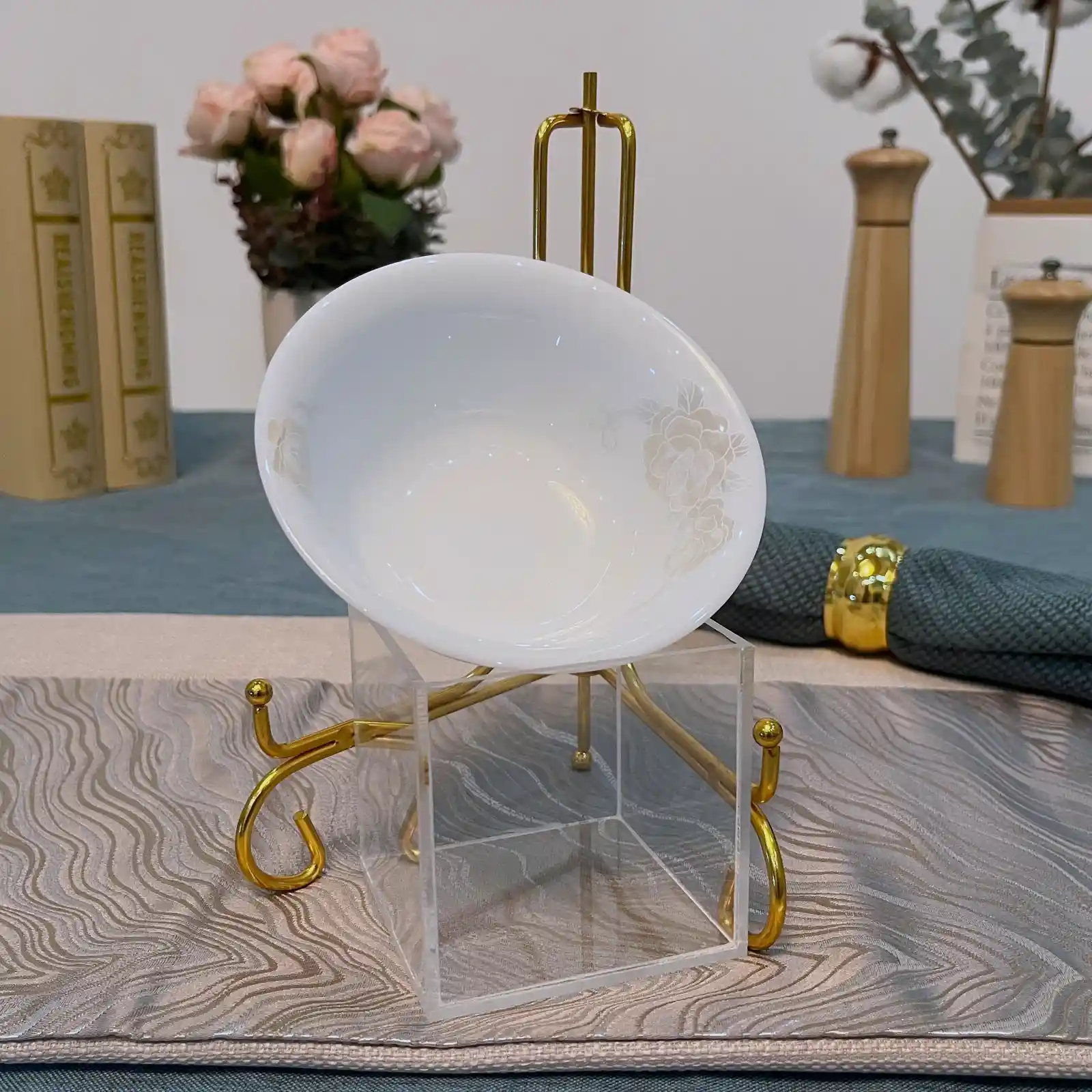
Opal Glass Bowls – No Yellowing or Color Fading Ever

FeatureDescription
Built-In White That Won’t YellowThe milky white color of opal glass bowls is part of the glass body — not a coating. It won’t oxidize or yellow from UV, food, or detergent.
Stays White While Melamine & Ceramic FadeMelamine bowls yellow in 2–3 years. Ceramic glazes dull over time. Opal glass bowls hold their original whiteness far longer.
Color Holds Up After Years of Daily UseAfter 5 years of everyday meals and dishwasher washing, opal glass bowls still look close to new — no discoloration, no dullness.

Video and What We Can Customize for you

Size Customization

Available from 3.5″ to 9.0″ — including 4.0″, 4.5″, 4.9″, 5.0″, 5.5″, 6.0″, 6.25″, 6.5″, 7.7″, and 8.5″ bowl diameters to suit any serving need.

Offered in White, Black, Jade Green, Topaz Yellow, and White Jade — all fade-resistant structural colors that hold true through years of use.

Supports decal transfer, low-temperature embossing, and pad printing on bowl surfaces — ideal for brand identity or custom decoration.

Round, deep, shallow, footed, square-rim, and flared bowl profiles — custom body curves and rim designs to match your tableware line.

Branded retail boxes, gift sets, or bulk cartons — opal glass bowl packaging tailored to private label or promotional requirements.

Four Best-Selling Decal Designs

The four designs on the right are the best-selling in this series so far, and here are the top 5 countries that have been inquiring the most:

  1. Saudi Arabia – Kabsa rice, lentil soup, and stew served in everyday opal glass bowls.
  2. Vietnam – Pho, congee, and rice noodle soup bowls used at high-frequency daily meals.
  3. United States – Cereal, oatmeal, and salad bowls for family breakfast and dinner.
  4. India – Dal, curry, and raita bowls across household kitchens nationwide.
  5. France – Onion soup, ratatouille, and dessert bowls for refined home dining.

FAQs

Contact Person Icon

Commernts Question People Often Curious

It gathers the five most frequently asked questions by users regarding this product. If you are also interested, you can click to have a look.

Why don't opal glass bowls turn yellow over time?
The white color comes from the glass structure itself — formed by microcrystalline phases during melting — not from a surface coating. UV light, cleaning agents, and food acids cannot change it. Users report near-original whiteness after 5 years of daily use, while melamine bowls often start yellowing within 2–3 years.
Ceramic bowls rely on a glaze layer for whiteness. Over 2–3 years of daily washing and food contact, that glaze can dull or develop uneven patches. Opal glass bowls have no separate glaze — the color runs through the entire material, so there is no layer to peel, fade, or darken.
No. Opal glass bowls hold stable brightness through years of regular dishwasher cycles. The dense, non-porous surface resists detergent erosion and mineral buildup. In hard water areas, a light mist may form but wipes off easily — unlike ceramic bowls, which can show gradual glaze dulling.
The surface of opal glass is smooth and nearly zero-porosity. Strong-pigment foods like turmeric, tomato sauce, and soy marinades do not soak in. After normal washing, no color residue or odor remains. Ceramic bowls with micro-pores in the glaze are more prone to absorbing pigments over time.
Based on real household use, opal glass bowls maintain near-new whiteness for 5+ years of daily meals, microwave reheating, and regular stacking. Melamine bowls typically yellow within 2–3 years, and ceramic bowl glazes lose brightness over a similar period. Opal glass is the more color-stable choice.
Scroll to Top

Contact us

Connect with us for tailored solutions, partnership opportunities, or product inquiries — we’re ready to support your vision.

learn More​

Please let us know the products or service you want to know  and we will contact you as soon as possible.