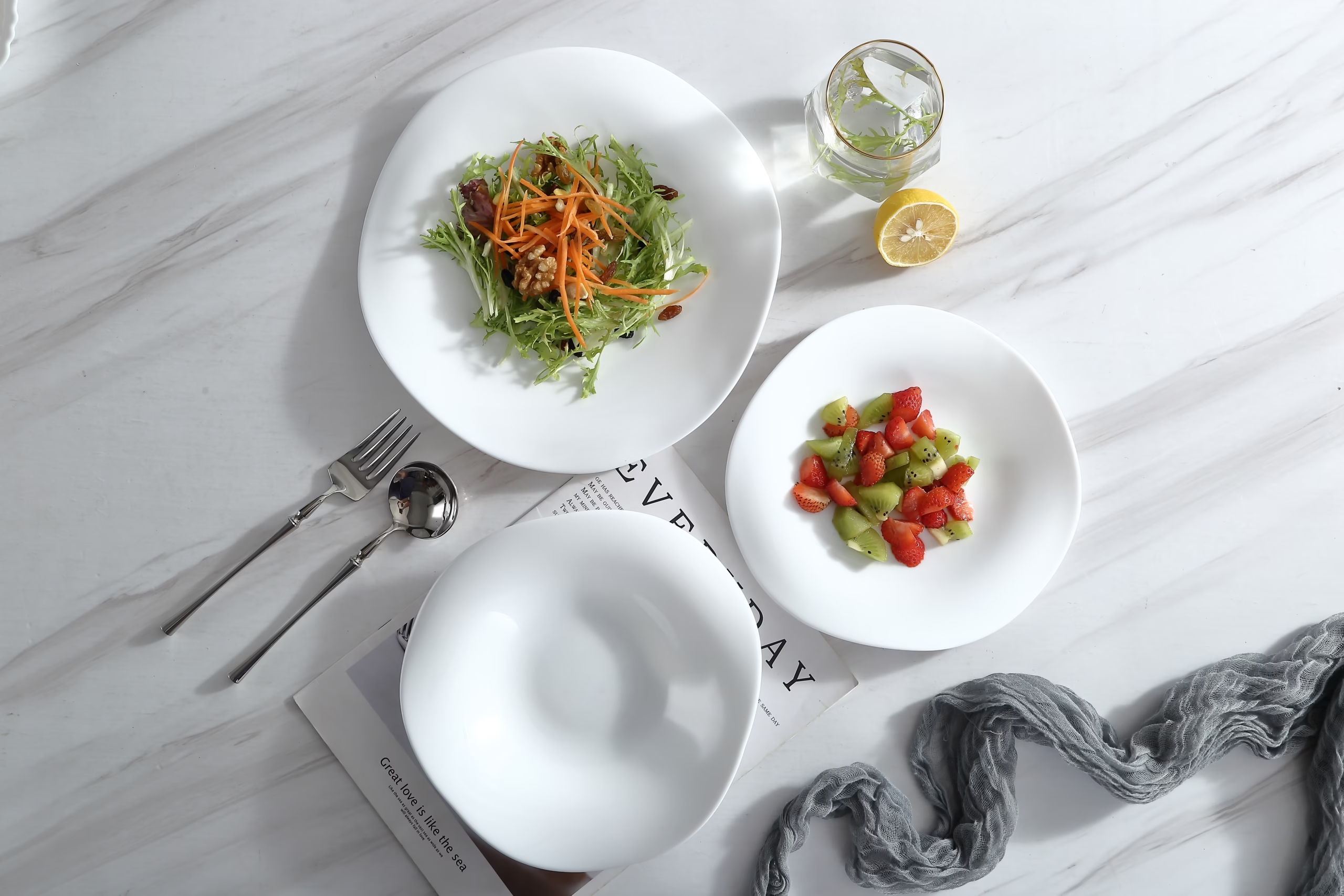
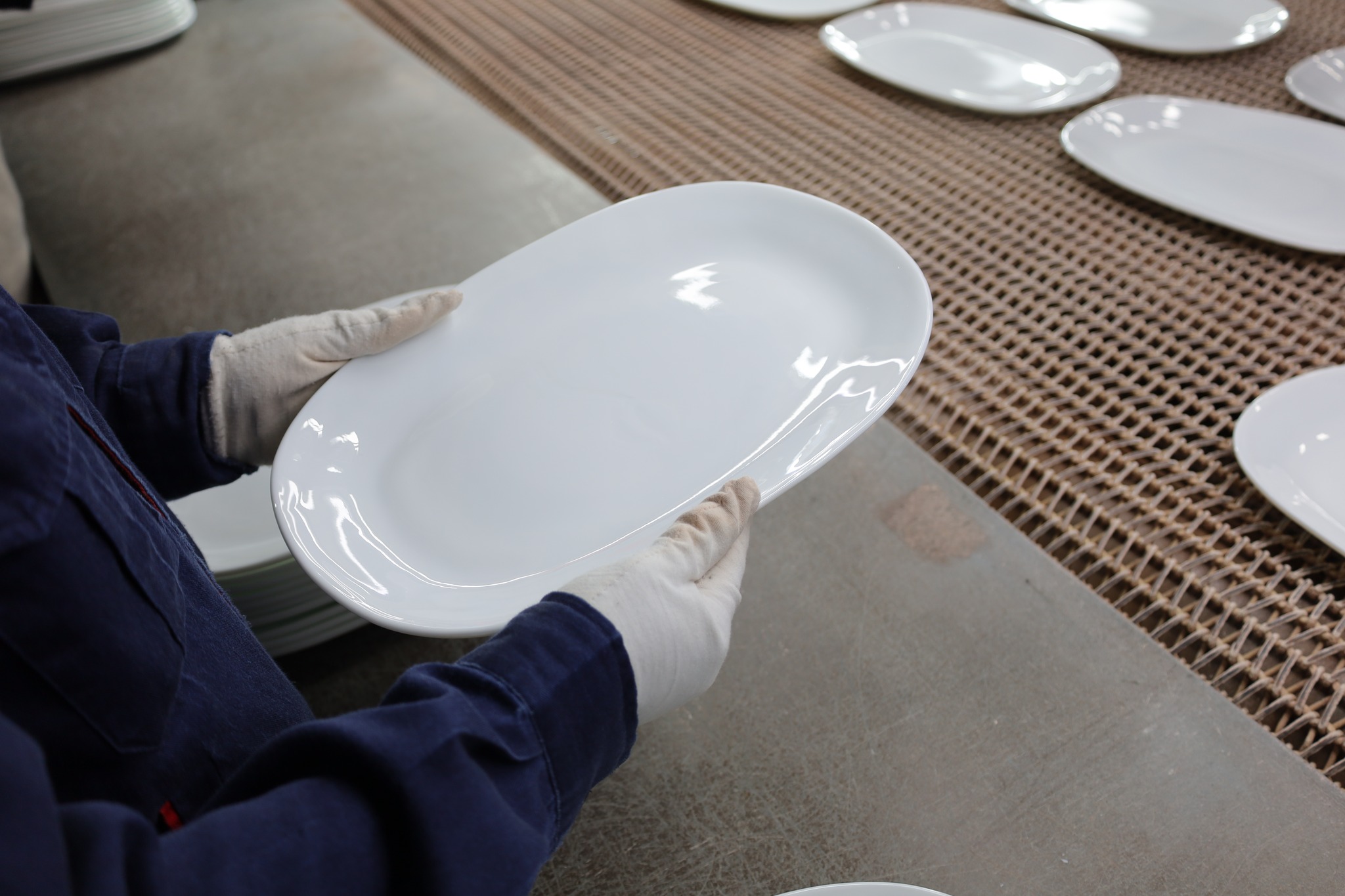
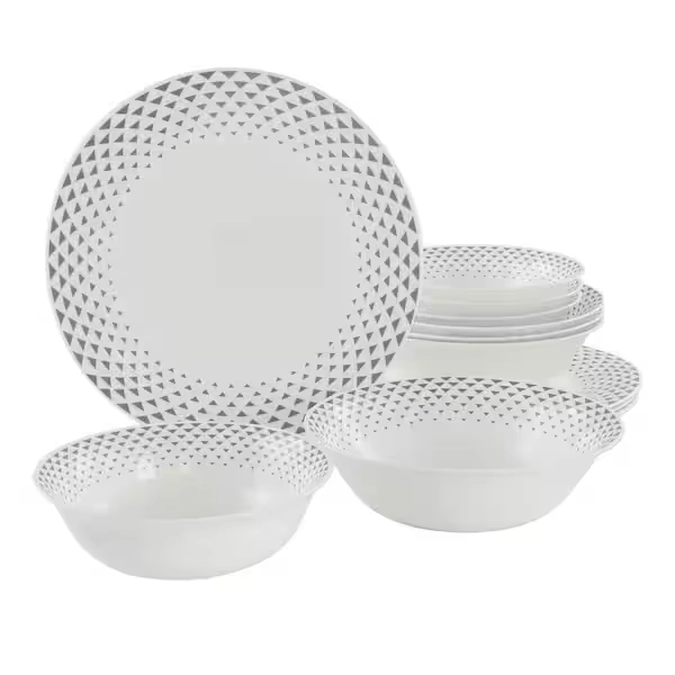
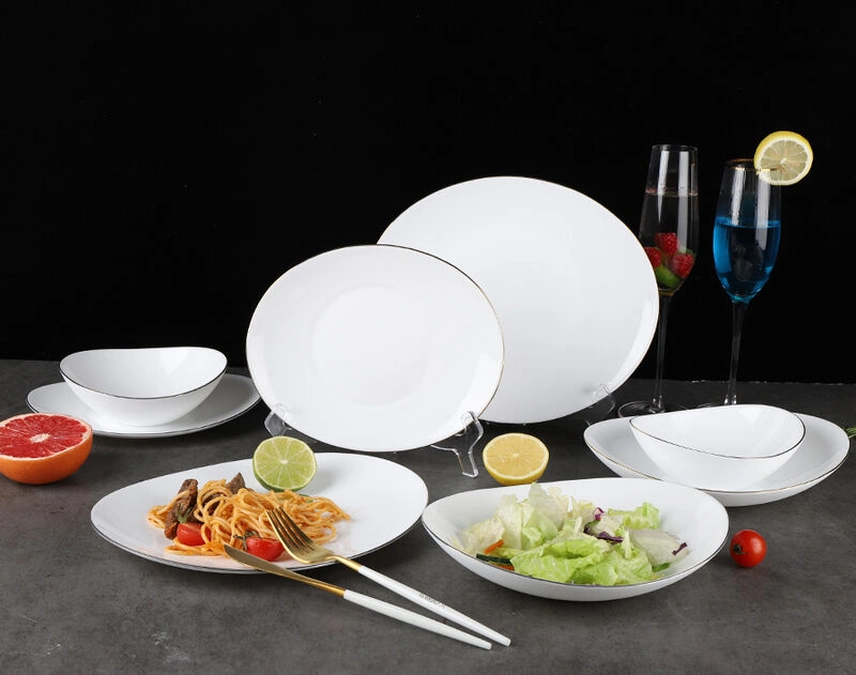
⚡short note: Jade-color tableware’s color range, visual contrast with white, long-term feel & suitability—key tips for everyday use.
- Color range: A soft, low-saturation light spectrum—near off-white or light jade green—with consistent performance across different lighting.
- Visual contrast: Softens light (unlike white) to craft gentler table settings, free of harsh reflections.
- Long-term usability: Adapts to frequent family use, with subtle visual changes when cleaned regularly.
- Suitability: Aligns with households that dine regularly, serve simple meals, and value consistent table aesthetics.
Many users compare jade dinnerware with white before making a decision, as both are popular choices for daily dining. This guide explains what ‘jade color’ means in dinnerware, how the shade range looks under different lighting, and how it compares with white in real dining scenes to help you clarify your doubts. Furthermore, If you want to see available styles in this color, visit our jade dinnerware collection,it can help you learn more about their style.
What Color Range Does Jade-Color Tableware Usually Refer to?
Many people start to care about “jade-color tableware” not when comparing parameters, but in a very specific dining scenario. The lights are turned on, the dishes are just served, and the moment the plate is placed down, you will subconsciously take a look — is the color harmonious? Does it overpower the dishes? This intuitive judgment is often more authentic than the color name.
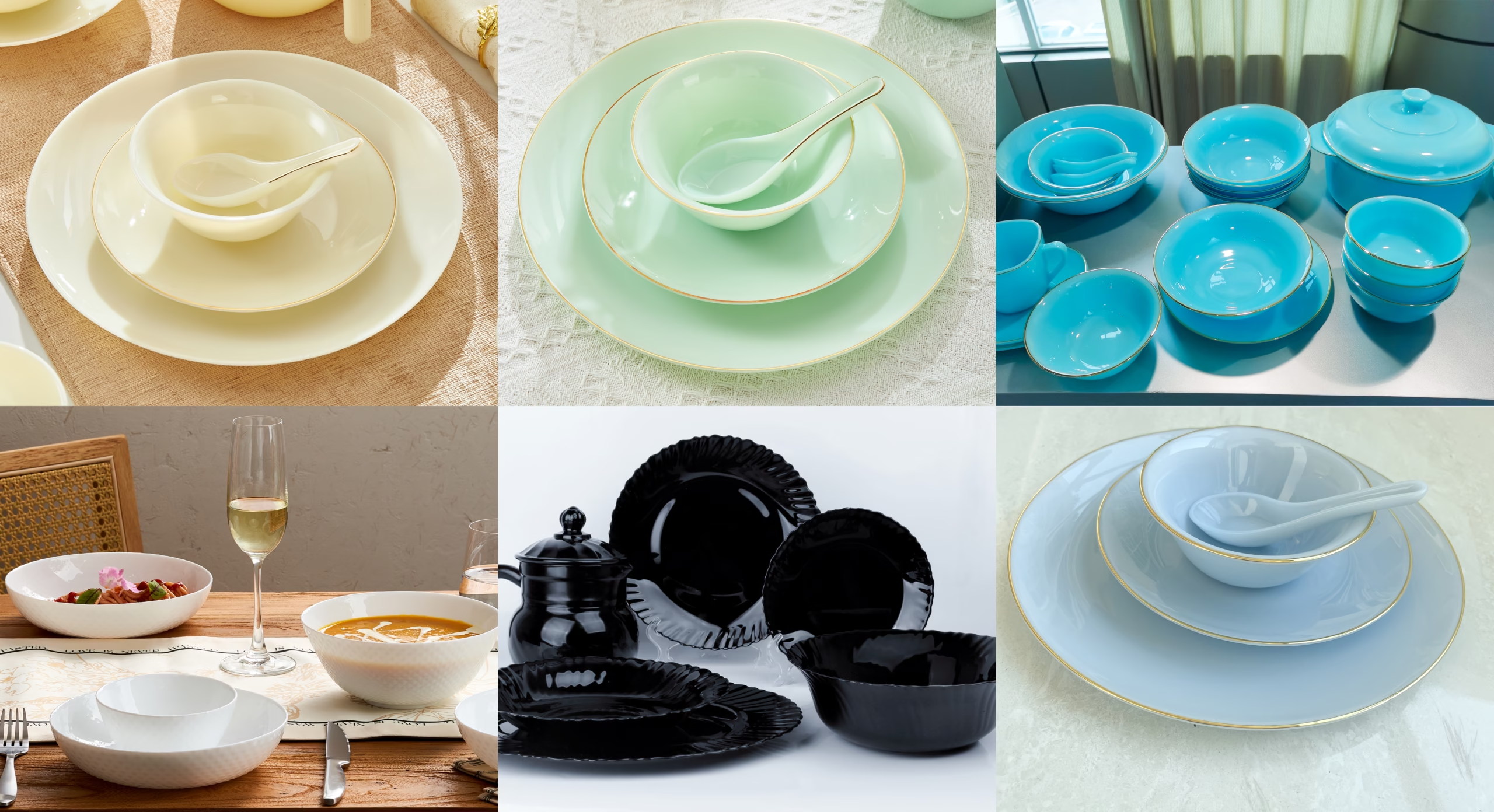
Understanding the jade dinnerware color range helps avoid purchase confusion. In the context of tableware purchase, jade color is not a strictly defined standard color code, but a color range formed by both vision and texture. It emphasizes warmth, restraint, and long-term visual appeal, rather than a strong sense of presence at first glance. In other words, jade color does not solve the problem of “what color it is”, but “whether it will make people comfortable in long-term use”.
- Jade color is not a single fixed color, but an entire range of light colors that “look like jade”
- The color is usually very light with extremely low saturation, and no clear hue can be seen at a glance
- The visual perception is soft, not harsh to look at for a long time, nor does it appear cold or grayish
- It changes little under different lights, without sudden shifts between white and yellow
- If the color can be clearly identified as green, yellow, or gray, it has usually deviated from jade color
- Jade color is more of a visual experience than a color name on packaging or labels
Once you understand this, many confusions during purchase will naturally disappear. You will find that although jade color is close to white, the difference in actual use is very obvious.
The difference between jade color and white often emerges during use.
If you compare a set of tableware under kitchen lights, pure white is often brighter and more direct, while jade color gently softens the light. This difference is constantly amplified in daily life: in the morning when natural light is cold, jade color is not easy to look gray; in the evening when warm lights are yellowish, it does not look dirty. Precisely because of this, many people have a subtle feeling after switching to jade color dinnerware — it does not stand out, but every meal is more visually pleasing.
From the perspective of actual products, jade-color tableware usually falls into several relatively stable color ranges. There are no absolute boundaries between these ranges, but the visual logic is consistent.
Common Color Ranges of Jade-Color Tableware
Slightly Translucent White
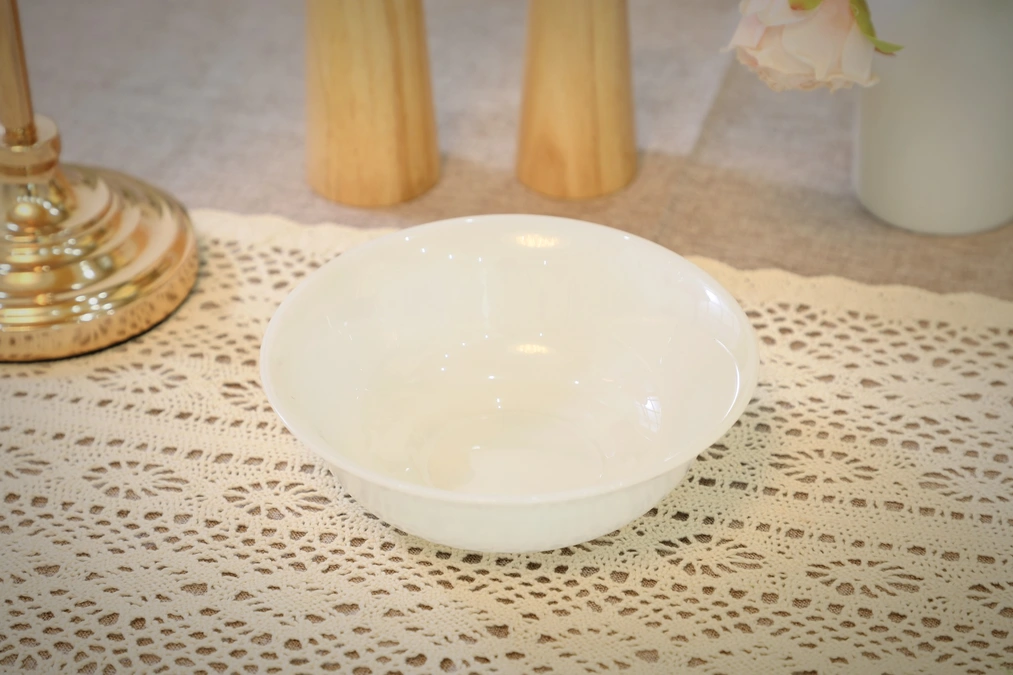
This type of jade color is close to white when viewed from the front, but shows a slight translucency at the rim of the plate or the thin walls of the bowl. This “translucency” is not transparency, but a layered change after light is softly diffused, making the tableware look more like jade rather than glass. If you notice subtle depth changes in the color when rotating the tableware, but the overall appearance remains unified, it usually falls into this range.
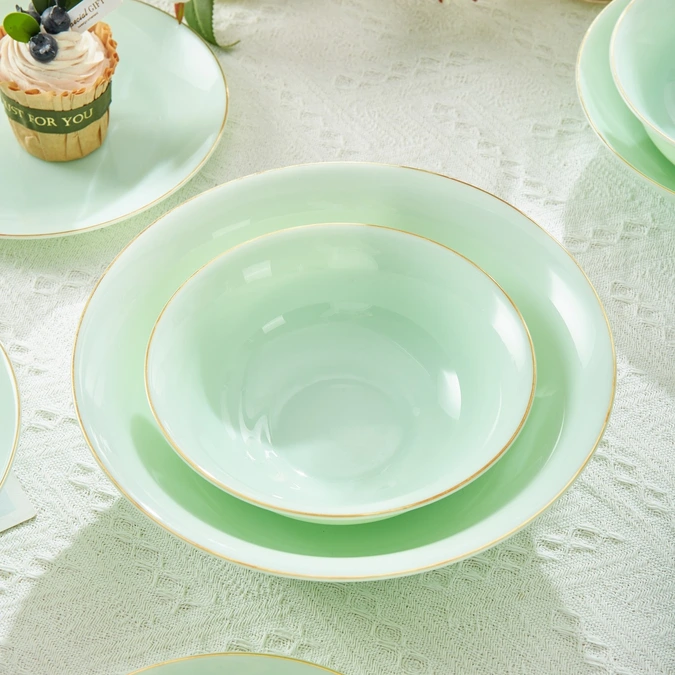
Light Jade Green
Some jade colors add extremely low-saturation blue or green to the white base. It cannot be identified at a glance, and only faintly appears when placed in groups or under specific lighting conditions. Such subtle tones make jade green dinnerware a popular choice for quiet dining spaces. This type of jade color is generally cool-toned with a quiet temperament, but the prerequisite is that the color must be sufficiently restrained. Once the green is clearly perceived, it has transitioned from jade color to colored tableware.
Light Ivory Beige
There is also a part of products in the border area between jade color and beige. They are slightly warmer than off-white but still maintain a clean and unified visual state. The only key judgment is: whether they appear yellowish under different lights. A truly reasonable jade color, even if warm-toned, should not evoke a sense of aging or yellowing.
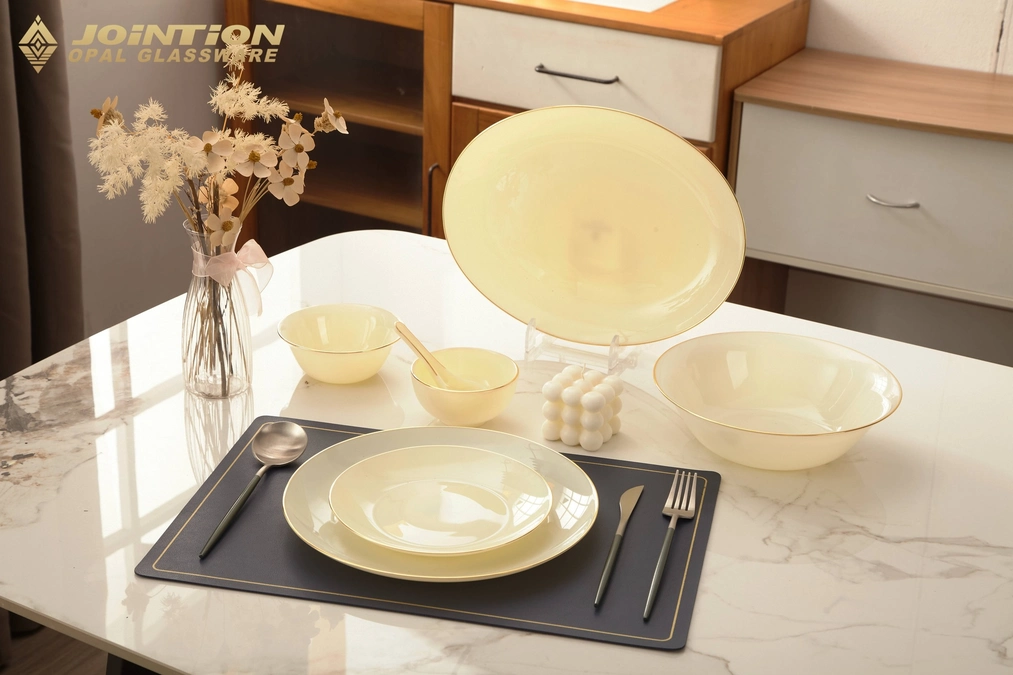
Overall, as long as a set of tableware is light in color, low in saturation, soft in visual perception, and stable under different lights, it falls within the reasonable jade dinnerware color range. The value of jade color is slowly reflected in this stable sense of not disturbing or overshadowing during long-term use.
First Visual Impression of Jade-Color Tableware vs White Tableware
When you first see the dining table, color has already “spoken” first.
Imagine such a scene: a guest is just led to their seat, hasn’t even sat down yet, and their gaze first falls on the table. The dishes haven’t been served yet, and the taste is impossible to judge, but how this meal “feels” has already started to take shape. More often than not, it is the color of the tableware that completes the first communication at this moment.
White tableware often sends a very direct signal. It is clean, clear, and without extra emotion, just like turning on all the lights, allowing people to see the structure and order at a glance. The edges are distinct, the reflection is crisp, the tableware itself quickly fades into the background, and the stage is naturally given to the food. For customers visiting the store for the first time, this feeling is reassuring — it won’t go wrong, and no adaptation is needed.
But if what is placed on the table at this time is not white but jade color, the picture will quietly change tone.
Real Differences Between Jade Color and White at the First Visual Level
- White is more likely to create contrast, with distinct outlines and fast information transmission speed
- Jade color reduces visual impact, with softer edges and longer gaze retention time
- White makes attention quickly focus on the dishes themselves
- Jade color makes the tableware and dishes form an overall picture together
| Technical Characteristics | Jade-Color Tableware | White Tableware |
|---|---|---|
| Color Saturation | Extremely low, soft light spectrum (near off-white/light jade green) | High, distinct pure white hue with clear visibility |
| Light Reflection Mode | Diffused and gentle, no harsh highlight points | Direct and crisp, easy to produce obvious reflections |
| Visual Fatigue Alleviation | Effective, low contrast reduces eye adjustment frequency | Limited, sharp contrast may cause fatigue with long-term use |
| Environmental Adaptability | Stable across warm/cold lights, mild color changes | Prone to cold grayish tone in cold light, yellowish in warm light |
| Usage Trace Visibility | Mildly visible, dependent on glaze smoothness | Highly visible, easily amplifies water stains and residues |
| Long-Term Color Stability | Slow, uniform change with proper maintenance | Prone to yellowing or dulling over high-frequency use |
In other words, if white is like a fully unfolded white paper, then jade color is more like a thin layer of rice paper — the content is still clear, but with a little buffer.
This difference is very real in actual dining. For example, in a restaurant with warm lighting, white tableware will appear more rational and neat, while jade-color tableware will “contain” the light, making the table look less sharp and the mood naturally slow down. Customers will not immediately realize what has changed, but will feel that the environment is quieter and more suitable for sitting down to eat slowly.
Why Does the Same Dish Feel Different with Different Tableware?
Suppose the same dish is plated in exactly the same way, only the tableware color is different. With white tableware, the dish looks clear, professional, and standard; with jade-color tableware, the dish looks softer, and the overall picture is more unified. It is not the color that changes the food, but the color that changes the “way of viewing”.
Many people have a question here: will jade color distract attention from the dishes? The answer is quite the opposite. Jade color is not ostentatious; its sense of presence is more like a background atmosphere. You can feel it, but it will not interrupt your gaze. In contrast, the “complete neutrality” of white makes people ignore the tableware itself more easily.
From a psychological association perspective, white is more likely to evoke thoughts of standardization, professional kitchens, and efficiency; jade color naturally brings out feelings of warmth, restraint, and partial emotionality. There is no unified answer to which is better, only depending on what kind of expectation you want customers to have in their hearts the first second they sit down.
The choice of color is actually determining the emotional direction of the first second.
Choosing between jade color and white is essentially not a matter of style preference, but whether the first vision needs to convey emotion. If you want customers to quickly enter the state of “looking at and evaluating the dishes”, white is clear and direct; if you care more about the overall atmosphere and hope that dining slows down from the very beginning, jade color is often more suitable.
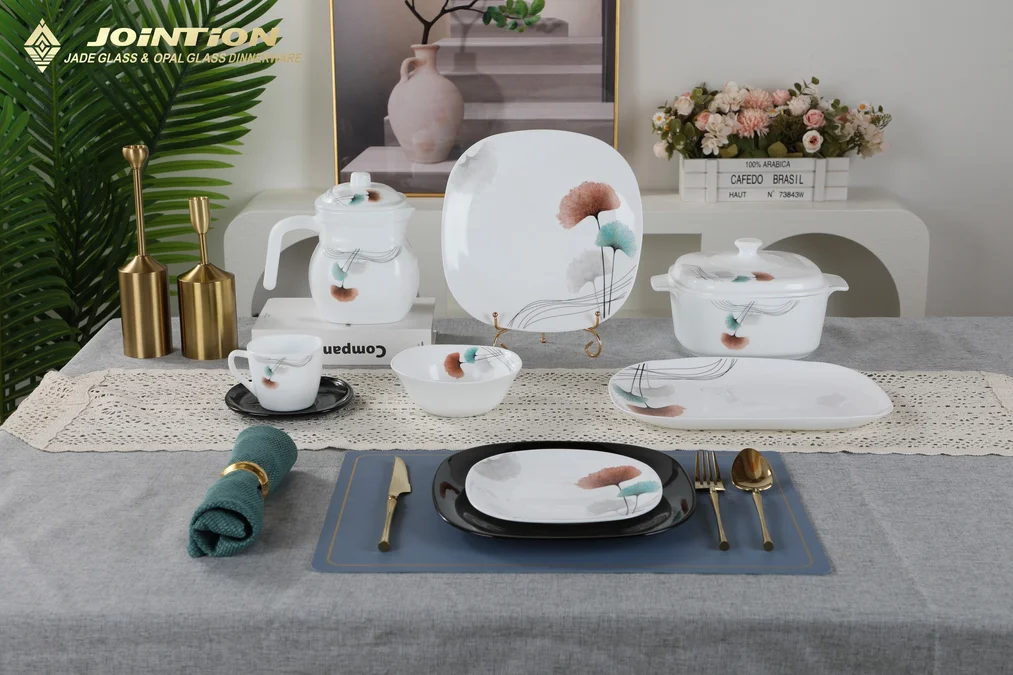
Many decisions do not happen when the food is eaten, but are foreshadowed the moment the guest sits down and their eyes sweep across the table. The color of the tableware is the most easily overlooked but first perceived part of this foreshadowing.
Why Do Many People Think Jade-Color Tableware Is Softer and Less Glare?
Understanding the “Eye-Friendly” Feeling from Real Dining Scenarios
Many people first come into contact with jade-color tableware not on an elaborately arranged dining table, but in very ordinary daily moments: the kitchen lights are not fully turned on in the early morning, the outdoor light is too strong during lunch, or only a warm chandelier is on in the evening. It is under these not “ideal” lighting conditions that the characteristics of jade-color tableware are easier to perceive. You will not be attracted to it, nor will you think it is dull; instead, you naturally ignore its existence — this “being ignored” makes people feel relaxed instead.
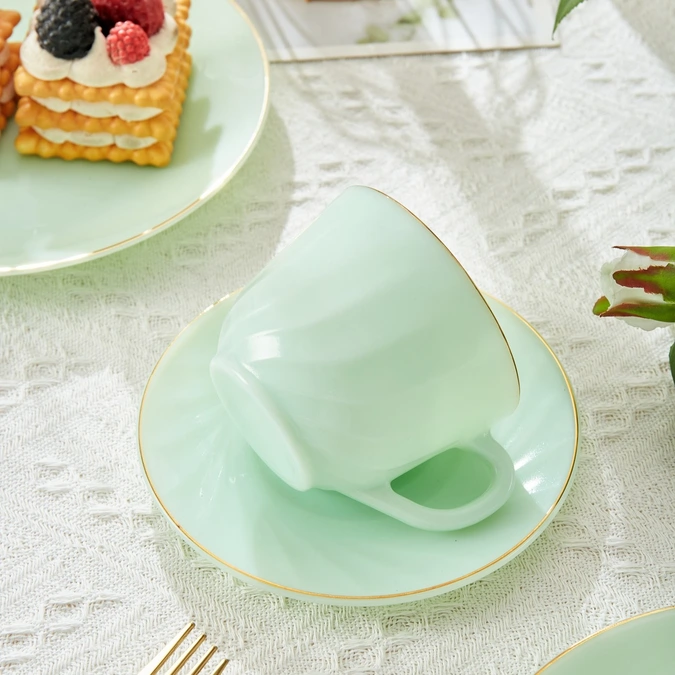
From the perspective of color attributes, jade color is between white and light green, with overall saturation deliberately lowered. It retains the cleanliness of white tableware while weakening the high reflection problem that pure white is prone to under bright glaze layers. In daily use, this color often affects our visual experience in ways that are very consistent with common sense:
- Brightness is not overly concentrated: under kitchen ceiling lights or dining table lights, jade color is not easy to produce obvious highlight reflection points, and the line of sight will not be suddenly “dazzled”.
- Light and dark contrast is milder: the brightness gap between the tableware edges and the desktop/food is smoothed out, and the eyes do not need to adjust the focus frequently.
- Closer to natural background colors: similar to the color of light jade, tender leaves, or frosted glass, it is easier for the brain to regard it as part of the environment rather than an object that needs attention.
If we regard tableware as an object that enters our field of vision repeatedly every day, this point becomes particularly important. Compared with high-gloss, bright white glazed tableware, the surface of jade-color tableware reflects light more dispersedly; compared with dark tableware, it will not make the dining table look dull due to excessive light absorption. Over time, the eyes remain in a relatively stable state during dining, and there is little accumulation of tension or fatigue.
Why Is This Difference Often Realized Only After Using for a Period of Time?
Interestingly, many people do not clearly realize that “jade color is more comfortable” during the first meal, but after using it continuously for a period of time, they find that their focus on the dining table has changed: their gaze stays more on the food and communication, rather than being interrupted by the tableware itself. When switching back to other colors later, they will vaguely feel a bit tired, but cannot tell the reason for a while.
This is because visual fatigue rarely comes from a single stimulus, but is slowly accumulated by repeated small stimuli. Every obvious reflection and every overly strong contrast will make the eyes make an extra adjustment. When this adjustment happens repeatedly during three meals a day, the fatigue will naturally be amplified.
In visual research, there are also conclusions that echo this experience. A study published in spaces using blue, green, and white combinations could help alleviate visual fatigue in Nature / Scientific Reports in 2025 pointed out:
This study discusses spatial color matching, but its core logic is not difficult to migrate to the dining table scene. When the color combination in the visual environment tends to be low-stimulus and low-contrast, the “workload” required by the visual system will decrease. Jade-color tableware is just between white and green, more like a buffer color rather than a signal that actively creates a sense of presence.
Back to life, this characteristic will be repeatedly verified at different times: at noon when natural light is strong, it is not easy to reflect glare; in the warm light environment at night, it will not appear yellowish or old; when a full set of tableware is placed at the same time, the picture remains unified, and will not look cluttered because the color is too prominent. It is these seemingly small but frequently occurring details that make jade color particularly visually pleasing in long-term use.
Therefore, many people think that jade-color tableware is soft and not glare, not because it deliberately pursues safety or mediocrity, but because it rarely consumes your attention in daily life. When the tableware no longer constantly reminds you of its existence, dining itself becomes more relaxed and natural. This is also the real thing you need to figure out before deciding whether to choose jade-color tableware.
Common Concerns Before Choosing Jade-Color Tableware
Before many people really decide on jade-color tableware, they have actually “used it” many times in their minds. Not standing in the exhibition hall, but in more real scenes: the lights are on, the dishes are cooked, the plates are brought to the table; put it aside casually when busy, change the angle when taking photos; after using it for weeks or months, look back at it — is it still the same as it was at the beginning.
From a large number of real usage feedback, it can be found that these hesitations are not scattered; they are actually highly concentrated, only appearing in different expressions.
- The first type of concern comes from “whether it will look different”: whether the color will be unstable under different lights and different time periods.
- The second type of concern comes from “whether it will change after long-term use”: whether the glaze state, marks, and aging feeling are obvious.
- The third type of concern comes from “whether it will restrict use instead”: whether it increases the burden when serving dishes, taking photos, and adjusting styles.
Putting these concerns together, we will find that they are not questioning jade color itself, but confirming: is this color suitable for their own use environment and habits.
Will the Color “Be Picky About the Environment / Lights”?
This is almost the first question everyone will think of, and it is often not a fantasy.
Imagine an ordinary scene: in natural light during the day, jade color looks clean and warm, and the edges of the dishes are gently held; in the evening, when switching to cold spotlights, the same plate suddenly looks grayish, and even brings out a little green tone. This change is easy to make people question: is the color unstable?
In fact, color never exists in isolation. It will definitely interact with light, background, and desktop. Precisely because of this, practical experience about vision and tableware color will repeatedly emphasize:
Understanding this in life is very intuitive: if the space itself has warm lighting and low contrast, jade color often appears soft and stable; if the environment itself is cold and the light is complex, its problems will be more obvious. In other words, it is not “picky”, but will not cover up problems for the environment.
Will It Look Dirty, Less Visually Pleasing, and Get Out of Control in State After Long-Term Use?
Many beginners directly equate jade color with “not dirt-resistant”, but what really determines the degree of visual appeal is often not the color, but the details.
The flatter the glaze surface, the less likely usage marks are to be amplified; if the glaze surface is rough, even if the color is light, time will leave traces. Jade color just makes this difference easier to perceive.
The same logic applies to the concern of “whether it will turn yellow or darken”. For long-term users, this anxiety is not exaggerated. The difference is that if the craftsmanship is stable, the change is often slow and uniform, like the luster being rounded; if there are unstable factors at the beginning, time will only make the problem more obvious. The concern itself is not redundant; it just reminds you to pay attention to the source.
Will It Bring Additional Restrictions When Serving Dishes, Taking Photos, and Changing Styles?
Compared with white, jade color has a stronger sense of presence, which is especially obvious when serving dishes and taking photos.
The same situation also occurs in spatial styles. Choosing jade color often means that you have to some extent accepted a more restrained and quiet way of expression. For people who hope to maintain a stable style for a long time, this is an advantage; but if you are used to frequently adjusting themes and quickly changing visual directions, this color may seem not flexible enough.
Is It Worth Taking on More Requirements for This Color?
All concerns will eventually return to a realistic question: is it worth it.
Jade color is not simply “changing a color”; it means you need to be more aware of the lights, space, and usage methods. If the tableware is only a functional tool, this requirement may seem redundant; but if you hope it participates in the expression of the overall experience, then these requirements themselves are the premise for the existence of jade color.
Real Usage Experience of Jade-Color Tableware in Daily Dining
Many people really start to notice jade-color tableware not on an elaborately arranged dining table, but in some ordinary moments. It may be when the kitchen light just turns on in the early morning, and the light has not fully spread out; or after a busy day, you just want to serve dinner as soon as possible. In this state of not being too particular or deliberately picky, jade color often looks more pleasing than imagined.

If the first glance determines “whether you like it”, then long-term use actually tests another question: will it make people feel worry-free in the life that repeats every day.
What Is Truly Repeatedly Felt About Jade Color in Daily Use?
Tableware is rarely examined alone in life. More often, it only appears in actions — serving rice, picking up vegetables, carrying plates, cleaning up, washing. It is in these constantly repeated details that the feelings brought by color slowly accumulate, rather than forming at one time.
- Whether the eyes feel relaxed when dining under different lights in the morning and evening
- When the dishes are just plated, do they look natural and appetizing, or dark and cold
- After using for a period of time, will water stains and small marks be amplified
- When family members use it casually, do you need to remind and maintain it deliberately
- In a busy or average mood, will it make the picture quieter
Together, these experiences constitute the position of jade-color tableware in real life.
From Vision to Emotion: How It Integrates into Daily Dining
Visually, jade color does not stand out. It does not reflect light as easily as pure white, nor does it carry emotions like obviously colored tableware. When serving porridge in the morning or hot dishes in the evening, it is more like being naturally caught by the light, rather than reflecting the light back. After using it for a long time, you will find that you rarely pay attention to its color anymore. This is not neglect, but adaptation.
This state will directly affect your feeling of food. Dark-colored dishes will not look overly oily, and light dishes will not have their presence weakened by the background. Jade color does not deliberately beautify the food, but makes them look closer to their original appearance. For people who eat every day, this unextreme performance is more visually pleasing in the long run.
Changes after high-frequency use are more real than the first glance.
In real life, no set of tableware is only responsible for looking good. Stacking, scrubbing, and occasional bumps will all leave traces. One practical advantage of jade color is that it has a higher “tolerance” for these life traces. It is not that there are no usage marks, but these marks are not easy to jump out and remind you at the first time.
When the kitchen countertop is not fully cleaned, with water stains and sundries still there, jade color will not immediately amplify this messiness. Over long-term use, this difference in psychological pressure will be more obvious than the color itself.
The sense of relaxation during use often comes from the color itself.
Many people have had such an experience: some tableware look good, but you will subconsciously slow down your movements when using them. In long-term use, jade dinnerware is often regarded as the “safe to use” set — no hesitation in passing it to family members, and no need for repeated reminders when children use it.
This sense of relaxation does not come from material descriptions, but from the psychological implication conveyed by the color — it is more like a daily necessity than an item that needs to be carefully maintained.
Is Jade-Color Tableware Suitable for Long-Term High-Frequency Family Use?
To judge whether it is suitable for long-term use, first return to the real use rhythm of the family.
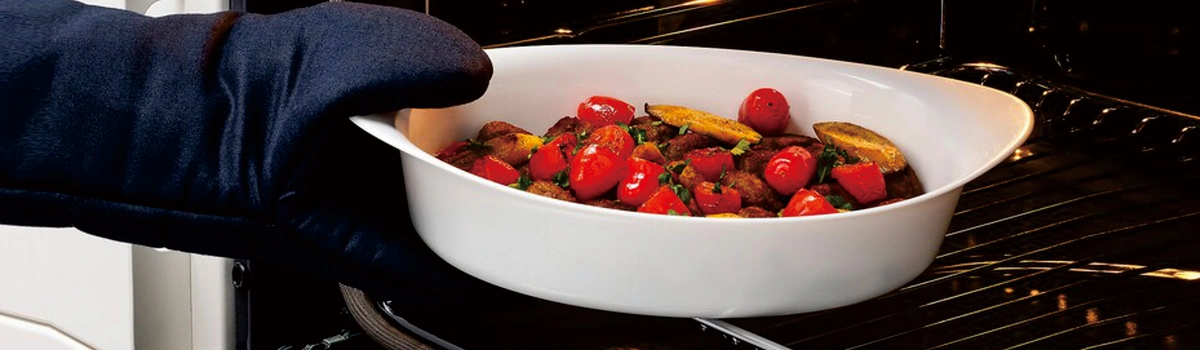
In a family environment, tableware almost has no “rest time”. It holds hot porridge in the morning, leftover dishes at noon, and stir-fries with lots of oil and soup in the evening. After eating, it is simply cleaned, dried, and stacked, and reused the next day. The real question is not whether jade color looks good, but whether it starts to feel troublesome or less pleasing after this rhythm continues for months or even years.
When many people first come into contact with jade color dinnerware, they will subconsciously associate it with “light color”, “warmth”, and “partial decoration”, worrying about whether it will look old or be difficult to clean after long-term use. But once it enters the state of high-frequency family use, these concerns are often reordered. Because in real life, what determines the retention of a set of tableware is never the initial impression, but whether it is still convenient and pleasing after being used continuously.
Core Criteria for Judging Suitability Under High-Frequency Use
When tableware really enters the state of daily use, the judgment criteria become very specific and close to daily life.
- After repeated cleaning and stacking, does the surface easily show obvious changes
- Do frequently used areas look old faster than the edges
- After holding hot soup or green vegetables, does it need extra careful cleaning
- After using for a period of time, does it still look pleasing
If under these circumstances, a set of tableware still does not make people think “should I replace it”, it basically meets the requirements for long-term high-frequency family use. Jade-color tableware is not special, but it is more likely to present these problems in advance.
Reasons Why Jade Color Is Easily Accepted in Long-Term Use
From life experience, jade color is in a delicate position. It is not as highly sensitive to water stains and small residues as pure white, nor does it easily expose oil film marks under light like dark colors. In a family scenario that does not pursue “perfection at all times”, this color that does not overemphasize contrast is more likely to maintain a stable state for a long time.
As the number of uses accumulates, jade color will not frequently remind you “I have been used”. With normal cleaning, its visual changes are relatively mild. This sense of mildness will gradually appear in daily use, making people adapt slowly rather than repel.
Jade Color Is Not Delicate, But It Is Honest About Craftsmanship
It needs to be clarified that jade color is not tolerant of all craftsmanship. On the contrary, it is very sensitive to the density and uniformity of the glaze. If the basic craftsmanship is not up to standard, under long-term high-frequency use, the frequently used areas may gradually appear slightly darker, the light sense becomes weaker, and it looks like it has been “used old”.
This change does not happen suddenly, but slowly accumulates during daily serving, cleaning, and drying. Precisely because of this, whether jade-color tableware is suitable for long-term family use depends not on the color itself, but on whether it can withstand this slow and continuous consumption.
Cleaning Experience and Long-Term Maintenance Will Not Become an Extra Burden
From actual use, jade color does not require additional cleaning methods. It will not amplify water scale like white, nor will it make oil shine obvious like dark colors. As long as normal family cleaning habits are maintained and strong wear methods are not used for a long time, it can fully adapt to the daily use frequency and will not increase pressure on people in terms of use cost.
Really unsuitable tableware for long-term high-frequency family use is often not “unusable”, but “more and more troublesome to use”.
Which Families and Usage Habits Are More Suitable for Choosing Jade-Color Tableware?
When many people choose tableware colors, they are easily led by “whether it looks good at first glance”, but after really starting long-term use, the judgment criteria often change quietly. Color is no longer just decoration, but a background that appears repeatedly every day: the rush of breakfast, the relaxation of dinner, the casual gatherings on weekends — it will participate in all of them. It is in this high-frequency, real life that whether jade color is suitable will be truly tested.
Scenarios Where Jade Color Can Coexist Well for a Long Time
- Families with high tableware usage frequency who hope it remains pleasing for years
- Families with a daily diet who hope tableware serves food quietly
- Families who care about table tidiness and hope to maintain overall consistency for a long time
- Families who have the habit of recording life but do not want to repeatedly adjust the picture
- Families with a large age gap among members who need colors that are easily accepted
Professional food visual research has the same judgment on the relationship between color and food. When analyzing tableware colors, Muted greens work well because they support the food rather than compete with it.
This sentence is not only applicable to photography, but essentially talks about a life logic: when the tableware color does not interfere excessively, attention is more easily returned to the food itself, and the dining experience becomes more focused.
How to Judge Whether a Set of Jade-Color Tableware Is Worth Buying Before Actually Placing an Order?
Many people start to consider jade-color tableware not because “they need to change a set of tableware”, but because they are moved by a certain picture. Maybe in a restaurant, maybe at a friend’s house, or just scrolling through an unposed photo — the plate color does not stand out, but the whole table looks quiet, and the food seems to be gently held rather than pressed by the color. At that moment, you will feel that such a dining table seems more suitable for long-term life.
But the real problem often arises after placing the order.
Jade color is a color that needs to be understood by the environment, not a safe option that can be established in any scenario. If you only make a judgment based on “whether it looks good at first glance”, it is easy to become less pleasing in daily use, and even make you start to doubt your original choice.
In the overseas home and lifestyle field, the entire color line of jade color, light green, and natural green has been popular for more than one season. When discussing the reasons for the popularity of green tableware, the mainstream British home media Ideal Home gave a simple explanation: Dark earthy greens are timeless shades… help create a serene and calming ambience in your kitchen.
What is emphasized here is not “visual impact”, but the stability of long-term coexistence. Precisely because of this, the real risk of jade-color tableware is not that it is ugly, but that: when life returns to the most ordinary state, can it still hold up?
One Thing You Need to Figure Out Before Placing an Order
If white tableware is the “default option” and dark tableware is a “style expression”, then jade color is more like a “life choice”. It will not take the initiative to modify everything for you, but will magnify your real dining environment, eating habits, and usage frequency.
Imagine a very ordinary night.
The lights are not warm lights for taking photos, and the dishes are not made for plating. After dinner, you put the plates in the sink, rinse them simply, and dry them. When you take them out again the next day, does their state make you feel at ease, or do you subconsciously want to change one? Such moments are often more real than any parameters.
Before making a real decision, you can use the following set of questions to quickly judge whether a set of jade-color tableware is worth entering your daily life:
- Put in your current dining table and lighting environment, does it look warm or grayish
- After continuous high-frequency use, water marks or slight usage traces appear, can you still accept it
- Substitute with the dishes you eat most often, is it holding the food or darkening the color
- If you only keep this set as the main tableware, will it seem forced in some scenarios
- When adding white or transparent tableware in the future, can it blend naturally
If for two or three of these, you need to convince yourself repeatedly, the problem is often not with the tableware itself, but that it is not suitable for your current lifestyle.
Key Judgments for Determining Whether Jade-Color Tableware Is Worth Long-Term Use
Environmental adaptability determines its first layer of stability.
Jade color is very sensitive to the environment.
In spaces with warm lighting, wooden desktops, and more natural materials, it will slowly show softness and layering; but in environments with cold white light, more metal or dark countertops, the same jade color is likely to look dull. This is not a quality problem, but the color itself is not good at resisting high-contrast environments.
Jade green dinnerware follows the same logic, as its subtle green tones perform best in soft, natural lighting without harsh contrasts.
FAQ
Q: What defines the jade dinnerware color range?
A: It covers soft, low-saturation light shades like warm off-white, slightly translucent white, and faint jade green, maintaining stability across different lighting conditions.
Q: How does jade dinnerware vs white differ in daily use?
A: White tableware offers sharp contrast and clear visibility, while jade dinnerware softens light, reduces glare, and creates a more gentle, cohesive dining scene.