⚡short note: Durable dinnerware showdown: Opal Glass vs Melamine vs Stoneware for family/heavy use.
- Shatter Resistance: Merges tempered surface strength and internal stress dispersion, withstanding daily bumps and low-to-medium falls without easy breakage.
- Scratch Resistance: Boasts an unglazed homogeneous structure that disperses friction wear, avoiding obvious marks typical of glazed or melamine options.
- Temperature Adaptability: Microwave/dishwasher-safe, handling 70-90°C washes and temperature shifts between heating, serving and cleaning stably.
- Long-Term Appearance: Retains smoothness through frequent use/washes, resisting premature aging, fine wear or discoloration common in other materials.
Shatter Resistance: How Opal Glass Balances Strength & Flexibility to Reduce Breakage
Many “final moments” of tableware are actually quiet. It’s not being slammed down hard or falling from a height, but the edge of a plate gently bumping against the sink when being stacked after cleaning in the back of a hotel; or in the busy rhythm of serving meals, the plate is just placed on the edge of the counter, and when the body turns, it slides off the counter. The sound is not loud, but it’s enough to make people stop instinctively—and the result is often predictable. It is these recurring moments that make people gradually realize: the real risks faced by hotel tableware do not come entirely from extreme impacts, but more from high-frequency, low-intensity daily accidents. So the question naturally arises—in this usage environment, what kind of material is more likely to exhibit relatively stable durability? This is the core of durable dinnerware material comparison.
From the perspective of shatter resistance, opal glass does not adopt an aggressive approach. It does not simply pursue higher hardness indicators, but focuses on a more practical usage issue: when an impact occurs, is the force inclined to concentrate and amplify, or to be dispersed and buffered as much as possible?
If we understand falling or bumping as a brief and sudden “stress impact”, the difference between materials does not lie in “whether they will be hit”, but in the possible results after the impact occurs. Opal glass emphasizes, to a certain extent, reducing the possibility of stress getting out of control rapidly at a single point—that is, minimizing the chance that an ordinary operational error directly leads to irreparable damage.
And this ability to “reduce stress out of control” comes precisely from a core feature of opal glass in material design: the structural balance between strength and toughness. Specifically:
- Strength aspect: A compressive stress layer is formed on the glass surface through tempering process, so that when impacted, external forces first need to overcome this preset compressive stress layer before they can be further transmitted to the interior—this is equivalent to adding a “buffer threshold” to the glass.
- Toughness aspect: Unlike pure tempered glass, the internal structure of opal glass is not completely homogeneous. Instead, the introduction of opacifiers forms more stress dispersion paths at the micro level. When impact force is transmitted in, these tiny structural differences act like “stress diversion”, preventing cracks from expanding rapidly along a single direction.
- Significance of balance: It is this combination of “sufficient surface hardness to resist initial impact + sufficient internal toughness to disperse stress transmission” that makes opal glass neither crack at the touch like overly hard materials nor accumulate damage due to continuous deformation like overly soft materials in daily bumps and knocks.
In other words, the essence of shatter resistance is not to make the material “absolutely hard” or “absolutely soft”, but to allow the force to be distributed and dissipated more reasonably when an impact occurs—this is exactly the engineering logic pointed to by “balances strength & flexibility” in the title.
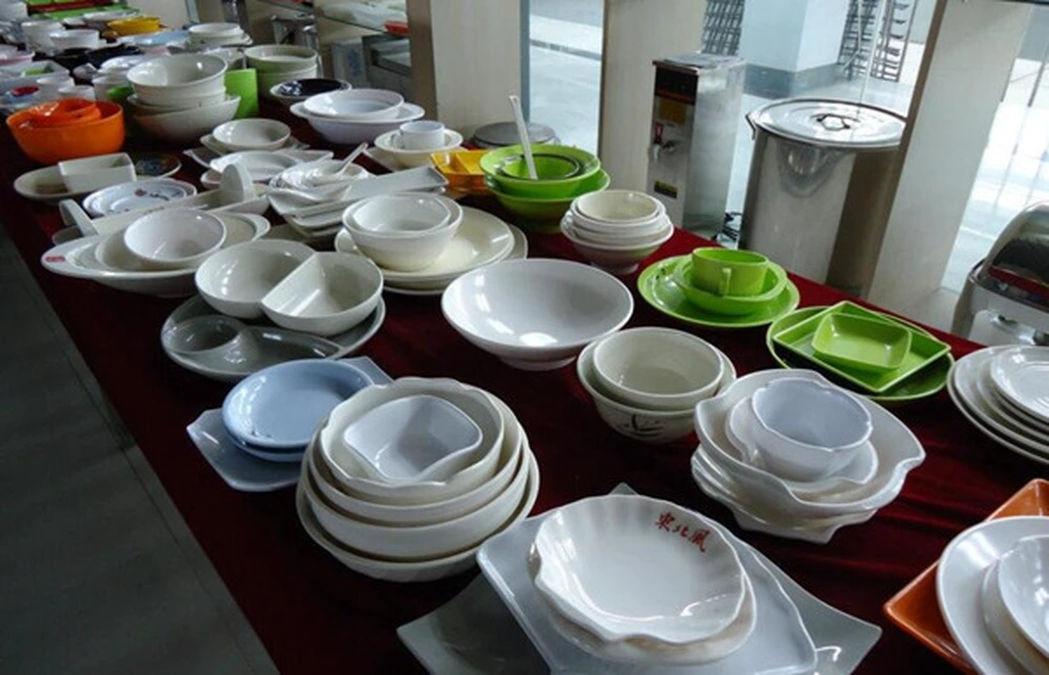
In similar hotel usage scenarios, different materials often “react” differently to these moments:
- Opal glass tends to disperse impact through structural design, making it a standout in shatter resistant dinnerware for families, coping with high-frequency, low-intensity daily operational accidents rather than extreme conditions;
- Melamine tableware relies on the elasticity of the material itself to absorb impact, and is not easy to break immediately when dropped, but is more prone to gradual surface wear during long-term high-frequency use; in actual usage comparisons, this difference is often not reflected in a single drop test, but in long-term appearance changes, cleaning marks and the rhythm of usage aging.
- Stoneware tableware usually gives people the first impression of being thick and stable, but when dropped or when the edge is hit, once a crack forms, it often expands rapidly, and the damage result is more direct.
There is an easily overlooked fact here: glass itself is not inherently “fragile”. In the field of materials engineering, it has long been proven that the shatter resistance of glass can change significantly through structure and process. Around the question of whether opal glass is durable (this article also has a detailed introduction), the focus of the discussion is not on the material name itself, but on whether its structural design can maintain a relatively stable state during high-frequency, low-intensity daily use. Taking tempered glass as an example, engineering data clearly points out when introducing its characteristics:
“Tempered glass is about four times stronger than annealed glass.” — Wikipedia, Tempered glass
This sentence is not discussing specific hotel tableware, nor does it mean that all glass products have the same strength level, but it explains a more basic engineering fact: the shatter resistance of glass in actual use is often closely related to its internal structure and stress control methods, not just depending on the material name itself.
Scratch Resistance: Why Opal Glass Unglazed Surface Beats Glazed Dinnerware
Have you ever had a moment—after washing the dishes, stacking the plates back in the cupboard, some plates look “a bit old” under the light? Not cracked, not dirty, just with a few unclear gray lines on the surface. You may instinctively think: is the cleaning method not right recently? But if, under similar usage conditions, after replacing with a new set of tableware, these marks appear relatively slower, or even not obvious for a long time, then the problem may not be entirely with usage habits.
The performance of opal glass in such long-term usage scenarios is often related to an easily overlooked structural feature—it usually does not rely on a glaze layer structure. Its color is not attached to the surface, and its smoothness is not obtained through surface coating, but a relatively homogeneous overall structure formed by the material itself during the high-temperature melting process. This means that there is no obvious independent layered interface on its surface that is prone to premature wear. Under daily friction conditions, wear is more likely to be dispersed and absorbed by the overall structure, rather than easily manifested as clear scratch tracks.
And this phenomenon of “wear being dispersed and absorbed” precisely reveals the essential difference in scratch resistance between unglazed and glazed surfaces: whether the surface is a single homogeneous layer or has a vulnerable independent coating. Specifically:
- Advantage of unglazed surface – no “preferential wear layer”: The surface and interior of opal glass are highly consistent in material composition, both forming a glassy structure after melting at a high temperature above 1400°C. This means that when cutlery or other tableware rubs against the surface, it is not in contact with an “additional coating”, but the material itself. Even if minor wear occurs, it will not expose the underlying different material like a glaze layer, so it is not easy to form visually obvious contrast marks.
- Limitation of glazed structure – existence of “structural interface”: The surface of glazed ceramic or stoneware is essentially a glassy coating covering a clay substrate. Although the glaze layer itself has a certain hardness, there is a clear material boundary between it and the underlying clay. When metal tableware rubs repeatedly, the glaze layer, as an independent thin-layer structure, is more likely to be preferentially worn in local areas—once the glaze layer is damaged, the exposed underlying clay is different from the glaze layer in color, luster, and even porosity, making the scratches particularly obvious.
- True meaning of “Beats”: “Beats” does not mean that opal glass necessarily has a higher hardness value, but that in long-term use, the unglazed integrated structure can avoid the inherent “layered wear” problem of glazed structures. Even if two materials are subjected to the same intensity of friction, the wear marks of opal glass are often harder to detect, while glazed tableware is more likely to amplify the visual effect of wear due to structural boundaries.
The key to scratch resistance lies not only in how hard the surface is, but also in whether the surface structure will “actively expose” wear marks—this is exactly the core advantage of unglazed surfaces over glazed structures.
Looking at most stoneware or ceramic tableware, the situation is different.
Their appearance and texture rely to a large extent on the surface glaze layer—and this glaze layer is itself a relatively independent structure. When metal cutlery contacts this surface repeatedly, the friction effect is often concentrated on the glaze layer first. Initially, such marks may only be detectable at specific light angles; as the frequency of use increases, gray lines or foggy areas may gradually accumulate, causing the tableware’s appearance to change first even though its structure is still intact.
This phenomenon is not only found in individual usage experiences. In material research, the visible marks on glazed tableware caused by contact with metal tableware have a specific term—metal marking. Relevant research abstracts describe it as: “The term ‘metal marking’ is widely used to define the common phenomenon of tableware glazes being damaged by metallic cutlery.” This statement indicates that under normal usage conditions, the appearance of detectable marks on the glaze layer is a relatively common situation, not an abnormal phenomenon.
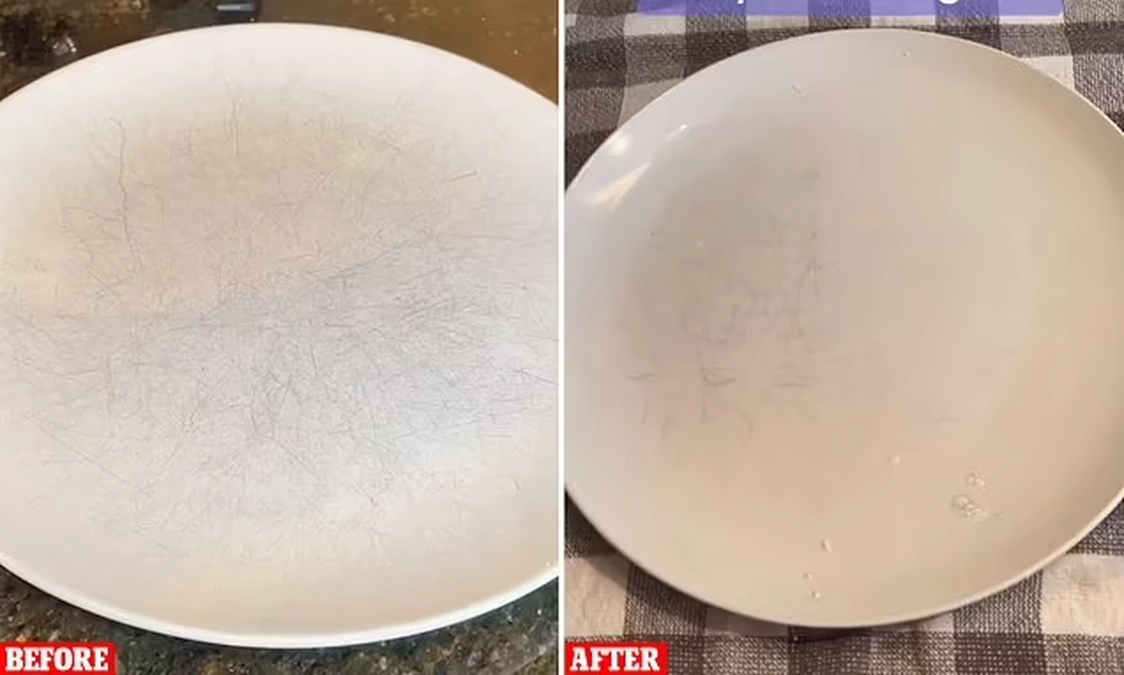
If we shift our perspective from material parameters themselves to actual usage logic, we will find a more intuitive judgment method: scratch and wear resistance is not just a simple comparison of material hardness, but related to whether the surface structure is prone to amplifying wear. The differences between different materials in this regard are often reflected in the appearance stability after long-term use:
- Due to not relying on an independent glaze layer, the impact of daily friction on opal glass is usually more dispersed, the appearance changes relatively slowly, and it is not easy to show obvious scratches concentratedly.
- Stoneware and glazed ceramics often have good smoothness initially, but as usage time increases, the glaze layer is more likely to accumulate visible marks, thus affecting the overall appearance.
- Although melamine tableware also does not adopt a glaze layer structure, under high-frequency friction conditions, fine wear marks are more likely to appear on the surface, and the luster gradually fades.
Therefore, when “durability” is understood as maintaining a relatively stable appearance state after years of use, the unglazed integrated structure of opal glass often better aligns with the criteria for best dinnerware material for daily use in the specific dimension of scratch and wear resistance.
Microwave to Dishwasher: How Opal Glass Offers Safer Versatility Than Melamine & Stoneware
Some tableware often does not attract much attention when used in restaurant environments. Take it out, heat it, hold the dishes, serve them on the table, and enter the dishwasher after meals—the process is smooth and coherent. This usage experience that does not require additional pauses or judgments often affects the possibility of a set of tableware being retained and reused for a long time in a restaurant. The real difference is usually not reflected in a single extreme operation, but more likely in those recurring daily usage details.
For example, a not uncommon situation in catering scenarios: during peak meal preparation, a pre-prepared dish needs to be reheated quickly. The tableware is put into the microwave, and after heating, it directly enters the serving process; after the meal, the tableware still has residual temperature, and then is sent to the dishwasher for centralized cleaning. The entire process is closely connected, and the adaptability requirements for the utensils themselves are also increased accordingly.
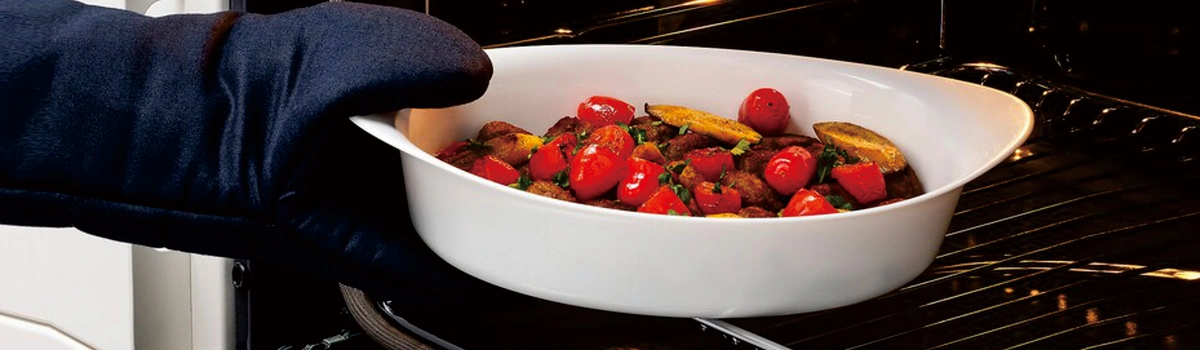
But not all materials will show the same stable state in such usage processes. In the actual operation of most restaurants, a set of tableware often repeatedly goes through such a path: being put into the microwave for heating or reheating → directly used to hold hot food and serve on the table → entering the dishwasher after meals to receive high-temperature water flow and detergent cleaning. This process is not deliberately designed, but gradually formed as an operational habit in the daily operation of the restaurant. Precisely because of this high-frequency, continuous usage method, the adaptability of materials to different temperature nodes will be continuously verified in actual operation.
Let’s start with the microwave link.
If a piece of tableware is defaulted to be directly involved in the heating link in the back kitchen, its acceptance in the operational process is often higher. Opal glass is often included in this type of application scenario in the usage practice of many restaurants—from heating to serving, the steps are relatively direct, and the process connection is also smooth.
Melamine tableware, on the other hand, is usually more suitable for the role of holding and serving food in this link. In actual operation, staff often choose to complete heating in other containers first, then transfer the food. This method is effective in many restaurants, but in peak periods or high-frequency use environments, the scope of the material’s participation in the process is relatively concentrated in specific stages.
The problem is not whether this distinction is reasonable, but that when heating becomes part of the daily operation of the restaurant, the degree of integration of different materials into the process will gradually affect the coherence of the overall operation.
Next is the latter half of the process that is easily overlooked but equally critical. After the meal, the tableware is still at a relatively high temperature, sometimes placed in the recycling area for a short time, and then sent to the dishwasher for centralized cleaning. High-temperature water flow, detergent, and the switch between hot and cold environments often occur continuously at this stage.
Under such usage conditions, the performance of stoneware is more dependent on specific circumstances. The thickness of the vessel, the state of the glaze layer, and daily operation methods will all have an impact on its long-term stability. Therefore, the usage feedback of stoneware may vary in different restaurants.
In contrast, opal glass in this continuous process often emphasizes the material’s own adaptability to temperature changes. It less relies on the surface structure to bear the impact of temperature differences, and has relatively loose requirements on the operation rhythm in the connection process of “serving → recycling → cleaning”, and is more likely to be consistent with the existing processes.
- Safety in microwave link – no risk of metal or organic matter release: Opal glass is essentially an inorganic glass material, and will not release harmful substances due to molecular vibration during microwave heating. In contrast, although melamine tableware is stable at room temperature, its main component is melamine-formaldehyde resin, which belongs to organic polymer materials. When the temperature exceeds 120°C, the material structure may change, and there is a potential risk of migration of small molecules such as formaldehyde—that is why most melamine tableware manufacturers clearly mark “not suitable for microwave heating”.
- Structural stability in temperature difference impact link – advantage of integrated material: From the high-temperature environment of the microwave, to room temperature contact after serving, to the high-temperature water flow of 70-90°C in the dishwasher, and finally to cooling in the air-drying stage—this series of temperature changes places continuous demands on material thermal expansion stability, a key trait of microwave dishwasher safe dinnerware materials.
- True meaning of “Safer Versatility”: “Safer” in the title does not only refer to safety in a single link, but to the ability of the material to maintain chemical stability and structural integrity throughout the entire chain of “microwave heating → holding hot food → high-temperature cleaning”. “Versatility” emphasizes that opal glass can seamlessly connect multiple temperature ranges without setting additional judgment nodes in the operation process such as “this cannot be microwaved” or “that needs to cool down”—this characteristic of reducing operational restrictions is the core embodiment of its “safer versatility” in catering environments.
In other words, the value of versatility does not lie in how many different things a material can do, but in whether it can always maintain a safe, stable, and no special attention required state in a continuous usage process—this is exactly the actual usage logic pointed to by “safer versatility” in the title.
It should be noted that the comparison here is not a value judgment on the materials themselves.
A more practical understanding is: in catering scenarios where there is frequent circulation between microwave ovens, serving links and dishwashers, the differences in the coverage of usage ranges of different materials will gradually be reflected in operational convenience and process stability, a key point in opal glass vs melamine vs stoneware evaluations.
Family Dinnerware Guide: Choosing Durable Materials for Kids & Heavy Use
In genuine discussions among overseas parents, this concern is directly mentioned. When exchanging views on choosing toddler tableware, some parents mentioned that they are looking for
“plates that are dishwasher safe, microwave safe, durable and not easily broken”
This sentence itself is not advocating that a certain material is “better”, but describing a household usage scenario—the tableware needs to minimize additional burdens under the conditions of repeated cleaning, frequent use, and children’s participation. If we turn our attention back to the family itself, many selection logics will gradually emerge:
- Can it relatively calmly cope with those “unintentional moments”? In families with children, it is not uncommon for tableware to be knocked over, pulled aside, or casually placed on the table edge. Durability here is more like a buffering capacity—not a promise to remain intact forever, but to not frequently enter a state of “needing replacement” when accidents occur.
- Is it more suitable for repeated use and repeated cleaning? For families with high-frequency meals, the real test often comes from repetition: entering and exiting the dishwasher every day, long-term stacking, and slight friction between edges. Over time, the differences in which materials are more likely to look old and have minor wear and tear will usually gradually appear.
- Is it relatively “in sync” with the usage methods at home? Some families prefer lightweight and easy-to-take tableware, while others lean towards stable and thick hand feel. The performance differences of opal glass, melamine and stoneware in families are often not comparisons of advantages and disadvantages, but different degrees of adaptability to different family rhythms. And this “difference in adaptability” can often be understood through three specific dimensions: shatter resistance, long-term appearance stability, and inclusiveness of usage scenarios. Specifically:
Shatter resistance – fault tolerance when children are involved:
- Opal glass: Through tempering process and internal stress dispersion design, it can often remain relatively intact when dropped from low to medium heights, solidifying its place as shatter resistant dinnerware for families. Although it cannot be said to be “absolutely unbreakable”, it usually provides a larger buffer margin than ordinary ceramics in daily operations such as children carrying plates and placing tableware.
- Melamine tableware: The material itself has elasticity and is not easy to break immediately when dropped, which is the main reason why it is widely used in the children’s tableware market. However, it should be noted that this advantage of “not easy to break” is mainly reflected in mechanical impact.
- Stoneware tableware: Although it gives people the impression of being thick, once the edge is hit, cracks often expand rapidly, and the damage result is more direct—in families where children participate in cleaning up, this may mean a higher replacement frequency.
Long-term appearance stability – whether it looks “old” after high-frequency use:
- Opal glass: Its unglazed integrated structure makes it not easy to have obvious scratches or gray lines due to repeated friction, and even if it enters the dishwasher every day, the appearance change is relatively slow.
- Melamine tableware: Although it is smooth initially, fine wear marks are more likely to accumulate on the surface during long-term high-frequency use, and the luster gradually fades. In addition, if it comes into contact with high-temperature food or is used for a long time, it may turn yellow or discolor.
- Stoneware tableware: After repeated contact with metal tableware, the glaze layer is more likely to have metal marking (metal scratches). Although these marks do not affect use, they will make the tableware look “old”.
Inclusiveness of usage scenarios – whether additional precautions are needed:
- Opal glass: It can be used in microwaves, dishwashers, and can hold both hot and cold food. In the process of “heating → holding → cleaning”, basically no special judgment is needed, which aligns with the needs for microwave dishwasher safe dinnerware materials in fast-paced family life.
- Melamine tableware: It cannot be heated in microwaves and is not suitable for holding overheated food (it is recommended to be below 120°C). In actual use, this means that certain scenarios need to be “avoided”—for example, when meals need to be reheated, another container needs to be used first.
- Stoneware tableware: Although it can be used in microwaves and dishwashers, it is relatively sensitive to temperature difference impacts. Putting it directly from the refrigerator into the microwave, or rinsing it with cold water just after being taken out of the oven, may increase the risk of cracking.
Summary of the significance of these three dimensions: When we say “choosing durable materials for kids and heavy use”—a key part of identifying best dinnerware material for daily use—the real judgment standard is not “which is the hardest” or “which is the most unbreakable”, but—in the real life where children knock over plates, tableware is washed several times a day, leftover meals need to be heated quickly sometimes, and forgetting to handle with care occasionally, which material can reduce your psychological burden of “needing to pay attention” and increase the sense of ease of “just using it casually”.
Technical Comparison of Opal Glass, Melamine and Stoneware Dinnerware: A Focus on durable dinnerware material comparison
| Performance Dimension | Opal Glass | Melamine | Stoneware |
|---|---|---|---|
| Shatter Resistance (Daily Bumps/Falls) | Balanced strength & toughness; disperses stress to reduce breakage; better buffer for low-to-medium height falls | Elastic material resists immediate breakage on fall; prone to long-term surface wear accumulation | Thick but brittle; cracks expand rapidly once formed, leading to direct damage |
| Scratch Resistance (Long-Term Use) | Unglazed integrated structure; wear is dispersed, no obvious scratch marks | No glaze layer but prone to fine surface wear and luster loss over time | Glazed surface; metal marking is common, scratches are visually obvious |
| Temperature Adaptability (Microwave/Dishwasher) | Microwave-safe (no harmful release); withstands temperature fluctuations; dishwasher-safe with stable structure | Not microwave-safe (risk of formaldehyde release over 120°C); dishwasher-safe but sensitive to high-temperature food | Microwave/dishwasher-safe but sensitive to temperature differences; glaze may crack/peel long-term |
| Long-Term Appearance Stability | Slow appearance change; maintains smoothness for years | Prone to yellowing/discoloration and fine wear marks | Glaze marks accumulate; looks “old” quickly despite structural integrity |
| Suitability for Family (Kids/Heavy Use) | High fault tolerance; no special usage restrictions; stable appearance | Unbreakable but limited usage scenarios (no microwave); surface ages fast | Thick but fragile; temperature-sensitive; glaze scratches affect appearance |
Frequently Asked Questions (FAQ)
Q1: Is opal glass really more shatter-resistant than regular ceramic or melamine for daily household use?
A1: Opal glass is not absolutely unbreakable, but it balances strength (via a tempered compressive stress layer) and toughness (via internal stress dispersion paths) to disperse impact force, reducing breakage from daily low-intensity bumps or low-to-medium height falls. Unlike regular ceramic (stoneware) that cracks rapidly once damaged, or melamine that resists immediate breakage but accumulates surface wear long-term, opal glass offers more stable shatter resistance in daily family use with kids and heavy usage.
Q2: Why do glazed dinnerware show scratches more easily than opal glass even if their surface hardness is similar?
A2: The key difference is surface structure: glazed dinnerware has a separate glassy glaze layer on a clay substrate. When rubbed by metal cutlery, the glaze layer (a thin, independent layer) is preferentially worn, exposing the different-colored clay underneath and making scratches obvious. Opal glass has an unglazed, homogeneous structure (no layered interface), so wear is dispersed across the material itself and does not form contrasting, visible scratch marks—even with similar hardness, its structural design avoids amplifying wear visually.
Q3: Can melamine tableware be used in microwaves or with hot food, and what are the risks?
A3: Melamine tableware should not be used in microwaves. Its main component is melamine-formaldehyde resin (an organic polymer), which may undergo structural changes when heated above 120°C, leading to potential migration of harmful substances like formaldehyde. It is also not suitable for holding overheated food (above 120°C). While melamine is dishwasher-safe and shatter-resistant for drops, these usage restrictions make it less versatile for fast-paced family or restaurant environments compared to opal glass.