
⚡ Short note: Factory-Direct Chinese Opal Glass is a reliable Arcopal alternative for commercial catering with steady quality and supply
- Glass material: Tempered opal glass has a tight inner structure, designed for frequent stacking, washing, and restaurant handling
- Supply consistency: Chinese mass production keeps the same tableware specs for long-term restocks, no random size or style changes
- Pricing factor: Factory-direct sales cut middle links, same-spec products carry competitive pricing without extra brand costs
- Custom features: Tableware sizes, edge shapes can be tailored, brand logos added, with MOQ varying by model and decoration
Why Factory-Direct Opal Glass from China Is the Best Arcopal Alternative
In the global tableware procurement market, many catering brands, hotel suppliers, and tableware wholesalers often face a practical problem when looking for Arcopal-style tableware: is there an alternative that can maintain the milky white glass texture and enable long-term stable replenishment? Imagine a common procurement scenario: a restaurant has just completed renovation and needs to uniformly purchase a batch of white dinner plates, bowls, and cups. The table setting effect must be neat and consistent, while these tableware items also need to withstand repeated cleaning, disinfection, and frequent use every day. If the style or size changes when replenishing stock a few months later, the originally neat table setting style is likely to be disrupted.
It is against this background of actual demand that more and more procurement managers are paying attention to opal glass tableware produced in China, a practical Arcopal alternative for global commercial catering buyers. China’s mature glass manufacturing industry chain enables large-scale and stable production of milky white glass tableware, which means that the same tableware can maintain consistent specifications for a long time, thereby helping restaurants, hotels, or wholesalers maintain a unified product system. For the catering industry that needs continuous replenishment, stable supply is often more important than simply relying on brands.

What Buyers Actually Look for When Replacing Arcopal
When procurement managers start comparing milky white glass tableware from different sources, they usually make judgments from the perspectives of material performance, supply stability, and procurement models. What truly determines whether a product can be an alternative to Arcopal is not a single factor, but whether multiple conditions are met simultaneously. If buyers want to have a more comprehensive understanding of milky white glass tableware in commercial scenarios, they can also check out commercial opal glass tableware, which makes it easier to understand material characteristics, usage environments, and replenishment logic on the same line when comparing alternatives.
• Why more and more buyers consider factory-direct Opal Glass from China as an alternative to Arcopal
- Similar material structure and close usage experience
Opal Glass forms a milky white glass structure through high-temperature melting and rapid cooling processes, making the tableware lightweight while having good impact resistance, and can maintain stable performance in the high-frequency use environment of restaurants. - Stable production scale and easier replenishment
China’s mature glass tableware industry chain can continuously produce tableware of the same specifications, which is crucial for restaurants or wholesalers because the same size and appearance can be maintained during long-term replenishment. - Factory-direct supply reduces procurement links
Cooperating directly with production factories can reduce intermediate trade links, make procurement prices more transparent, and make order communication more direct and efficient. - More flexible product specification options
Factories can usually provide tableware of different sizes, edge shapes, and capacity specifications, allowing buyers to choose more suitable products according to the actual needs of restaurants while maintaining the Arcopal style.
Why Factory Supply Makes a Practical Difference
After understanding these factors, it is not difficult to see why many catering equipment procurement teams include Chinese Opal Glass in their consideration of Arcopal alternatives. From another perspective, if a restaurant needs to complete multiple rounds of table turnover every day, and the tableware will be continuously cleaned, stacked, and transported, what really affects the long-term use experience is often not the brand name, but the material stability and the convenience of replenishment. The milky white glass structure of Opal Glass performs stably in such environments, so it has gradually been accepted by more catering procurement teams.
From Restaurant Demand to Global Purchasing Decisions
In actual operation, a restaurant’s purchase of white tableware is often not only for the beauty of table setting but also for the stability of long-term operation. If a certain tableware model cannot be purchased in the later stage, the restaurant may have to replace the entire set of tableware, which will increase costs invisibly. When products come from factories with stable production, the same tableware can usually be supplied continuously, which makes restaurants more relaxed when expanding or replenishing stock.
Is Chinese Opalware as Durable as Arcopal?
When many people look for alternatives to Arcopal, their first reaction is often straightforward: if the price is more favorable, will the durability be worse? This doubt is actually very common. Imagine a real usage scenario – just after the dinner peak, the dishwasher in the restaurant’s back kitchen has just completed a round of cleaning, and the waiter quickly moves a stack of freshly washed plates to the tableware rack. If the quality of the tableware is unstable, the edges are likely to have small chips due to such collisions and stacking. Precisely because this kind of use environment is experienced every day, buyers naturally pay more attention to durability.
From the perspective of the material itself, Opal glass is a tableware material designed for high-frequency use. It is a milky white tempered glass with a stable structure formed through a special glass formula and high-temperature treatment, so it is superior to ordinary glass tableware in terms of impact resistance and heat resistance. Actual performance depends on formula, thickness, tempering process, and QC standards, regardless of origin.
In other words, if Chinese Opalware uses consistent-grade glass formula and tempering technology, then in theory, the durability foundation of the two aligns closely.
- Opal glass itself has a tempered glass structure and is more impact-resistant than ordinary glass tableware
- As long as the glass formula and tempering process are consistent, the durability of tableware mainly depends on production quality rather than origin
- High-quality Opalware can withstand frequent stacking, cleaning, and transportation in restaurant environments
- Under normal use conditions, it is not easy to have edge chipping or small cracks
- Due to its dense structure, the tableware can still maintain a stable shape and color after long-term use
Opal Glass Material Structure Improves Dinnerware Durability
Many people notice a feature when they first come into contact with Opal glass tableware: it looks like porcelain but has the delicate texture of glass. This milky white color is not a simple appearance treatment, but a natural effect formed by the internal structure of the glass. Special mineral components are added during the manufacturing process, and after high-temperature melting and rapid cooling, a more uniform and dense structure is formed inside the glass. When a plate collides slightly during stacking or transportation, the impact force will be dispersed instead of concentrating on a single point, so cracks are not easy to occur. This structure can be understood as a tighter glass tissue, which is more stable and wear-resistant in long-term use.
Manufacturing Process Determines the Strength of Opal Glass Dinnerware
Materials determine the foundation, and the manufacturing process determines the final strength. Even for the same Opal glass, different production methods will bring obvious differences. Modern Opal glass tableware is usually pressed by molds after high-temperature melting, and then tempered to form a stable stress structure inside the glass, thereby improving the overall impact resistance. A simple example is the uniformity of the thickness of the plate edge. If the edge structure is stable, it is not easy to be affected by local impact during stacking and transportation. In recent years, many Chinese glass tableware factories have adopted automated production lines to ensure that each piece of tableware maintains consistency in thickness, density, and structure. This stability is the foundation of durability.
Opal Glass Dinnerware Performs Well in Busy Restaurant Use
Durability ultimately returns to the real use environment. Imagine the breakfast time in a buffet restaurant: guests keep taking plates, waiters send used tableware into the dishwasher, and after high-temperature cleaning, they quickly stack them back on the tableware rack. This cycle happens many times every day. In such a high-frequency use scenario, ordinary glass tableware is prone to cracks due to repeated collisions, while high-quality Opalware can often maintain a stable structure, is not easy to break, and will not lose surface smoothness due to long-term cleaning. Precisely because the material structure, production process, and actual use performance are all stable, Chinese Opalware is gradually becoming a reliable alternative to Arcopal in the global market.
| Technical Aspect | Arcopal | Chinese Opal Glass Tableware |
|---|---|---|
| Material Structure | Milky white tempered glass with uniform internal stress distribution, a mature formula refined over decades | Milky white tempered glass with dense internal structure, consistent with Arcopal’s core material principles |
| Production Process | High-temperature melting + mold pressing + tempering treatment, semi-automated production with strict brand quality control | High-temperature melting + mold pressing + tempering treatment, full automated production lines for large-scale output |
| Impact Resistance | Engineered to resist chipping and cracking under typical commercial handling and stacking | Designed for consistent impact performance, supported by precise production line thickness control |
| Heat Resistance | Formulated to withstand common temperature fluctuations in restaurant and catering operations | Optimized for extended temperature variation scenarios in global commercial use |
| Supply Stability | Stable brand-led production with planned inventory, ensuring consistent quality for global distribution | Stable mass production with consistent specifications, supporting long-term replenishment for commercial clients |
| Unit FOB Cost | Premium pricing reflecting brand heritage, R&D investment, and global distribution network | Competitive pricing driven by mature industrial chain and large-scale manufacturing efficiency |
Why Is Chinese Tempered Glass Dinnerware More Affordable Than Arcopal?
In many real tableware procurement scenarios, this question is often not a simple price comparison, but a very specific cost decision. Imagine a common scene: a restaurant procurement manager sits in the office, with two sample plates on the table – one from Arcopal and the other from tempered opal glass dinnerware produced by a Chinese factory. The color is also milky white, and the texture looks similar, but when the quotations are placed together, the price difference makes people can’t help but take a second look. Why is this? Is it just the brand difference, or is there a difference in the production system itself?
If we shift our perspective from the dining table to the factory, we will find that the price difference is not accidental. The cost of tableware does not only come from materials, but also from manufacturing methods, production scale, and supply chain structure. When these factors are combined, opal glass tableware produced in China can often form a more competitive price, making it a top choice for buyers seeking affordable white glass tableware for commercial use.
When many buyers first come into contact with Chinese tempered glass tableware, they often first see the price advantage, but do not immediately realize the manufacturing logic behind it. In fact, when the production system is mature enough and the output is stable enough, the product price will naturally be lowered.
- China has a mature glass manufacturing industry chain. Raw materials, molds, production equipment, and packaging supplies are often concentrated in the same industrial area, resulting in lower transportation and collaboration costs.
- Automated production lines can continuously manufacture a large number of standardized tableware, significantly reducing the equipment and labor costs allocated to a single product.
- Many Chinese tableware adopt the factory-direct supply model, reducing the price superposition caused by distribution channels and brand premiums.
- Large-scale production oriented to exports enables factories to reduce unit production costs through stable orders.
When these factors are placed in the same supply chain, it is not difficult to understand why Chinese tempered opal glass dinnerware has a price advantage.
China’s Glass Manufacturing Ecosystem Reduces Opal Dinnerware Costs
In some daily-use glass industrial zones in China, producing tableware is more like a tightly connected system. Glass raw material suppliers, mold processing factories, and tableware production lines are often distributed in the same industrial area. What does this industrial structure mean? Simply put, when a mold manufacturing factory is only a few dozen kilometers away from a glass tableware factory, new molds can be put into production quickly, and the transportation cost of raw materials is also reduced accordingly. Compared with purchasing production resources across regions or even countries, this highly concentrated manufacturing environment is obviously more efficient.
From the perspective of the production process, glass is melted in a high-temperature furnace, then put into pressing molds to form plates, bowls, or cups, and then undergoes annealing and tempering treatment. The entire process is completed in a stable production chain, and the equipment rarely stops for a long time. A stable production rhythm allows factories to continuously output a large number of tableware, and the higher the output, the lower the average cost naturally.
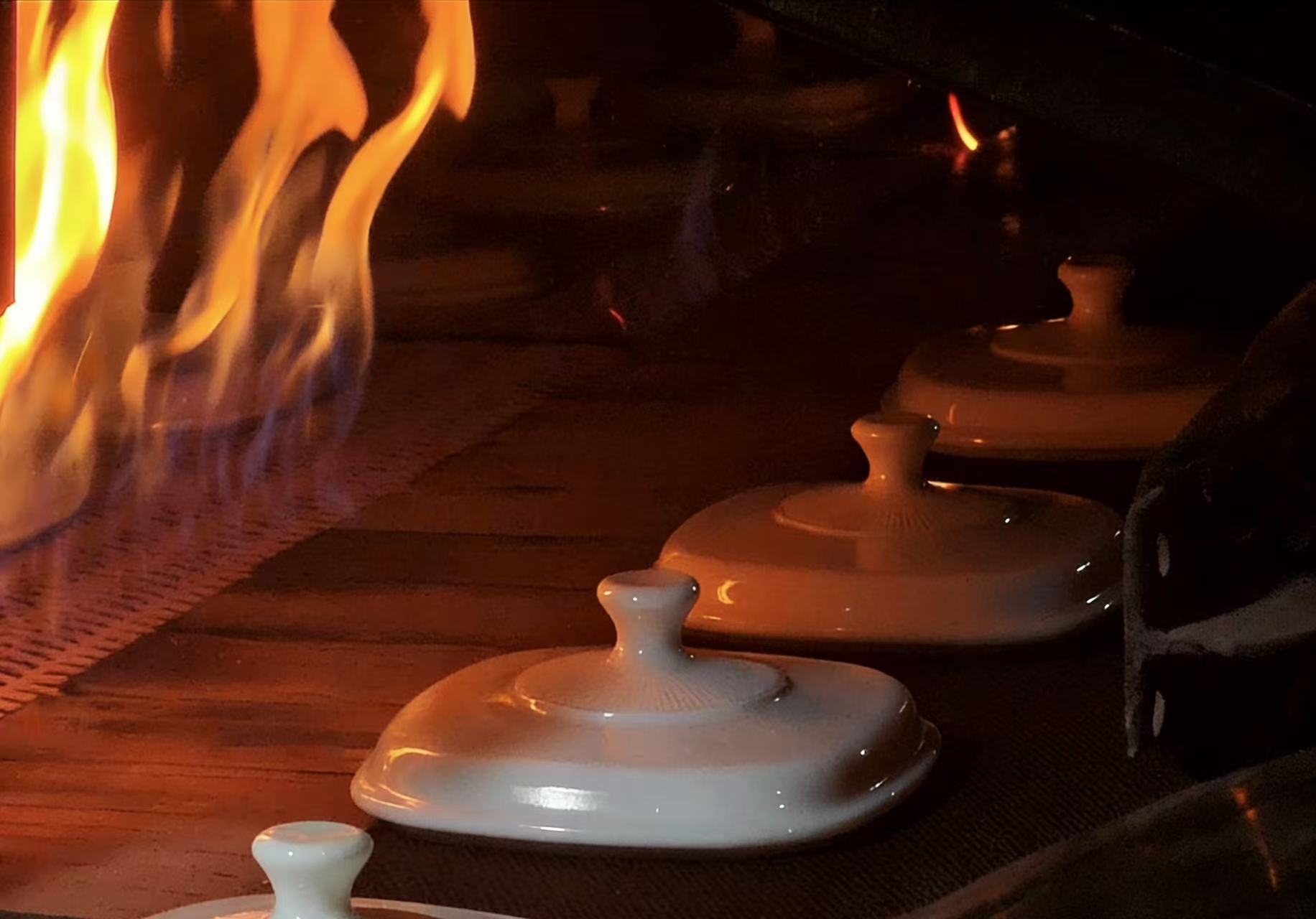
Automated Production Improves Manufacturing Efficiency
If you walk into a modern glass tableware factory, you can easily see high-speed pressing equipment and automated production lines. Glass is pressed into shape in molds; as soon as one dinner plate leaves the production line, the next one is already formed in the mold. What was just high-temperature liquid glass a few minutes ago becomes neatly arranged tableware a few minutes later.
The biggest change brought by this continuous production is efficiency. When the production line can manufacture a large number of standardized products in a short time, the equipment cost, energy cost, and labor cost borne by each piece of tableware will be reduced. In other words, the higher the production efficiency, the easier it is for the unit product price to drop.
Sales Models and Brand Structure Influence Pricing
Price differences also come from the sales model itself. European brands like Arcopal have mature brand systems and distribution channels in the global market, so product prices usually include brand operation, marketing, and channel costs. In contrast, many Chinese tempered opal glass dinnerware are directly exported by factories or supplied in bulk to catering buyers. This factory-direct model reduces intermediate links and price superposition.
When buyers compare two products, it seems to be the difference between two plates, but in fact, they are comparing two completely different supply systems: one is a brand retail system, and the other is a supply chain directly connected to the manufacturing end.
Large-Scale Export Manufacturing Creates Cost Advantages
Chinese glass tableware manufacturers usually produce for the global catering market, so the order scale is often large. For factories, stable large orders mean that production lines can keep running for a long time, equipment utilization rate is improved, and production costs are easier to control.
When a batch of tableware is packed, loaded into containers, and shipped to overseas markets, large-scale production and large-scale logistics have already reduced a lot of costs behind the scenes. For restaurants, hotels, and tableware wholesalers, this production model will ultimately be reflected in procurement prices, making Chinese opal glass tableware an important choice for many buyers when looking for alternatives to Arcopal.
How to Order White Glass Crockery Straight from a Chinese Factory
For many restaurant buyers, wholesalers, or brand buyers, when looking for alternatives to Arcopal, opal glass tableware from Chinese factories often enters the procurement list. White glass tableware looks simple, but it is used frequently almost every day: during the lunch peak, a waiter quickly takes a plate from a stack of plates with one hand to serve food. If the edge of the tableware is uneven or the stacking is unstable, it will soon affect the serving rhythm. It is precisely in such real catering scenarios that more and more buyers begin to think: if they purchase directly from production factories, will it be more efficient and controllable? Many international buyers opt for factory-direct opal glass when placing bulk orders for consistent quality and pricing.
In the actual procurement process, many buyers often worry about complex procedures when contacting Chinese factories for the first time. But from another perspective, this process is actually very intuitive – just like a restaurant determines the source of ingredients before finalizing the menu, the core of purchasing tableware is to confirm the demand first, and then find the appropriate production end. Whether it is a catering chain preparing to open a new store or a wholesaler stocking up for the market, as long as the product requirements are prepared in advance and the details are confirmed with the factory, the entire process is often more direct than traditional brand procurement, especially when sourcing an opal glass dinner set China for commercial catering needs.
To get a clearer picture of available product types, sizes, and specifications before reaching out to the factory, buyers can browse the opal glass tableware product catalog to match specific items to their restaurant or wholesale requirements.
- Determine the type and size of white glass tableware to be purchased
For example, dinner plates, soup bowls, salad bowls, or complete tableware sets, and confirm common sizes (such as 10-inch dinner plates, 7-inch bowls, etc.). Clear specifications can help the factory quickly judge the production plan. - Contact Chinese opal glass factories for inquiry and communication
Provide the factory with product dimensions, quantity, and usage scenarios. The factory will usually give a quotation, minimum order quantity, and approximate production cycle. - Request samples for quality confirmation
Check the glass thickness, edge treatment, stacking stability, and overall workmanship through samples. Many restaurants will directly use the samples for trial use. - Confirm price, customization, and packaging methods
Confirm with the factory whether brand logos, patterns, or exclusive packaging can be added, and determine the export packaging standards at the same time. - Place an order and arrange production and transportation
After the order is confirmed, the factory arranges production. After completion, it is packed according to international export standards, and shipped by sea or other international logistics methods.
Clarify Product Specifications Before Contacting the Factory
When procurement needs are clear, communication with Chinese factories is often very smooth. Many procurement personnel have similar experiences: if they only simply ask “do you have white glass tableware”, communication will often go back and forth; but when the demand becomes “10.5-inch dinner plate + 7-inch bowl set for daily restaurant use”, the factory can usually provide a quotation and production suggestions quickly. This difference is actually like specifying the dish name and taste when ordering in a restaurant – the more specific the information, the higher the efficiency. For bulk procurement, the clearer the size, quantity, and purpose, the easier it is to match the production arrangement.
Check Samples and Confirm Production Details
In the sample confirmation stage, some details can directly reflect whether the tableware is suitable for long-term use. For example, stack a few white glass plates and rotate them gently; if the bottom design is reasonable, the entire stack of tableware will be very stable; if the design is unreasonable, the plates will easily slide between each other. Many buyers will put the samples into the dishwasher for several tests to see if the surface gloss remains uniform. Such tests are not complicated, but can truly reflect the performance of the tableware in restaurant environments. After the sample confirmation is completed, the next step is production scheduling and transportation arrangements. Most Chinese opal glass factories will package according to international export standards, such as reinforced cartons, shockproof interlayers, and full-container transportation, to ensure that the tableware remains intact during long-distance transportation.
When the entire batch of white glass tableware finally arrives at the warehouse, many buyers will realize a change: purchasing directly from the factory not only reduces the cost of intermediate channels, but also product specifications, packaging design, and even brand elements can be flexibly adjusted according to market demand. This more direct supply method is also gradually becoming an important choice for international buyers when looking for alternatives to Arcopal.
Frequently Asked Questions (FAQ)
Q: Can Chinese opal glass dinnerware be customized according to restaurant branding needs?
A: Yes, most professional Chinese opal glass tableware factories offer comprehensive customization services. This includes adding custom brand logos (either printed or embossed), adjusting edge shapes, modifying capacity specifications of bowls/plates, or even customizing packaging with restaurant branding. MOQ varies by model, decoration, and order volume, and customization can be realized without compromising the core quality and specification consistency of the tableware. This flexibility is one of the key advantages of factory-direct procurement from China.
Q: What is the typical lead time for bulk orders of Chinese opal glass tableware, and how to ensure on-time delivery?
A: Lead time for Chinese opal glass tableware bulk orders varies by model, decoration, and order volume. For standard-sized, non-customized tableware, production and quality inspection follow efficient factory schedules. For customized orders (e.g., logo printing, special size molds), additional time for mold adjustment and sample reconfirmation is required. To ensure on-time delivery, it is recommended to sign a formal purchase contract with clear delivery timelines and maintain regular communication with the factory to track production progress.