News For Reading

Is It Safe to Microwave Food in Opal Glass Every Day?

Table of Contents

Is Opal Glass Microwave-Safe?

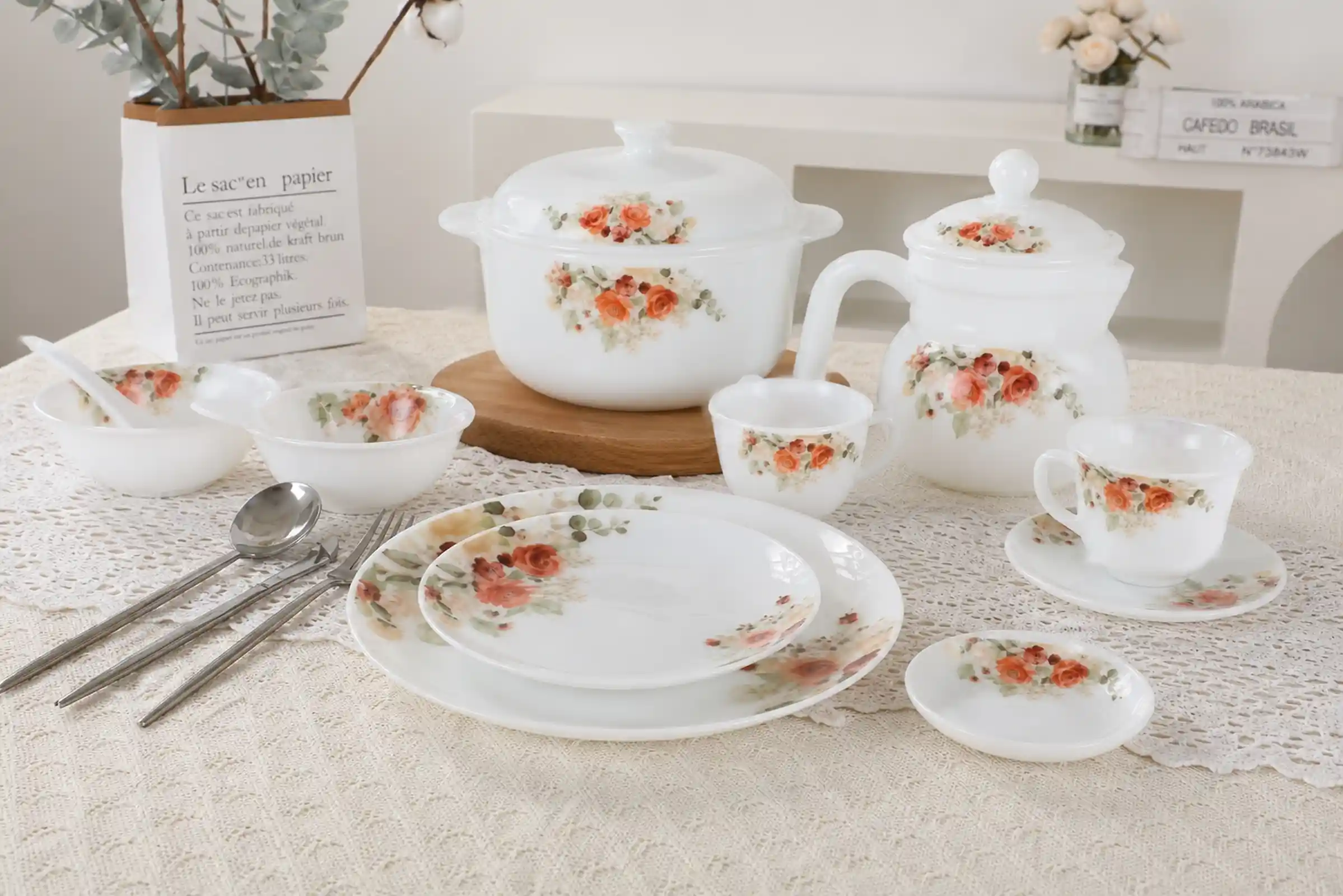
When you stand in front of the microwave holding a smooth, milky-white opal glass plate, you might wonder — can this beautiful piece of dinnerware actually go in the microwave? The answer is yes. Whether you’re using a bowl, a plate, or a serving dish, opal glass microwave safe performance is one of the most consistently praised qualities of this material among everyday home users. But to use it with real confidence, we need to understand why it qualifies as microwave-safe by looking at the material itself.

For an opal glass item to be considered “microwave-safe,” it must meet the following core conditions:

  1. The material itself contains no metallic components.Opal glass is made from inorganic minerals such as silicon dioxide, aluminum oxide, and calcium oxide, melted together at high temperatures — it contains no metal elements whatsoever. This matters because microwaves work by emitting high-frequency electromagnetic waves. If a container contains metal, those waves induce electrical currents in the metal surface, causing sparks at best and igniting the container or damaging the magnetron at worst.The purely inorganic, non-metallic composition of opal glass eliminates this risk entirely. Microwaves pass freely through the walls of the dish and reach the food directly, without accumulating energy in the dinnerware itself.
  2. It has undergone professional tempering or heat treatment.Qualified opal glass goes through a critical manufacturing step called crystallization heat treatment. In simple terms, the formed glass is reintroduced into a high-temperature environment for a controlled secondary heating and slow cooling process, allowing numerous tiny, evenly distributed microcrystals to grow within the glass matrix. These microcrystals act like countless embedded “rebar rods,” dramatically improving the material’s resistance to thermal shock.This is precisely what makes tempered opal glass dishes microwave performance so reliable: the crystalline structure allows them to handle sudden temperature changes that would shatter standard glass. They can typically withstand temperature differentials of 120°C or more without cracking, compared to ordinary glass which may shatter at around 60°C. This means that even if you take an opal glass plate directly from the refrigerator and place it in the microwave, it can handle that sudden temperature change. For a deeper dive into the full comparison between these two materials in terms of composition, microstructure, and real-world performance, you can read the complete breakdown of core differences between opal glass and ordinary glass.
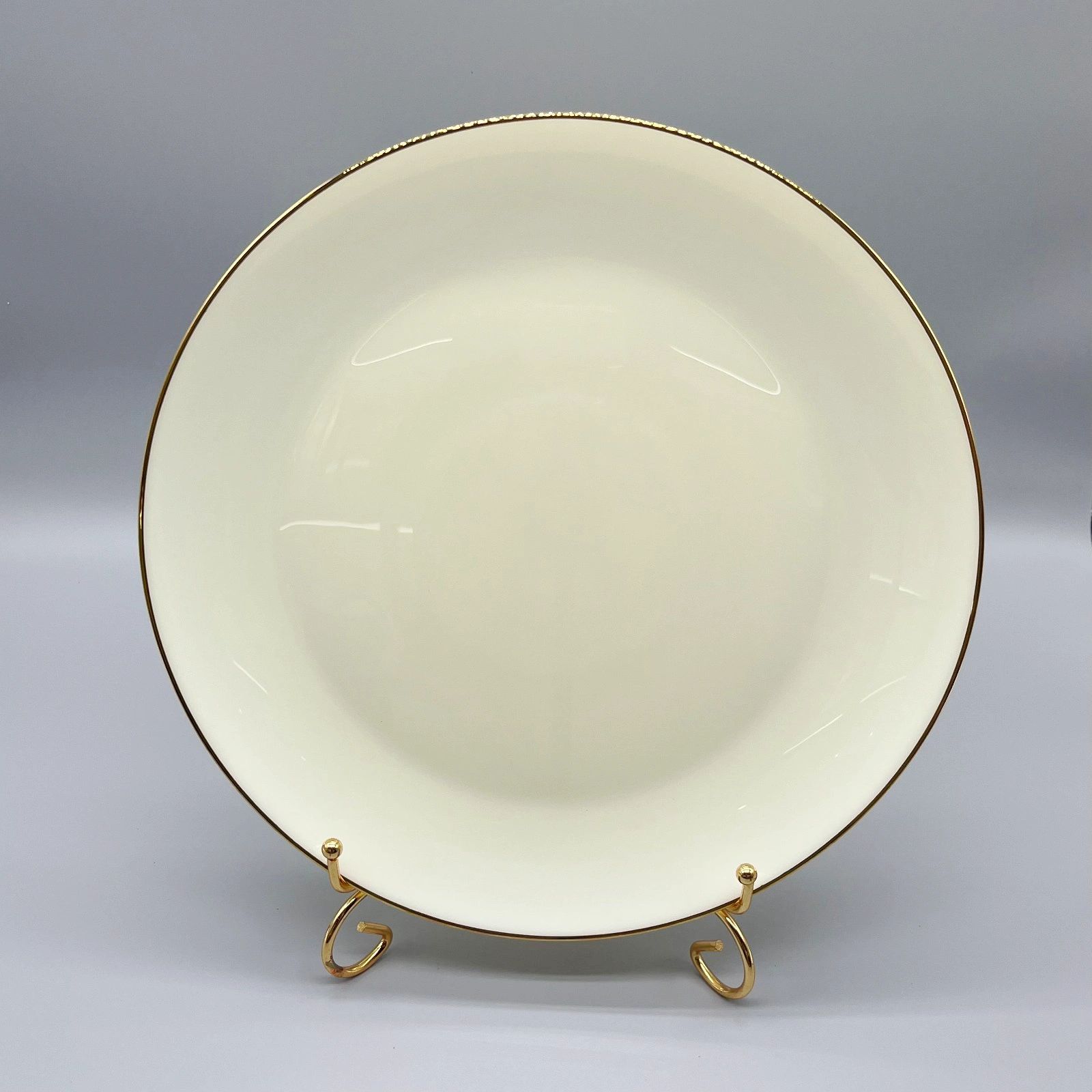
  3. The surface of the dinnerware has no metallic decorations.This point is often overlooked, yet it is critically important. Some dinnerware pieces feature decorative gold rims, silver lines along the edge, or colored patterns made with metallic oxide pigments — all for aesthetic purposes. No matter how heat-resistant and safe the opal glass base material is, once metallic decorations are added, placing it in the microwave causes those metallic elements to produce electrical arcing under the electromagnetic field.You’ll see sparks jumping along the rim, smell a burning odor, and in severe cases, the glaze layer on the surface can be punctured. Therefore, when selecting opal glass dinnerware for microwave use, always choose plain, undecorated styles with no metallic-looking trim anywhere on the surface.

To make the differences more visible at a glance, here is a brief comparison of microwave safety across several common dinnerware materials:

Dinnerware MaterialMicrowave-Safe?Thermal Shock ResistanceRisk of Harmful Substance Leaching
Opal Glass (tempered)YesStrong (≥120°C differential)No
Ordinary GlassUse with cautionWeak (may crack at ~60°C differential)No
Ceramic (glazed)Most are safeModerateSome glazes may contain lead or cadmium
Plastic (labeled microwave-safe)YesModerateMay release microplastics with repeated heating
Metal / Stainless SteelNoStrongN/A (causes arcing)

The comparison above focuses primarily on everyday home microwave heating scenarios. If you are sourcing opal glass dinnerware for a restaurant, hotel, or chain food service operation, the selection criteria and procurement logic differ considerably from household use — usage frequency is much higher, and requirements for batch consistency and supplier qualifications are significantly more stringent. For a systematic guide to evaluating durability, specification configurations, and supplier screening for opal glass dinnerware in commercial settings, refer to the complete commercial opal glass dinnerware procurement guide.

What Are the Risks of Microwaving Food in Opal Glass Every Day?

When people ask whether opalware microwave safe claims hold up under real daily use, the honest answer is: the material itself is sound, but everyday habits introduce risks that the material alone cannot fully offset. Opal glass is widely regarded as a top choice for microwave-safe dinnerware, thanks to its lead-free, glaze-free composition, uniform structure, and excellent heat resistance. However, “microwave-safe” does not mean “zero risk.”

Understanding these risks is not meant to discourage you from using opal glass — it’s meant to help you make safer judgments in your daily routine. Here are the four main risks to be aware of:

  1. Thermal shock cracking.Although opal glass has been tempered, the temperature differential it can safely handle is generally within 120°C. The problem is that many everyday habits can push right past that safe boundary. Refrigerator temperatures hover around 4°C, while freezer compartments can drop to -18°C — and food heated on high power in the microwave for two to three minutes can exceed 100°C.This means a plate taken directly from the fridge and placed in the microwave will experience rapid heating on the food-contact surface while the base and edges remain much colder, creating a localized temperature differential that can exceed the material’s tolerance. One occasional instance may not cause problems, but repeating the “fridge → microwave” routine every day progressively stacks microscopic internal stress with each heating cycle. A crack may then appear suddenly during what seems like a completely routine heating session. This is not a quality defect unique to opal glass — it is a physical property shared by all glass-type materials. No glass is absolutely immune to thermal shock.
  2. Metallic decorations causing electrical arcing.The key risk here lies not in the opal glass itself, but in what has been added to the surface. The USDA’s microwave safety guidelines include a very clear warning: “Microwaves react with the metallic paint on dishes to cause arcing in the microwave.” This means that even if the opal glass base is completely fine, any gold rim along the edge, a silver logo on the base, or a pearlescent decorative coating containing metallic compounds can react with the microwave and produce sparks inside the cavity.Arcing is not something that can be dismissed as a quick flash with no consequences. It can damage the magnetron — the core component of the microwave — scorch the interior cavity lining, and more dangerously, if there are grease splatter residues inside, a spark can ignite them directly. Many users fall into the trap of thinking “it’s just a tiny decoration, it should be fine,” but in a microwave environment, the quantity of metal present does not determine whether arcing occurs. As long as metal is present, every single heating session is a real and active risk.
  3. Overheating leading to burns.Opal glass itself does not absorb microwave energy, but it does absorb heat conducted from the food inside. In practice, a bowl of soup heated on high power for three to four minutes can reach an exterior surface temperature of 60°C to 80°C. For context, the medically recognized threshold for skin burns is approximately 55°C — contact at this temperature for just a few seconds can cause first- or even second-degree burns.For people who heat food in the microwave every day, this risk is easily underestimated precisely because the routine has become so familiar. You may have successfully picked up the bowl bare-handed a hundred times before — but it only takes one session with a slightly longer heating time or slightly higher fat content in the food for the bowl’s temperature to spike enough to make you recoil instinctively. And in that split second of pulling back, a full bowl of scalding food may spill. This risk deserves particular attention in households with elderly family members or young children.
  4. Long-term high-frequency use accelerating microscopic wear.Every material has a fatigue lifespan, and opal glass bowls heat safe ratings are no exception — they reflect performance when the piece is new and undamaged, not after hundreds of use cycles. A brand-new opal glass bowl performs at its peak thermal shock resistance, capable of comfortably handling temperature differentials within 120°C. But each daily use cycle — microwave heating, hot water washing, dishwasher drying, stacking in the cabinet — leaves behind invisible micro-scratches and micro-impacts on the surface and edges.These small damages work like hairline cracks in a road: when they first appear, they have no effect on traffic, but after countless cycles of vehicle pressure and thermal expansion and contraction, they grow into potholes. Similarly, accumulated microscopic damage on an opal glass bowl gradually becomes a stress concentration point for thermal shock. A bowl that originally withstood 120°C differentials may begin to crack at 80°C or even less after hundreds of use cycles. So if you are a high-frequency user who microwaves food in opal glass every day, regularly inspecting your dinnerware condition is essential. Once you notice a chip on the rim, a perceptible scratch on the surface, or fine lines on the base, retire that piece from microwave use immediately.It is worth noting that this kind of microscopic wear is not unique to opal glass. On the contrary, opal glass has clear advantages over ceramics and ordinary glass in terms of impact resistance, scratch resistance, and long-term stability. For a deeper look at how opal glass performs in real-world scenarios such as drop tests, surface abrasion, and repeated thermal cycling, see the in-depth durability analysis of opal glass dinnerware.
Risk TypeWhy It HappensPotential ConsequencesSimple Prevention
Thermal shock crackingDirect transfer from fridge to microwave causes localized differential exceeding 120°CDish cracks suddenly; fragments may enter foodLet dish return to room temperature for a few minutes first
Metallic decoration arcingMetal components in gold/silver rims or pearlescent coatings react with microwavesElectrical sparks, microwave damage, potential fireOnly use plain, undecorated styles
Overheating burnsFood heat conducts to bowl walls, exterior can reach 60–80°CBare-hand burns; recoiling may cause hot food to spillAlways use oven mitts; use medium-low power settings
Long-term wear reducing toleranceHundreds of heat-wash cycles cause microscopic surface damage to accumulateThermal shock resistance decreases; cracking at smaller differentialsInspect regularly; stop microwave use at first sign of chips or cracks

How to Safely Microwave Food in Opal Glass Every Day?

As a tempered, non-porous glass material with a uniform internal structure and excellent thermal stability, opal glass is one of the best choices for everyday microwave heating. Choosing microwave safe opal dinnerware gives you a strong starting point — but the right usage habits are what turn that material advantage into consistent, reliable safety every single day. The material has already done the foundational work; what remains is using it correctly.

The following five steps cover the complete workflow from before use, through use, and after use. Follow this sequence and your opal glass dinnerware will perform safely and consistently every day in the microwave:

  1. Before use, check the base for a “Microwave Safe” label and confirm there are no metallic decorations on the surface.Reputable manufacturers of opal glass dinnerware will print “Microwave Safe” text or a microwave oven icon on the base or packaging if the product has passed microwave safety testing. This label means the item has undergone specific testing for the microwave environment, confirming that its materials will not excessively absorb microwave energy during heating.You should also verify that the surface has no gold or silver rims, metallic-looking trim lines, or printed patterns with a metallic sheen. The USDA’s microwave safety guidelines explicitly state that metallic decorations produce arcing and sparks in the microwave, which can damage the appliance and create safety hazards. In other words, a single thin gold rim is enough to turn an otherwise perfectly qualified bowl into an unstable element inside the microwave. Plain, undecorated opal glass is the best choice for everyday microwave use. If your dinnerware has no labeling at all, run a simple test: fill the bowl with water and heat on high for one minute. If the water is hot and the bowl stays cool, it’s safe to use. If the bowl also heats up, keep it out of the microwave.
  2. After removing from the refrigerator, let the dish sit at room temperature for 10 to 15 minutes before placing it in the microwave.Opal glass has been tempered with an evenly distributed internal stress profile, giving it good thermal shock resistance. However, all glass-type materials follow the same physical principle when it comes to temperature changes: the more gradual the temperature rise, the smaller the internal stress variation, and the more structurally stable the material remains.Dinnerware taken from the refrigerator is cold throughout. Placing it directly in the microwave means the area in contact with the food heats up rapidly while the base and walls remain cold, creating a temperature differential. Letting it sit at room temperature first is like letting someone who just stepped out of an air-conditioned room gradually adjust before exercising — it gives the material a smooth transitional buffer, making the subsequent microwave heating process far more forgiving. Ten to fifteen minutes, about the time it takes to brew a cup of coffee, buys you a much more reliable heating session every time.
  3. If you cover the dish while heating, always leave a gap for steam to escape.Food releases a significant amount of steam during microwave heating. If the lid is fully sealed, steam cannot escape and pressure builds up inside the container. Leaving a gap allows steam to vent naturally, effectively preventing food from splattering and coating the microwave interior — without creating additional internal pressure on the container.The method is simple: use a dedicated microwave-safe vented lid, or tilt a regular lid slightly to leave an opening. No special tools are needed.
  4. After heating, use oven mitts to remove the bowl and set it on a wooden cutting board or heat-resistant mat to cool naturally.While opal glass itself does not heat dramatically from microwave exposure, the hot food inside conducts heat into the bowl walls and base, making it quite hot to the touch when removed. Always use oven mitts or a dry, thick cloth.Where you set the bowl down also matters. A dry wooden cutting board, a silicone trivet, or a dry towel are all appropriate choices. The reasoning is the same as letting the dish warm up before heating — give the material a gradual, even temperature transition rather than subjecting one side to heat while the other stays cold. By the same logic, never pour cold water or icy liquid directly into a bowl that has just been heated. Let it cool naturally to near room temperature before rinsing with warm water.
  5. Clean daily with a soft sponge, and periodically inspect the dinnerware for damage.The non-porous surface of opal glass makes cleaning remarkably easy — warm water with standard dish soap and a gentle wipe with a soft sponge or cloth is all it takes. Avoid steel wool pads or abrasive cleaning agents, as these can leave fine scratches on the surface, and a smooth, intact surface is one of the foundations of opal glass’s strong performance during microwave heating.It’s also worth building a habit of regular inspection. Every so often, hold your frequently used microwave dinnerware up to the light and check for any minor damage caused by accidental impacts. Damaged pieces don’t need to be discarded — they can be repurposed for room-temperature food storage. They simply should no longer go in the microwave.

The table below summarizes the core actions and reasoning behind each of the five key steps for quick day-to-day reference:

StepCore ActionWhy It Matters
Pre-use inspectionConfirm “Microwave Safe” label; no metallic decorationsMetallic decorations cause arcing; the label confirms the product has passed dedicated safety testing
Room temperature warm-upLet dish sit 10–15 minutes after removing from fridgeGradual temperature transition reduces internal stress variation for a smoother heating process
Leave a steam gapDo not fully seal the lid; leave a vent openingPrevents steam pressure buildup; keeps splatter contained while maintaining safety
Safe removal and placementUse oven mitts; place on heat-resistant mat to coolPrevents burns; even cooling maintains structural stability of the material
Daily cleaning and inspectionSoft sponge wash; periodic visual check for damageKeeps surface smooth and intact; ensures dinnerware is always in good usable condition

Opal glass is one of the safest all-around materials for everyday microwave heating currently available. It contains no metal, leaches no harmful substances, and can withstand temperature differentials far beyond what ordinary glass can handle — these material-level advantages mean you can absolutely use it every day to microwave your food with confidence.

But “material safety” does not equal “safe no matter how you use it.” What ultimately determines whether each heating session is safe is your usage habits: let dishes warm to room temperature before heating, use oven mitts when removing, and check regularly for damage. Make these three actions second nature, and your opal glass dinnerware will serve you safely in the kitchen for many years to come.

Before You Buy: Common Decision Questions

I already have a set of ceramic dinnerware at home — is it really necessary to switch to opal glass?

If your ceramic dinnerware is lead-free, has no metallic decorations, and is labeled microwave-safe, it works perfectly well for everyday heating and there’s no need to switch for the sake of switching. However, if you’ve noticed the glaze developing fine cracks, chips appearing frequently along the edges, or you often need to move dishes directly from the fridge to the microwave in a fast-paced routine, opal glass’s advantages in thermal shock resistance and impact resistance will make daily use noticeably more hassle-free.

Plastic labeled “microwave-safe” — is it just as reliable as opal glass for daily use?

For short-term use there’s no issue, but under long-term high-frequency microwave heating, plastic containers carry a risk of releasing microplastic particles, and that risk increases with cumulative use. Opal glass, as an inorganic material, is chemically extremely stable and poses no such leaching concern. If you’re someone who heats food in the microwave every day, opal glass is the more dependable long-term choice.

All opal glass bowls look similar — what’s actually the difference between a cheap one and an expensive one?

The difference lies in the quality of the tempering process and the consistency of manufacturing quality control. Budget products may skip the crystallization heat treatment entirely or shorten the processing time, resulting in thermal shock resistance that falls far short of the stated values. Thickness and stress distribution may also vary inconsistently across production batches.

It’s worth prioritizing products with a “Microwave Safe” label on the base and the ability to provide testing documentation. The price premium you pay is essentially buying certainty — confidence that every single heating session will go exactly as expected.

Scroll to Top

Contact us

Connect with us for tailored solutions, partnership opportunities, or product inquiries — we’re ready to support your vision.

learn More​

Please let us know the products or service you want to know  and we will contact you as soon as possible.