
Why Are Chefs So Focused on Kitchen Safety These Days
In the current catering industry, “kitchen safety” is no longer a basic norm to be passively followed, but has become an important direction for chefs and restaurants to actively optimize. More and more professional kitchens are re-evaluating the selection criteria for equipment and tableware, and the core logic behind this change is not complicated—in a high-intensity operational environment, any small potential safety hazard will be quickly amplified and directly affect food preparation efficiency and restaurant stability.
In real restaurant scenarios, kitchens during peak hours are often in a state of continuous high pressure: multiple cooking stations operate simultaneously, chefs move frequently, and cookware and tableware are constantly being replaced. In such a rhythm, safety issues are no longer a matter of “whether they will happen”, but “when they will happen”. For example, cookware slipping, hot oil splashing, and tableware falling—these seemingly common situations, once superimposed with high-frequency operations, may quickly turn into accident risks.
From a practical usage perspective, the reason why chefs are paying increasing attention to kitchen safety can be understood in a more straightforward way:
- The kitchen is too busy, and a small mistake can turn into an injury or accidentDuring lunch or dinner peak hours, the kitchen often operates under continuous high load. Chefs control the fire, handle ingredients, and plate dishes quickly at the same time. If the bottom of the cookware is unstable, the countertop is wet, or the tableware is improperly placed, a slight slip or collision may lead to hot oil splashing or utensils falling. What was originally just a “small unnoticed problem” will be amplified into real harm under high-frequency operations, which is why chefs prefer to choose more stable and less error-prone equipment and tableware.
- Things are used too frequently, and unreliable equipment and tableware are prone to problemsThe biggest difference between a commercial kitchen and a home kitchen lies in “frequency of use”. A set of tableware may be used hundreds of times a day in a restaurant, undergoing frequent cleaning, heating, and collision. If the material itself is not stable enough—for example, ordinary glass develops micro-cracks under temperature changes or slight bumps—these problems will not show up immediately but may suddenly crack during one use. In contrast, more impact-resistant and stable materials (such as opal glass) can maintain consistency during long-term high-frequency use, and this “stability” itself is part of safety.
- Once an accident happens, it not only affects individuals but also the entire restaurant operationThe kitchen is a highly collaborative environment, and a problem in one position often has a chain effect on the entire food preparation rhythm. For example, if a chef is temporarily absent from work due to scalding, others need to take over the work temporarily, resulting in slower food preparation speed, backlogged orders, and longer waiting times for customers. If tableware breaks, it may also involve cleaning, re-preparing dishes, and even handling complaints. All these show that safety issues are not local problems but directly related to the overall operational efficiency of the restaurant.
- Inspections are stricter now, and many safety issues will directly affect whether the restaurant is compliantWith the improvement of industry norms, the kitchen is no longer just a place where “food can be cooked”, but also needs to meet a series of safety and hygiene standards. During inspections, the stability of equipment, the durability of tableware, and the existence of potential risks will all be included in the evaluation scope. If tableware is prone to breakage or equipment has unstable factors, it will not only affect daily use but may also be identified as a hazard during inspections. Therefore, many restaurants start to prioritize choices with higher safety attributes during the procurement stage to avoid subsequent uncertain risks.
- Using safer equipment and tableware is essentially reducing unnecessary troubles and lossesWhen kitchen configuration becomes more stable, many problems will be eliminated at the source. For example, more controllable heating equipment reduces fire-related errors, more durable tableware lowers the breakage rate, and the overall environment becomes more predictable. For chefs, this means they can focus more on cooking itself rather than constantly worrying about whether equipment or tableware will “go wrong”. In the long run, this choice not only reduces the probability of accidents but also cuts down on replacement, maintenance, and management costs.
At the same time, restaurants’ perception of “safety costs” is also changing. In the past, broken tableware or minor accidents were mostly regarded as “normal wear and tear” in operations; but now, these problems will bring more direct chain effects—injured employees will disrupt the scheduling rhythm, broken tableware may trigger customer complaints, and even affect the overall brand reputation. For this reason, every detail in the kitchen is being re-examined, especially the equipment and tableware that are frequently contacted.
Against this background, more and more chefs and procurement managers have formed a consensus: safety cannot only rely on operational norms but needs to reduce risks through “the equipment and materials themselves”. This is why the material of tableware has become a focus of attention. For example, the problem that traditional glass is fragile and has sharp fragments will continue to amplify hidden dangers in actual use, while more stable materials like opal glass have begun to be included in the long-term use plans of more restaurants.
What Are the Biggest Safety Risks in a Restaurant Kitchen
For professional kitchens, safety is never an abstract concept but a real operational issue that occurs every day. When lunch and dinner peak hours arrive, the cooking surfaces remain at high temperatures, cookware is moved frequently, the floor is more likely to have water stains, oil stains and debris, and plates and bowls undergo constant collision and cleaning during high-frequency circulation. In such a working environment, what is truly dangerous is often not a single link, but the overlap of multiple high-risk factors at the same time. For this reason, more and more chefs and restaurant managers are re-examining the two most basic yet critical types of configurations in the kitchen: cooking equipment and daily tableware.
From the perspective of actual kitchen usage scenarios, the most noteworthy safety risks in restaurant kitchens are mainly concentrated in the following aspects:
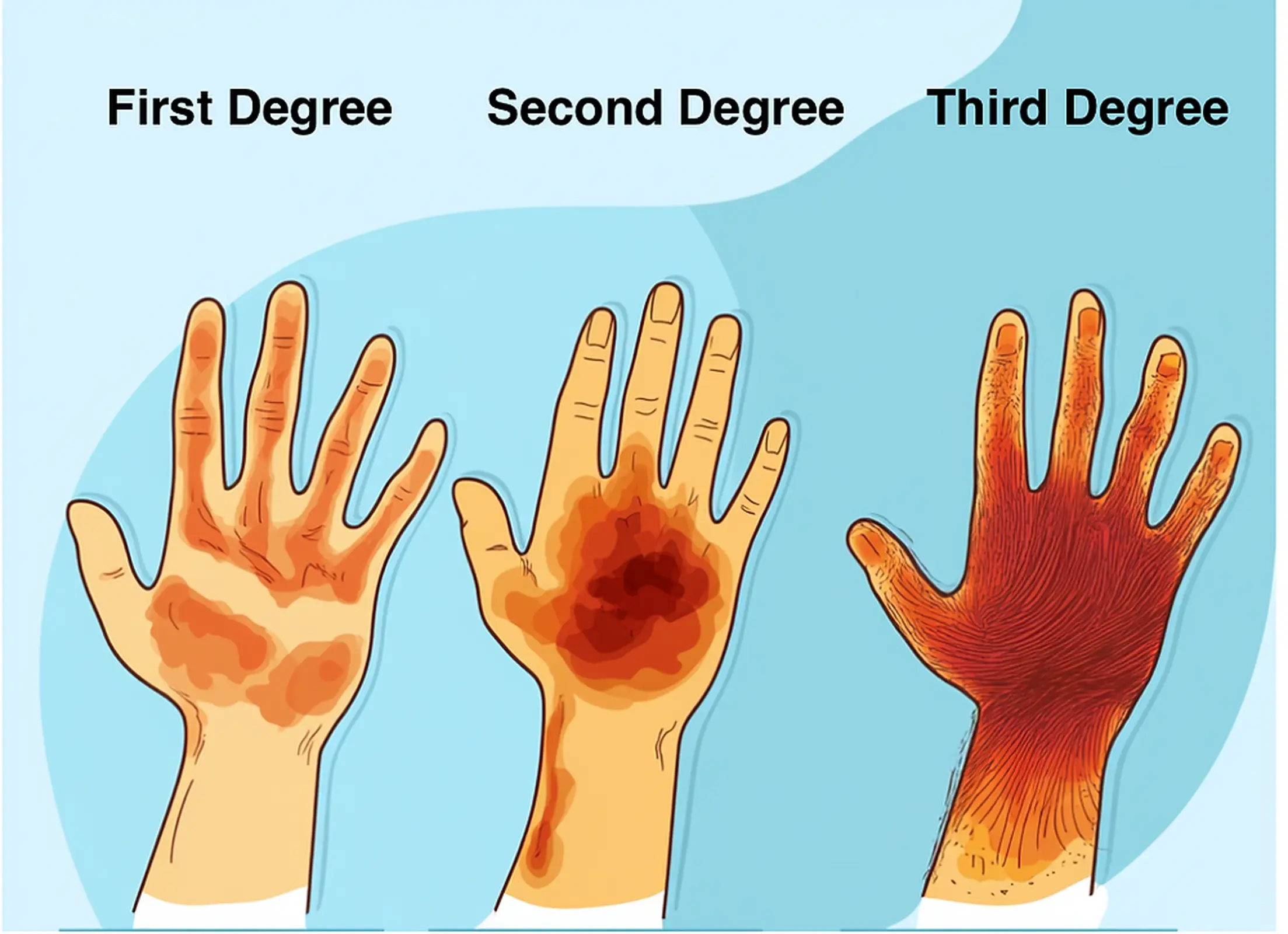
- High-temperature equipment and hot oil are most likely to cause scalds, and novice chefs are most likely to ignore the pot edges and steam
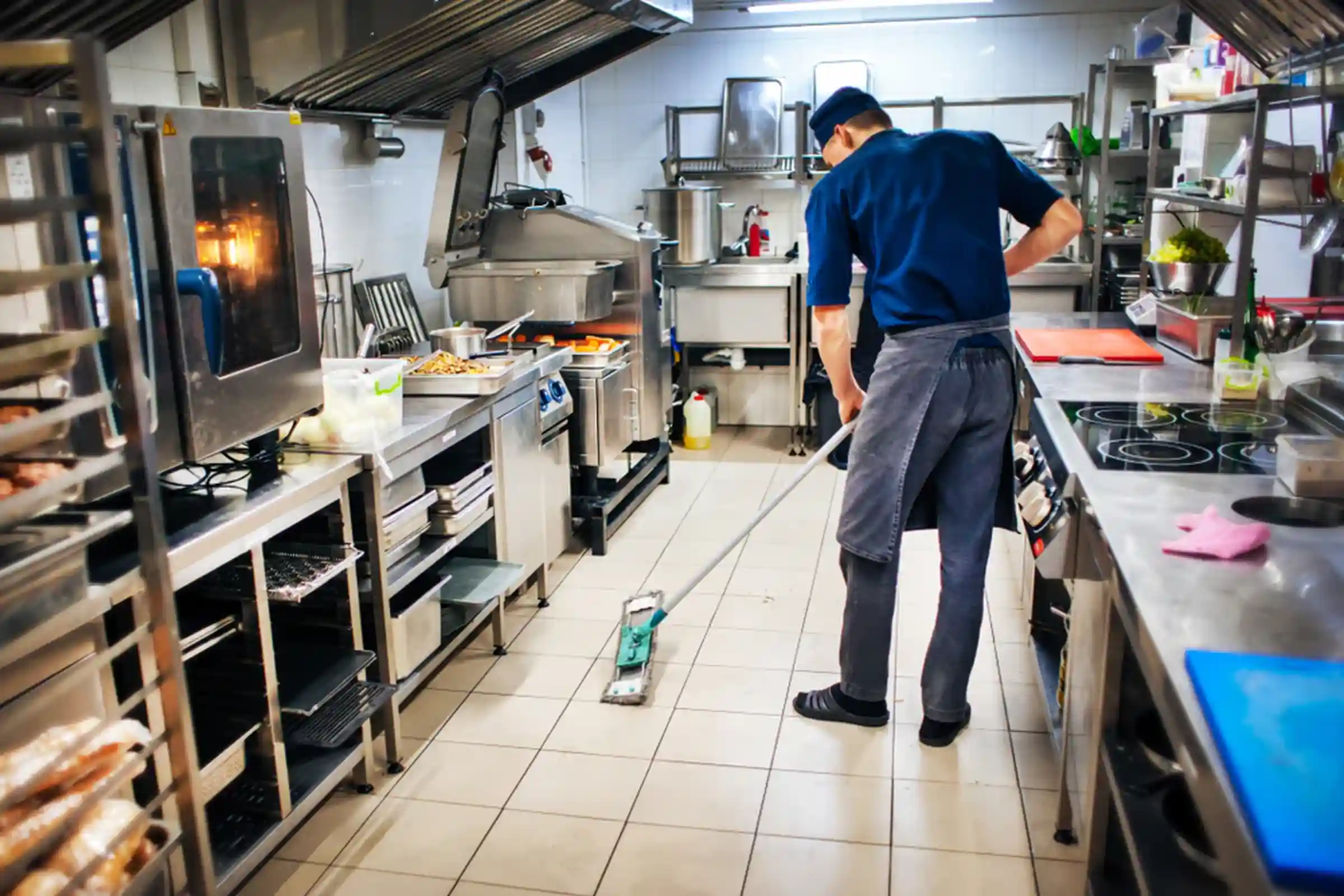
- The floor is very slippery when there is water or oil, especially when carrying hot dishes
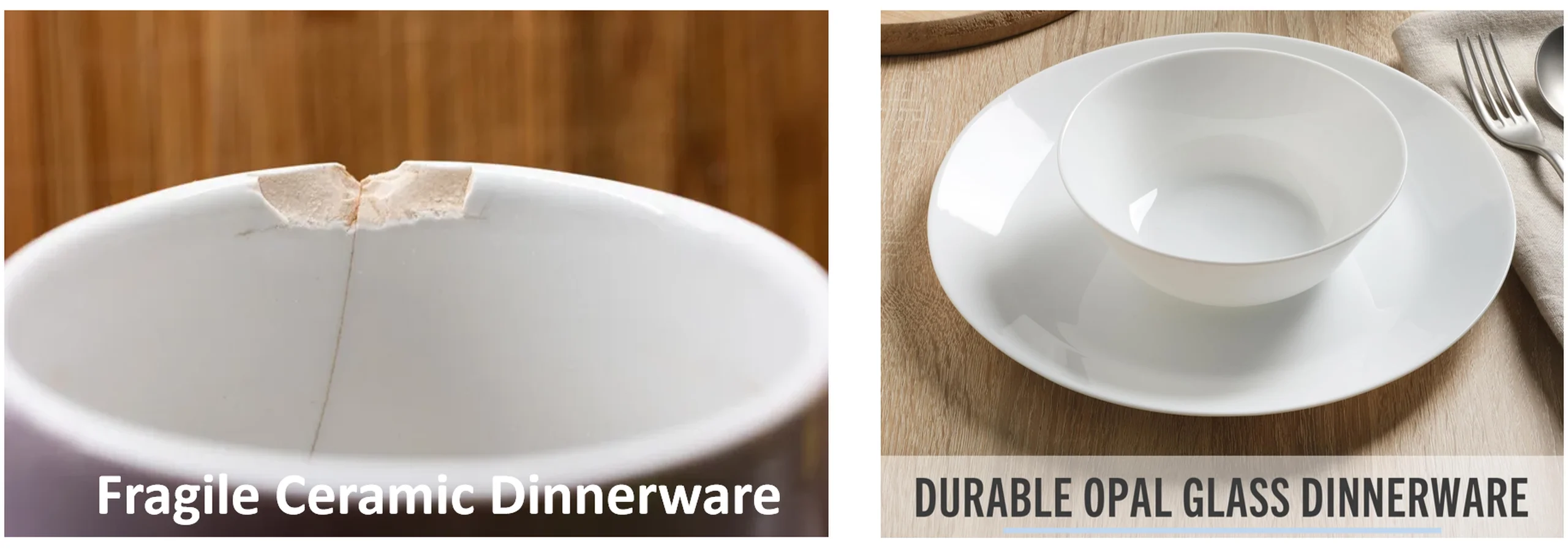
- Tableware is prone to breakage if of poor quality, and the fragments may scratch hands or mix into food
- Open flame and gas equipment have risks of gas leakage, deflagration and fire, while the flameless design of induction cookers is safer
- Long-term exposure to oil fumes and harmful emissions from gas combustion increases the daily health burden on kitchen staff
High-temperature risks are often not due to the temperature being “particularly high”, but because the contact frequency is too high.
In a real kitchen, a chef continuously stir-fries multiple pots during peak hours, and residual hot oil on the pot wall can easily cause scalds if the hand is close to the pot edge or steam direction is not noticed. The high-frequency contact and fast operation rhythm make high-temperature risks hard to avoid with manual vigilance alone.
The problem of slipping on the floor is also not simply “slippery ground”, but the timing of occurrence is often the most dangerous.
A common scenario is: a waiter or chef is carrying a freshly cooked hot soup or a whole plate of food from the cooking area to the food pickup counter, and just steps on a small piece of oil stain or water stain. Slipping itself may only be a loss of balance, but because of the high-temperature items in hand, the accident will immediately escalate into a scald, and even collide with surrounding personnel. In other words, the real danger of floor risks is that they often occur at the same time as carrying hot food, so the busier the kitchen, the more necessary it is to reduce such hidden dangers.
The risks brought by broken tableware often occur under seemingly normal circumstances. For example, a plate has been used for a period of time and has fine cracks on the edge, but it is not easy to find at first glance with the naked eye. During cleaning, stacking or food delivery, as long as it is subjected to another slight collision, it may suddenly crack. At this time, staff instinctively reach out to catch, take or sort it, and are likely to be scratched by the sharp edges. What is more realistic is that if broken tableware is not found in time, it may also affect the subsequent food preparation safety. So the key to such problems is not just whether the tableware will break, but whether it will suddenly break during high-frequency use. For this reason, restaurants are paying more and more attention to tableware materials that are more impact-resistant and stable, hoping to reduce such high-frequency minor accidents from the source.
Open flame and gas equipment carry risks of gas leakage, deflagration and fire, which are hard to ignore in busy commercial kitchens. More kitchens are switching to flameless induction cookers for safer heating,you can also learn more about this topic by visiting one website of the ATRX commercial induction cooker brand. They have been researching flameless commercial induction cookers for 19 years and can provide you with the missing knowledge in this area.
Without an open flame or gas supply, induction cookers eliminate fire and leakage risks at the source, creating a more stable operating environment for commercial kitchens. They also reduce harmful combustion emissions, lowering the long-term health burden on kitchen staff compared to gas equipment.
Overall, safety issues in restaurant kitchens do not exist as a single point, but are the result of each risk being amplified and superimposed in specific scenarios. High-temperature scalds, floor slips, tableware breakage, fire hazards brought by gas equipment, and the burden on personnel caused by long-term harmful emissions—these problems together constitute the core safety pressure of professional kitchens. For this reason, more and more restaurants, when upgrading kitchens, no longer only focus on whether equipment can cook or tableware can be used for serving, but start to pay more attention to whether they can truly reduce risks in long-term use.
What Cooking Equipment and Tableware Do Professional Chefs Actually Use
In professional kitchens, “what equipment and tableware chefs use” is never a question about brand or price, but a choice about safety, stability and continuous output capacity. The equipment that is truly retained is often not the most expensive one, but the one that still does not go wrong during peak hours.
A typical scenario: the dinner peak has just started, all cooking stations are fully open, and the food preparation area, cooking area and food pickup area operate simultaneously. If the equipment in a certain link is unstable—heating is a bit slow, knives get stuck, or plates are slippery—the problem will not stay at one point, but will quickly amplify into a disruption of the entire kitchen rhythm.
Therefore, what professional chefs really rely on is not “seemingly high-end” equipment, but a combination of tools that remain controllable during continuous operations.
- Commercial induction cookers: responsible for heating, the core cooking equipment in the kitchen
- Opal Glass tableware: used for food serving and plating, balancing safety and durability
- Non-slip cutting boards and knives: used for cutting ingredients, reducing operational risks
- Non-slip high-temperature resistant trays: used in the process of serving food, ensuring stable transportation
Commercial Induction Cookers
Commercial induction cookers feature flameless, controllable heating that avoids gas risks and unstable firepower. When used with compatible magnetic cookware, they further enhance kitchen safety by preventing issues like overheating or cookware damage, providing a secure cooking solution for busy commercial kitchens.If you want to know more about which cookware can be used with an electromagnetic stove, in this field you can explore the company czckitchen. They have a more comprehensive introduction.
Opal Glass Tableware
The food serving link seems simple, but it is actually a high-frequency and easily overlooked risk point. Opal glass dinnerware for commercial kitchens is the representative of break-resistant restaurant tableware and safe serveware for professional chefs, which perfectly meets the high-standard needs of professional catering scenes.
A common scenario: waiters continuously pick up and place plates during peak hours. If the tableware is heavy or has fragile edges, it is only “slightly inconvenient” at first, but as the number of times increases, fatigue will accumulate and the probability of mistakes will rise. Once a slip occurs, it is not only the loss of tableware, but may also affect the customer experience and even bring safety problems.
The advantages of Opal Glass are not just light weight and durability, but “reducing the probability of mistakes” during high-frequency operations.
Lighter → reducing the burden of long-term operations
More impact-resistant → lowering accidental breakage
More dense → faster cleaning, reducing the risk of residue
When these factors are superimposed, the food serving process becomes smoother instead of relying on human caution to maintain.
Non-slip Cutting Boards and Knives
What is truly dangerous in the kitchen is not continuous movements, but that moment of loss of control.
For example, when cutting ingredients, the knife has already fallen, but the cutting board has moved slightly. This situation happens very quickly, even too late to react, but may occur repeatedly in high-frequency operations.
If only emphasizing the sharpness of the knife, it may instead amplify the risk. What is truly effective is to stabilize the entire operating system:
Non-slip cutting board → stable operational foundation
Smooth knife → predictable cutting path
When the foundation is stable, the chef’s movements are continuous instead of constantly correcting.
The value of such tools is not reflected in “faster speed”, but in reducing those unpredictable moments.
Non-slip High-temperature Resistant Trays
Many kitchen problems do not occur in cooking, but in the “last step”.
A typical scenario: a waiter carries multiple plates of hot food through a narrow passage with crisscrossing people. If the tray surface is smooth or not heat-resistant, a slight tilt may cause the entire plate to slide, and high temperature will further increase the difficulty of operation.
In this case, stability becomes the only key factor.
Non-slip design keeps tableware in place during movement
High-temperature resistant material prevents operation from being disturbed by temperature
When this link is stabilized, the entire process is truly closed—from heating, cooking, processing to serving, every step is within a controllable range.
In professional kitchens, the selection of these equipment and tableware is not a single-point optimization, but a continuous progression around the same goal: reducing uncertainty in every link. When uncertainty is gradually compressed, efficiency and safety will naturally emerge.
How to Use Commercial Kitchen Equipment and Dinnerware Safely
In a truly efficient commercial kitchen, safety is never “reminded”, but embedded in every action. From the moment the equipment is started to before the tableware is served on the table, all details determine whether the kitchen is stable and controllable or hidden with risks. Mastering chef kitchen safety tips is the key to maintaining a safe and efficient kitchen environment.
As more and more kitchens start to upgrade equipment and tableware (such as electromagnetic equipment and opal glass tableware), the logic of safety is also changing—it is no longer just “avoiding mistakes”, but making mistakes themselves more difficult to happen through more reasonable tools and more standardized operations.
At the equipment usage level, safety is first reflected in “controllability”. Compared with traditional gas equipment, the advantage of induction cookers is not only heating efficiency, but also making every firepower change predictable. Chefs do not need to “guess the heat” based on experience, but directly control the cooking process through clear power adjustment. This controllability is particularly critical during peak hours—when multiple cooking stations operate simultaneously, stability means the rhythm will not be interrupted and risks will not be amplified.
However, the upgrade of equipment itself does not automatically equal safety. The real key lies in whether the usage method matches the equipment logic. For example, whether the cookware fits the cooking surface correctly, whether misoperation of the control area is avoided during operation, and whether the equipment is returned to its position in a timely manner after use. These details seem trivial, but they directly determine whether the equipment is a “tool” or a “hidden danger”.
- Before using the equipment, confirm that the cookware is placed stably and the cooking surface is clean, then turn on the heating
- Only adjust the required firepower gear during cooking, do not adjust frequently and randomly to avoid loss of control
- Turn off the power in a timely manner when the equipment is not in use to avoid empty heating or accidental activation
- Remind surrounding personnel in advance when moving the pot or equipment to avoid collision or scalding
- Check whether the tableware has cracks or water stains before use to avoid slipping or breaking
When these actions are truly applied to kitchen scenarios, their significance becomes more concrete rather than just staying as “operational suggestions”.
For example, confirming that the cookware is placed stably and the cooking surface is clean before using the equipment seems like a simple step. But during the lunch peak, if a novice chef casually places the pot and turns on the fire without the bottom of the pot fully fitting the cooking surface, the heating will be uneven, the soup will boil and overflow on one side quickly, which will not only affect food preparation but also may cause scalding. At this time, you will find that “confirming before turning on the fire” is not a process, but the first threshold to avoid accidents.
Looking at firepower control again. Many people are used to adjusting firepower frequently, thinking it is more flexible, but in actual operation, this instead makes the temperature out of control easily. A typical scenario is: continuously increasing and decreasing gears during stir-frying, resulting in fluctuating oil temperature, unstable ingredient state, and even oil splashing. Using a single gear stably is actually replacing “temporary response” with “predictability”, which is the essence of safety.
The same goes for turning off the equipment. In a busy environment, chefs are likely to “leave immediately after use”. But if the equipment is not turned off in a timely manner, the next operator may touch the high-temperature cooking surface unknowingly, and the risk will be directly amplified. Turning off the power in a timely manner is essentially “clearing risks” for the next person.
During pot moving or transportation, safety mostly comes from cooperation between people. Imagine a kitchen with a narrow moving line: a chef turns around with a freshly cooked hot pot, and if there is no advance reminder, a colleague happens to pass by, and the collision between the two is almost inevitable. A simple verbal reminder actually makes the entire space “predictable”.
The risks of tableware are easier to be ignored. During the peak of food serving, service staff stack plates quickly. If one plate has water on the bottom, it is easy to slip after stacking due to weight, which may cause breakage at best and hand scratches at worst. Checking the state of tableware in advance seems like an extra step, but in high-frequency operations, it is reducing a series of chain reactions.
From a more macro perspective, kitchen safety is shifting from “local protection” to “systematically reducing risks”. The popularization of flameless equipment is the most direct reflection of this change. The elimination of the possibility of gas leakage and the hidden danger of open flame out of control means that the kitchen has reduced one of the most serious types of accidents at the source.
Frequently Asked Questions (FAQ)
Q1: What makes opal glass tableware a better choice for commercial kitchens compared to traditional glass?
A1: Opal glass tableware is more impact-resistant and stable than traditional glass, which can withstand frequent cleaning, heating and collision in high-frequency use scenarios of commercial kitchens without easy cracking or breaking. Its structural stability reduces the risk of sudden breakage during use, thus lowering the potential safety hazards such as cuts from sharp fragments or contamination of food by broken pieces. In addition, opal glass tableware is lighter, which reduces the operational burden of staff during high-frequency food serving, and its dense texture enables faster cleaning and less residue, further enhancing the hygiene and operational efficiency of commercial kitchens.
Q2: How does a commercial induction cooker enhance kitchen safety compared to gas-fired equipment?
A2: Commercial induction cookers adopt a flameless heating design, which eliminates the risks of gas leakage, deflagration and fire associated with gas-fired equipment. Unlike gas equipment that relies on combustion, induction cookers do not produce harmful emissions such as oil fumes from gas combustion, reducing the long-term health burden on kitchen staff exposed to such emissions. Moreover, the linear and instant firepower adjustment of induction cookers makes the cooking process more predictable, minimizing operational errors caused by unstable fire control, which is particularly important for maintaining safety and efficiency during peak hours in commercial kitchens.