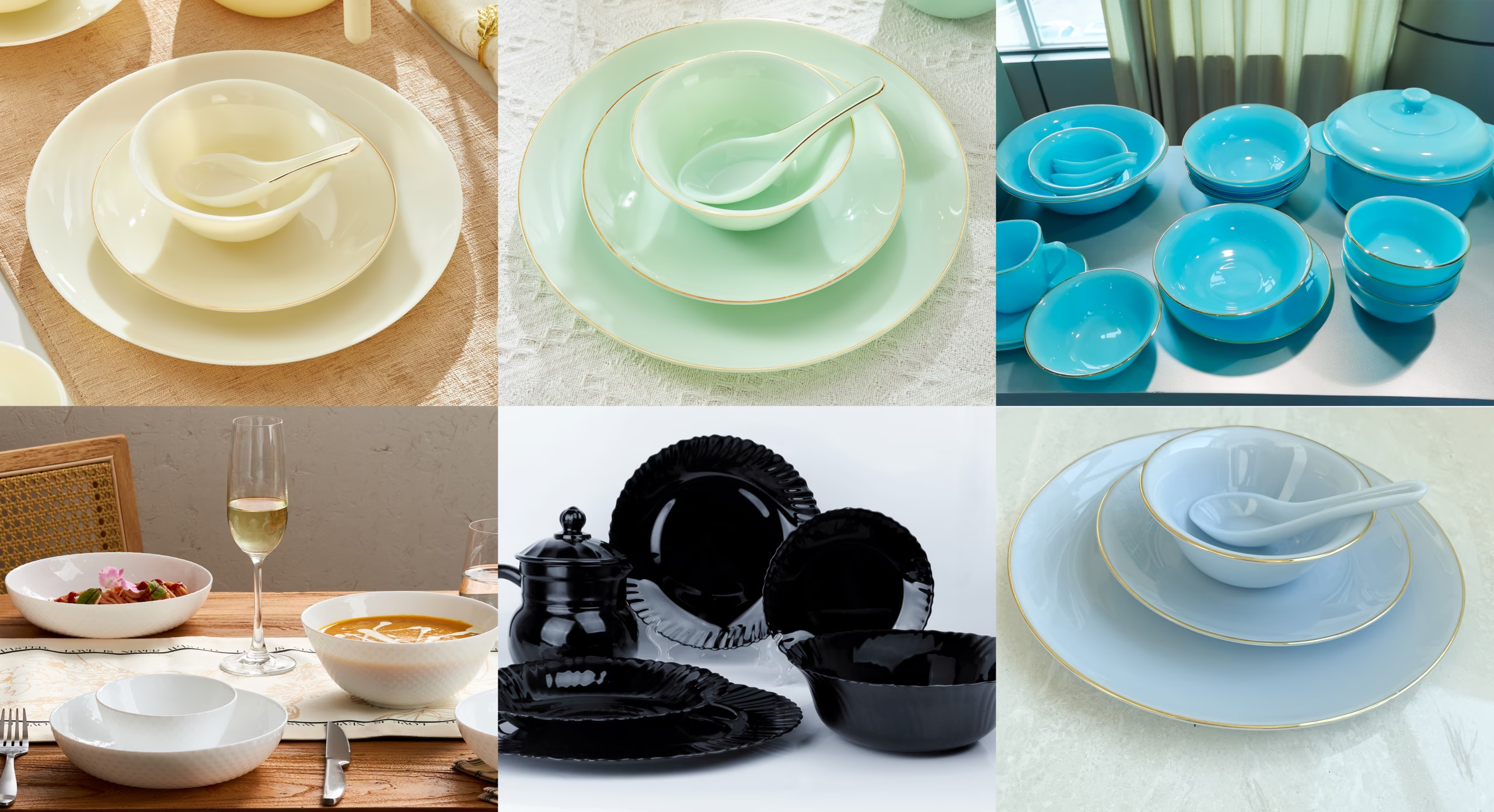
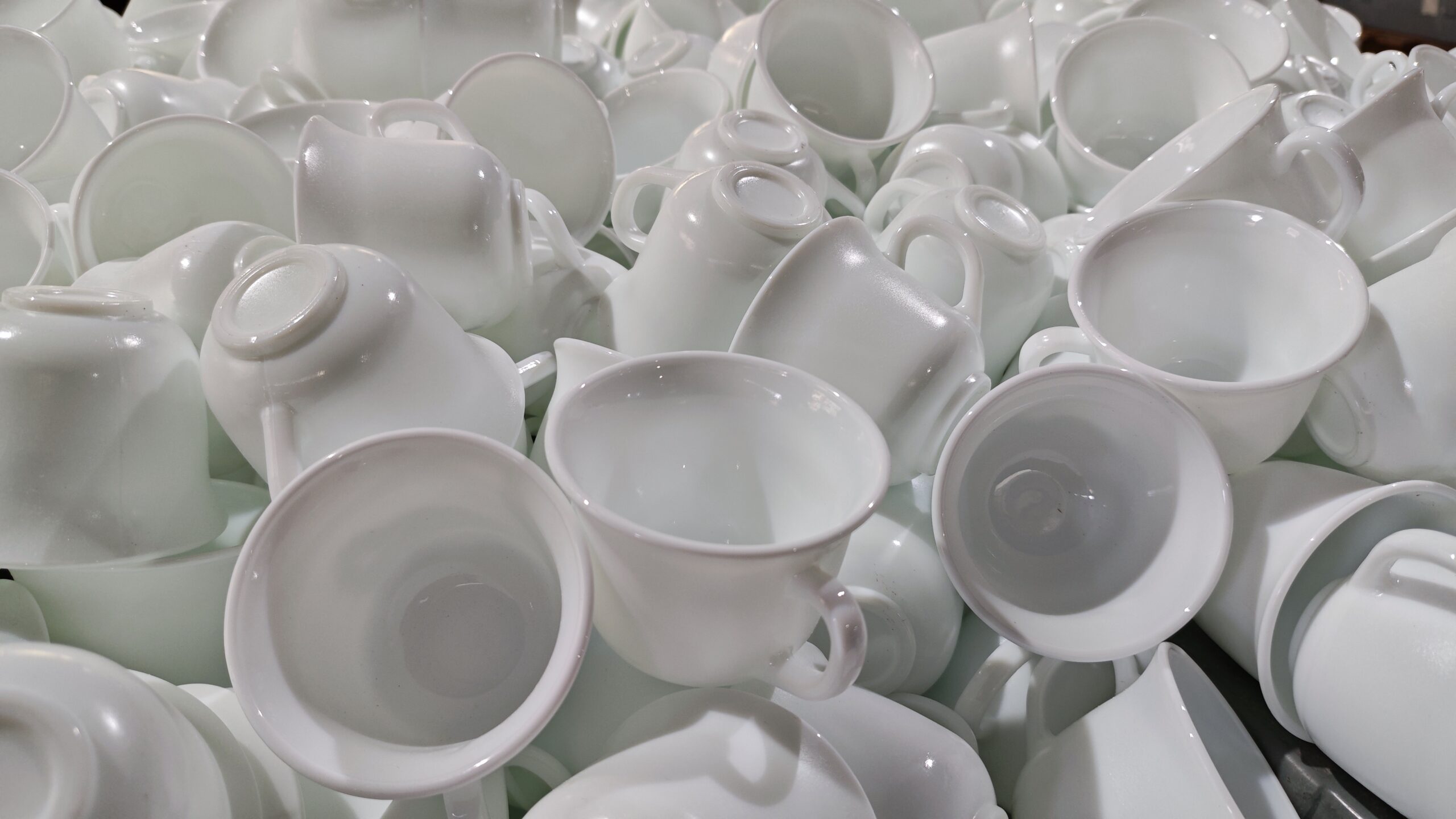
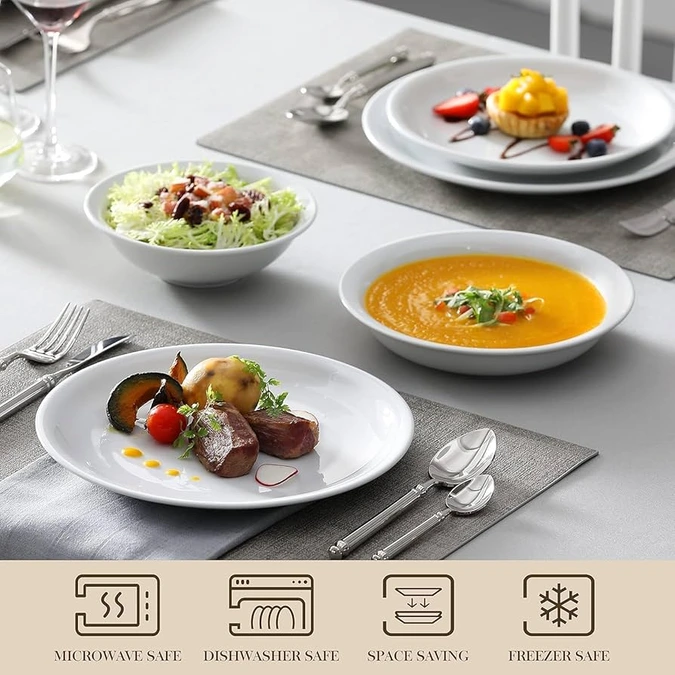
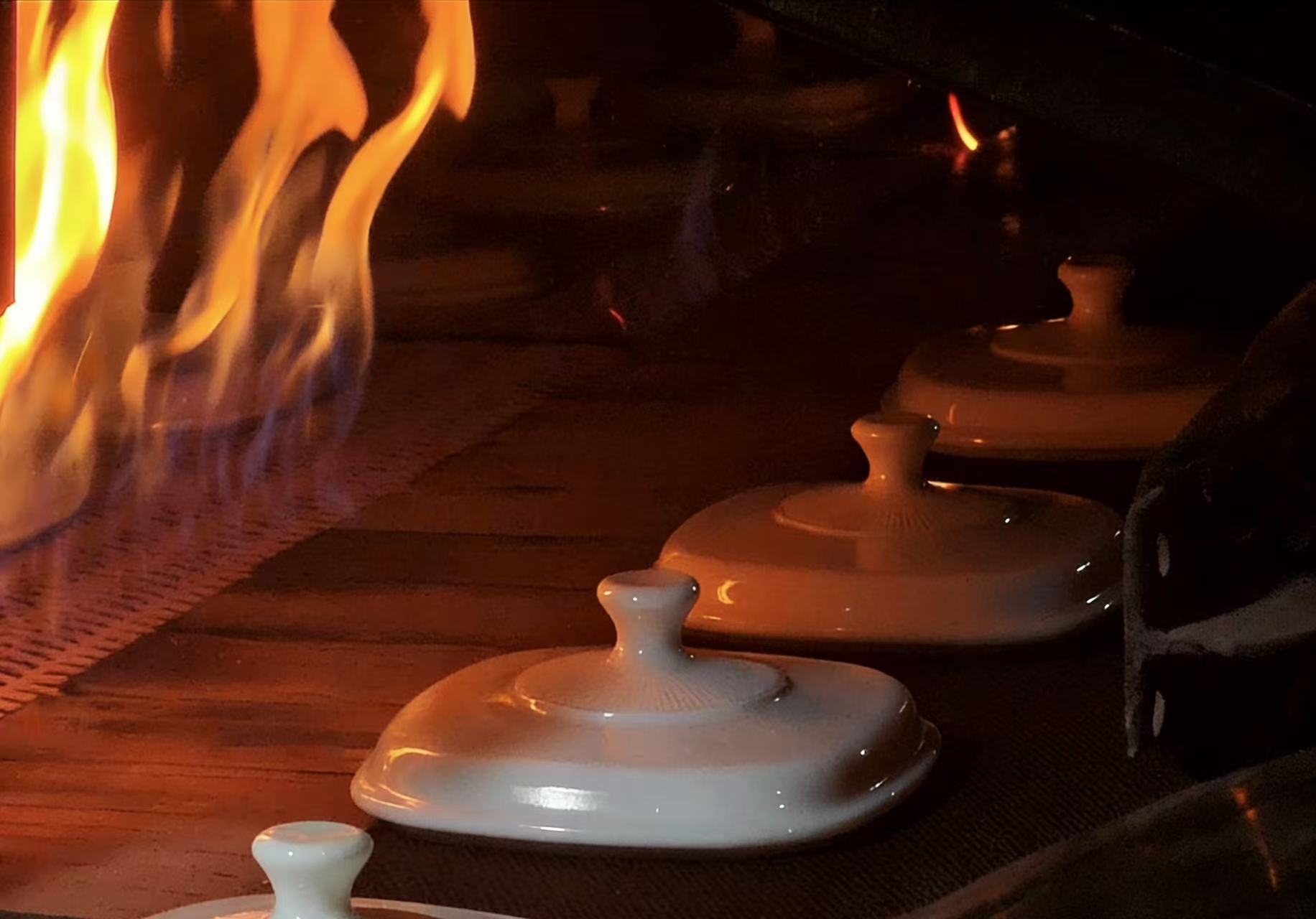
The numbers tell a clear story: The NPD Group’s 2024 Foodservice Equipment Report found that commercial dinnerware replacement costs account for 8-12% of annual restaurant operational budgets. For mid-sized chains, that’s $15,000-$40,000 per year—money lost to yellowing, scratches, stains, and cracks. The question isn’t whether you’ll replace dinnerware; it’s how to minimize the frequency. Is opal glass dinnerware scratch resistant enough to break this cycle? The answer lies in material science—specifically, how opal glass addresses the root causes of dinnerware failure that traditional materials miss.
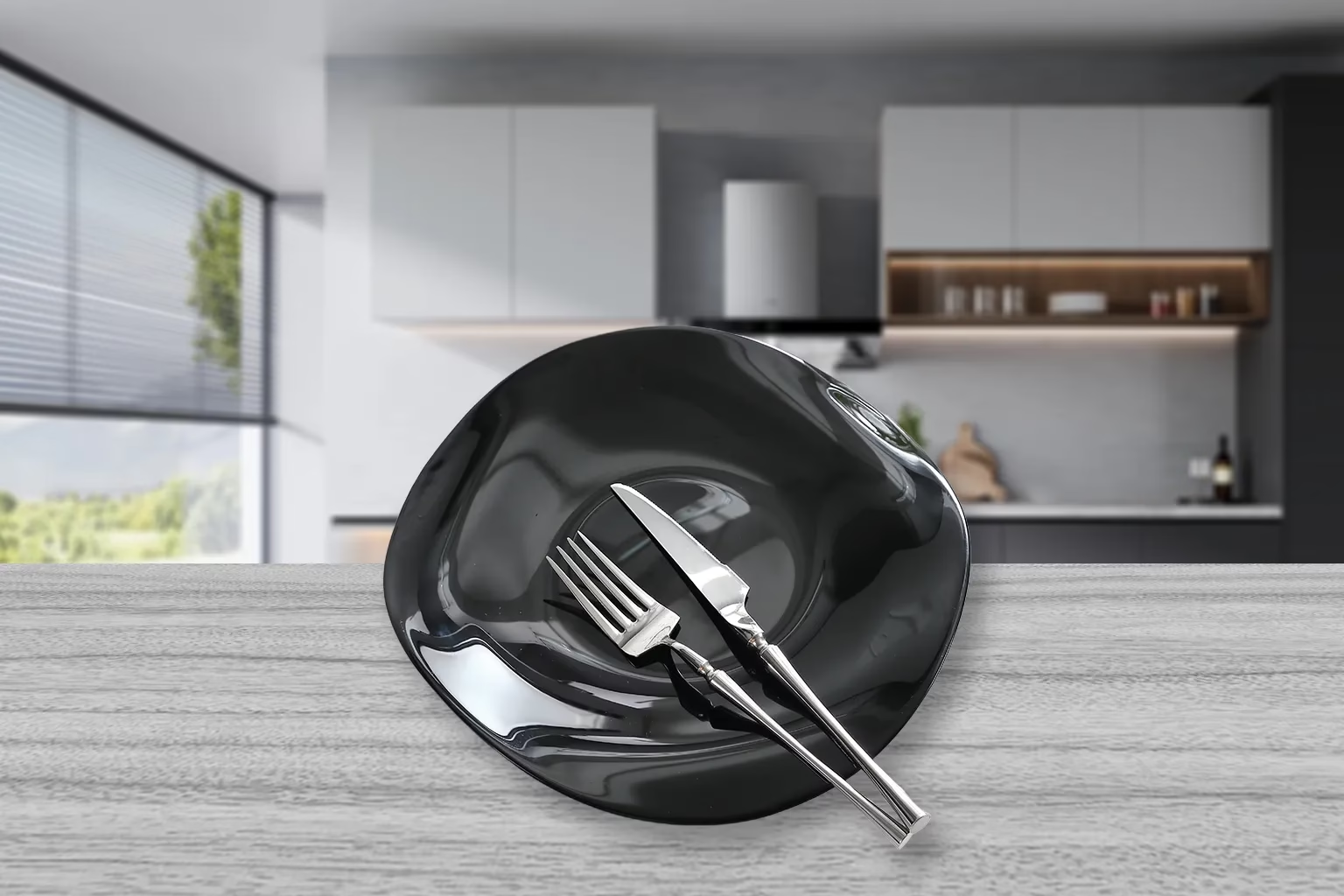
Table of Contents
- Common Signs when Dinnerware Wear and Tear
- How Opal Glass Structure Resists Cracks and Aging
- Surface Barrier: How Opal Glass Blocks Pigment Corrosion
- How Opal Glass Maintains Its Luster and Prevents Aging
- Real-World Applications: 5 Scenarios Where Opal Glass Shines
- Recommended Opal Glass Dinnerware: Specifications & Compliance
- FAQs
Common Signs when Dinnerware Wear and Tear
Commercial dinnerware doesn’t fail overnight. It degrades in predictable ways—each tied to the material’s inability to handle the demands of high-volume service. These signs aren’t just cosmetic; they drive hidden costs: labor for extra cleaning, emergency replacements, and even guest dissatisfaction. Let’s break down the four most costly wear patterns, backed by industry data.
Yellowing or discoloration after prolonged use
65% of operators cite yellowing as their top replacement driver—no surprise, given the relentless cycle of coffee, sauce, and high-heat washes. Restaurant Business’s 2022 Supply Chain Survey found that white ceramic plates lose their brightness in as little as 8 months of daily use. The culprit? Microscopic pores in the glaze that trap pigment particles, while detergent chemicals react to amplify discoloration. Most chains adopt 12-18 month replacement cycles, spending $2-$5 per plate for bulk orders that add up fast.
Cost Impact: A 50-seat restaurant replacing 200 plates annually spends $800-$1,500—money that could fund other operational improvements.
Loss of surface gloss after prolonged use
Gloss isn’t just shine—it’s a functional barrier. New ceramic glaze has a Ra value (surface roughness) of ~0.3μm; after 6 months of commercial use, that number jumps to 1.2μm, per tests by the International Foodservice Manufacturers Association (IFMA). Dull, rough surfaces retain 3x more water spots and grease, adding 15-20 seconds of cleaning time per plate. For a kitchen washing 1,000 plates daily, that’s 4+ hours of extra labor weekly.
Labor Impact: Extra cleaning time translates to $3,000-$5,000 in annual labor costs for mid-sized operations.
Staining or color absorption after prolonged use
Acidic foods—tomato sauce, lemon, vinegar—are dinnerware’s silent enemies. CNBC’s 2023 Consumer Product Lab tested 10 mid-range ceramic lines: 7 showed permanent staining after 50 cycles of acid exposure. The issue? Glaze sealing that breaks down over time, allowing pigment ions to migrate. Operators often pay 20-30% more for “acid-resistant” ceramics, but the protection fades after 12-18 months.
Waste Impact: Stained plates are often discarded prematurely—IFMA estimates 15% of ceramic inventory is scrapped due to non-functional staining.
Micro-cracks developing after prolonged use
The FDA’s 2024 Food Code classifies micro-cracked dinnerware as a “critical hazard” due to bacterial harboring. Professional cleaning services report that 8-10% of ceramic plates show micro-cracks after 9 months of use. These flaws are invisible to the naked eye but grow with thermal shock—from fridge to oven, or hot food to cold dishwasher—until plates chip or shatter.
Safety Risk: Bacterial contamination from cracked plates increases liability and guest illness risk, with potential legal costs far exceeding replacement expenses.
How Opal Glass Structure Resists Cracks and Aging
Traditional materials struggle with commercial demands because they’re designed for home use—low frequency, gentle cleaning, minimal thermal shock. Opal glass changes the game by addressing the structural weaknesses that cause failure. Here’s the science: its dual-phase composition and microcrystalline network don’t just “resist” wear—they redirect it.
Opal glass is a two-phase material, not a single-phase homogeneous glass
Most glass and ceramics are single-phase—one material, one point of failure. Opal glass is different: a continuous glass matrix (for flexibility) reinforced with lithium silicate microcrystals (for strength). When impact occurs—plate hitting plate in a dishwasher, utensil scraping—the microcrystals disperse energy across the surface instead of letting it concentrate. Foodservice Equipment & Supplies’s 2023 Dishwasher Durability Study found opal glass has a 70% lower non-accidental breakage rate than soda-lime glass and 45% lower than standard ceramics.
Reliability Benefit: Fewer breakages mean consistent inventory—no last-minute runs to replace chipped plates before a dinner service.
Opal glass has a virtually non-porous surface that prevents stain penetration
Porosity is dinnerware’s Achilles’ heel. Ceramic glaze has a porosity of 5-10%; opal glass clocks in at <0.1%, per tests by the Materials Research Society. This near-zero porosity creates a barrier: pigment molecules can’t seep in, even after prolonged exposure to coffee, wine, or tomato sauce. High-end hotels that switched to opal glass report a 50% drop in staining-related replacements, according to Hotel Management’s 2024 Sustainability Report.
Longevity Benefit: Non-porous surfaces retain their original appearance 2-3x longer than porous ceramics.
Opal glass features a microcrystalline network that blocks crack propagation
Cracks grow when stress finds a clear path. Opal glass’s microcrystals act as roadblocks—forcing cracks to deflect, slow, or stop entirely. The result? Superior thermal shock resistance: opal glass withstands temperature swings from -20°C to 180°C, per LFGB (German Food and Feed Code) testing. Traditional ceramics typically max out at -10°C to 120°C, making them vulnerable to fridge-to-oven use or hot dishwashing.
Versatility Benefit: Thermal shock resistance expands use cases—plates can go from cold appetizers to hot entrees without risk of cracking.
<<<<
| Performance Metric</ | Traditional Ceramic</ | Standard Glass</ | Opal Glass</ |
|---|---|---|---|
| Non-Accidental Breakage Rate | 12% annually | 18% annually | 5% annually |
| Porosity | 5-10% | 1-3% | <0.1% |
| Thermal Shock Range | -10°C to 120°C | -5°C to 150°C | -20°C to 180°C |
| Ra Value After 1,000 Washes | 1.1μm | 0.8μm | 0.25μm |
| Typical Service Life | 1-2 years | 1.5-2.5 years | 3-5 years |
Surface Barrier: How Opal Glass Blocks Pigment Corrosion
Staining and chemical corrosion are two sides of the same coin: both exploit material weaknesses to degrade appearance and function. Opal glass’s surface barrier addresses both—through its non-porous structure and chemical composition. Here’s how it works in the real world, where plates face hours of contact with acidic foods and harsh detergents.
Virtually no porosity, pigment molecules cannot penetrate the surface
Pigment corrosion starts with adsorption: molecules sticking to a surface, then seeping into pores. Opal glass eliminates this process. Its dense, uniform surface has no gaps for molecules to cling to—even after 2,000 commercial washes, per testing by the American National Standards Institute (ANSI). A regional café chain documented this: after switching to opal glass, they reduced plate replacements due to coffee/tea stains from 15% to 3% of inventory annually.
Consistency Benefit: Uniform appearance across all plates—no mixing “new” and “stained” inventory to maintain presentation.
Contains silica to resist acidic and alkaline food corrosion
Opal glass is 70% silica—one of the most chemically inert materials. This means it doesn’t react with acids (pH 2-4) or alkalis (pH 10-12), the range of most foods and commercial detergents. The Foodservice Durability Whitepaper (2023, compiled by 5 major supply chains) found opal glass retains 92% of its surface integrity after 1,000 hours of acid exposure. Traditional ceramics? Just 68%.
Low-Maintenance Benefit: No special cleaning products or extra scrubbing—standard dishwashing protocols work without damaging the surface.
How Opal Glass Maintains Its Luster and Prevents Aging
Visual aging is just as costly as structural failure. Guests notice dull, scratched plates—Consumer Reports’ 2024 Dining Experience Survey found 62% of diners associate “worn tableware” with lower food quality. Opal glass’s luster retention isn’t magic; it’s engineering that targets the three causes of visual degradation: coating failure, surface roughness, and light reflection.
It’s not a surface glaze or coating, so the color won’t chip off
Ceramics rely on a thin glaze layer—0.1-0.2mm thick—for color and shine. This layer chips, peels, and wears away with use. Opal glass’s color is integral to its structure; there’s no coating to fail. Hotel & Restaurant Design tested both: after 3,000 dishwasher cycles, 40% of ceramic plates showed glaze chipping, while opal glass showed zero. The result? Consistent appearance for years, not months.
Branding Benefit: Uniform tableware reinforces brand professionalism—critical for chains and upscale venues.
It has a smooth surface finish (low Ra value) that resists washing wear
Gloss loss equals roughness gain. Opal glass starts with a Ra value of <0.2μm—smoother than most ceramics—and stays there. After 1,000 commercial washes (1 year of high-volume use), opal glass’s Ra value increases by just 19%, per IFMA tests. Ceramics see an 87% increase. A smooth surface means water and grease bead off, cutting cleaning time by 10-15 seconds per plate.
Efficiency Benefit: Faster cleaning frees up staff for other tasks—from food prep to guest service.
It uses diffuse light scattering, which keeps the surface glossy long-term
Most glassware relies on镜面反射—scratches disrupt this, creating obvious flaws. Opal glass uses diffuse scattering: light bounces off its internal microcrystals, creating a soft, uniform glow. Minor scratches (inevitable in commercial use) don’t disrupt this glow. Lighting Research & Technology found that diners perceive opal glass as “glossy” even with 2x more micro-scratches than ceramic.
Perception Benefit: Plates look newer longer, delaying the need for aesthetic replacements.
Real-World Applications: 5 Scenarios Where Opal Glass Shines
Opal glass’s benefits aren’t theoretical—they solve specific pain points in high-demand environments. Below are five common commercial settings where its structure and performance deliver measurable value.
1. Busy Chain Restaurants (1,000+ Covers Daily)
High turnover means plates go through 3-4 wash cycles daily. Opal glass’s 70% lower breakage rate and 3-5 year service life cut replacement costs by 60% compared to ceramics. Its non-porous surface also resists ketchup, soda, and coffee stains—critical for maintaining brand consistency across locations.
2. Hotel Buffets & Banquet Halls
Buffets demand 24/7 availability and resistance to constant handling. Opal glass’s thermal shock resistance works for hot dishes (soups, roasts) and cold items (salads, desserts) alike. Its diffuse glow maintains visual appeal even with heavy use—no more swapping out “scratched” plates mid-event.
3. Cafés & Coffee Shops
Coffee, tea, and pastries are staining hazards. Opal glass’s silica composition resists tannin and sugar buildup, while its smooth surface cleans easily with standard detergents. Cafés report a 40% reduction in plate replacement costs after switching—money that goes straight to bottom-line profits.
4. Fine Dining Venues
Visual presentation is non-negotiable. Opal glass’s creamy white hue complements food colors, while its chip-resistant structure avoids “imperfect” place settings. Its long service life also aligns with sustainability goals—reducing waste from frequent replacements.
5. Fast-Casual Restaurants
Speed and durability go hand-in-hand. Opal glass’s quick-clean surface cuts dishwashing time, while its impact resistance handles the rush of peak hours. For franchises, consistent performance across locations simplifies inventory management and reduces training time for staff.
Recommended Opal Glass Dinnerware: Specifications & Compliance
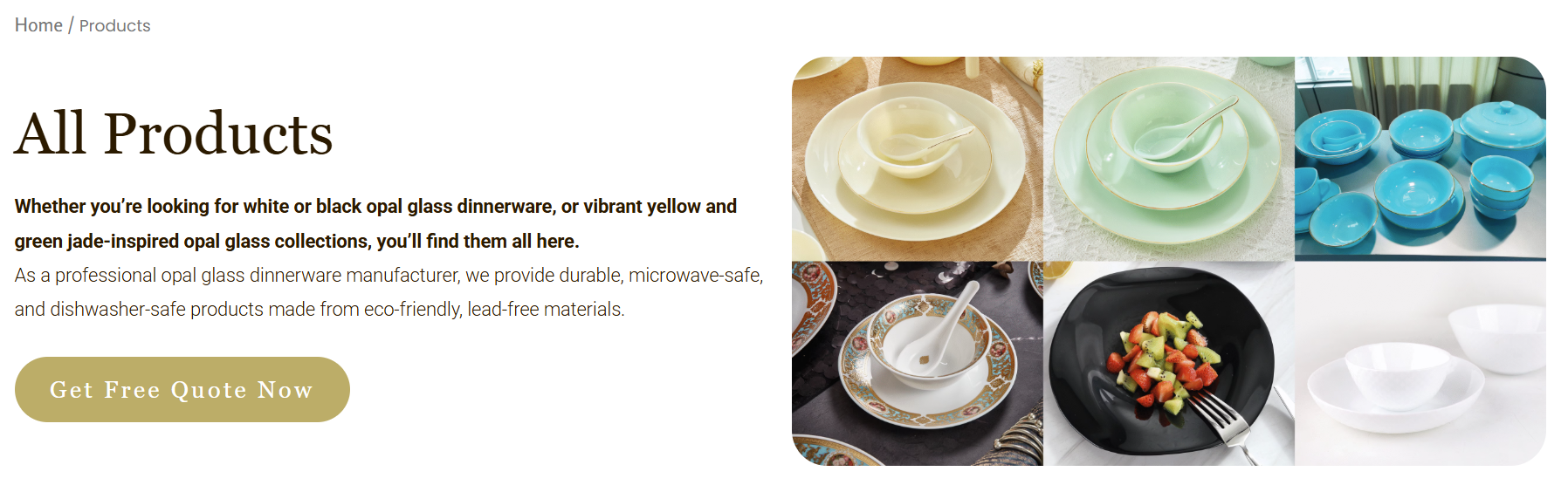
Commercial-Grade Opal Glass Dinnerware Collection
Built for the rigors of high-volume service, this collection translates opal glass’s material science into practical, reliable tableware. Every piece meets industry standards for durability, safety, and performance—backed by third-party testing and real-world validation.
Tempered Opal Glass (70% silica, 20% lithium silicate, 10% other oxides)
-20°C to 180°C (-4°F to 356°F)
<0.2μm (initial); <0.3μm after 1,000 washes
<0.1% (near non-porous)
3-5 years (average)
70% lower non-accidental breakage vs. standard ceramics
FDA (US), LFGB (EU), ISO 4802 (Food Contact Safety)
Dinner Plates (10.5″), Salad Plates (8″), Bowls (16oz/24oz), Soup Cups (12oz)
Key Differentiators: Integrated color (no chipping), acid/alkali resistance, and compatibility with commercial dishwashers, microwaves, and ovens. Ideal for operations seeking long-term value without sacrificing presentation.
FAQs
Is opal glass dinnerware scratch resistant enough for daily commercial use?
Opal glass offers industry-leading scratch resistance for commercial settings. Its high silica content and low Ra value minimize visible scratches from cutlery and handling. While no material is scratch-proof, opal glass retains a smooth surface through 2x more wash cycles than ceramics—meaning scratches are less frequent and less noticeable when they occur.
How does opal glass compare to melamine in terms of durability?
Melamine resists shattering but scratches easily and can’t withstand high heat (over 160°F). Opal glass handles higher temperatures (up to 356°F) and retains its appearance longer—melamine typically needs replacement after 1-2 years, while opal glass lasts 3-5. Melamine also carries chemical leaching risks at high temperatures, a concern opal glass avoids.
Is opal glass dinnerware more expensive than traditional ceramics?
Upfront, yes—opal glass costs 20-40% more per piece. Long-term, no. Its 3-5 year service life vs. ceramics’ 1-2 years means lower total cost of ownership. A 5-year analysis by a national restaurant supply chain found opal glass saves 30-40% in cumulative replacement costs.
Can opal glass dinnerware be used in microwaves and ovens?
Yes. Its thermal shock resistance (-20°C to 180°C) makes it safe for microwave heating and oven use (up to 356°F). It’s also compatible with commercial dishwashers—no special cycles or detergents required.
Does opal glass meet food safety standards?
It exceeds them. Opal glass is certified by the FDA (US), LFGB (EU), and ISO 4802 for food contact safety. Its non-porous surface and chemical inertness prevent bacterial growth and material leaching, making it one of the safest options for commercial foodservice.
Industry Validation: Real Results from Operators
A regional hotel group with 18 properties switched to opal glass in 2022. After 24 months, they reported: 38% lower tableware procurement costs, 27% less time spent on dishwashing, and a 12-point increase in guest satisfaction scores related to dining presentation (per their 2024 Operational Report). Another case: a fast-casual chain with 50 locations cut plate replacements by 62% in the first year, redirecting $75,000 to menu innovation.
These results align with the broader trend: IBISWorld’s 2024 Foodservice Equipment Outlook predicts opal glass adoption will grow 15% annually through 2027, as operators prioritize long-term value over upfront savings. For buyers tired of the replacement cycle, opal glass isn’t just a product—it’s a solution rooted in material science that delivers on its promises.