
What is Opal Glass Tableware?
Opal glass tableware is dinnerware made from a specialized glass formula containing fluoride or phosphate opacifiers. These additives create a microcrystalline structure that scatters light, producing the signature milky white appearance that closely resembles fine porcelain—while retaining all the non-porous, hygienic advantages of glass.
This isn’t a new material. The Arcopal brand under Arc Holdings launched an opal glass tableware series as early as 1958. Decades of continuous market presence speak for the maturity of this material. For a detailed breakdown of the raw materials, forming processes, and the science behind the appearance, see our beginner’s guide to opal glassware.
This article focuses on what matters for commercial buyers: real-world performance benchmarks, how to select the right opal glass dinnerware for your operation, and how to find a reliable opal glass supplier.
Why Commercial Kitchens Choose Opal Glass Dinnerware
When a set of tableware hits the ground, ceramics usually shatter. Opal glass dinnerware makes a dull thud—and the plate stays intact.
That’s not luck. It’s material structure.
For restaurant operators and procurement managers, the tableware decision comes down to a short list of non-negotiable requirements. Opal glass meets them simultaneously—something few single materials can claim:
- Impact resistance 2–3x higher than standard ceramics: In a kitchen where staff clear hundreds of plates per shift, that directly lowers quarterly breakage costs.
- Thermal shock range of -20°C to 130°C: Plates move from walk-in cooler to serving line with zero buffer time. No preheating step. No cracking risk.
- Non-porous, lead-free, cadmium-free surface: Passes NSF and CE food contact standards. No odor absorption. No bacterial harboring. No chemical leaching at serving temperatures.
- 15–30% lighter than equivalent ceramic pieces: Over a 6-hour shift with 1,000+ plate transports, the cumulative fatigue reduction for service staff is real.
- Stable gloss after thousands of industrial dishwasher cycles: Ceramic glaze dulls visibly after 300–600 washes. Opal glass holds its whiteness and sheen.
For a detailed breakdown of food contact safety testing—lead-free and cadmium-free verification standards, microwave heating safety boundaries—this food safety analysis of opal glass plates and bowls covers each item from a materials chemistry perspective.
Real-World Durability Evidence
One set of tableware. Three household moves. Daily dishwasher runs. Twenty full years—without a single chip.
That’s what real users in UK consumer communities documented about their Corelle sets (Corelle uses opal glass material). Multiple people reported the same thing: continuous daily use for over 20 years, through relocations and thousands of dishwasher cycles, without damage. This kind of long-term user feedback from ordinary households is hard to argue with.
Opal Glass vs Ceramic, Melamine, and Stainless Steel
A restaurant purchasing manager puts an opal glass dinner plate on the table. A colleague immediately asks: “Is this ceramic?”
That happens in commercial kitchens around the world. Almost daily.
Opal glass tableware stands out because of its microcrystalline glass structure. To show where it actually wins—and where other materials have their own strengths—here’s a systematic comparison against four common commercial dinnerware options.
Quick version first. Where does opal glass come out ahead?
- More drop-resistant than ceramics. Not afraid of sudden cold or heat.
- Safer than ordinary glass. Lower breakage risk.
- Healthier than melamine. No harmful substance release at high temperatures.
- Better texture than stainless steel. No heat conduction issues. No metallic odors.
- Overall durability and hygiene make it a stronger long-term fit for commercial use.
Now, each matchup in detail.
Opal Glass vs Ceramic
Say you run a chain restaurant doing six table turns a day. During clearing alone, staff handle hundreds of pieces. In that kind of high-frequency collision environment, ceramic’s fragile nature gets magnified fast.
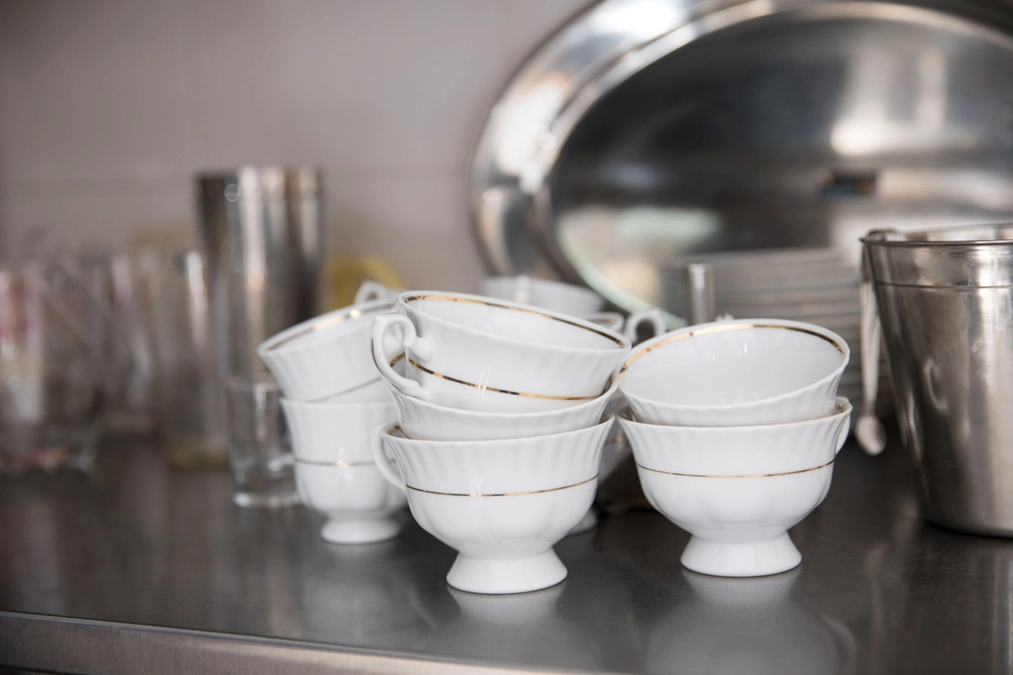
On the surface, the opal glass vs ceramic comparison is close—both present a pure white, warm visual texture. That’s why people confuse them constantly. But the physical performance gap opens up quickly.
Opal glass goes through special heat treatment. The dense microcrystalline structure that forms inside gives it impact resistance and thermal shock tolerance far beyond traditional ceramics. Ceramic plates crack from sudden temperature changes. Opal glass goes from fridge to microwave without flinching.
There’s a hygiene gap too. Once ceramic glaze develops fine cracks, those cracks trap dirt and bacteria. Opal glass has a completely dense surface—cleaning is more thorough, and that matters where food safety standards aren’t optional.
Porcelain usually enters the conversation too. If you need all three materials evaluated side by side—temperature resistance, hygiene, turnover intensity—this three-way comparison of opal glass, ceramics, and porcelain covers it in one place.
Opal Glass vs Regular Glass
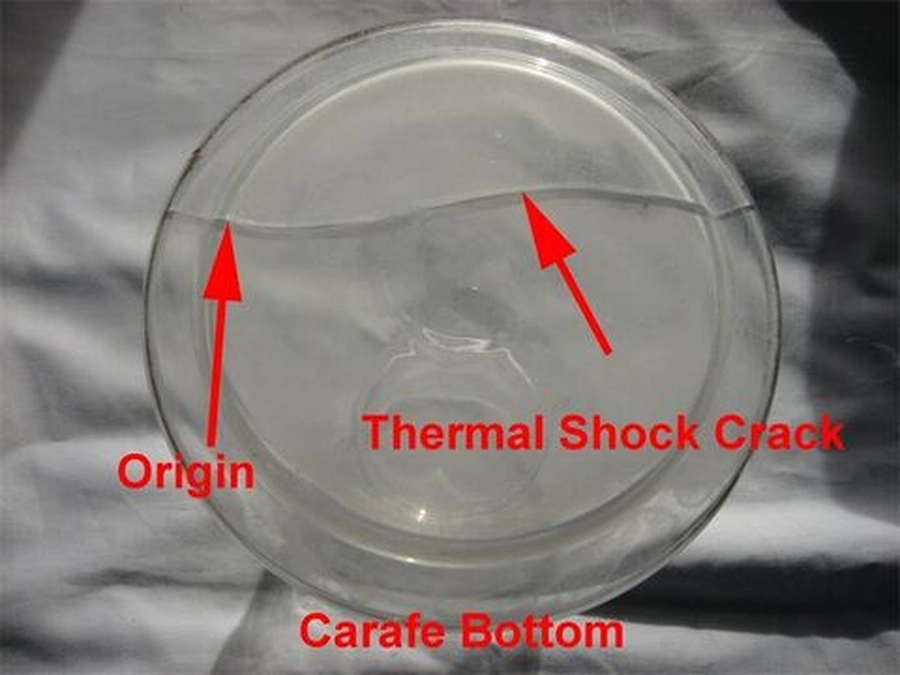
In a commercial kitchen, the critical difference comes down to breakage safety and operational risk. Ordinary glass shatters into sharp fragments—an immediate hazard in any dining environment where staff are clearing hundreds of pieces per shift. Opal glass fractures in a more controlled pattern with larger, blunt-edged pieces, reducing both injury risk and cleanup time.
Opal glass also has the edge in mechanical performance: the microcrystalline phases created during heat treatment give it significantly higher impact resistance than standard soda-lime glass. For a deeper comparison of the two glass types—including composition differences, thermal behavior, and hygiene characteristics—see our opal glass vs ordinary glass breakdown.
Opal Glass vs Melamine
If tableware is the “last checkpoint” before food reaches someone’s mouth, then the material it’s made from directly decides whether that food has been contaminated along the way.
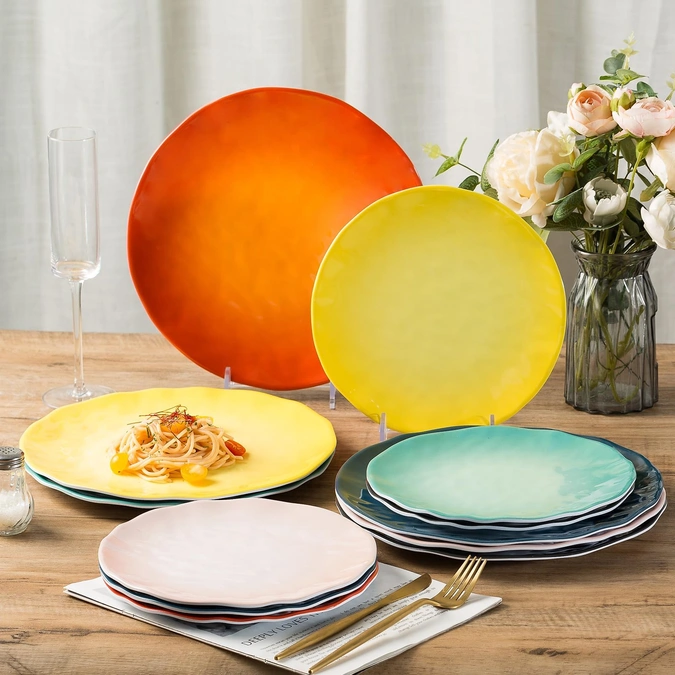
Melamine has dominated the fast food and takeout market for years. It’s lightweight, drop-resistant, and cheap. But food safety has always been the elephant in the room.
Opal glass is an inorganic material with extremely stable chemical properties. It won’t release harmful substances at high temperatures or on contact with acidic foods. Melamine is a different story. Above 70°C, it carries a risk of releasing trace amounts of formaldehyde and melamine compound. That makes it a poor fit for hot soups, hot porridge, or any high-temperature dishes.
Surface durability is another gap. Opal glass dinnerware has higher surface hardness and resists knife scratches over time. Melamine scratches easily—and those scratches become hiding spots for bacteria. It’s the kind of problem users only realize after a year or two, when the damage is already visible.
Opal Glass vs Stainless Steel
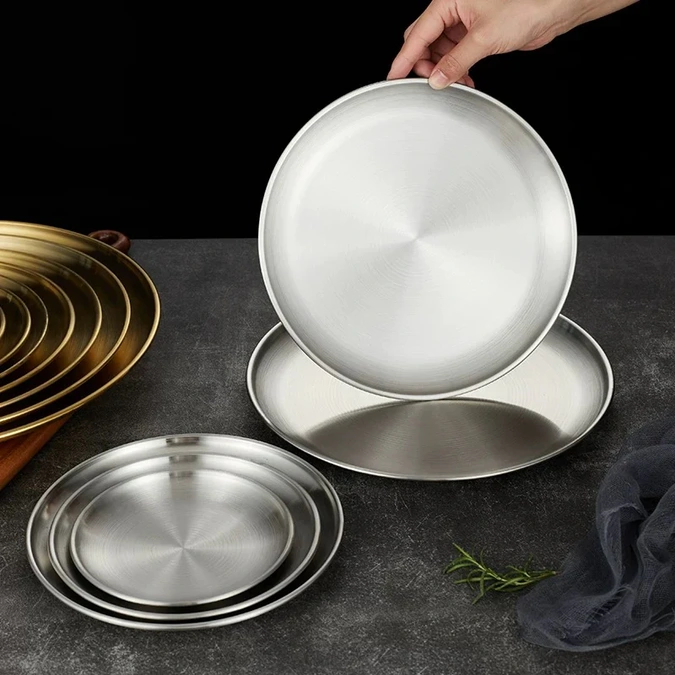
Stainless steel is known for durability and antibacterial properties. It’s been a long-term standard in school cafeterias, hospitals, and institutional dining.
But put the same stainless steel set in a business restaurant focused on refined experiences. The cold metallic shine and potential metallic taste quietly undermine the warmth a dining table should have.
Opal glass tableware presents a warm texture close to white porcelain. Whether it’s table settings or dish presentation, it lifts the visual tone of the entire experience.
There’s a practical kitchen difference too. Stainless steel conducts heat aggressively—bowl edges holding hot soup can burn fingers on contact. Opal glass has low thermal conductivity, so it stays comfortable to hold. At a busy buffet with hundreds of guest interactions, staff and guests both feel the difference.
Commercial Uses of Opal Glass Tableware
Commercial kitchens are not gentle places.
Hundreds of transports, washes, and stacks every single day. Cycles of high-temperature serving and rapid cooling. Ordinary tableware often doesn’t survive a full quarter.
Whether a set of commercial dinnerware lasts long enough never depends on how good it looks in a display cabinet. It depends on whether it can handle the roughest processes of every ordinary workday.
Here’s a quick overview before the deep dive:
- Hotel breakfast and banquet catering: Full-process temperature switching from refrigerated prep to hot food serving. No special handling needed.
- Airline catering tray systems: Lightweight, turbulence-resistant. Mainstream material for airline tableware for years.
- Chain restaurant daily serving: Highly consistent mass production supports cross-store standardization and unified procurement.
- Industrial dishwasher high-frequency cycles: Resistant to strong detergents and high-temperature steam. Gloss stays stable after thousands of washes.
- Back-of-house storage and stacking: Lightweight and stackable. Saves shelf space. Reduces physical strain on staff.
Hotel Breakfast and Banquet Service
Seven in the morning. The back-of-house prep rhythm doesn’t slow down for anything.
Plates just pulled from the refrigeration area hold steaming porridge and reach tables within minutes. No buffer time. No preheating step. Just continuous serving pressure.
Under that kind of sudden cold-to-hot switching, ordinary tableware develops cracks on some unremarkable morning. Then it shatters. Then it gets scrapped—an avoidable loss on the expense sheet. Opal glass handles these temperature swings at the material level, thanks to the microcrystallization heat treatment covered earlier.
In the evening, the same batch has to survive a different test: full banquet service for five hundred people. Setting, serving, clearing—the full cycle. It has to handle that operational intensity while still looking elegant enough for formal dinner. Opal glass is one of the few commercial dinnerware materials that meets both requirements at the same time.
Airline Catering
Airline catering is one of the most demanding use cases for any tableware material.
Tray space is extremely limited. Tableware weight directly affects fuel costs. Turbulence during takeoff and landing constantly tests structural strength. Cabin temperature changes add another layer of stress.
One gram of extra weight, multiplied across hundreds of daily flights, adds up to a number no airline wants to see on the fuel bill.
After screening common alternatives on weight, durability, and food-safety compliance, the airline catering industry landed on opal glass tableware as the mainstream material for economy and business class service. That conclusion came from decades of testing materials under extreme conditions—not a passing market trend.
Chain Restaurant Operations
For a chain brand operating dozens or hundreds of locations, tableware consistency is an easy detail to overlook—and a damaging one to get wrong.
A brand running in thirty cities needs every plate to look the same. If the Beijing store’s plates are slightly yellower and the edges slightly thicker than Shanghai’s, customers at a single location might not notice. But at the brand level, the message is clear: this chain hasn’t managed its standards.
Opal glass dinnerware maintains highly consistent color, size, and weight across mass production runs. Cross-store allocation and replenishment stays simple and controllable.
The consistency extends to breakage rates too. When loss rates are predictable across locations, headquarters can set up unified procurement cycles and inventory models—systematically lowering management costs at the supply chain level.
Performance in Commercial Dishwashers
Industrial dishwashers in commercial kitchens don’t go easy on anything.
High-temperature steam. Aggressive cleaning agents. High-pressure water jets. Every cycle is a chemical and physical double hit on the tableware surface.
The key difference here is guest-facing appearance retention. Ceramic glaze loses its sheen within a few hundred cycles, and once it does, guests see the wear the moment plates reach the table. Opal glass has a dense surface structure that tolerates commercial cleaning agents well. Even after thousands of industrial-grade washes, whiteness and gloss hold steady—which translates directly to lower replacement frequency and more controllable costs.
Back of House Storage and Handling
Back-of-house storage space is always tight. Every inch of shelf gets carefully allocated.
Opal glass tableware has regular shapes and stacks efficiently. It uses vertical space well without awkward gaps or instability. And its lighter weight means each transport puts less strain on staff—a benefit that compounds over hundreds of trips during peak turnover.
How to Pick the Best Opal Glass Dinnerware for Commercial Use
A restaurant switches to a new batch of tableware. Within weeks, regular customers start showing up less often.
That happens more than you’d think. Tableware feels like a detail, but it’s actually the first thing customers use to judge quality. Opal glass dinnerware—with its matte white tone, strong durability, and easy-to-clean surface—is becoming the go-to choice for more restaurants, hotels, and banquet venues. But with this many products on the market, buying without a clear evaluation framework easily leads to unnecessary losses from the wrong style or the wrong opal glass supplier.
The process usually breaks into three core steps:
- Step 1: Pin down your restaurant’s style positioning and daily use scenarios.
- Step 2: Evaluate product durability through documentation and hands-on testing.
- Step 3: Plan the right tableware sizes and quantities based on your actual menu structure.
These three steps connect tightly. Skip one, and you’re likely dealing with style mismatches, high breakage rates, or replenishment headaches down the road.
Choosing a Style That Fits Your Venue
The same opal glass dinnerware in a Michelin restaurant versus a university cafeteria sends two completely different signals.
High-end restaurants and boutique hotels do well with smooth-edged, simple shapes. The matte white of opal glass already looks refined under proper lighting. It pairs naturally with high-end plating styles.
Buffet and fast food venues need to prioritize thickness and stackability. A buffet doing three turns per hour at lunch peak will blow through its commercial dinnerware breakage budget within three months if the plates are too thin.
For weddings and large banquets, embossed patterns are worth considering. A unified visual style elevates the professionalism of the whole event—and it’s often the first thing guests photograph for social media.
Style is just the starting point. Different operating scenarios have very different requirements for thickness, edge profile, and specifications. The scenario-based selection framework for opal glass plates breaks these variables down one by one.
Evaluating Durability Before You Buy
Performance claims on a product page mean little without verification. Before placing any order, request the supplier’s test reports covering thermal shock range and impact resistance data. Check whether the product holds NSF certification or CE certification—opal glass tableware without these certifications is like ingredients without an inspection report. Maybe fine, but the risk sits entirely on your shoulders.
Where possible, ask for samples and run them through your own dishwasher and daily workflow for at least a week. Real-environment testing tells you more than any spec sheet.
Planning the Right Size Combination for Your Menu
A lot of restaurants only order dinner plates on their first opal glass dinnerware purchase. Then dessert service starts, and there are no matching small plates. A random replacement gets pulled in, and the visual coherence of the whole table breaks.
Commercial procurement needs to be planned systematically around the actual menu. Here’s a reference for standard specifications that work across most scenarios:
- Dinner Plate 10″–11″ — The main course carrier. Sets the visual tone of the entire table.
- Salad Plate 7″–8″ — Works for appetizers, salads, or dessert presentations.
- Soup Bowl 16–20 oz — Covers soups, stews, and broth-based dishes.
- Bread Plate 6″ — Standard small piece for formal meals. Bread and butter placement.
- Cup & Saucer 8 oz — Basic setup for post-meal coffee and tea service.
How many pieces per seat? That depends on your venue type, peak turnover rate, and dishwashing cycle time. Here’s a starting-point reference:
| Piece Type | Fine Dining (per seat) | Hotel Buffet (per seat) | Fast Casual / Chain (per seat) | Banquet / Event (per seat) |
|---|---|---|---|---|
| Dinner Plate 10–11″ | 2.5–3x | 3–4x | 3–4x | 1.2–1.5x |
| Salad / Dessert Plate 7–8″ | 2–2.5x | 2–3x | 1.5–2x | 1.2–1.5x |
| Soup Bowl 16–20 oz | 2–2.5x | 3–4x | 2–3x | 1–1.2x |
| Bread Plate 6″ | 2–2.5x | Optional | Not needed | 1.2x |
| Cup & Saucer 8 oz | 2–2.5x | 2–3x | 1.5–2x | 1.2x |
| Key Note | Prioritize elegant rim styles; allow extra for multi-course plating | Prioritize stackability and thickness; highest turnover = highest backup ratio | Prioritize uniformity across locations; simple shapes for fast clearing | Order exact headcount + 15–20% buffer; unified series for photo-ready tables |
How to Find a Reliable Opal Glass Supplier
For restaurants, hotels, or banquet venues, the opal glass dinnerware procurement decision goes way beyond “picking a good-looking set of tableware.”
Every link from factory to dining table—supplier qualifications, delivery timelines, bulk pricing, after-sales support—can become either a problem or a safeguard down the road. A qualified opal glass supplier should meet these baseline conditions:
- Holds international certifications like NSF, CE, or ISO 9001—proving products meet commercial food safety standards.
- Can maintain high color and size consistency between different production batches—critical for chain operations.
- Offers flexible minimum order quantities, so you replenish based on actual need instead of being forced into massive stockpiles.
- Supports logo printing (hotel-grade silk screen, decal, spray glaze) for restaurants or chains that need branded commercial dinnerware.
- Defines breakage compensation and after-sales response mechanisms in the contract—not just in a sales pitch.
Here’s what each one means in practice.
Supplier Certifications and Product Standards
Opal glass dinnerware touches food every single day. Whether it meets food safety standards isn’t something you judge by feel.
A properly qualified supplier should hold three core certifications:
- NSF certification (North American food equipment standard) — Proves the products meet commercial kitchen hygiene requirements. Basic entry ticket for the North American market.
- CE certification (EU compliance mark) — Required for export to European markets or for dining businesses with international operations.
- ISO 9001 quality management system certification — Reflects how standardized the supplier’s production processes are. Useful indicator for predicting long-term supply stability.
These certifications look like just paperwork—until a food safety complaint or quality dispute hits. Then they become the first line of defense for proving your business acted responsibly.
When sourcing opal glass tableware, ask suppliers to provide original certification documents or official verification links. Any opal glass supplier who gets vague when asked for documentation is worth being cautious about from the start.
Supply Continuity and Batch Consistency
Here’s a scenario that plays out too often.
A restaurant picks a perfect opal glass dinnerware set at opening. Six months in, normal breakage means it’s time to reorder. They call the supplier. The answer: “That style has been discontinued.”
Re-selecting, sampling, and waiting for production takes nearly two months. During the gap, old and new tableware sit on tables together—and the visual inconsistency quietly erodes the quality image the restaurant spent months building.
This problem has two layers. The first is supply continuity. When negotiating with any opal glass supplier, three questions should be asked upfront: What’s the minimum order quantity? Is this product a long-term main line or a short-run item? Can the supplier put continuous supply for a set period in writing?
The second layer is color consistency between production batches. Opal glass production is extremely sensitive to raw material ratios and firing temperatures. Whiteness and light transmittance can vary visibly between runs. For chain brands especially, even small differences become obvious when tableware from different stores gets compared side by side.
The fix: ask the supplier for physical samples from at least two different production batches before signing. Compare them under both warm and cool lighting. Then write a batch consistency clause into the procurement contract, using Delta E color difference values as the acceptance standard. Getting color control into the contract upfront is far more effective than arguing about it after delivery.
Custom Branding and Personalization Options
One chain coffee brand printed its logo on the bottom of every opal glass tableware piece across all locations. Every time a customer picked up a cup and saucer, they saw the brand mark.
No push notification. No ad spend. Just seamless, daily brand exposure built into the act of drinking coffee.
When evaluating an opal glass supplier’s customization capabilities, three things need confirming: whether the custom order minimum fits your budget, whether the supported printing methods (screen printing, decal transfer, spray glaze) deliver the visual effect you want, and whether the production timeline for customized opal glass dinnerware will interfere with your opening or restock schedule.
The earlier you raise customization needs, the more room both sides have to adjust. Bringing it up close to opening date usually means accepting whatever compromise solution time allows.

Pricing Structure and Payment Terms
Commercial procurement quotes for opal glass dinnerware usually get cheaper as order volume goes up. “Buy more, save more” looks appealing on paper.
But a quote with the lowest unit price can end up costing more if shipping is billed separately, transit breakage is your problem, and partial delivery isn’t supported. A slightly higher unit price with better terms might actually be the cheaper option.
During negotiations, verify each item: Does the quote include shipping and insurance? What’s the threshold for breakage compensation? Is partial delivery an option? Can you pay in stages?
For small and mid-sized restaurants, an opal glass supplier who supports small-batch, frequent replenishment is often worth more in cash flow flexibility than one offering rock-bottom unit prices on massive orders.
Samples and After-Sales Support
Opal glass dinnerware shifts color depending on lighting. Under warm light, it leans off-white. Under cool light, it looks bluish-white. The same product can look like two different things in two different rooms.
Product photos can never capture this accurately. The only way to judge is to get physical samples and evaluate them in your restaurant’s actual lighting. Any opal glass supplier confident in their products should support pre-order sampling.
After-sales support needs the same specificity. Breakage compensation on arrival, quality dispute timelines, replenishment response times—all of it belongs in the contract. Verbal commitments carry almost zero weight in commercial partnerships.
Sourcing opal glass tableware is a long-term decision that spans the full lifecycle of a restaurant. Spending more time vetting suppliers on the front end is the most effective way to reduce procurement risk.
If you’re ready to evaluate specific products, browse our complete opal glass tableware collection—organized by category with full specifications, so you can match pieces directly to the selection criteria covered in this guide.
Supplier Evaluation Scorecard
Before signing with any opal glass supplier, score each candidate on a 1–5 scale across these seven dimensions. A total below 20 out of 35 signals too much operational risk for a long-term partnership.
| Evaluation Dimension | What to Verify | Score (1–5) |
|---|---|---|
| Certifications | Can provide original NSF / CE / ISO 9001 documents with verifiable certificate numbers? | ___ |
| Batch Consistency | Willing to provide samples from 2+ production batches for side-by-side comparison? Accepts Delta E clause in contract? | ___ |
| Supply Continuity | Confirms SKU is a long-term production line? Willing to commit in writing to minimum 2-year continuous supply? | ___ |
| MOQ Flexibility | Supports small-batch replenishment (not just full-container minimums)? MOQ aligns with your actual replenishment cycle? | ___ |
| Customization | Supports logo printing (screen print / decal / spray glaze)? Custom MOQ fits budget? Lead time fits your timeline? | ___ |
| Pricing Transparency | Quote clearly breaks down unit price, shipping, insurance, and breakage terms? Supports partial delivery or staged payment? | ___ |
| After-Sales Terms | Arrival breakage compensation, quality dispute resolution, and replenishment response time written into contract? | ___ |
Technical Comparison: Opal Glass vs Other Commercial Dinnerware Materials
| Feature | Opal Glass | Ceramic/Porcelain | Regular Glass | Melamine | Stainless Steel |
|---|---|---|---|---|---|
| Material Composition | Glass with fluoride/phosphate emulsifiers, microcrystalline structure | Clay, feldspar, quartz; glazed surface | Silica sand, soda ash, limestone | Organic compound (melamine-formaldehyde resin) | Iron alloy with chromium/nickel |
| Weight | Light (lighter than ceramic) | Heavy | Medium to heavy | Very light | Medium |
| Impact Resistance | High (2–3x regular glass) | Low (fragile) | Low (shatters easily) | High | Very high |
| Thermal Shock Resistance | Excellent (-20°C to 130°C) | Poor (cracks with sudden temp change) | Poor | Moderate (degrades above 70°C) | Excellent |
| Surface Porosity | Non-porous (dense) | Slightly porous (glaze can crack) | Non-porous | Non-porous (but scratches easily) | Non-porous |
| Food Safety at High Temp | Excellent (no chemical release) | Good (lead/cadmium concerns in low-quality) | Good | Poor (releases formaldehyde/melamine above 70°C) | Good (potential metallic taste) |
| Dishwasher Safe | Yes (thousands of cycles) | Yes (glaze may dull over time) | Yes | Yes (but degrades) | Yes |
| Microwave Safe | Yes | Varies (not all types) | No | No | No |
| Aesthetic Appeal | Premium (porcelain-like, warm white) | Premium (varies by quality) | Modern (transparent) | Casual (plastic-like) | Industrial (cold metallic) |
| Typical Lifespan (Commercial) | 10–20+ years | 1–3 years (high breakage) | Variable (high breakage) | 2–5 years (scratching/staining) | 10+ years |
| Cost Efficiency (Long-term) | High (low replacement rate) | Low (frequent replacement) | Low | Medium (health concerns limit use) | High |
| Best Use Cases | Hotels, airlines, fine dining, banquets | Home use, low-traffic venues | Beverage service, display | Outdoor/casual (cold foods only) | Institutional cafeterias, schools |
10-Year Cost of Ownership: Opal Glass vs Ceramic vs Melamine
Comparison tables show feature differences. But procurement decisions ultimately come down to money.
The model below estimates total tableware cost over a 10-year period for a mid-scale restaurant (200 seats, 4 table turns per day). All figures are approximate ranges based on industry averages. Your actual numbers will vary with supplier pricing, breakage patterns, and local labor costs. But the relative proportions between materials stay consistent across most commercial environments.
| Cost Factor | Opal Glass | Ceramic / Porcelain | Melamine |
|---|---|---|---|
| Initial procurement (full set, 200 seats) | $3,000 – $5,000 | $2,000 – $4,000 | $1,200 – $2,500 |
| Estimated annual breakage rate | 3 – 5% | 15 – 25% | 5 – 10% (scratching/staining retirement) |
| Annual replacement cost | $100 – $250 | $300 – $1,000 | $60 – $250 |
| Full replacement cycles in 10 years | 0 (original set still serviceable) | 2 – 3 full replacements | 2 – 4 full replacements |
| Estimated 10-year total cost | $4,000 – $7,500 | $8,000 – $16,000 | $4,500 – $12,500 |
| Hidden cost factors | Minimal—stable appearance, no health compliance risk | Glaze dulling affects perceived restaurant quality; frequent reordering consumes management time | Health regulation risk; scratched surfaces fail hygiene inspections; not suitable for hot food service |
Frequently Asked Questions (FAQ)
Q1: Is opal glass tableware truly microwave-safe and freezer-safe, or are there temperature limits I should know about?
A: Yes—opal glass tableware is rated for use from -20°C to 130°C (-4°F to 266°F). You can move a piece straight from the freezer into the microwave without thermal shock cracking. The microcrystalline structure distributes heat stress evenly, unlike ceramic which can crack from rapid temperature swings. One limit to keep in mind: don’t put opal glass on a direct flame or stovetop. That exceeds its designed thermal range and can cause damage.
Q2: How does the long-term cost of opal glass compare to cheaper options like melamine?
A: Melamine wins on upfront price. But opal glass wins on total cost over time—and it’s not close. Melamine typically needs replacing every 2–5 years due to surface scratching, staining, and the limitation that it can’t safely hold food above 70°C (158°F). Health regulations around melamine in commercial food service are tightening too. Opal glass dinnerware keeps its appearance and safety standards for 10–20+ years, even under daily industrial dishwasher use. When you calculate total cost of ownership—replacement frequency, potential compliance fines, insurance liability—opal glass generally runs 40–60% cheaper over a 10-year period in high-turnover commercial settings.
Q3: What’s the typical MOQ when ordering opal glass dinnerware from manufacturers? Can I order small replenishment batches?
A: MOQ varies a lot by opal glass supplier. Large manufacturers typically set initial minimums between 1,000 and 5,000 pieces (or one 20ft container). Trading companies or distributors may go as low as 200–500 pieces at slightly higher unit prices. For replenishment, the key is whether the supplier supports smaller reorder batches at a reasonable price. Establish this in your initial contract—some suppliers lock in replenishment MOQs as low as 100–300 pieces for existing customers. That flexibility is critical for keeping your tableware consistent without tying up cash in excess inventory.
Q4: We run a chain with 30+ locations. How do we make sure opal glass tableware looks identical across all stores over multiple batches?
A: Consistency across locations requires contractual controls, not just verbal promises. Before signing, ask the opal glass supplier for physical samples from at least two different production batches. Compare them side by side under both warm and cool lighting. In the contract, specify a maximum Delta E color difference value (≤1.5 is a common standard for commercial white tableware). Also confirm that the supplier classifies your selected SKU as a long-term production line—not a limited run—and get a written supply continuity commitment for a defined period (usually 3–5 years). Keep a small reference sample set at headquarters. When new batches arrive at any location, compare against that standard before putting anything on the floor.