
Choosing tableware for a corporate cafeteria usually means compromise. Good-looking options break too easily. Tough options can’t handle heat. And the ones that last forever make the dining hall feel like a factory floor. This guide walks you through the real-world shortcomings of ceramic, melamine, and stainless steel — then shows you why tempered opal glass is the one material that checks all three boxes at the lowest five-year total cost.
Cafeteria Tableware Material Comparison: Where Do Ceramic, Melamine, and Stainless Steel Fall Short?
Ceramic looks great but breaks at a rate of 15–25 % per year — and shards in food are a real safety problem. Melamine almost never breaks, but the FDA says it should not be microwaved, and its safe heat limit is only about 70 °C. That rules it out for hot soups and steamer-reheated meals. Stainless steel barely ever breaks either, but it gets too hot to hold and clangs loud enough to turn lunch hour into a headache.
None of the three can deliver good looks, drop resistance, and heat tolerance at the same time. Here is how each one actually performs in a cafeteria — so you can tell which trade-offs you can live with and which ones you should walk away from.
Ceramic Looks Great but Can’t Survive Cafeteria Turnover; Melamine Is Tough but Fails the Hot-Soup Test
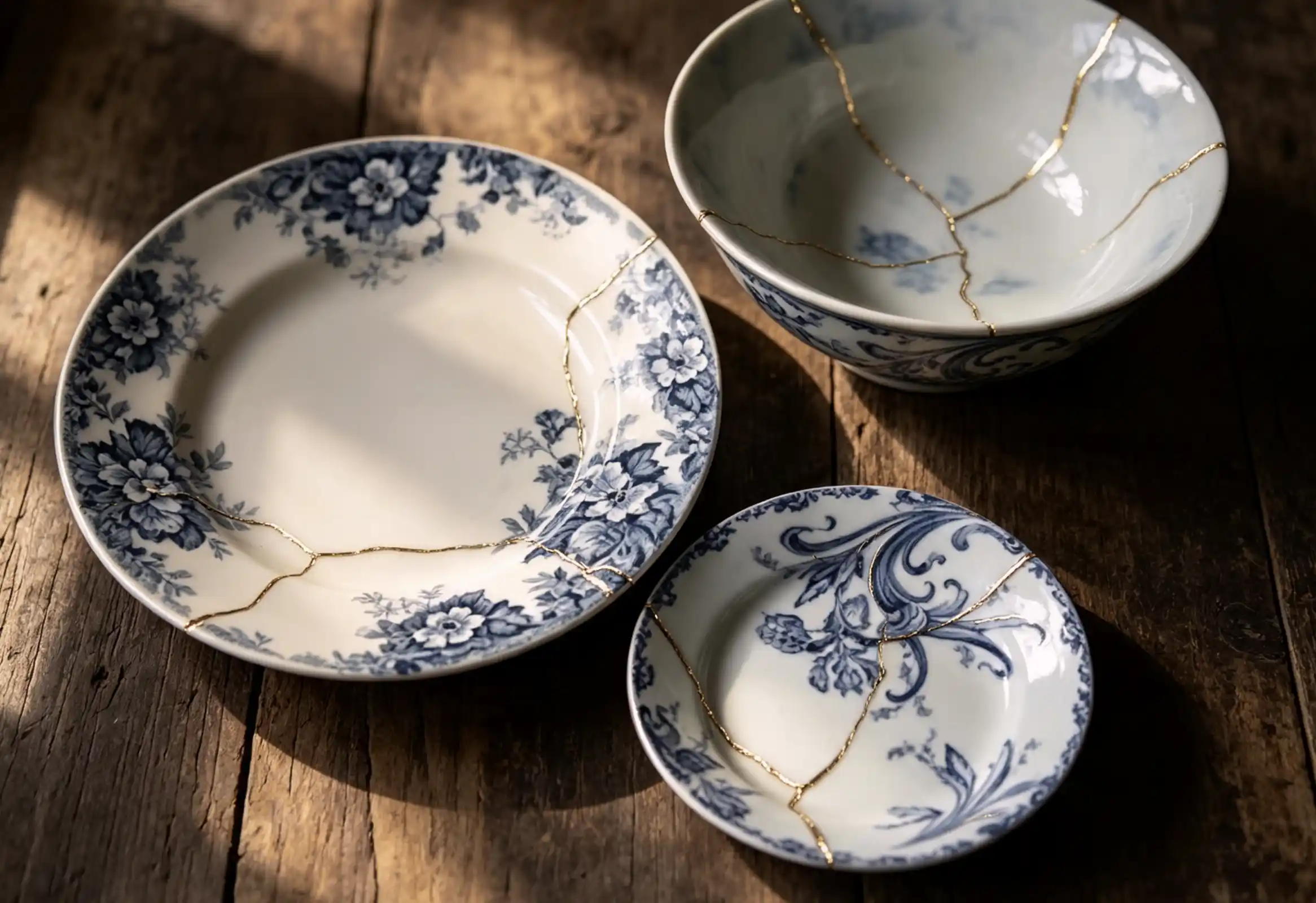
1. Ceramic: beautiful, but cafeteria life is brutal on it.
Everyone agrees ceramic looks the best. Smooth glaze, rich colors, microwave-safe — it is the obvious pick for homes and upscale restaurants. A corporate cafeteria, though, is a different animal. Hundreds or thousands of meals a day means bowls and plates get knocked around on busing belts, blasted through commercial dishwashers, and stacked high in storage racks.
The numbers tell the story: cafeteria ceramic breaks at 15–25 % a year. That is a constant drain on your budget. Worse, any chip or shard that lands in someone’s food becomes an instant safety incident.
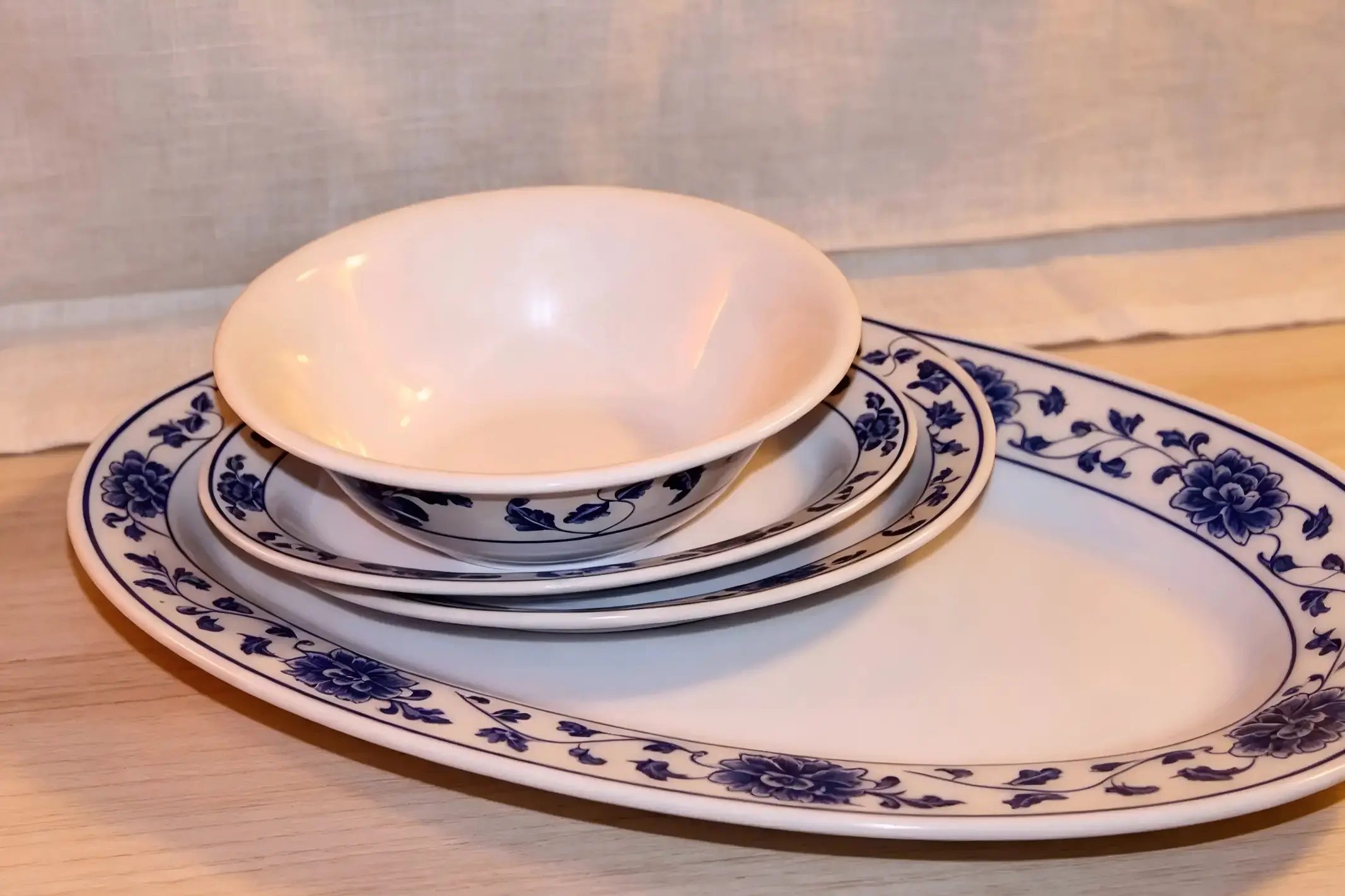
2. Melamine: tough as nails, but hot soup is where it fails.
Melamine fills ceramic’s biggest gap — it almost never breaks and weighs a lot less. That is why schools and fast-food cafeterias use so much of it. The catch is heat. The FDA’s melamine tableware guidance says plainly: do not microwave food in melamine dinnerware. The safe ceiling is around 70 °C.
Most corporate cafeterias serve hot soup and reheat meals in steam cabinets well above that temperature. At those levels, formaldehyde and melamine monomers can start migrating into food. There is also a cosmetic problem: after two to three years, melamine turns yellow, picks up knife marks, and starts looking worn out — the kind of tired appearance that drags down the whole dining space.
Stainless Steel Is Durable but Hurts the Experience — Cafeterias Need a Fourth Option
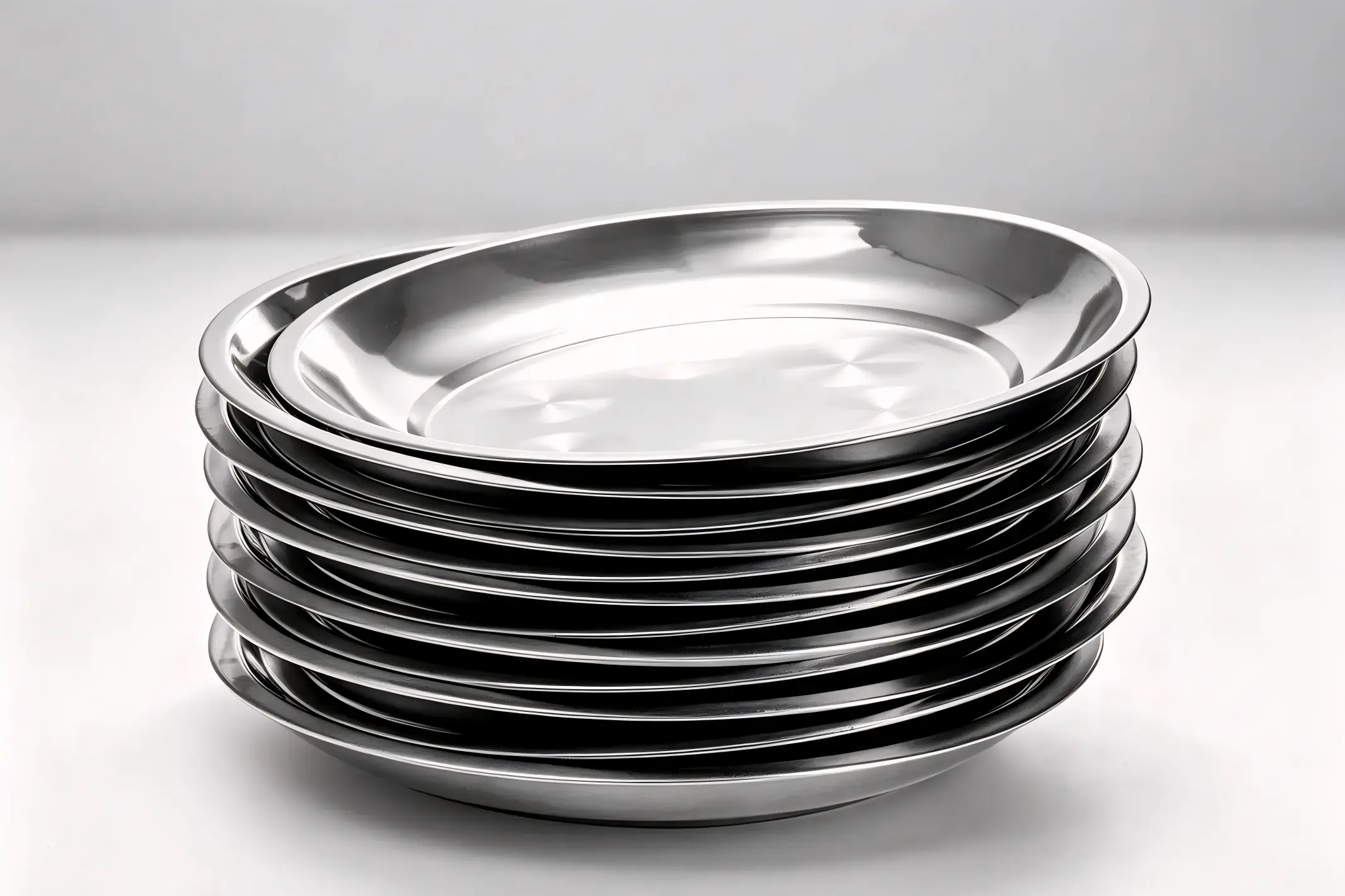
On pure durability, stainless steel is hard to beat. Breakage is basically zero, cleaning is easy, and plenty of factory and government cafeterias have relied on it for years. The problems are all on the user side. Metal conducts heat fast — a bowl of hot soup makes the rim too hot to hold within seconds.
Then there is the noise. Stainless-steel trays crashing into each other during busing and stacking are loud. At peak lunch hour with hundreds of trays moving at once, the dining hall sounds like a kitchen warehouse. A facilities manager at one Shenzhen tech-park campus told us his cafeteria ran 304 stainless-steel trays for three years with almost no breakage — yet “too noisy” and “trays burn my hands” showed up in the top three complaints on every employee survey.
Put all three materials next to each other and the pattern is clear. The good-looking one breaks. The tough one can’t take heat. The durable one ruins the dining experience. This opal glass vs ceramic vs melamine snapshot shows the trade-offs at a glance:
| Dimension | Ceramic | Melamine | Stainless Steel |
|---|---|---|---|
| Appearance & Texture | ★★★★★ Refined glaze, rich patterns | ★★★ Decent when new; yellows & scratches after 2–3 yrs | ★★ Industrial feel, lacks dining ambiance |
| Impact Resistance | ★★ 15–25 % annual breakage; shard hazard | ★★★★★ Nearly unbreakable | ★★★★★ Breakage rate ≈ 0 |
| Heat / Microwave Safe | ★★★★★ Microwave-safe, high-temp tolerant | ★★ FDA says no microwave; ≤ 70 °C limit | ★★★★ High-temp tolerant, but conducts heat — scalds hands |
| Noise Control | ★★★★ Relatively quiet on impact | ★★★★ Relatively quiet on impact | ★★ Loud metallic clatter, especially at peak hours |
| Key Pain Point | High breakage cost & safety risk | Chemical migration at high temps; rapid aging | Burns hands, noisy — poor dining experience |
What a corporate cafeteria actually needs is break-resistant cafeteria tableware that still looks good and handles heat. That is why opal glass — tempered milky-white glass — keeps showing up on more procurement shortlists. It is the fourth option that sidesteps the usual trade-offs. For a deeper comparison covering physical properties, lifespan, and cost, see this opal glass vs. porcelain full comparison guide.
Why Is Opal Glass Tougher Than Ceramic yet Safer Than Melamine?
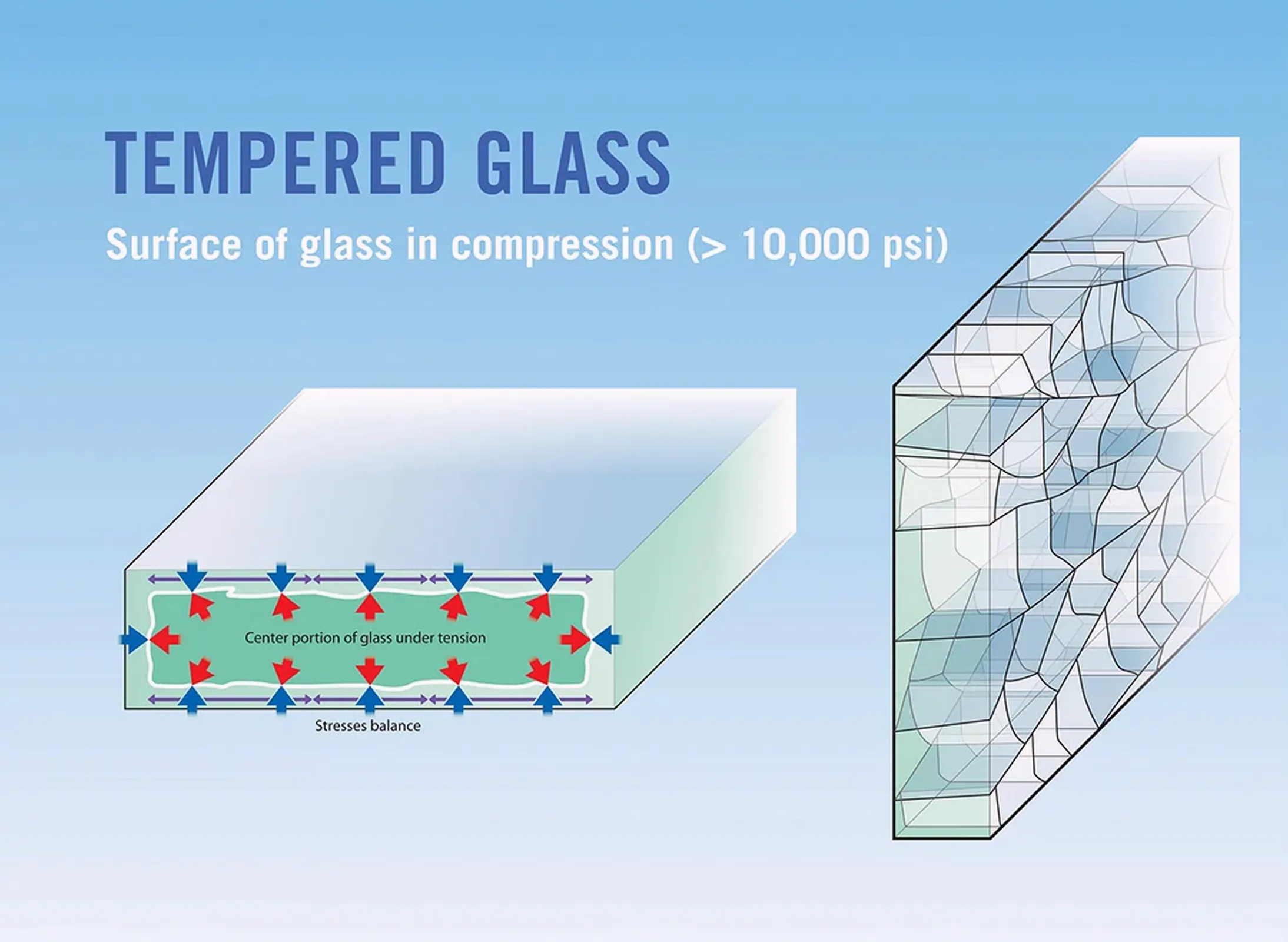
Tempered opal glass hits 2–3× the impact strength of ordinary ceramic. When it does break, it crumbles into blunt granules — not sharp shards. It is also lead-free, cadmium-free, microwave-safe, and handles thermal shock from −20 °C to 130 °C. Melamine starts leaching chemicals above 70 °C; opal glass does not leach at all. And because it is a non-porous, solid glass body, it keeps its whiteness and shine after thousands of dishwasher cycles — while ceramic dulls and melamine yellows.
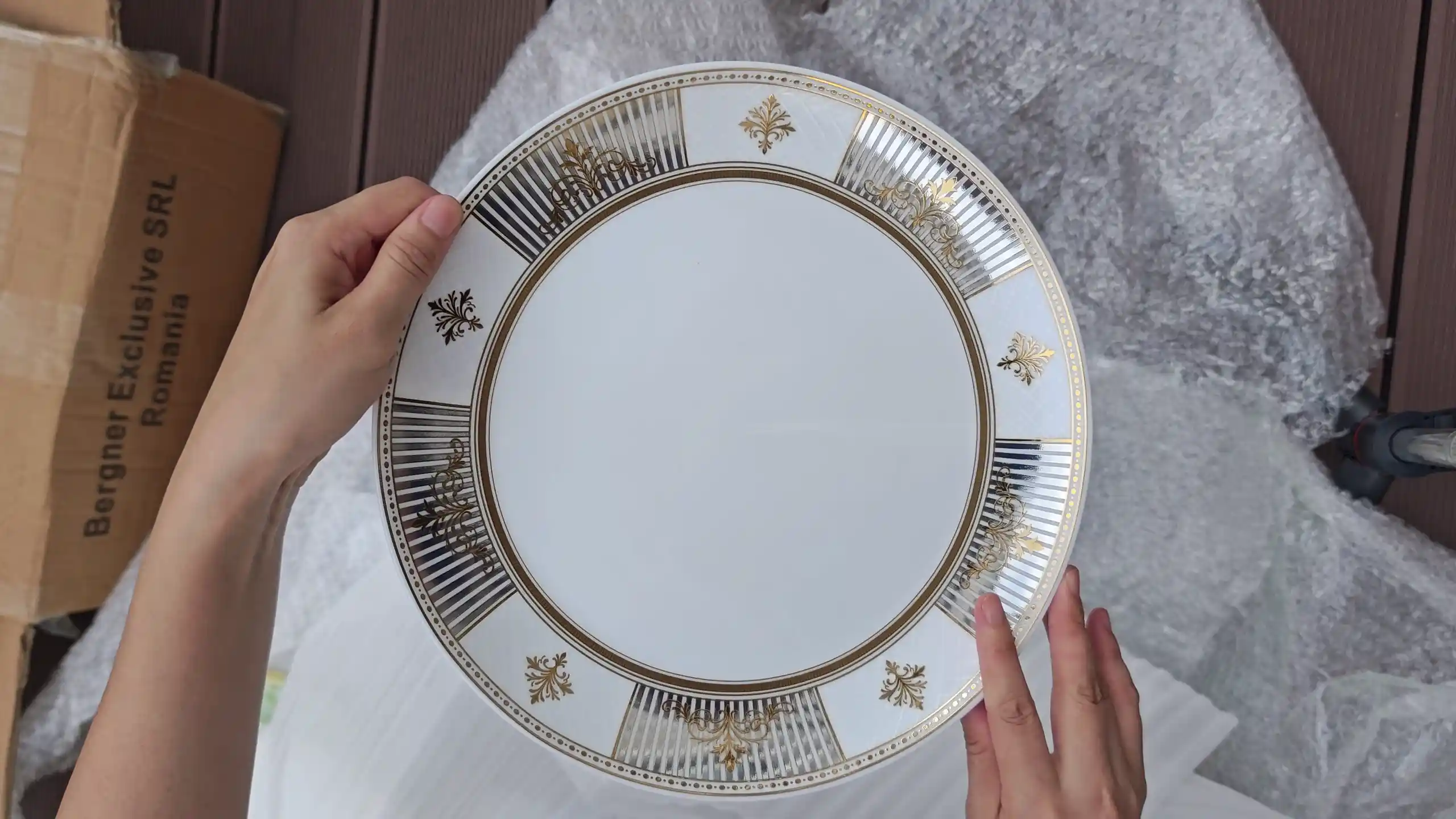
Here is how that plays out in practice, broken into two parts: material performance head-to-head and long-term real-world use.
Impact Resistance, Heat Tolerance, Food Safety — Benchmarked Against Ceramic and Melamine
1. Impact strength: 2–3× ceramic after tempering.
Tempered opal glass plates go through a heat-treatment step that builds a compressive-stress layer across the surface. The result is 2–3 times the strength of standard ceramic. Drop one from busing-counter height — about 75 cm — and it will usually survive intact or pick up nothing more than a small chip.
Even when a piece does shatter, it breaks into small, blunt-edged granules instead of the large, jagged fragments you get from ceramic. In a busy cafeteria at peak busing time, that difference matters. Blunt particles cause far fewer cuts, and cleanup is faster and more complete.
2. Heat tolerance & food safety: microwave-safe, thermal-shock-proof, zero chemical migration.
Opal glass goes straight into the microwave. It handles sudden swings from −20 °C to 130 °C without cracking — perfect for the cafeteria routine of pulling a container from the fridge and reheating it right away. The material is inorganic glass, lead-free and cadmium-free. Nothing migrates into food, period.
Melamine is a different story. The FDA bans microwaving food in it. And once the temperature passes 70 °C with acidic food present, melamine and formaldehyde release climbs fast. A peer-reviewed study indexed by the NIH (Ebner et al., 2020) tested this with 3 % acetic acid at 100 °C and found that migration rises exponentially past the 70 °C mark.
Ceramic can go in the microwave, but the glaze and the clay body expand at different rates. Repeated rapid heating and cooling causes crazing — tiny cracks in the glaze — or even full fractures. Under cafeteria-level use, that failure rate adds up.
For a full side-by-side of all three materials — including migration test data and real replacement costs — see this melamine vs. ceramic vs. opal glass restaurant plates deep dive.
After a Thousand Washes: How Big Is the Appearance and Maintenance Gap?
Cafeteria tableware goes through the commercial dishwasher two to three times a day. That adds up to over a thousand cycles a year. One long-term client of ours — a corporate campus in eastern China serving around 800 meals daily — started with an all-white ceramic set. Their facilities team told us the glaze looked noticeably dull after about ten months. The plates were so worn they had to replace the entire batch.
They then swapped half the inventory to opal glass dinnerware for their cafeteria and ran both side by side on the same machine with the same wash program. After more than two years, the opal glass still looked the same — same whiteness, same gloss. The ceramic plates had already gone through a second replacement. Melamine held up no better: surfaces yellowed year over year and eventually trapped grease stains and odors.
The reason opal glass keeps its look is structural. It is a non-porous, homogeneous glass body with no separate glaze or coating to wear away. No soaking needed, no special detergent required — it goes straight into the dishwasher. For a full breakdown of commercial-grade specs and how to evaluate suppliers, check this opal glass commercial tableware buying guide.
One more thing procurement teams often overlook: weight and stacking. Opal glass is precision-molded, so every piece is dimensionally consistent. Each item weighs 15–30 % less than a same-size ceramic piece, stacks tighter, and lets you fit one to two extra layers on the same shelf. For spec selection, most corporate cafeterias find that 9–10-inch round plates plus 6-inch bowls cover rice, stir-fry, and soup with no gaps. Here is how the three materials compare on day-to-day maintenance:
| Dimension | Opal Glass (Tempered) | Ceramic | Melamine |
|---|---|---|---|
| Appearance After 1,000+ Machine Washes | Whiteness & gloss virtually unchanged | Glaze dulls noticeably, whiteness drops | Surface yellows & fades; absorbs grease stains |
| Microwave Compatibility | Fully microwave-safe | Microwave-safe, but rapid heating/cooling can craze the glaze | Not microwave-safe (per FDA regulation) |
| Unit Weight (10-inch plate) | ≈ 200 g | ≈ 400 g+ | ≈ 150–180 g |
| Stacking Efficiency | Uniform shape; fits 1–2 extra layers per shelf | Variable shapes; stacking less compact | Lightweight & thin; stacks reasonably well |
| Daily Maintenance | No special care; straight into the dishwasher | Monitor glaze wear; schedule periodic culling | Monitor yellowing & aging; schedule periodic replacement |
Five-Year Total Cost: Which Material Actually Saves You Money?
Start with a 200-person cafeteria buying about 1,800 pieces. Ceramic, melamine, and opal glass all land in a similar per-unit price range, so the day-one bill looks roughly the same. The gap opens up afterward. Ceramic needs 15–25 % restocking every year. Melamine requires a full-batch swap every two to four years. Tempered opal glass? Under 5 % annual top-ups.
Over five years, the opal glass cafeteria tableware route costs about 25–35 % less than ceramic and 15–20 % less than melamine. The savings do not come from a cheaper sticker price. They come from not having to reorder.
Similar Prices Up Front, but the Restocking Gap Widens Fast
1. Day-one spending is close — the real difference shows up in year two.
For a 200-person cafeteria at three pieces per person with a 3 : 1 rotation-and-backup ratio, the first order is roughly 1,800 pieces. At that volume, per-piece prices for ceramic, melamine, and opal glass are similar enough that most procurement managers shrug and say “pick whichever.” The cost gap only becomes visible in the years that follow.
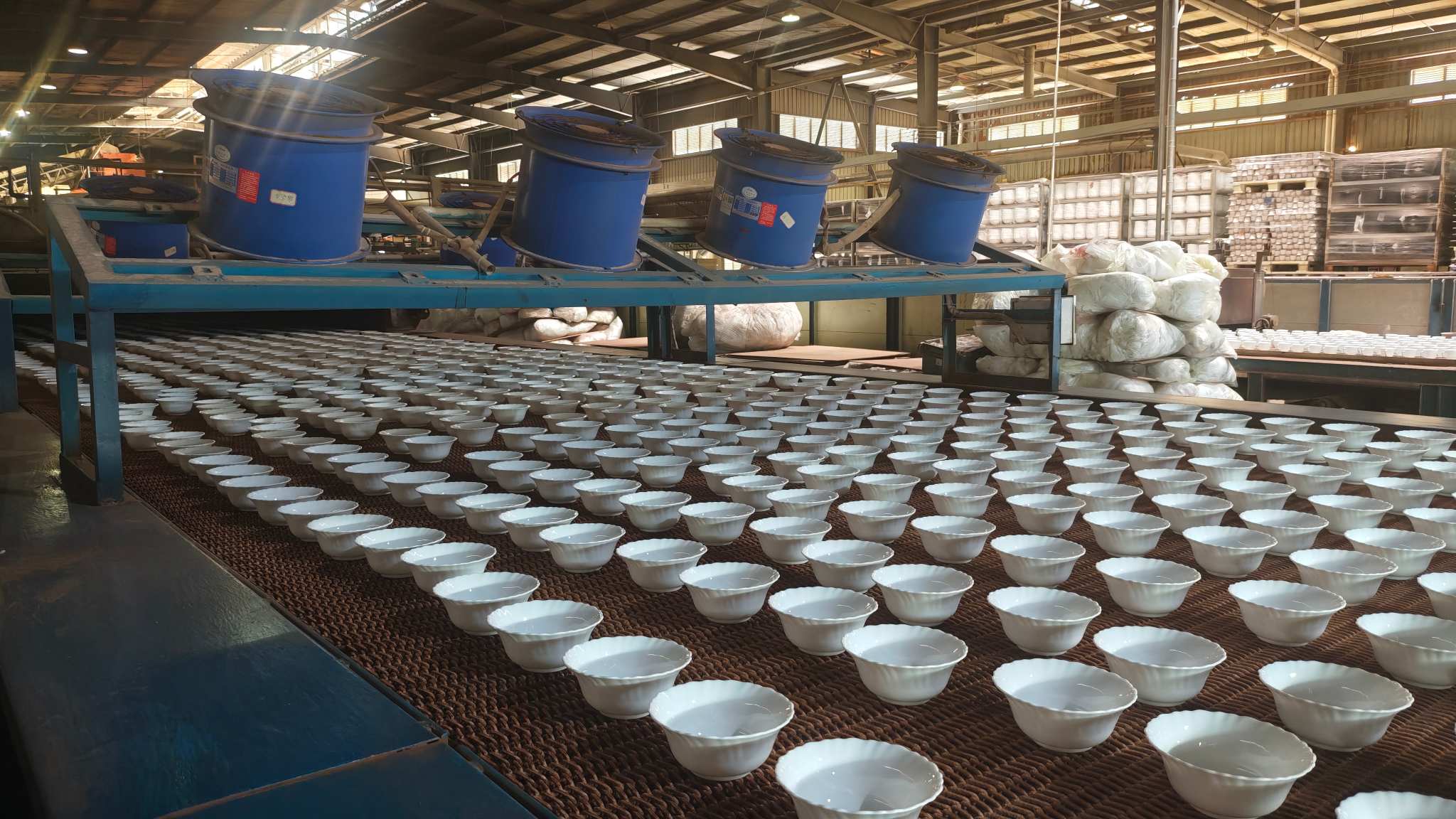
2. Each material wears out in a completely different way.
Cafeterias are high-frequency, high-turnover environments. Daily impacts, stacking, machine washing, and high-temperature sanitizing all take a toll. Ceramic is brittle — chips and cracks pile up, and most cafeterias end up reordering 15–25 % of stock every year. Melamine resists breakage but yellows and cracks on the surface after prolonged contact with cooking oil and sanitizers. A full-batch swap every two to four years is common.
Opal glass, tempered for higher impact resistance and naturally stain- and odor-proof, keeps annual restocking under 5 %. For anyone sourcing commercial cafeteria plates in bulk, that low replacement rate is the single biggest factor driving down total cost.
3. Five-year math: the money stays in your budget because you stop reordering.
Add up five years of spending and the opal glass path runs roughly 25–35 % cheaper than ceramic and 15–20 % cheaper than melamine. One multi-site client shared his books with us: under ceramic, yearly restocking ate up nearly a quarter of the original purchase cost. After one of his facilities switched to opal glass, the second-year top-up was fewer than 60 pieces. He pulled the purchase orders side by side, and by year three the remaining sites had all switched over.
The takeaway is simple. Opal glass does not win on shelf price — it wins because you stop buying replacements. In a setting that runs year after year, low attrition is where the real savings live.
Buying Opal Glass for Your Cafeteria: Which Specs Must You Verify?
Once you have settled on opal glass, a few procurement details can make or break the outcome. Skip any of them and you risk getting a product that looks right but does not perform.
First, make sure the product is labeled tempered opal glass — not plain opal glass. They look almost identical, but the untempered version has no meaningful advantage over ceramic when it comes to breakage. This matters especially when choosing tempered glass cafeteria dishes for a high-volume dining hall where each piece cycles through multiple services a day.
Second, check that the supplier holds ISO 9001 certification. That tells you there is a standardized quality-control process from raw materials through finished goods, with traceable batch-to-batch consistency. Third, give preference to manufacturers with independent factory-audit credentials — a GMC certification audited by TÜV Rheinland, for instance. These audits cover production qualifications, quality systems, and R&D capability, and carry more weight than anything a supplier can claim about itself.
Finally, before you commit to a large order, ask for samples from different production runs. Compare whiteness and dimensions across batches. Whether you are equipping a single location or selecting opal glassware for corporate dining across several sites, this step catches color shifts and sizing issues before they show up in a full shipment.
| Checklist Item | Requirement | Why It Matters |
|---|---|---|
| Material Label | Must state “tempered opal glass” | Untempered opal glass lacks the impact resistance needed for high-frequency cafeteria use |
| Quality Management Cert | Supplier holds ISO 9001 | Ensures standardized QC from raw material to finished product; batch quality is stable & traceable |
| Third-Party Factory Audit | Prefer GMC certification via TÜV Rheinland | Covers production qualifications, QA systems, and R&D capability — more credible than self-reporting |
| Batch Consistency Check | Request samples from different batches; compare whiteness & dimensions before ordering | Prevents color variation or size inconsistencies in the bulk shipment |
If opal glass is already your direction, browse the tempered opal glass tableware product range and filter by category and size to find the right fit for your cafeteria.
Common Questions People Ask
Q1: Our cafeteria only serves 200–300 people. Is the minimum order quantity too high for us?
Most manufacturers set MOQs for standard items at 500–1,000 pieces. A 200–300-person cafeteria’s first purchase usually clears that bar. Custom logos or unusual shapes push the minimum higher, so starting with in-stock standard items is the easiest way to keep unit costs down and lead times short.
Q2: We use melamine now and have never had a safety issue. Do we really need to switch?
If your cafeteria never serves anything above 70 °C and does not use microwaves or steam cabinets, melamine can keep working for the short term. But keep in mind that surface aging creates micro-cracks that speed up chemical migration — even without heating. Any melamine set that has been in use for more than three years should be lab-tested or replaced. “Nothing has gone wrong yet” is not the same as “it is safe.”
Q3: Can opal glass go into our existing commercial dishwashers without changing any settings?
Yes. It works with all major commercial dishwasher brands out of the box — no need to adjust water temperature or wash cycle. Opal glass handles heat well above the 60–80 °C range standard machines run at, and it is not picky about detergent. The only tip: do not nest pieces too tightly, so water can circulate properly. Same rule you would follow with ceramic.
Q4: How can I tell whether a supplier’s sample is truly tempered opal glass?
The quickest test is a drop from 75 cm — standard table height — onto a tile floor. Properly tempered opal glass will most likely survive or show only a small chip. Untempered opal glass shatters into large pieces, just like ceramic. For extra confidence, ask the supplier for the tempering-process report and a third-party test certificate for that batch. Documentation beats guesswork.