⚡ Short note: Opal glass handles daily restaurant wear without the usual trade-offs.
- Built differently: Special glass recipe with tiny crystals inside scatters light to create that porcelain look—except it won’t crack when your kitchen staff stacks it hot from the dishwasher.
- Temperature proof: Goes from ice-cold prep fridge to 130°C serving line without shattering, something standard ceramic rarely survives in busy kitchens.
- Tougher than it looks: Real kitchens report 10-20 year lifespans even with daily industrial washing, while drop tests show 2-3x the impact strength of regular glassware.
- Actually clean: The dense surface has no pores for food particles to hide, so stains and smells wash off completely—verified through thousands of commercial dishwasher cycles.
What is Opal Glass Tableware?
In the afternoon tea scene of a boutique café, desserts are served on a plate that is pure white with slightly translucent edges—it looks like porcelain but is lighter than porcelain, and the touch is surprisingly smooth when picked up. This plate is very likely opal glass tableware.
Opal glass tableware is a series of tableware made from a special glass material, named for its unique milky white translucent appearance. Simply put, it is white glass dinnerware that looks like porcelain and feels like glass, combining the premium feel of porcelain with the hygiene and durability of glass.
Many people who first encounter it ask: What exactly is opal glass made of, and how is it different from ordinary glass? Here are its core components:
- Raw materials: Emulsifiers such as fluorides and phosphates are added to ordinary glass
- Craftsmanship: High-temperature melting forms a uniformly distributed microcrystalline structure
- Visual result: Light is scattered by microcrystalline particles, presenting a milky white opaque texture
- Tactile result: The surface is dense and non-porous, non-absorbent, non-odor-absorbing, and bacteria-free
- User experience: Lighter than ceramics, whiter than ordinary glass, easy to clean without leaving odors
The Material Behind Opal Glass Tableware
The core raw material composition of opal glass determines its unique properties that distinguish it from ordinary ceramics or transparent glass. By adding emulsifiers such as fluorides and phosphates to ordinary glass raw materials, and after high-temperature melting, a uniformly distributed microcrystalline particle structure forms inside. The function of these microcrystalline particles is to scatter light passing through the glass, thereby giving the overall appearance a soft milky white color rather than the transparency of ordinary glass. This is why opal glass tableware is extremely close to porcelain in appearance but still fundamentally belongs to the glass category in terms of material essence. Its dense, non-porous surface will not adsorb food residues, moisture, or odors like the microporous structure of ceramics—this is one of the core defining characteristics of opal glass as a tableware material. This material is not a new invention; its industrial history can be traced back to the mid-20th century. For those first encountering opal glass, from raw material composition to forming processes, Opal Glass Tableware Material Basics clearly organizes these basic concepts, making product parameters easier to understand after reading. The Arcopal brand under Arc Holdings officially introduced an opal glass tableware series as early as 1958, and decades of market presence serve as powerful evidence of this material’s maturity.
The Look of Opal Glass Tableware
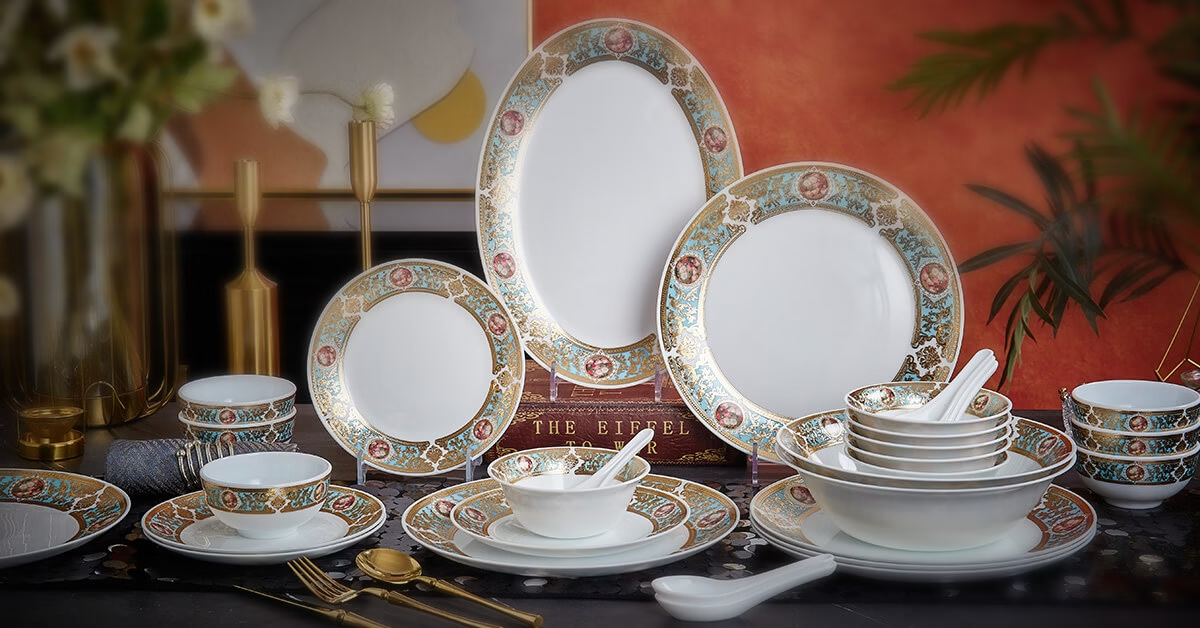
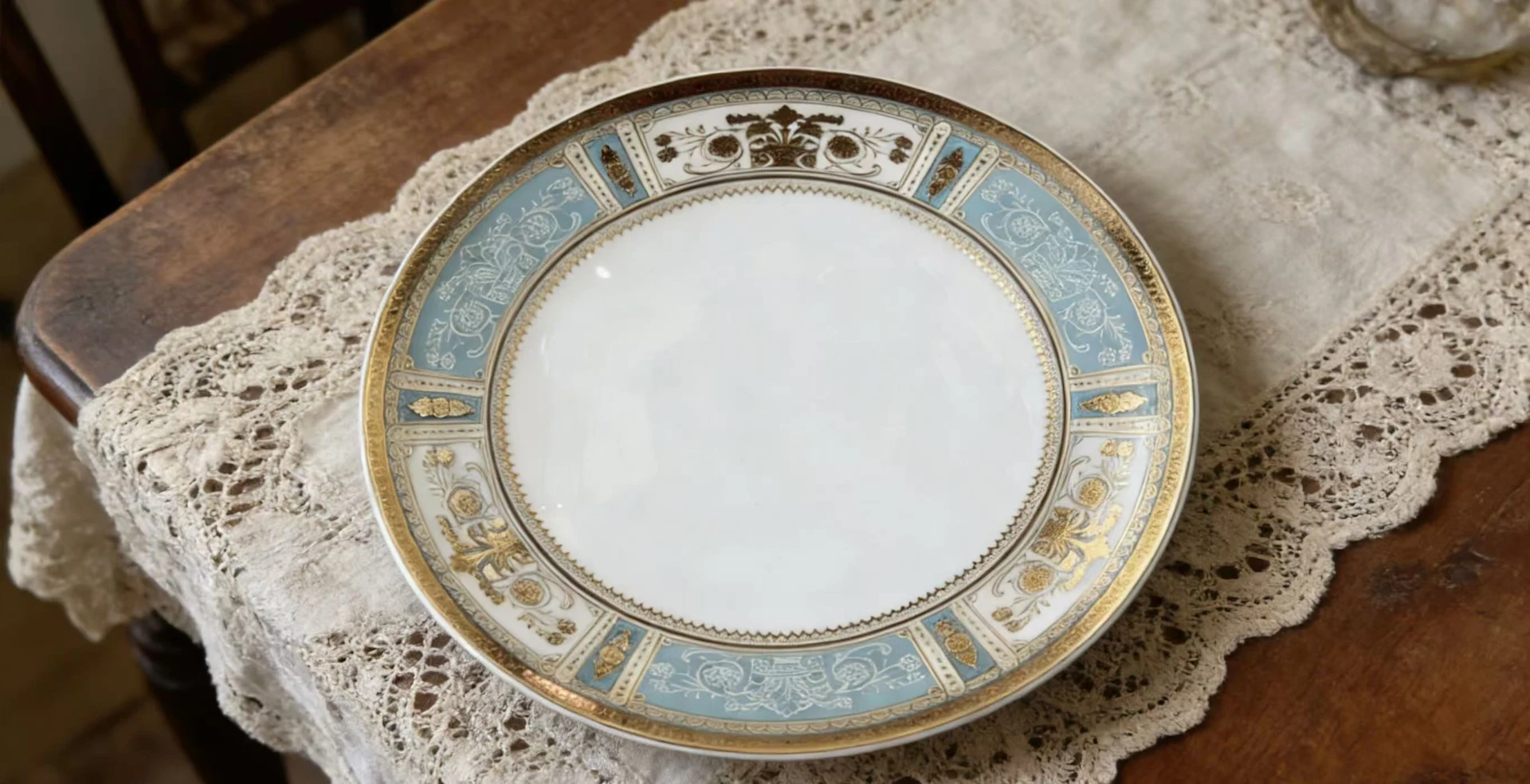
Place opal glass tableware next to a pile of ordinary white porcelain plates, and experienced people can distinguish them at a glance. Opal glass tableware has three distinct visual characteristics, and it is these three points that constitute its independent position as a tableware category. The first is its pure milky white tone, with uniform overall color and no obvious color difference; the visual texture is highly similar to high-end bone china but without the risks of glaze cracks or color spots that porcelain has. The second is the translucent edge effect—under strong light, the edges of the tableware will reveal a delicate halo with rich layers; this translucency is the key visual marker that distinguishes opal glass from opaque white porcelain. The third is the smooth, glossy surface with high glaze finish, where stains are not easily attached and the initial clean appearance can be maintained even after long-term use. It is precisely this dual attribute of “looking like porcelain but essentially being glass” that gives opal glass tableware its independent position in the definition of tableware categories, rather than being a simple substitute for porcelain or ordinary glass. The key behind this lies in the fundamental differences between the two materials from formulation to internal structure—The Essential Difference Between Opal Glass and Transparent Glass provides a detailed breakdown from microcrystalline particle structure to actual mechanical performance; after reading it, you will understand why both are called “glass” yet feel and perform completely differently.
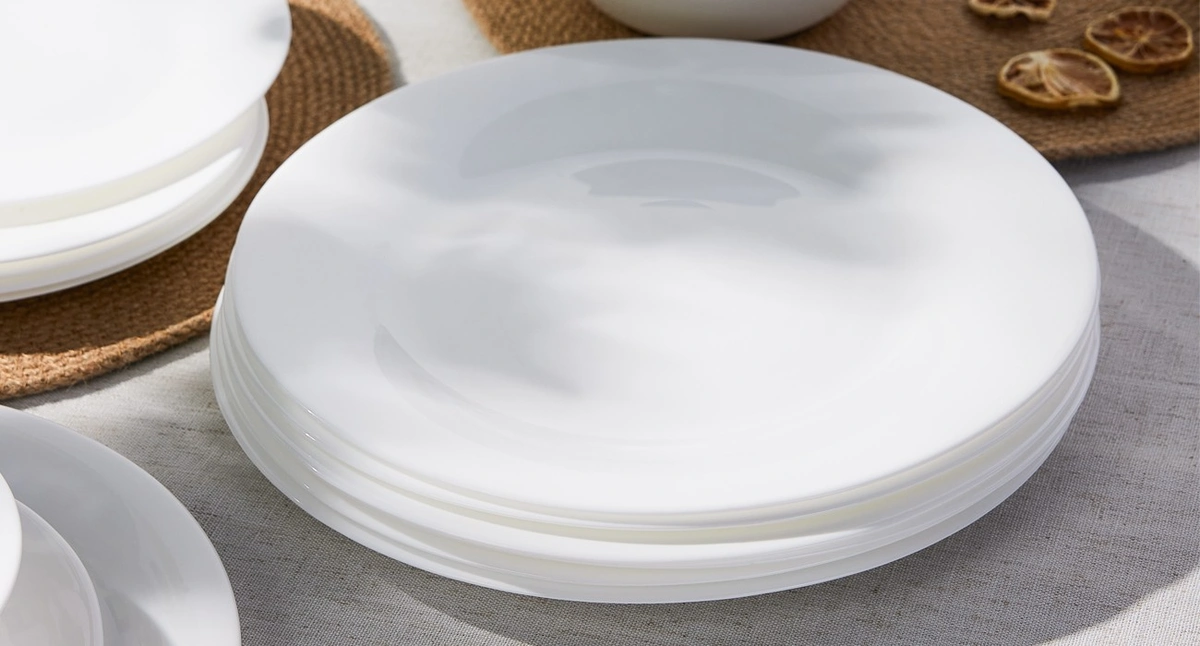
Opal Glass as a Dinnerware Category
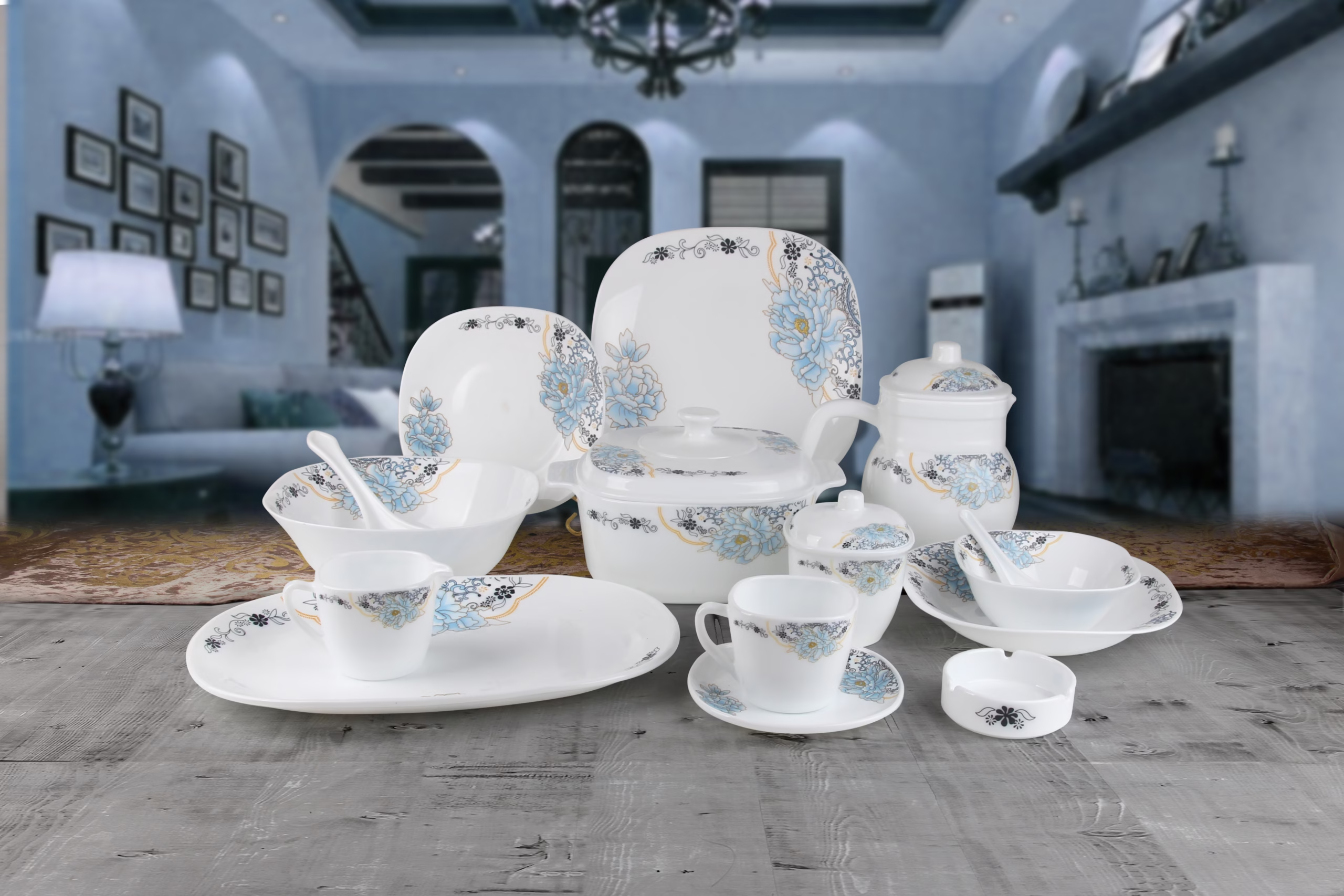
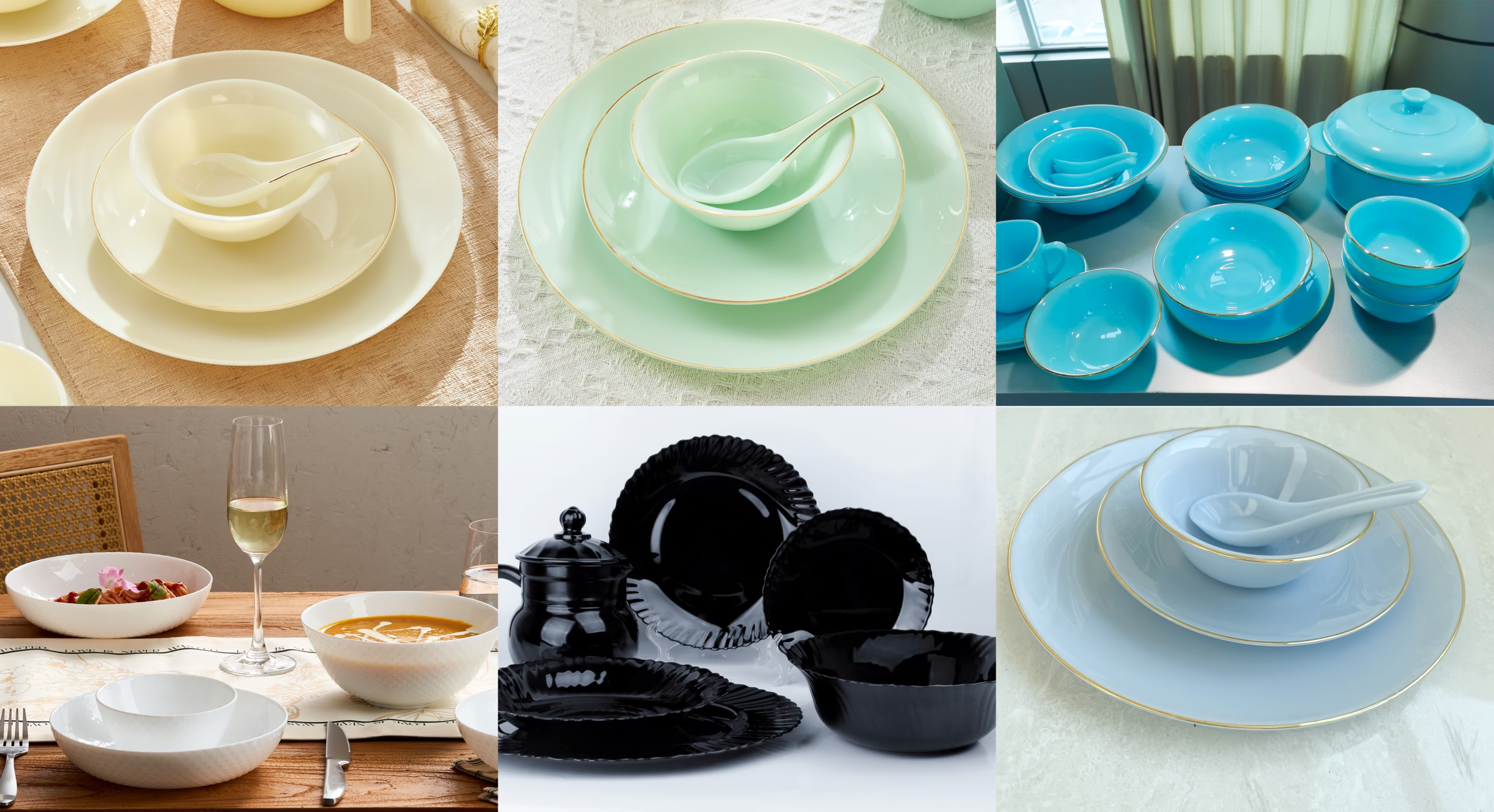
From the perspective of category definition, opal glass tableware covers complete tableware categories needed for daily dining tables, including dinner plates, soup bowls, teacups, and rice bowls. Its unified milky white tone and glass material characteristics make the entire set highly coordinated visually. It neither belongs to the category of traditional ceramic tableware nor is it the same as ordinary transparent glassware; it is an independent tableware category established with opal glass as the core material. Understanding what opal glass tableware is essentially means understanding this material itself—a modern tableware solution that achieves a milky white appearance through special formulation and craftsmanship, combining the hygiene of glass with the aesthetic appeal of porcelain.
Opal Glass Dinnerware Features and Benefits
When a set of tableware falls to the ground, ordinary ceramics often shatter into pieces, while opal glass dinnerware usually just makes a dull thud upon landing, with the plate remaining intact. This is not accidental but an inevitable result determined by its material structure. For this reason, opal glass dinnerware is gradually becoming a popular choice for home dining tables and commercial dining venues—it lacks the fragility of ordinary glass and the heaviness of ceramics, finding a convincing balance between the two.
When purchasing tableware, many people struggle with these core questions: “Is it durable?” “Is it safe?” “Is it easy to clean?” The following material characteristics of opal glass dinnerware directly address these concerns:
- Milky white opaque appearance: Formed by microcrystalline matrix craftsmanship, with a warm appearance; it is not ordinary glass dyeing but the structural color of the material itself
- Impact-resistant and shatterproof: Internal microcrystalline structure effectively disperses collision stress; daily drops and collisions are not likely to cause damage
- Cold and heat resistant, microwave-safe: Can go directly from refrigerator to microwave without cracking due to thermal expansion and contraction
- Lead-free and cadmium-free, food-grade safe: Non-porous surface does not breed bacteria, does not adsorb odors, and does not release harmful substances
- Lightweight design: Lighter than ceramics of the same size, easy for elderly and children to handle
- Dishwasher safe: Smooth surface prevents grease residue, gloss does not diminish after long-term washing
These six points constitute the core differences between opal glass dinnerware and ordinary ceramics and ordinary glass tableware.
The Structure That Makes It Strong
Opal glass is a milky white opaque glass made by adding oxides such as fluorides or phosphates during the glass manufacturing process. This craftsmanship forms a microcrystalline matrix structure inside, significantly enhancing overall strength while presenting a milky white luster that combines the delicacy of glass with the warmth of ceramics. It is not that the glass has turned “white,” but rather it has undergone an essential restructuring at the structural level. When ordinary glass is subjected to external impact, stress concentrates at one point and rapidly spreads, causing overall rupture; whereas the microcrystalline matrix structure of opal glass disperses this stress over a larger area, giving it far greater resistance to damage than ordinary tableware under the same impact. This inherent material advantage directly determines opal glass’s comprehensive performance across multiple dimensions including durability, temperature resistance, and safety that distinguishes it from ordinary tableware. Food contact safety is particularly worth separate attention—the dense, non-porous surface structure determines that it does not release harmful substances, but specifically regarding lead-free and cadmium-free verification standards and the safety boundaries of microwave heating, Analysis of Food Contact Safety of Opal Glass Plates and Bowls breaks down each item from a materials chemistry perspective, with conclusions clearer than most product pages.
Long-Term Durability in Real Use
A set of tableware accompanies a family through three moves, goes through the dishwasher every day, and is used for a full 20 years without showing any chips—in real discussions within UK consumer communities, multiple users have documented their personal experiences with Corelle (an opal glass material product) sets used continuously for over 20 years, through multiple moves and daily dishwasher cleaning, without any damage. Such long-term user feedback from ordinary families provides objective evidence for the comprehensive durability of opal glass. Under equivalent conditions, ordinary ceramics would be hard-pressed to achieve this level of performance.
Opal Glass vs Ceramic, Melamine, and Stainless Steel
When a restaurant purchasing manager first places an opal glass dinner plate on the table, colleagues around them blurt out: “Is this ceramic?”—this scene plays out almost daily in commercial kitchens around the world. Opal glass tableware stands out among numerous materials thanks to its unique microcrystalline glass structure. To more intuitively understand the practical value of opal glass, we systematically compare it with the four most common tableware materials on the market.
Before the formal comparison, many people ask: Where exactly is opal glass tableware superior to other materials? Simply put, here are the key points for quick understanding:
- More drop-resistant than ceramics, not afraid of sudden cold or heat
- Safer than ordinary glass with lower breakage risk
- Healthier than melamine, does not release harmful substances at high temperatures
- More textured than stainless steel, non-conductive, without metallic odors
- Comprehensive durability and hygiene standards make it more suitable for long-term commercial dining use
With these five points in mind, let’s examine each one in depth.
Opal Glass vs Ceramic
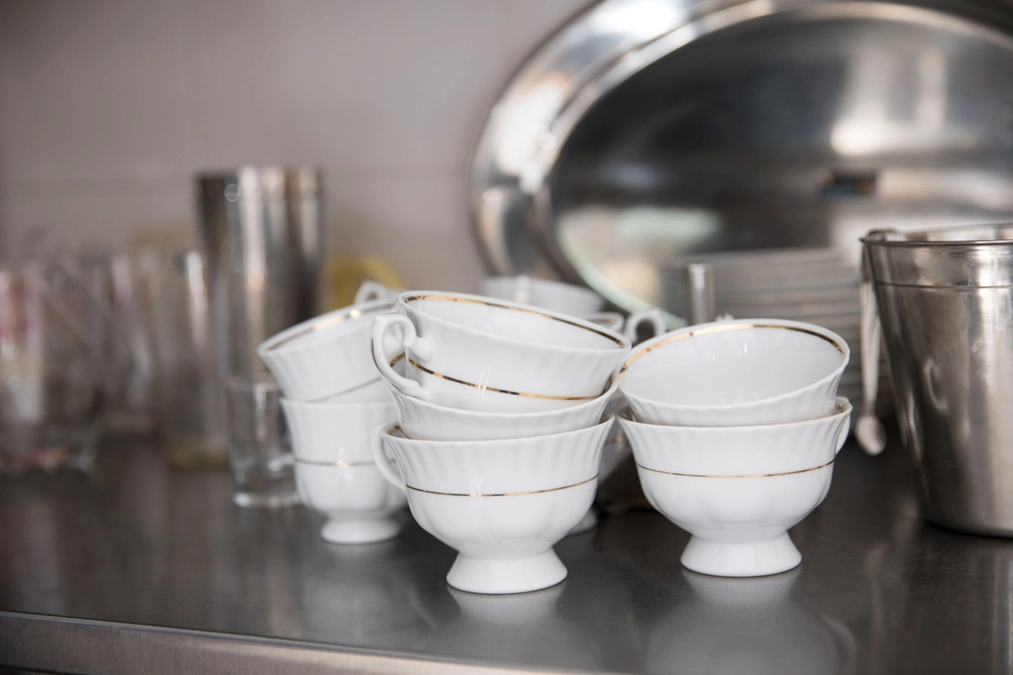
Suppose you work in a chain restaurant with six table turns per day, moving hundreds of pieces of tableware during clearing alone—in this high-frequency collision environment, the fragile nature of ceramics is magnified infinitely. Opal glass and ceramics are very close in appearance, both presenting a pure white, warm visual texture, which is why the two are often confused. However, when delving into physical performance, the differences become clear. Opal glass undergoes special heat treatment to form a dense microcrystalline structure, with impact resistance and temperature change resistance far exceeding traditional ceramics. Ceramic tableware is highly prone to cracking when exposed to sudden cold or heat, while opal glass can go directly from the refrigerator to microwave heating without damage. Furthermore, once ceramic glaze develops fine cracks, it tends to harbor dirt; opal glass has a dense surface and is more thoroughly hygienic to clean—this is no small matter for commercial kitchens that need to strictly enforce food safety standards. Of course, ceramics are not the only reference object; in actual procurement, porcelain often needs to be compared simultaneously—the real performance of the three materials under temperature resistance, hygiene standards, and commercial turnover intensity, Three-Way Performance Comparison of Opal Glass, Ceramics, and Porcelain compares them in the same dimension, saving time from searching separately.
Opal Glass vs Regular Glass
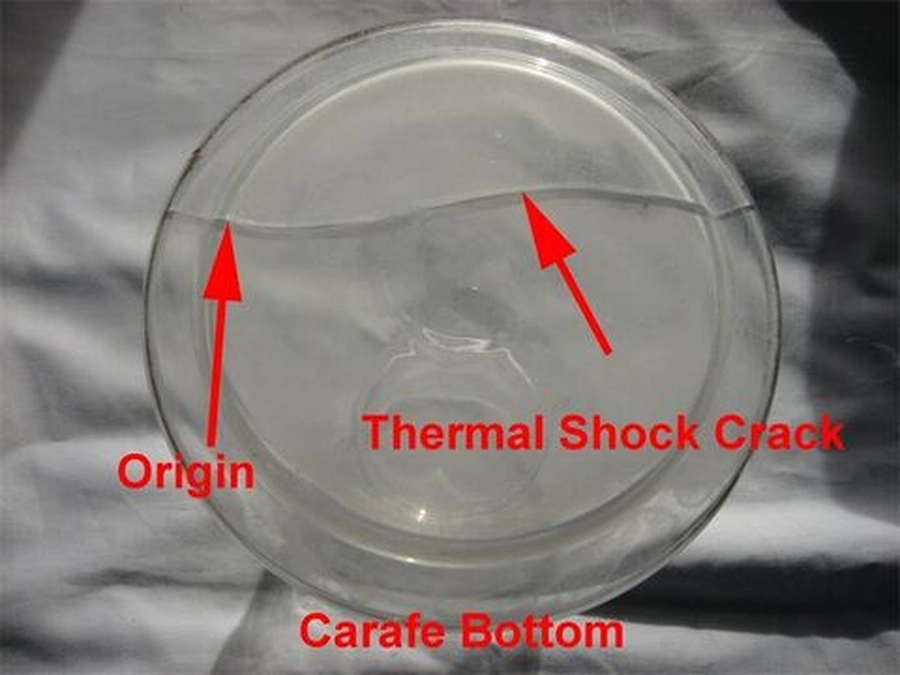
When many people first pick up opal glass tableware, they subconsciously tap it—the subdued texture is completely different from the crisp sound of ordinary glass cups. This intuition is correct. Opal glass adds opacifiers (such as fluorides or phosphates) during the manufacturing process and undergoes precise heat treatment to form microcrystalline phases inside, fundamentally changing the mechanical properties of the glass. From a practical use perspective, opal glass has 2 to 3 times the impact resistance strength of ordinary glass. More notably, ordinary glass forms sharp fragments when broken, posing obvious safety hazards in dining environments; whereas even if opal glass is damaged by external force, its fracture pattern is more controllable, significantly reducing usage risks, making it popular in children’s tableware and medical institution dining scenarios.
Opal Glass vs Melamine
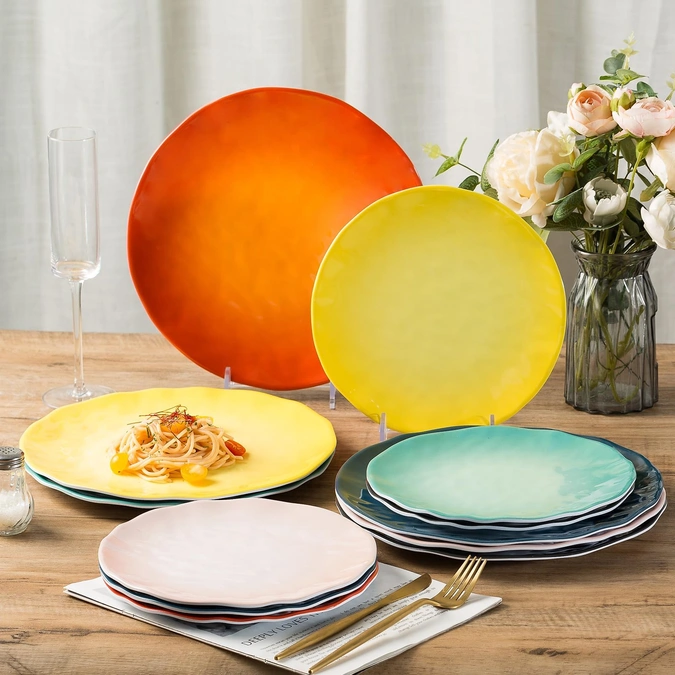
If tableware is compared to the “last checkpoint” for food, then what material this checkpoint is built from directly determines whether the food has been contaminated before reaching the mouth. Melamine tableware has long occupied the fast food and takeout markets with its lightweight, drop-resistant, and low-cost advantages, but food safety issues have always been unavoidable concerns. As an inorganic material, opal glass has extremely stable chemical properties and will not release any harmful substances in high-temperature environments or when in contact with acidic foods. In contrast, melamine carries risks of releasing trace amounts of formaldehyde and melamine when temperatures exceed 70°C or with long-term frequent use, making it unsuitable for holding hot soups, hot porridge, and other high-temperature foods. At the same time, opal glass has higher surface hardness and is less prone to knife scratches with long-term use, maintaining both aesthetics and avoiding hygiene hazards from scratches harboring bacteria—this is precisely something many melamine users regret not considering in advance after one or two years of use.
Opal Glass vs Stainless Steel
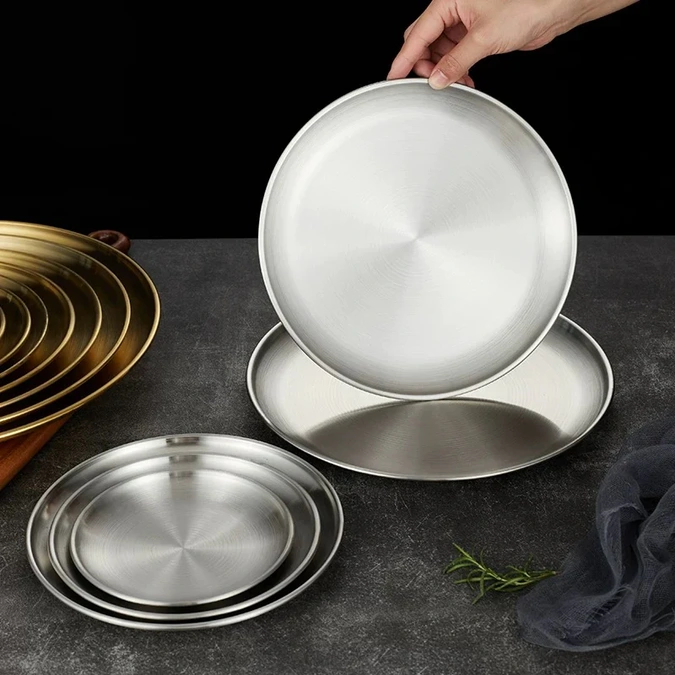
Stainless steel tableware is renowned for its excellent durability and antibacterial properties and is a long-term choice for school cafeterias, hospitals, and other institutional venues. However, if the same set of tableware is placed in a business restaurant focusing on refined experiences, the cold metallic luster and potential metallic odors will silently weaken the warmth that the dining table should have. Opal glass presents a warm texture close to white porcelain, whether setting the table or serving dishes, significantly enhancing the visual hierarchy of the dining table. In actual operation, stainless steel has strong thermal conductivity, making container edges prone to burning hands when holding hot soup, while opal glass has low thermal conductivity, making it safer and more comfortable to hold—this seemingly minor difference is repeatedly verified by hundreds of customers’ hands in buffet scenarios, and its importance is self-evident.
Commercial Uses of Opal Glass Tableware
Commercial kitchens are never gentle places. Hundreds of daily transports, washes, and stacks, cycles of high-temperature serving and rapid cooling, cause ordinary tableware to often not last a quarter here. Whether a set of tableware can “survive” long enough in a commercial kitchen never depends on how good it looks in the display cabinet, but on whether it can withstand the roughest processes of every ordinary workday. The reason opal glass tableware can be adopted on a large scale in high-intensity commercial scenarios such as hotels, airline catering, and chain restaurants is precisely because its material characteristics are highly compatible with the core needs of commercial kitchens. So, what specific application scenarios does opal glass actually land in?
Before delving into each application scenario, let’s first quickly review the core application values of opal glass in commercial kitchens from an overall perspective:
- Hotel breakfast and banquet catering: Full-process temperature switching from refrigerated preparation to hot food serving without special handling
- Airline catering tray systems: Lightweight, turbulence-resistant, long-term mainstream material selection for airline tableware
- Chain restaurant daily serving: Highly consistent mass production, supporting cross-store standardized operations and unified procurement
- Industrial dishwasher high-frequency cycles: Resistant to strong detergents and high-temperature steam, maintaining stable gloss after thousands of washes
- Back-of-house preparation area stacking storage: Lightweight and stackable, saving shelf space and reducing employee handling physical exertion
With these six application scenarios in mind, let’s examine each one in depth.
Hotel Breakfast and Banquet Service
Every morning at seven, the preparation rhythm in hotel back-of-house does not slow down for any reason. Plates just taken from the refrigeration area will hold steaming porridge and be served directly to tables within minutes—no buffer time, no preheating steps, only continuous serving pressure. Ordinary tableware under this sudden cold and hot switching will see cracks quietly appear on some unremarkable morning, then shatter, then be scrapped, ultimately becoming an avoidable loss cost. Opal glass solves this problem at the material structure level through microcrystallization heat treatment, withstanding sudden switching from freezing temperatures to high-temperature serving without cracking or deformation. In evening banquet scenarios, the same batch of tableware must also survive complete cycles of setting, serving, and clearing for five hundred people, withstanding both operational intensity and presenting an elegant texture close to high-end white porcelain when distinguished guests are seated—opal glass is one of the few materials that can simultaneously meet these two requirements.
Airline Catering
Airline catering is one of the most demanding scenarios for commercial tableware applications. Tray space is extremely limited, tableware weight directly affects fuel costs, turbulence during takeoff and landing phases is a continuous test of structural strength, and temperature changes inside the cabin cannot be ignored. One gram overweight, multiplied by hundreds of flights per day, accumulates to a figure no one wants to see. Under these multiple restrictive conditions, ordinary ceramics are excluded due to weight and fragility, and melamine is not adopted due to high-temperature safety concerns. Opal glass, with its comprehensive characteristics of lightweight, impact resistance, and thermal stability, has long been the mainstream material selection for economy and business class tableware systems of numerous global airlines. This is not accidental market preference but a material conclusion drawn by the airline catering industry after long-term screening under extreme use conditions.
Chain Restaurant Operations
For chain dining brands with dozens or even hundreds of stores, tableware consistency is a easily overlooked but crucial aspect of brand visual standards. Imagine a brand operating simultaneously in thirty cities nationwide—if Beijing stores’ plates are slightly yellower and edges slightly thicker than Shanghai stores’, this subtle difference may not be easily noticeable in a single store, but when magnified at the brand level, the signal sent to customers is only one: this chain store has not managed its standards well. Opal glass tableware can maintain highly consistent color, size, and weight in mass production, making cross-store tableware allocation and replenishment management simple and controllable. Its stable quality performance makes tableware loss rates consistent across stores, facilitating headquarters to establish unified procurement cycles and inventory models, systematically reducing overall management costs from the supply chain level.
Performance in Commercial Dishwashers
Industrial dishwasher operating parameters in commercial kitchens are not gentle—high-temperature steam, powerful cleaning agents, high-pressure water flow—every cycle is a chemical and physical dual impact on tableware surfaces. Ceramics slowly “age” in this process: after three hundred washes, the glaze begins to dull; after six hundred washes, the moment they are placed on the table, guests’ eyes have already made their judgment of the restaurant. Opal glass has a dense surface structure with good tolerance to chemical components in cleaning agents; even after thousands of industrial-grade washes, whiteness and gloss remain stable. This application characteristic directly translates to lower tableware replacement frequency and more controllable operating costs—a long-term account worth carefully calculating for any high-turnover commercial restaurant.
Back of House Storage and Handling
Storage space in back-of-house is always a scarce resource in commercial kitchens, with every inch of shelf space being carefully allocated. Opal glass tableware has regular shapes and strong stackability, allowing efficient stacking on shelves without wasting vertical space. Compared to ceramics of the same specification, opal glass is lighter in weight—under conditions where a server works continuously for six hours and each transport is one-third lighter than ceramics, the difference in physical exertion genuinely accumulates with every bend and lift of the body. This is not a parameter comparison on paper but a real score given by back-of-house staff with their level of fatigue during peak turnover periods. A restaurant with high daily table turnover may transport tableware more than a thousand times per day; the benefits of lightweight design in this scenario carry far more weight than initially apparent.
How to Pick the Best Opal Glass Dinnerware for Commercial Use
After a restaurant changes to a new batch of tableware, regular customers quietly decrease—this situation is not uncommon. Tableware selection may seem like a detail, but it is actually the first threshold for customers to perceive restaurant quality. Opal glass dinnerware, with its matte white tone, strong durability, and easy-to-clean characteristics, is becoming the procurement choice of choice for more and more restaurants, hotels, and banquet venues. However, with numerous products on the market, if enterprises do not have a clear judgment framework when purchasing, they can easily cause unnecessary losses by choosing the wrong style or supplier.
For enterprises to purchase a suitable opalware dinnerware set, they usually need to start with the following five core steps:
- Step 1: Clarify your restaurant’s style positioning and daily usage scenarios
- Step 2: Evaluate product durability performance, focusing on thermal shock resistance and breakage resistance
- Step 3: Reasonably plan tableware specifications and capacity combinations according to menu structure
These three steps are interlocking; missing any one may lead to practical problems such as style inconsistency, high breakage rates, or replenishment difficulties after procurement.
Choosing a Style That Fits Your Venue
The same opal glass dinnerware placed in a Michelin restaurant versus a university cafeteria will give customers completely different feelings. High-end restaurants and boutique hotels are suitable for choosing styles with smooth edges and simple shapes; the matte white color of opal glass itself can present exquisite tabletop texture under lighting, highly compatible with high-end ingredient plating styles. Buffet restaurants and fast food venues should pay more attention to tableware thickness and stackability—for a buffet venue with three turns per hour during lunch peak, the breakage cost of lightweight commercial dinnerware will exceed the procurement budget within three months. For weddings and large banquet venues, series with embossed patterns can be considered; unified visual style can enhance the professionalism of the entire event, and this detail is often the first thing guests notice when taking photos for social media. Style positioning is only the first step; different operating scenarios actually have very different specific requirements for style, thickness, and specifications. The selection framework for opal glass plates under different scenarios breaks down these variables one by one and can be directly referenced according to your own situation.
Evaluating Durability Before You Buy
A set of milk glass dishes does not have an easy life in a commercial kitchen. Into the dishwasher in the morning, stacked into towers at noon, and through another round of high-temperature washing in the evening—this cycle repeats daily, and ordinary ceramics start showing chips and fading after less than six months. High-quality tempered opal glass typically has a thermal shock resistance range between -20°C and 130°C, with breakage resistance approximately 2 to 3 times higher than ordinary ceramics, and the glaze is not prone to fading or odor adsorption after long-term use.
Before procurement, it is recommended to confirm whether the product holds NSF certification or CE certification. Opal glass dinnerware without these two certifications is like ingredients without inspection reports—not necessarily problematic, but the risk is entirely borne by the enterprise.
Planning the Right Size Combination for Your Menu
Many restaurants only buy dinner plates when purchasing opal glass dinnerware, only to discover when serving desserts that there are no suitable small plates, temporary mixing other styles and breaking the coherence of the entire table setting. Commercial procurement needs to systematically configure specifications according to the actual menu; here is a reference for standard specifications suitable for most commercial scenarios:
- Dinner Plate 10″~11″—The core carrier for main courses, determining the visual tone of the entire table
- Salad Plate 7″~8″—Suitable for independent presentation of appetizers, salads, or desserts
- Soup Bowl 16~20 oz—Meeting the serving needs of soups and stewed dishes
- Bread Plate 6″—Standard small piece for formal meals, used for bread and butter placement
- Cup & Saucer 8 oz—Basic configuration for post-meal coffee and tea service
How to Find a Reliable Opal Glass Dinnerware Supplier
For restaurants, hotels, or banquet venues, the procurement decision for opal glass dinnerware is far more complex than simply “choosing a good-looking set of tableware.” Every link a set of tableware goes through from factory to dining table—supplier qualifications, delivery cycles, bulk pricing, after-sales support—may become operational troubles or safeguards at some point in the future. Before formally placing an order, the following core factors are worth every purchasing manager’s serious attention.
When purchasing opal glass dinnerware, a qualified supplier needs to meet the following basic conditions:
- Holding international certifications such as NSF, CE, or ISO 9001, proving products meet commercial dining food safety standards
- Able to ensure high consistency in color and size between different batches, meeting the uniformity needs of chain stores
- Providing flexible minimum order quantity policies, supporting enterprises to replenish according to demand rather than forcing large batch stockpiling
- Having brand LOGO customization printing capabilities, adapting to personalized needs of high-end restaurants or chain brands
- Clearly defining breakage compensation and after-sales response mechanisms at the contract level rather than relying solely on verbal promises
These five points are the core criteria for judging whether an opal glass dinnerware supplier is worth long-term cooperation; they will be explained one by one below.
Supplier Certifications and Product Standards
Opal glass dinnerware is in direct contact with food every day; whether products meet food safety standards cannot be judged by feeling alone. A supplier with complete qualifications should typically hold the following three core certifications:
- NSF certification (North American food equipment standard)—Proving products meet commercial kitchen hygiene requirements, a basic threshold for entering the North American market
- CE certification (EU compliance mark)—Applicable to export to European markets or dining enterprises with international operations
- ISO 9001 quality management system certification—Reflecting the supplier’s standardization in production process management, an important reference for judging long-term supply stability
These three certifications usually look like just documents, but once food safety complaints or product quality disputes arise, they are the first line of defense for enterprises to prove compliance and avoid legal risks. When purchasing opal glass dinnerware, directly requesting suppliers to provide original certification documents or official verification links is the most basic and effective screening action. Suppliers who are vague about certification documents are worth vigilance from the start.
Supply Capacity and Stock Reliability
Some restaurants selected a very satisfactory opal glass dinnerware at opening; after six months of operation, when contacting the supplier for normal breakage replenishment, the supplier replied that the style had been discontinued. Re-selecting styles, sampling, and waiting for goods took nearly two months in total; during the period when old and new tableware were mixed on the table, customers may not have said anything, but this loosening of details quietly diluted the quality sense that the restaurant had worked hard to accumulate.
Tableware replenishment is a long-term necessity; when negotiating with suppliers, three questions must be asked in advance: What is the minimum order quantity (MOQ)? Is this opal glass dinnerware a long-term main product or a phased product? Can the supplier commit in writing to continuous supply for a certain period? The answers to these three questions explain the supplier’s real supply capacity better than any sales pitch.
Color Consistency Across Batches
Opal glass production is extremely sensitive to raw material ratios and firing temperatures; between different batches of the same opal glass dinnerware, whiteness and light transmittance can completely produce visible differences. Single-store restaurants may have some tolerance for this difference, but chain brands have no room for it—when tableware from various stores is placed together with inconsistent color depth, the signal sent is poor management rather than natural product variation.
Solving this problem is not difficult, but rules need to be established clearly before cooperation begins. Require suppliers to provide physical samples of at least two different production batches of opal glass dinnerware for comparison before signing, and clearly define batch consistency acceptance terms using Delta E color difference values as a standard in the procurement contract. Writing color control into the contract is much more labor-saving and binding than arguing after receipt.
Custom Branding and Personalization Options
A chain coffee brand once unified printing of its brand logo on the bottom of all opal glass dinnerware in its stores; customers saw that familiar LOGO every time they picked up their cups and saucers. This exposure relies on no push notifications or advertisements, completely integrated into daily dining actions, making brand impressions more lasting.
When evaluating a supplier’s customization capabilities, three things need to be confirmed: whether the customization minimum order quantity is within the enterprise budget, whether supported printing processes (screen printing, decal transfer, spray glaze) can achieve expected visual effects, and whether the production cycle for customized opal glass dinnerware will affect the restaurant’s opening or operational plans. The earlier customization needs are communicated with suppliers, the more room for adjustment is left for both parties; raising customization needs near opening often means accepting compromise solutions under time pressure.

Pricing Structure and Payment Terms
Commercial procurement quotes for opal glass dinnerware typically decrease in steps with order volume, making “buy more, save more” look attractive. However, a quote with the lowest unit price, if shipping is calculated separately, transportation breakage is self-borne, and partial delivery is not supported, may actually cost more than a slightly higher unit price with more reasonable terms. Price is only part of procurement cost; terms are the key variable determining total cost.
During negotiations, verify item by item: Does the quote include transportation and insurance costs? What are the recognition standards for breakage compensation? Does it support payment terms or partial delivery? For small and medium-sized dining enterprises, suppliers who can replenish in small batches with high frequency are far more valuable in capital turnover flexibility than superficially low unit prices.
Samples and After-Sales Support
The milky white color of opal glass dinnerware tends toward off-white under warm light and bluish-white under cool light; the same product may look like two different things under different lighting conditions. Product images can never reproduce this difference; only by obtaining physical objects and observing them in the restaurant’s real environment can accurate judgments be made. Any supplier confident in their products should support providing physical samples before bulk ordering—this is both responsible to the buyer and normal confidence in their own product quality.
After-sales support also cannot rely on feelings. Arrival breakage compensation standards, quality objection processing cycles, and replenishment response times must be clearly written in the contract. Verbal promises have almost no binding force in commercial cooperation; putting after-sales terms on paper is the most direct and lowest-cost way to protect enterprise procurement interests.
Procuring opal glass dinnerware is a long-term decision throughout the entire restaurant operation cycle. Choosing the right supplier means every link from certification compliance to batch stability, from customization services to after-sales response can operate smoothly; choosing the wrong one means any weak point may evolve into continuous operational friction at some point in time. Spending more time screening suppliers upfront is the most direct and effective investment in reducing procurement risk. If you want to do a systematic check before formally placing an order, the five practical dimensions for identifying opal glass tableware quality provide a set of actionable screening methods from physical observation to long-term use verification, which is also sufficient for reference when negotiating with suppliers.
Technical Comparison: Opal Glass vs Other Commercial Tableware Materials
| Feature | Opal Glass | Ceramic/Porcelain | Regular Glass | Melamine | Stainless Steel |
|---|---|---|---|---|---|
| Material Composition | Glass with fluoride/phosphate emulsifiers, microcrystalline structure | Clay, feldspar, quartz; glazed surface | Silica sand, soda ash, limestone | Organic compound (melamine-formaldehyde resin) | Iron alloy with chromium/nickel |
| Weight | Light (lighter than ceramic) | Heavy | Medium to heavy | Very light | Medium |
| Impact Resistance | High (2-3x regular glass) | Low (fragile) | Low (shatters easily) | High | Very high |
| Thermal Shock Resistance | Excellent (-20°C to 130°C) | Poor (cracks with sudden temp change) | Poor | Moderate (degrades above 70°C) | Excellent |
| Surface Porosity | Non-porous (dense) | Slightly porous (glaze can crack) | Non-porous | Non-porous (but scratches easily) | Non-porous |
| Food Safety at High Temp | Excellent (no chemical release) | Good (lead/cadmium concerns in low-quality) | Good | Poor (releases formaldehyde/melamine above 70°C) | Good (potential metallic taste) |
| Dishwasher Safe | Yes (thousands of cycles) | Yes (glaze may dull over time) | Yes | Yes (but degrades) | Yes |
| Microwave Safe | Yes | Varies (not all types) | No | No | No |
| Aesthetic Appeal | Premium (porcelain-like, warm white) | Premium (varies by quality) | Modern (transparent) | Casual (plastic-like) | Industrial (cold metallic) |
| Typical Lifespan (Commercial) | 10-20+ years | 1-3 years (high breakage) | Variable (high breakage) | 2-5 years (scratching/staining) | 10+ years |
| Cost Efficiency (Long-term) | High (low replacement rate) | Low (frequent replacement) | Low | Medium (health concerns limit use) | High |
| Best Use Cases | Hotels, airlines, fine dining, banquets | Home use, low-traffic venues | Beverage service, display | Outdoor/casual (cold foods only) | Institutional cafeterias, schools |
Frequently Asked Questions (FAQ)
Q1: Is opal glass tableware truly microwave-safe and freezer-safe, or are there temperature limitations I should be aware of?
A: Opal glass tableware is engineered to withstand extreme temperature variations, typically rated for use from -20°C to 130°C (-4°F to 266°F). This means you can safely transfer pieces directly from the freezer to the microwave without risk of thermal shock cracking. The microcrystalline structure distributes thermal stress evenly across the material, unlike ceramic which can crack under rapid temperature changes. However, while the material itself handles these transitions well, avoid subjecting any tableware to direct flame or stovetop heating, as this exceeds the designed thermal limits and may cause damage.
Q2: How does the long-term cost of opal glass compare to cheaper alternatives like melamine when accounting for replacement cycles and health compliance?
A: While melamine has lower upfront costs, opal glass demonstrates superior long-term cost efficiency in commercial environments. Melamine typically requires replacement every 2-5 years due to surface scratching, staining, and health safety limitations (it cannot safely hold foods above 70°C/158°F). Additionally, increasing health regulations restrict melamine use in many commercial food service applications. Opal glass, conversely, maintains its appearance and safety standards for 10-20+ years even with daily industrial dishwasher use. When calculating total cost of ownership—including replacement frequency, potential health compliance issues, and insurance liabilities—opal glass generally proves 40-60% more cost-effective over a 10-year operational period compared to melamine in high-turnover commercial settings.