
This guide helps you figure out how to pick the right product from JOINTION’s opal glass tableware lineup — whether you’re after high-volume basics or premium custom pieces. There are four tiers: white/black basics, electroplating gold rim tableware, embossed decal glassware, and jade glass tableware. Each one maps to a specific channel, budget, and buyer profile. Read through, find your fit, and skip the back-and-forth.
What Are JOINTION’s Everyday Opal Glass Tableware Options?
The everyday catalog covers two tiers. First, plain white glass and black glass basics — built for high-volume opal glass dinnerware wholesale orders. Second, an electroplating gold upgrade that adds metallic luster to the same shapes. The basics span six categories: plate, bowl, cup and pot, oval plate, casserole dish, and dinner set. They’re the go-to for B2B buyers stocking shelves in bulk. The gold-rim line sits just above, giving the same shapes a visible lift without leaving the everyday price bracket.
Here’s a closer look at both tiers — what’s in them, how they differ, and which one fits your market.
White and Black Glass Basics — The Workhorse for Volume Sales
The foundation of the everyday line is simple: white opal glass plates bulk range and matching black opal glass. White glass has a natural milky tone with a warm, almost jade-like sheen. Black glass gets its color during the 1,500°C melting stage — mineral colorants are fused directly into the glass body. It’s not a surface coating. It won’t fade or peel no matter how many wash cycles it goes through.
These two materials make up the highest-volume base in the catalog, covering most day-to-day restocking and bulk distribution needs. The shape lineup hits every major category you’d expect on a dining table:
- Plate — The top seller. Round plates run from 6-inch bread plates, through 7–8-inch dessert and salad sizes, to 9-inch lunch plates, 10–11-inch dinner plates, and 12-inch-plus display platters. Square plates mirror the same size range, with mature molds ready in both white and black.
- Bowl — Starts at 4-inch rice bowls (220 ml) and 4.5–5-inch everyday bowls (255–460 ml), then moves up to 6.7-inch soup bowls (540 ml) and 8.5-inch large salad or serving bowls (1,250 ml). Weight runs from 145 g to 506 g per piece — light enough for home use, tough enough for hotel buffet turnover.
- Cup and Pot — Coffee cups and mugs in 190 ml and 380 ml sizes, plus saucers, sugar bowls, creamers, and 1.5 L coffee pots and teapots. Enough to build a complete beverage service set.
- Oval Plate — Four sizes: 10-inch, 12-inch, 13-inch, and 14-inch. That covers everything from a single fish fillet to whole-fish presentation. The black version doubles as a high-contrast backdrop that makes food stand out.
- Casserole Dish — Main capacity is 2.5 L. It’s 20%–40% lighter than a ceramic casserole of the same size, and handles fridge-to-microwave transfers without cracking. Great for stews and braised dishes that go straight from kitchen to table.
- Dinner Set — As a leading glass tableware manufacturer, JOINTION offers tempered glass dinner set configurations from 24 to 72 pieces. White round, white square, black round, black square — all available as ready-made combos. Buyers can order full sets for hotel openings, restaurant refreshes, or any scenario where consistency matters from day one.
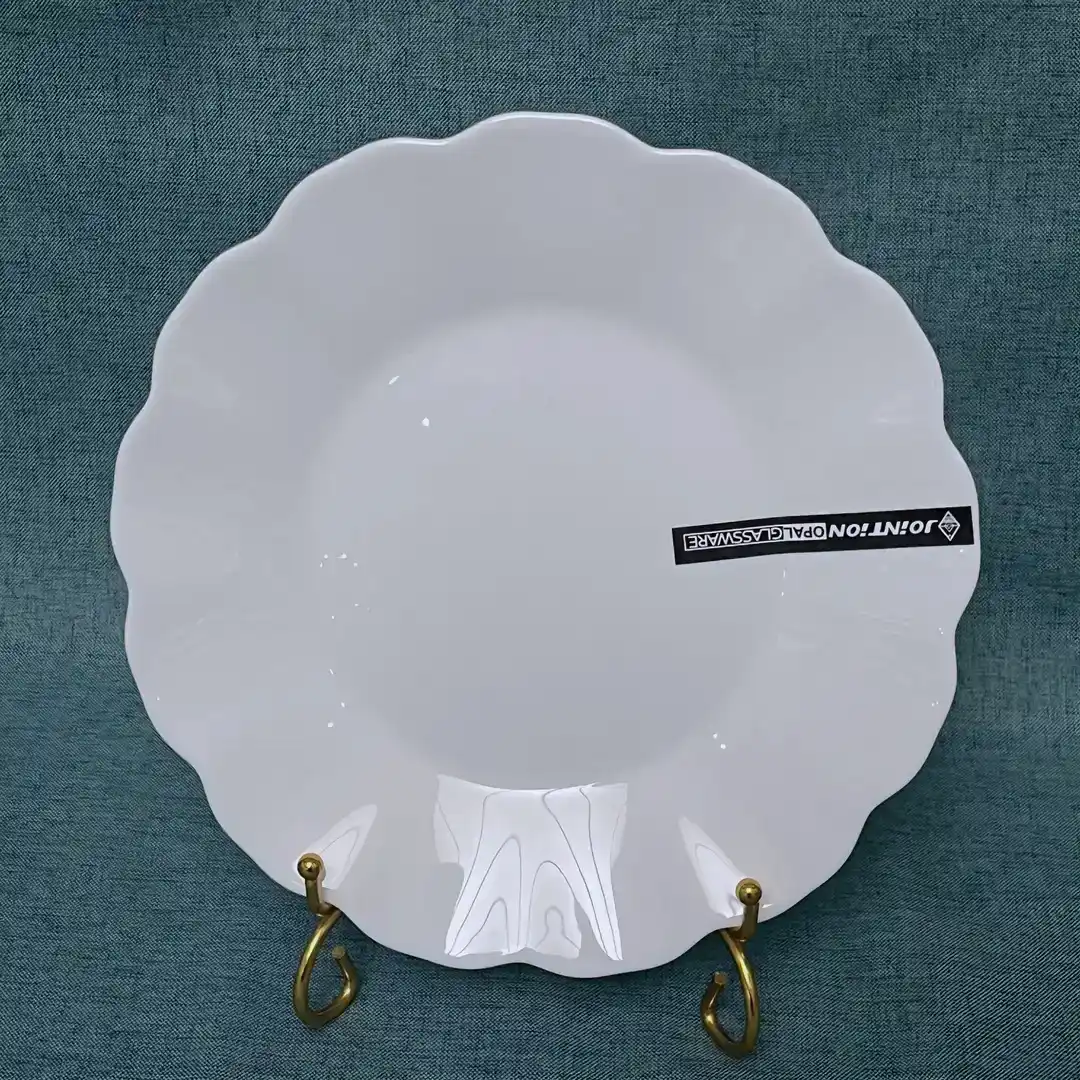
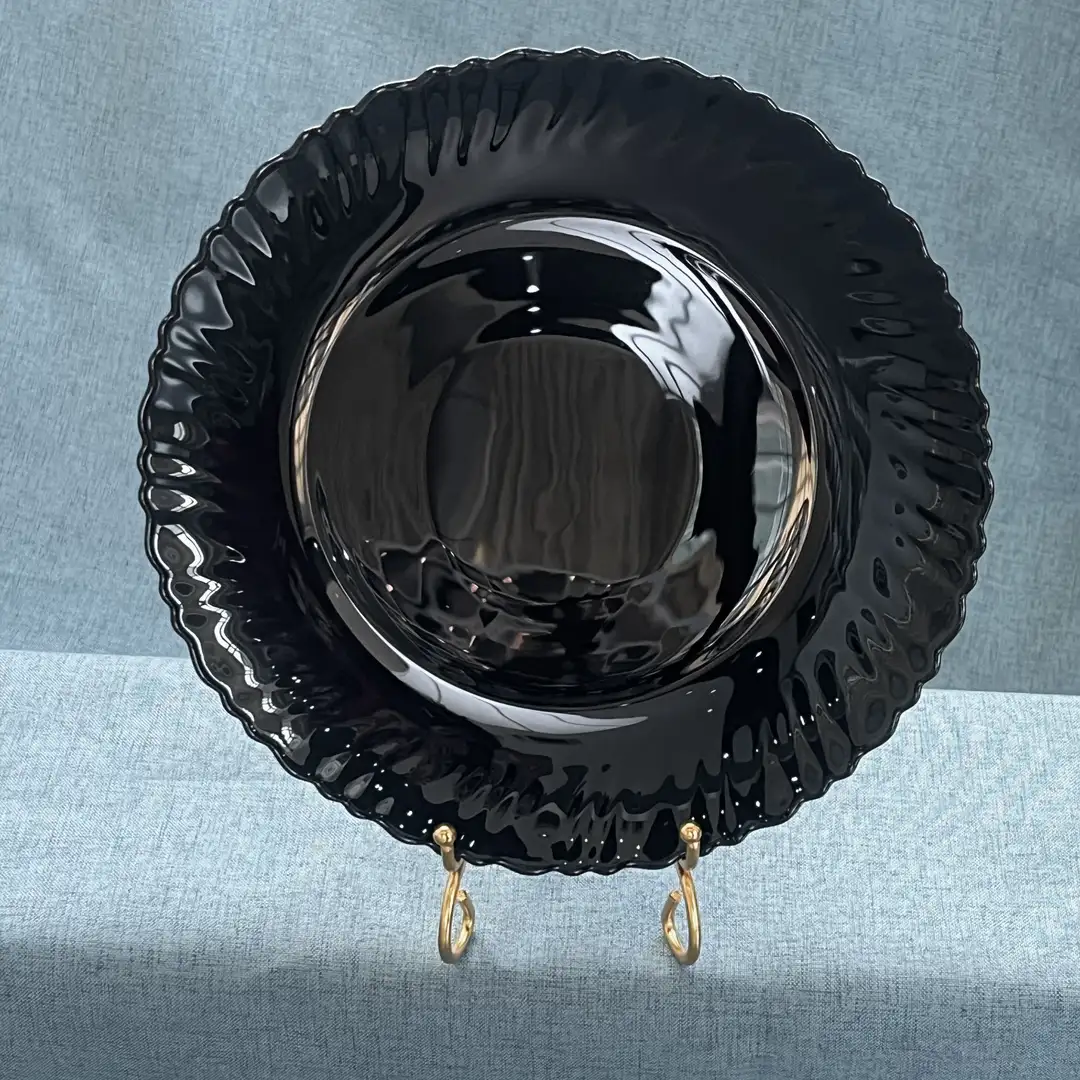
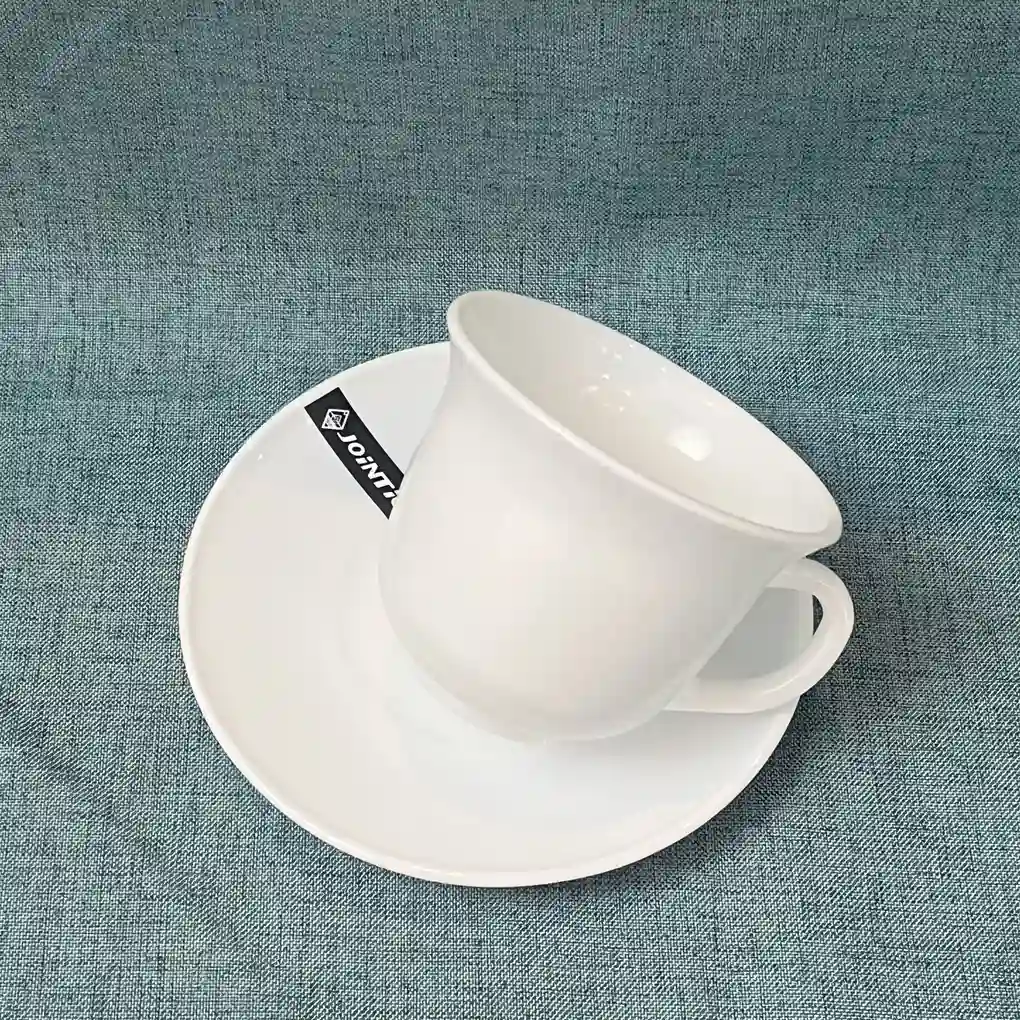
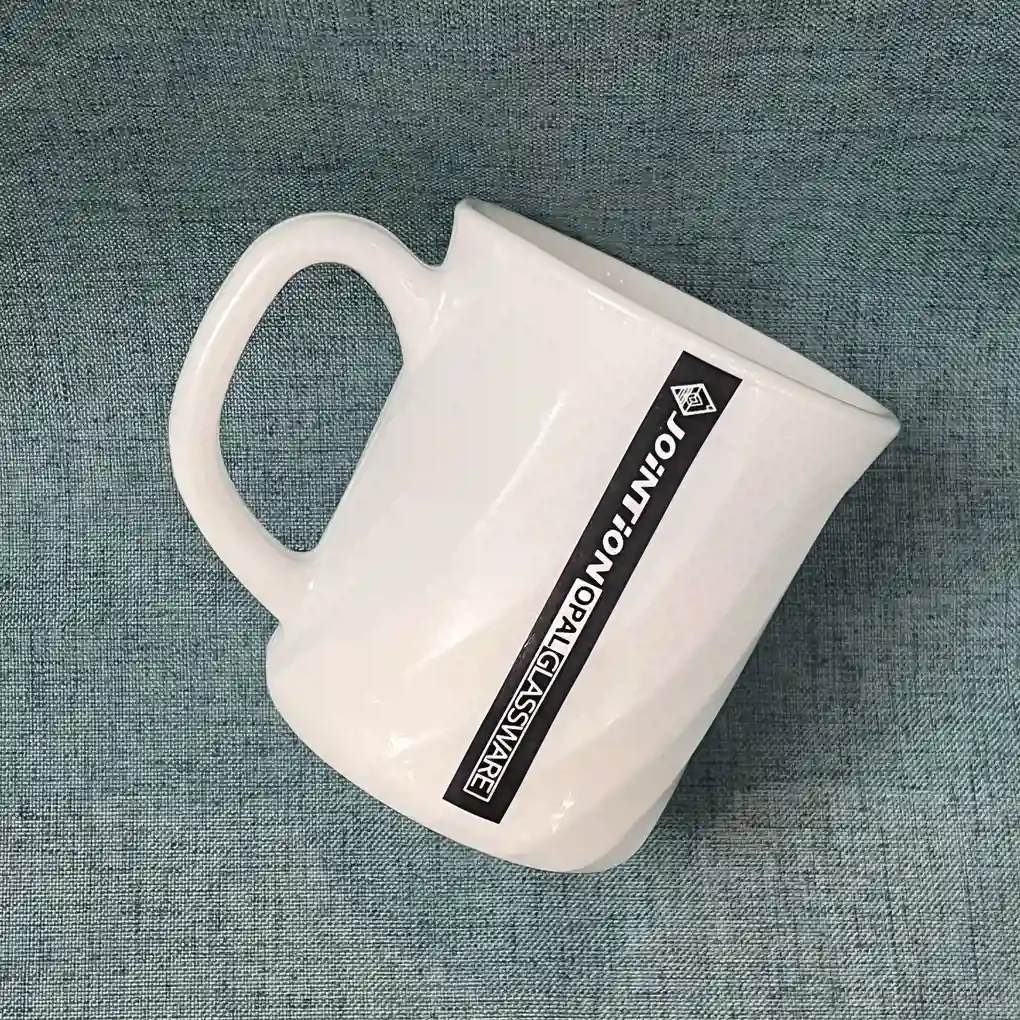
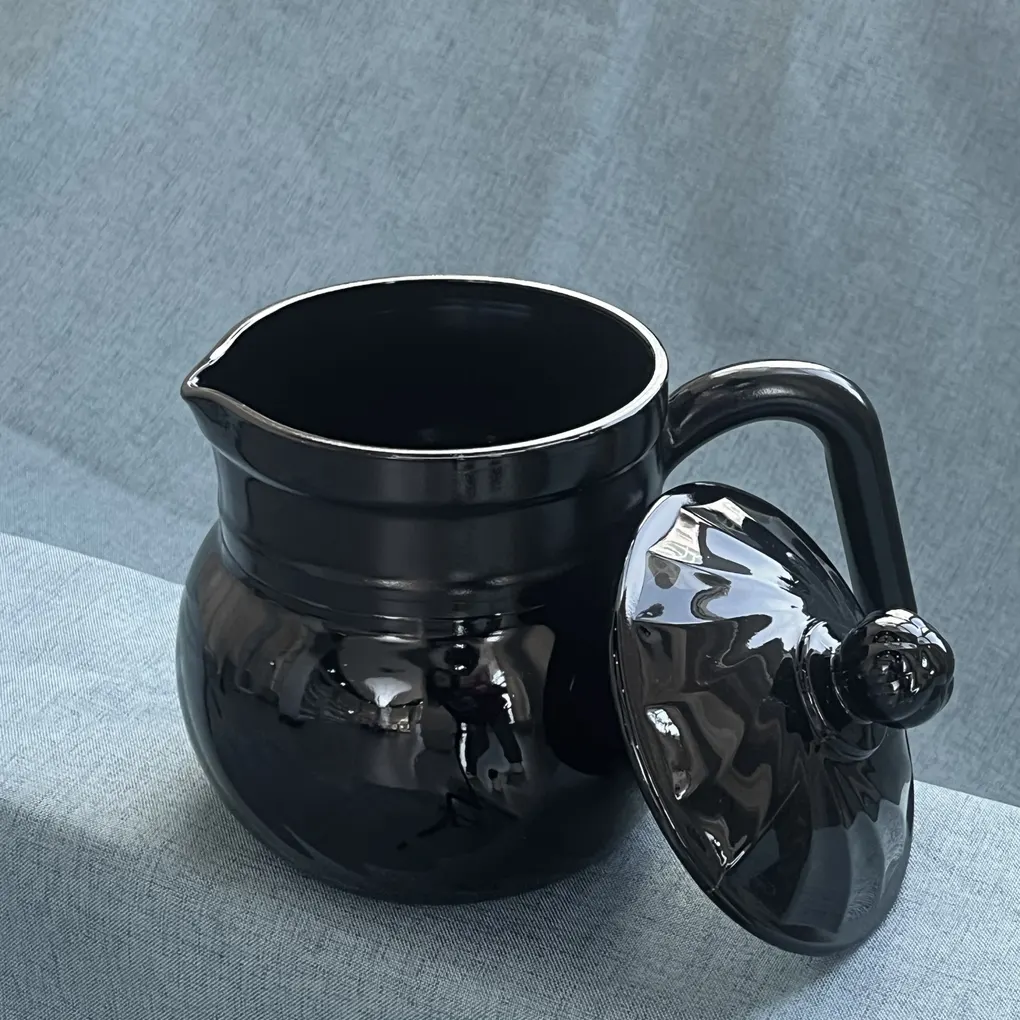
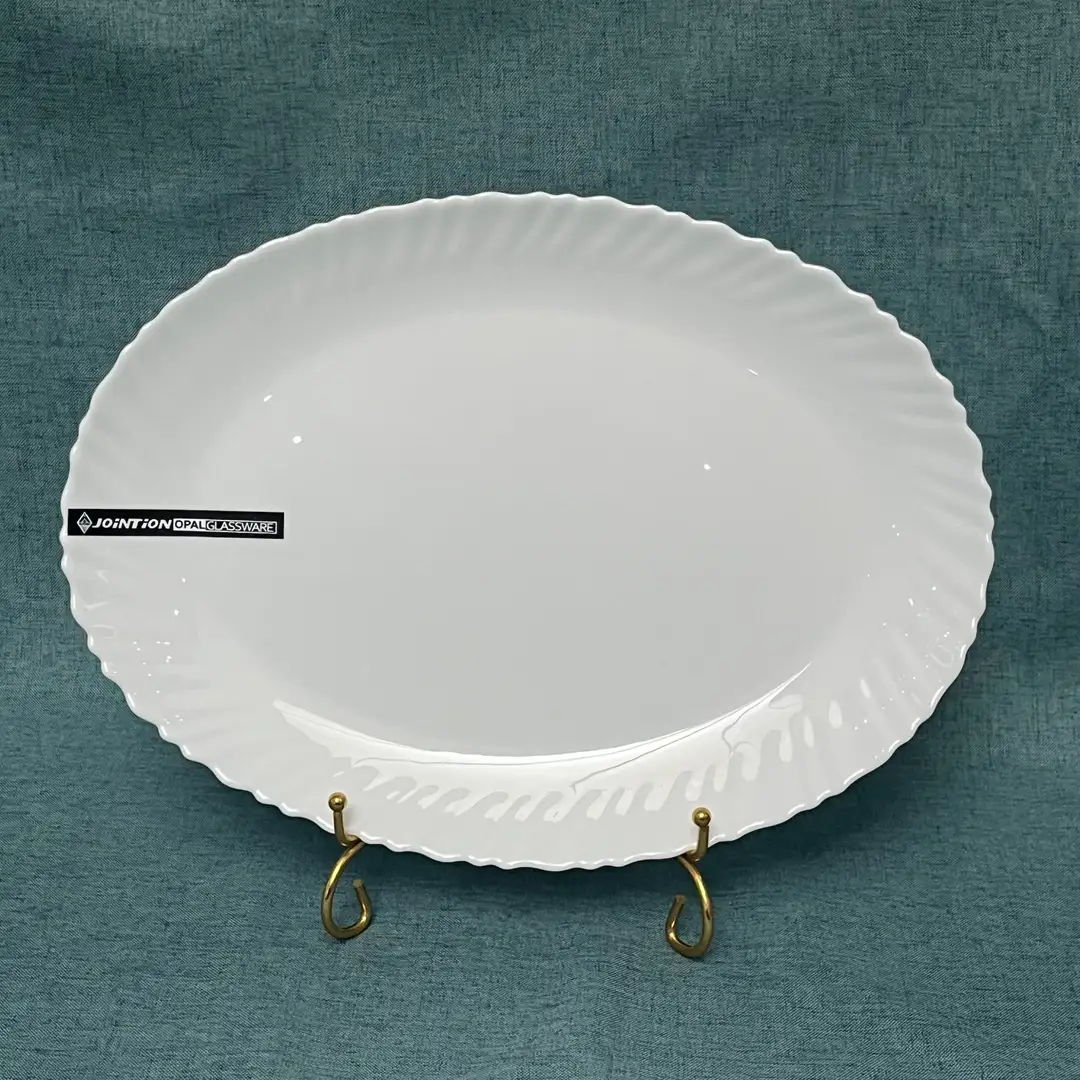
For B2B buyers, the real value here is straightforward: complete shape coverage, continuous size runs, and almost zero color drift between batches. You can reorder the same series six months later and the new shipment will match what’s already on the table. That kind of supply consistency is the single most important thing in a high-volume everyday product.
Behind that consistency is a 70,000-square-meter production facility running equipment from raw material melting all the way through to annealing and tempering. That’s the infrastructure that lets basics ship in large quantities without quality variation.
If you want to browse specs and images by category,the complete product catalog page has every white glass, black glass, and specialty process item sorted by type — easy to cross-reference against the shapes listed above.
Electroplating Gold — The Quality Upgrade Within the Everyday Line
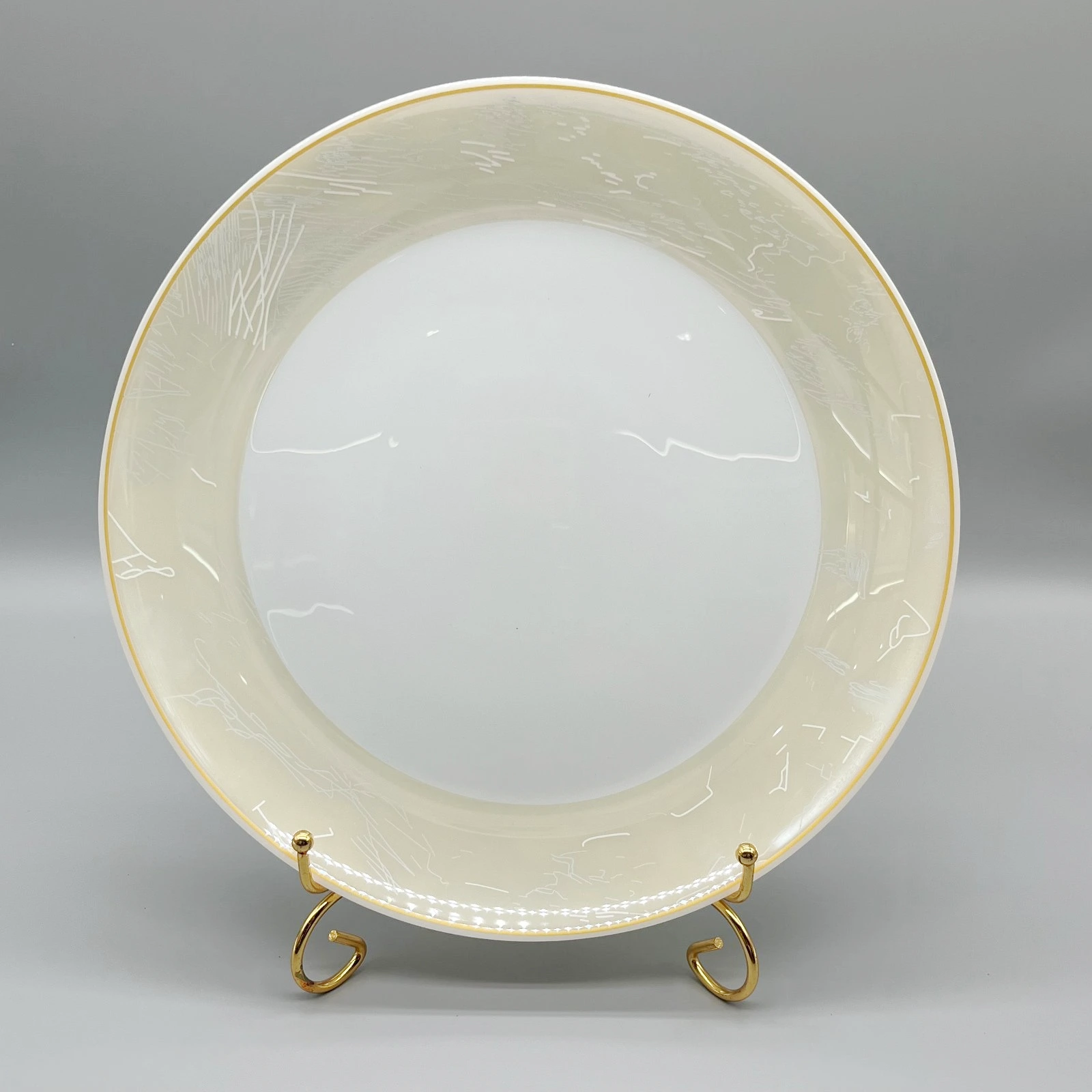
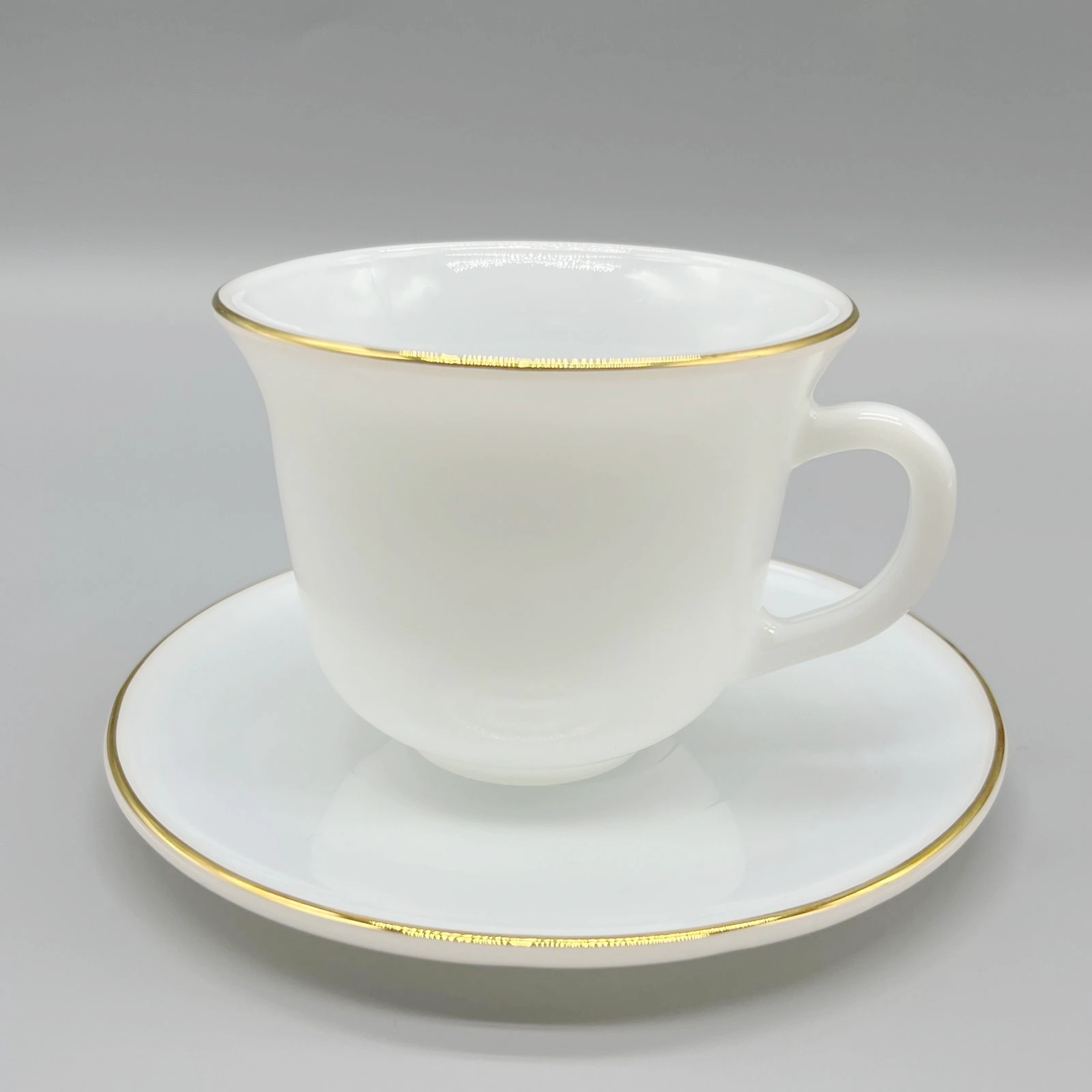
One step above the plain basics sits the electroplating gold rim tableware line. It doesn’t change the product’s everyday positioning or base shapes. What it adds is a thin, uniform metallic coating deposited onto the glass surface through an electrochemical process — gold or alloy ions bond directly to the opal glass, forming a dense, well-adhered metal layer. The result is a subtle but unmistakable upgrade in surface luster and perceived quality.
Put the two side by side and the difference is clear. Plain basics show the natural milky warmth of opal glass — clean and understated. With the electroplating treatment, the surface picks up a refined metallic sheen. Under lighting, it catches and reflects light differently — softer, warmer, with a faint golden undertone that makes the same white plate look noticeably more polished. It’s not a bold gold stripe or a painted line. It’s a surface-level coating that shifts the entire feel of the piece from “everyday functional” to “everyday with presence.”
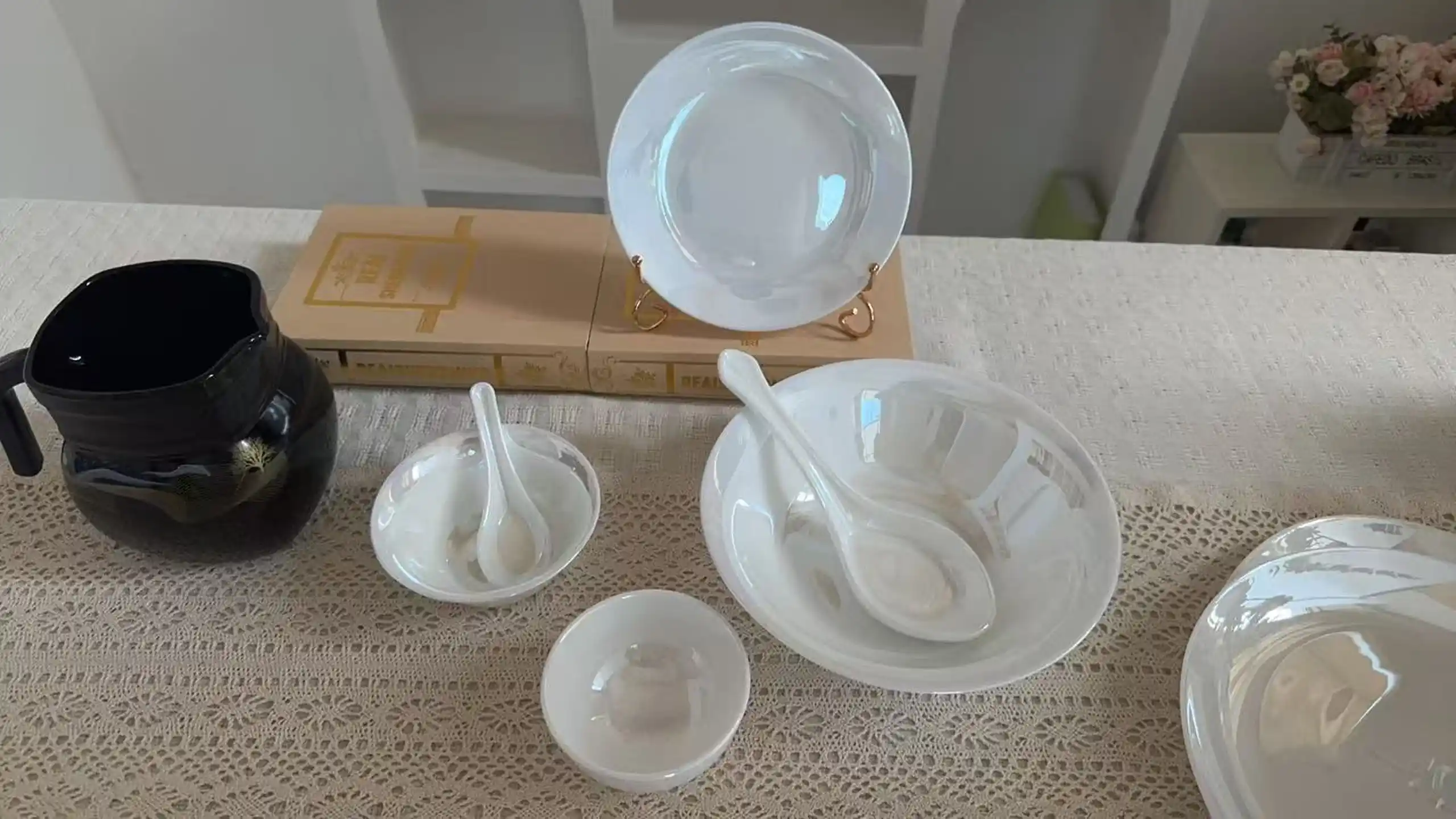
You don’t need a designer’s eye to see it. At every Canton Fair booth we’ve set up, when a plain white plate sits next to a gold-plated white plate on the sample table, seven or eight out of ten buyers who stop and pick something up reach for the plated one first. The usual first comment? “This looks way more expensive than the plain plate.” Once they hear it still falls within the everyday price range, the order conversation tends to move fast.
Here’s a quick side-by-side of what separates the two:
| Comparison Dimension | Plain White/Black Glass Basics | Electroplating Gold |
|---|---|---|
| Appearance | Solid color — milky white or pure black — with opal glass’s natural warm sheen | Same base color, plus a thin electrochemically deposited metallic layer that adds a refined golden undertone across the surface |
| Perceived Quality | Clean, understated — works for everyday use without decoration | Clearly one tier up — the metallic sheen under lighting adds warmth, refinement, and a sense of occasion |
| Product Positioning | Everyday volume — the core stocking product for B2B buyers | Still everyday pricing, but aimed at markets or channels expecting a more polished look |
| Shape Coverage | Full range: plate, bowl, cup and pot, oval plate, casserole dish, dinner set | Same shape system — electroplating gold mostly applied to plates, bowls, and cups |
| Best For | High-volume distribution, routine restocking, price-sensitive markets | Product differentiation within the everyday budget — better shelf appeal and room for higher margins |
The bottom line: electroplating gold gives you a way to stand out in the everyday price bracket without changing shapes, materials, or your supply chain. The metallic coating elevates how the product looks and feels in hand, but it doesn’t push the price into premium territory. If your market wants something that reads a step above plain white or black, this is the most efficient upgrade available.
What Are JOINTION’s High-End Custom Opal Glass Tableware Options?
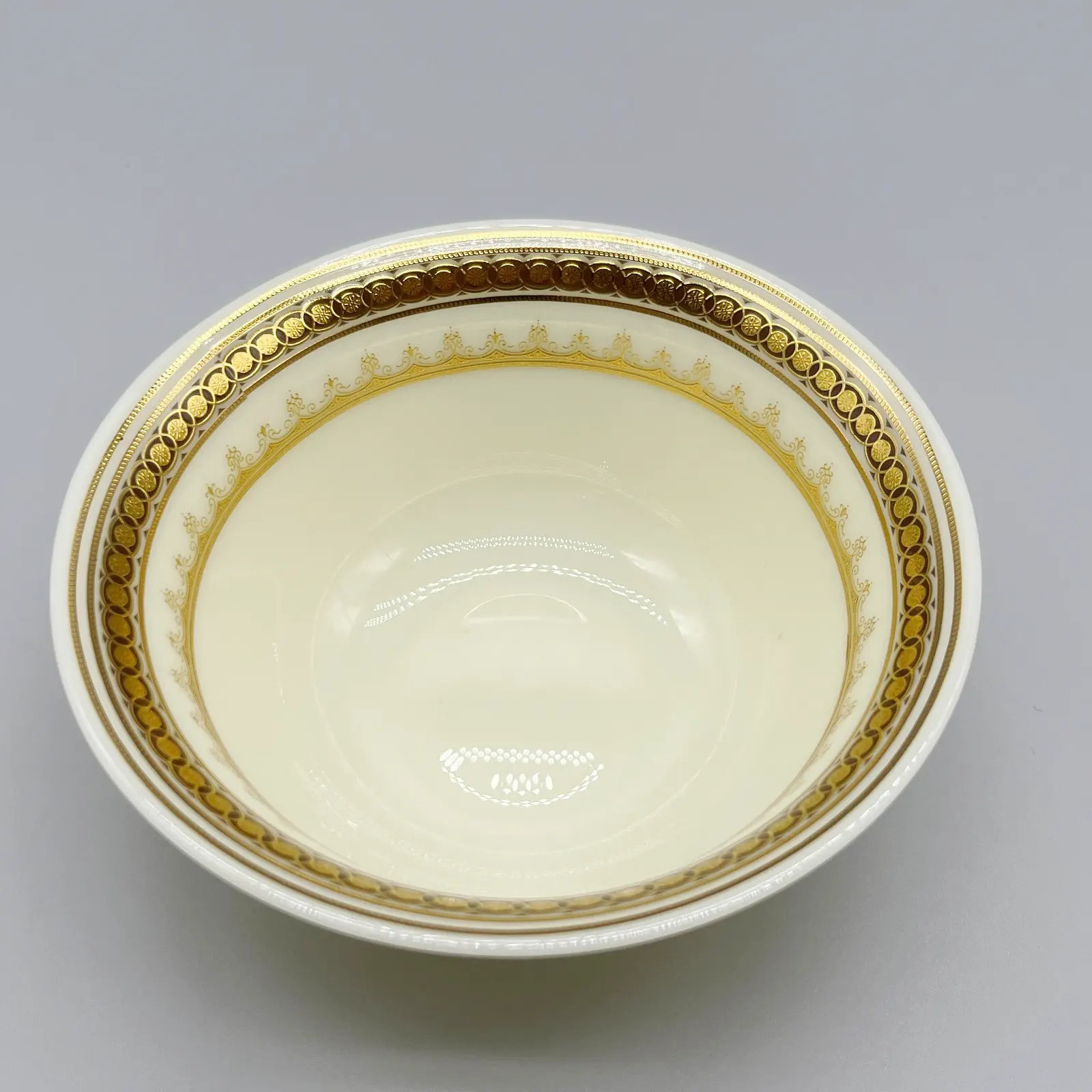
The high-end custom range has two product lines. The first is embossed decal glassware — raised surface patterns and complex firing push the product from everyday into mid-to-high-end territory. The second is jade glass tableware — the top of the entire matrix. It separates from standard opal glass at the material level, not through post-production decoration.
Below, we break down each line’s process and material details so you can see exactly where the tier boundary sits.
Embossed Decal — The Core Product of the Premium Line
Embossed decal is the signature process on the high-end opal glass line. It’s also the clearest dividing line between everyday and mid-to-high-end. Here’s why it matters:
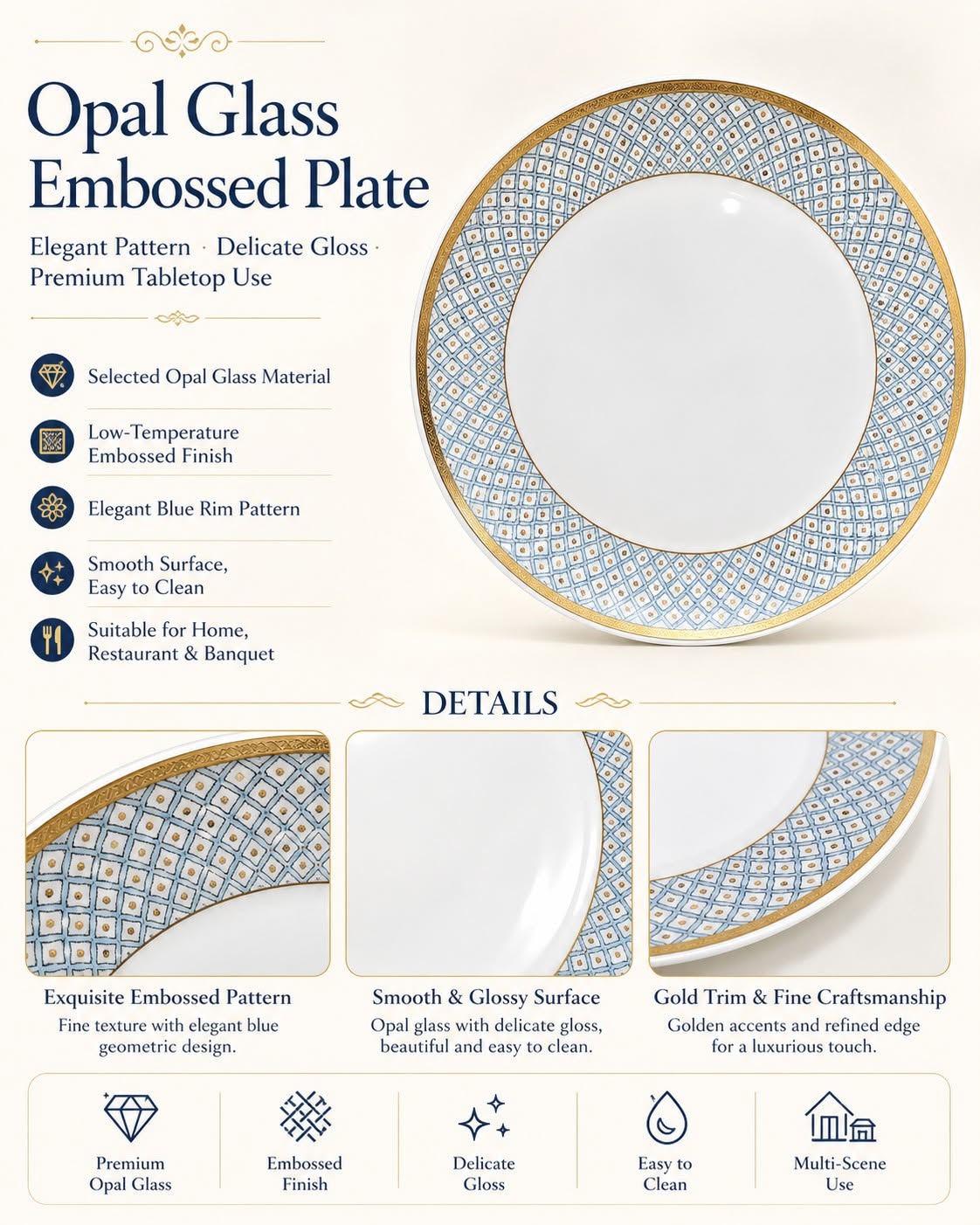
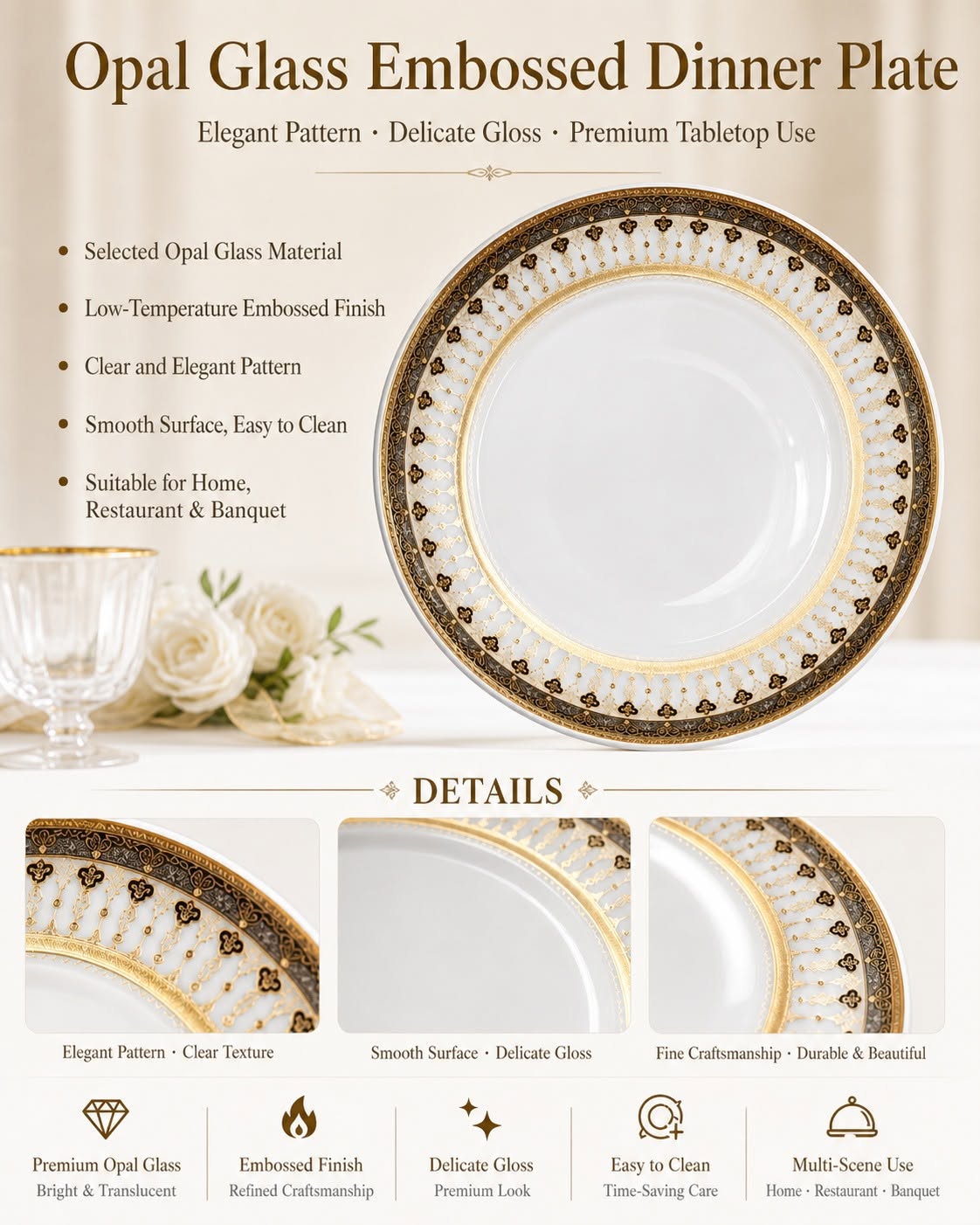
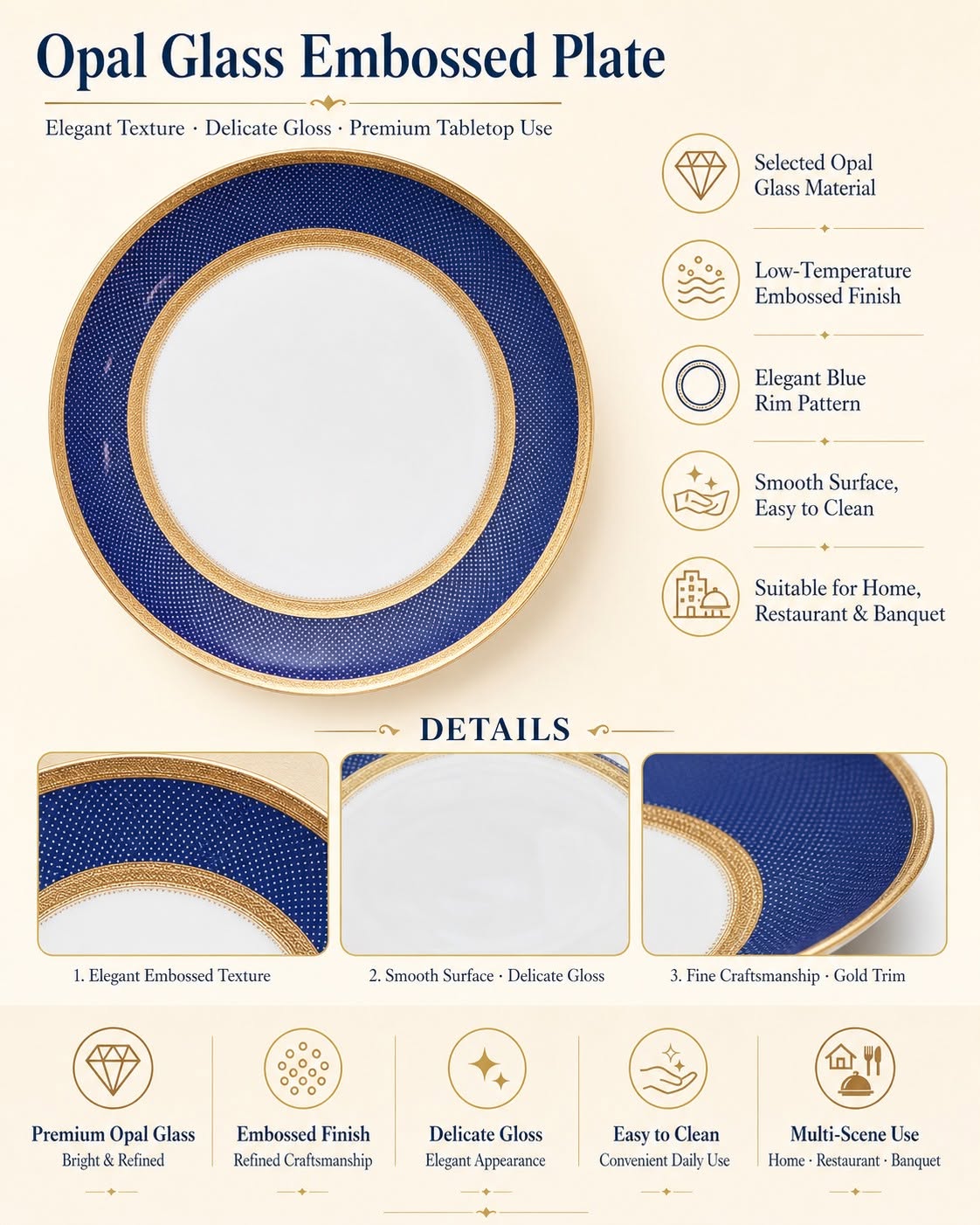
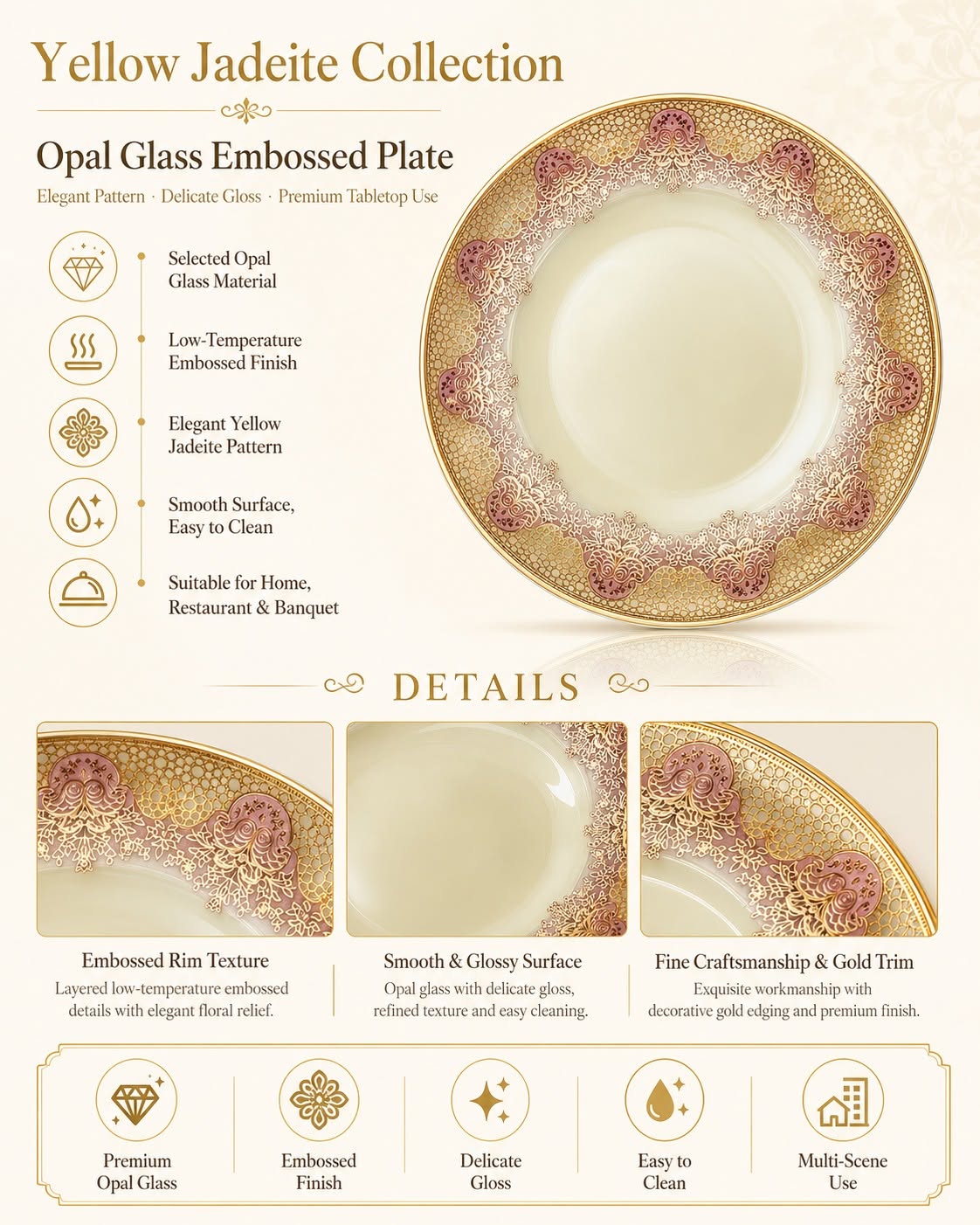
The surface goes from flat to three-dimensional — and you can feel it. Embossed decal builds real physical relief on the glass. Patterns rise slightly above the surface, and when you run a finger across them, you feel the contour of the design. That tactile feedback is something flat printing and standard decal work simply can’t deliver. At the Canton Fair booth, almost every buyer who picks up an embossed piece does the same thing instinctively — traces the pattern edge with a fingertip. That reaction says more about the process than any spec sheet.
Light plays differently on raised patterns. Because the design has actual physical height, it catches light and casts micro-shadows. Whether the motif is an intricate European floral or a clean geometric line, edges look sharper, details read richer, and the overall feel moves closer to a ceramic art piece than a standard dinner plate.
Higher process difficulty is what supports the higher price point. Embossed decal requires tighter temperature curve control, more precise decal positioning, and a longer firing cycle than conventional decoration. During internal production commissioning, the team found that converting the same design from flat decal to embossed raised yield management difficulty significantly. That’s exactly why embossed decal glassware holds up at higher retail prices — and why it’s a natural fit for hotel supply, gift channels, and custom glass dinnerware OEM projects.
Jade Glass — The Highest Tier in the Entire Product Matrix
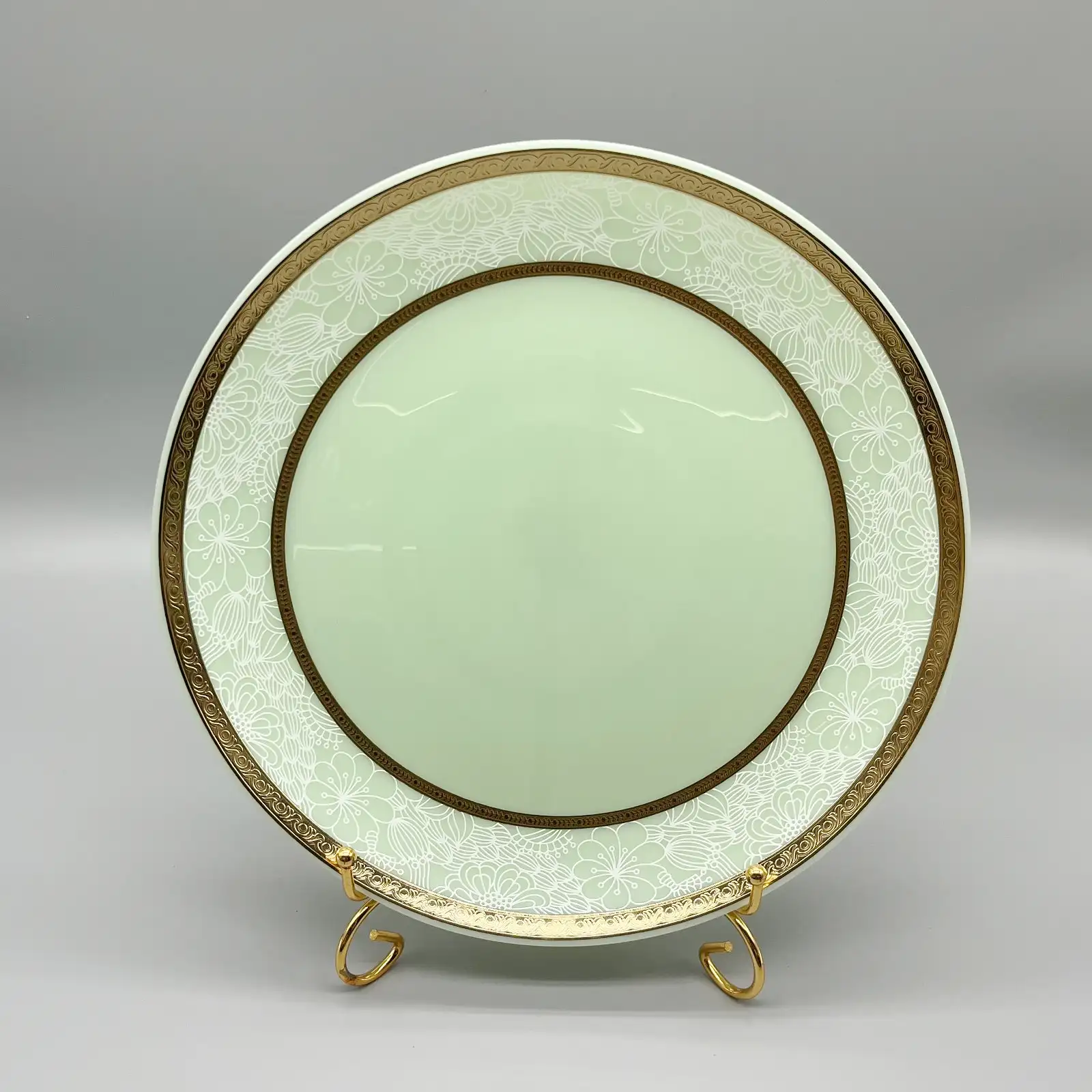
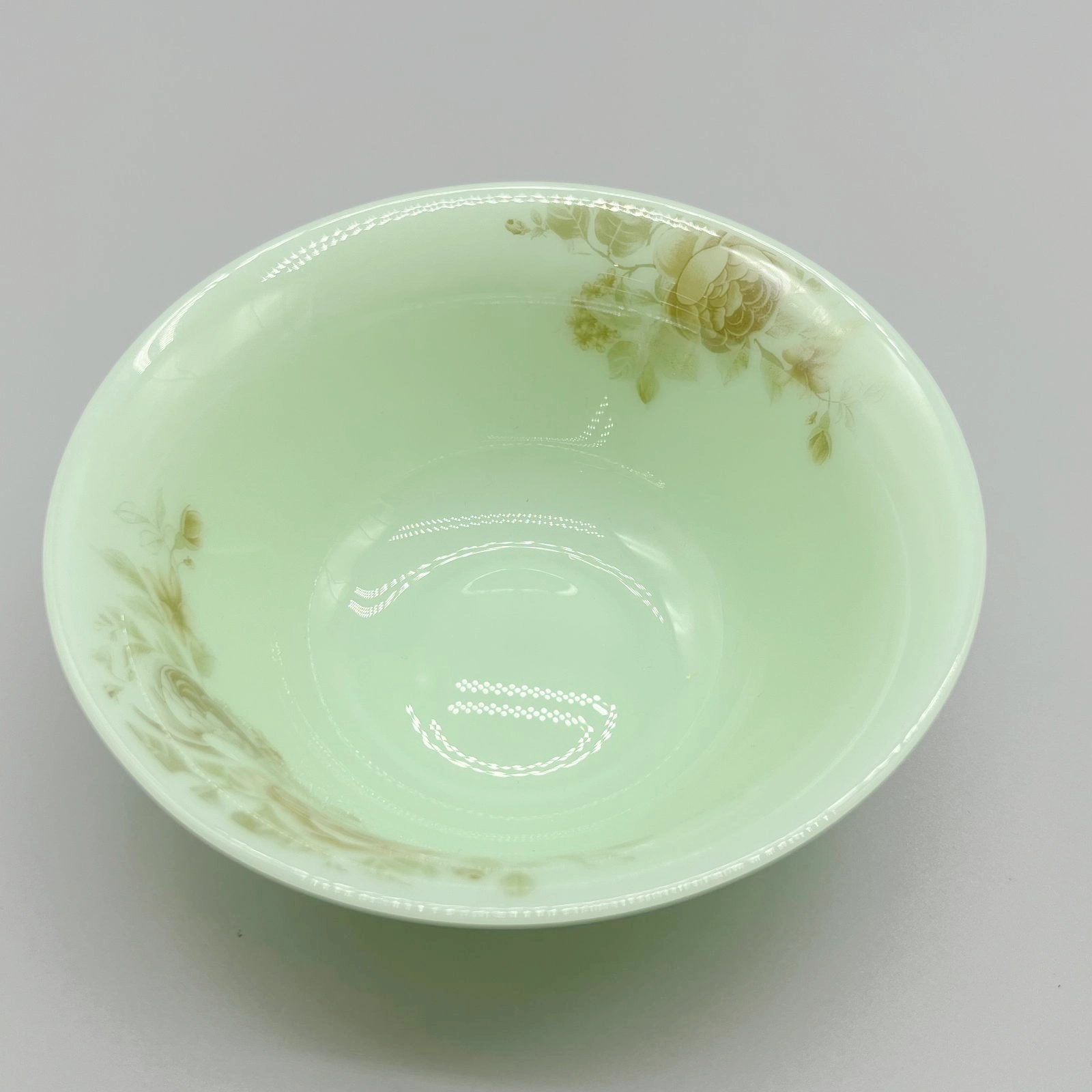
Jade glass sits at the very top. Its premium status doesn’t come from what’s done to it after production — it comes from the glass itself. A proprietary composition formula gives the finished product a warm, subtly translucent, jade-like quality. No coating. No glaze trick. The look comes from the material’s internal optical properties.
Set jade glass next to standard opal glass and the gap is obvious. Standard opal glass reflects a uniform bright white. Jade glass glows softer — a restrained luster that seems to come from inside the material rather than bouncing off the surface. Pick it up, and the difference continues: jade glass runs thicker, heavier, and smoother in the hand. The “premium” signal is immediate.
Because the material itself is the highest grade, jade glass doesn’t need complex decoration to justify its position. The material is the product language. That’s why it holds the ceiling spot in the JOINTION lineup and always will.
Here’s how jade glass and standard opal glass compare across the key dimensions:
| Comparison Dimension | Standard Opal Glass | Jade Glass |
|---|---|---|
| Material Appearance | Uniform milky white; leans porcelain-like | Warm, subtly translucent; jade-stone quality |
| Surface Luster | Bright white reflection; fairly uniform | Soft, restrained; luster radiates from within |
| Feel and Weight | Light to moderate; straightforward feel | Thick, substantial; warm and silky-smooth |
| Typical Application | Household daily use, supermarket channels | Brand flagship lines, high-end hotel supply, limited-edition gift customization |
| Product Positioning | Basic to mid-range | Highest tier in the product matrix |
Which Scenarios Suit Each Tier of JOINTION’s Opal Glass Tableware?
Four tiers, four sets of scenarios. Basics (white/black) work best in price-sensitive, high-volume channels — supermarkets, hotel procurement, fast-food chains. Electroplating gold fits home retail and gift markets. Embossed decal is for mid-to-high-end home brands and boutique retailers who sell on design. Jade glass targets high-end custom gifts, brand collaborations, and premium export — anywhere the material itself needs to carry the story.
Let’s walk through each one so you can match your channel to the right product tier.
Basics and Electroplating Gold for Volume and Everyday Retail
1. Basics (White/Black Opal Glass) — Built for Supermarkets, Hotels, and Fast-Food Chains
The basics come in white and black, round and square. Lowest unit cost in the lineup. Most flexible on minimum order quantities. They’re a natural fit anywhere demand is high and margins are tight — supermarket shelves, hotel opening kits, fast-food chain standard sets.
Here’s the math that matters most to bulk buyers: a mid-range hotel with 200-plus rooms cycles through hundreds of tableware pieces just at the breakfast buffet. The full-day dishwashing load easily tops a thousand. Opal glass basics break far less often than ceramic and weigh roughly 30% less, which means lower annual replacement costs and easier handling for staff. That cost-of-ownership number is usually the deciding factor in any volume purchase. For a deeper look at durability data, material comparisons, and commercial selection logic, the opal glass commercial tableware complete guide covers it in detail.
2. Electroplating Gold — The “Just Enough Upgrade” for Home Retail and Gift Channels
The gold-rim line applies the same electroplating process on top of the basic shapes. The result looks simple but clearly upscale. It’s not built for supermarket volume — it’s aimed at home retail stores and gift channels. On a crowded shelf in a home furnishing outlet, plain white basics can blur into the background. A gold-rimmed set has noticeably stronger visual pull, creating “you can see the difference” quality perception at a price mainstream consumers still accept.
The same logic applies to festive gift sets, wedding favors, and seasonal promotions. The gold-rim line delivers the visual refinement a gift needs without pushing the budget anywhere near premium territory.
3. How to Match Your Needs
Simple rule of thumb: if your market runs on volume and your buyers watch every cent, basics are your main SKU. If your channel needs a visible step up but the budget has a ceiling, the gold-rim line is the most practical move — better-looking product, same cost structure underneath.
At the Spring Canton Fair (Hall 5.1, D46-48), over half the first-time inquiries from Southeast Asian and Middle Eastern buyers landed on these two tiers. The question they asked most: “What’s the MOQ gap between basics and gold-rim, and can I mix them in one container?” That pattern alone tells you where most volume-market sourcing conversations start.
Embossed Decal and Jade Glass for Branding and High-End Custom
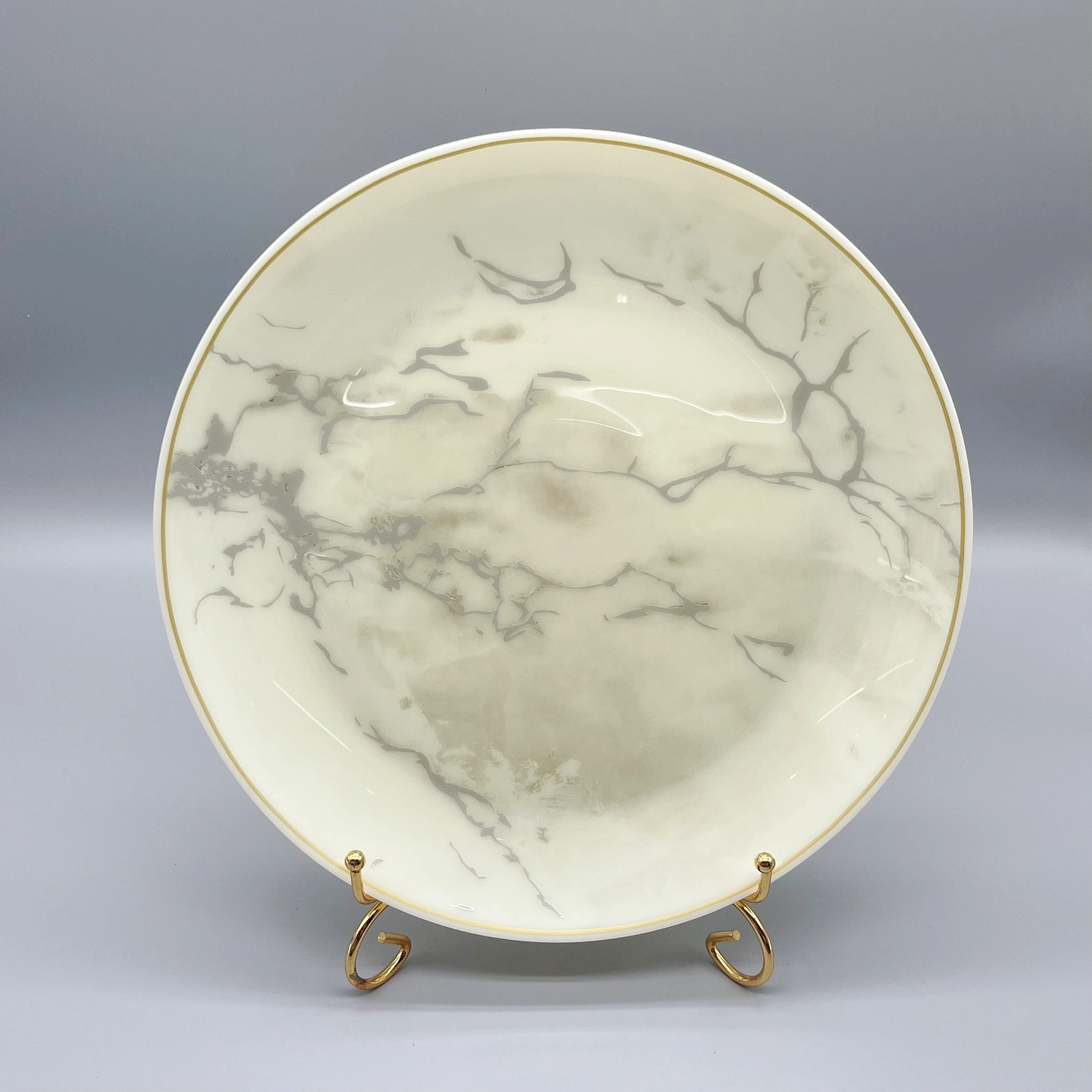
Embossed decal is where design expression gets serious. The low-temperature embossed process can produce gold-edge florals, vintage motifs, marble textures — visual styles that plain-color tableware simply can’t touch. Target channels are clear: mid-to-high-end home brands, boutique retailers, and online home stores that compete on curation and aesthetics.
In those channels, how a tableware set looks in a product photo or on a display shelf directly drives clicks and conversions. A set with embossed texture and a themed colorway commands attention in ways that solid-white pieces never will. As an experienced opal glassware supplier, JOINTION supports OEM custom patterns and packaging — brand owners can develop exclusive designs for their market, turning the product into something genuinely their own rather than a relabeled commodity.
Jade glass occupies the very top of the line. It uses a jade-green, jade-quality glass material distinct from standard white opal glass, finished with gold-rim detailing. The result is a warm luster and translucency that looks and feels like natural jade — a material-level distinction no amount of post-production work can replicate on ordinary white glass.
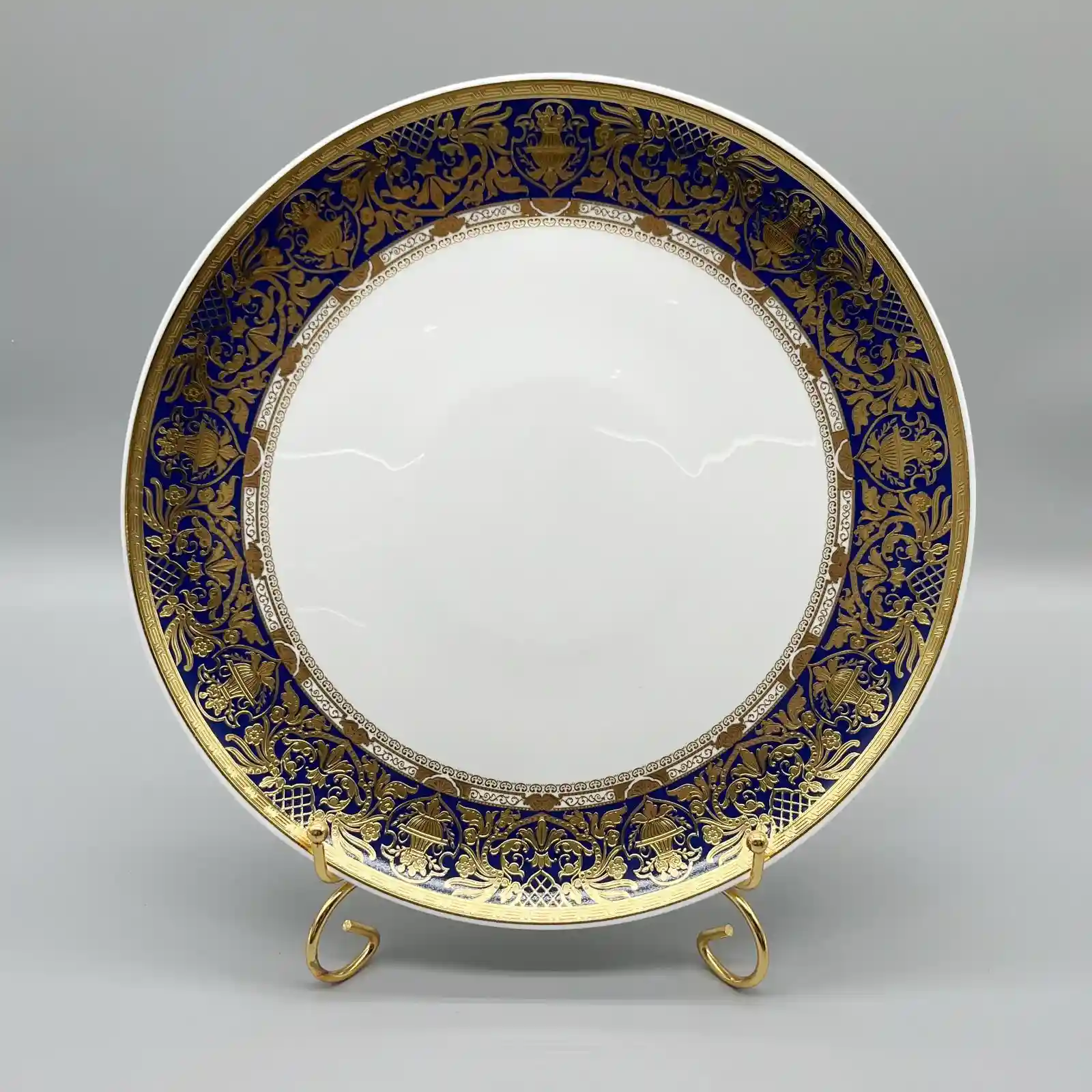
This line is especially strong in the Middle East and Southeast Asian high-end banquet markets. It also fits brand-collaboration gifts, premium export, and private bespoke projects where material quality is the non-negotiable requirement. For buyers in the high-end gift trade or brand partnership space, jade glass isn’t just a piece of tableware — it’s a product where the material alone is the selling point. The luster and hand-feel do all the talking without needing a complicated design story behind them.
Use this table to quickly match your business direction to the right tier:
| Product Tier | Core Selling Point | Ideal Channels | Typical Sourcing Scenarios |
|---|---|---|---|
| Embossed Decal | Rich design flexibility; full OEM pattern support | Mid-to-high-end home brands, boutique retail, online home stores | Brand product line development, differentiated selection, seasonal themed launches |
| Jade Glass | Material-level premium presence; gold-rim accent | High-end custom gifts, brand collaborations, premium export | Corporate gifts, high-end banquet supply, brand collaboration limited editions |
The choice between these two comes down to one question. Embossed decal wins mid-to-high-end markets through design. Jade glass wins top-tier markets through material. If your customers want something that looks striking and tells a visual story at retail, go with embossed decal. If they want a product where the glass itself communicates quality before anything else, jade glass is the answer.
Four tiers cover the full spread — supermarket volume to top-tier custom. Basics handle quantity. Electroplating gold adds a visible everyday upgrade. Embossed decal plays the design card. Jade glass holds the material high ground. Don’t overthink process details when sourcing. Figure out which tier your channel sits in, and the product choice follows. If you’re still unsure which tier fits your market best, reach out to JOINTION with your target price range and channel profile — that conversation will get you to the right answer faster than browsing alone.
Common Questions People Ask
Q1: My customers have both supermarket volume needs and gift channel needs. Do I have to place two separate orders?
Not necessarily. Mixed-container loading is standard. Basics and gold-rim products can go in the same container, split by whatever ratio you need, under a single order and logistics batch. Just confirm the SKU quantities and packing plan with your sales contact at order time. No need to run two procurement cycles.
Q2: Embossed decal supports OEM custom patterns, but if my volume is small, won’t the mold fees make it too expensive?
There’s a tiered MOQ structure for custom patterns. If your volume is on the smaller side, the smarter move is to pick from the existing pattern library first — no mold fee, order directly. If you do need an exclusive design, ask for a per-unit mold cost breakdown before committing. Many buyers find that once the order hits one full container, the mold fee per piece ends up much lower than they expected.