
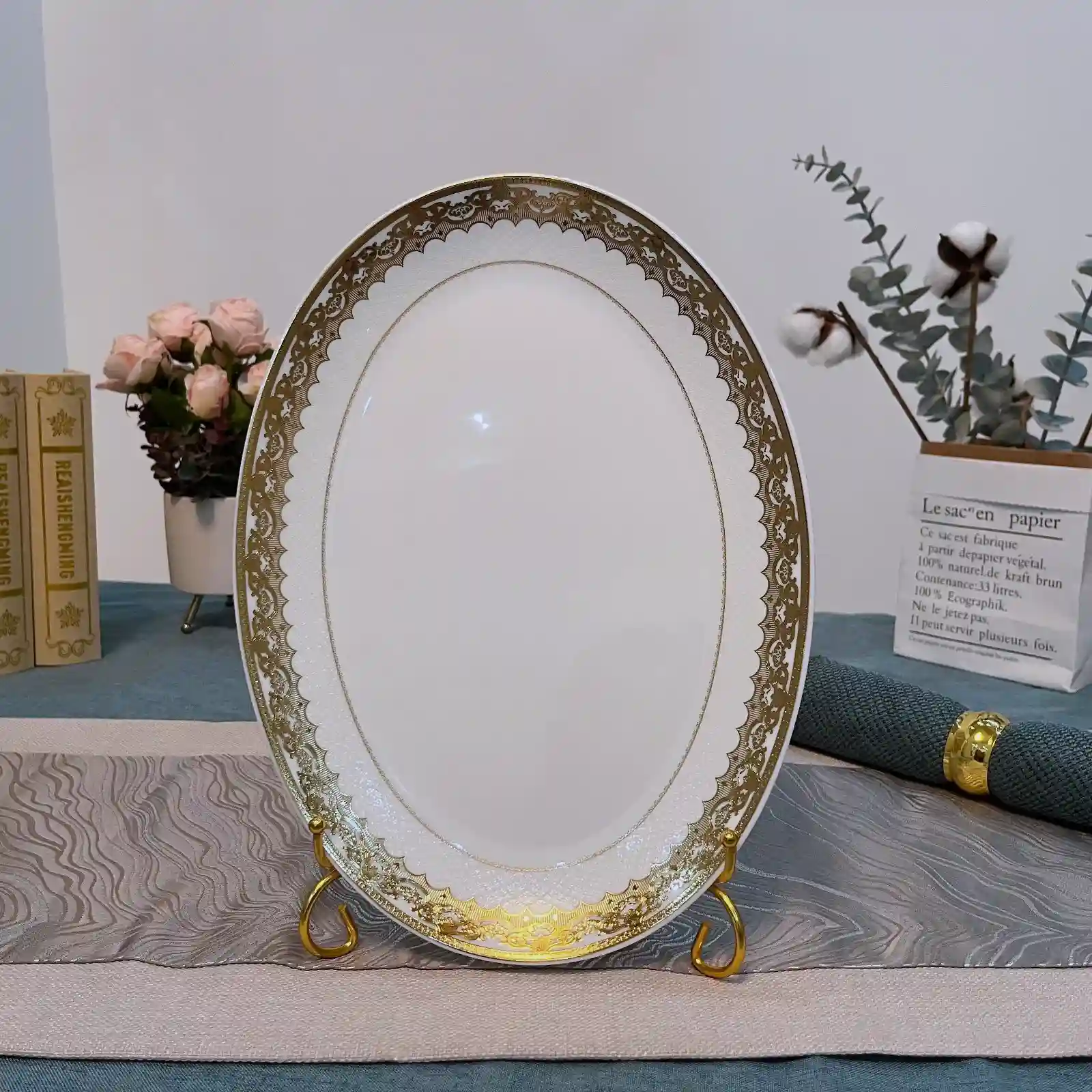
Opal Glass Oval Fish Plate vs Ceramic & Porcelain

Bullet PointDescription
Material Performance ComparisonCompare opal glass fish plates with ceramic and porcelain on weight, durability, thermal shock, hygiene, and overall value.
Daily & Commercial Use SuitabilitySee why opal glass oval fish plates work better for daily home use and busy commercial kitchens than traditional porcelain.
Objective Decision-Making GuideGet a clear, data-based breakdown to help you pick the right fish plate material for your restaurant or household needs.

Video and What We Can Customize for you

Size Customization

Available in 10″, 12″, 13″, and 14″ oval fish plate sizes for different fish portions and table settings.

Offered in white, black, jade green, topaz yellow, and milky white to match your dinnerware style.

Supports decal printing, low-temperature embossing, pad printing, and screen transfer for brand identity.

Choose from classic ellipse, elongated boat, wide shallow, or deep-rimmed oval fish plate profiles.

Custom cartons, foam inserts, or branded retail boxes available based on your requirements.

Four Best-Selling Decal Designs

The four designs on the right are the best-selling in this series so far, and here are the top 5 countries that have been inquiring the most:

  1. Saudi Arabia – whole grilled hammour and sayadieh rice fish
  2. United States – baked salmon fillets and pan-seared sea bass
  3. Vietnam – steamed grouper and clay-pot caramelized catfish
  4. India – tandoori fish and fried pomfret
  5. France – butter-poached sole and herb-crusted trout

FAQs

Contact Person Icon

Commernts Question People Often Curious

It gathers the five most frequently asked questions by users regarding this product. If you are also interested, you can click to have a look.

How much lighter is an opal glass fish plate than a porcelain one?
An opal glass oval fish plate is roughly 20–30% lighter than porcelain of the same size. A 14″ opal glass fish plate weighs about 500g, while porcelain runs around 700–800g. This makes serving, clearing, and stacking easier at home and reduces fatigue for restaurant staff handling fish plates all day.
Yes. Tempering gives opal glass 3–5 times the impact strength of regular glass, and it chips far less than standard ceramic under the same conditions. The oval rim — the most exposed edge on a fish plate — holds up significantly better through daily stacking and washing. Ceramic fish plates tend to develop small edge chips over time that are hard to clean.
Opal glass fish plates resist thermal shock up to about 135°C, so moving them from fridge to microwave is safe. Porcelain handles roughly 80–100°C, and basic ceramic even less. This matters for fish dishes that go from cold marination straight to reheating. Repeated hot-cold cycling can crack porcelain over time, while opal glass stays structurally sound.
No. Opal glass is fully non-porous with zero water absorption, so fish oils, turmeric sauces, and seafood smells cannot soak into the surface. Ceramic — especially lower-fired types — has porosity beneath the glaze that traps oils and odors over months of use. Opal glass cleans completely with warm water and basic detergent every time.
Porcelain oval fish platters work best in fine dining where presentation ceremony and tableware prestige matter most — think Michelin-level whole-fish courses or luxury banquets. The translucent body and refined feel of porcelain create a formal atmosphere opal glass cannot replicate. But for everyday meals, casual restaurants, buffets, or any high-use setting, opal glass fish plates win on durability, hygiene, and total cost.
Scroll to Top

Contact us

Connect with us for tailored solutions, partnership opportunities, or product inquiries — we’re ready to support your vision.

learn More​

Please let us know the products or service you want to know  and we will contact you as soon as possible.