
Opalescent Glass Plates — What Are They?
Before diving into the specifics of wholesale and OEM, it’s worth addressing a foundational question: what exactly are opalescent glass plates? Simple as it sounds, the answer shapes how buyers approach product positioning, market fit, and supply reliability. Misunderstanding the category from the outset tends to skew judgments on sampling, price comparisons, and customization negotiations.
Opalescent glass plates — also commonly referred to as milky white glass dinner plates or opal glass plates — are neither ordinary transparent glass plates nor traditional ceramic plates. They are a category of glass tableware with a milky white or translucent visual effect, produced through specialized manufacturing processes. Visually, they resemble white porcelain, yet in terms of material, they remain firmly within the glass family. As a result, they combine the cleanliness, softness, and versatility associated with white tableware, while also benefiting from the consistency that industrial glass production enables.
For those encountering this category for the first time, the most common mistake is to look at the appearance and mentally file it away as “another type of white porcelain dinner plate.” The more accurate approach is to start with the material, then work outward — understanding how that material gives rise to the appearance, the texture, and ultimately the commercial value. In other words, understanding opalescent glass plates shouldn’t stop at “they’re white plates.” It should follow the logic of material → appearance → perception → product positioning.
To help build that understanding quickly, the core definition of this product can be broken down into four straightforward points:
- Its essence is glass, not porcelain
- Its appearance is milky white or translucent, not transparent
- Its texture sits between the brilliance of glass and the warmth of porcelain
- Its positioning is as a standardized, mass-replicable tableware product
These four points aren’t simply a list of scattered traits — they build on one another. The material defines what it fundamentally is; that determines the appearance; the appearance shapes the user experience; and the user experience explains why this category holds a distinct place within the wholesale and OEM ecosystem.
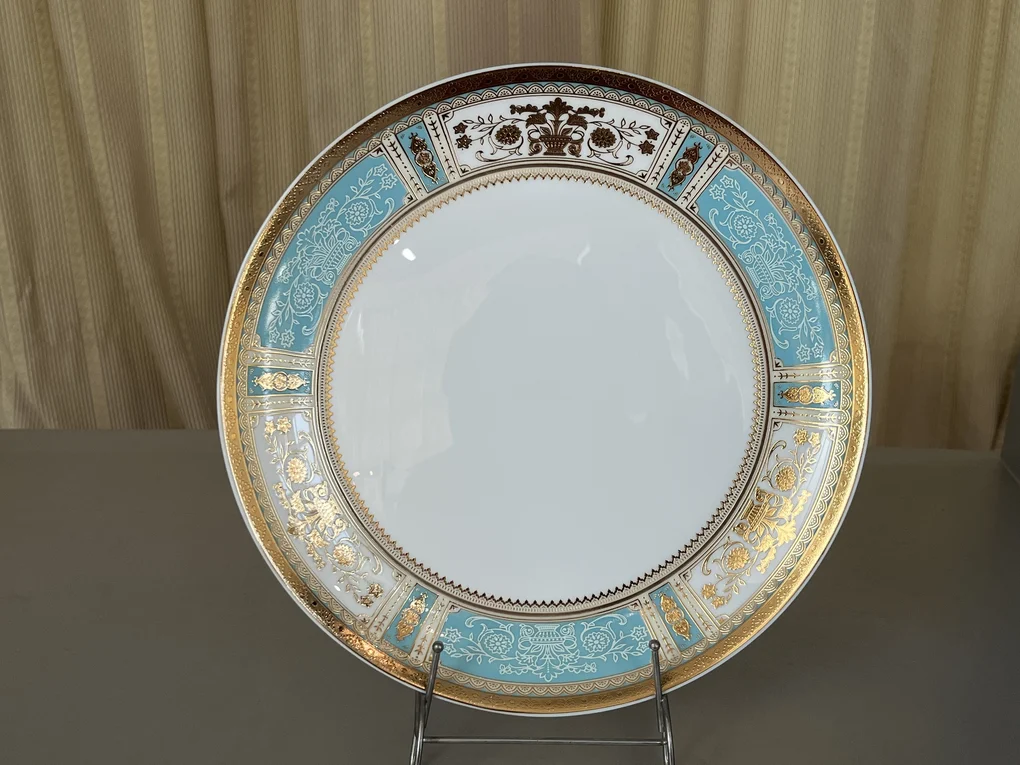
Milky White Glass Plates — Shapes & Colors
Within the opalescent glass tableware system, milky white glass dinner plates are not only among the most representative product types — they’re also the most stable and scalable choice for milky white glass plates wholesale. They may appear to be simply “white plates,” but what actually drives purchasing decisions is rarely just the color itself. It’s the specific shapes available, the particular shade of white on offer, and how those differences lead a product toward different use cases and visual outcomes.
From a practical standpoint, shape determines how a plate behaves across plating, handling, stacking, and service. Color determines whether the plate leans toward universal, all-purpose use or toward a specific atmosphere, aesthetic, or brand identity. Both are foundational choices that buyers need to clarify upfront before selecting products — not superficial details to sort out later.
In actual product selection, the core information about milky white glass plates covers the common shapes and color tones available:
- Common shapes: round, square, oval, and decorative styles with embossed or wavy edges
- Basic color: standard pure white, suitable for most restaurants and bulk procurement
- Warm-toned white: cream white, warm white, used to enhance dining atmosphere
- High-end tones: ivory white, slightly beige, with more texture and differentiation
- Visual layered style: translucent milky white, with a slight transparent effect under light
Common Shapes of Milky White Glass Plates
Starting with shapes. The reason round, square, oval, and decorative-edge styles have remained staples isn’t that manufacturers keep developing more options — it’s that different plate shapes serve genuinely different purposes. Round plates are the most common because they integrate most easily into standardized operational systems: they’re easy to lay out, highly compatible with a wide range of dishes, and efficient to clean and stack. That’s why they remain the default for most restaurants, hotels, and large-volume orders. The conclusion that “round plates are the most common” holds not because they’re unremarkable, but because they’re the most dependable in high-frequency, high-turnover environments.
Square plates take things a step further. Switching from round to square isn’t merely a shape adjustment — it changes the visual boundary the plate creates around the food. Round plates feel natural and universally accommodating; square plates make the plating look more structured and intentional, which suits settings where visual presentation matters as much as the food itself. Because of that stronger visual framing, square plates often stop functioning purely as “containers for food” and begin actively participating in the presentation. So when people say “square plates have a stronger design sensibility,” it’s not empty description — they genuinely shift the visual focus of the table from functionality toward style.
Oval plates occupy a different niche — their advantage lies not in aesthetics, but in practical versatility. Shared dishes, elongated preparations, or arrangements that benefit from horizontal space can feel cramped at the center and wasteful at the sides on a round plate. On an oval plate, the ingredients spread out more naturally and the overall presentation looks fuller. That makes oval plates a clear choice for specific serving needs rather than a supplementary style. Their inclusion among the common shapes of milky white glass plates reflects a real functional purpose: they solve a distinct display challenge for a particular type of dish.
Decorative-edge styles build on those basic shapes. They don’t change the fundamental purpose of the plate, but they significantly elevate the visual presence of the rim, shifting the plate from “supporting the food” to “contributing to the overall look of the table.” Embossed edges, wavy edges, and similar treatments are generally not the first choice for high-volume basics, but they appear reliably in settings that prioritize display, serving ceremony, or brand identity. This explains why decorative edges count as a common shape type — not because they’re the most widely used, but because they represent a clear and distinct product direction: extending from the practical into the visual. For a more direct sense of how these shapes compare across round, oval, and different size specifications, browsing the White Opal Plate Collection makes the differences much easier to see.
Common Color Tones of Opal Glass Plates
Turning to colors. Standard pure white has always been the dominant baseline because it solves the most fundamental requirement: compatibility. For most restaurants, a dinner plate needs to work with the food, the environment, and the rest of the tableware — without introducing visual conflict — while remaining consistent across different procurement batches. Pure white is the most reliable choice on all of these counts. It works across virtually every cuisine — Chinese, Western, desserts, breakfast — and maintains color consistency most easily in bulk orders. The conclusion that “standard pure white suits most restaurants and bulk procurement” isn’t a conservative judgment — it’s recognition that pure white carries the core functional load in commercial settings.
Warm-toned whites are a natural progression from pure white. They still fall within the white family and remain well within the mainstream acceptance range, but they take on an additional atmospheric role. Where pure white reads as clean, direct, and standardized, warm white and cream white feel softer and less stark — easier to pair with warm lighting, wooden tabletops, or spaces that lean toward a more lived-in aesthetic. Saying that “warm-toned whites enhance the dining atmosphere” isn’t about ranking them as more premium — it’s that they add an emotional quality to the environment without sacrificing versatility.
Ivory white takes another step beyond warm white, moving from softness into deliberate differentiation. Compared to standard pure white, its tone is richer — not a bright, clean white, but something with a faint beige or creamy undertone. That subtle shift makes a real difference in practice: the plate tends to read as more considered, refined, and elevated. For that reason, ivory white often appears in product lines looking to stand out from conventional white tableware. It no longer just fulfills the baseline function of white — it builds a sense of style recognition within the white color range.
Translucent milky white is the final step in the color hierarchy, and arguably the most distinct. Here, white is no longer just a color — it begins to interact with light. The visual value goes beyond looking clean or soft; a slight light transmission creates a layered effect, making the edges, the plate surface, or the entire piece more dynamic under illumination. That’s why it’s classified as a “visual layered style.” The difference from pure white, warm white, or ivory white isn’t simply a matter of shade or tone — it’s an entirely different mode of presentation. Translucent milky white earns its own category because its visual behavior is fundamentally unlike that of any other white plate.

Opal Glassware Plates — Are They Durable & Safe?
Yes, opal glassware plates are both durable and safe. For wholesalers, brand owners, and catering buyers, their value doesn’t rest on a single selling point — it comes from consistently delivering on both durability and safety across high-frequency commercial use.
When evaluating this type of tableware, many buyers tend to treat durability and safety as separate questions: first, is it tough enough? Then, is it safe? In real-world usage, though, the two are closely linked. Tableware that’s genuinely suited to commercial environments must not only look and feel sturdy — it must also remain stable, hygienic, and predictable through repeated cleaning, temperature swings, stacking, and transportation.
To put it directly, the reasons why opal glassware plates can answer “yes” on both counts come down to the following:
- They are durable because of their more stable internal structure, which holds up under high-frequency use over time.
- They are durable because the edges are more resistant to impact and far less prone to chipping or cracking.
- They are safe because the dense material surface resists the absorption of grease, odors, and bacteria.
- They are safe because they are generally compatible with microwaves and dishwashers, making routine kitchen use reliable and worry-free.
- They are both durable and safe because their improved thermal shock resistance makes them far less likely to crack under sudden temperature changes.
Starting with the first point: durability here isn’t about surviving a single drop test — it’s about holding up through daily use at scale. Commercial tableware faces constant handling, frequent cleaning, and repeated impact every single day. If the material isn’t structurally sound, micro-cracks can build up internally even when nothing looks wrong on the surface, eventually causing sudden breakage during service. Because opal glass undergoes a strengthening process that densifies the material, it’s far less prone to this kind of gradual degradation. Its durability is about long-term structural integrity, not just initial hardness.
With overall structural stability established, the next practical test is the edges. In real operating environments, tableware rarely breaks from the center outward — it chips at the rim first. Stacking, knocking against other pieces, storage, and packing all put the edges under stress before anything else. Opal glassware plates perform well here because the edges are more likely to stay intact through daily friction and light impact. They’re not merely “usable” — they’re better suited to high-turnover settings where edge damage is a constant concern.
On the safety side, the third point goes beyond the basic assurance of non-toxicity. It addresses something equally important in food service: whether residue accumulates after repeated contact with food. The dense surface of opal glass doesn’t readily absorb grease, odors, or bacteria — which matters a great deal in catering. Real food safety isn’t just about what the product is made of at the point of manufacture; it’s about whether it stays clean, hygienic, and stable after cycles of use and washing.
The fourth point addresses a practical but often overlooked dimension of safety: equipment compatibility. Modern kitchens run on microwave heating and dishwasher cleaning as standard processes. Tableware that can’t reliably handle those conditions isn’t fully safe in practice, because misuse risk rises whenever the material’s limits aren’t clear. Opal glassware plates are generally stable in both environments, which removes a layer of operational uncertainty for commercial kitchens.
Finally, the fifth point is where durability and safety genuinely converge: thermal shock resistance. Many tableware failures don’t happen in static conditions — they happen during rapid temperature transitions, such as moving from a cold environment to a heat source, or making contact with cooler surfaces immediately after high-temperature washing. Standard materials can crack under that internal and external stress. Opal glass, after strengthening, handles these transitions more reliably — making it not only more durable, but also less likely to fail unexpectedly during use. Being resistant to cracking is durability; being unlikely to crack suddenly mid-service is safety.
Technical Comparison: Opal Glass Plates vs. Porcelain Plates vs. Regular Clear Glass Plates
| Technical Indicator | Opal Glass Plates | Porcelain Plates | Regular Clear Glass Plates |
|---|---|---|---|
| Material Essence | Strengthened opal glass (silicate-based) | Kaolin-based ceramic fired at high temperature | Ordinary soda-lime glass (silicate-based) |
| Thermal Shock Resistance (℃) | Resistant to 120-150℃ sudden temperature changes | Resistant to 80-100℃ sudden temperature changes (varies by firing process) | Resistant to 50-80℃ sudden temperature changes (prone to cracking) |
| Edge Impact Resistance | High (strengthened edge treatment, low chipping rate) | Medium (glazed edges, prone to chipping in high turnover) | Low (thin edges, easy to chip or crack) |
| Stain & Bacteria Resistance | High (dense surface, non-porous, easy to clean) | Medium (porous glaze, may retain odors if not cleaned thoroughly) | High (smooth surface, but stains are visible due to transparency) |
| Batch Production Consistency | High (industrial molding, minimal size/color variation) | Medium (kiln firing leads to slight shape/glaze variations) | High (industrial molding, consistent size but transparent in appearance) |
| Microwave/Dishwasher Compatibility | Yes (stable performance in regular use) | Yes (but avoid sudden temperature changes) | Yes (but prone to cracking from thermal shock) |
Milk Glass Dinner Plates — Who Buys Them & Where?
In practice, wholesale and OEM procurement of milk glass dinner plates doesn’t happen sporadically — demand is clearly concentrated among a defined set of buyers with consistent, ongoing needs for milk glass dinner plates bulk orders. For suppliers, identifying who is buying first, and then understanding where they typically source from, is essential to correctly positioning products, setting pricing structures, and establishing the right cooperation model.
On the demand side, these plates don’t rely primarily on individual retail consumption. They’re better suited to commercial buyers who need tableware for daily operational use, care about overall presentation consistency, and must keep procurement costs under control. Catering chains, mid-to-large restaurants, hotels, buffet operations, event planning companies, brand customization clients, and a growing number of coffee shops and casual dining spaces are the most stable procurement entities for products like these.
In brief, the primary buyers and procurement channels for milk glass dinner plates fall into the following core categories:
- Catering chains and mid-to-large restaurants — typically purchase directly from factories or through established long-term suppliers, with priority on supply stability, specification consistency, and reliable replenishment
- Hotels and buffet operations — prefer mature supply channels with bulk delivery capability, with priority on overall table setting appearance and long-term visual consistency
- Wedding and event planning companies — often source through local wholesale or project-based procurement channels, with priority on visual coordination, matched sets, and on-time delivery
- Brand owners and OEM clients — typically work directly with factories for customized procurement, with priority on logo integration, packaging, specification development, and product differentiation
- Coffee shops and casual dining spaces — mostly procure through stable distribution networks or long-term supply relationships, with priority on style consistency, photogenic presentation, and convenient ongoing replenishment
These categories aren’t simply parallel entries on a list. What actually drives procurement is the difference in each buyer’s business objectives — and it’s those differences that push each type toward a distinct sourcing approach.
Opalescent Glass Plates — How to Order in Bulk
For most buyers, placing a bulk order for opalescent glass plates isn’t as simple as picking a style and asking for a price. Once you actually enter the procurement process, the real questions tend to be more practical: how do you nail down the right specifications, how do you verify quality before committing, how do you negotiate MOQ, how do you avoid problems with the bulk production run, and how do you make sure the goods actually arrive as expected?
The bottom line with bulk orders like these is that the goal isn’t to move fast — it’s to confirm each step in the right sequence. The more thoroughly you clarify things upfront, the smoother everything downstream becomes, and the less likely you are to run into costly surprises.
In practice, getting a bulk order right means working through the process in a structured way. To get bulk orders of opalescent glass plates right, the process needs to be structured by clarifying these 6 key steps first:
- Confirm the exact product requirements firstDon’t lead with price — start by nailing down the product itself. What size do you need? Round or square? Are you buying plates only, or matching them with a full tableware set? Is this for a restaurant, a hotel, or retail distribution? These may feel like basic questions, but the answers directly shape the quotation, the MOQ, and the production schedule. Leave them vague at the start and you’ll spend far more time on revisions later.
- Verify that product quality meets requirementsNot every plate that looks similar performs the same way. For bulk procurement, it’s worth confirming upfront whether the material is genuine opal glass, whether it’s heat-resistant and dishwasher-safe, and whether it can hold up to the kind of daily high-frequency use your context demands. This matters especially for restaurant, hotel, or wholesale buyers — because unstable quality ends up costing far more than a slightly higher unit price. Once quality issues show up in a bulk run, the cascading costs of returns, replacements, and customer complaints are rarely worth the initial savings.
- Check samples before placing an orderThe sample stage isn’t optional. It’s not just about checking appearance — it’s your chance to confirm the actual product before you’re committed. Does the color match what you had in mind? Are the edges cleanly finished? Does the thickness and weight feel right? If you have OEM requirements — a logo, a surface pattern, a specific packaging format — confirming these at the sample stage is even more critical. A clear, approved sample gives the bulk run a concrete standard to hit. Without it, you’re left hoping the production matches a mental image, which rarely ends cleanly.
- Clarify MOQ and pricing methodsBulk pricing is rarely as straightforward as a per-unit cost. You need to understand the MOQ — is it per style, per SKU, or per total order value? Can different sizes be mixed? Does packaging choice affect pricing? Many first-time buyers overlook this, then find that the unit price works in isolation, but the quantity requirements, mix restrictions, or packaging configurations make it unworkable in practice. Price should always be evaluated alongside MOQ and fulfillment structure, not separately.
- Confirm production time and shipping method in advanceA lot of order problems aren’t quality issues — they’re timeline mismatches. A buyer plans around a store opening, a promotional launch, or a project delivery date, but doesn’t confirm the factory’s production cycle clearly, and the goods arrive late. By then, all the preparation that depended on that delivery is disrupted. Before placing an order, lock in the production lead time, packaging timeline, shipping window, and transport method. For international bulk procurement in particular, delivery dates should never be left approximate.
- Control risks at lastThe biggest risk in a bulk order isn’t a slightly elevated price — it’s goods that don’t match expectations at delivery. Damage on arrival, color variation between batches, packaging that doesn’t match the approved sample: these are the problems that cause real operational headaches. Address them before the order is placed, not after. Agree on inspection standards, damage handling procedures, replenishment terms, and after-sales communication processes upfront. The earlier these are settled, the less friction there is if something does go wrong. For ongoing procurement relationships, this step is especially important — it’s what determines whether you can sustain the partnership over time.
Milk Glass Serving Plates — Why Buy From JoinTion?
In bulk procurement of milk glass serving plates, what ultimately determines the quality of a supplier relationship isn’t the opening price — it’s whether the supplier can consistently and reliably deliver value across the full arc of a long-term partnership. For wholesalers, brand owners, and e-commerce sellers, a dependable supplier means lower operational risk, higher efficiency, and a more predictable growth path. That’s the context in which JoinTion has become a leading consideration for more and more procurement decisions — particularly for buyers seeking milk glass serving plates OEM.
For buyers sourcing milk glass serving plates, choosing JoinTion is ultimately a choice to work with a supply partner that is stable, customization-ready, low-risk, and scalable across different stages of business growth.
- Stable production, ensuring consistency in color, thickness, and surface finish across every batch — suitable for long-term repurchase without batch variation problems
- OEM customization support, covering logos, patterns, sizes, and packaging — giving products a distinct brand identity rather than remaining generic white plates
- Rigorous quality control with multiple inspection checkpoints before dispatch, reducing damage and defect rates and minimizing returns and after-sales issues
- Flexible MOQ, accommodating small trial batches and stable large-scale fulfillment — suitable for buyers at different stages of their business
- Strong familiarity with overseas market demands, with the ability to offer product suggestions that align with the specific needs of e-commerce, catering, and retail channels
If you interest to learn more about why Jointion was chosen, we have a dedicated article about it, and you can also read “Top Chinese Opal Glass Brand for Bulk Buyers: Why Jointion Wins on Quality and Price“.
When these factors are considered together, the supplier’s role shifts from “production factory” to something more meaningful: a partner that helps reduce trial-and-error costs, improves product competitiveness, and supports the long-term expansion of the business.