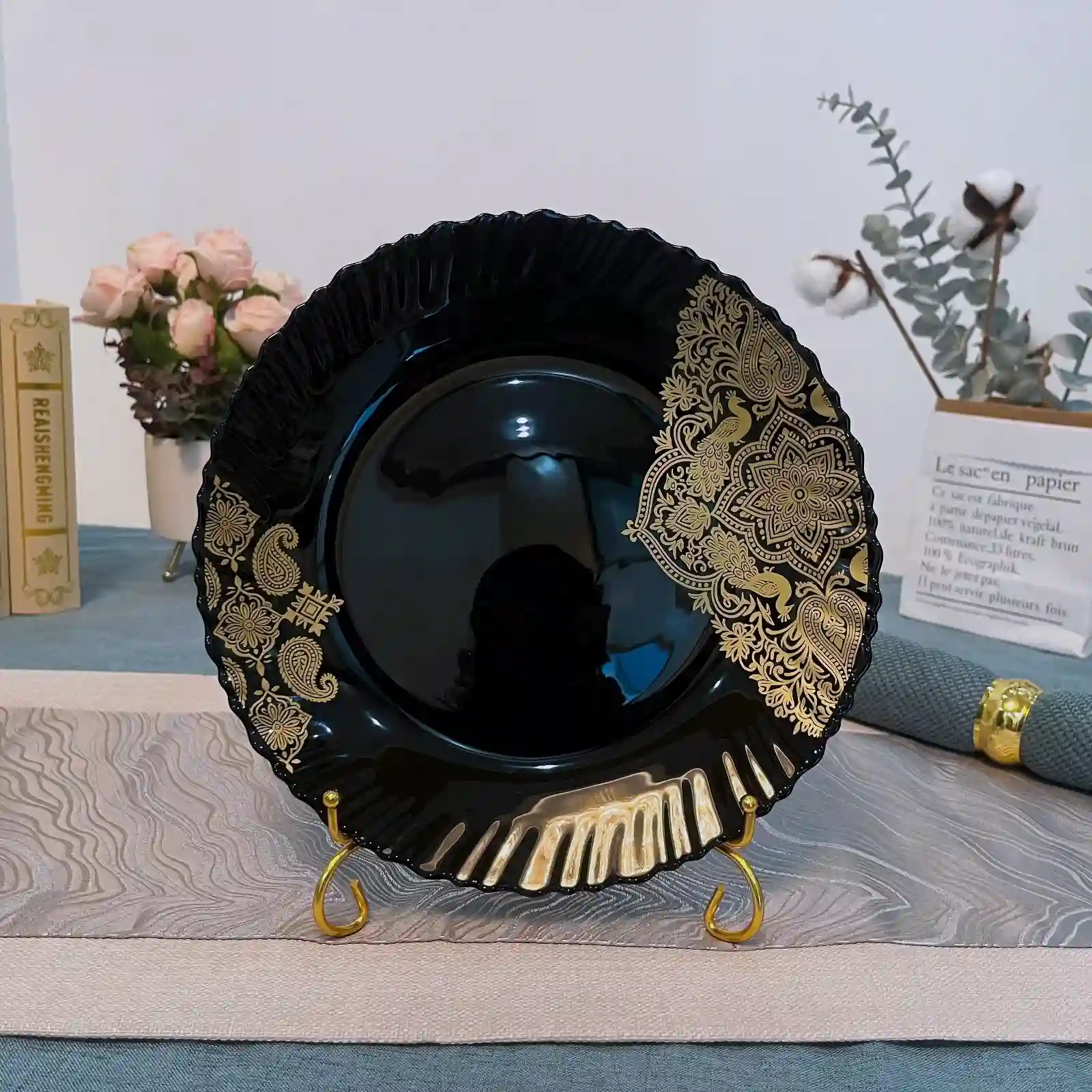
Non-Porous Opal Glass Plates – Hygienic & Food Safe

FeatureDescription
Zero-Porosity SurfaceOpal glass leaves no micro-cracks for bacteria or mold — unlike ceramic glazes that trap germs over time.
Commercial Hygiene ComplianceMeets FDA and EU food-contact standards for commercial kitchens, hospital canteens, and school dining environments.
Stain & Odor ResistantAbsorbs no stains or odors — safe, easy-to-clean dinnerware for families with babies or immunocompromised members.

Video and What We Can Customize for you

Size Customization

Available in 7.5″/8″/8.5″/9″/9.5″/10″/10.5″/11″/12″ to fit appetizers, main courses, or shared platters across any food service.

Choose from white, black, jade green, topaz yellow, or white jade — integral body color with no applied glaze layer.

Decal printing or low-temperature embossing available — both methods keep the non-porous plate surface fully intact.

Round, square, oval, coupe, or irregular profiles — all made from the same dense, bacteria-resistant opal glass material.

Custom packaging to match your brand or logistic needs, ensuring plates arrive safely and display-ready on shelf.

Four Best-Selling Decal Designs

The four designs on the right are the best-selling in this series so far, and here are the top 5 countries that have been inquiring the most:

  1. USA — steaks, brunch plates, and leafy salads
  2. Germany — cold cuts, bread, and sausage platters
  3. Japan — sushi, sashimi, and pickled side dishes
  4. UAE — grilled meats and rice platters
  5. Australia — seafood, pasta, and café meals

FAQs

Contact Person Icon

Commernts Question People Often Curious

It gathers the five most frequently asked questions by users regarding this product. If you are also interested, you can click to have a look.

Why are opal glass plates considered non-porous?
Opal glass is formed through high-temperature crystallization that creates a fully dense body with zero open pores. There is no glaze layer that can crack or wear away. The entire plate is one solid material, so bacteria and food residue have nowhere to penetrate. This is why opal glass stays hygienic even after years of heavy daily use.
Ceramic plates rely on a glaze coating to seal their porous clay body. Over time, that glaze can develop micro-cracks from thermal shock or wear, exposing gaps where bacteria grow invisibly. Opal glass has no coating — its smooth, sealed surface is the material itself. No layer to degrade means no hidden contamination risk, even after prolonged use.
Yes. Our opal glass plates comply with FDA, EU 1935/2004, and LFGB food-safety standards. The non-porous surface prevents cross-contamination, which is essential in healthcare and institutional food service. Many hospitals already use opal glass tableware in their meal systems because it delivers reliable hygiene without special cleaning procedures.
Absolutely. The zero-porosity surface means no bacteria or mold can colonize the plate — even in scratches or after hundreds of wash cycles. Standard dishwasher cleaning is fully effective. Unlike aged ceramic or wooden plates that trap germs over time, opal glass stays microscopically smooth, giving parents confidence that every meal is served on a genuinely clean surface.
No. Our decal and low-temperature embossing methods bond to the opal glass surface without breaking its non-porous structure. Testing confirms that decorated plates perform identically to plain ones in food-contact safety assessments. You can brand your plates for commercial use without compromising the bacteria-resistant quality that makes this material hygienic.
Scroll to Top

Contact us

Connect with us for tailored solutions, partnership opportunities, or product inquiries — we’re ready to support your vision.

learn More​

Please let us know the products or service you want to know  and we will contact you as soon as possible.