
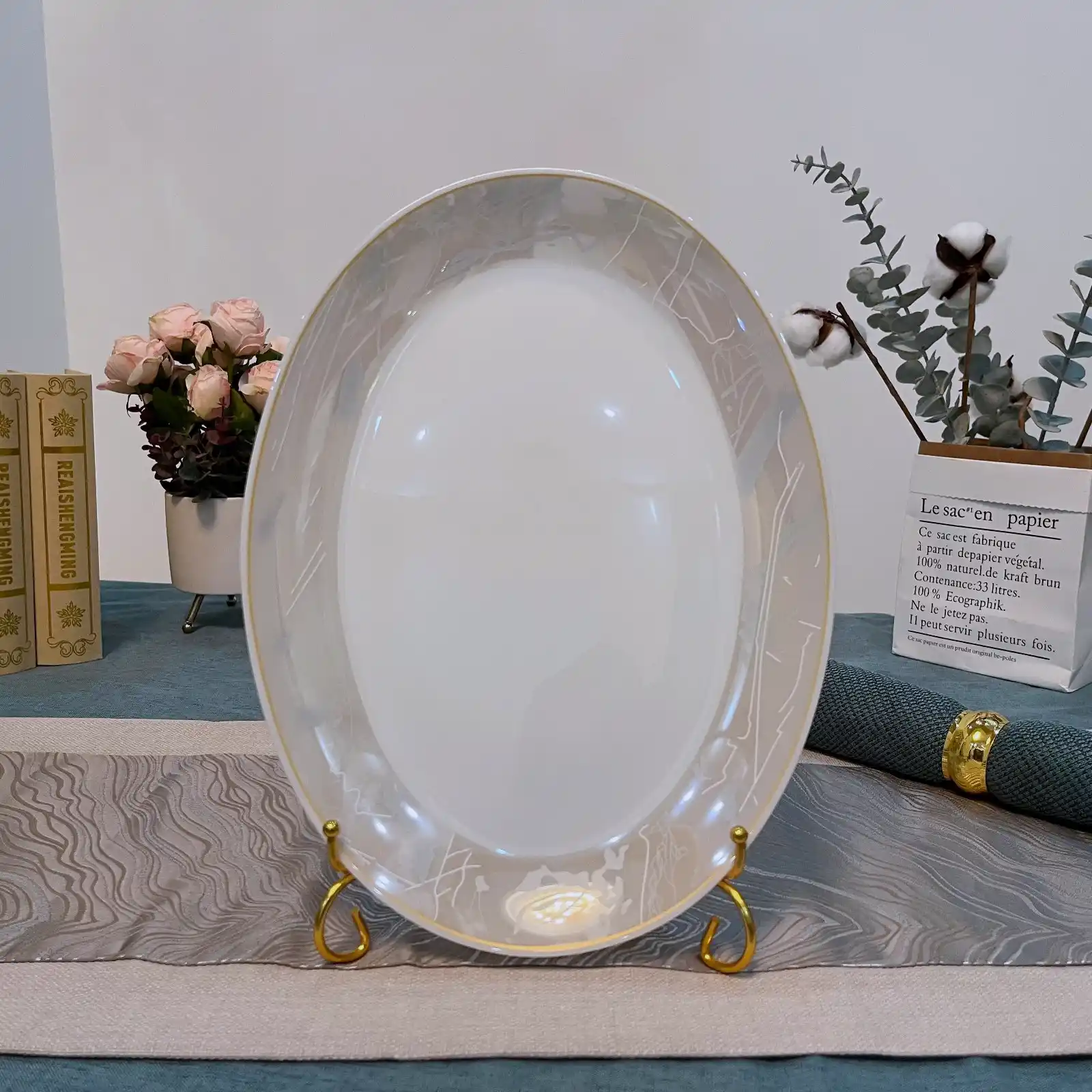
Opal Glass Oval Fish Plate | Batch Color & Size Match

Focus AreaDescription
Batch Color ConsistencyMachine-pressed opal glass fish plates maintain Delta E ≤1.5 across batches—no visible color shift between repeat orders.
Dimensional UniformityDimensional tolerance within ±0.5mm per oval fish platter ensures consistent stacking and table presentation across locations.
Pre-Order VerificationCross-batch sample comparison recommended before bulk orders; set color and size acceptance terms in your supply contract.

Video and What We Can Customize for you

Size Customization

Oval fish plates available in 10″, 12″, 13″, and 14″—each size held to the same dimensional tolerance across production batches.

White, black, jade green, topaz yellow, or white jade—color formula fixed per SKU to ensure batch-to-batch shade consistency.

Decal printing and low-temperature embossing supported on oval fish platters, with matched logo color across reorders.

Deep oval, shallow elliptical, and boat-style fish dish profiles—all machine-molded for repeatable form and rim height.

Branded outer cartons or client-specified protective packaging available to match your chain’s logistics and unboxing standards.

Four Best-Selling Decal Designs

The four designs on the right are the best-selling in this series so far, and here are the top 5 countries that have been inquiring the most:

    1. Saudi Arabia – grilled hammour and spiced whole fish on oval platters
    2. Vietnam – steamed fish and braised seafood served on opal glass fish plates
    3. United States – roasted salmon and plated fish dishes
    4. India – fried pomfret and tandoori fish presentations
    5. France – poached sole and pan-seared fillet servings

FAQs

Contact Person Icon

Commernts Question People Often Curious

It gathers the five most frequently asked questions by users regarding this product. If you are also interested, you can click to have a look.

How do opal glass oval fish plates maintain color consistency between batches?
The color in opal glass comes from the glass formula itself, not a surface glaze. Raw materials are mixed to fixed ratios before pressing, so each batch produces the same white tone. Spectrophotometer checks confirm Delta E stays below 1.5. This means oval fish plates ordered months apart will match visually when placed side by side on your restaurant tables.
Each opal glass oval fish platter is formed in precision steel molds. Length, width, and rim height stay within ±0.5mm from batch to batch. This keeps stacking height uniform, fits standard dishwasher racks, and ensures replacement plates blend seamlessly with existing stock across your chain locations.
If one branch receives slightly yellower or shorter fish plates than another, guests notice the difference. It signals inconsistency in brand quality. Opal glass production removes the kiln-variable issues found in ceramic tableware, giving multi-unit operators a reliable way to keep every location visually aligned without constant inspection.
Ask your supplier for samples from two separate production runs. Compare them under standard lighting for visible tone difference and measure dimensions with calipers. Then write the acceptable Delta E range and size tolerance into your purchase contract. This gives your QC team a clear pass/fail standard at goods receipt.
Porcelain glaze color shifts with kiln temperature and humidity—factors that vary between firings. Opal glass gets its color from the molten material composition, which is controlled before forming. This makes batch-to-batch repeatability inherently stronger. For buyers managing uniform fish plate inventory across many outlets, opal glass reduces rejection rates at inspection.
Scroll to Top

Contact us

Connect with us for tailored solutions, partnership opportunities, or product inquiries — we’re ready to support your vision.

learn More​

Please let us know the products or service you want to know  and we will contact you as soon as possible.