
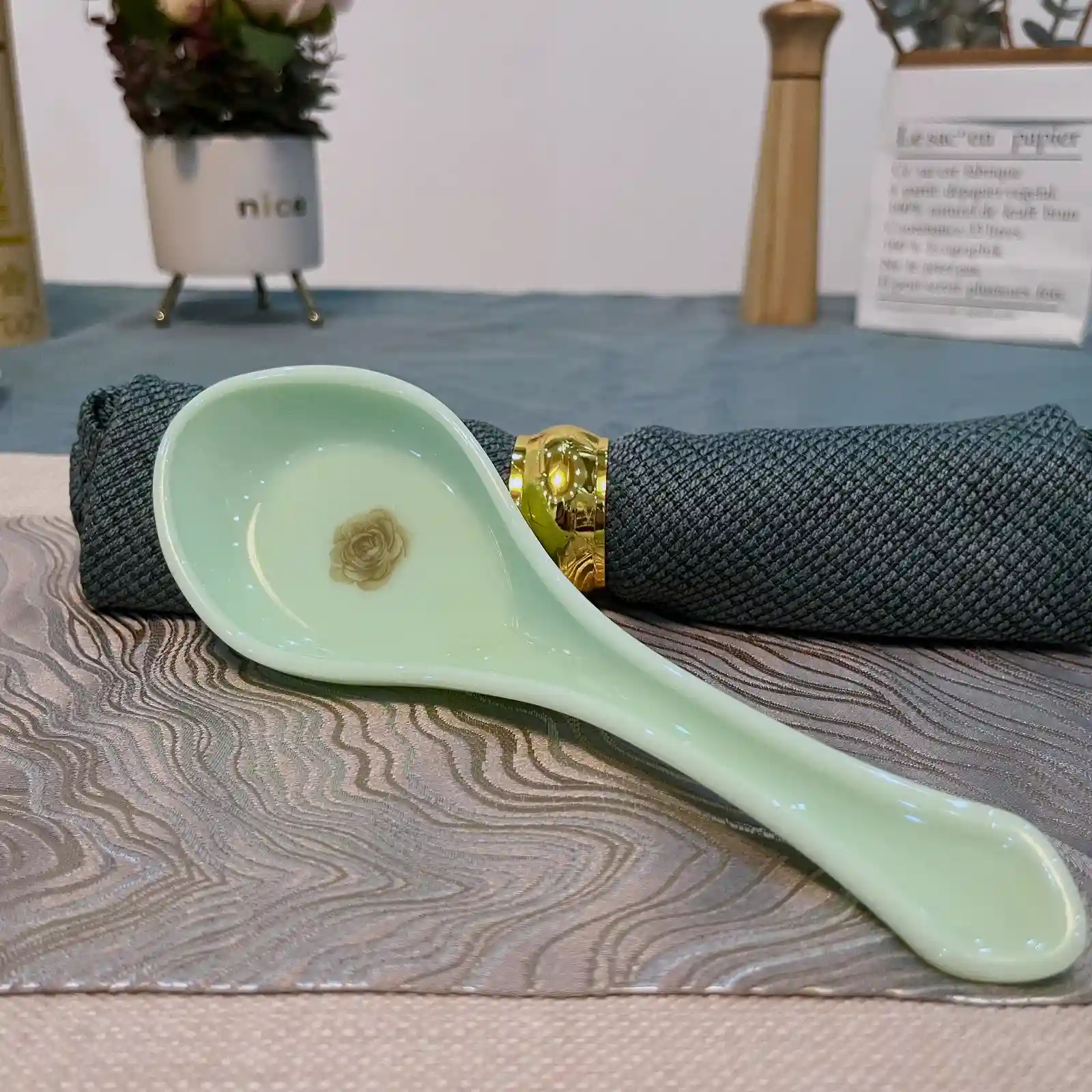
Stain-Proof Opal Glass Spoon | Non-Porous & Hygienic

FeatureDescription
Zero Pigment AbsorptionNon-porous opal glass spoon resists turmeric, curry, and soy sauce stains. Zero porosity means color never absorbs into the surface.
Hygienic & Easy to CleanNo pigment residue means no bacteria buildup. This food-safe tempered glass spoon washes clean to its original color every time.
Commercial-Grade DurabilityDishwasher-safe white glass spoon stays spotless through daily commercial use — ideal for restaurants serving high-pigment foods.

Videos below showcase this product series

No PS editing, real footage for quality reference (stickers/labels shown are our standard options; custom designs are also available)

Size Customization

Two standard sizes available: 9.0″ serving spoon and 5.5″ dessert spoon, suited for different portion and plating needs.

Offered in White, Black, Jade Green, Topaz Yellow, and White Jade. All colors share the same non-porous, stain-proof glass body.

Supports decal application and low-temperature embossed branding directly on the opal glass spoon for durable logo visibility.

Standard round-bowl spoon with ergonomic handle — a familiar, functional form for soups, desserts, and everyday dining.

Custom packaging available based on your brand guidelines, retail display format, or bulk shipping requirements.

FAQs

Contact Person Icon

Commernts Question People Often Curious

It gathers the five most frequently asked questions by users regarding this product. If you are also interested, you can click to have a look.

Does turmeric or soy sauce permanently stain opal glass spoons?
No. Opal glass has a zero-porosity surface, so pigments from turmeric, curry, soy sauce, or tomato sauce cannot penetrate the material. A standard wash with dish soap removes all color residue immediately. Unlike plastic spoons that yellow or wooden spoons that darken over time, the opal glass spoon returns to its original color after every use regardless of how deeply pigmented the food is.
Ceramic relies on a glaze layer to seal its porous clay body. If that glaze chips, food particles and bacteria enter the exposed pores. Opal glass is homogeneous — the same non-porous material all the way through. No glaze to damage, no pores to trap residue. Pigment that stays on surfaces creates breeding grounds for bacteria, so a surface that holds zero pigment also holds zero hidden contamination.
No. Stain resistance is built into the opal glass itself during manufacturing. Silica, soda ash, and limestone are fused above 1500°C into a sealed, non-porous structure. There is no added coating or film. The material performs identically on day one and after years of dishwasher use. This is a structural property of tempered opal glassware, not a surface treatment.
Yes. Opal glass spoons are tempered for thermal stability and safe for direct contact with hot foods including curries, stews, and broths. The spoon will not warp, release chemicals, or crack under normal serving temperatures. It is also dishwasher safe for repeated high-temperature wash cycles in commercial kitchens.
A white spoon that stays white signals genuine cleanliness to diners. Plastic and melamine utensils develop micro-scratches that trap curry and turmeric stains within months. Stainless steel hides discoloration but can transfer metallic taste. Opal glass keeps its color permanently with no flavor transfer — it is odorless, chemically inert, and maintains its appearance through high-volume daily service.
Scroll to Top

Contact us

Connect with us for tailored solutions, partnership opportunities, or product inquiries — we’re ready to support your vision.

learn More​

Please let us know the products or service you want to know  and we will contact you as soon as possible.

Canton Fair — Request Your Invitation Letter

We’re exhibiting at Canton Fair, Oct. 23–27. Book your booth visit now and get VIP reception with our new Jadeite & Opal Glass collections prepared just for you.