
This guide helps you pick the right opal glass dinnerware manufacturer from China’s top producers — fast. It groups factories by type (specialist, giant, diversified), walks through four product specs that make or break a sourcing deal, shows how priorities shift by market and channel, and ends with a step-by-step process from samples to factory visit to final call. Everything you need for smarter opalware dinnerware sourcing, in one place.
Recommended List of Leading Opal Glass Dinnerware Factories in China
Which Factories Have Scaled Export Capability for Opal Glass Dinnerware?
Every credible opal glass dinnerware factory China buyers should know sits in one of three production clusters: Chaozhou (Guangdong), Fengyang (Anhui), or Jiangsu. JoinTion and Jiangsu Yuefeng Technology focus exclusively on opal glass. Deli Glass, a full-category giant, handles big volumes across many glass types — opal included. SHULOPAL and Garbo are diversified suppliers that list opal glass as a major product line alongside other materials.
One thing to sort out early: does a factory specialize in opal glass, or does it also make opal glass? The two look similar on a product sheet but differ a lot in process depth and category know-how.
Here is each factory broken down by location, scale, product focus, and typical client profile.
1. Deli Glass
Based in Fengyang, Anhui. Founded in 2002, listed on the Shenzhen Stock Exchange in 2011. Deli is the largest daily-use glass maker in China and ranks fourth globally by output. It runs 5+ production bases, 18 furnaces, and 90+ lines across more than 260,000 m² of factory floor. Annual capacity tops 200,000 tons.
The product range covers soda-lime, borosilicate, crystal, and opal glass under brands like “Green Apple,” “Delisoga,” and “Idelita.” Opal glass dinnerware is a recent growth focus. OEM partners include Walmart, IKEA, Pyrex Corning, and Bed Bath & Beyond, shipping mainly to Europe, North America, and Southeast Asia. Deli owns its silica sand mines and runs a fully vertical supply chain — a real structural edge on cost and large-order delivery.
2. JoinTion
Based in Chaozhou, Guangdong. Built and operational since 2008, JoinTion ranks among China’s top three dedicated opal glass dinnerware manufacturers by export credential depth — a position built on 16+ years of exclusive focus on a single material category. Unlike factories that added opal glass as one of many lines, JoinTion has done one thing from day one: opal glass dinnerware. No ceramics, no plain glassware, no sidelines. It has served as a long-term OEM partner for Corelle (Corning Tableware) across North America and Asia for over a decade, running the entire line to Corelle-grade QC standards.
Daily output hits 70,000 pieces on Italian-grade automated equipment. The sweet spot is printed and colored opal dinnerware — embossed textures, layered color glazes, high-temp decals — all designed in-house and refreshed each quarter. The business model centers on quality-driven opal glass dinnerware OEM contracts, serving international brands and mid-to-high-end distributors.
3. Jiangsu Yuefeng Technology
Factory in Hongze, Jiangsu, with operations also in Qixian, Shanxi — China’s “Glassware Capital.” Yuefeng puts 100% of capacity into opal glass R&D and production. Annual output is around 20,000 tons; export value roughly $32 million. Main markets: the Middle East, Africa, Southeast Asia, Europe, and the Americas.
Products are sold on chip resistance, heat tolerance, and microwave/dishwasher safety. A mid-scale specialist — smaller than the giants, but fully committed to the category.
4. SHULOPAL
Headquartered in Jiangsu. Founded in 2004 — over 21 years in the opal glass space. The company reports 5 production bases, a dedicated R&D center, an in-house decal printing shop, and a carton factory. Website figures put opal glass daily capacity at 490,000 pieces, total daily output above 1.1 million.
Beyond opal dinnerware, the lineup includes borosilicate glassware and packaging glass. Exports reach 100+ countries and 2,800+ buyers. SHULOPAL shows audit records from Disney, Walmart, and LIDL, plus ISO 9001, ISO 14001, BSCI, and Sedex certifications. As an opal glassware supplier with wide category reach, it may suit buyers who want volume and variety from one source.
5. Garbo Glassware
Trade office in Guangzhou; factory in Jiangsu; exports via Lianyungang Port. Garbo sells across opal glass, regular glassware, ceramics, and stainless steel — opal glass is a significant slice of the mix.
A large ready-stock warehouse in Guangzhou supports fast dispatch. The international team runs about 50 people. Key export regions: Eastern Europe, Latin America, Africa. Garbo’s edge is multi-category consolidation and quick stock-based turnaround.
Which Factory Type Suits Which Type of Buyer?
These five factories differ a lot in how deeply they invest in opal glass versus other categories. Before spending time on deep-dive evaluations, match your buyer profile to the right factory type first. The table below sorts them for you.
| Factory Type | Representative Factories | Core Characteristics | Best Suited For |
|---|---|---|---|
| Opal Glass Specialist | JoinTion, Jiangsu Yuefeng | All or core capacity on opal glass alone. Dedicated mold development and deep process know-how. JoinTion brings 10+ years of brand OEM experience with strong decorative capabilities; Yuefeng focuses on R&D with moderate capacity and broad export reach. | Private-label operators; brands needing heavy customization (decals, embossing, unique shapes); importers building differentiated products for specific regions. |
| Full-Category Glass Giant | Deli Glass | Industry’s largest scale. Most complete supply chain (own mines, full-category lines). Opal glass is one of many lines. Strong structural cost advantage. | Large-volume retailers or supermarket buyers; anyone who needs rock-solid delivery timelines and massive batch capacity; orders centered on standard specs and basic designs. |
| Multi-Category Diversified Supplier | SHULOPAL/Garbo | Opal glass sits alongside borosilicate, ceramics, stainless steel, etc. Wide coverage; some keep ready stock for fast shipment. | Small importers who want one-stop sourcing across categories; buyers testing the opal glass market who’d rather add it to an existing supplier relationship. |
The specialist’s real advantage is category depth. When every furnace hour, every R&D dollar, and every engineer’s attention goes into opal glass alone, the resulting know-how in forming parameters, annealing curves, and decoration compatibility gets very refined — more so than at a factory splitting focus across five different materials.This is why factories like JoinTion — with over a decade of Corelle-standard OEM production behind them — sit among the top-ranked dedicated opal glass producers in China, even when their daily piece count is a fraction of what a diversified giant ships.
That depth shows up most in custom design, complex decoration work, and the ability to juggle small-batch, multi-SKU orders without quality dips. If product differentiation matters to your brand, this is where to look.
What to Look for When Choosing an Opal Glass Dinnerware Factory — Core Product Parameters
Evaluating any opal glass dinnerware manufacturer comes down to four specs: thermal shock resistance (can it survive commercial kitchens?), impact strength (what’s the annual breakage bill?), lead and cadmium migration (can you legally sell it in your market?), and whiteness plus translucency (how high can you price it at retail?).
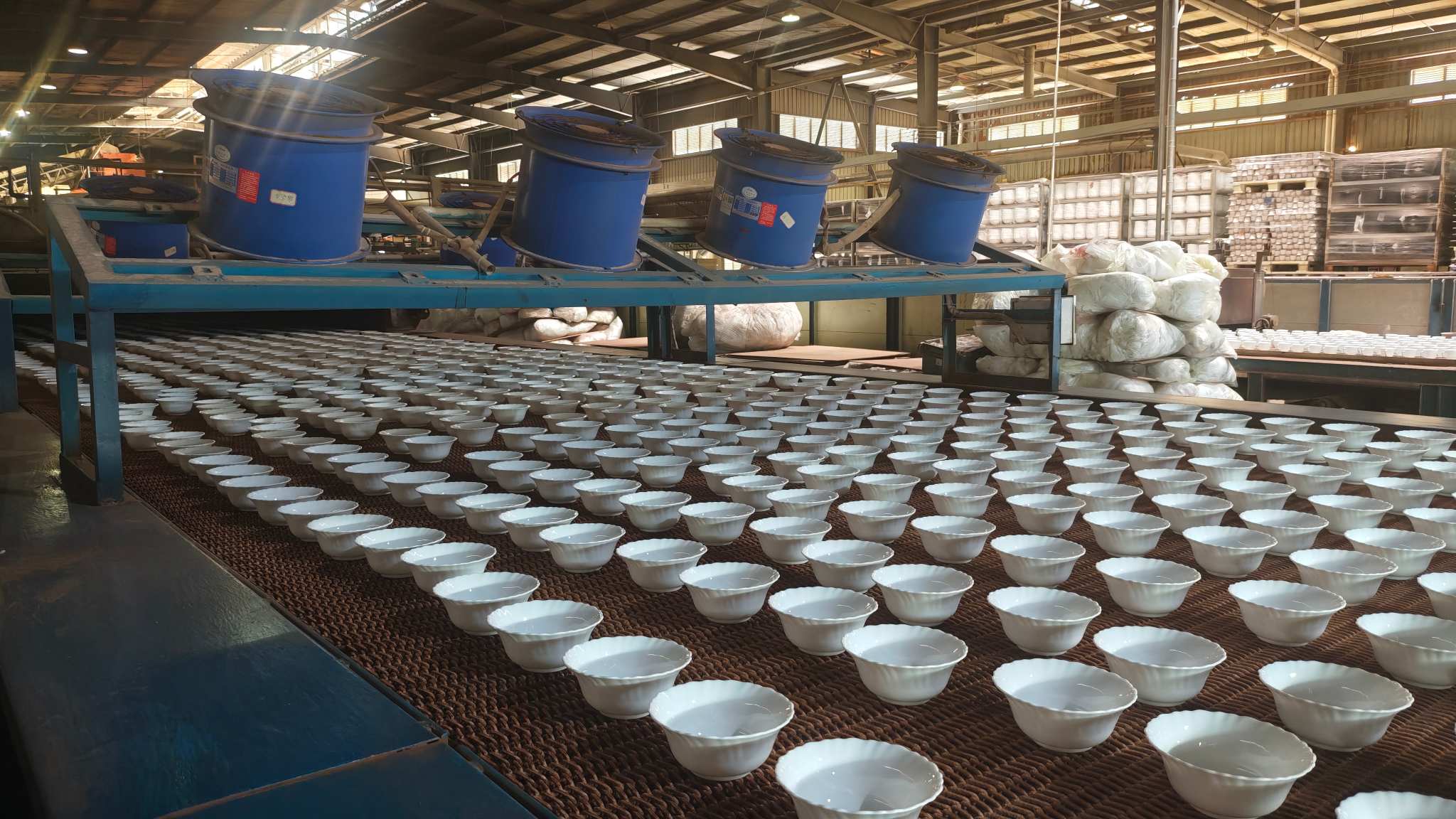
The catch: the bar for each spec shifts depending on where you’re selling and who the end user is. EU versus Middle East, supermarket shelf versus hotel kitchen — the “good enough” line moves a lot. The sections below unpack each spec, then map priorities by market and channel.
What Are the Key Product Parameters That Affect Factory Selection?
Four dimensions matter most. Here’s what each one actually means for your bottom line — no textbook definitions, just business impact.
1. Thermal Shock Resistance
Most factories ship products rated around ΔT 100–130°C. Better-controlled lines push that to ΔT 130–150°C consistently. At home, you won’t notice the gap. In a commercial kitchen, it’s everything.
Hotel plates go from a walk-in cooler straight under hot food, then through 3–5 rounds of 80°C+ dishwasher cycles every day. Products that can’t handle the swing start cracking within months — sometimes shattering right inside the machine. The after-sales fallout from bulk complaints will dwarf any savings on unit price.
Rule of thumb: if your end customer is a hotel or restaurant chain, ΔT 130°C is the floor. Below that, move on to the next factory. This spec lives or dies in the forming and tempering stages of production.
For a full walkthrough of how opal glass goes from raw batch to finished plate — and where each stage affects performance — see: Opal Glass Manufacturing Process: Complete Guide.
To show what that process control translates to in finished-product toughness, here’s a Corelle-standard drop test conducted on plates shipped from our factory. The test was performed under Corelle’s own protocol and shared with their authorization:
2. Impact Resistance
Under ISO 7086, well-tempered opal glass hits surface compressive stress above 100 MPa — that’s 2–3× the impact strength of standard ceramic. In real terms: a good piece survives a 90 cm drop onto hard floor. A cheap one chips at 50 cm.
The cost translation is straightforward. In a busy hotel buffet, quality opal glass runs 2%–5% annual breakage. Low-end product? 10%–15%. The replacement cost gap wipes out your unit-price savings within the first year. That’s why more and more hotel procurement teams now require an impact test report just to accept your quote.
The science behind this strength is well documented. A peer-reviewed study in the International Journal of Applied Glass Science (American Ceramic Society) found that three types of fluoride crystals — NaF, CaF₂, and BaF₂ — distributed evenly throughout the glass matrix create a dense composite structure. This is what makes opal glass hold up far better than single-phase ceramics under repeated stress. It’s also the core reference we use when advising hotel clients on material choices. (Source: Structure and Durability of Opal Crystallized Glass Plates — Int J Appl Glass Sci, 2025)
3. Lead & Cadmium Migration
This one isn’t about performance. It’s about legality. If migration levels exceed your target market’s limits, the shipment gets stopped at the border. No negotiation, no workaround.
The EU standard (Directive 84/500/EEC, amended by 2005/31/EC) sets the bar at: flatware lead ≤ 0.8 mg/dm², cadmium ≤ 0.07 mg/dm²; fillable items lead ≤ 4.0 mg/L, cadmium ≤ 0.3 mg/L. And the EU is pushing a revision that would tighten lead limits by roughly 400× and cadmium by roughly 60×.
The US FDA works differently. Its action levels (CPG Sec. 545.450) are: flatware lead 3.0 ppm, small hollowware 2.0 ppm, large hollowware 1.0 ppm. Both systems use 4% acetic acid extraction, but the numbers and pass/fail logic don’t match. Passing FDA does not mean passing EU. The reverse is also true.
This is not hypothetical. Our QC team once handled a case where a South American client tried to redirect an FDA-certified batch to Europe. It failed the EU cadmium limit at customs and was returned in full. Since then, every test report leaving our facility carries the exact standard reference number — no more vague “food-safe compliant” wording. When you get a report from any factory, check which standard it actually covers. That one step can save you a shipment.
4. Whiteness & Translucency
How white and how translucent the finished piece looks depends on the opacifier type and ratio in the glass formula. The industry splits it into two tiers: “standard white” (milky, slightly warm-gray or warm-yellow) and “super white” (cool-toned, more translucent, close to bone china under light).
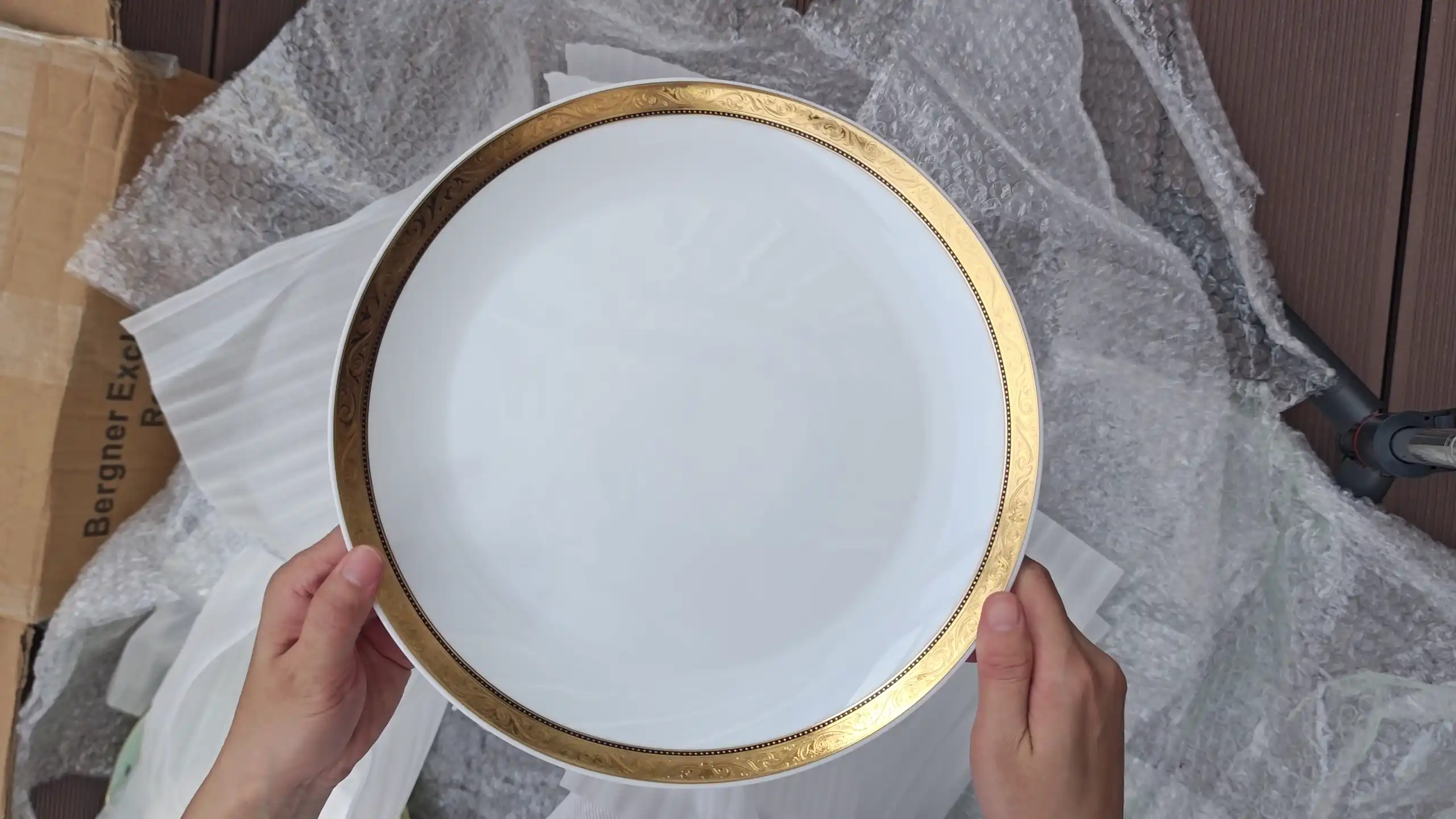
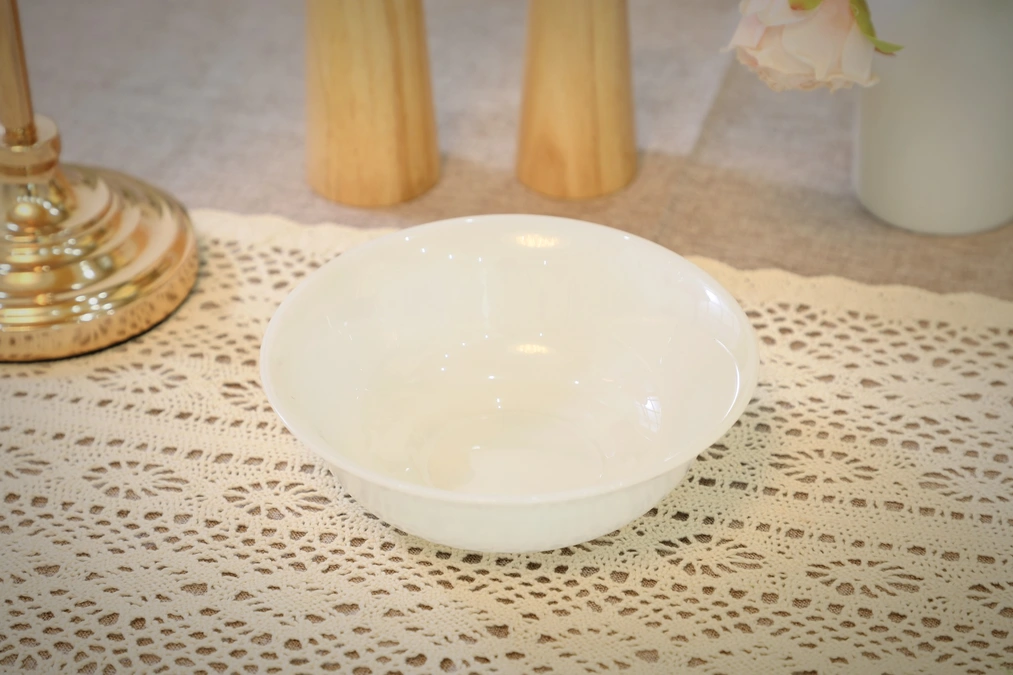
The pricing impact is direct. Super white retails 30%–60% higher than standard white — it supports branded channels and premium positioning. But for price-sensitive markets and promotional bundle deals, standard white has the better cost structure. No point paying for a look the end buyer won’t value.
One practical tip: photos can’t capture the real difference. Ask for physical samples from different batches and compare them side by side under both warm and cool lighting. You’ll see it instantly.
How Do Requirements Differ Across Export Markets and End-Use Channels?
You know the specs. The next question: how high do they actually need to be for your business? The passing bar moves a lot depending on where you sell and who uses the product. Chasing top marks across the board will blow up your costs. Missing the bar where it matters will blow up your shipment. Here’s how it breaks down.
Export markets first. The EU has the toughest lead and cadmium limits — that’s common knowledge. Less known: individual member states pile on extra rules. France adds aluminum, cobalt, and arsenic testing. The Netherlands checks glass products for 15 metal elements, including antimony, barium, boron, lithium, rubidium, and zirconium. Finland sets separate lead, cadmium, nickel, and chromium limits for lip-contact zones and children’s items.
Getting onto European supermarket shelves means more than passing EC 1935/2004. You need to confirm the factory can handle the specific additional tests for your exact destination country. If they can’t, expect customs trouble.
In the Middle East, Saudi Arabia requires registration through the SABER platform and a SASO certificate before anything clears import. The underlying concern is food-contact safety — same as everywhere — but the certification pathway and paperwork are completely different from EU or US systems. Plenty of smaller factories have never navigated this process, and the learning curve can add weeks to your timeline.
South American MERCOSUR members (Brazil, Argentina, etc.) regulate glass and ceramic food-contact items through resolutions like GMC/RES No. 55/92. Limits are generally looser than the EU’s — but they’ve been tightening steadily in recent years. “Lower bar” does not mean “skip the audit.” Check the factory’s QC capability regardless.
Now the channel layer. The same four specs rank very differently depending on whether you’re selling through supermarkets, hotels, or branded retail. The table below lays it out — a useful reference for anyone evaluating China opal glass production across different end-use scenarios. Read it against your own business and you’ll see right away what to defend and what you can flex on.
| Parameter | Supermarket Channel | Hospitality Projects | Branded Retail |
|---|---|---|---|
| Lead & Cadmium Migration | Top priority. Must pass the target country’s standard first try. Packaging and label compliance are non-negotiable for shelf listing. | High priority. Must meet the buyer’s specified standard, but usually no need for country-by-country differentiation. | High priority. Brands typically want dual FDA + EU reports for marketing credibility. |
| Impact Resistance | Medium. Home-use standard is fine. No need for commercial-grade toughness. | Top priority. Daily back-of-house collisions and repeated machine washing will expose any weakness fast. | Medium. Household use means much lower collision frequency. |
| Thermal Shock Resistance | Medium. ΔT 100°C handles home microwaves and dishwashers. | Top priority. 80°C+ water, 3–5 cycles daily — ΔT 130°C is the floor. | Medium. But listings often use this as a selling point, so keep verified data handy. |
| Whiteness & Translucency | Medium-high. Shelf display needs batch consistency. Standard or super white both work depending on price strategy. | Medium-high. Batch-to-batch Delta E must stay tight (typically ≤1.5) so restock orders match what’s already on tables across locations. | Top priority. Super white is almost mandatory. Surface quality drives online visuals and unboxing impressions. |
| Shape Precision & Tolerances | High. Shoppers compare products on the same shelf. Visible dimension gaps hurt. | High. Plates must fit existing table setups and tray systems. Poor precision slows table-setting. | Top priority. Zoomed-in listing photos expose uneven rims and wobbly bases — both drive returns. |
If your business centers on hotels and commercial foodservice, impact resistance and thermal shock resistance — the top two rows for hospitality — will define your annual breakage rate and replacement spend. For real-world durability data from actual hotel environments, plus a side-by-side comparison with ceramics, see: Opal Glass Dinnerware Durability in Hotel Use: Test Data and Cost Analysis.
How to Verify Factory Capability and Make Your Final Choice
Verification has two parts. First, sample testing confirms product quality — thermal shock tests, consistency checks across multiple pieces. Second, an on-site audit confirms the factory can repeat that quality at scale — tempering line precision, raw material management, inspection flow, defect handling.
The final decision isn’t about finding the “best” factory. It’s about lining up your own conditions — target market regulations, price positioning, order size, customization needs — against each candidate, item by item, and picking the closest match.
How to Verify a Factory’s True Capability Through Sample Testing and On-Site Audits
Sample testing has one job: verify whether the supplier’s claimed specs hold up in reality. Five checks cover the essentials. The first two you can do from your office. The last three need a factory visit.
Thermal Shock — Hands-On Test
Boil the sample for five minutes. Pull it out and drop it straight into room-temperature water (~20°C). No cracks, no pops — the tempering is real. Good opal glass handles at least a 120°C swing. If the supplier claims higher, push the gap wider and test again. Near-zero cost, maximum insight into actual tempering quality.
Multi-Sample Consistency Check
One sample proves nothing. Get three to five pieces of the same SKU. Line them up. Compare weight, wall thickness, surface sheen, and stacking fit. Tight consistency means a stable production line.
A practical benchmark from our production floor: same-batch weight variation should stay within ±3% of the nominal value. Anything beyond that points to instability in forming or annealing.
Tempering Line & Temperature Control
First stop on a factory visit: the tempering furnace. Check three things. Is the furnace body visibly aged or corroded? Does the control panel show real-time temperature holding within ±5°C? Are operators loading shape-specific heating and cooling profiles per SOP?
Tempering precision is what keeps finished-product strength consistent piece to piece. A sloppy line can produce great samples. Bulk orders are where it falls apart.
Raw Material Warehouse — Batch Management
Opal glass whiteness and strength are very sensitive to raw material ratios. If incoming materials are mixed or mislabeled, every downstream step inherits the problem. A well-run warehouse has clear batch labels, segregated storage zones, and test records for each incoming lot. A poorly run one has mixed piles and vague answers.
Ten minutes in the warehouse tells you whether this factory controls quality at the source — or hopes for the best.
Inspection System & Defect Handling
At the three critical stages — post-forming, post-tempering, pre-packing — ask: sampling or 100% inspection? What’s the sampling rate and AQL level? Is there a quarantine zone for rejects? Is disposal documented and traceable?
A factory that answers these questions clearly and shows a closed-loop process is far more trustworthy for bulk orders than one that wins you over with a single set of flawless samples.
The takeaway: sample testing tells you “Can this factory make a good product?” The audit tells you “Can they do it every time?” You need both halves to decide.
How to Make the Final Decision Based on Your Own Business Needs
At this point, you probably have two or three candidates left — all quality-verified. The question is no longer “who’s better” but “who fits best.”
A pattern we’ve seen often at Canton Fair: buyers do thorough audits and solid sample testing, then stall at the final call. The candidates all look capable. The uncertainty is about fit — which one matches this particular buyer’s business model? The table below turns that vague “gut feel” comparison into something concrete.
| Matching Dimension | What You Need to Clarify About Your Own Business | What to Check at the Candidate Factory |
|---|---|---|
| Target Market Regulatory Threshold | Primary export markets and their mandatory standards (EU, FDA, LFGB, etc.) | Does the factory have routine testing capability and certification track record for those standards — or will every shipment need ad hoc third-party testing? |
| Channel Price-Tier Positioning | Your product’s end-retail price range and margin structure | After FOB + freight + tariffs + landing costs, does the math still work within your target price tier with healthy margin? |
| Order Volume & Reorder Frequency | Typical order size, annual total, reorder cycle | Does your volume sit in the factory’s comfort zone? In peak season, do they have enough buffer to protect your delivery date? |
| OEM Custom Development | Plans for private label, unique shapes, or exclusive patterns | Do they have an in-house mold team with firm sampling timelines — or do they outsource molds and bring them back to run? |
| Communication & After-Sales | Working language, time-zone flexibility, claim-resolution expectations | How’s the team’s English? Average response time? Any documented past-claim cases with resolution timelines you can review? |
Fill in each candidate’s real performance, cell by cell. Strengths and weak spots surface immediately. No weighted-scoring spreadsheet required — one look and you know.
Almost never does one factory lead across every row. The realistic play: find the one that’s strongest where you absolutely can’t compromise, and acceptable everywhere else. A giant with massive capacity and deep export experience may be wrong for a buyer with smaller volumes and heavy customization needs. A mid-scale factory with flexible tooling and fast small-order response may be the perfect launch partner for a new brand.
Don’t ask “Who’s the best?” Ask “Who’s the best fit?” — that’s how you finish this process. If you’re currently sizing up the best opal glass manufacturer China has in the specialist category, the JoinTion Factory & Capacity Overview page covers equipment, QC systems, and client collaboration details.
Common Questions People Ask
Q1: Two factories quoted 15%–20% apart, but samples look nearly identical. Where’s the price gap hiding?
Three places you can’t see at the sample stage. First, raw material grade — super white formula costs roughly 10%–15% more than standard white. Second, tempering energy — thorough tempering burns 30%+ more fuel than a quick pass through the furnace. Third, inspection rigor — 100% inspection costs significantly more in labor than sampling. A lower price doesn’t always mean cut corners. But after you get a quote, ask the factory to spell out their approach on all three. The gap will explain itself.
Q2: I need large volumes at competitive pricing for regional distribution. Does opal glass dinnerware wholesale direct from these factories make sense?
Yes — but in this industry, “wholesale” almost always means buying at scale direct from the factory, not from a middleman’s warehouse. If your annual volume runs above 5–10 containers, you’re in a strong position to negotiate FOB pricing with any factory on this list. The key is matching your volume to the factory’s sweet spot. Full-category giants like Deli Glass are built for very large runs of standard designs. Specialist producers work better for customized wholesale programs with brand-specific shapes and packaging. Start with a trial order to lock in quality, then set up annual framework pricing on round two.