
Top 10 Opal Glass Manufacturers & Suppliers Recommendations for 2026
The 10 manufacturers below are ranked by how focused they are on opal glass and how much weight they carry in this space — not by revenue. The ones listed higher are either more deeply invested in the opal glass category or hold more representative capacity and standing in this niche. Coverage spans China, India, Iran, and the United States — matching the full range of intent behind the search “opal glass manufacturer.”
Each profile zeroes in on one thing: what makes this factory different. Hard numbers and side-by-side specs come later in the comparison table — no duplication here.
1. Jointion (JC Tableware Manufacturers) in Chazhou,China
| Basic Info | Details |
|---|---|
| Headquarters | Chaozhou, Guangdong, China |
| Founded | 2008 |
| Daily Capacity | 70,000 pcs opal glass tableware |
| Key Endorsement | OEM manufacturer for Corelle (a Corning tableware brand) for 10 consecutive years |
| Certifications | FDA, LFGB and other food-contact material certifications |
| Export Coverage | North America, Middle East, India, Southeast Asia |
Since day one in 2008, Jointion has done nothing but opal glass. No ceramics, no ordinary glass, no sideline products. That level of single-category focus is extremely rare in this industry.
The standout credential is one name: Corelle. Jointion has been Corelle’s OEM manufacturer for 10 consecutive years, supplying opal glass dinnerware to North American and Asian markets. Every piece runs through Corelle-level quality control. A significant share of the Corelle tableware millions of households use daily comes off Jointion’s lines.
Product development leans heavily into high-value-added decoration — printed decals, electroplated gold rims, embossed transfers, colored opal glass (the jade glass series). All patterns are designed in-house and refreshed quarterly. Italian-grade fully automated production lines keep quality consistent at scale.
When we compared samples from different manufacturers side by side, Jointion stood out for stable decal fineness and color saturation. Gold-rim electroplating uniformity was especially impressive — that’s a process notoriously hard to keep consistent across large batches, and their yield-rate control was solid.
Best suited for: premium brand clients, OEM partners seeking pattern exclusivity, and wholesalers or distributors who want Corelle-equivalent quality.

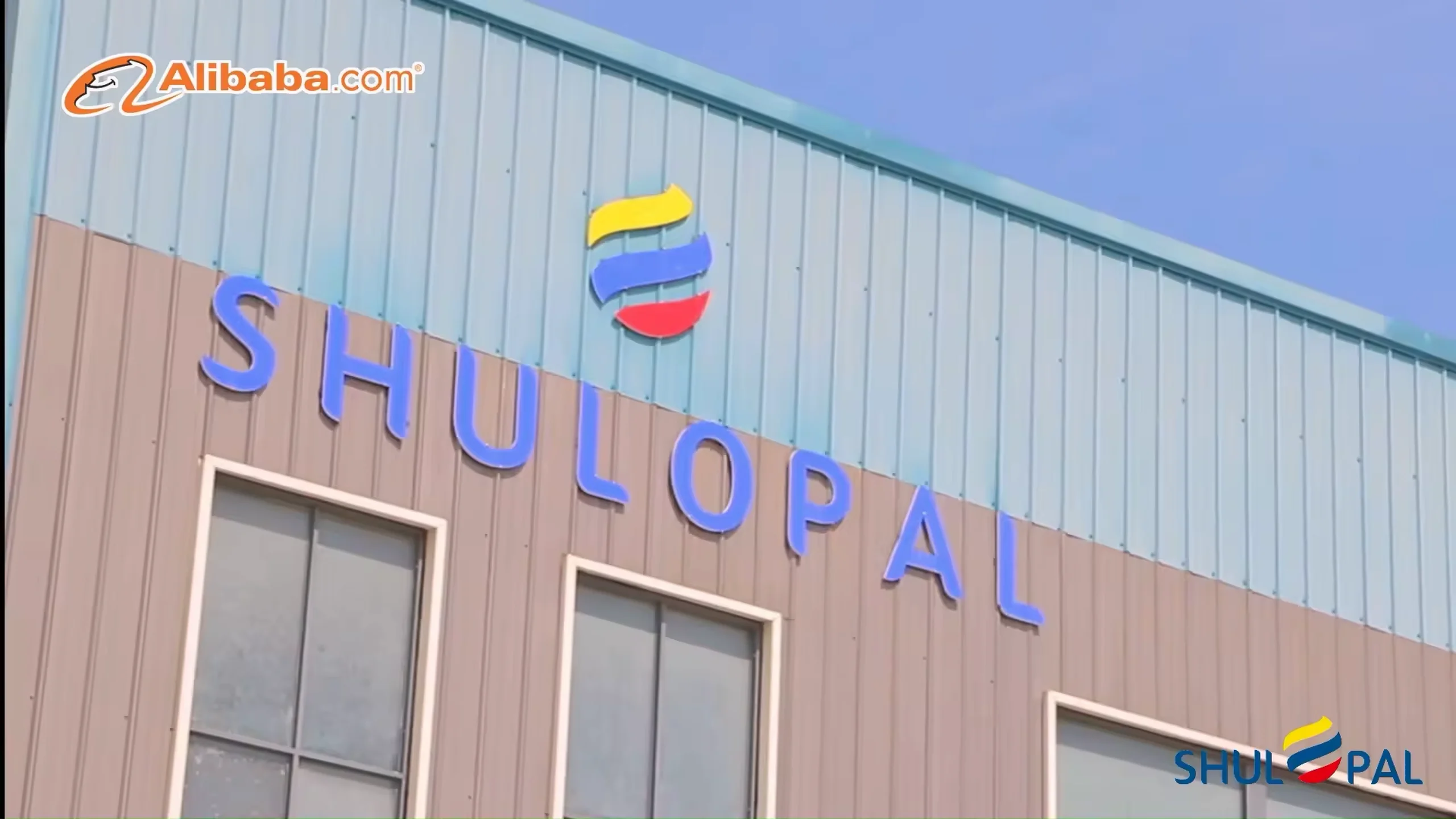
2. Shulopal Industry Co., Ltd
| Basic Info | Details |
|---|---|
| Headquarters | Foshan, Guangdong, China |
| Founded | 2004 |
| Main Production Bases | Jiangsu (opal glass tableware), Huizhou (opal glass containers), Anhui (borosilicate glass) |
| Daily Capacity | 490,000 pcs opal glass tableware; 1,100,000 pcs total across the group |
| Dedicated Opal Glass Furnaces | 5 (the most in China) |
| Certifications | ISO 9001, ISO 14001, ISO 45001, BSCI, Sedex |
| Export Coverage | 100+ countries, 2,800+ global buyers served cumulatively |
Shulopal is one of the largest opal glass manufacturers in China by sheer production capacity. Five dedicated opal glass furnaces — no other domestic producer has more.
More accurately, Shulopal is a cross-category glass group. The product range covers opal glass tableware (plates, bowls, cups, saucers), glass baking dishes, storage jars, cosmetic bottles, beverage bottles, and other packaging glass. More recently, the group expanded into borosilicate glass for food storage and bakeware. If you need opal glass and borosilicate glass from the same source, Shulopal saves you the headache of managing multiple factories.
In-house mold-making, a dedicated decal printing facility, and its own carton factory give the company end-to-end control over OEM/ODM fulfillment. It also owns a quartz sand mine upstream, which gives it a real edge on cost control.
Best suited for: large-volume B2B buyers who want cross-category one-stop sourcing or need tight supply-chain integration. Shulopal’s defining tag: “big and comprehensive” multi-category glass group.
3. Guangzhou Garbo International Trading Co., Ltd
| Basic Info | Details |
|---|---|
| Headquarters | Guangzhou, Guangdong, China |
| Founded | Established 1993 (international trading division formed 2011) |
| Supply Model | Own factory + partner factory network |
| Product Lines | Opal glass + regular glassware + stainless steel cutlery + ceramics |
| Certifications | FDA, LFGB, CE, SGS, ISO 9001 |
| Export Coverage | Europe, Americas, Middle East, Africa |
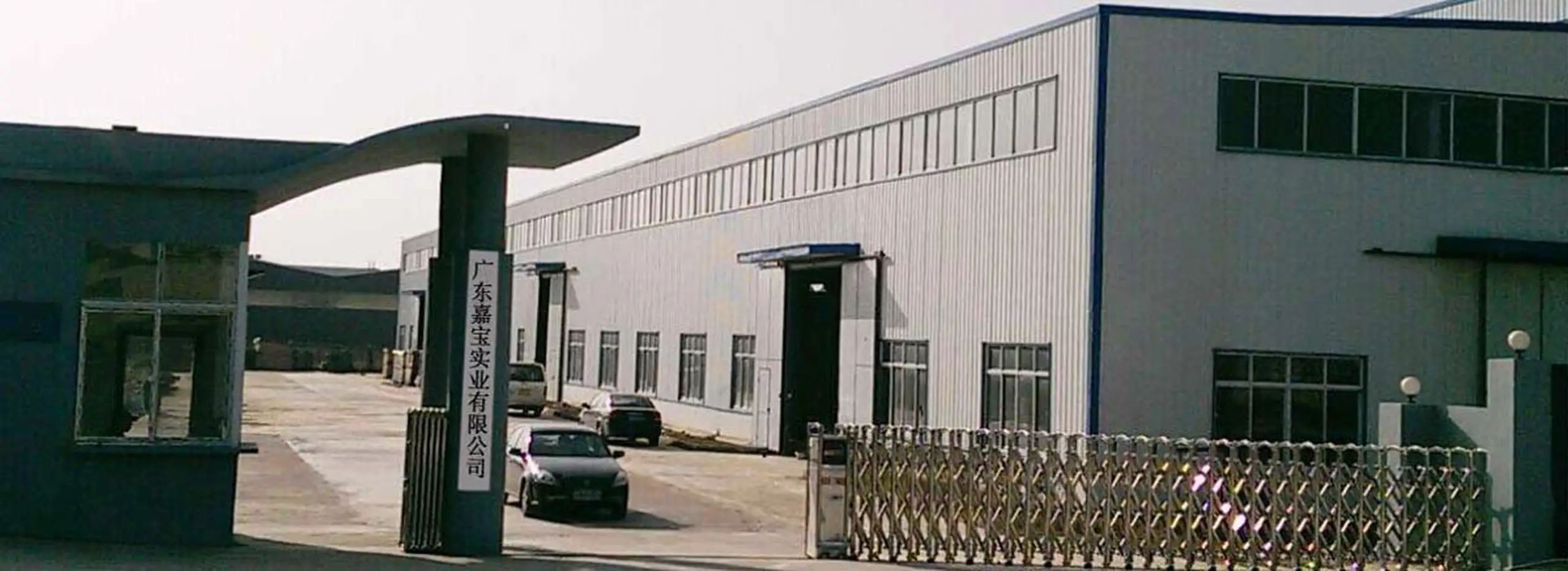
Garbo’s real strength is supply-chain integration. It’s one of China’s largest comprehensive trading-type opal glassware suppliers, running on an “own factory + partner factory network” model with opal glass capacity in Jiangsu.
The Guangzhou HQ has one of the industry’s biggest glassware showrooms, plus a football-field-sized ready-stock warehouse — great for small-batch quick shipments, especially if you’re placing a first trial order. The product catalog spans opal glass, regular glassware, stainless steel cutlery, and ceramics, so you can mix categories in one container. Garbo exhibits at every Canton Fair session and has mature export channels across Europe, the Americas, the Middle East, and Africa. Cooperation is mainly ODM (private-labeling existing designs), though OEM is available too.
Best suited for: supermarket-channel buyers, traders who need multi-category mixed container loading, and new buyers who want low MOQ and fast turnaround on a first order.
4. Deli Group (Anhui)
| Basic Info | Details |
|---|---|
| Headquarters | Fengyang, Anhui, China |
| Founded | 2002 (predecessor business started 1996) |
| Listed | Shenzhen Stock Exchange since 2011 (stock code: 002571) |
| Production Scale | 5+ production bases, 18 furnaces, 90+ production lines, annual capacity over 200,000 tons |
| Product Lines | Soda-lime glass, borosilicate glass, crystal glass, opal glass |
| In-house Brands | Green Apple, Delisoga, Idelita |
| OEM Partners | Walmart, IKEA, Pyrex Corning, Bed Bath & Beyond |
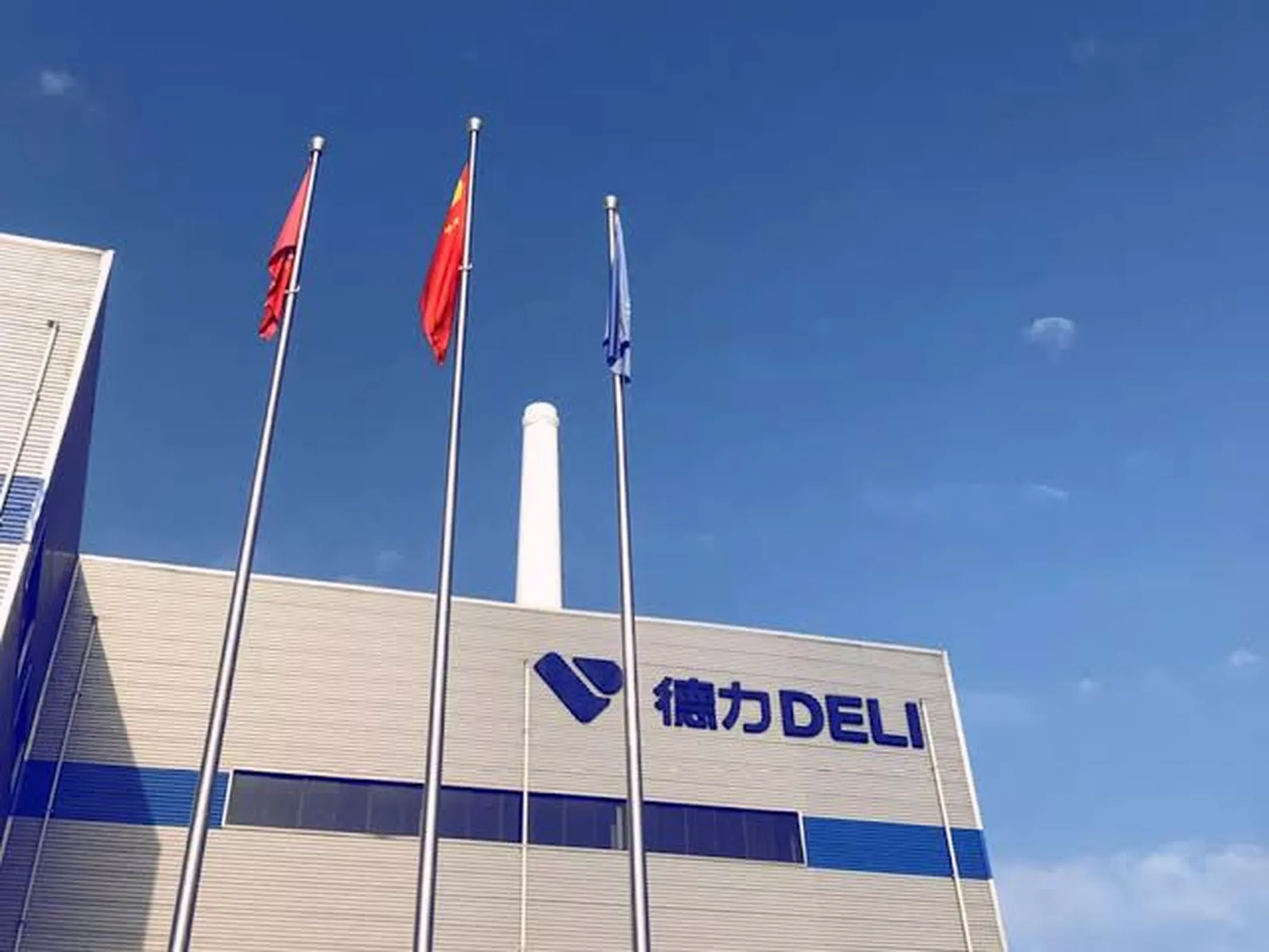
Deli plays in a completely different weight class. China’s largest household glass manufacturer and the world’s fourth-largest — those two titles speak for themselves. Listed on the Shenzhen Stock Exchange, the group runs 5+ production bases, 18 furnaces, 90+ lines, and covers over 260,000 square meters of factory floor.
The structural advantage is full vertical integration. Deli owns its own silica sand mines, controlling the entire chain from raw-material extraction to finished-product shipment. That gives it a natural moat on cost and the ability to handle ultra-large orders. Opal glass tableware has been a key growth focus in recent years, with OEM clients including Walmart and IKEA.
Best suited for: top-tier B2B buyers who need massive capacity guarantees and value the stability of a publicly listed company. Deli’s core tag: “comprehensive household glass giant.”
5. Jiangsu Yuefeng Technology
| Basic Info | Details |
|---|---|
| Headquarters | Hongze, Jiangsu, China |
| Additional Production Base | Qixian, Shanxi (China’s “Glassware Capital”) |
| Annual Output | Approx. 20,000 tons |
| Annual Export Value | Approx. $32 million USD |
| Capacity Allocation | 100% opal glass |
| Export Coverage | Middle East, Africa, Southeast Asia, Europe, Americas |
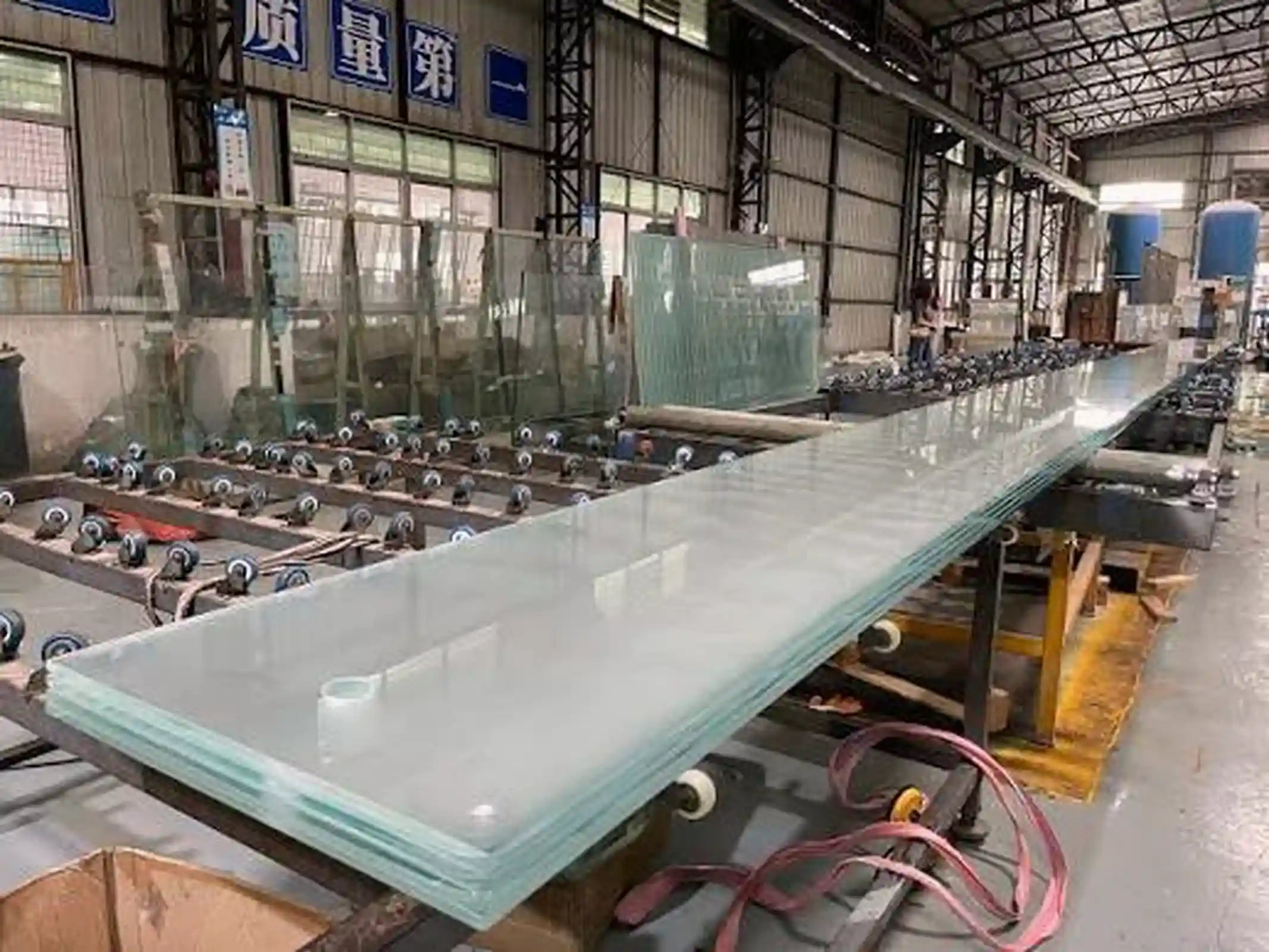
Yuefeng’s positioning is straightforward — 100% of capacity goes to opal glass R&D and production. Nothing else.
Scale-wise, it’s mid-range: roughly 20,000 tons annual output and about $32 million in yearly exports. Its base in Qixian, Shanxi — China’s recognized “Glassware Capital” — taps into a mature industrial ecosystem with strong local supply-chain support. Products lean into performance: chip resistance, heat tolerance, microwave and dishwasher safety.
Best suited for: buyers placing mid-range volumes (10–50 containers per year) who value a factory that’s 100% focused on opal glass.
6. Linyi Boyou Ceramic Co., Ltd
| Basic Info | Details |
|---|---|
| Headquarters | Linyi, Shandong, China |
| Product Lines | Ceramic tableware + opal glass tableware (dual production lines) |
| Opal Glass Styles | Standard white, colored, decal-decorated |
| Export Support | English-language website, detailed product catalog, full certifications |
Boyou’s pitch boils down to one line: one supplier, two materials.
The factory runs ceramic and opal glass production lines side by side. If you need both materials and want them packed into the same container, Boyou cuts out the cost of coordinating two separate factories. One contact, one audit, one shipment — that’s a real efficiency gain.
Linyi, Shandong is a major tableware-export cluster in China with a mature supply chain and strong price competitiveness. Boyou’s opal glass range covers standard white, colored, and decal styles, all open to customization.
Best suited for: supermarket-channel buyers, promotional-product purchasers, and anyone who wants ceramic and opal glass in one container to cut per-shipment logistics costs.
7. Foshan Shunde Jinyi Glass Products Co., Ltd
| Basic Info | Details |
|---|---|
| Headquarters | Shunde, Foshan, Guangdong, China |
| Product Coverage | Opal glass plates, bowls, cups and other standard categories |
| Markets | Domestic + export |
| Factory Scale | Medium |
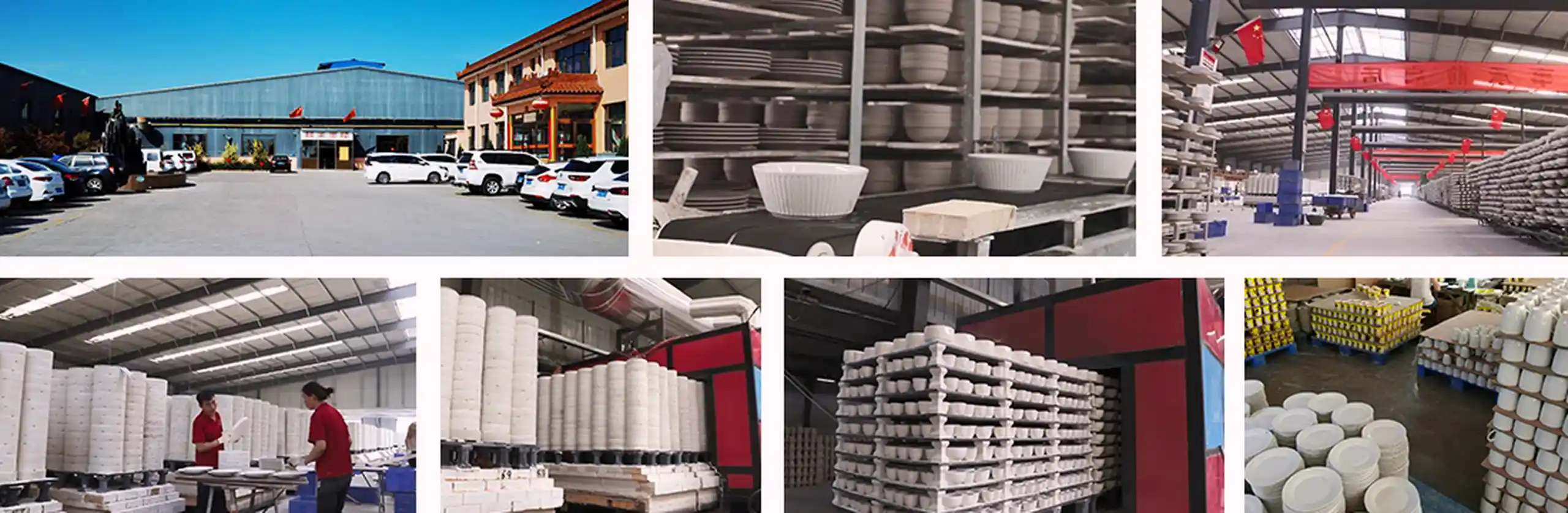
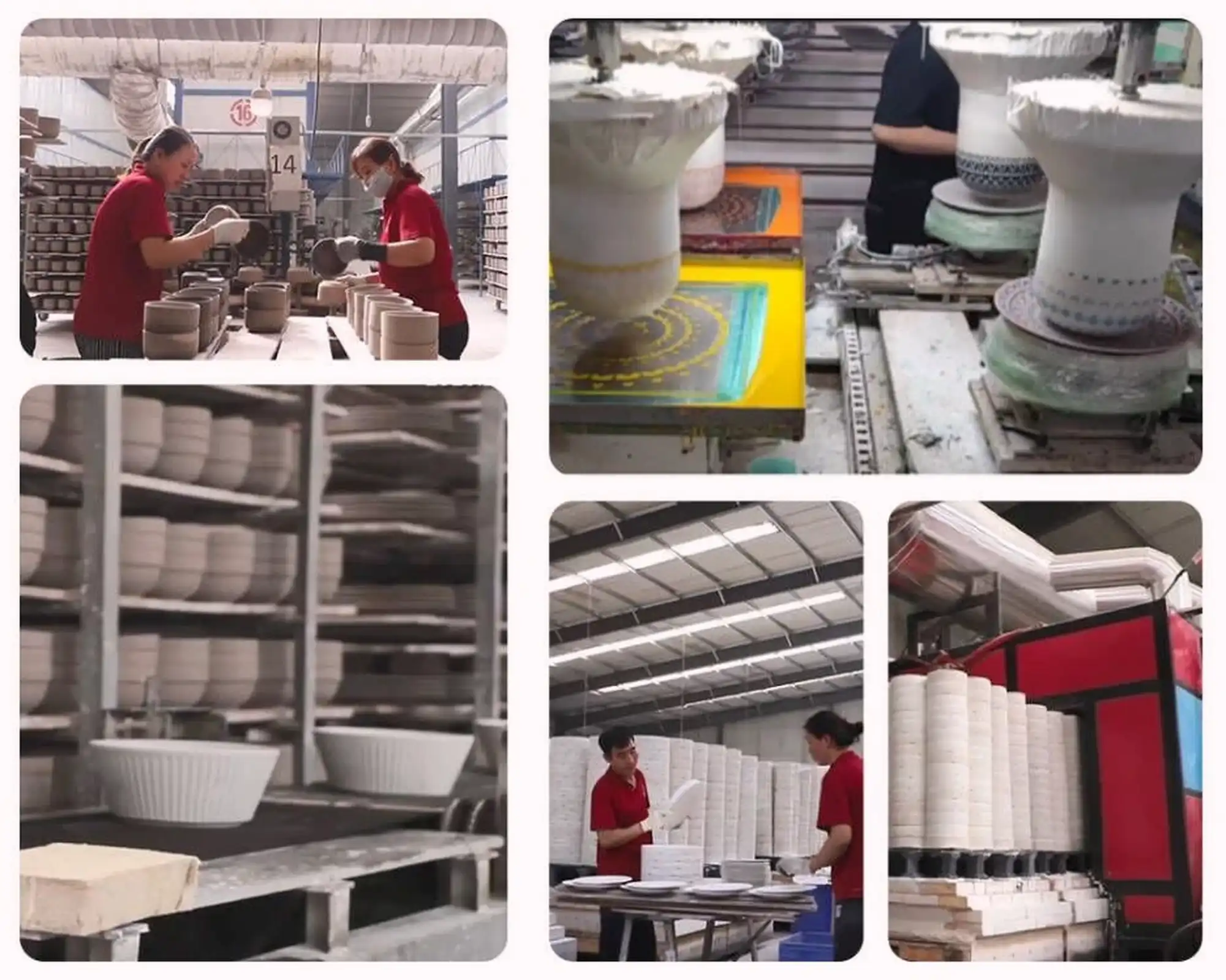
Foshan is a major Chinese manufacturing hub with deep local infrastructure and technical talent. That gives Jinyi a clear home-base advantage.
The company puts significant resources into R&D, particularly optimizing opacity effects and boosting product strength. Its output shows solid results in whiteness consistency and surface gloss. If you’ve sourced opal glass before, you know these details matter — uneven whiteness within a batch, visible bubbles or surface flaws — they determine which retail channel a product can actually enter. Jinyi’s QC on these fronts is reliable.
The factory is mid-sized, with capacity matched to mid-volume orders. It attends international trade fairs regularly to grow its overseas client base.
Best suited for: mid-tier brand clients and regional distributors with clear requirements for whiteness and visual consistency.
8. La Opala RG Ltd — India
| Basic Info | Details |
|---|---|
| Headquarters | Kolkata, India |
| Founded | 1987 |
| Listed | Dual-listed on BSE (Bombay Stock Exchange) + NSE (National Stock Exchange) |
| Total Capacity | 32,000 MTPA |
| Production Bases | Sitarganj plant (31,000 MTPA) + Madhupur plant (1,000 MTPA) |
| In-house Brands | La Opala, Diva |
| Export Coverage | 40+ countries (exporting since 1991) |
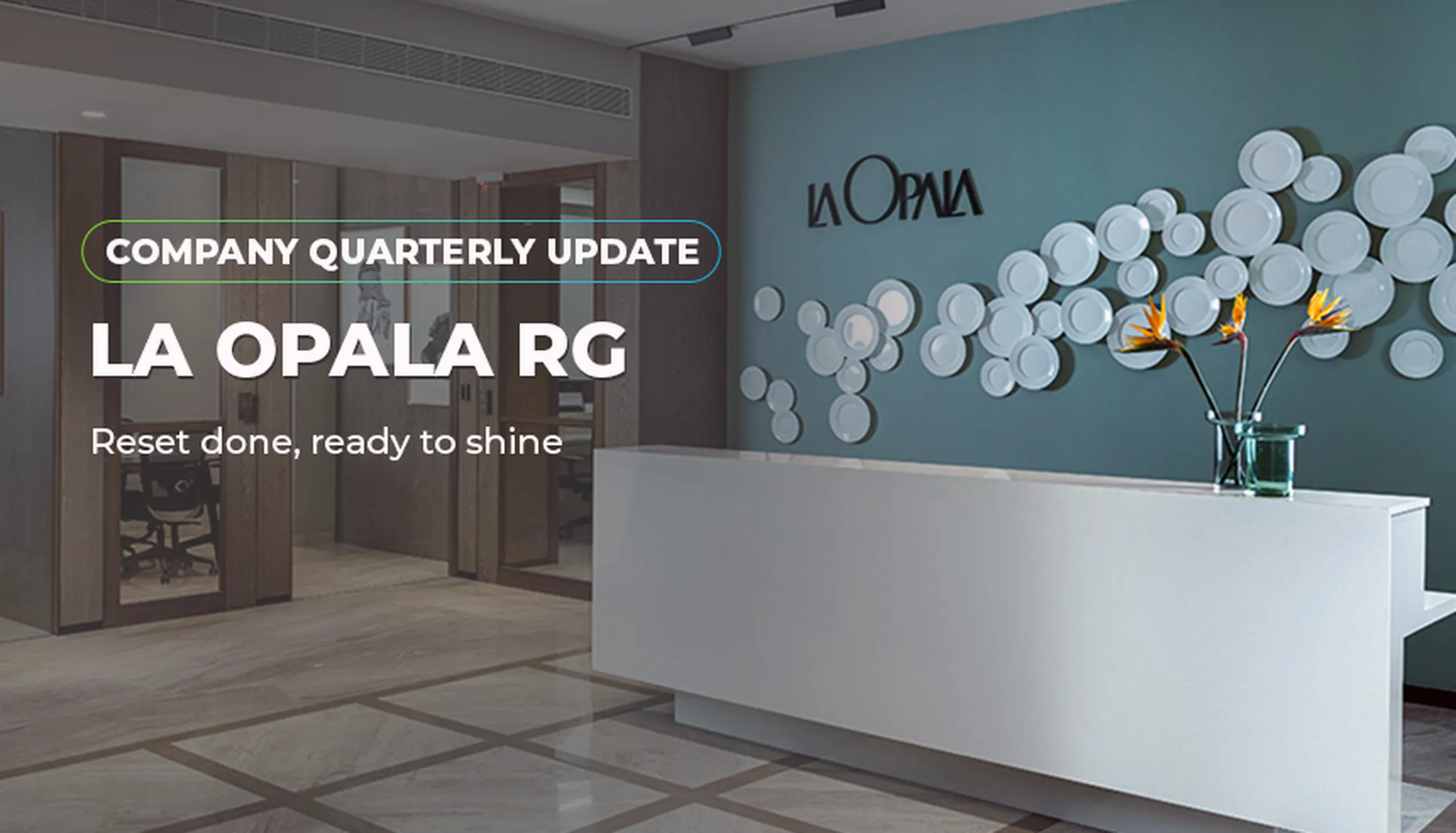
La Opala pioneered opal glass in India. Founded in 1987, it was the first to bring opal glass technology to the Indian market — and remains the only opal glass company dual-listed on both the BSE and NSE.
In India, “La Opala” is practically synonymous with opal glass tableware. Brand recognition is extremely high — it’s the first name consumers think of in this category. The “Diva” sub-brand targets a more premium design segment. Products sit in the mid-to-high-end range, with aesthetics tuned for Indian and South Asian tastes: rich florals, festival themes, and gift sets are the strong suits. At 32,000 MTPA, it is India’s largest opal glass producer.
One important note: La Opala runs on a brand-driven model. Capacity is dedicated to its own labels, and the company does not take on large-scale OEM work for outside clients. It’s better suited for brand partnerships, regional distribution licensing, or channel agency deals. If your target market is South Asia and you’re exploring a distributorship, this is worth a conversation.
9. Mahfam Jam Co. (Pars Opal) — Iran
| Basic Info | Details |
|---|---|
| Headquarters | Tehran, Iran |
| Founded | 1997 |
| Furnaces | 4 furnaces, 8 production lines |
| Certifications | ISO 9001, ISO 45001, ISO 14001, ISO 10004 |
| Export Coverage | 25+ countries (North America, South America, Europe, Africa, Asia, Oceania) |
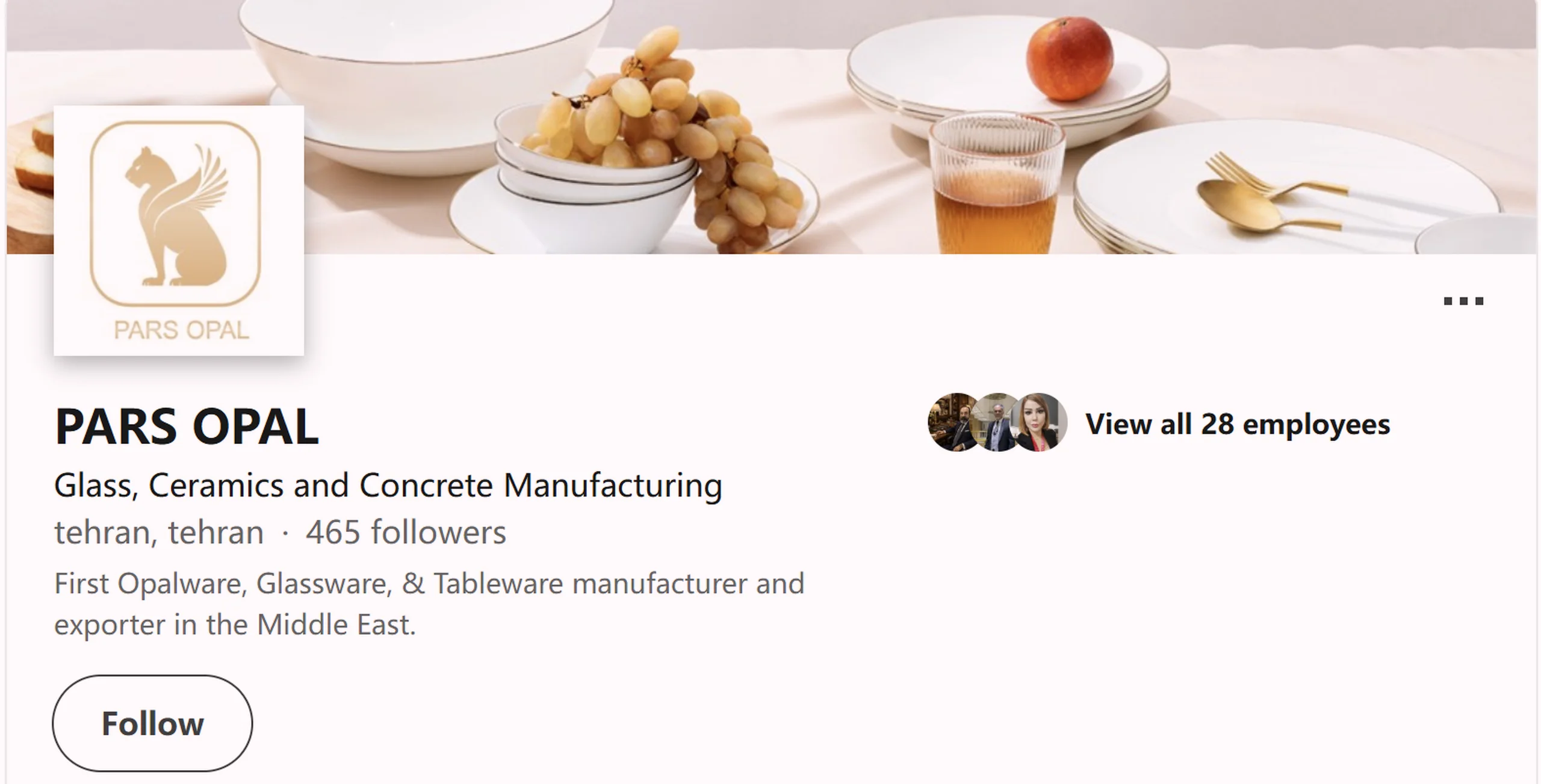
Pars Opal was Iran’s first opal glass manufacturer — and the first opal glass factory in the entire Middle East. Founded in 1997 by the Mahfam Jam Industrial Group, it has been running for over 27 years.
Product quality benchmarks against European standards. The glassglobal industry directory notes that it “competes against European products in quality, elegance and variety of shapes.” Pars Opal positions itself as one of Asia’s leading opal glass producers and a global top-three player. Products center on opal glass dinnerware sets with design sensibilities tailored to Middle Eastern aesthetics — distinctive patterns and shapes with clear regional character.
For buyers targeting the Middle East, Central Asia, or North Africa, Pars Opal offers a sourcing alternative beyond China and India. Shorter regional shipping distances and closer cultural-aesthetic alignment — both matter for tableware.
A candid heads-up, though: because of the broader international sanctions environment around Iran, payment channels (bank transfers, letters of credit) and logistics with Iranian companies can be more complicated than with other origins. Consult a trade compliance advisor before committing, and make sure you fully understand the rules between your country and Iran.
10. Kokomo Opalescent Glass — USA
| Basic Info | Details |
|---|---|
| Headquarters | Kokomo, Indiana, USA |
| Founded | 1888 |
| Product Direction | Art glass, stained glass / decorative architectural glass |
| Manufacturing Process | Hand-cast opalescent sheet glass |
| Product Lines | Cathedral glass + Opalescent glass |
This is the most unusual entry on the list.
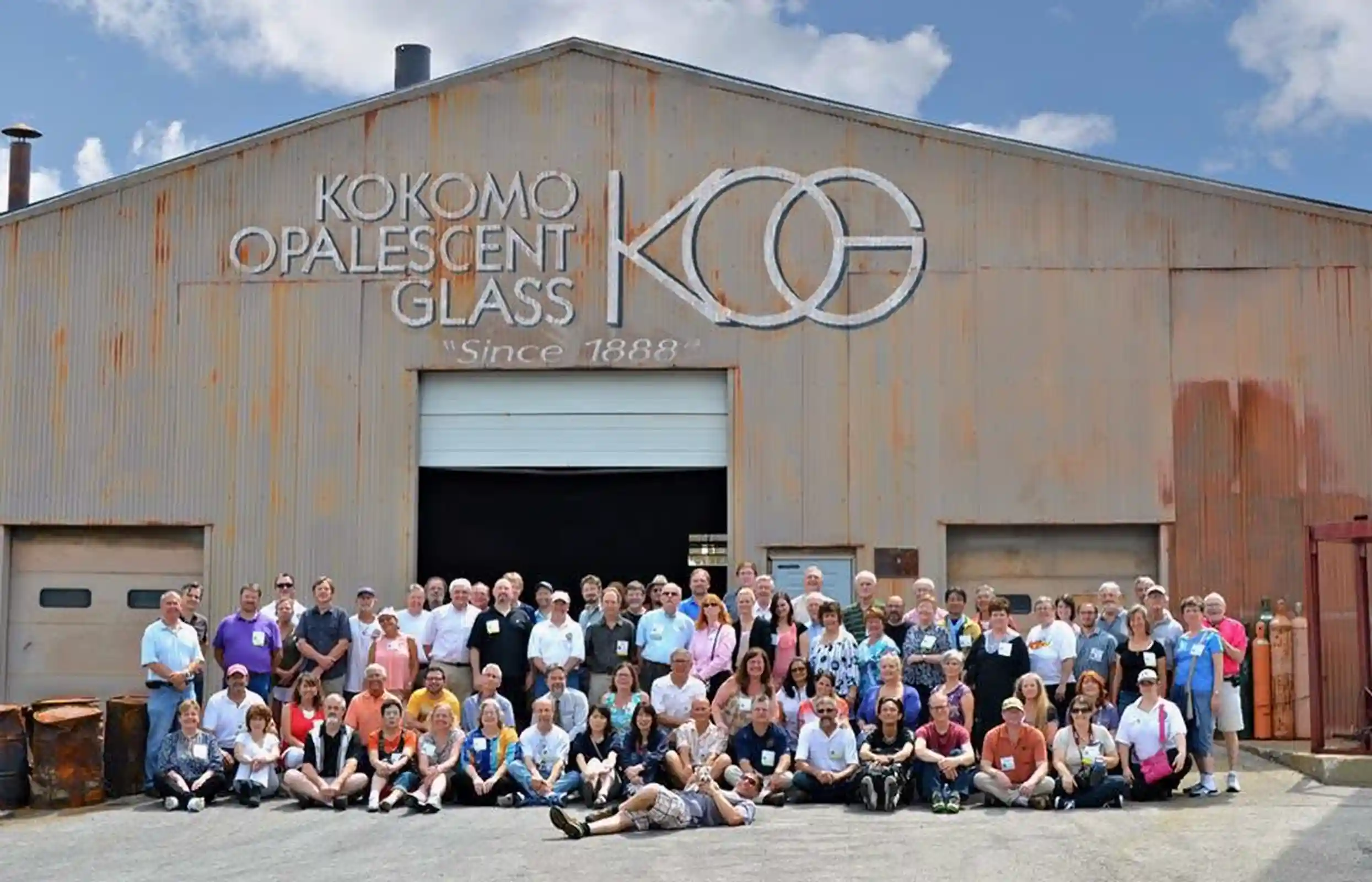
Kokomo doesn’t make tableware. It makes art glass and stained glass. Founded in 1888 — 137 years ago — it’s the oldest surviving stained art glass producer in the United States. Why include it? Because not everyone searching “opal glass manufacturer” wants dinnerware. Some need glass for church window restoration, art projects, or architectural decoration. Kokomo is the global benchmark in that niche.
Every piece is hand-cast, with an extraordinarily wide range of colors and textures. Natural batch-to-batch color variation is part of the appeal — it’s exactly what art glass buyers are after. Historically, Louis Comfort Tiffany was one of Kokomo’s earliest and most important clients. In 1893 alone, Tiffany bought over 10,000 pounds of opalescent glass from the company. Today, Kokomo is still a primary supplier for Tiffany artwork restoration and reproduction. Some pieces are still made on the same work tables used to produce Tiffany’s originals.
Kokomo also offers factory tours and glass art classes, with deep roots in the North American stained glass community.
Clear note: Kokomo does not produce tableware, does not do OEM, and does not do mass consumer-goods production. If you need opal glass tableware, refer to the first 9 manufacturers on this list.
Top 10 Opal Glass Manufacturers Comparison Table
According to Grand View Research, the global glass tableware market was worth $10.56 billion in 2023 and is expected to hit $17.69 billion by 2030. The dinnerware segment makes up 42.5% of that, with Asia-Pacific contributing 38.1% of revenue. The table below lines up all 10 manufacturers on the key specs that matter for procurement. The profiles above told you “what’s different.” This table gives you “the data” — so you can filter fast by order size, target market, and product type.
| Manufacturer | Country | Est. Year | Product Focus | Daily Capacity | Key Certifications | Main Export Markets | OEM/ODM |
|---|---|---|---|---|---|---|---|
| Shulopal | China | 2004 | Tableware, bakeware, storage jars, packaging glass, borosilicate glass | 100,000 pcs (all categories) | ISO 9001, ISO 14001, ISO 45001, BSCI, Sedex | 50+ countries | Both supported |
| Jointion | China | 2008 | Opal glass tableware (single-category focus) | 70,000 pcs | FDA, LFGB | North America, Middle East, India, Southeast Asia | Both supported (Corelle-level QC) |
| Garbo | China | 1993/2011 | Opal glass + regular glassware + stainless steel + ceramics | Varies by partner factory scheduling | FDA, LFGB, CE, SGS, ISO 9001 | Europe, Americas, Middle East, Africa | Primarily ODM; OEM available |
| Deli Group | China | 2002 | Soda-lime, borosilicate, crystal, opal glass | Annual capacity 200,000+ tons | ISO 9001, ISO 14001, BSCI, FDA | Global | Both supported |
| Yuefeng | China | — | Opal glass (100% focus) | Annual output ~20,000 tons | — | Middle East, Africa, Southeast Asia, Europe, Americas | Both supported |
| Boyou | China | — | Ceramic tableware + opal glass tableware | — | Full certifications | Global | Both supported |
| Jinyi | China | — | Opal glass tableware | Medium | — | Domestic + export | Both supported |
| La Opala | India | 1987 | Opal glass tableware (own brands) | 32,000 MTPA | — | 40+ countries | Large-scale OEM not available |
| Pars Opal | Iran | 1997 | Opal glass tableware | 4 furnaces, 8 lines | ISO 9001, ISO 45001, ISO 14001 | 25+ countries | Confirm on case-by-case basis |
| Kokomo | USA | 1888 | Art glass / stained glass | Handmade production | — | Global (art glass channels) | Not applicable |
How to Choose a Reliable Opal Glass Manufacturer
Choosing a factory is a matching exercise. You’re not looking for “the best factory” — you’re looking for the one that fits where you are right now. The three dimensions below are the most useful starting filters. If you’re specifically looking at Chinese opal glass tableware manufacturers, we have a deeper guide that groups factories by type and walks through a full selection framework: Chinese Opal Glass Tableware Manufacturers — Full Directory & Selection Guide.
Do Certifications Meet Requirements (FDA / LFGB / ISO)
If you’re exporting opal glass tableware to Europe or the US, FDA (21 CFR) and LFGB are non-negotiable. They’re the legal entry tickets for food-contact materials. No FDA or LFGB? Cross that factory off immediately — don’t waste time on anything else. ISO 9001 is your baseline for quality management systems. SGS third-party test reports add another layer of credibility.
Here’s a pitfall many buyers only learn the hard way: decal-decorated opal glass needs its own lead (Pb) and cadmium (Cd) leaching tests. The pigments in decal inks can contain heavy metals. A plain white piece passing the test doesn’t mean the decorated version will too. When you ask for reports, check the specific report number and validity date — don’t just accept a verbal “we have certifications.” (A 2025 study in the International Journal of Applied Glass Science tested opal glass-ceramic dinner plates under food-contact conditions and found their chemical stability and corrosion resistance performed well.)
How to Quickly Assess Customization Capability and Factory Audits
At the initial screening stage, three checks are enough.
First, does the factory have its own mold workshop? In-house tooling means tighter lead times and smoother communication than outsourcing. Second, will they do small-batch sample runs? Some factories won’t touch anything under 10,000 pieces; others will run 3,000. That gap directly affects your cost to test a new product. Third, ask for real photos or videos of past OEM projects. You want to see actual execution — not slide decks or 3D renders.
For a deeper audit playbook — what to inspect on-site (furnace condition, automation, QC flow), how to run remote audits (video walkthroughs, third-party reports, Canton Fair track record), and which product metrics to benchmark — this opal glass factory audit checklist breaks the process into three phases: pre-audit prep, on-site inspection, and post-audit scoring. Each step has a clear pass/fail benchmark you can take straight to the factory floor.
Frequently Asked Questions (FAQ)
What Is the Typical MOQ for Opal Glass Tableware?
It depends on the model.
ODM (picking from a factory’s existing catalog and adding your label): MOQ usually starts at 3,000–5,000 pieces. Some suppliers with ready stock (like Garbo) go even lower — down to loose-cargo consolidation.
OEM (you provide the design, they open molds and produce): MOQ typically starts at 10,000 pieces, because mold costs need to be spread across the run. Tooling fees range from a few hundred to several thousand dollars depending on complexity.
The spread across factories is wide. Some large producers won’t start under one full container (~15,000–20,000 pieces). Some mid-size operations will take half a container or even loose cargo. In your inquiry, ask three things upfront: the MOQ, whether you can mix styles in one container, and whether sub-MOQ orders are possible at a higher unit price. Don’t assume every factory works the same way — in practice, the gap is significant.
What Is the Typical Lead Time for Custom Orders?
Here are the standard ranges so you can plan your stocking timeline.
| Order Type | Lead Time |
|---|---|
| ODM existing designs (order confirmed → shipped) | 30–45 days |
| OEM first order (mold-making + sampling + approval + production) | 90–120 days |
| OEM repeat order (molds exist, straight to production) | 45–60 days |
Three things move the needle on timing. Decoration complexity: plain white is fastest; add decals or silk-screen and tack on 7–10 days; add electroplating or fired decals and that’s another 5–7. Order size: 5 containers and 50 containers have very different scheduling cycles. Season: September through December is peak (Christmas/New Year prep), and factory slots fill fast — lead times can stretch 2–3 weeks longer. Book 2–3 months before peak to lock in capacity.
Don’t forget to add ocean freight on top: China to North America runs about 25–35 days, to Europe 30–40 days, to the Middle East 15–25 days. Production time + shipping + customs clearance = your real goods-in-hand date.
How Are Payment Terms Typically Negotiated?
Three payment structures dominate in opal glass:
30% T/T deposit + 70% before shipment. This is the default for most Chinese factories. You wire 30%, production starts. The remaining 70% clears before goods leave the dock.
L/C (Letter of Credit). Makes sense when a single order tops $100,000. A bank sits in the middle, reducing risk for both sides. The process is heavier on paperwork, so it suits buyers with foreign-trade experience. In practice, most factories only offer L/C terms to clients with 5+ years of repeat business.
Trade Assurance (Alibaba escrow). Good for small first orders or building trust with a new supplier. The platform holds funds and only releases payment after you confirm receipt.
One hard rule: never agree to 100% prepayment — especially on a first order with an unfamiliar factory. That’s a universally recognized red flag in this industry.
What Customs Clearance Documents Are Needed to Import Opal Glass?
Two layers.
Standard docs (required everywhere): Commercial Invoice (product, quantity, pricing), Packing List (carton count, weights, dimensions), Bill of Lading (your title document for ocean freight), and Certificate of Origin (for tariff calculations and preferential-rate claims under trade agreements).
Food-contact docs (mandatory for tableware): US imports need an FDA compliance report (21 CFR). EU imports need an EC 1935/2004 report. Both focus on lead (Pb) and cadmium (Cd) leaching — whether levels stay within legal limits.
Practical advice: confirm with the factory before ordering that they can supply every report your target market requires, and get the originals or scans before shipment. Finding out documents are missing after cargo hits port is far more expensive than a few emails upfront. If you’re new to importing, a freight forwarder or customs broker can walk you through it.
Can I Get Samples Before Placing a Bulk Order?
Yes — most manufacturers will send samples before you commit to a bulk run.
Policies vary. Some offer free samples on existing (ODM) items. Some charge a sample fee (typically a few dollars to a few dozen), which most will credit back against your bulk order. Shipping is usually on the buyer — international courier runs about $30–$80 depending on weight and destination. For OEM custom pieces, expect a separate sampling fee (mold or plate costs may apply) and a 7–15 day turnaround.
One tip that pays for itself: don’t sample from just one factory. Request the same type of product from 2–3 candidates and compare them side by side. Check four things — whiteness consistency (is there visible color drift between pieces in the same batch?), edge smoothness (any burrs or rough spots?), weight and feel (even thickness, solid heft?), and packaging quality (will it survive long-haul shipping without breakage?). This step is the single best investment you can make before locking in a supplier.
Conclusion
Picking the right opal glass manufacturer comes down to three matches: certifications that clear your target market’s entry bar, capacity that fits your actual order volumes, and customization flexibility that aligns with your product strategy — volume-driven standard goods or differentiated brand play.
Start with the comparison table to cut the field to 2–3 candidates. Then request samples from each and compare them hands-on. Your final decision should rest on sample quality and how smooth the communication feels.
If you’ve already narrowed your shortlist and want to see what’s available, here’s the full opal glass tableware product catalog — sorted by category and decoration style so you can lock in a sampling direction quickly. Ready to go deeper? Get in touch for samples and pricing.