
You’re already looking at opal glass tableware — and there’s just one thing left to confirm: can you put opal glass in the dishwasher? That’s the only question this article answers. No material comparisons. No buying guides. Just the glass itself, the thermal shock risk, and whether decals or gold rims can survive the wash — one by one.
Can Opal Glass Go in the Dishwasher?
Yes.
Tempered opal glass is dishwasher safe. It’s made from silicon dioxide, soda ash, and limestone, then put through high-temperature tempering. That process gives it the strength to handle the water pressure and heat cycling inside a dishwasher without any issue.
Most opal glass dinnerware on the market ships with a “dishwasher safe” label. Plain white pieces and high-temperature decal pieces — load them in and run the cycle.
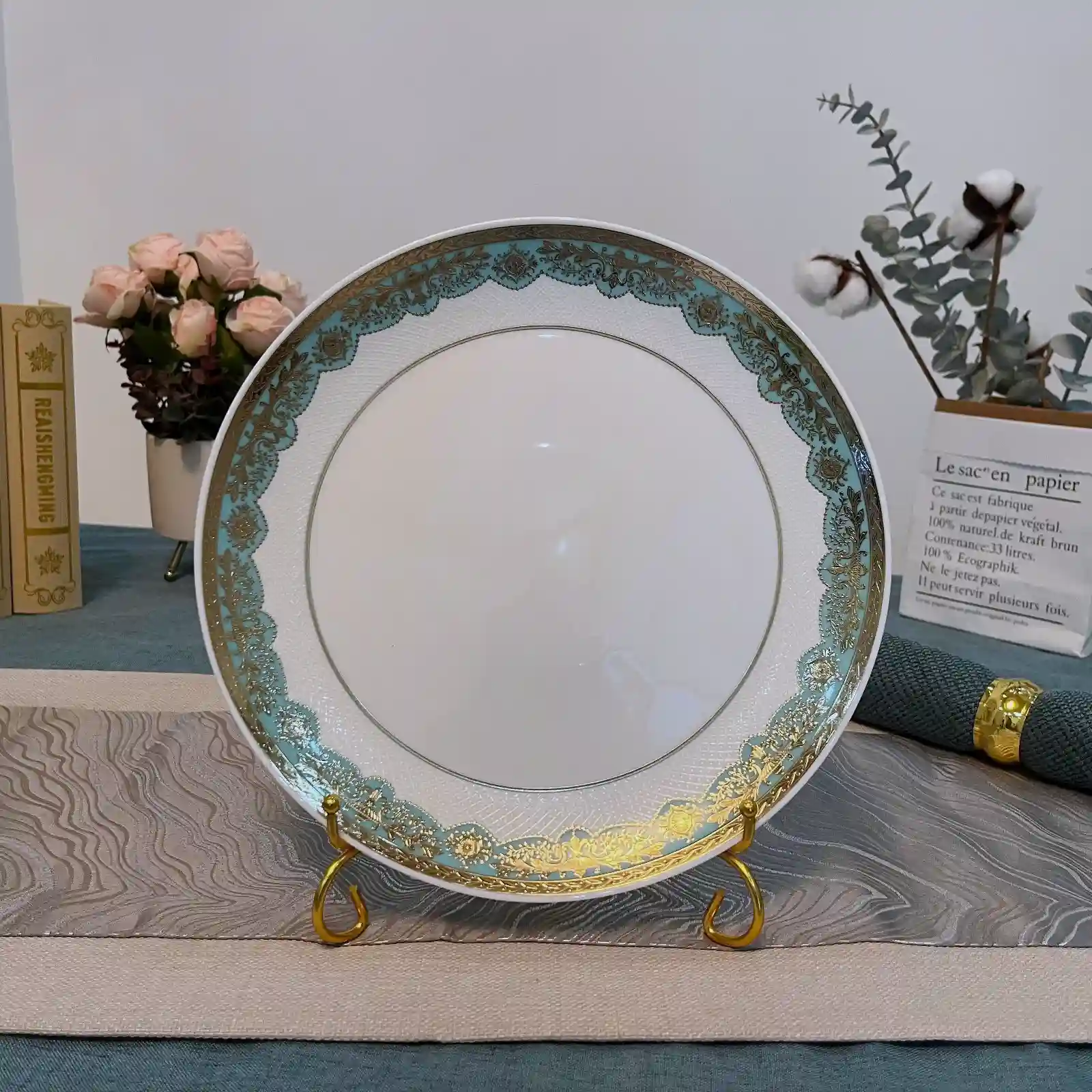
One thing to be clear about upfront, though: the glass body being safe doesn’t mean every decoration on it is. Gold stamping and real gold lines play by different rules. We’ll get to that below.
Will a Dishwasher Crack Opal Glass?
This is what most people actually worry about. Hot water, heated drying, temperatures going up and down — won’t the glass just crack?
Short answer: no, not under normal use.
How Much Temperature Swing Can It Take?
The easiest way to judge is to put the numbers side by side.
Here’s what happens inside a typical household dishwasher during one full cycle:
| Stage | Temperature Range |
|---|---|
| Main Wash | 50–60 °C |
| Hot Rinse | 65–75 °C |
| Drying | 60–75 °C |
From start to finish, the biggest instant temperature jump is about 40–50 °C.
Now look at the glass. Tempered opal glass can handle an instant temperature difference of 100–135 °C. During production, the glass is formed above 600 °C and then hit with forced cold air to temper it. That rapid quenching creates a compressive stress layer on the surface — and that’s what gives it thermal shock resistance far beyond ordinary glass.
So the dishwasher’s 40–50 °C swing? Less than half of what the glass can take.
We’ve tested this ourselves. Same production batch of opal glass plates, standard household dishwasher, normal mode, one cycle a day, 60 days straight. After 60 days: zero cracks, zero chips, no visible change in surface gloss.
According to the European Container Glass Federation (FEVE), glass is the only food-contact packaging material the U.S. FDA classifies as “GRAS” (Generally Recognized as Safe). Its chemical stability doesn’t degrade through repeated heating and washing.
When Could It Actually Crack?
The problem is never the dishwasher itself. It’s extreme handling. Here are the scenarios to watch for:
Frozen plates straight into a hot cycle. A plate comes out of a –18 °C freezer and goes directly into a sanitize mode running above 80 °C. That’s close to a 100 °C swing — right at the glass’s lower tolerance limit. It might not crack every time, but you’d be pushing the boundary for no good reason.
Running sanitize or extra-hot every single time. Some high-end machines hit 80–85 °C in sanitize mode. Add the residual heat from drying, and the real temperature gap climbs higher. Once in a while is fine. Every day is unnecessary stress. Normal mode gets the job done.
Glass with hidden damage. If a plate has taken a hard knock before, there could be micro-cracks you can’t see. Those tiny cracks grow a little with each heat cycle. It may look fine on the outside, but the structure inside isn’t the same. If a piece has been dropped, hand wash it for a while and keep an eye on it.
Bottom line: avoid extreme temperature jumps, stick to a normal cycle, and you’re set. In a discussion on Reddit r/BuyItForLife, several users reported their tempered opal glass dinnerware lasting 10–30 years of daily dishwasher use with no cracking or visible wear.
What About Decals and Gold Rims?
The glass body is fine in the dishwasher. But the decorative layer on top follows its own rules. The key factor is firing temperature — the higher it is, the stronger the bond between decoration and glass, and the better it holds up in the machine.
Decorations That Are Dishwasher Safe
| Technique | Firing Temp | Dishwasher Safe? | Notes |
|---|---|---|---|
| Standard decals (high-temp) | 610 °C | ✅ Yes | — |
| Luster / metallic finish | 610 °C | ✅ Yes | Except those with real gold |
| Rim lines | 610 °C | ✅ Yes | — |
| Low-temp faux gold lines | 180 °C | ✅ Yes | — |
| Low-temp decal paper | 190–220 °C | ✅ Yes | — |
| Low-temp embossed / relief | 190–220 °C | ✅ Yes | Slight edge wear possible after 20+ frequent washes |
Decals fired at 610 °C are extremely durable because the pigments fuse with the glass surface at a molecular level. Dishwasher water at 50–75 °C doesn’t come close to threatening that bond.
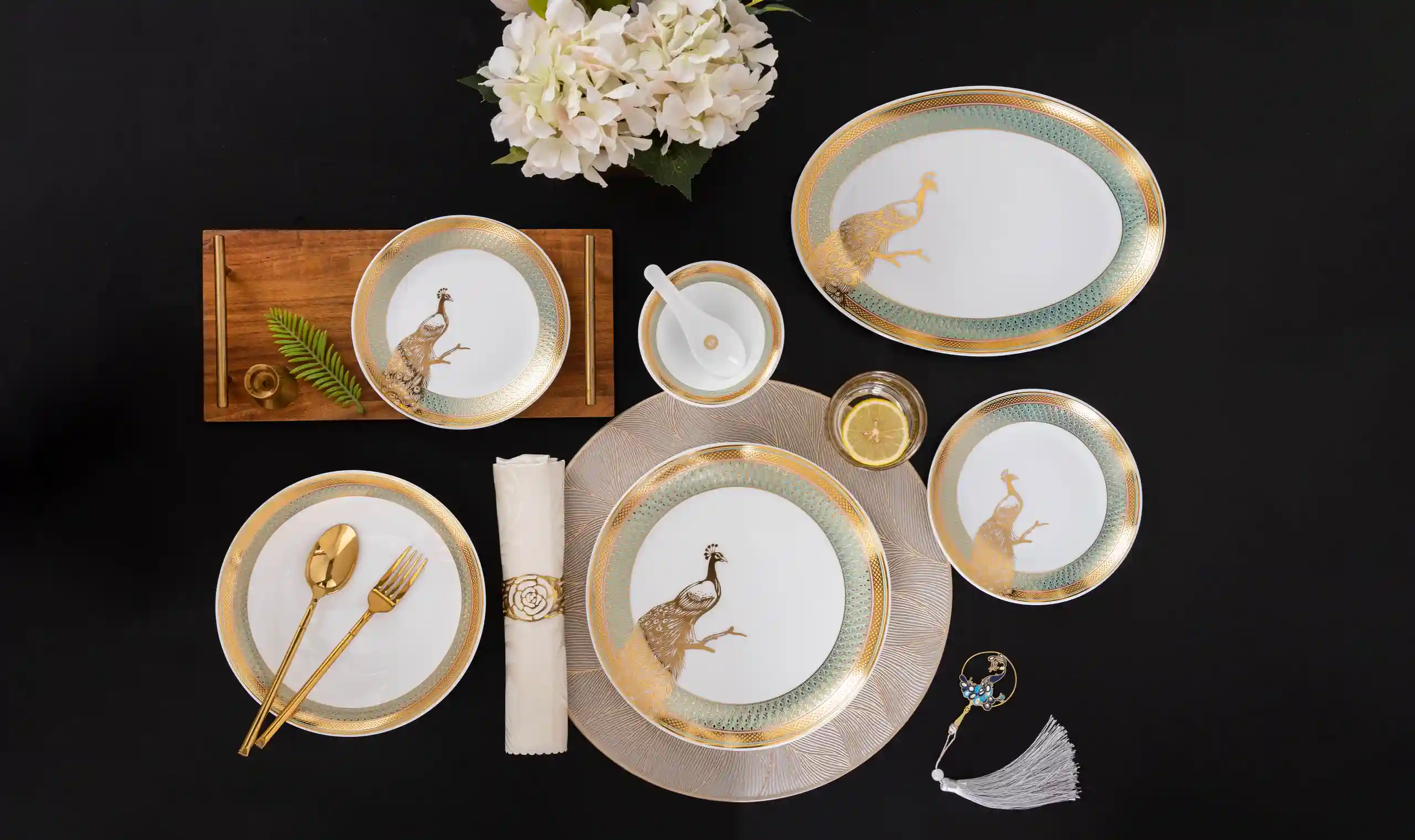
Low-temperature techniques (180–220 °C) create a weaker bond, but still hold up fine under a normal dishwasher cycle. The only one worth watching is low-temp embossed work — after many frequent washes, the edges of the raised pattern may show slight wear. If you care about cosmetic perfection, throw in an occasional hand wash.
Decorations That Are NOT Dishwasher Safe
| Technique | Firing Temp | Dishwasher Safe? |
|---|---|---|
| Gold stamping (hot stamp foil) | 210 °C | ❌ No |
| Real gold rim lines | 580 °C | ❌ No |
Both look gold, but they fail in different ways.
Gold stamping presses foil onto the glass surface with heat. It’s physically stuck on, not fused in. Inside a dishwasher, the alkaline detergent and hot jets eat away at that foil layer — it loses shine first, then starts peeling and darkening.
Real gold rim lines are fired at 580 °C, so they adhere well. The problem is the material itself: real gold reacts to alkaline detergents. Dishwasher detergent typically sits at pH 9–13. Wash after wash in that alkaline bath, the gold surface slowly oxidizes and dulls. You won’t see it after two or three cycles, but after fifteen or twenty, the lines look noticeably dimmer.
That change is permanent. Once it happens, there’s no fixing it.
Simple rule: if the product description says “real gold,” hand wash it. Not sure? Ask your supplier for a dishwasher compatibility test report rather than guessing.
Hand Wash or Dishwasher — Which Is Better?
For the glass itself, both are equally safe. Tempered opal glass has the heat resistance and surface hardness for either method. “Hand washing is gentler on the glass” is not actually true for this material.
The real question is about decorated pieces. Here’s a quick reference:
| Product Type | Recommended Method |
|---|---|
| Plain white opal glass | Dishwasher ✅ |
| High-temp decals (610 °C) | Dishwasher ✅ |
| Low-temp decals / faux gold lines | Dishwasher ✅ |
| Low-temp embossed / relief | Dishwasher OK; occasional hand wash if used daily |
| Gold stamping / real gold rim lines | Hand wash ✅ |
One rule covers it: no real gold decoration = dishwasher friendly. Real gold = hand wash.
If you’re sourcing opal glass dinnerware built for everyday dishwasher use, JOINTION’s product catalog lets you filter by category and decoration type — each product page states dishwasher compatibility clearly.
Common Questions People Ask
Q: Commercial dishwashers run much hotter. Is tempered opal glass dishwasher safe in those machines too?
A: Yes. Commercial high-temp dishwashers rinse at 71–82 °C (see Champion Industries’ comparison of high-temp vs. low-temp commercial machines). That’s still well within the 100–135 °C thermal shock tolerance of tempered opal glass. Just don’t load frozen items straight into a hot cycle — let them come closer to room temperature first.
Q: Before a big bulk order, how do I verify this batch is really dishwasher safe?
A: Don’t rely on the product page alone. Ask for a third-party dishwasher durability report — common standards are EN 12875-1 and relevant ASTM specs. Check the number of test cycles and results. Once the shipment arrives, pull a few random pieces and run them through the dishwasher daily for 5–7 days. Then inspect for cracks, fading, or surface changes.
Q: Will alkaline dishwasher detergent damage the opal glass surface?
A: No. Tempered opal glass is non-porous with no glaze layer. Alkaline detergent (pH 9–13) can’t penetrate or corrode the glass body. If your pieces have gold stamping or real gold lines, though, the detergent will damage the metal layer. That’s a decoration problem, not a glass problem.