
What Is Jadeite Kitchenware?
Jadeite kitchenware is opaque or semi-opaque green glassware associated with milk glass and mid-century American kitchens. It includes table pieces such as plates and cups, as well as serving, preparation, storage, and selected baking items.
The definition matters in wholesale trade because customers use “jadeite” for different products. A gift shopper may want one mug. A homeware customer may expect a matching set. A hospitality buyer may need stable dimensions and replacement stock. The same color attracts them, but the right product format is different.
The terms jadite and jade-ite also appear in listings. They usually describe the same broad style, although collectors may connect a spelling with a particular maker or period. Modern products should therefore be labelled clearly as jade-green glass or jade-green opal glass. Clear wording prevents a current product from being mistaken for an antique.
Wholesale takeaway: Jadeite describes a recognizable glass style. Material, product format, and intended use still need separate confirmation.
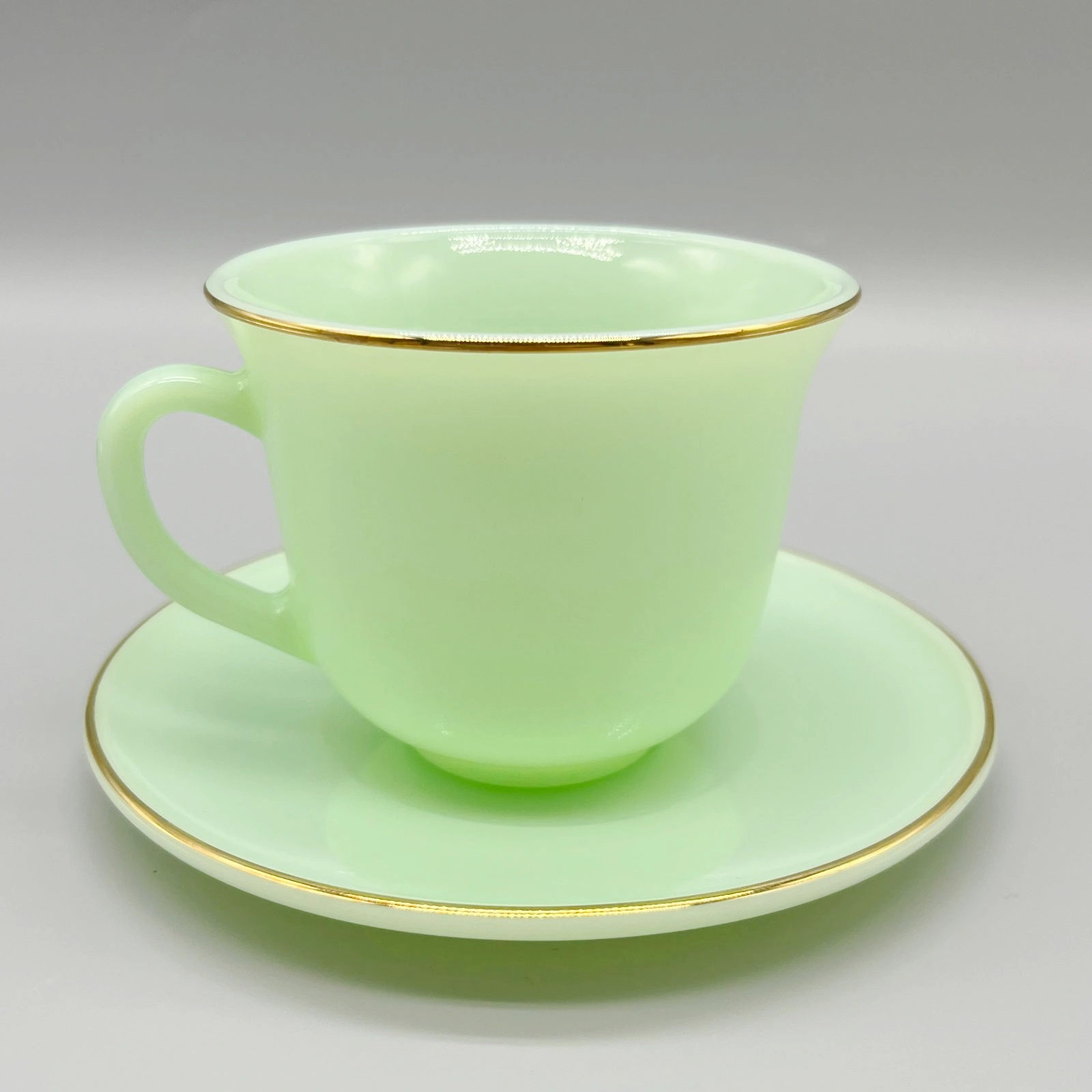
Jadeite Kitchenware Is Glass, Not Jade
Jadeite kitchenware is made from glass, not natural jade stone. The name refers to the soft green color and milky appearance. It does not mean the product has been carved from jade.
That distinction affects more than wording. If a retail listing simply says “jadeite,” customers may form the wrong expectations about material, weight, care, and price. Importers should use the exact material description supplied for the product, such as jade-green glass or jade-green opal glass.
A Brief History of Jadeite Kitchenware
Jadeite became widely recognized in the United States during the early and mid-twentieth century. Its green color stood apart from the white and clear tableware common at the time, while its practical forms suited homes, diners, restaurants, and everyday family meals.
McKee and Jeannette helped establish the category. Anchor Hocking’s Fire-King line later became one of the best-known names among collectors. Jadeite appeared as dinnerware, restaurant ware, storage pieces, promotional items, and kitchen tools.
This history still influences modern demand. Consumers are not only buying a green plate; many are buying a familiar vintage-American look in a format they can use today. That combination gives wholesalers a clear retail story without requiring every item to be a collectible.
Practicality and Color Drove Jadeite’s Popularity
Jadeite became popular because it joined everyday usefulness with a color customers could recognize immediately. Mass production and promotional distribution made matching kitchen pieces available to more households. The products were decorative, but they still had a job to do.
Modern demand builds on that same balance:
- Collectors value maker history, patterns, and period character.
- Home décor buyers use the soft green color with neutral cabinets, open shelves, and wood tones.
- Everyday users want the vintage look without searching for rare matching pieces.
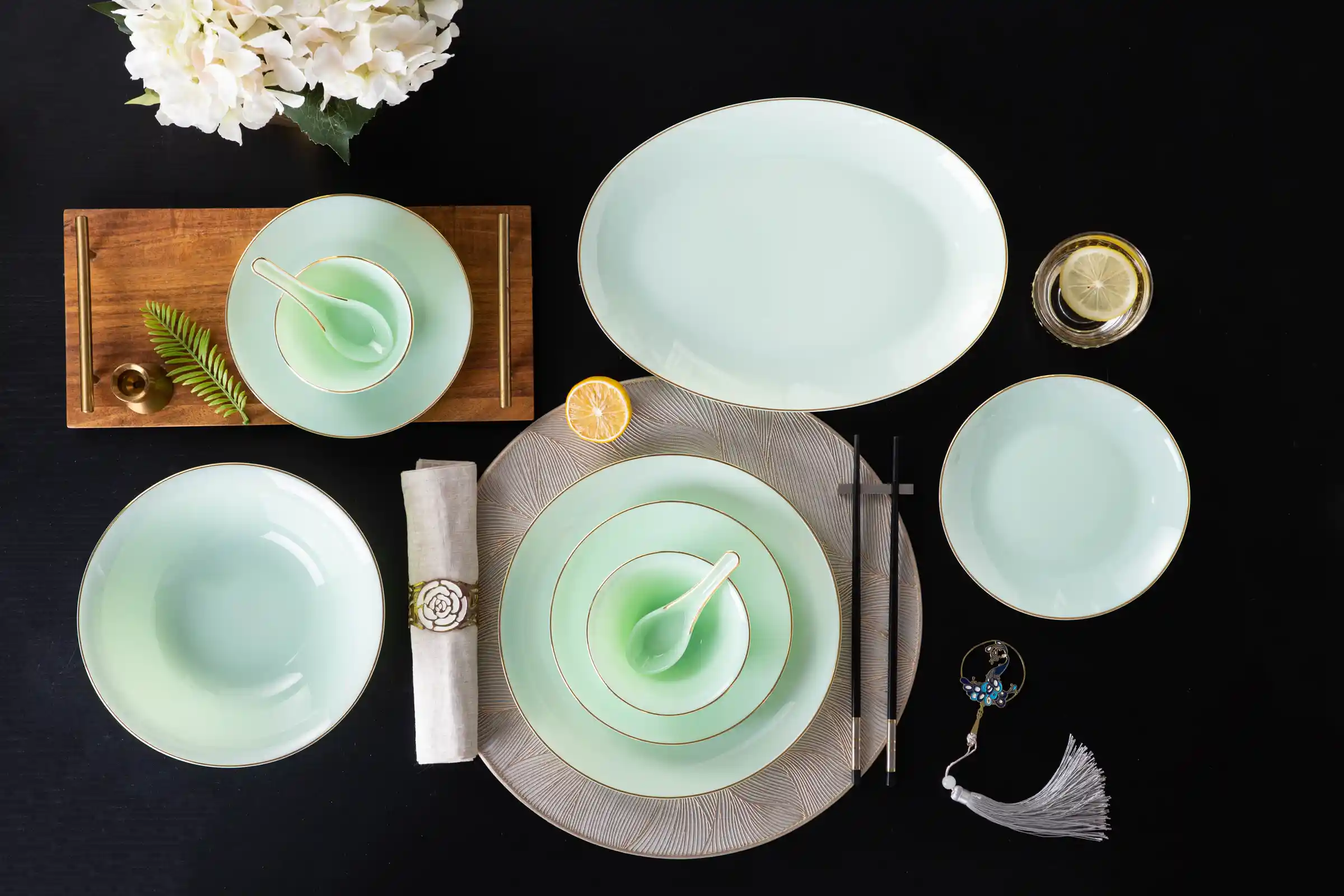
- Gift and hospitality buyers use coordinated shapes to create a distinct table setting.
For wholesalers, the useful point is not that jadeite appeals to everyone in the same way. It is that one visual style can support several buying reasons. Product descriptions should match the reason: history for collectors, coordination for homeware buyers, and repeatability for commercial customers.
What Types of Jadeite Kitchenware Are Available?
Jadeite ranges can cover dining, serving, preparation, storage, and selected baking. A wholesaler does not need every shape in the first order. The better starting point is a core group that shows the collection clearly, then expands when local sell-through reveals what customers want.
Common Types Cover Dining, Serving, Prep, Storage, and Baking
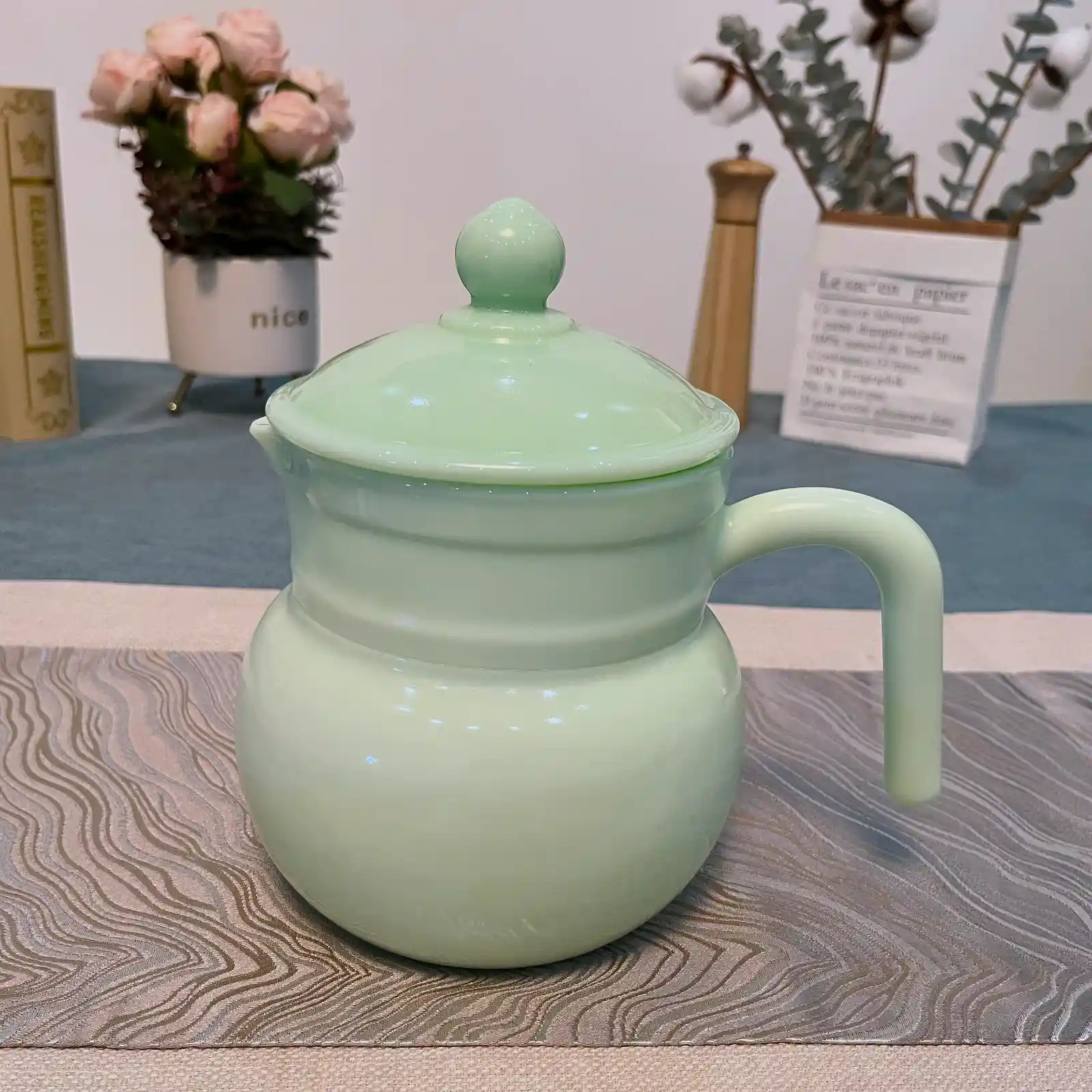
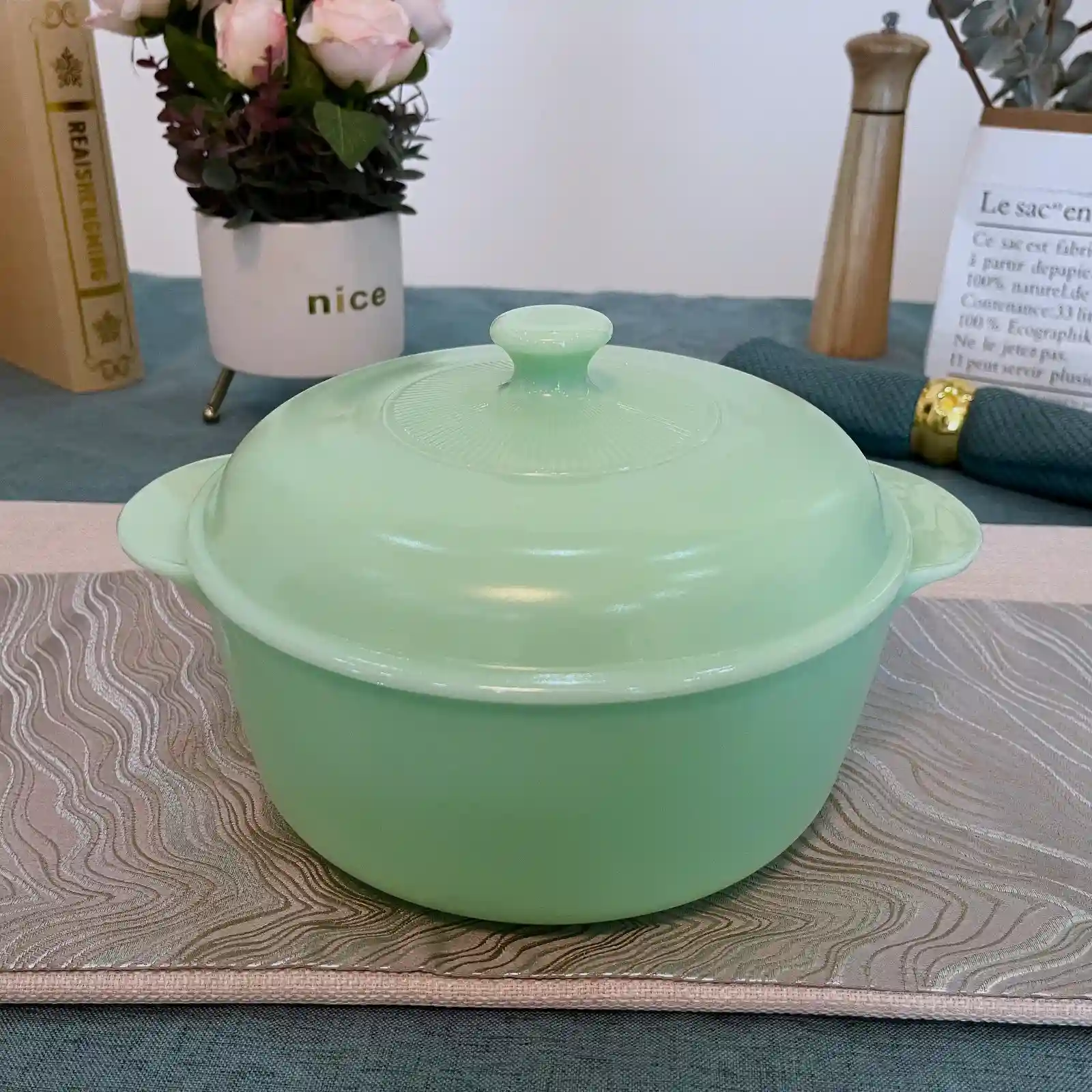
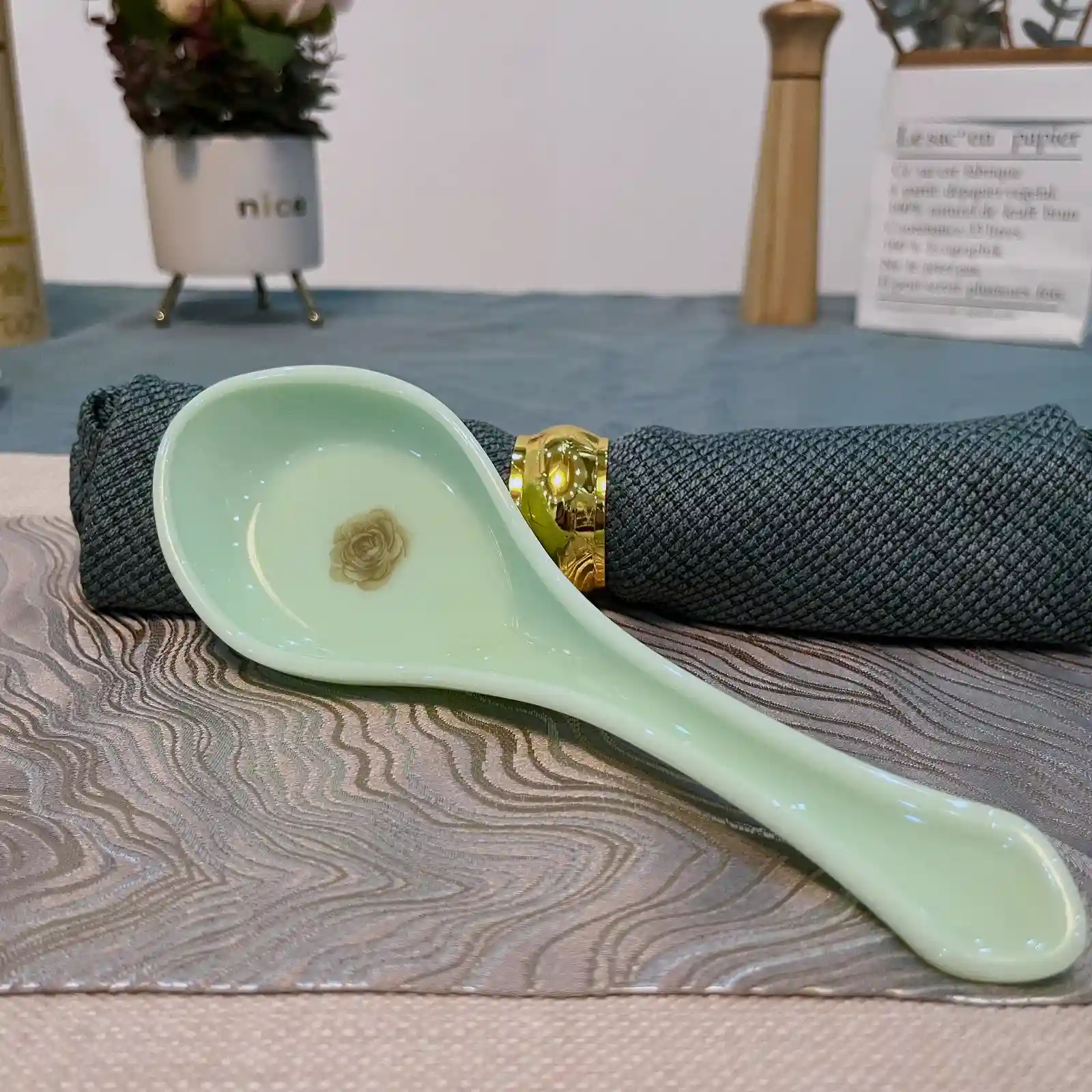
Common jadeite products include:
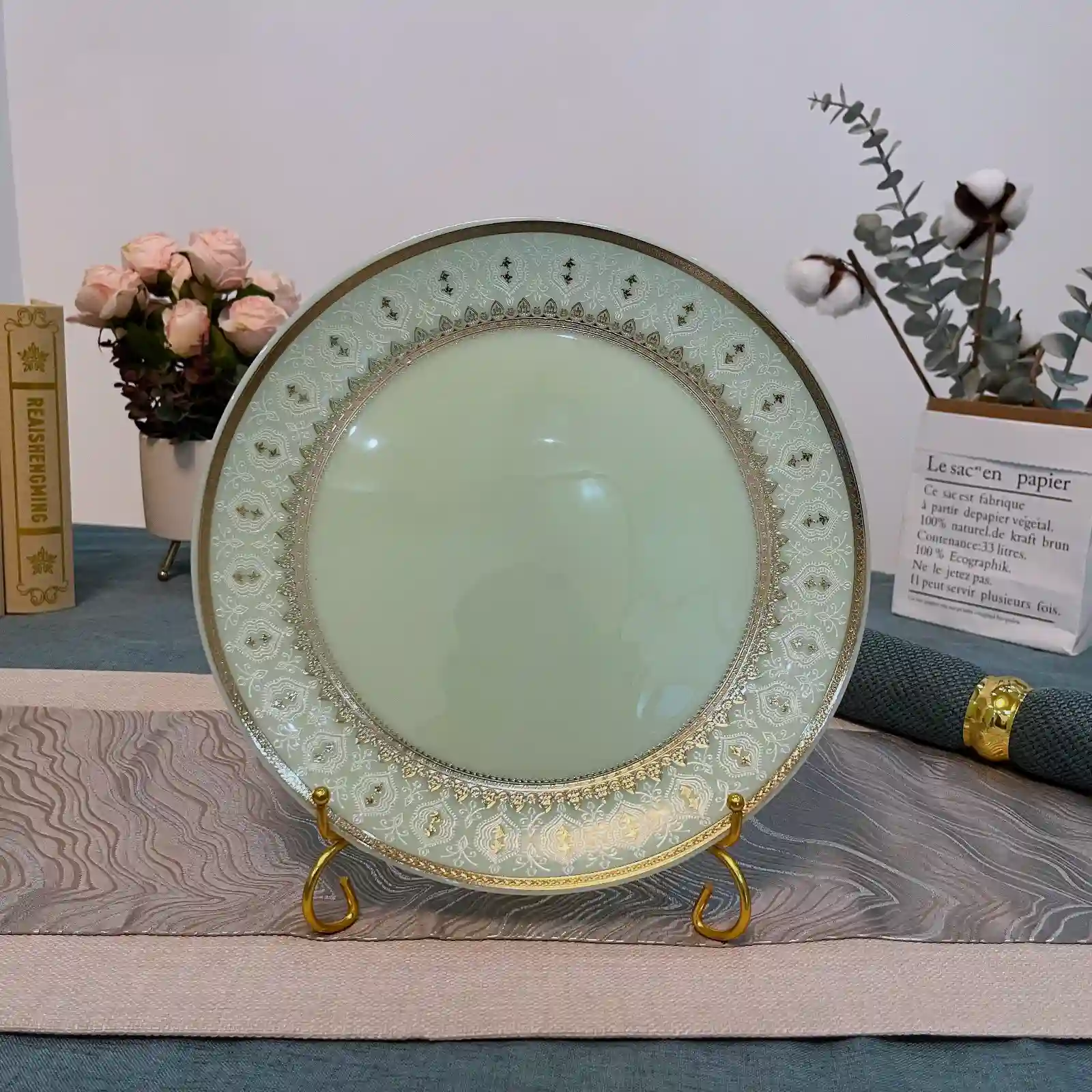
- Dinner plates and side plates
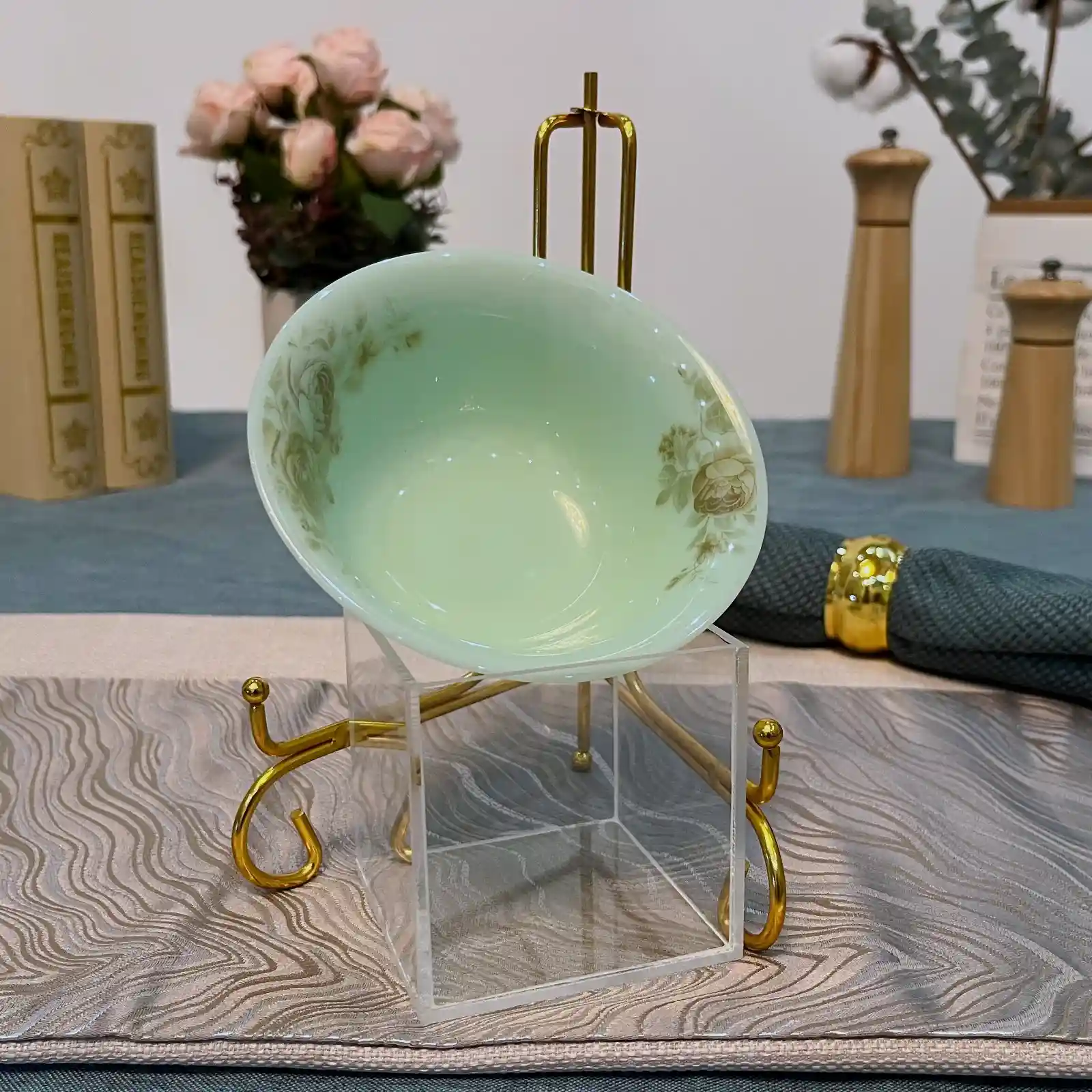
- Soup, dessert, and serving bowls
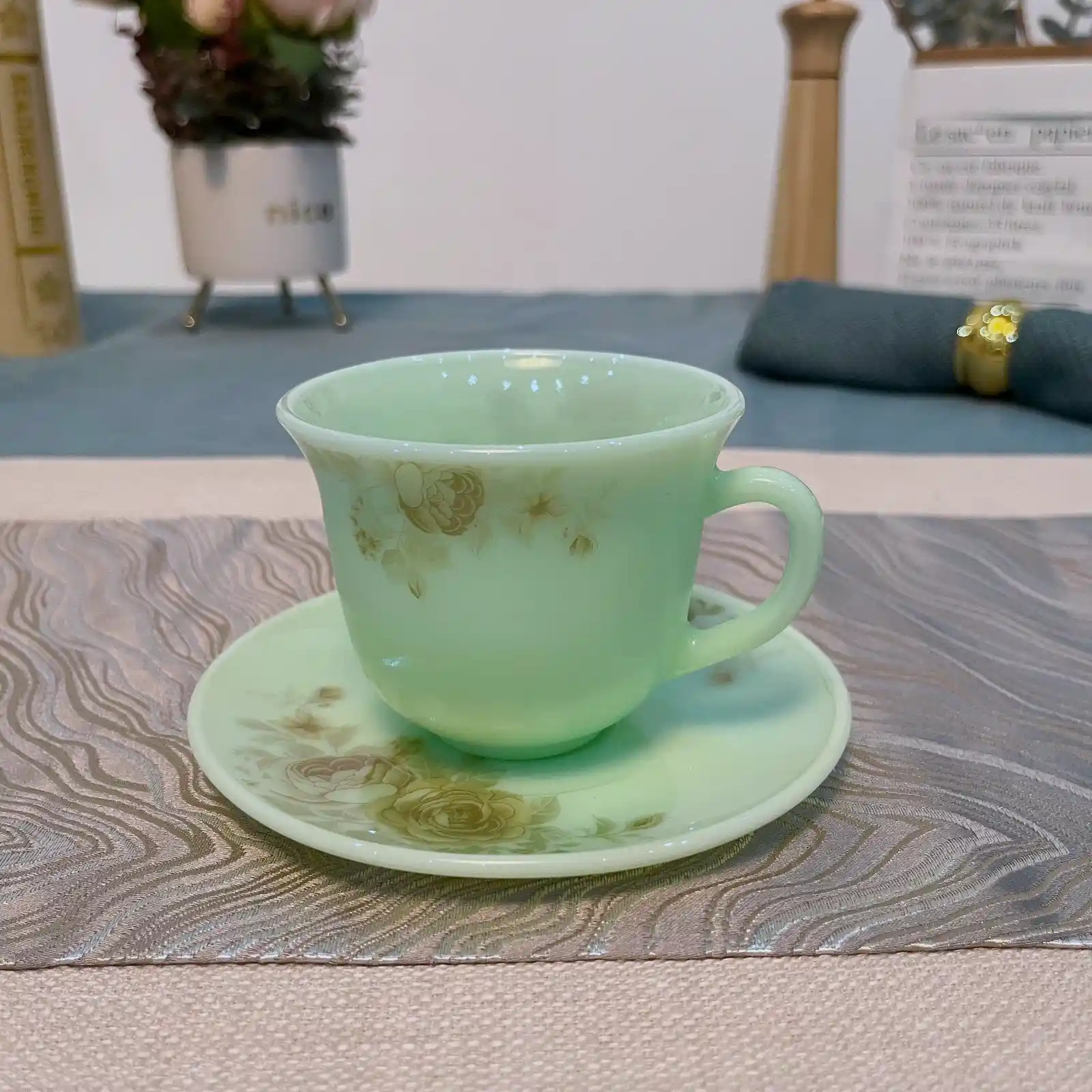
- Cups, mugs, and cup-and-saucer sets
- Mixing bowls and measuring cups
- Canisters and food-storage containers
- Platters, pitchers, and serving pieces
- Cake stands and dessert servers
- Casseroles and selected bakeware
Each group plays a different retail role. Mugs and small bowls offer an accessible first purchase. Plates and matching bowls form the repeatable core. Teapots, platters, and casseroles add visual interest and can raise the value of a coordinated display.
| Product group | Retail role | Buying implication |
|---|---|---|
| Mugs, cups, and small bowls | Entry purchase, gift, or add-on | Useful for testing demand at a lower consumer commitment |
| Plates and coordinated bowls | Core everyday tableware | Supports sets, repeat purchases, and replacement sales |
| Platters, teapots, and serving pieces | Statement and occasion-led items | Adds variety without changing the collection’s visual identity |
| Casseroles and selected bakeware | Kitchen-to-table use | Requires clear model-specific care and heat-use information |
Vintage vs. Modern Jadeite Kitchenware
Vintage and modern jadeite share the same visual language, but they serve different business models. Vintage pieces gain value from maker, age, rarity, condition, and provenance. Modern pieces are chosen for consistency, volume, current specifications, and replenishment.
For wholesalers, the deciding question is not which category looks better. It is whether customers are buying a collectible or a repeatable household product.
Vintage Serves Collectors; Modern Serves Repeat Retail
| Consideration | Vintage jadeite | Modern jadeite |
|---|---|---|
| Primary appeal | History, rarity, and collectible character | Coordinated appearance and everyday availability |
| Surface and color | May show age, patina, or production variation | Usually more uniform across a production order |
| Supply | Depends on the secondary market | Can support sets, wholesale ranges, and planned reorders |
| Use information | May require individual research and inspection | Can be checked against current specifications and documents |
| Replacement stock | Matching pieces may be difficult to find | Repeat production may support replenishment |
| Commercial value | Driven by maker, rarity, condition, and demand | Driven by material, design, quantity, packaging, and customization |
Vintage jadeite makes sense when specialist customers accept variation and value provenance. Modern jadeite is the more practical choice when several retailers need the same items across more than one season.
The trade-off is clear. Vintage creates scarcity. Modern creates continuity.
Is Jadeite Kitchenware Safe to Use?
Modern jadeite can be suitable for food use when the exact product is made for food contact and supported by the required documentation,so modern model no problem. Vintage jadeite is not automatically unsafe, but its composition, condition, repair history, and original care limits may be uncertain.
For an importer, a visual sample cannot answer the full safety question. Request:
- Material and food-contact information for the exact model
- Test documents relevant to the destination market
- Microwave, dishwasher, oven, and temperature-use instructions
- Packaging and labels that pass those limits to the end customer
Rules differ by market. Confirm the applicable requirements with a qualified compliance adviser or laboratory before making retail claims. A general supplier statement is not a substitute for product-specific documents.
Jadeite Kitchenware FAQs
Kitchenware Is Broader Than Dishes?
Jadeite dishes normally mean plates, bowls, cups, and related tableware. Jadeite kitchenware can also include preparation bowls, storage containers, casseroles, and serving pieces.
For wholesalers, “dishes” supports a focused tableware range. “Kitchenware” supports a wider assortment with more cross-selling potential—and more inventory to manage.
Marks and Records Help Date Jadeite?
Use base marks, patterns, dimensions, weight, mold details, surface wear, packaging, and seller history together. Green color, a black-light response, or the word “vintage” cannot prove age on its own.
Modern commercial orders should be traceable through current specifications, packaging, purchase records, and repeat-production details. Age claims need evidence, not appearance.
Modern Jadeite Is Easier to Verify?
Modern jadeite is usually easier to evaluate for everyday use because its material, care limits, and food-contact information can be checked against current documents. Vintage pieces may have unknown formulas, repairs, or use histories.
New does not automatically mean suitable for every appliance. Verify the exact model and destination-market requirements before making a claim.
Modern Suits Retail; Vintage Suits Collectors?
Choose modern jadeite for coordinated sets, repeat orders, hospitality supply, local retail, or private-label development. Choose vintage jadeite when maker history, rarity, and collectible character are the main purchase reasons.
A business can use vintage pieces for specialist sales or visual storytelling while keeping modern products as the repeatable core range. For broad local resale, modern jadeite normally provides the stronger operating base.
Final Takeaway
Jadeite gives wholesalers a recognizable historical look in a flexible modern tableware category. The opportunity ranges from small gifts and individual pieces to coordinated dining and serving collections.
The strongest assortment is not necessarily the largest. Start with products that fit local price points and buying habits. Confirm documents before making use claims. Keep core items available for reorder. Add serving pieces, packaging, or OEM/ODM options only when they solve a clear retail need.
For dependable local resale, modern jadeite offers the clearer path. It preserves the look customers recognize while giving importers more control over consistency, compliance checks, range planning, and replacement stock.
Source References
These sources provide historical and product context. Importers should also verify current, model-specific documents with the supplier and destination-market advisers.