
What Is Tempered Opal Glass Dinnerware?
Tempered opal glass dinnerware is opal glass tableware that has undergone a strengthening treatment. It is also known as tempered opalware or tempered white opal glass dinnerware. The material has an opaque or softly translucent appearance and is commonly used for dinner plates, bowls, cups and saucers, serving dishes, and complete dinnerware sets.
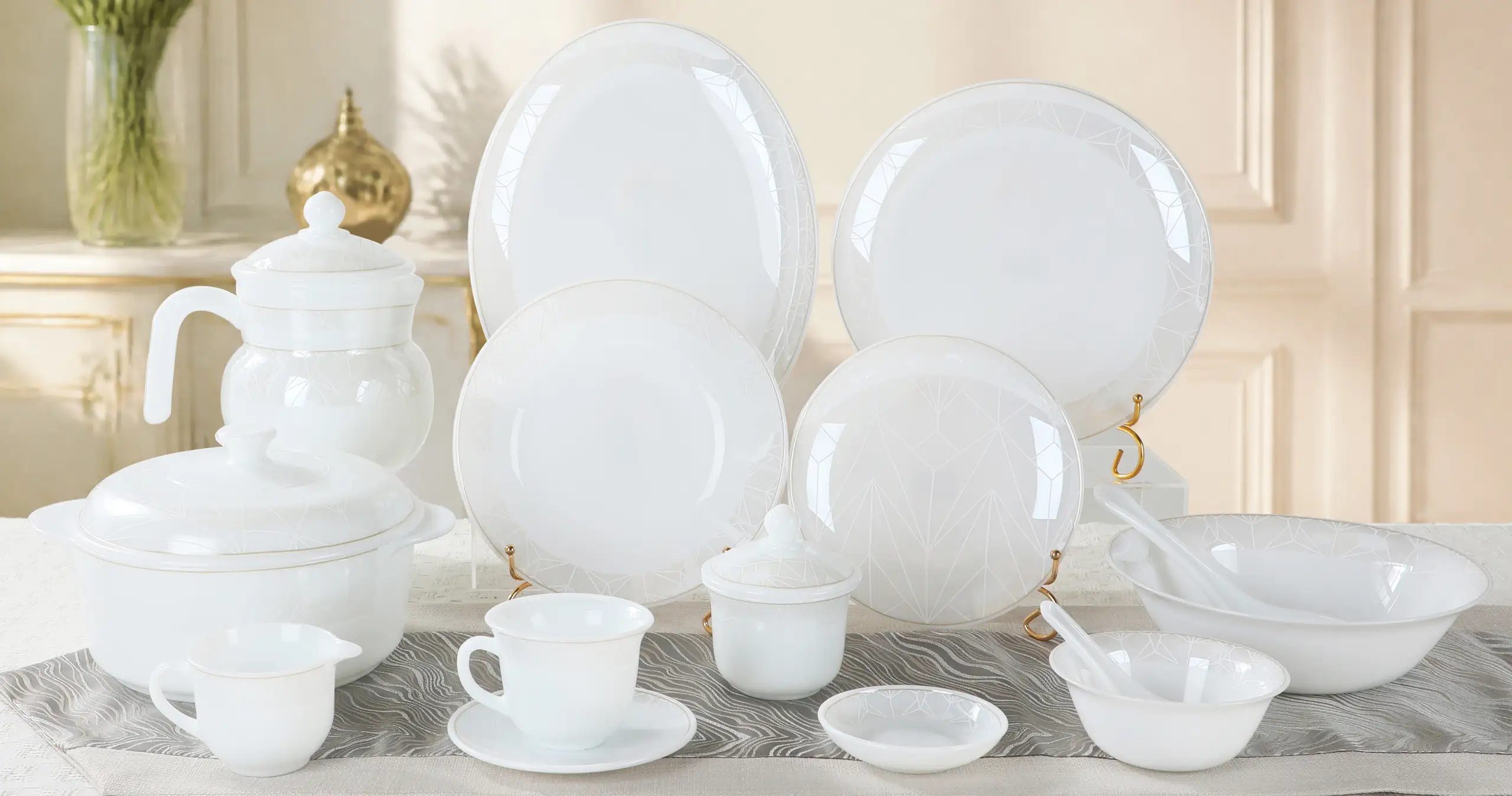
After the pieces are formed, they go through a controlled heating and cooling process. This treatment creates compressive stress at the glass surface, helping it resist the spread of cracks. As a result, rims and edges are better able to withstand the minor contact that occurs during stacking, washing, and routine handling than comparable non-tempered glassware.
| Feature | Why It Occurs | Practical Difference for Users |
|---|---|---|
| Lightweight | The glass composition and forming process allow a relatively thin structure while maintaining the stability of each shape. | Carrying several plates at once requires less effort, while cabinets, shelves, and service carts bear less stacking weight. |
| Durable | Tempering creates compressive stress at the surface, helping slow the growth of cracks caused by routine contact. | Plates and bowls are less likely to break immediately after ordinary contact during stacking, dishwashing, or frequent service. |
| Easy to clean | The smooth, low-porosity glass surface does not readily absorb moisture, food color, or odors. | Curry, tomato sauce, coffee, and grease tend to remain on the surface and are less likely to leave persistent odors after normal washing. |
What Types of Tempered Opal Glass Dinnerware Are Available?
A tempered opal glass dinnerware collection usually consists of plates, bowls, cups and saucers, and coordinated dinner sets. Manufacturers can apply the same glass colors and decorative style across these product types, allowing retailers, hospitality buyers, and private-label brands to build a consistent tableware collection.
Plates
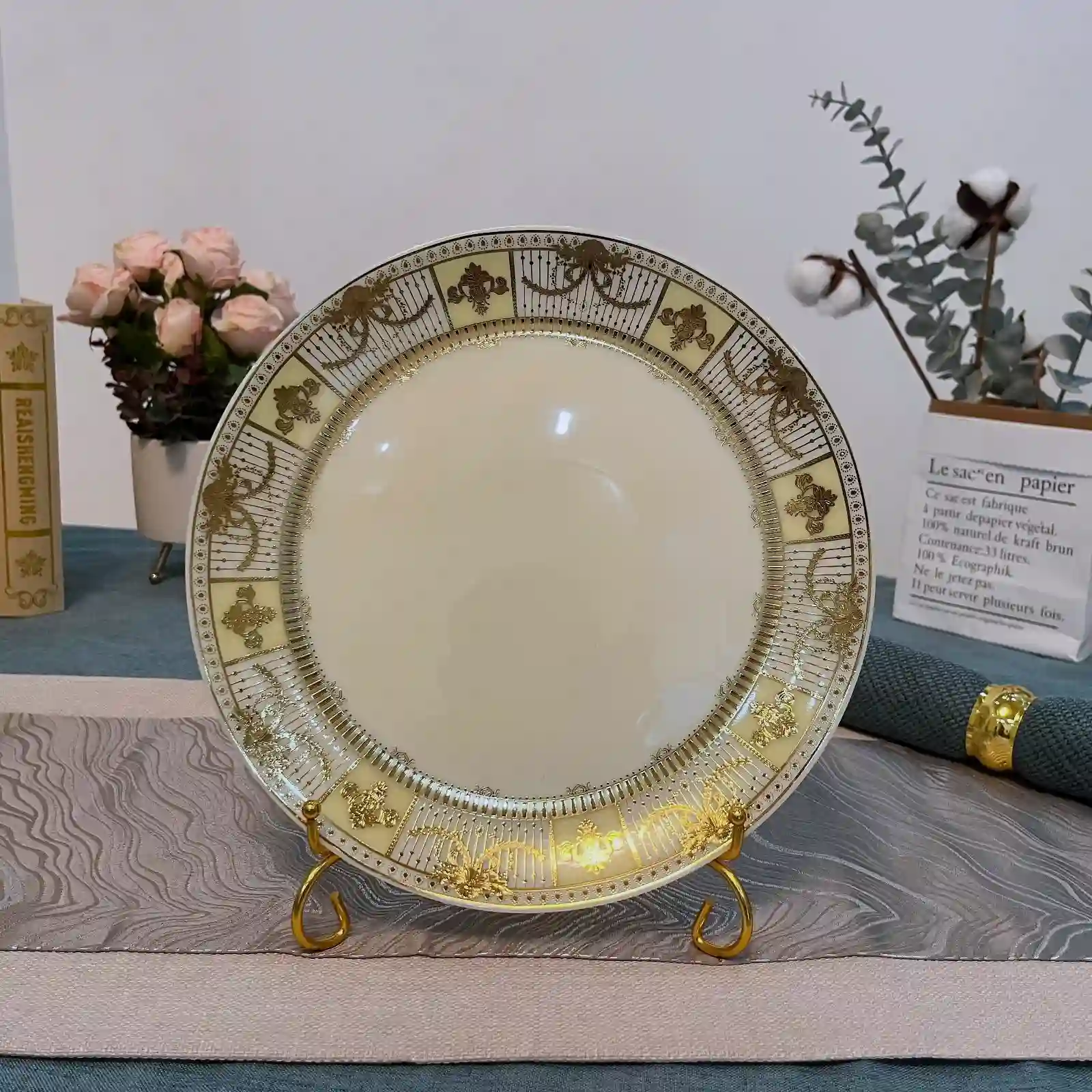
Common plate types include dinner plates, flat plates, side plates, dessert plates, salad plates, soup plates, pasta plates, oval fish plates, and large serving platters. Available shapes include round, square, oval, wide-rim, narrow-rim, rimless, and coupe designs. Sizes range from small dessert plates to 10- or 11-inch dinner plates and larger shared serving dishes.
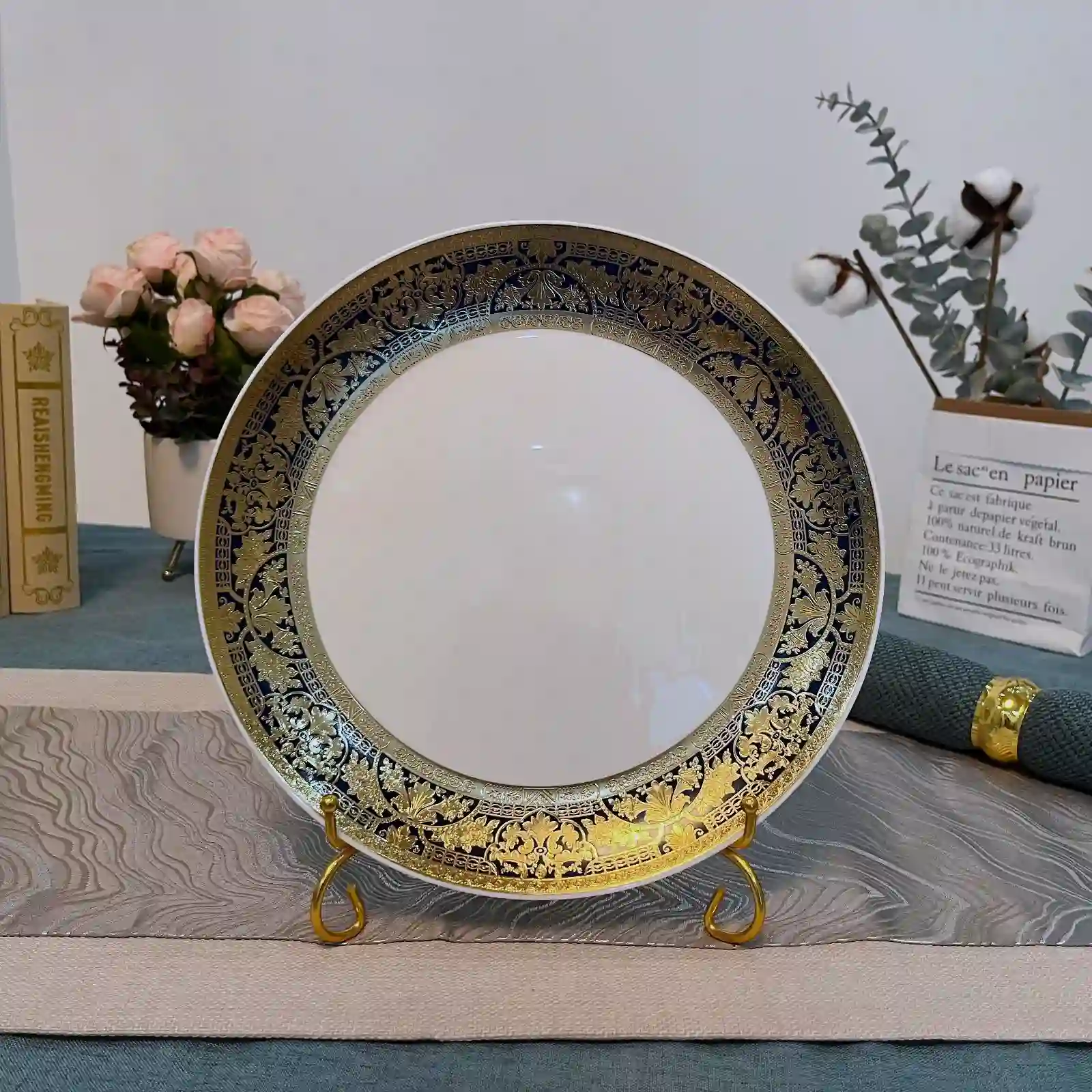
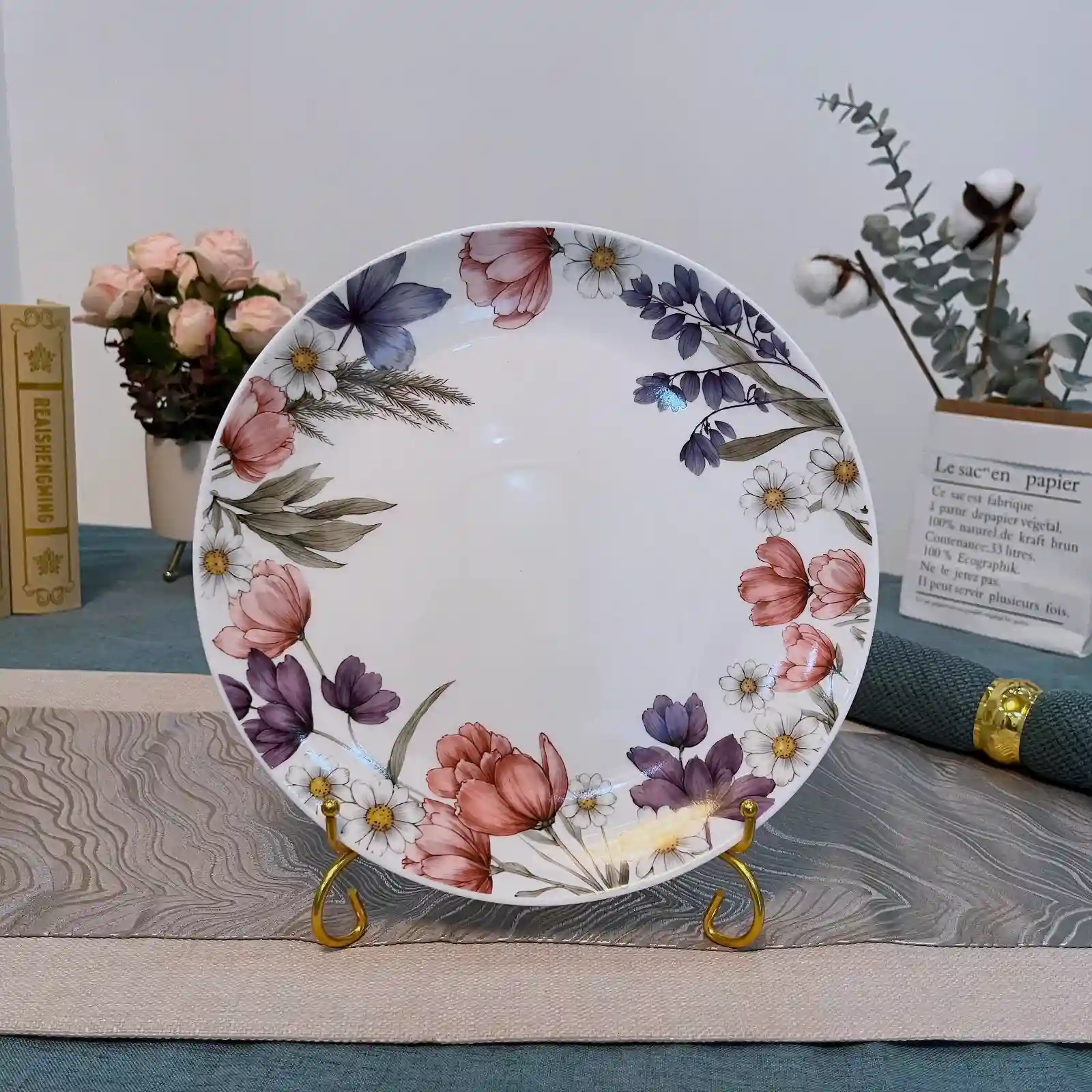
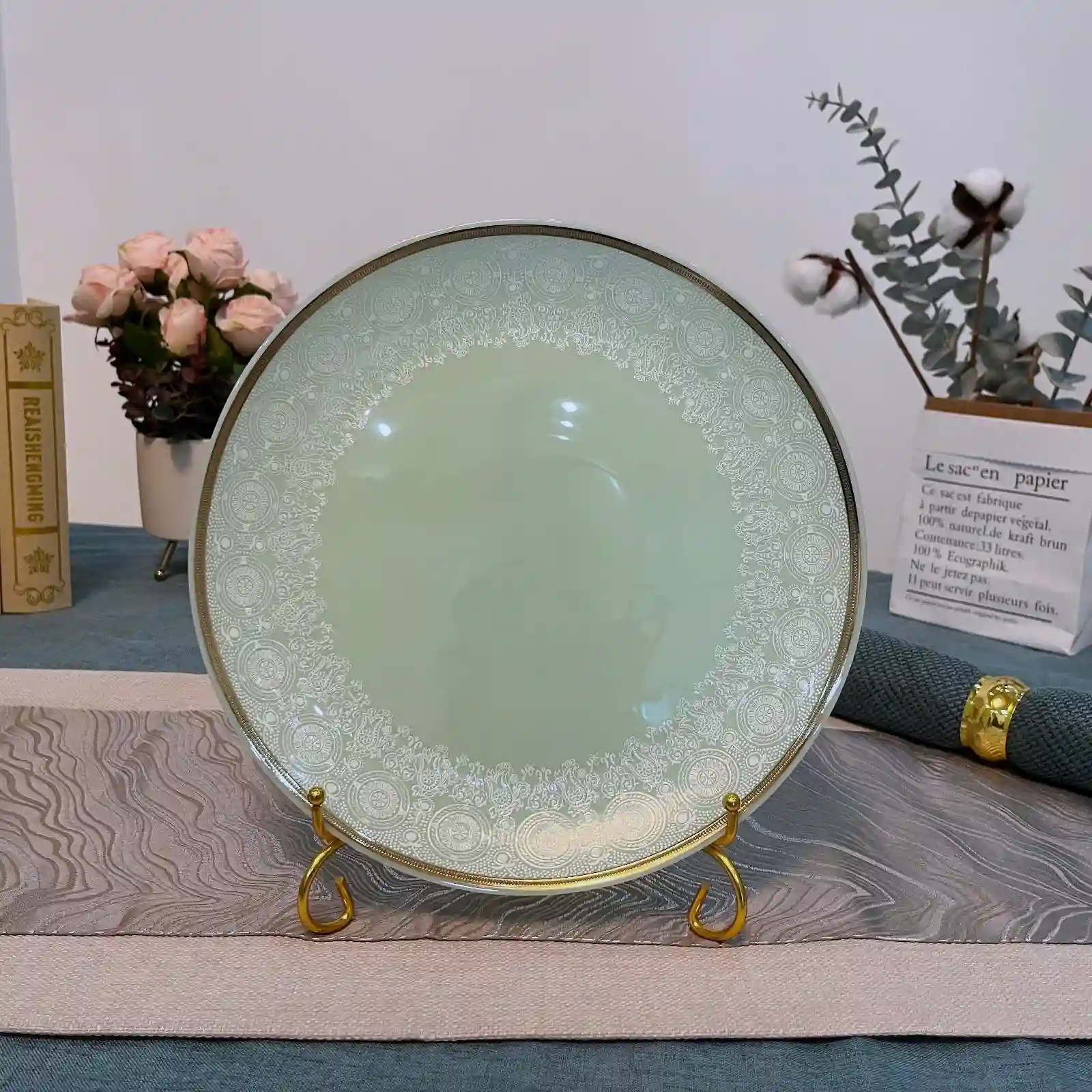
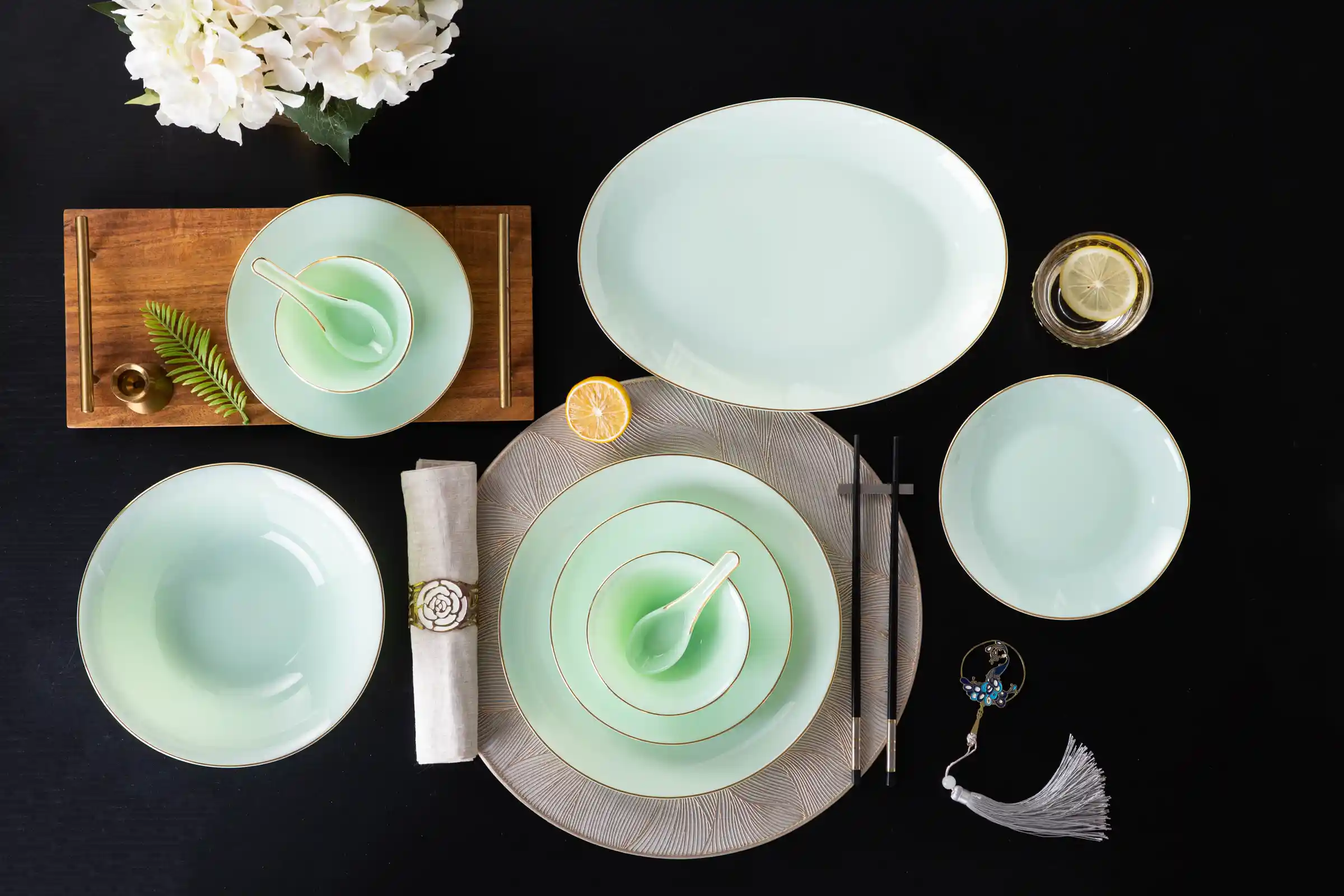
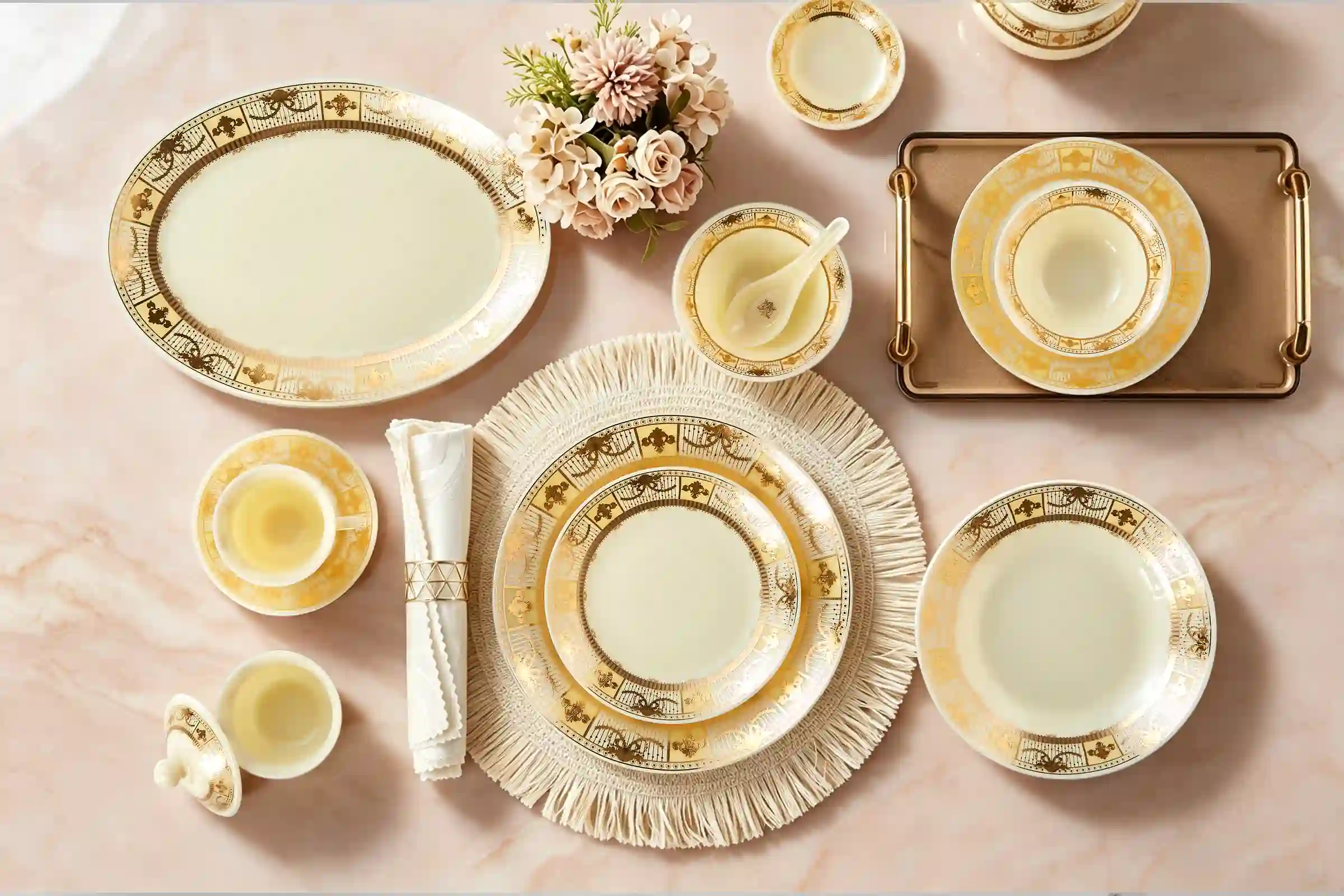
Plate colors may include white, black, jade green, amber or yellow jade, and white jade. Custom colors may also be developed subject to minimum order quantities and sample approval. Decoration options include plain finishes, full-color decals, branded graphics, screen printing, low-temperature embossed effects, molded textures, gold or silver rims, and electroplated details. These options can be combined, such as a white round dinner plate with a rim decal or a jade-green embossed plate with a matching serving platter.
Bowls
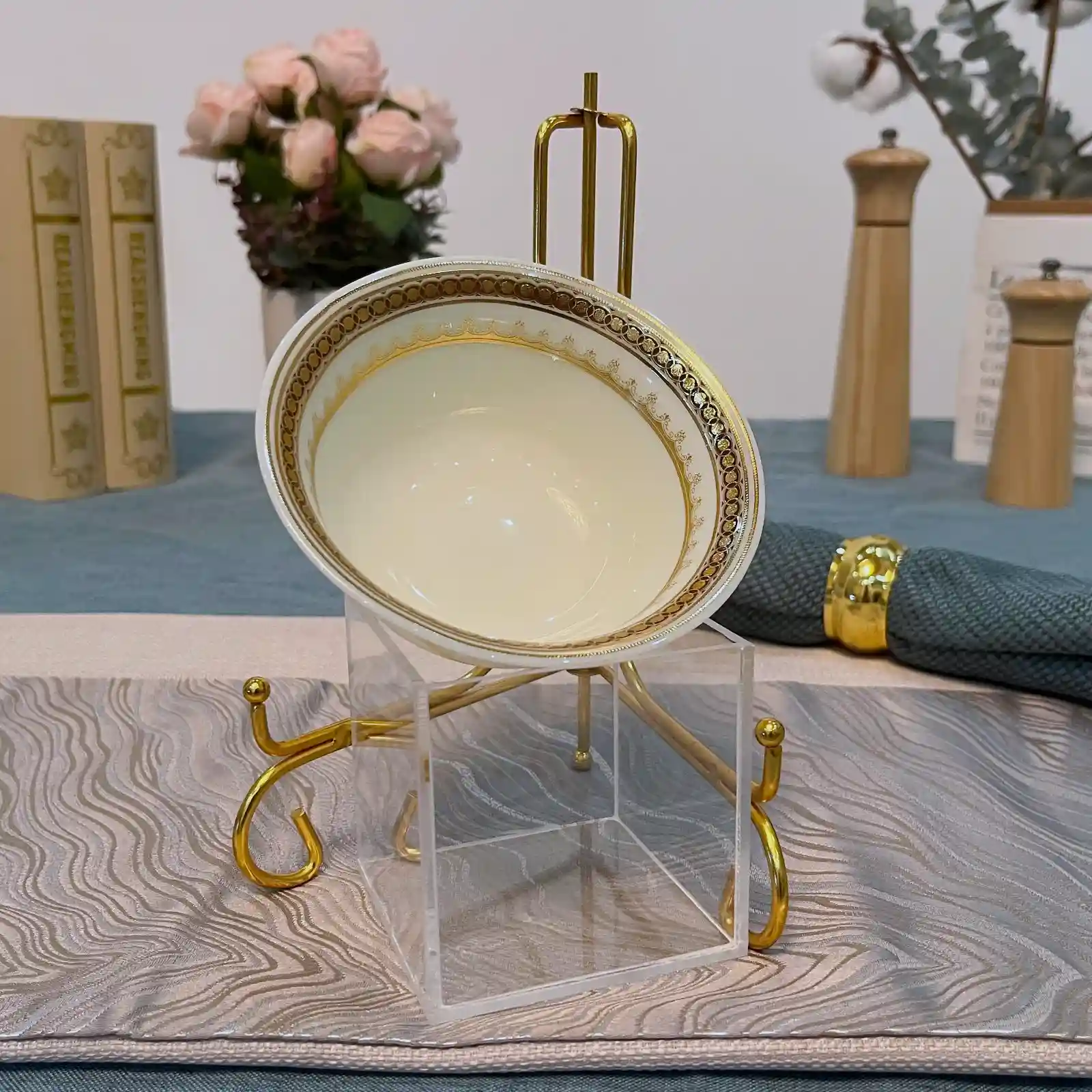
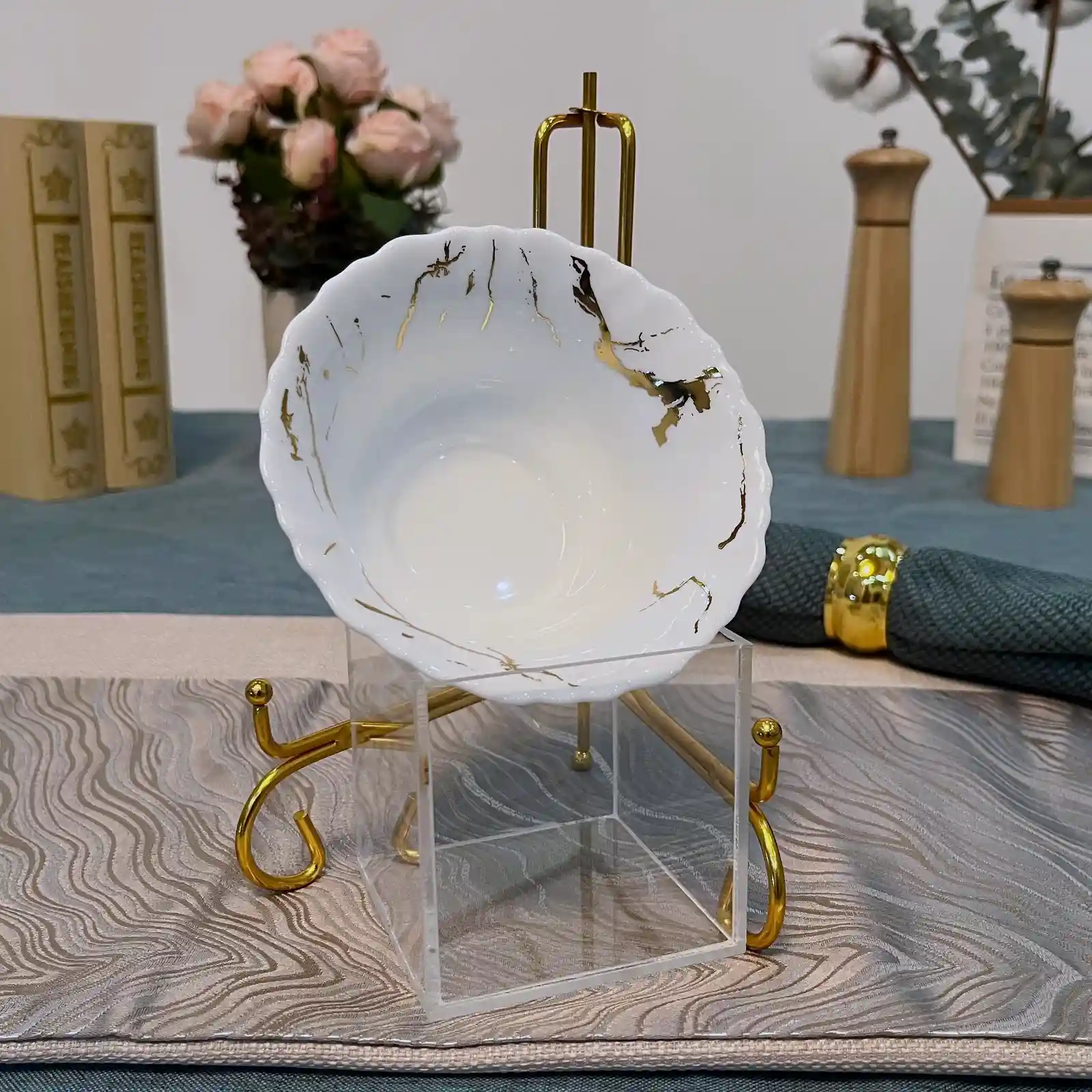
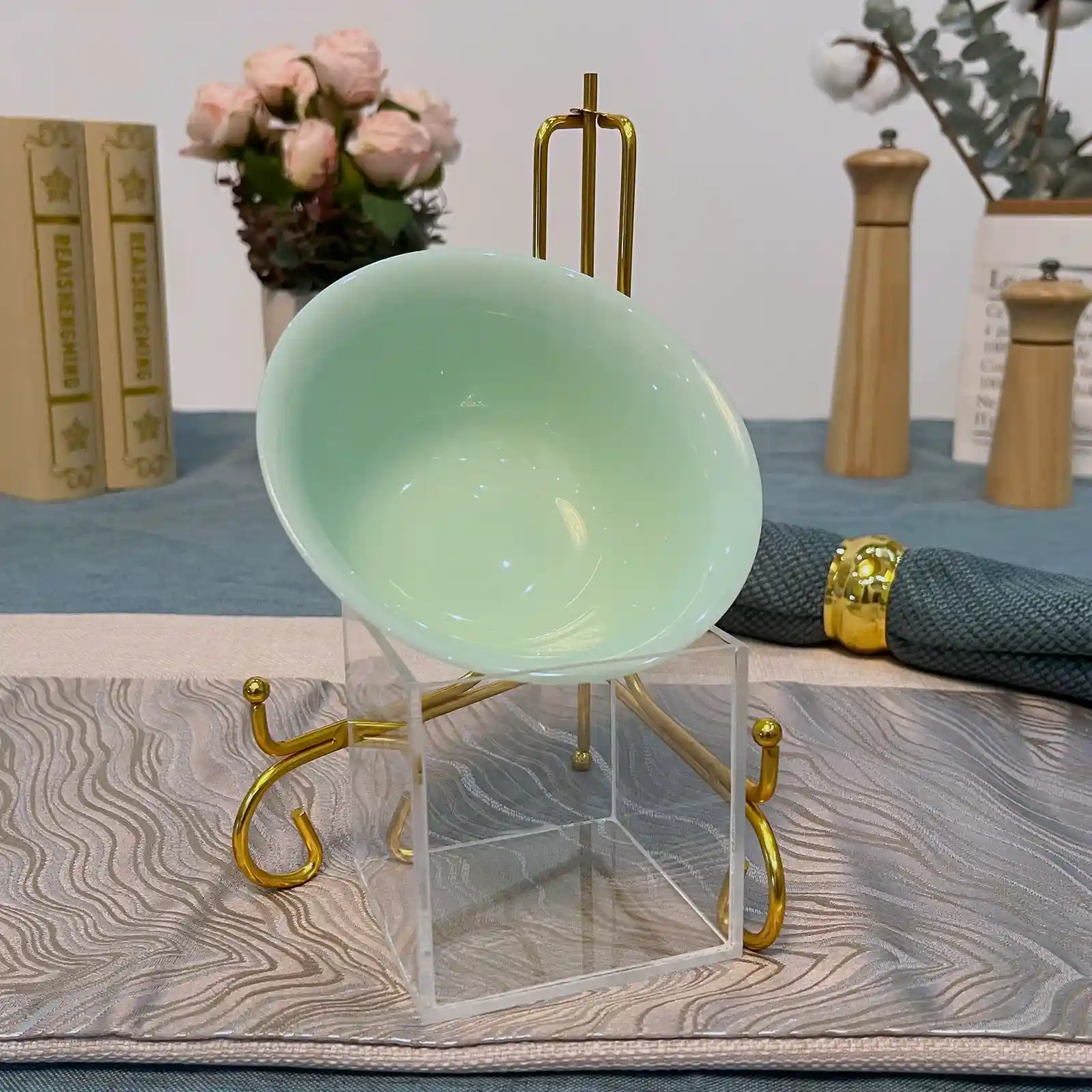
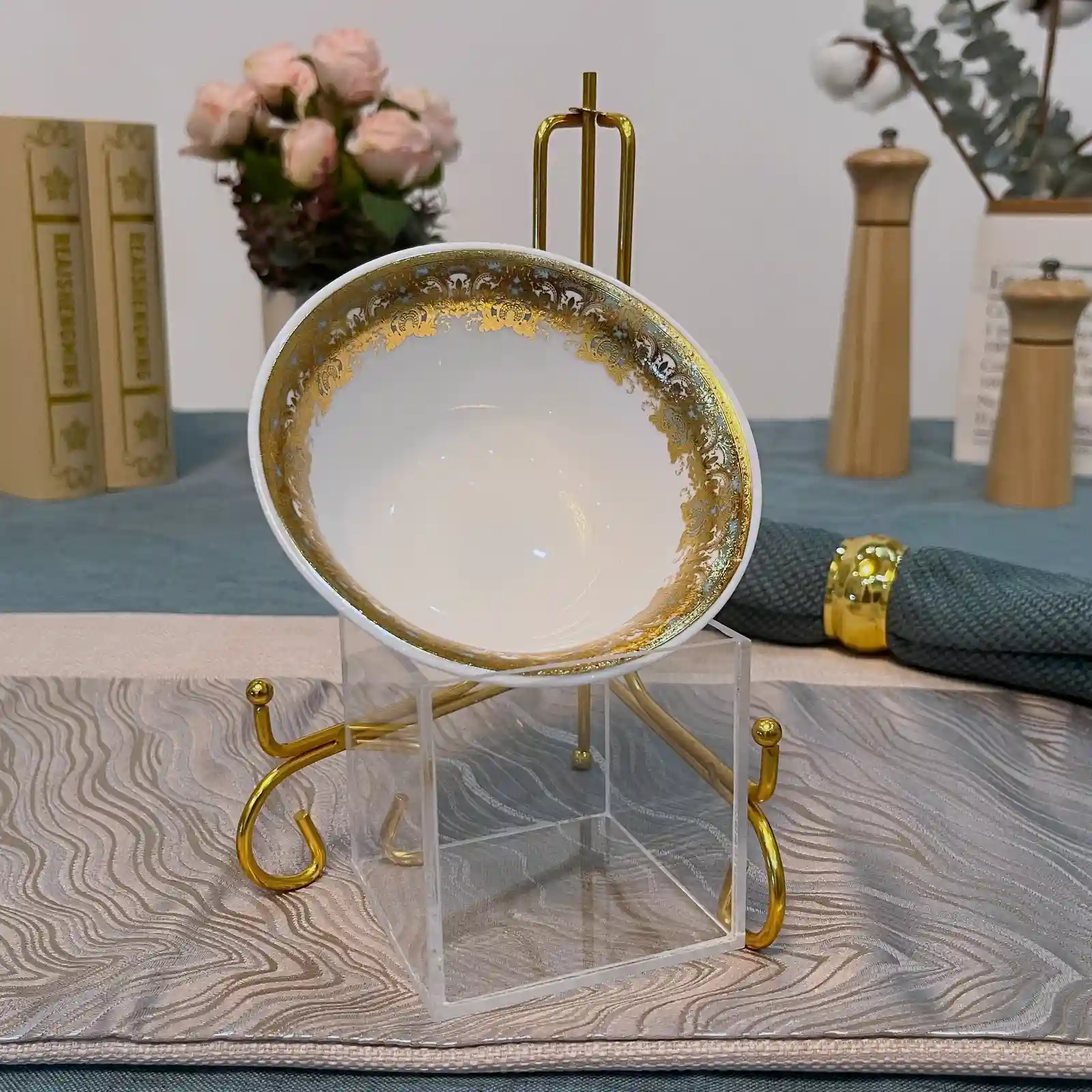
Common bowl types include rice bowls, cereal bowls, soup bowls, noodle bowls, salad bowls, baby food bowls, dipping bowls, and large shared serving bowls. Designs may be round, square, or oval, with wide openings, deep profiles, straight walls, flared rims, foot rings, or stackable structures. Sizes generally range from small individual bowls to serving bowls of approximately 9 inches.
Bowl colors may include white, black, jade green, amber or yellow jade, and white jade. Decoration options include full-color decals, low-temperature embossing, screen printing, pad printing, sandblasted effects, and gold or silver rims. Logos may be placed on the exterior, base, or another area that does not directly contact food. Because bowl depth and diameter determine how each piece is used, coordinated colors and patterns can connect individual bowls with larger serving pieces within the same tempered opal glass dinnerware collection.
Cups
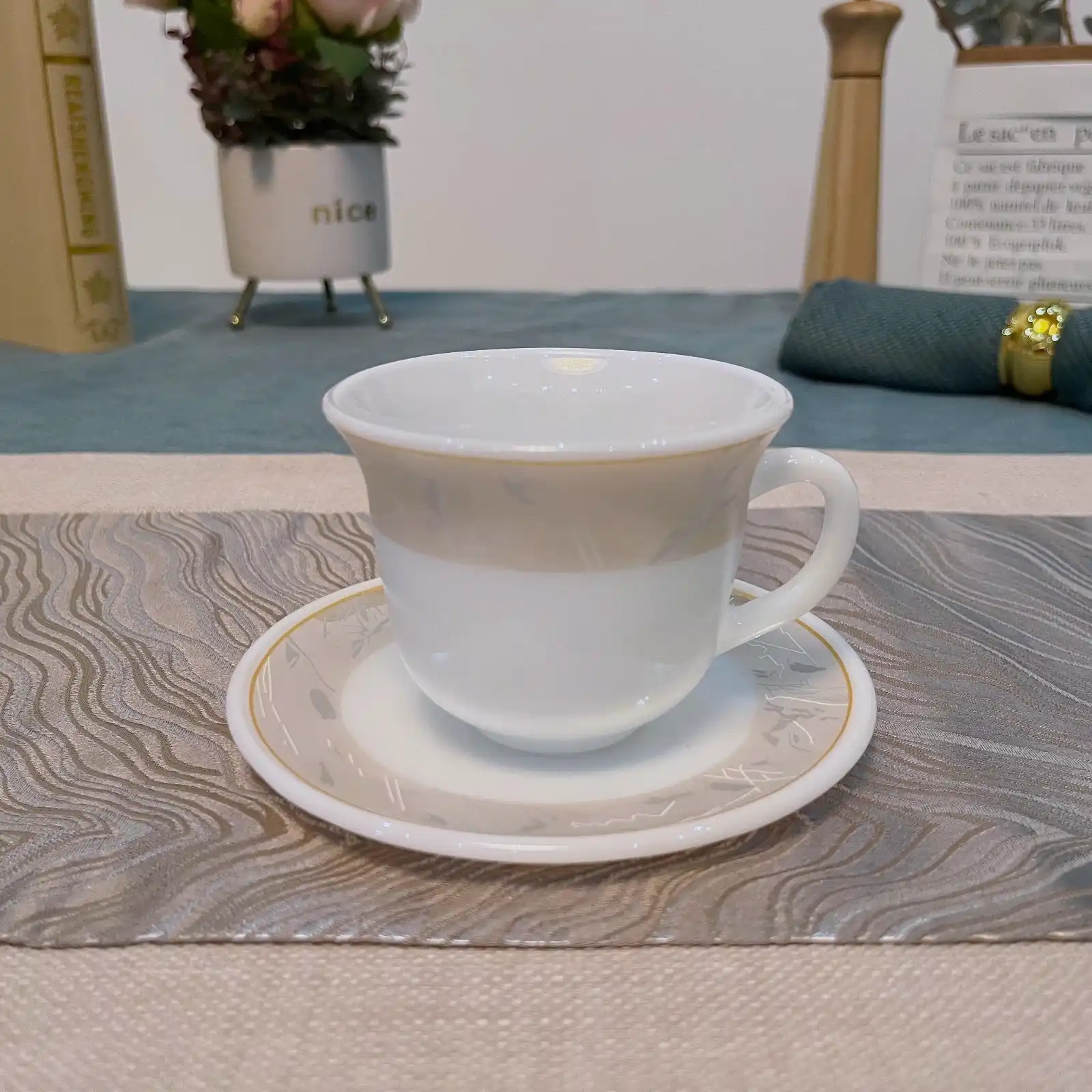
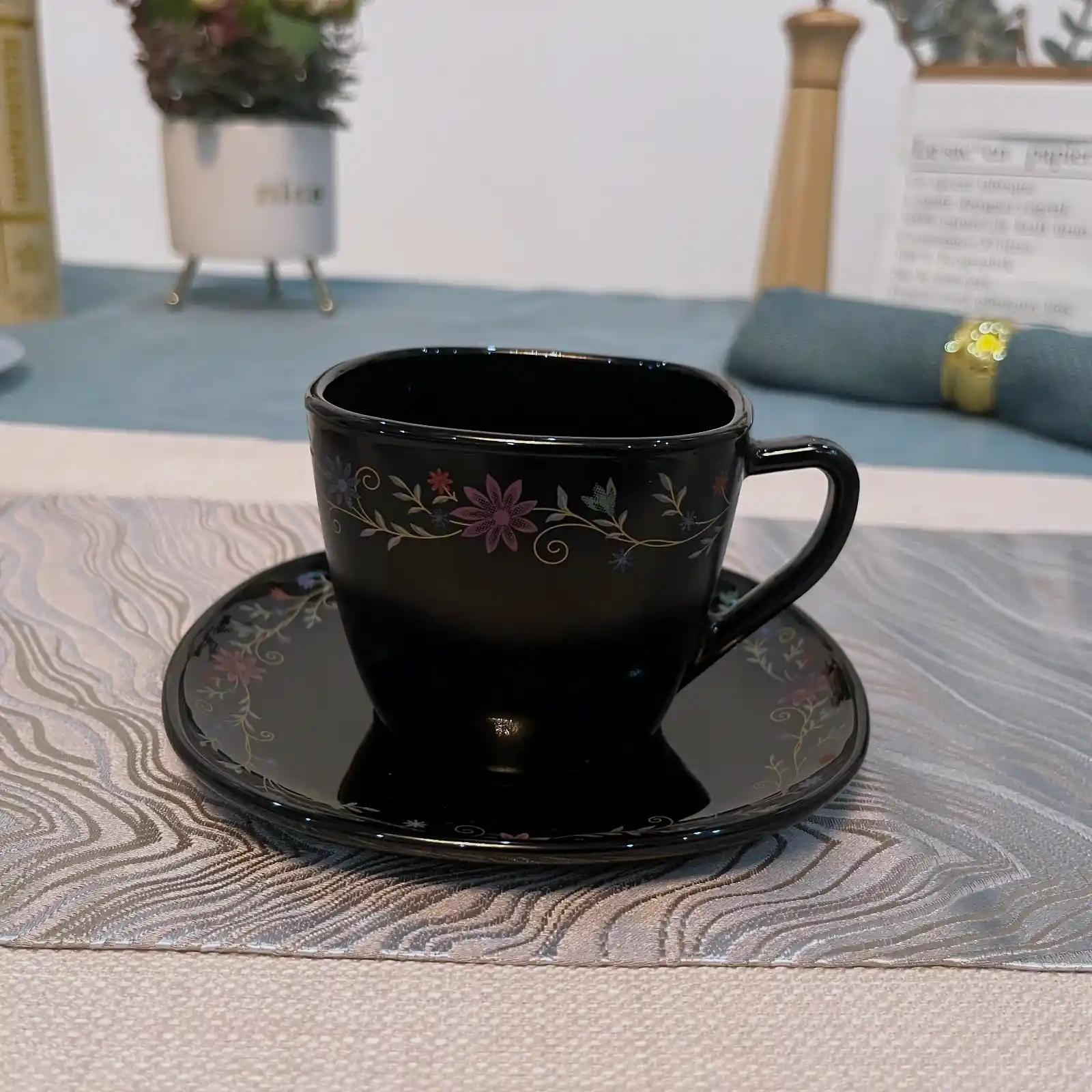
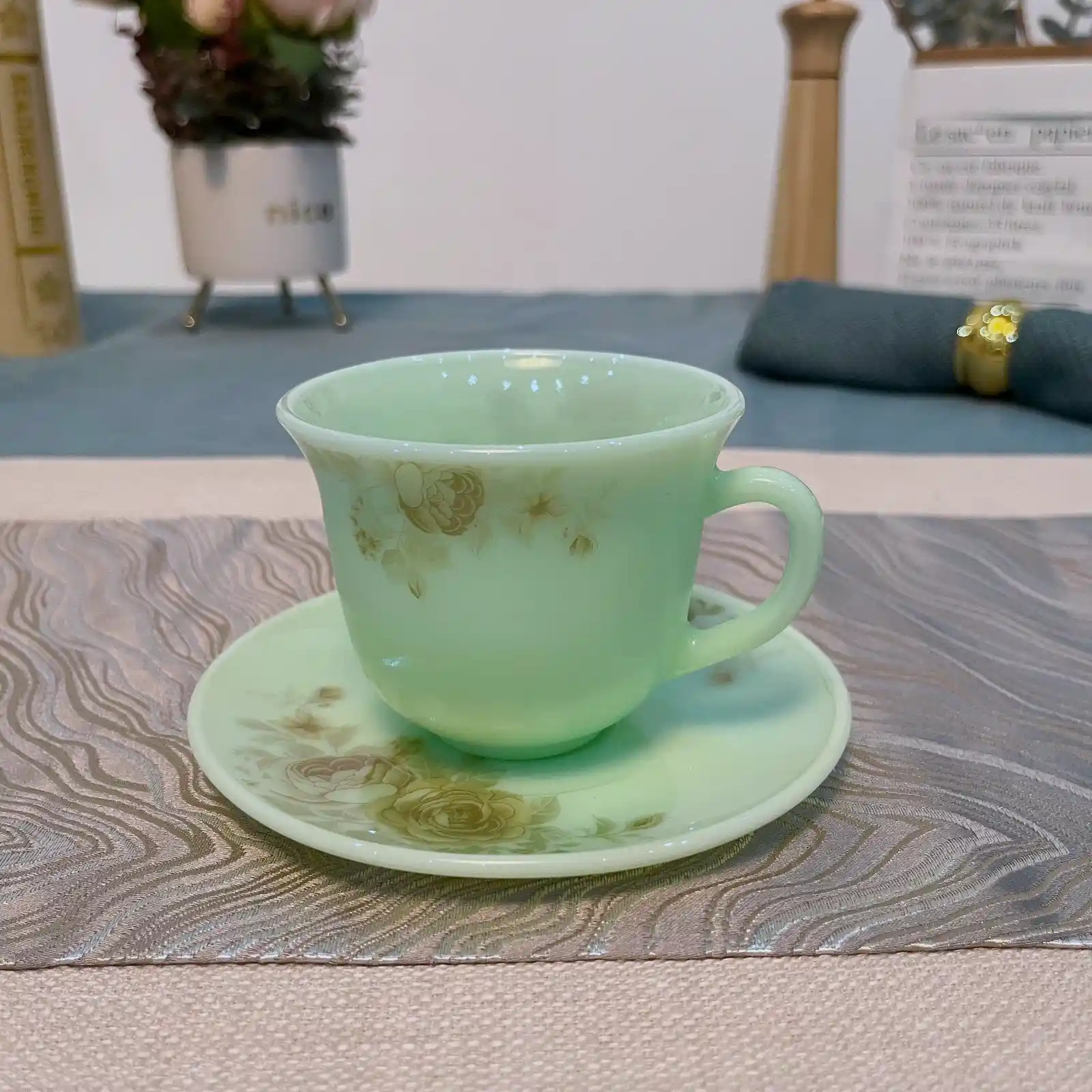
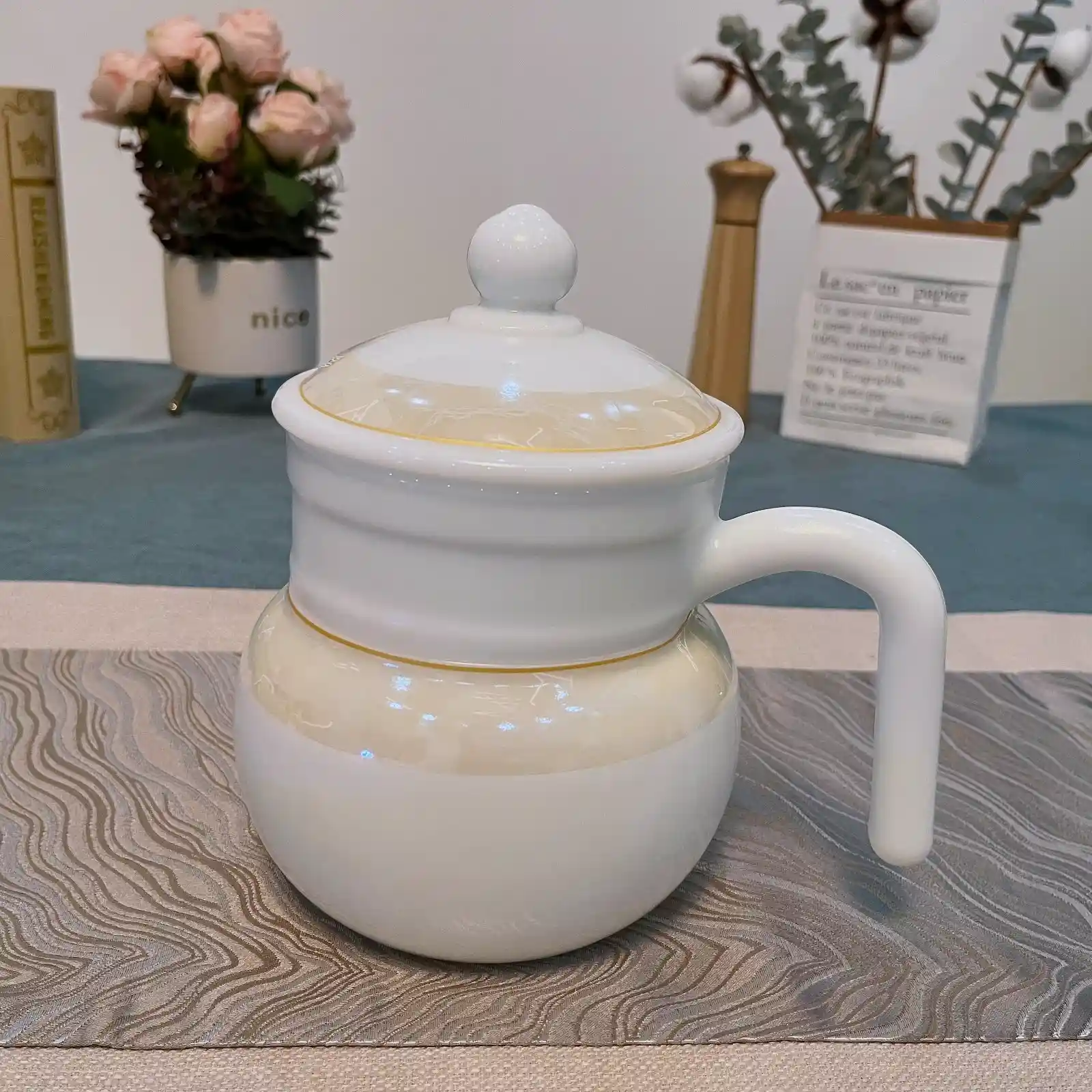
Common drinkware includes espresso cups, teacups, cappuccino cups, straight-sided coffee cups, wide latte cups, and matching saucers. Typical capacities include approximately 85 ml, 150 ml, 190 ml, and 250 ml for different beverage portions. Some collections also include coffee pots, teapots, sugar bowls, and milk jugs for a complete tea or coffee service.
Cups may be produced in white, black, jade green, yellow jade, and opal white. Decals, screen printing, low-temperature embossing, gold rims, or silver rims can coordinate the cups with matching plates and bowls. Variations in rim width, body profile, handle shape, and saucer design make it possible to develop several cup styles while maintaining the same colors and decorative theme across the full dinnerware range.
Dinner Sets
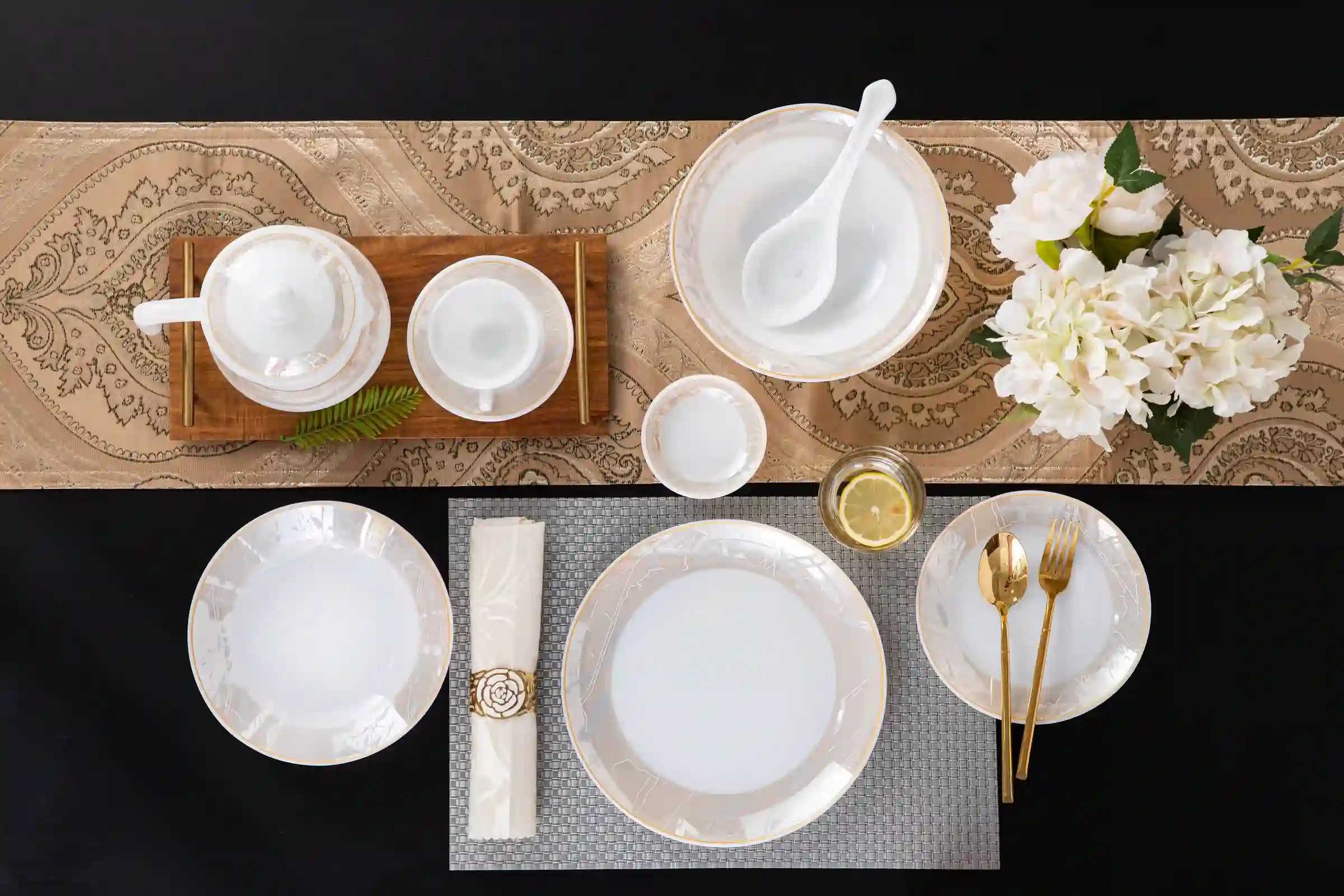
A dinner set is more than a total count of plates and bowls. Smaller sets focus on individual place settings, while larger configurations may add cups and saucers, fish plates, covered soup tureens, salad bowls, soup spoons, coffee pots, sugar bowls, and milk jugs. The following table shows the typical positioning of common tempered opal glass dinnerware set sizes.

| Set Size | Typical Number of Users | Common Configuration Focus |
|---|---|---|
| 26-piece set | 6 people | One dinner plate, flat plate, soup plate, and rice bowl per person, plus one salad bowl and one oval serving plate. |
| 33-piece set | 6 people | Individual plates, bowls, and soup spoons, with additional shallow or shared bowls and one oval serving plate. |
| 48-piece set | 8 people | Six pieces per person, usually including a dinner plate, side plate, deep plate, bowl, teacup, and saucer. |
| 58-piece set | 6 people | Seven pieces per person, plus a covered soup tureen, soup spoon, fish plate, serving plate, and salad bowl. |
| 60-piece set | 6 people | A fuller selection of plates, bowls, cups, saucers, and soup spoons, with a casserole or covered container and serving plates. |
| 72-piece set | 6 people | A complete dining, coffee, and shared-table arrangement, usually adding a fish plate, covered soup tureen, coffee pot, sugar bowl, milk jug, and serving spoons. |
These counts are common starting configurations, and the exact components can be adjusted for the target market. For example, both 26- and 33-piece sets may serve six people, but a 26-piece set is better suited to basic household use or entry-level retail, while a 33-piece set adds bowls and spoons for shared dishes and Chinese-style dining. The extra pieces in 58-, 60-, and 72-piece sets are mainly serving and tea or coffee accessories; they do not necessarily increase the number of place settings.
To compare specific shapes, colors, and set configurations, explore the tempered opal glass dinnerware product range.
Is Tempered Opal Glass Dinnerware Heat Resistant and Microwave Safe?
It Can Withstand a Thermal Shock of Approximately 120°C
Qualified tempered opal glass dinnerware can withstand the temperature changes involved in serving hot and cold food. Based on common product specifications, thermal shock resistance of approximately 120°C is a frequently used reference value. Under defined test conditions, an undamaged sample should not crack solely because it experiences that temperature difference.
Microwave-Safe Models Can Be Used for Everyday Reheating
Tempered opal glass plates and bowls labeled microwave-safe can be used to reheat everyday meals. Keep food in the dinnerware during heating, use a reasonable heating time, and confirm separately whether lids, decorative components, and rim treatments are microwave-safe. Gold rims, silver rims, and other metallic decorations generally should not be placed in a microwave.
Microwave suitability applies only to microwave heating. Ovens, open flames, electric stovetops, and buffet warming equipment expose dinnerware to higher or less even heat for longer periods. A product should be used in an oven only when it is explicitly labeled oven-safe and includes a stated temperature limit. Without that label, use tempered opal glass dinnerware for serving and dining rather than direct cooking.
How to Choose the Right Tempered Opal Glass Dinnerware Set
Choose the Set by Guest Count, Meal Structure, and Serving Needs
Start by deciding which pieces each diner needs, and then determine whether the set should include shared serving plates, soup bowls, or tea and coffee accessories. Looking only at a total such as 33, 48, or 72 pieces can be misleading because additional serving pieces do not automatically create more place settings.
| Use Case | Better-Matched Configuration | Why It Fits |
|---|---|---|
| Everyday household dining for 4–6 people | 26- or 33-piece set | The selection concentrates on frequently used plates and bowls, with fewer shared serving pieces. |
| Family gatherings or an eight-seat dining project | 48-piece set | Eight complete place settings can provide each diner with plates, a bowl, a cup, and a saucer. |
| A complete six-person meal with shared dishes | 58- or 60-piece set | The individual settings are supplemented with a fish plate, covered soup tureen, salad bowl, serving plates, and soup spoons. |
| Formal six-person dining, gift sets, or tea and coffee service | 72-piece set | The set covers the main meal, soup, shared dishes, and coffee service for a more complete table arrangement. |
| Hotels, restaurants, or long-term bulk purchasing | Reconfigure the order by individual item | Buyers can increase the quantities of frequently used plates and bowls while reducing spending and storage space for low-use accessories. |
For example, a six-person household using the set mainly for breakfast and dinner may find that a 26-piece set already covers dinner plates, soup plates, rice bowls, and shared serving dishes. A household that regularly serves Chinese-style shared meals may prefer a 33-piece set or add oval plates and large bowls. A standard 48-piece configuration is designed around six pieces for each of eight diners. Although 58-, 60-, and 72-piece sets contain more items, they are still commonly built around six place settings, with the additional pieces assigned to shared serving and tea or coffee functions.
Frequently Asked Questions
Can Tempered Opal Glass Dinnerware Still Break?
Yes. Tempering improves resistance to ordinary contact and certain temperature changes, but it does not make glass unbreakable. A fall onto tile or stone, a sharp impact on the rim, or continued use after cracks have developed can still cause breakage. Stop using and replace any piece with a chip, crack, or clearly damaged edge.
Does Microwave-Safe Also Mean Oven-Safe?
No. A microwave-safe label only indicates that the model can be used for microwave reheating under its specified conditions. An oven exposes dinnerware to higher temperatures for longer periods, while open flames and electric stovetops create concentrated local heat. Place tempered opal glass dinnerware in an oven only when the specific model is labeled oven-safe and provides a temperature limit.
Can Tempered Opal Glass Dinnerware Go in a Dishwasher?
Most tempered opal glass dinnerware labeled dishwasher-safe can be cleaned in a household dishwasher or in the specified type of commercial dishwasher. For decorated products, confirm whether decals, screen printing, gold rims, or silver rims are designed for repeated machine washing. Leave space between rims when loading the dishwasher to reduce repeated contact caused by water pressure and vibration.
Does the Smooth Surface Make Tempered Opal Glass Dinnerware Easier to Clean?
Yes. The smooth, low-porosity opal glass surface does not readily absorb moisture, food color, or odors. Standard grease can be removed with dishwashing liquid and a soft sponge. Gray marks left by metal utensils may be metal transfer rather than deep scratches in the glass, while highly abrasive cleaning tools can gradually reduce the surface gloss.
Who Should Choose Tempered Opal Glass Dinnerware?
Tempered opal glass dinnerware is well suited to households, restaurants, hotels, and catering operations that prioritize lightweight handling, everyday durability, convenient cleaning, and frequent tableware turnover. Buyers who prefer a heavier feel, complex ceramic glazes, or a clearly specified oven-to-table application may find other ceramic or purpose-made heat-resistant cookware more suitable. The final choice should reflect the actual service environment and required product performance.
Source References
Source References: The data above is drawn from verified sources — you’re welcome to explore the links below.