
Photos make dinnerware look complete, but a few days of use reveal the problems: soup plates too small for your usual serving, wide rims cutting into food space, cups needing careful placement on saucers, and sets that won’t fit your cabinets. Choosing a glass dinnerware manufacturer means matching your actual use to what it can supply, including plates, bowls, cups, saucers and services. Jointion mainly produces opal glass dinnerware, with sets, custom decoration, logos and packaging, and the advice below focuses on buying and using it.
What Glass Plates, Bowls, and Dinnerware Sets Do We Offer?
We Offer Glass Plates.
A 7-inch plate is usually large enough for dessert, yet a main course with sauce may feel cramped on it. Two plates can have similar overall diameters and still offer different amounts of space for food because their rims are different widths.
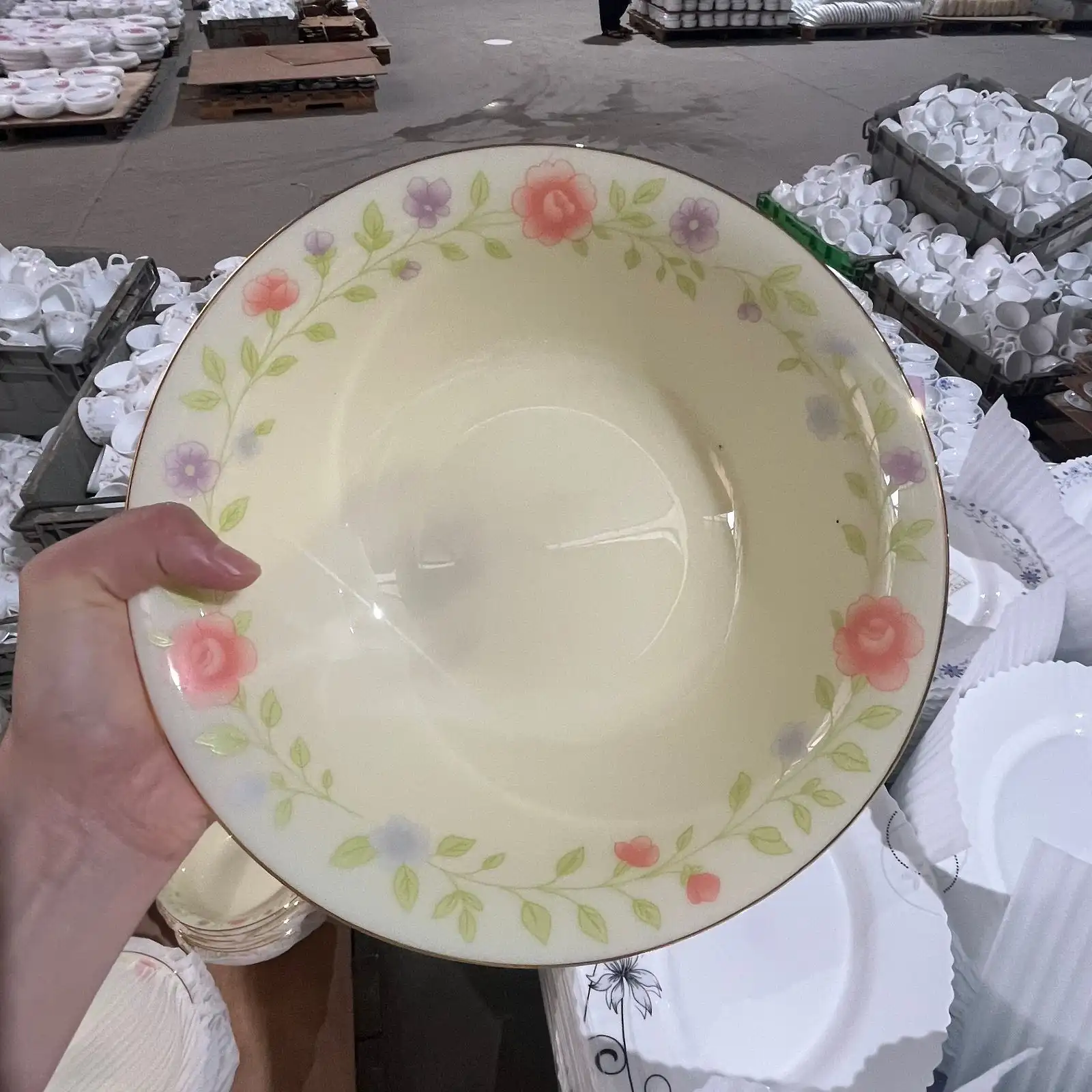
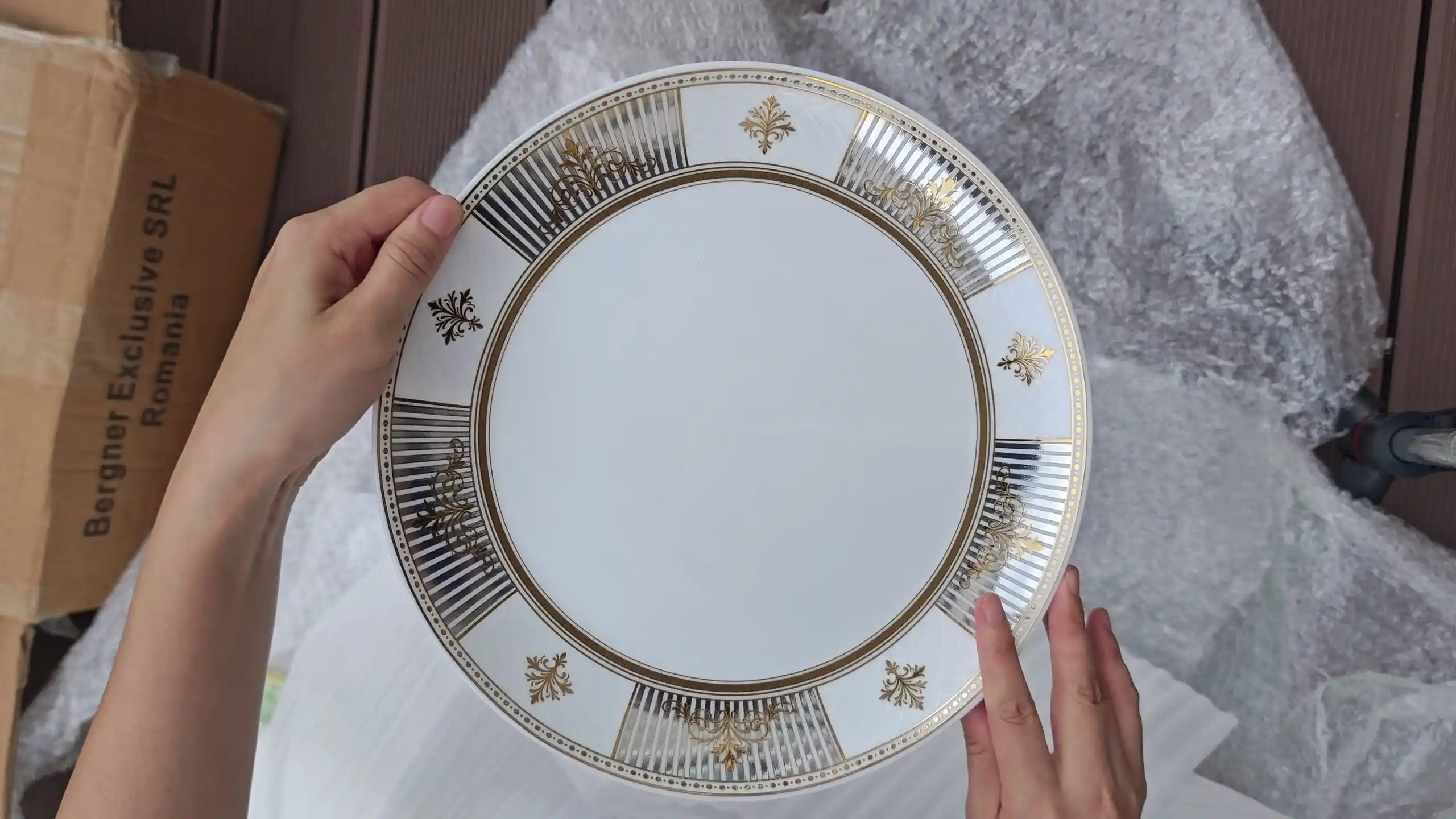
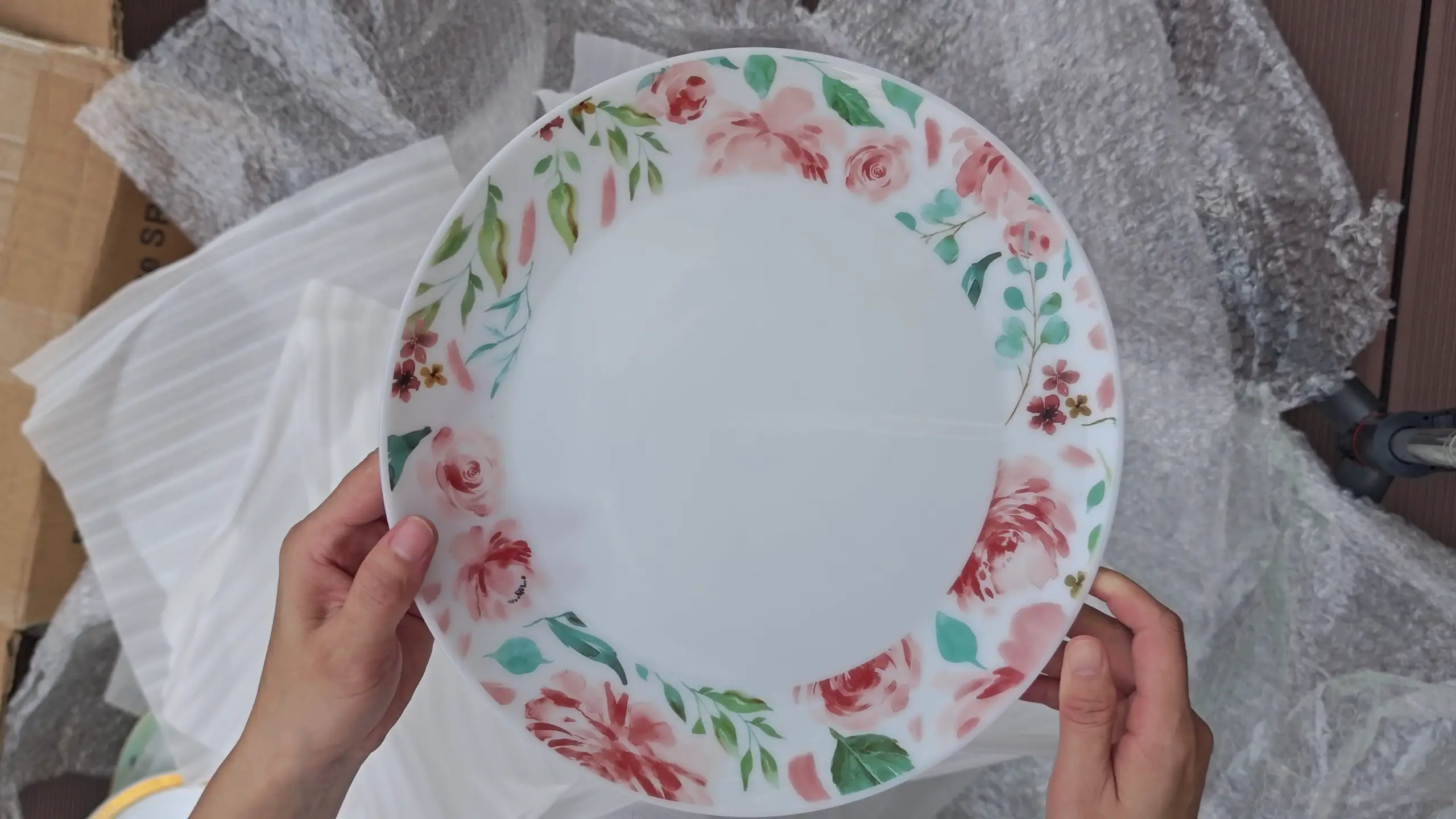
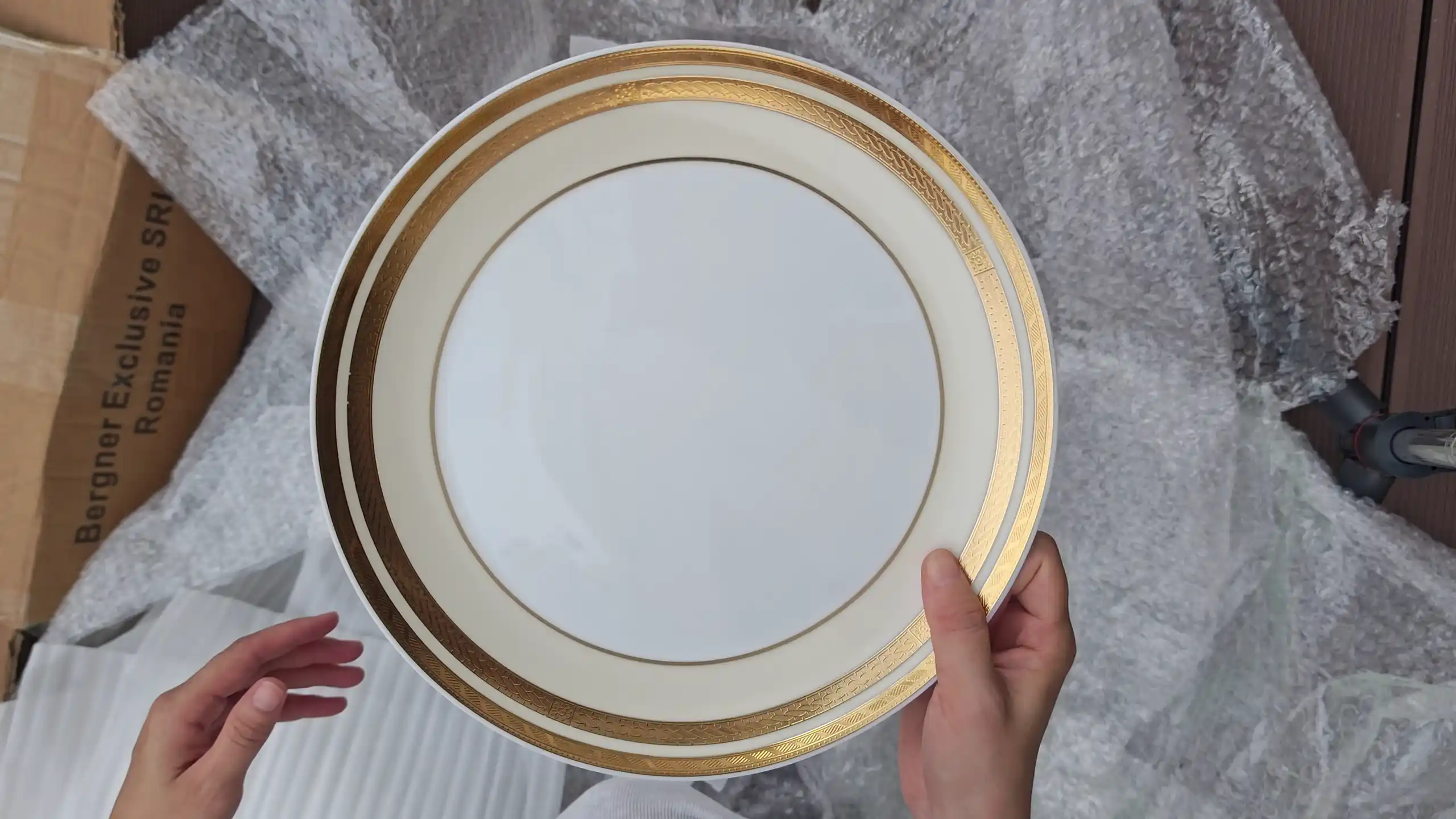
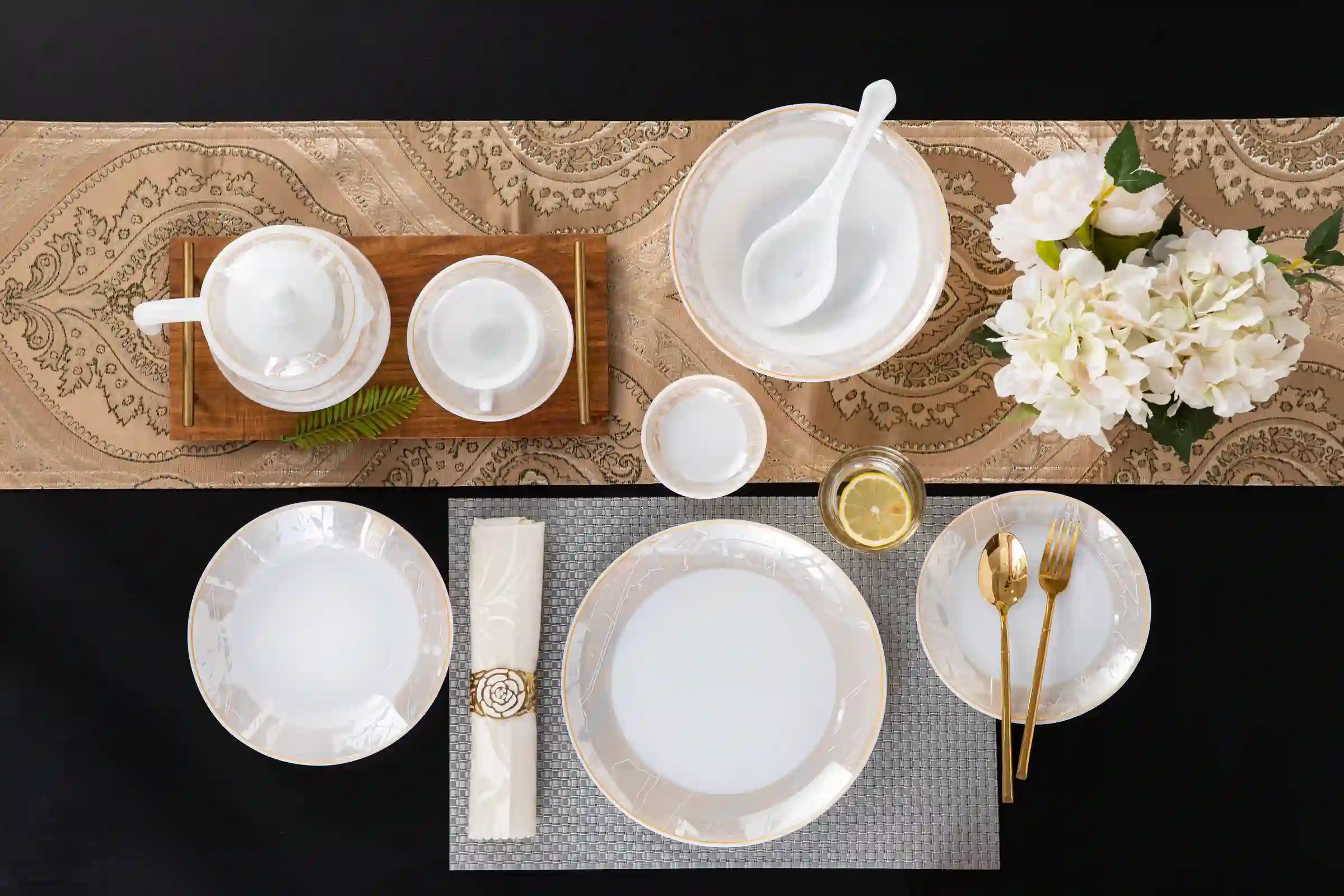
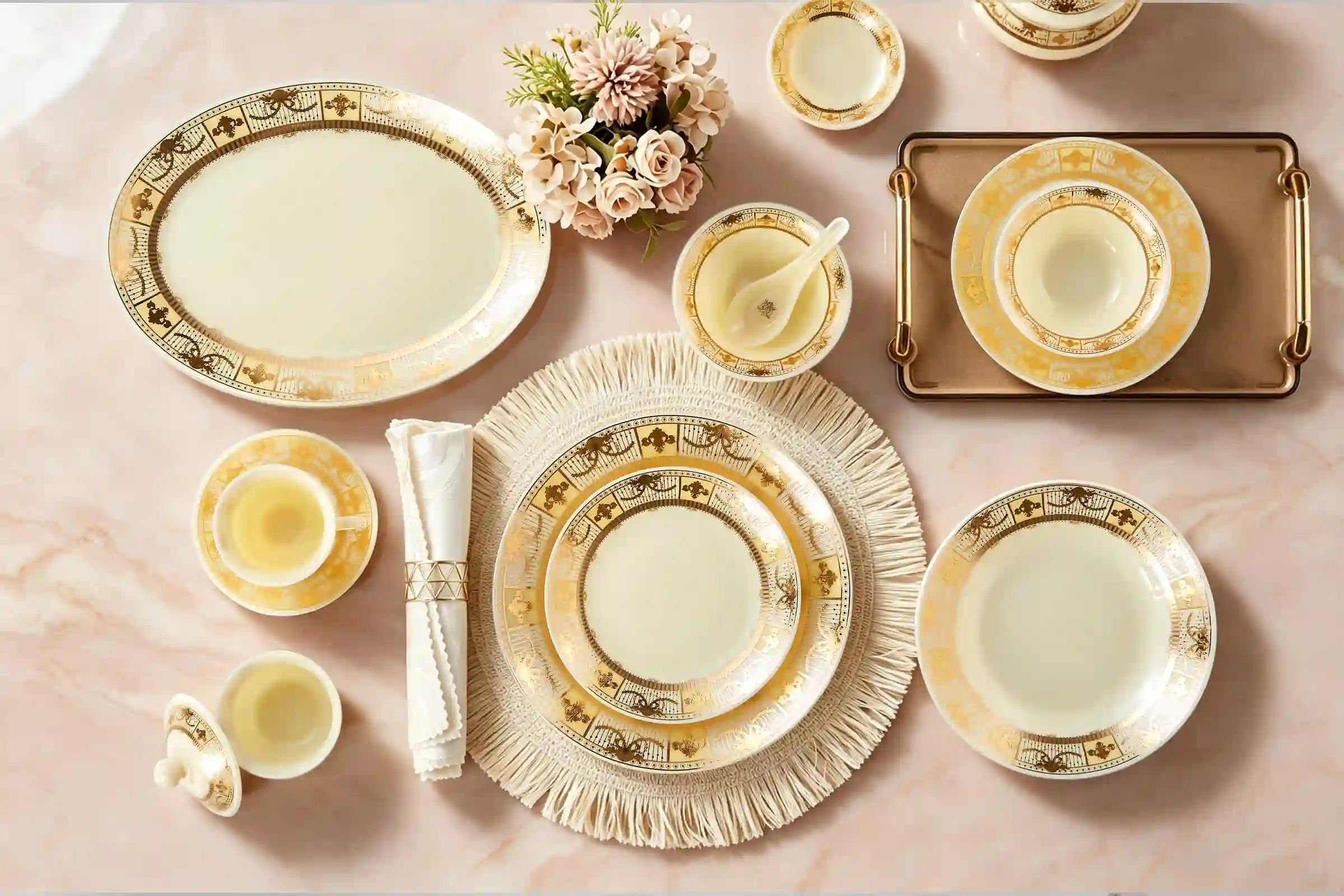
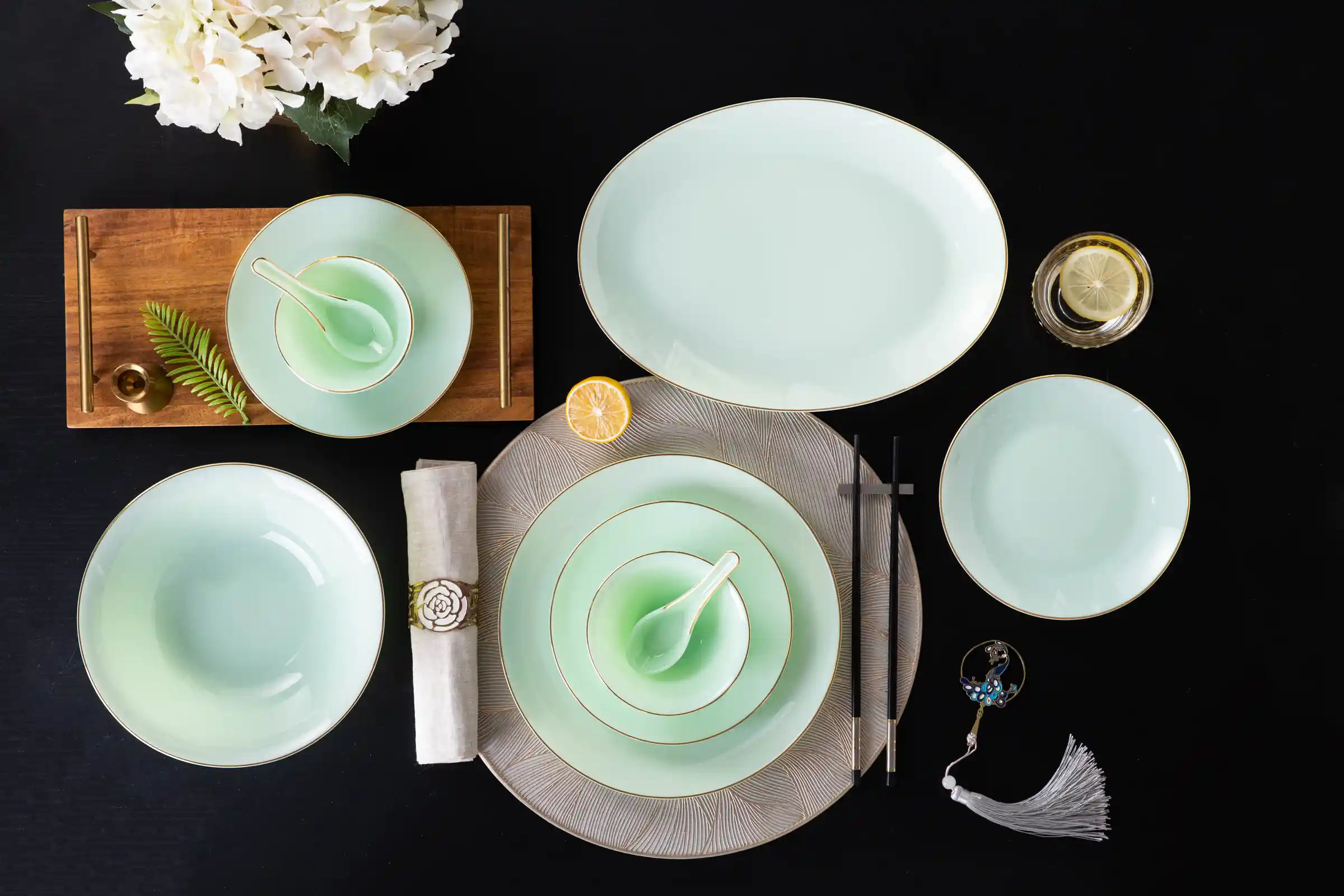
Jointion supplies dinner plates, salad plates, dessert plates, soup plates, and oval serving platters in round and square shapes, with a range of rim designs. Existing collections include 7-inch, 8-inch, and 10–11-inch sizes. Size is only the starting point; depth and usable surface area matter too. For soup, stews, or dishes with sauce, a shallow plate is generally less practical than one with some depth. For cake, salad, or small side dishes, a flat surface and a rim that leaves enough room for food may be more important.
Oval platters work well for whole fish, roast meat, or dishes shared around the table. On a small dining table, though, an overly long platter can crowd the bowls and cups beside it. Arranging several samples together often tells you more than looking at a single product photo.
You can start by browsing the Jointion glass plate gallery, then ask the manufacturer to confirm the model, overall diameter, depth, and base dimensions. If you already know the intended use, explain whether the plates are for everyday home dining, restaurant service, or retail sets. That makes the discussion much more straightforward.
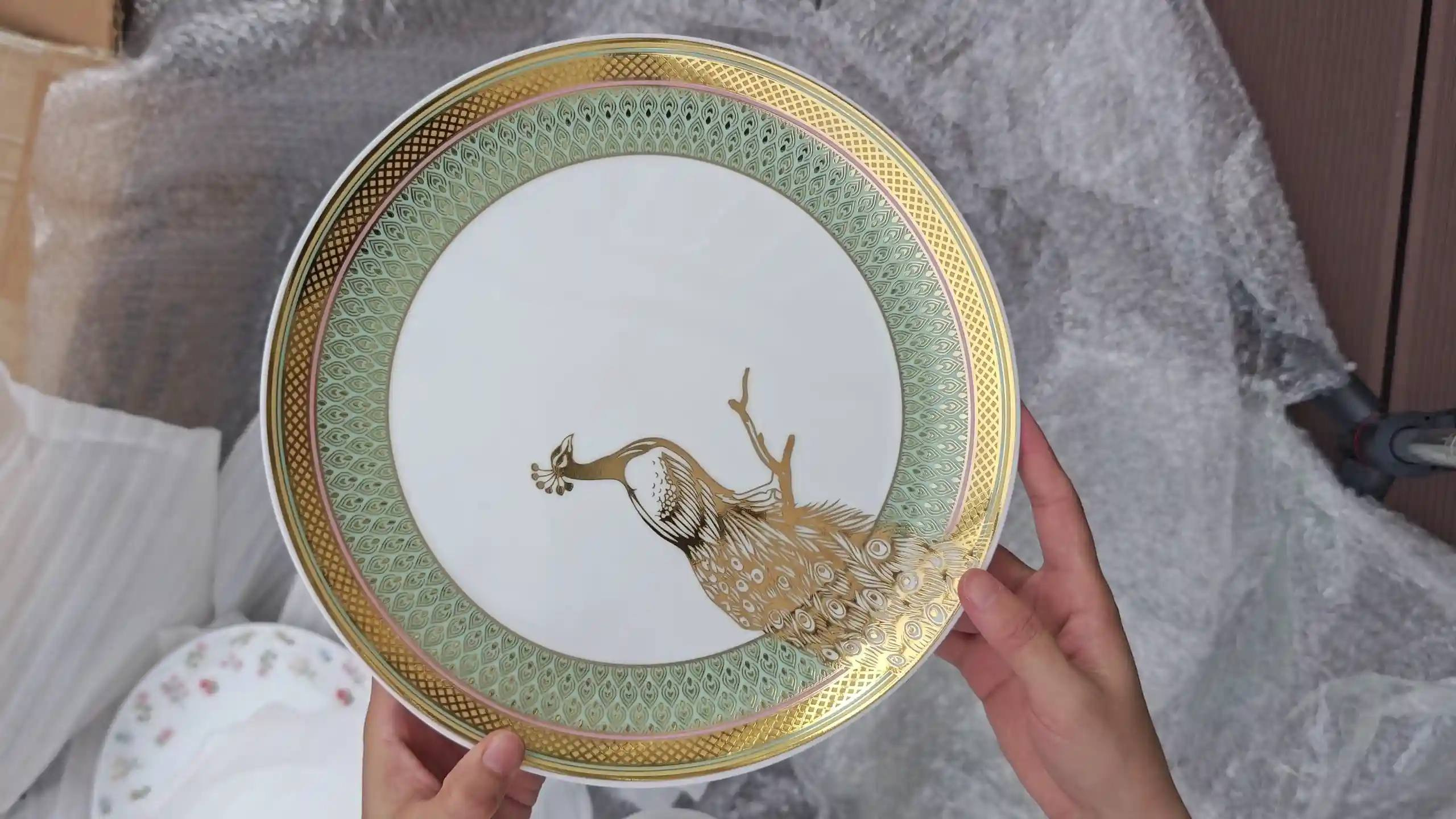
We Offer Glass Bowls.
It is easy to assume that a bowl’s listed capacity tells you how much food it will comfortably hold. In practice, a bowl filled to the brim is awkward to carry. Soup also needs a little room for a spoon and for handling without spills. Most everyday rice and soup bowls are filled below the rim.
Jointion offers rice bowls and soup bowls in different sizes and depths, along with larger bowls for fruit or shared dishes. Two bowls with the same opening diameter can have different amounts of usable space because of their height and the curve of their sides. When asking about capacity, check whether the figure is measured to the brim or to a specific fill level.
Storage is another detail that is easy to overlook. The height of several stacked bowls, and whether they fit on an existing cabinet shelf, may have more influence on the buying decision than a photo of one bowl. When reviewing samples, place a bowl beside its matching plate, then stack several bowls to check the height. It is a simple step that can reveal products that look suitable yet prove awkward once they arrive.
The Jointion glass bowl gallery shows the available bowl shapes. When requesting a quote, explain whether the bowls will be used for rice, porridge or soup, noodles, or shared dishes. This helps the manufacturer provide relevant diameter, height, and capacity information.
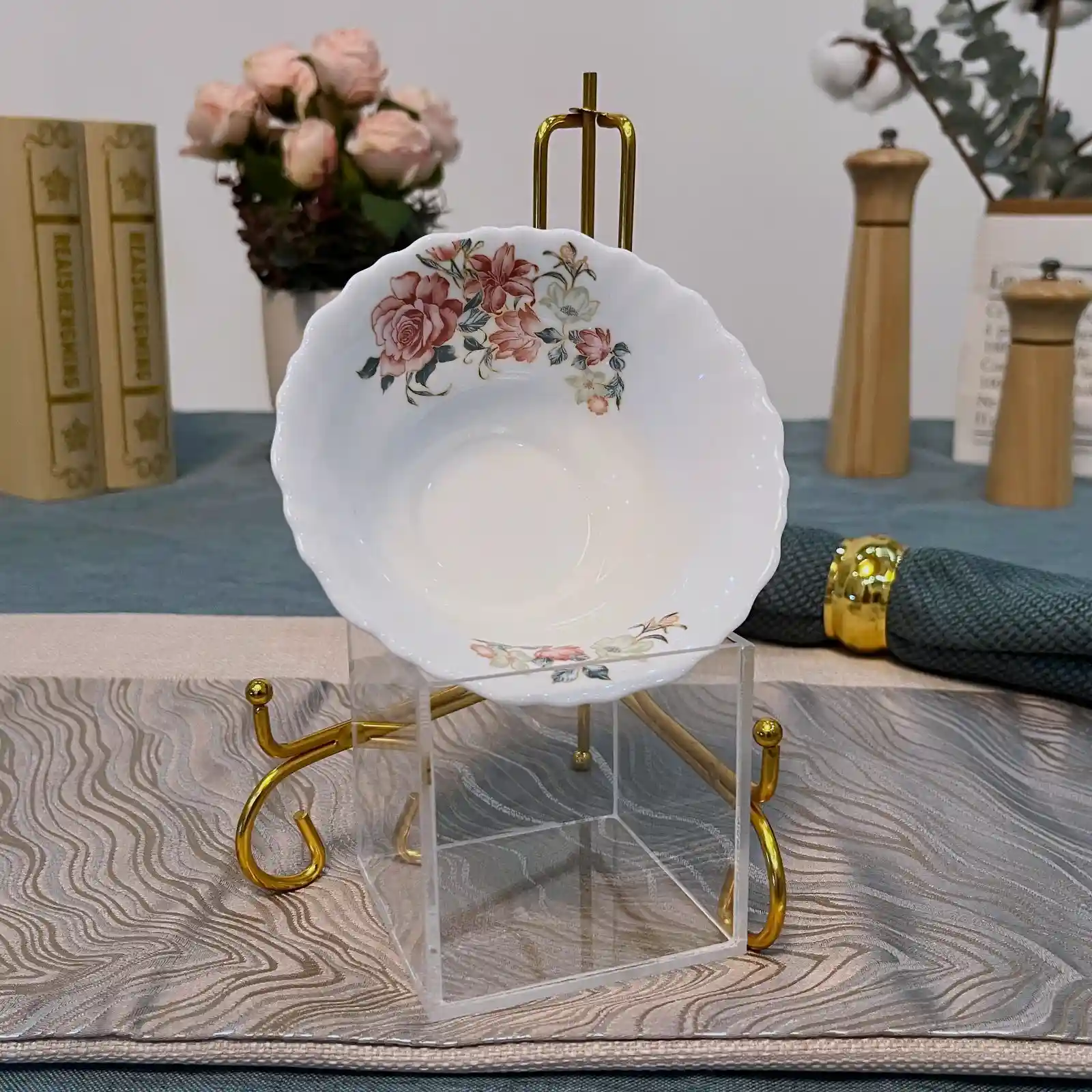
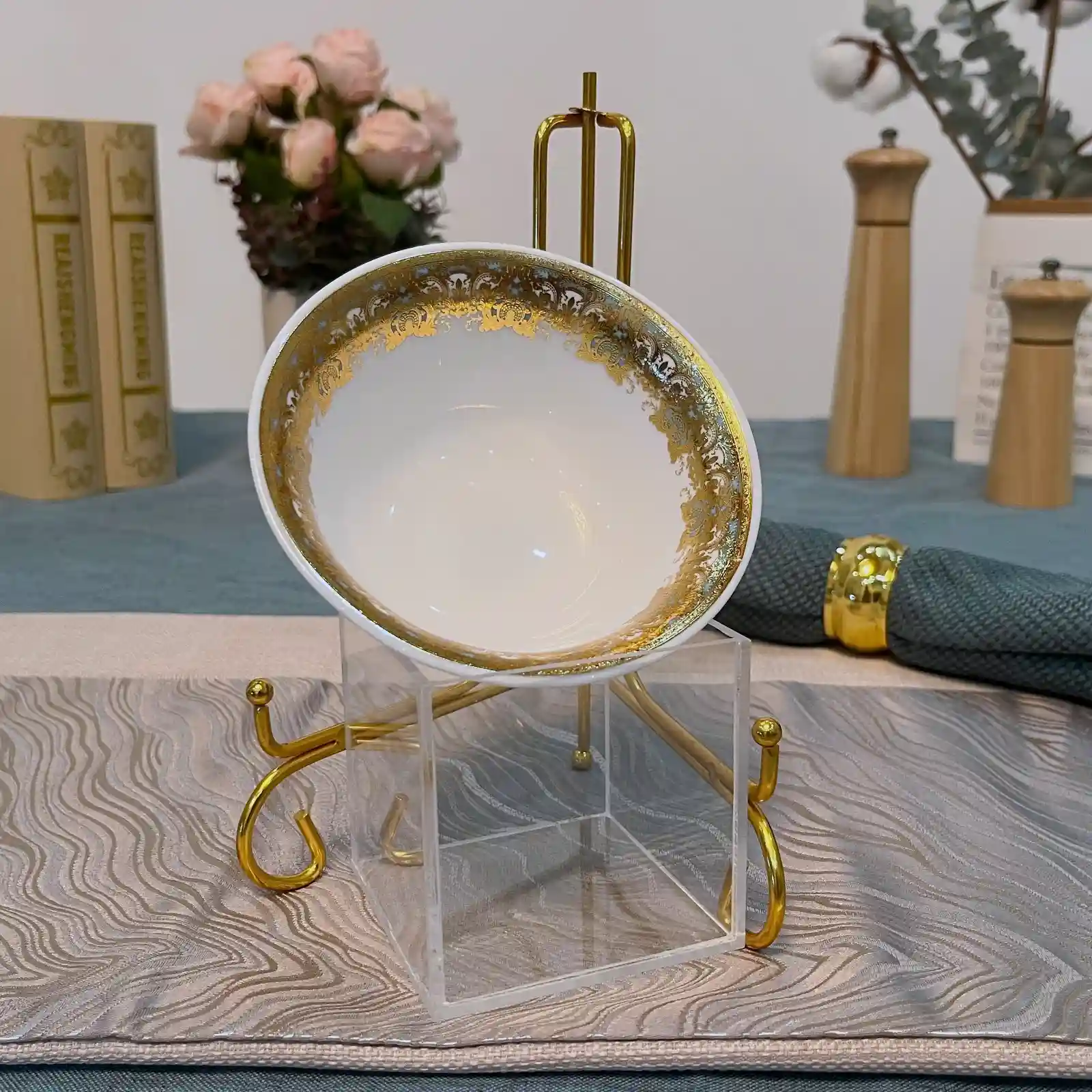
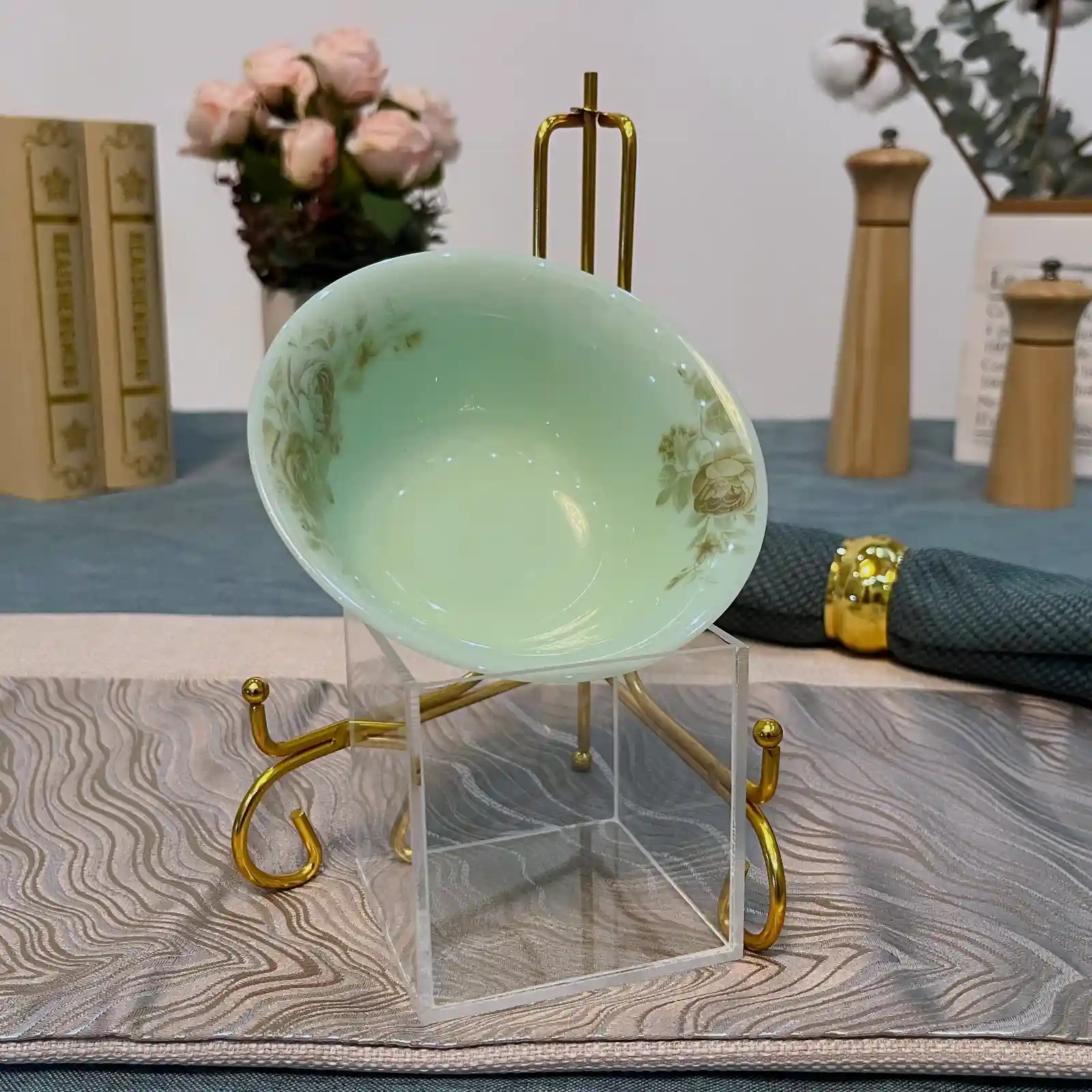
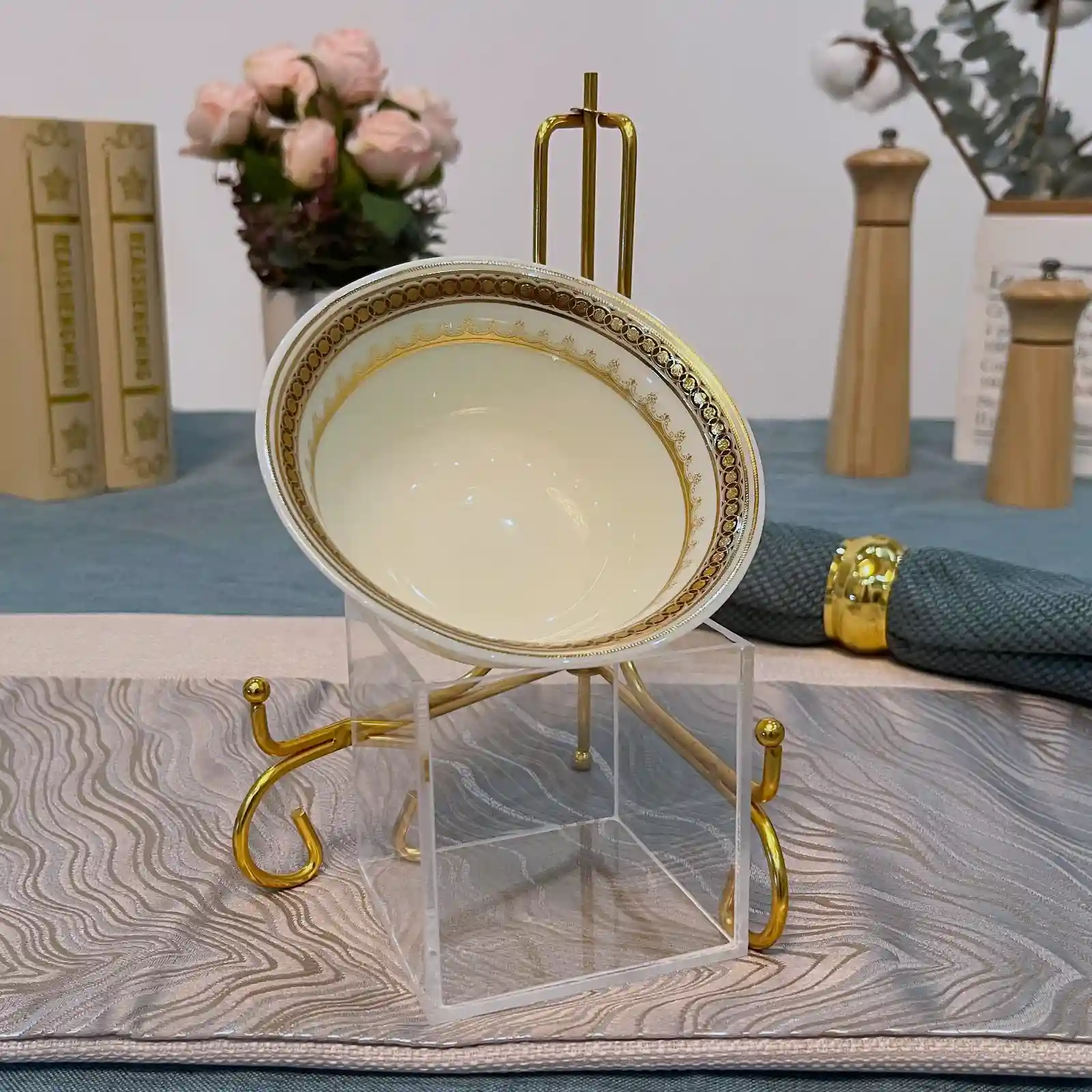
We Offer Glass Cups and Saucers.
A cup and saucer can look well matched and still feel awkward to use: the cup does not sit securely, the handle is too close to the saucer’s edge, or there is no room left for a teaspoon. Separate photos of the cup and saucer rarely show these differences.
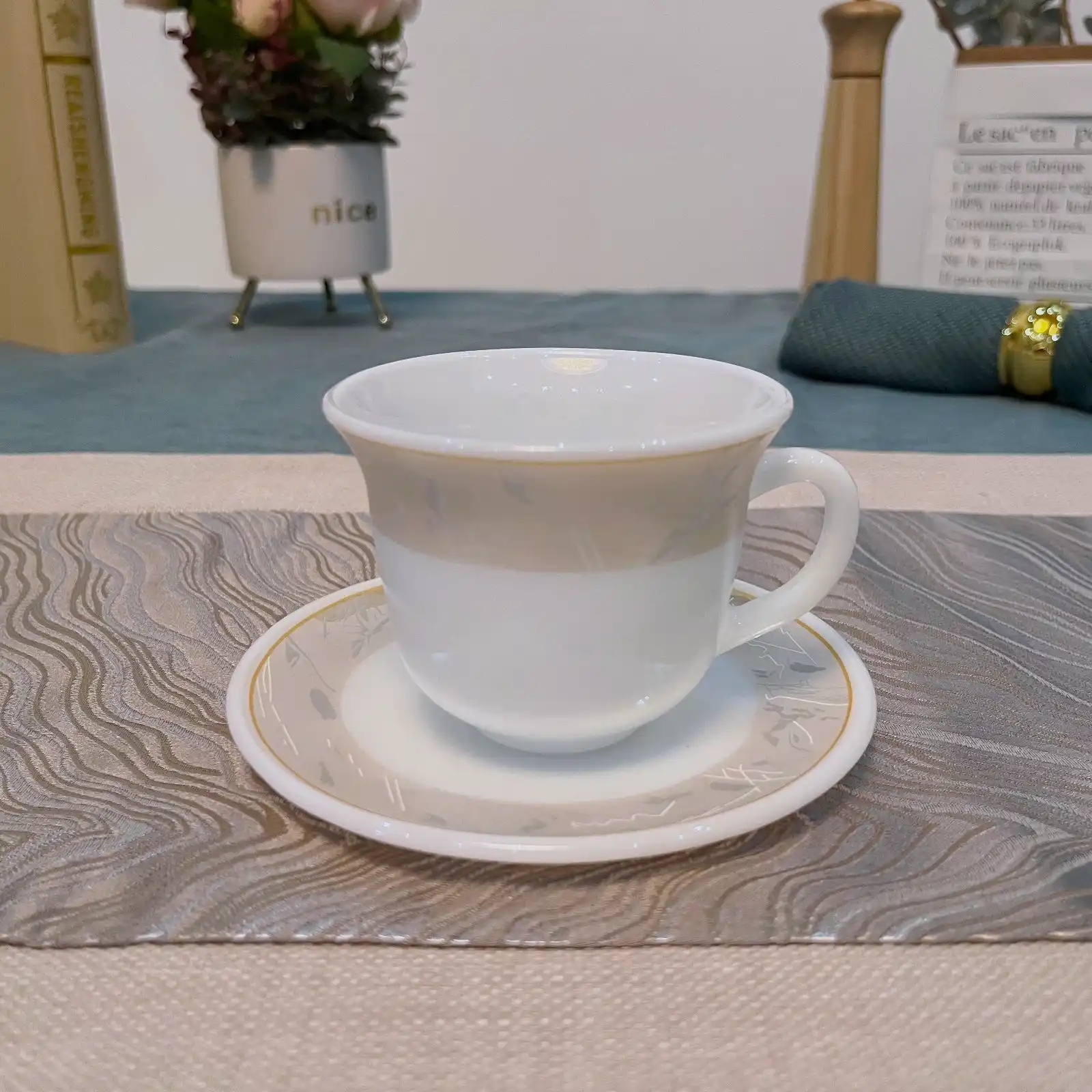
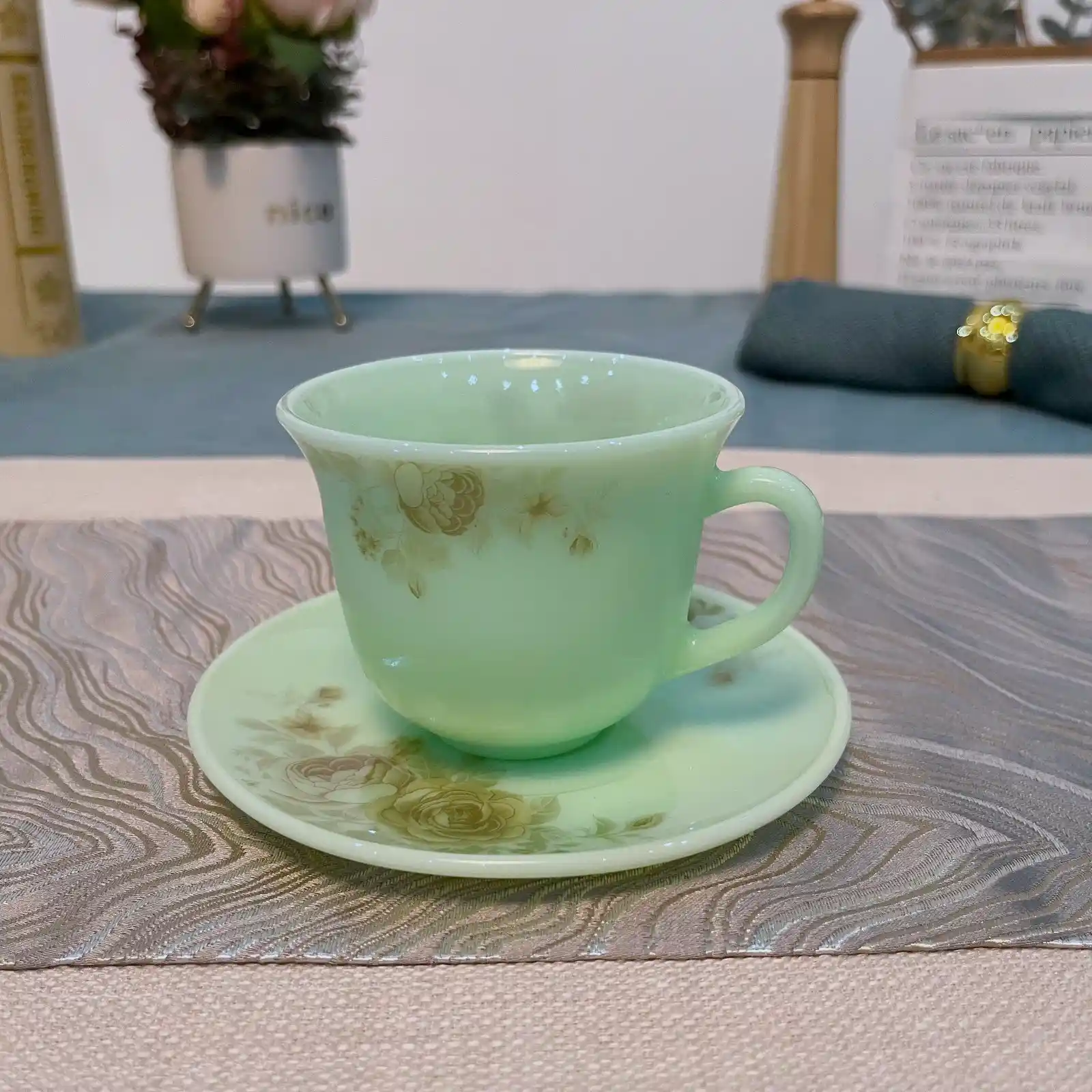
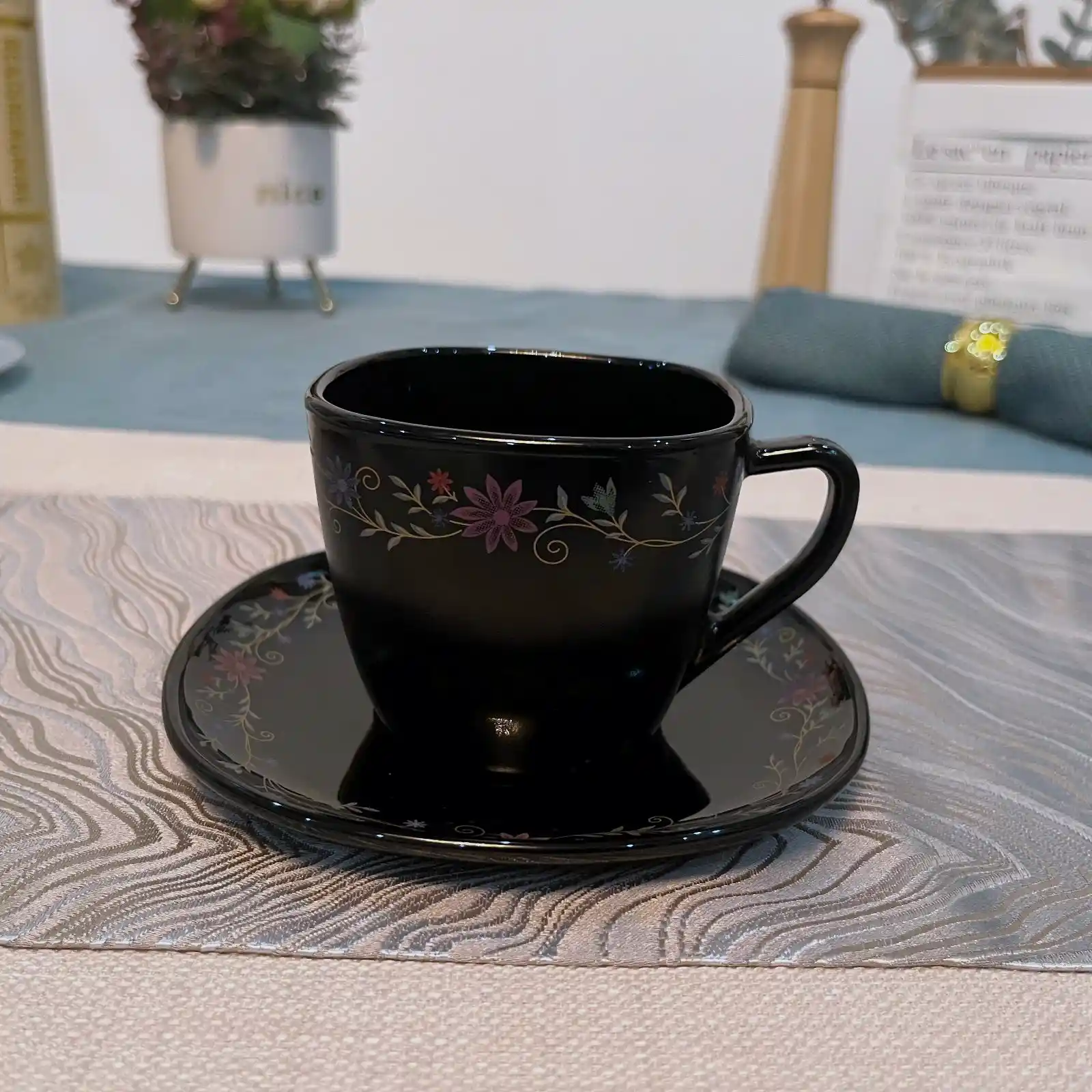
Jointion supplies opal glass coffee cups, tea cups, mugs, and cup-and-saucer sets. Existing cup collections include 160 ml, 180 ml, 220 ml, and 250 ml capacities. Smaller sizes suit tea or espresso, while medium sizes are better suited to everyday coffee and milk-based drinks; the details should still be confirmed for each model. A larger capacity usually means a taller or wider cup, which also affects how it fits into packaging and cabinets.
When matching cups and saucers, check the area that supports the cup’s base, the clearance around the handle, and the saucer’s diameter. A shared pattern does not make every cup interchangeable. If you need replacement cups or saucers, keep the original model details and photos. Otherwise, the color may be close while the dimensions fail to match.
For existing combinations, browse the Jointion glass cup and saucer gallery. If you are buying for a restaurant or hotel, also tell the manufacturer which drinks you serve, how staff carry the cups, and how much shelf space is available. A capacity figure alone usually is not enough.

We Offer Glass Dinnerware Sets.
A set labeled as 48 pieces may sound generous, yet that count can include cups, saucers, and shared serving pieces. Once it is laid out for four people, the practical questions are whether there are enough individual plates and whether everyone has a rice bowl.
Jointion’s website groups different collections into 26-piece, 33-piece, 48-piece, 58-piece, 60-piece, and 72-piece sets. The total count helps narrow the choice, while the actual contents determine how many people the set serves. Cups and saucers count as separate pieces, and shared serving plates may also be included in the total.
When choosing a set, divide the contents list into individual place settings—plates, rice bowls, and cups—and shared pieces such as soup plates and serving platters. This makes it easier to see what is missing without being distracted by the overall piece count. If you want to change the combination, confirm whether the manufacturer can produce the exact models and quantities in your requested configuration.
The Jointion dinnerware set gallery shows how complete sets look. Keep the final contents list: packaging artwork, packing, and inspection should all follow it.

Jointion: We Are a Glass Tableware Manufacturer with Our Own Factory
Buyers generally do not need to study every piece of equipment, though it helps to understand how raw materials become finished dinnerware. Then, if you notice an uneven plate rim, a change in bowl shape, or decoration in the wrong position, you know which stage to ask the manufacturer about.
We Produce Opal Glass Dinnerware Using Melting Furnaces, Forming Machines, and Annealing Furnaces.
Jointion’s opal glass dinnerware production involves raw material batching, melting, cutting the molten glass into portions, forming, and annealing. The materials are melted and divided into the amounts needed for forming. Forming machines and molds shape the glass into plates, bowls, or cups, followed by controlled cooling.
For buyers, molds and forming have the most direct connection to the product’s shape. Changing the artwork will not change a plate’s rim width, a bowl’s depth, or whether a cup has a handle. If an existing shape is close to what you need, start by requesting samples of that model. A substantial change to the outline requires a further discussion about molds and production arrangements.
Annealing is worth understanding, although it is no blanket guarantee of performance. It controls cooling after forming to help relieve internal stress. Whether a particular piece is suitable for a microwave or dishwasher, and which temperature changes it can tolerate, still depends on that model’s instructions and test information.
Jointion’s opal glass dinnerware manufacturing flowchart outlines the main steps. For footage of the workshop, decoration, and packing, see the Jointion factory videos. The flowchart explains the sequence; the videos show what happens on site. They serve different purposes and should be treated accordingly.
One useful approach when reviewing samples is to place several plates of the same model side by side on a flat tabletop, then stack them to check for obvious misalignment at the edges. This helps identify issues with shape consistency and stacking. It cannot replace sampling inspection or establish food-contact safety. If you find a difference, record the model, take side-view photos, and ask the manufacturer whether it falls within the agreed acceptance criteria.
How Do We Check the Safety and Quality of Glass Dinnerware for Export?
A chipped plate rim can catch your hand during cleaning, and a crack in a cup’s rim makes it difficult to feel comfortable using it. These fall within visual and finished-product inspection. We check for cracks, stains, obvious scratches, deformation, and decoration defects during pre-shipment inspection.
Food-contact safety is a separate matter. Based on the information currently available for review, Jointion has no food-contact safety test reports or certifications ready to provide. We can meet the testing requirements, but our current customers have not required formal certification, so no specific certificate has been issued. If your purchasing project requires testing, first identify the sales market, product model, color, and decoration. Testing can then be arranged by the customer or through a testing laboratory agreed on by both parties, with the findings determined by the actual report.
When asking about certification, check which model, color, and decoration the report covers, which market it applies to, and whether it includes the version you intend to buy. Those questions will give you more useful information.
How Can We Customize Dinnerware Designs, Brand Logos, and Packaging?
We Customize Dinnerware Decal Designs to Customer Requirements.
A pattern in the center of a plate may disappear beneath the main course. Decoration around the rim is easier to see, although a busy pattern can draw more attention to the edge during cleaning. The right position may differ depending on whether the dinnerware is for everyday home use, restaurant service, or gift-box sales.
Jointion offers plain white, plain black, standard decals, low-temperature relief decoration, and gold rims. Start with the dinnerware model, then decide on the pattern’s size, position, color, and coverage. Artwork that looks right on screen can appear differently on a curved bowl or plate rim, so check a sample from both the front and the side.

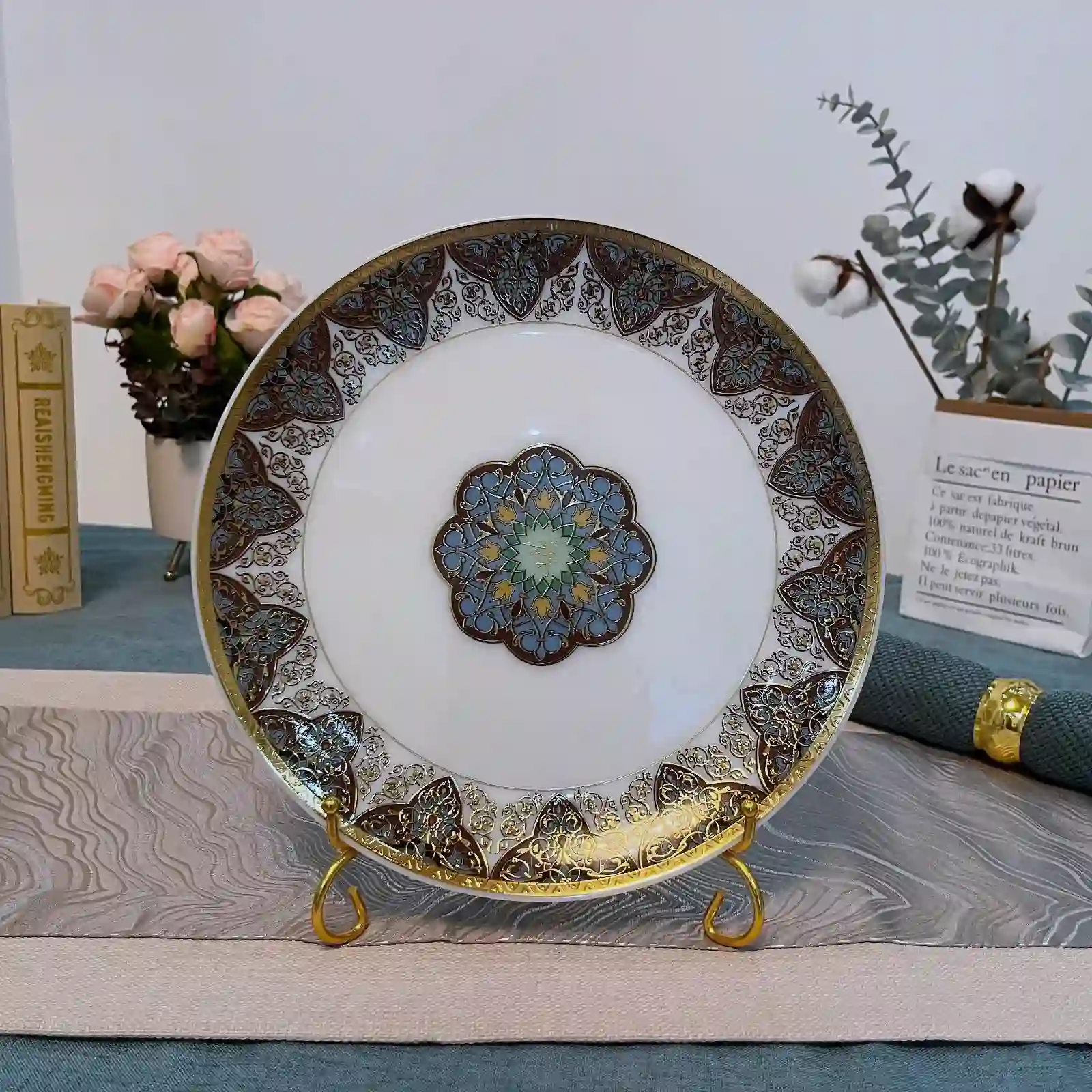
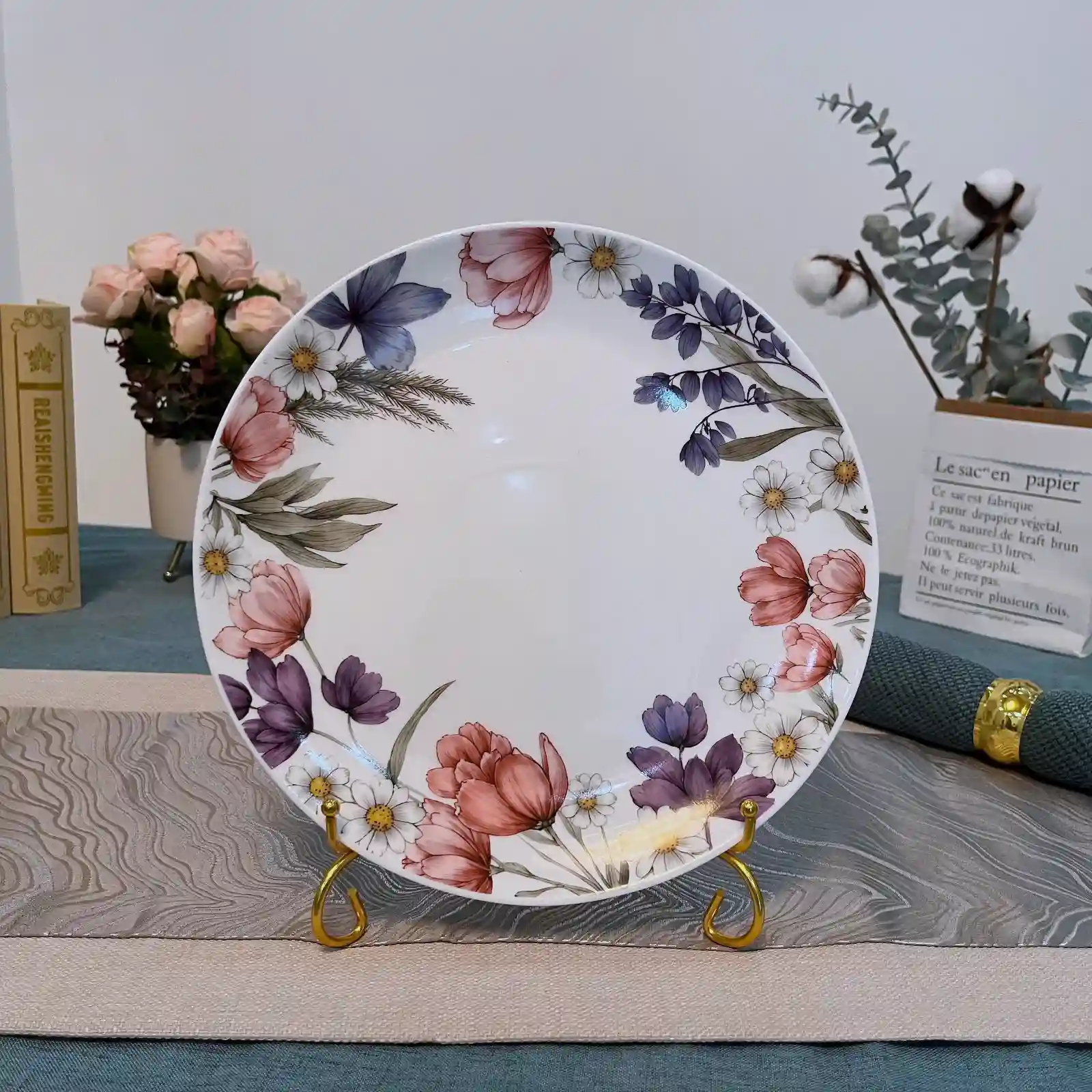
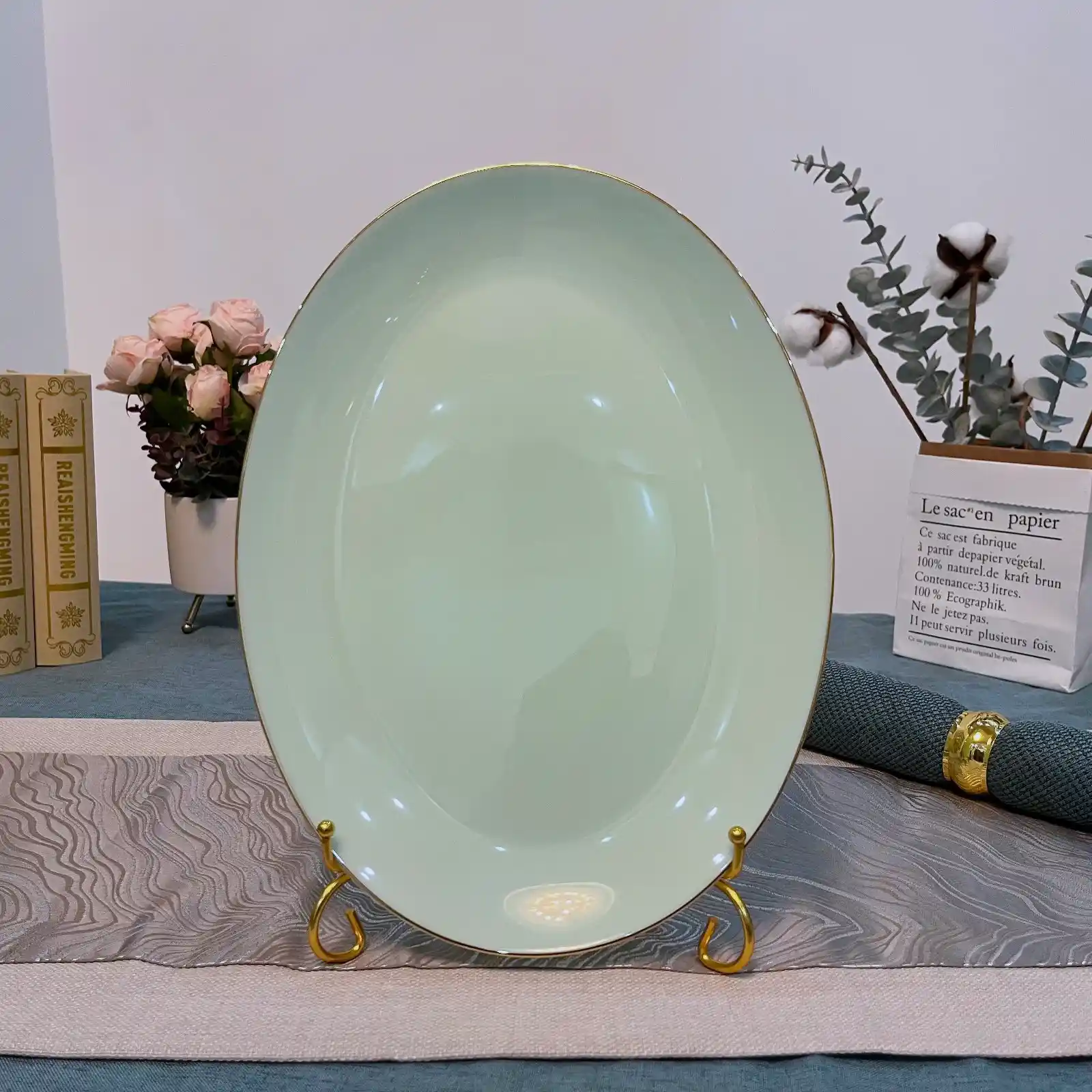
When reviewing a custom sample, try placing food on it as you would in normal use. Check whether the dish completely covers the pattern and whether the rim decoration makes cleaning more awkward. Microwave suitability and cleaning instructions also need to be confirmed for the final decoration process; the material name alone cannot answer those questions.
The Jointion custom design showcase provides examples of existing design options. Bulk production should follow the final approved design version and sample.
We Add Customer Brand Logos to Dinnerware or Packaging.
A logo in the center of an empty plate is prominent, yet it may be hidden once food is served. A logo on the rim or the body of a cup stays more visible and becomes something diners see throughout the meal. For retail gift sets, putting the brand on the packaging is usually more direct. For dinnerware used regularly in restaurants or hotels, consider who you want to notice the brand.
Jointion can add customer brand logos to dinnerware or packaging. Supply clear source artwork and confirm the position, dimensions, colors, and final file version together. On dinnerware, the location needs to be assessed in relation to flat surfaces, curved areas, or the base. On packaging, the logo should be reviewed alongside the product name, barcode, and contents list.
Once a sample is available, close-up photos help check fine lines and small lettering, while an overall view shows whether the logo is an appropriate size. This is generally more reliable than approving artwork only on a computer screen.
We Customize Packaging Designs to Customer Requirements.
When a dinnerware set is sold as a gift, the person opening it will usually look for two things: the total number of pieces and which plates, bowls, and cups are included. If the count on the box does not match the contents, after-sales support can become a headache.
Jointion’s packaging customization covers box style, dimensions, internal arrangement, and exterior printing. The quantity and dimensions of the products determine how the box is packed; graphics, logos, barcodes, and text follow. Before printing, confirm whether cups and saucers are counted separately or as a pair.
Review the sample box with the actual products inside. Artwork is mainly useful for checking text and layout. A packed sample shows whether cup handles are squeezed, the lid closes properly, and the pieces are easy to put back after removal. Retail presentation and shipping protection are separate considerations, so the box’s appearance is only part of the review.
How Long Does Delivery Take, and How Do We Pack and Ship the Order?
We Determine Delivery Times Based on Order Quantity and Customization Requirements.
Jointion’s typical lead time is 30–60 days, depending on quantity, models, and customization requirements. This range is useful for initial planning; it should not be treated as a fixed arrival date for a particular order.
The number of models in an order and the quantity of each affect production scheduling. Custom orders also require approval of the patterns, logos, and packaging version. While designs are still being revised, production and packing can be difficult to move forward together. Ask exactly when the lead time begins—sample approval, order confirmation, or another milestone—and whether it ends when production is complete, the goods are ready to ship, or at another agreed point.
List the production completion date and the goods’ arrival date separately. Sailing schedules, customs clearance, and final delivery occupy different parts of that timeline.
We Use Separators and Cushioning to Reduce Breakage During Shipping.
With glass dinnerware, shipping damage often takes the form of a chipped plate edge or a cup handle subjected to pressure; damage to an entire carton at once is less common. These problems tend to arise where pieces touch, move inside the carton, or sit in gaps that have not been properly managed.
Jointion uses separators and cushioning in its packaging. For stacked plates, check whether the separating material covers the points where they make contact. When a cup is placed in an inner box, check whether its handle presses against other pieces. Once the inner boxes are in the outer carton, check whether any remaining space allows the products to shift back and forth.
Fitting everything in does not necessarily mean it is packed well. Before sealing the carton, gently move the inner box to check for noticeable movement inside, then inspect whether plate edges and cup handles are under pressure. This tells you more than a photo of a sealed carton. Changes to the packing quantity, dinnerware model, or separating material also call for another packaging review.
The Jointion packing and shipping videos show individual separation, inner-box arrangement, and outer-carton packing. They demonstrate the methods used on site. To establish how well that protection performs, review relevant packaging tests or delivery records as well. Without those records, the videos should not be taken as a promise of zero breakage.
We Support EXW, FOB, CIF, and Door-to-Door Delivery.
Quotes for the same dinnerware order can vary considerably between EXW, FOB, CIF, and door-to-door arrangements, usually because they allocate costs and responsibilities differently. When requesting a quote, confirm who handles collection, ocean freight, insurance, customs clearance, taxes, and final delivery.
According to the International Chamber of Commerce’s explanation of Incoterms®, EXW generally means the goods are made available at an agreed location, with the buyer arranging collection and onward transport. Under FOB, the goods are placed on board the buyer’s nominated vessel at the port of shipment. Under CIF, the seller arranges and pays for freight and insurance to the agreed destination port. FOB and CIF apply to sea or inland waterway transport. With CIF, risk generally transfers when the goods are on board at the port of shipment, and insurance coverage still needs to be checked against the specific policy.
Door-to-door sounds straightforward, although delivery to an address may or may not include customs clearance, taxes, unloading, and final delivery, depending on the quote. When comparing manufacturers, include these remaining charges in the total. That is more useful than comparing product prices alone.
If you already have a product in mind, use the Jointion purchasing contact page to submit the model, quantity, customization requirements, delivery location, and intended use. This will usually produce a quote that is closer to the actual order than a general request for glass dinnerware pricing.