
The Christmas table is both the center of family gatherings and part of the retail peak season. The National Retail Federation (NRF) expects holiday retail sales to reach $1.013 trillion in 2026. Whether you are planning a family table or selecting products for a retail program, start with what plates, bowls, cups, and sets each need to do. Then compare four styles: traditional, rustic, Nordic, and playful. This guide also covers how holiday tableware works for Christmas Eve, Christmas dinner, and family gatherings, and explains how patterns and colors can be adapted to different markets. It then lists the details to confirm before sampling, so you can judge whether a collection suits your menu, guest count, and target market.
What Tableware Types Does Jointion’s Christmas Collection Offer?
Jointion’s opal glass Christmas dinnerware is built from glass that the Corning Museum of Glass describes as translucent and milky white. Different shapes have different jobs at the table. Starting with Christmas plates and bowls, cups, and complete sets makes it easier to judge whether a collection can cover a full meal; starting with patterns does not.
Plates
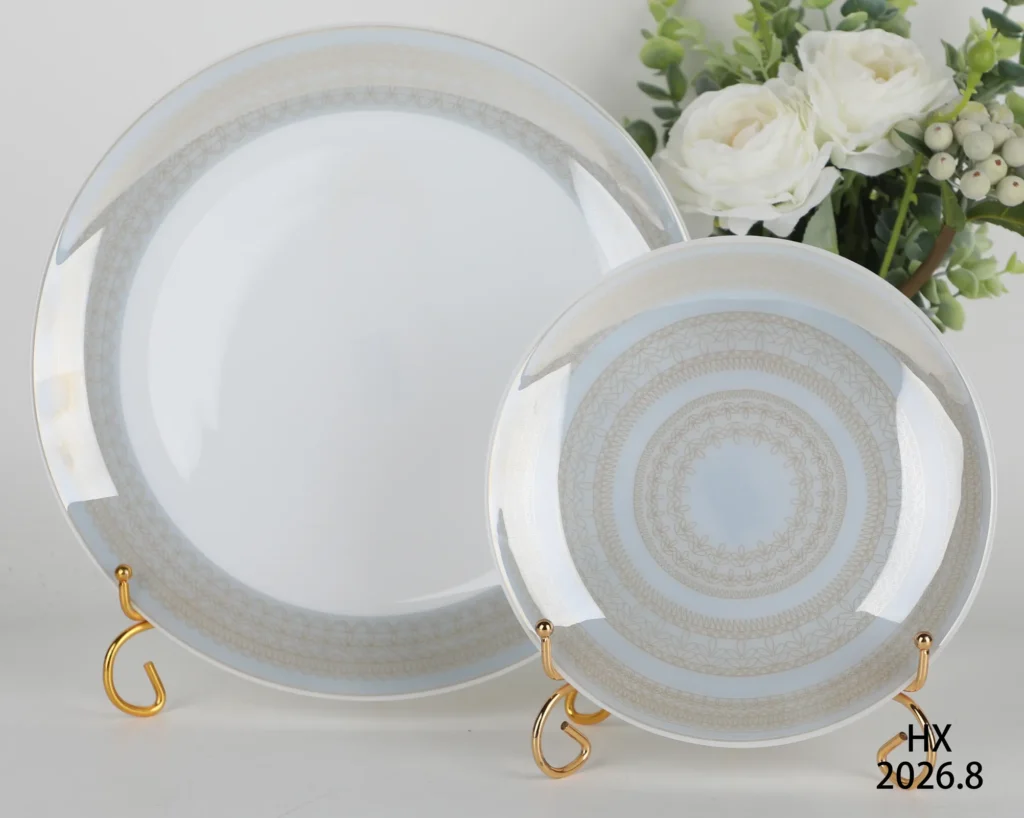
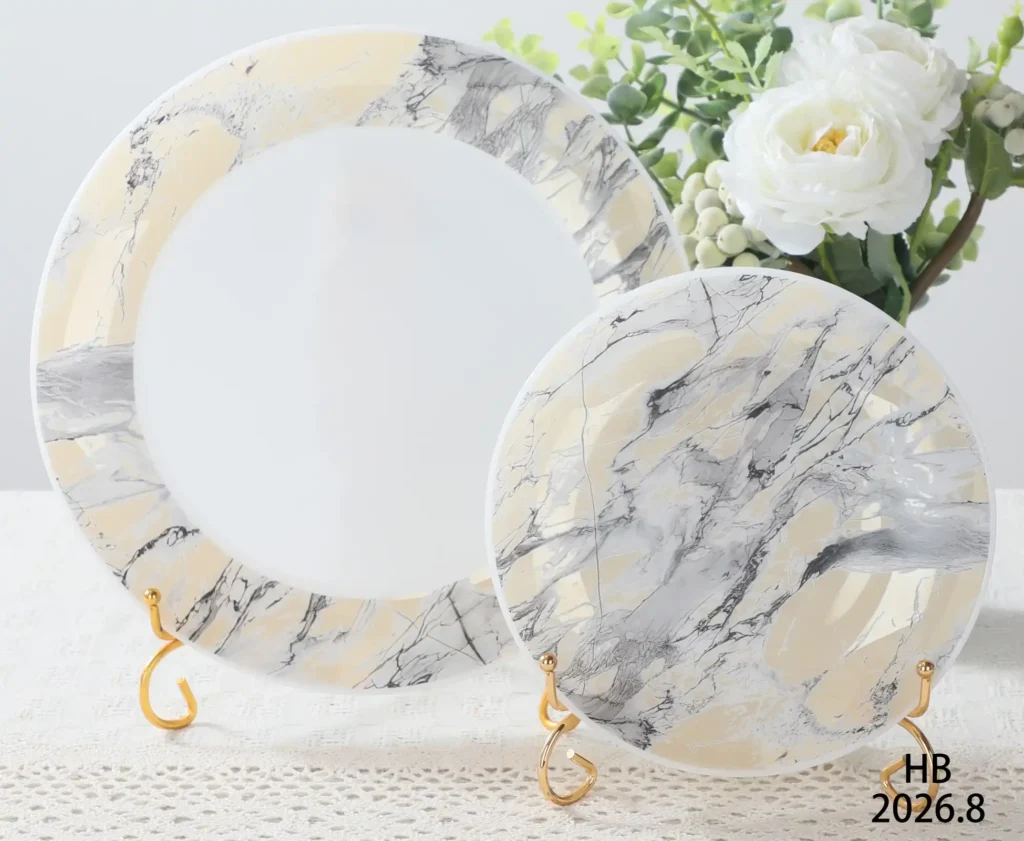
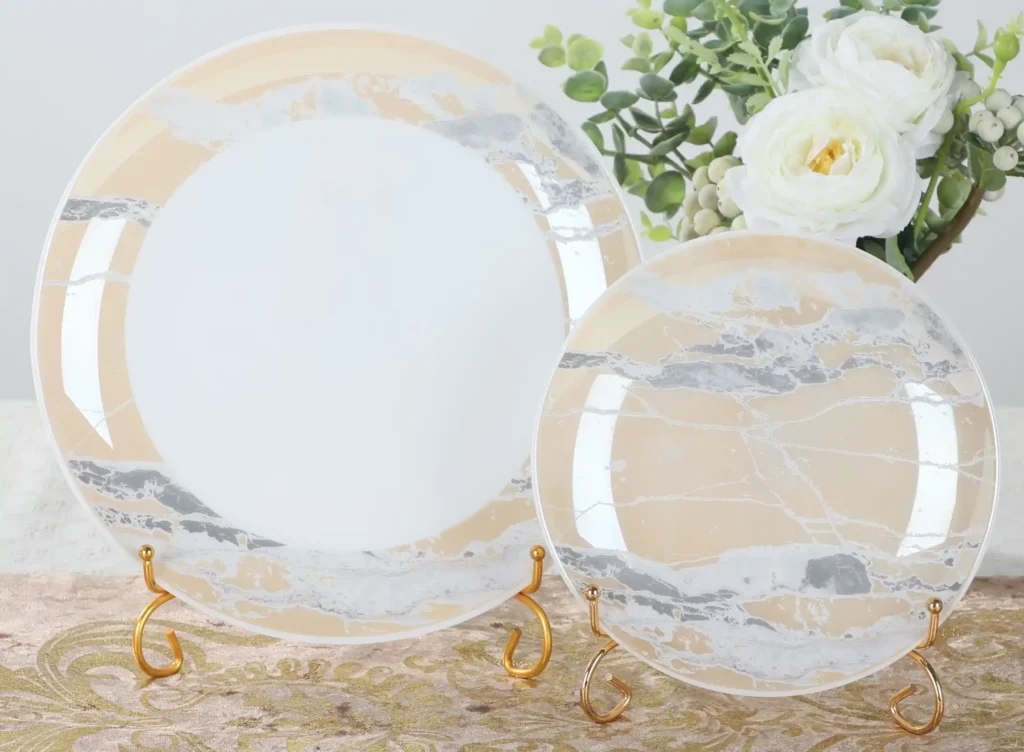
By table function, the plate collection falls into dinner plates, salad plates, and dessert plates, which correspond to the main course, cold dishes or sides, and dessert. At first glance, the difference may seem to be size alone, but plate width and rim height also matter. A dinner plate needs enough surface area for the main course, a salad plate should let food spread out for easy serving, and a dessert plate only needs to hold a small portion without taking up place-setting space.For more plate you can directly check our plate area list.
Bowls
The bowl collection is divided by use into soup, salad, and dessert bowls. A soup bowl needs depth, a salad bowl needs room for tossing and serving, and a dessert bowl only needs enough capacity for a small portion. Comparing rim diameter alone can make different bowl types look interchangeable.For more plate you can directly check our bowl area list.
Cups
The cup collection centers on mugs, coffee cups, and cup-and-saucer sets. All three can appear on a Christmas table; the difference is what they hold, how they are handled, and whether they need a saucer.For more plate you can directly check our Cups area list.
Complete Sets
A Christmas dinnerware set is organized by guest count and piece count; it is not a random bundle of individual items. It also works well for wholesale Christmas dinnerware buyers who need to equip place settings and shared serving pieces in one purchase.
What Christmas Colors and Styles Are Available?
For stock purchases, start with Jointion’s current seasonal catalog. For a custom project, the four styles below provide a clearer direction. Each style depends on a clear relationship between color and pattern; there is no need to put Santa, snowflakes, pinecones, and every other Christmas symbol on the same set.
Traditional Christmas Style: Red and Green with Gold Accents
Traditional Christmas style uses red and green as the main colors, with a small amount of gold for highlights. The combination is instantly recognizable because each color has a clear role.
Red draws the eye, green grounds the larger composition, and gold appears only at edges or in small decorative areas. When all three cover the full surface, the visual focal point disappears.
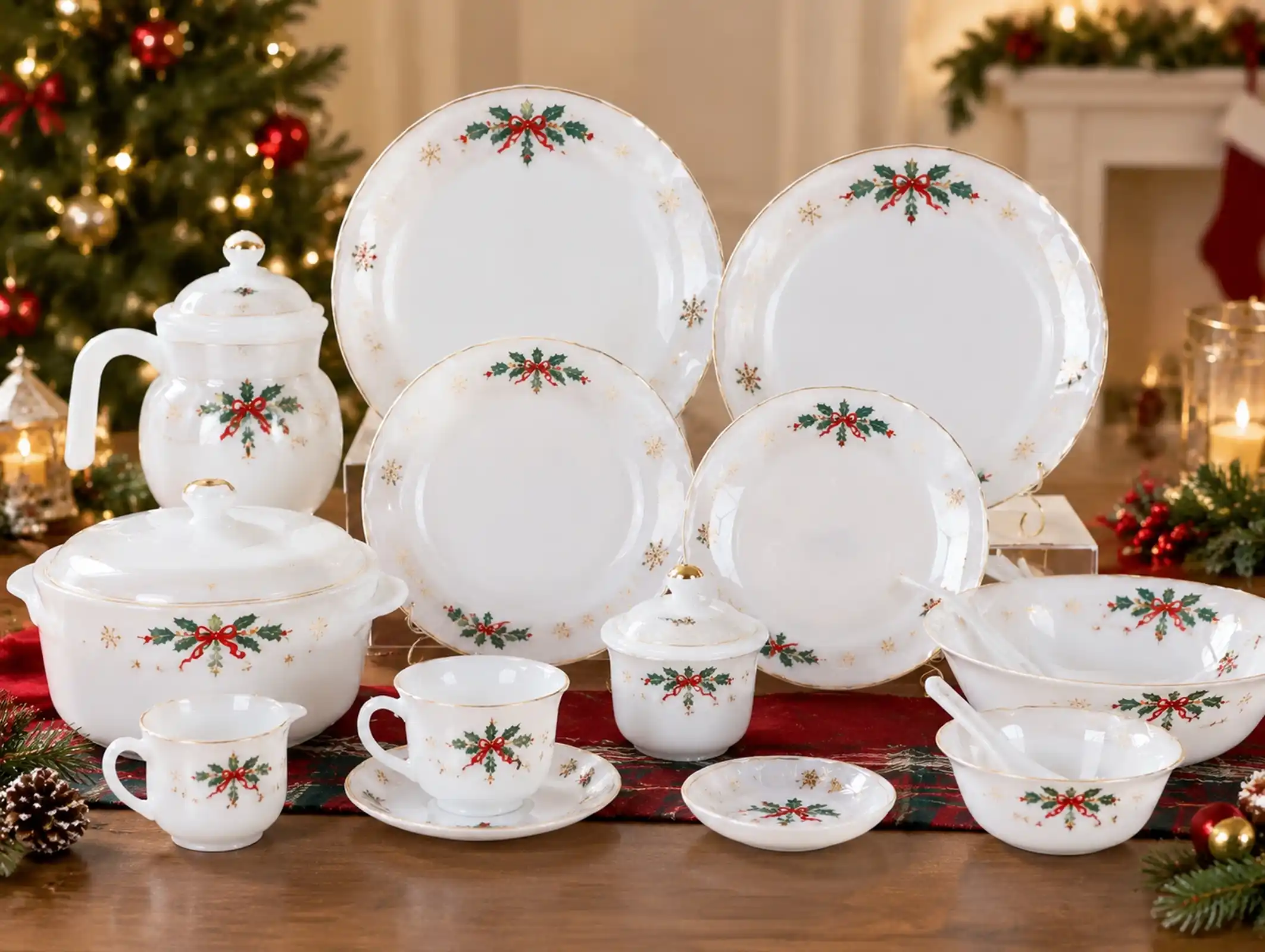
The palette is not arbitrary. It is associated with holly, fir, Christmas wreaths, and other holiday elements. An NPR article on holiday colors also explains how red and green became part of Christmas tradition.
On Jointion glass tableware, the dinner plate can carry the main red-and-green motif, bowls can use green or a white background, and cups can keep only a gold rim. With that distribution, each piece feels festive without competing for attention.
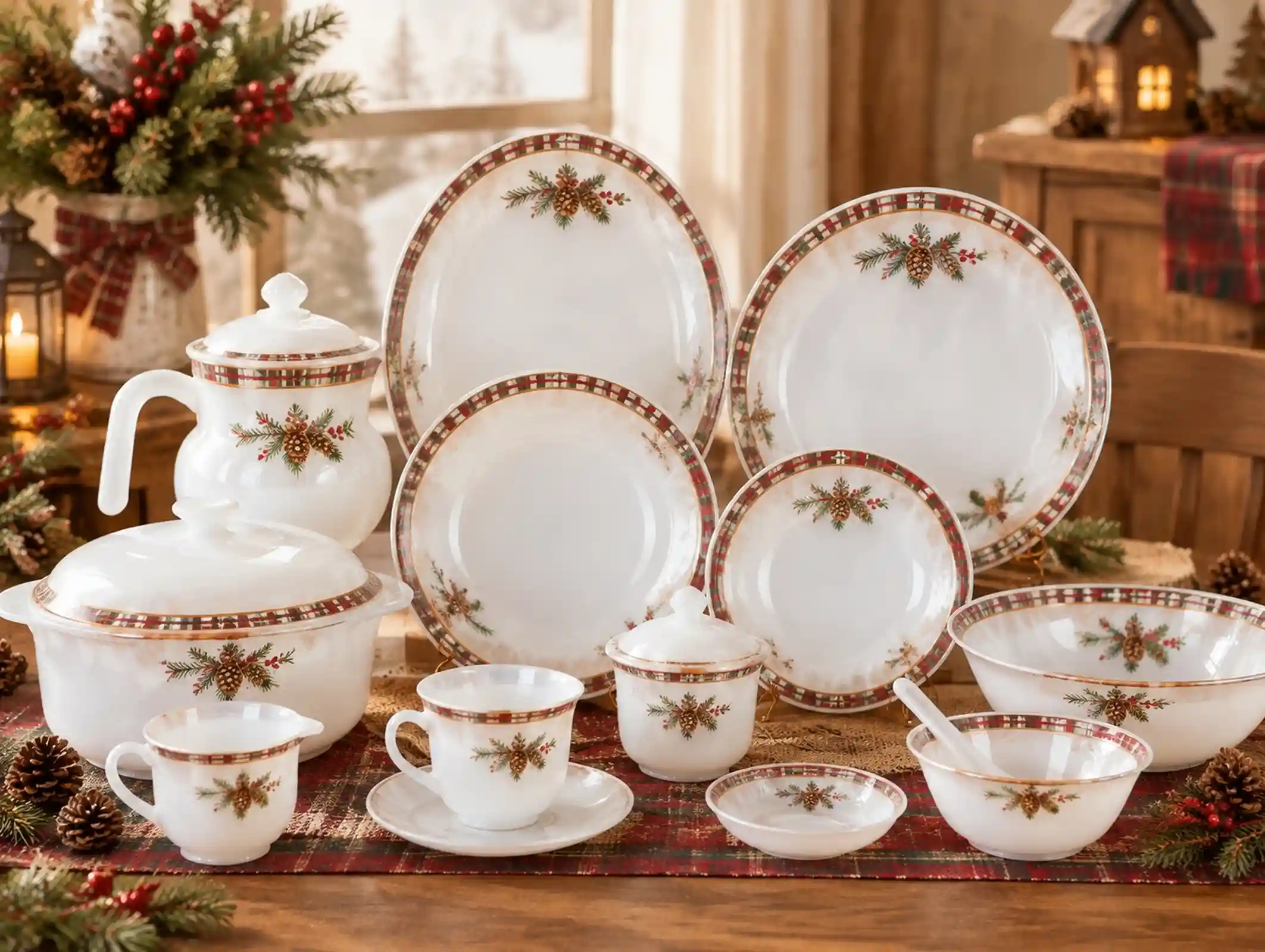
Rustic Christmas Style: Plaid, Pinecones, and Wood-Tone Details
Rustic Christmas style is recognized mainly through plaid, pinecone motifs, and warm wood tones. They do not need to cover large areas at once, but they should point in the same visual direction.
These elements often appear together in farmhouse dining rooms, woodland decor, and handmade holiday decorations. Plaid adds a fabric-like structure and a sense of order, pinecones suggest winter woods, and warm wood tones keep the composition from feeling cold. Glass tableware does not need actual wood; patterns and colored bands can create the same impression.
For example, use a plaid border on a plate, a pinecone motif on a dessert bowl or small plate, and warm wood or brown details on the cup. Give each piece one element so that the result reads as one design rather than three patterns placed side by side.
Nordic Christmas Style: White, Red, and Simple Motifs
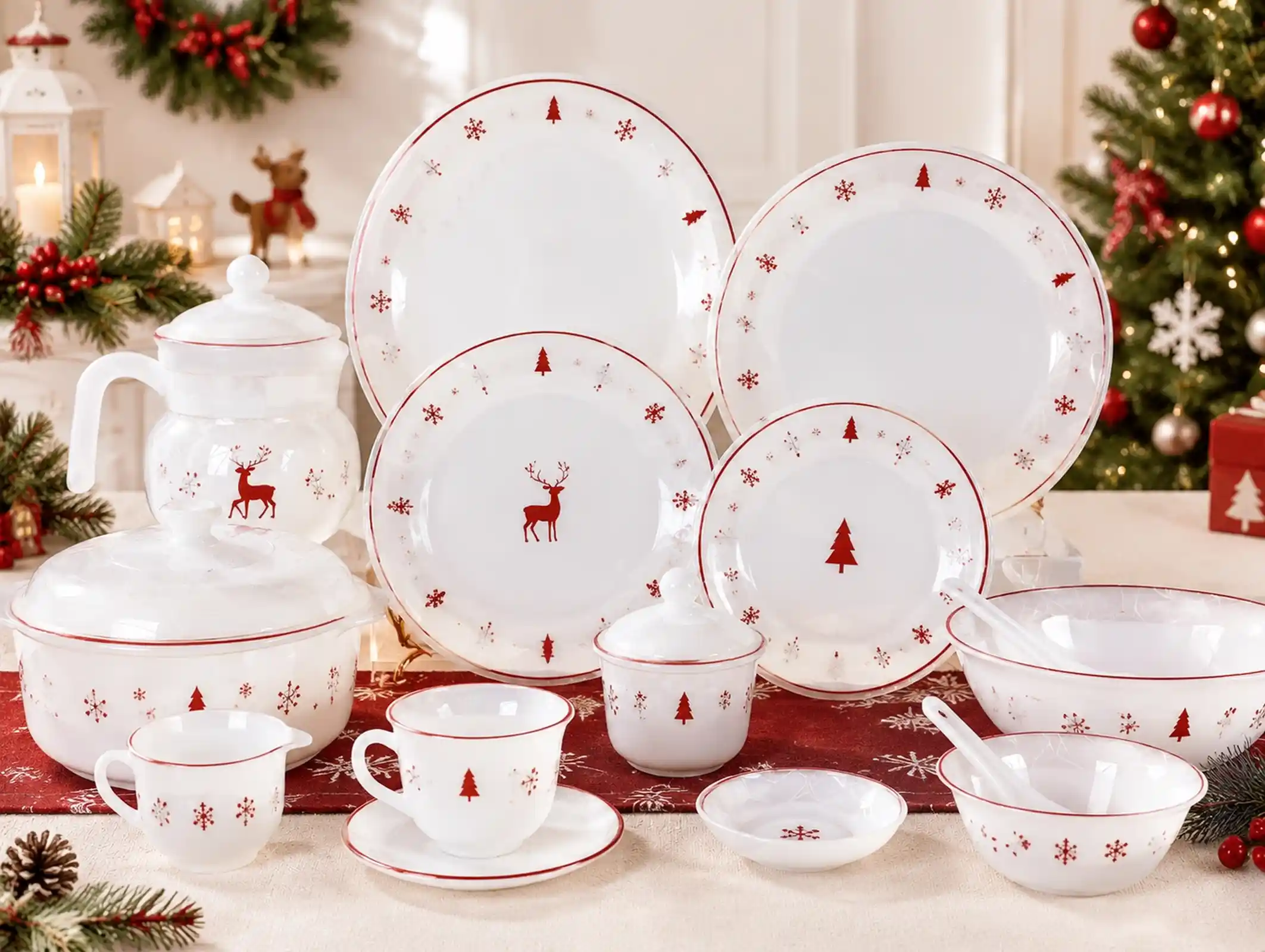
Nordic Christmas style is primarily white, with red used in small areas and patterns kept simple. The key is not fewer decorations, but careful control of negative space and proportion.
A white tabletop or milky glass can carry the main background. Red establishes the festive focal point, and one or two snowflakes, berries, or linear motifs are enough. A sparse design can still read as Christmas when the color relationships are clear.
The difference from traditional style is not whether there is a Christmas motif, but how much of the plate it covers. Traditional designs are bolder; Nordic designs are more restrained. On a single set, leave most of a white plate open and add red motifs to cups or small bowls, so the overall look does not become too busy.
Playful Christmas Style: Santa, Snowmen, and Snowflakes
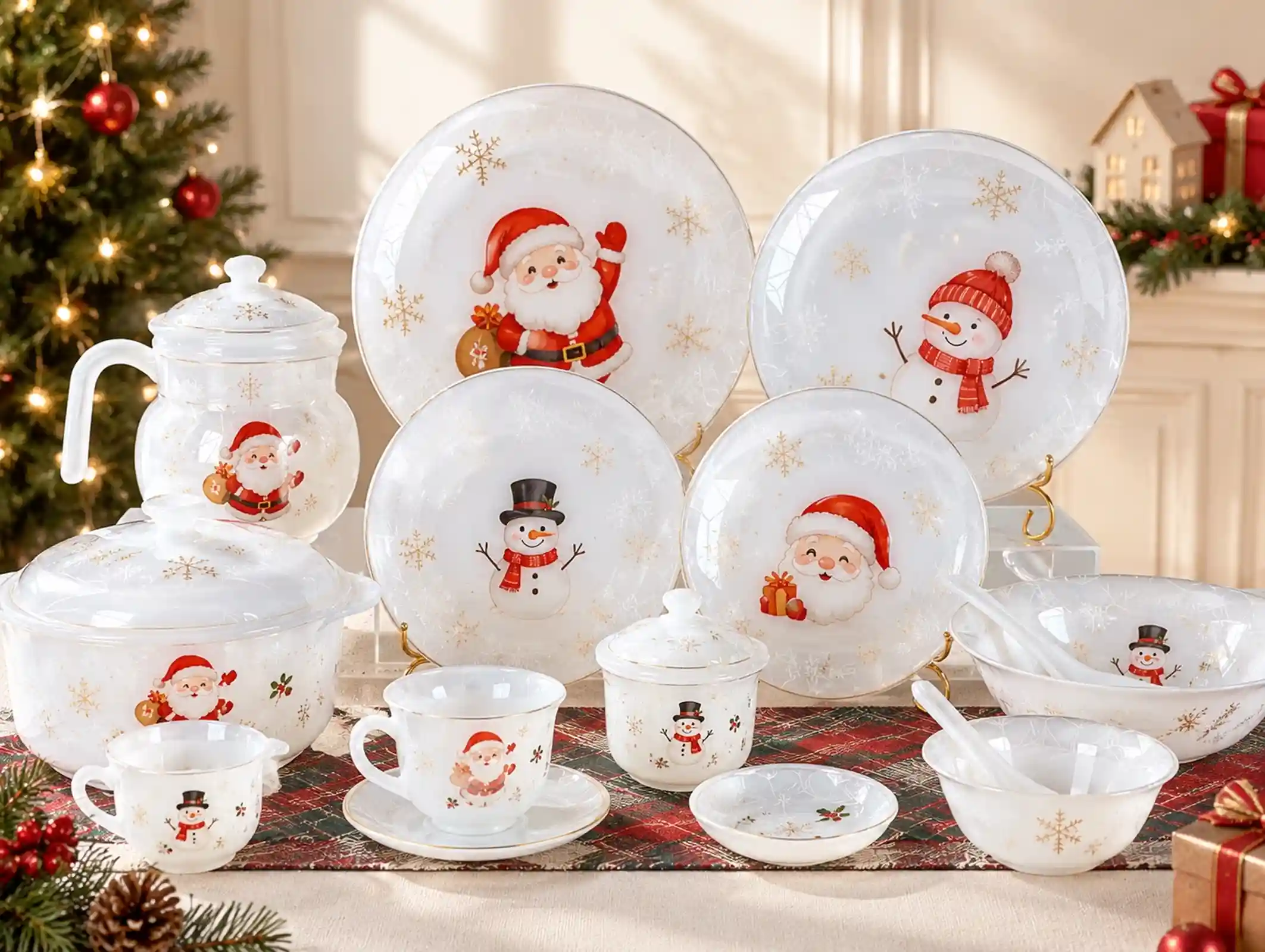
Playful Christmas style uses highly recognizable motifs such as Santa, snowmen, and snowflakes to lighten the mood of the table. They do not need to appear on every piece, but when they do appear, they should be immediately visible.
These figures recur in holiday decorations, so they are quick to recognize and need no explanation. They are not only for children; adult gatherings also use lighthearted motifs to ease the formality.
Placement depends on the shape. A plate center suits one main image, the curved side of a bowl suits a wrap-around motif, and a cup works well with a small repeated pattern. Jointion’s decal process video shows how decoration is applied to glass tableware.
One main motif per piece is enough; leave the rest of the surface open. When the surface is too full, playful turns busy.
How Should You Set the Table for Christmas Eve, Christmas Dinner, and Family Gatherings?
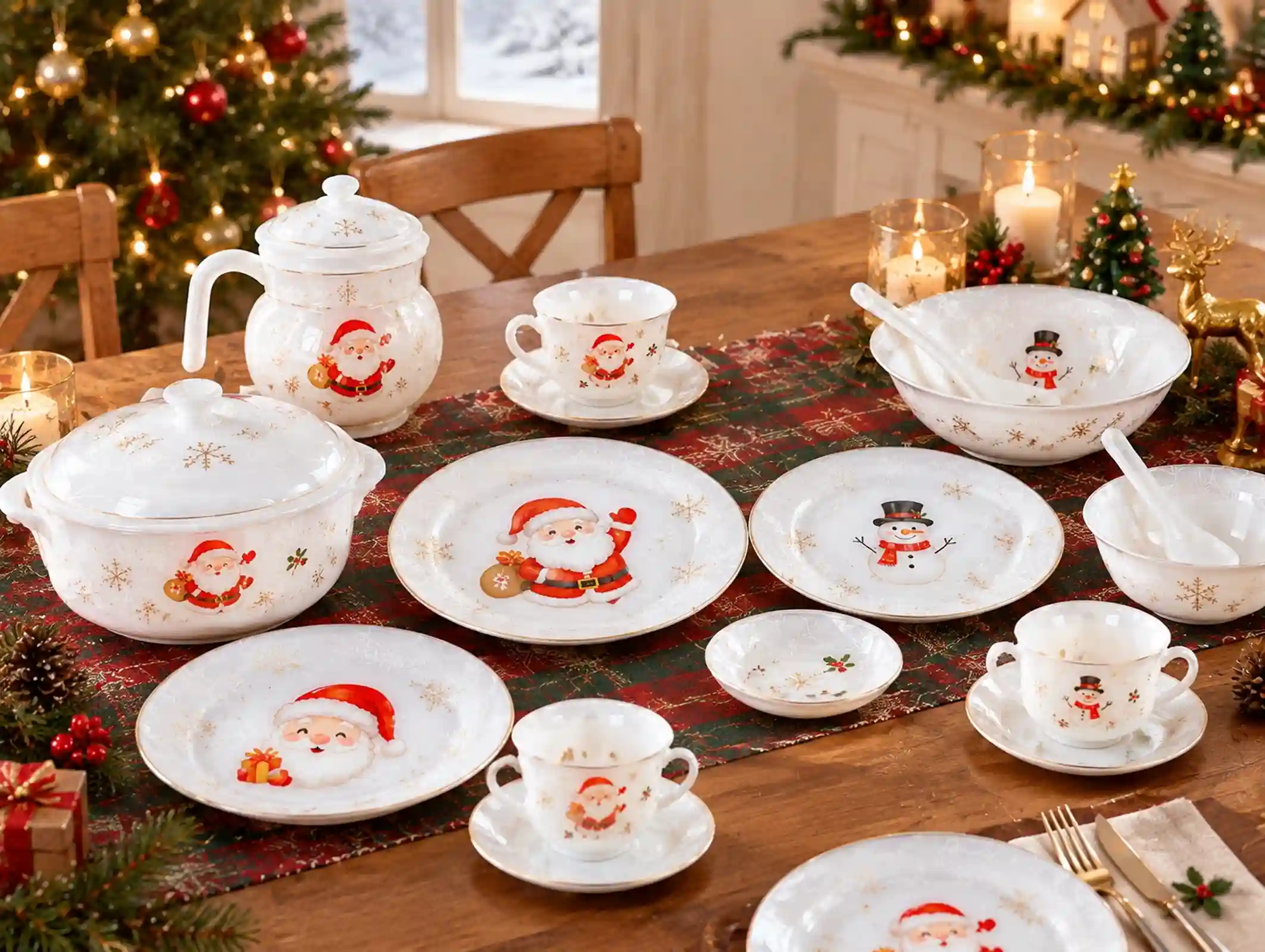
The amount of tableware does not need to stay the same across all three occasions. Christmas Eve centers on the basic place setting, Christmas dinner is calculated by guest count and menu, and a family gathering puts the serving flow first.
Set a Small Christmas Eve Table with Dinner Plates, Soup Bowls, and Cups
For a small Christmas Eve table, start with one dinner plate, one soup bowl, and one cup per guest. The combination covers the main course, soup, and a drink without filling the table from the start.
Emily Post’s basic table-setting guide places the plate in the center of the setting and the cup at the upper right. This arrangement is easy to understand, so guests do not have to guess where to begin. A small table does not need to be fully set in advance; adding pieces in serving order keeps the surface easier to use.
- Center the dinner plate and leave room around it for serving and handling.
- Add the soup bowl when soup is served; do not stack it on the plate in advance.
- Place the cup at the upper right without overlapping the plate.
- Leave the center of the table open for shared dishes.
If the menu consists of soup, a main course, and one drink, these three pieces are enough. If the table is narrow, reduce the centerpiece and temporarily remove pieces that are not yet needed; keep the basic place setting intact.
Scale Dinner Plates, Serving Platters, and Serving Bowls to the Guest Count
At Christmas dinner, start with one dinner plate per guest, then add serving platters and serving bowls according to the menu. The first calculation gives every guest a complete place setting; the second gives shared dishes a clear way to reach the table.
| Item | Base Calculation | When to Add |
|---|---|---|
| Dinner plate | 1 per guest | When serving a main course with a formal place setting |
| Serving platter | 1 for every 1-2 shared dishes that need to lie flat | Roasts, sliced meat, bread, and other dishes portioned at the table |
| Serving bowl | 1 for each soup, salad, or side | When the dish needs a deeper vessel |
Example: for 8 guests and 4 shared dishes, with two meat dishes that need to lie flat and two soup dishes that need a bowl, prepare 8 dinner plates, 2 serving platters, and 2 serving bowls. As the guest count rises, secure one plate per person first, then add shared pieces based on the menu.
This formula suits dinners of six or more with at least one shared dish. Mark the dishes that need a flat platter and those that need a deep bowl, then measure the usable length of the table. If everything does not fit, move extra dishes to a sideboard rather than reducing the number of dinner plates.
Use Dinner Plates and Serving Bowls for an Easy Self-Serve Family Gathering
Buffet dinnerware is a natural fit for a family gathering: plates at the start, serving bowls in the center, and separate zones for hot dishes, cold dishes, and sides.
When guests serve themselves and dishes are concentrated in one area, this flow is easier than plating each portion in advance. First check whether the main table can hold all the serving bowls; if not, move the bowls to a nearby side table while keeping the plates at the start of the line.
With a larger group, plating each portion slows service. Stacking plates at the beginning and grouping serving bowls in the middle lets guests control their portions and makes refilling easier without walking around the table.
Keep hot dishes, cold dishes, and sides in separate zones; do not mix plates and bowls in the same line. The clearer the flow, the less likely a family gathering is to stall at the serving table.
Can Jointion Adapt Its Standard Christmas Patterns and Colors to Other Styles?
Standard Christmas patterns can be kept as they are or adjusted for different markets. For custom Christmas tableware, two questions need to be settled first: how far a pattern can be changed, and on which base material the color will be confirmed.
Existing Patterns Can Be Adapted to Different National and Cultural Preferences
Existing patterns can be adapted for a target market, but the changes focus on motifs, composition, and motif size rather than a complete redesign.
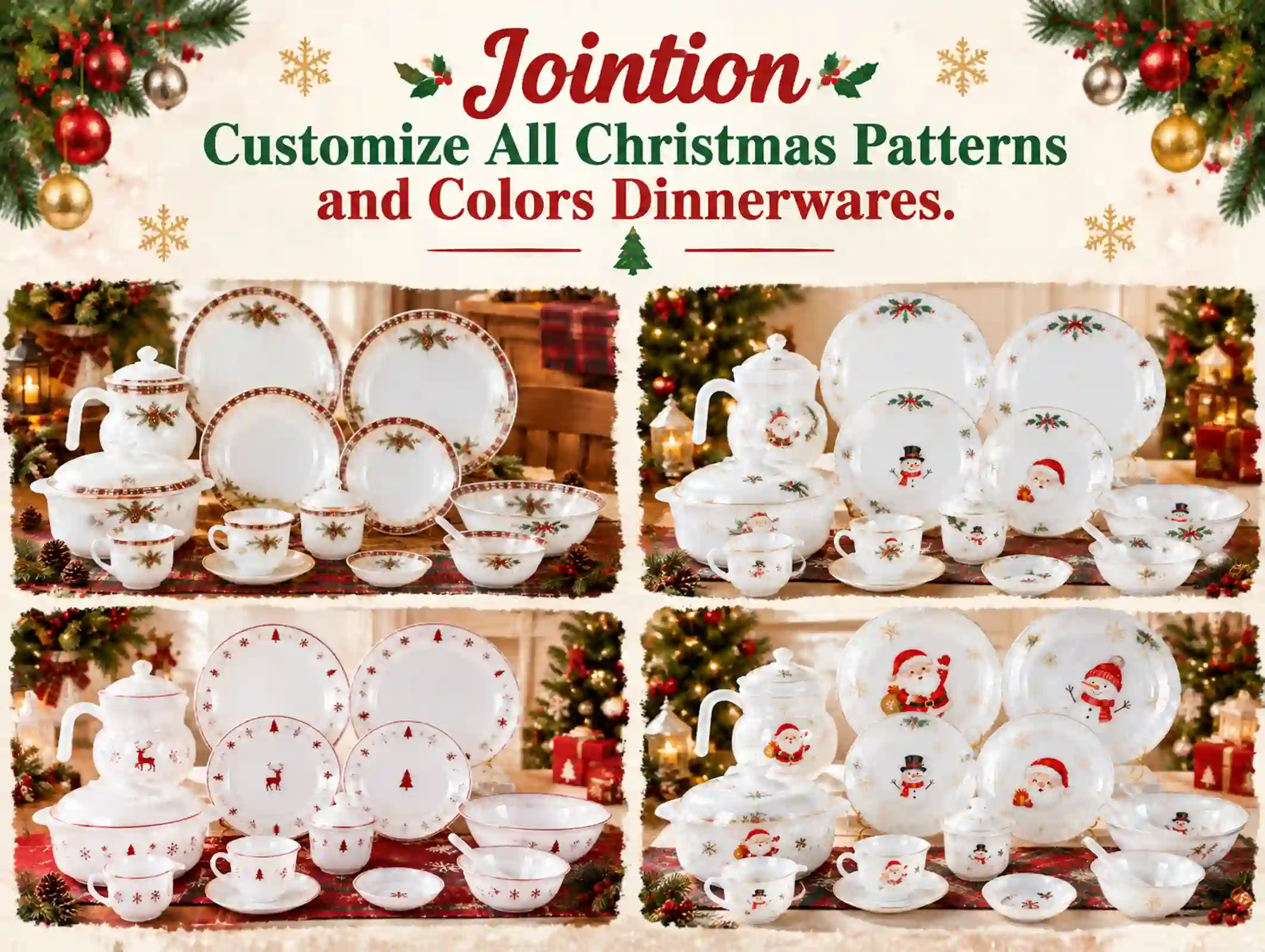
If the buyer already has a pattern library and only needs localization, begin by reviewing the motifs, composition, and scale in the artwork. Then submit the target market, prohibited elements, and reference images. Ask the sales team to mark each item as adjustable or fixed and confirm it in writing before sampling. If the supplier cannot provide a clear scope, produce from the original artwork and do not replace cultural symbols on your own.
Different markets are not equally familiar with Christmas symbols. Pinecones and wood tones are more easily understood as rustic, while Santa and snowmen suggest a lighter, more direct holiday style. If a pattern is moved unchanged to a market unfamiliar with those symbols, the intended rustic or playful style loses its context.
Jointion’s OEM service process first confirms the product, pattern decoration, set quantity, and packaging before moving to samples and production. For buyers, clarifying these conditions is more useful than hearing only that customization is available.
Copyrighted artwork, religious symbols, and local holiday elements require written approval from the brand before artwork is submitted; without that confirmation, they do not proceed to sampling.
Existing Colors Can Be Adapted to Regional Preferences
Colors can also be adjusted to regional preferences. Buyers with an existing color card should first check the card, the retained sample from the previous production batch, and the glass base. Buyers developing a new color need to provide a Pantone reference or physical sample so that the factory can make a trial on the intended base material.
A single main color can change the character of the table as its depth shifts. A brighter red feels more festive; a deeper red feels more restrained. A grayer green feels more natural, while a more saturated green feels more traditional. Too much gold competes with the motif.
Both the glass base color and the firing stage affect the final result. Jointion’s production process page lists raw material preparation, melting, decoration, and quality inspection, which shows that color cannot be confirmed from a design file alone.
- Define the main color and decide whether the collection should feel traditional, natural, or crisp.
- Set the secondary colors and control the area of red, green, and white.
- Confirm the coverage of accent colors such as gold so they do not overpower the main color.
Review the approval sample once under natural light and once under indoor light, then sign off before bulk production. Without an approved sample, do not replace the target color with an approximate match.