
This guide is for buyers and operators choosing wholesale dinnerware for restaurants, hotels, and banquet venues. It answers three practical questions: which plates, bowls, saucers, and cups belong in a wholesale order; whether glass, reinforced porcelain, melamine, or earthenware is the better fit for commercial use; and how to match plates, bowls, cups, and trays to your menu and service style. By the end, you can put together a purchasing list and know where the budget matters and what to check in a sample.
What Does Wholesale Dinnerware for Restaurants and Hotels Usually Include?
Plates, Bowls, Side Plates, and Cups Are the Core Items That Go Directly on the Table
At the center of a wholesale order are four core restaurant dishes that go directly on the table: plates, bowls, side plates, and cups. They touch the food, shape the presentation and portion size, and create the guest’s first impression of the table. They are also the pieces that wear out fastest in washing, table turns, and knocks, so they need to be replenished by the set.
| Category | Front-of-house use | What to check when buying |
|---|---|---|
| Plates | Main courses, set meals | Set diameters by the menu; do not use one size for everything |
| Soup bowls | Soups, noodles, rice with broth | Depth matters more than diameter for spill control |
| Side plates and small dishes | Bones, shared portions, sauces | High daily turnover; keep an extra batch |
| Cups | Water, wine, coffee, tea | Pair separately for cold and hot drinks |
Cookware and disposables sit outside this dinnerware category and should be ordered separately. Hotels add in-room cups and full banquet sets, but these are still extensions of the same plate-bowl-side plate-cup group, just organized by setting.
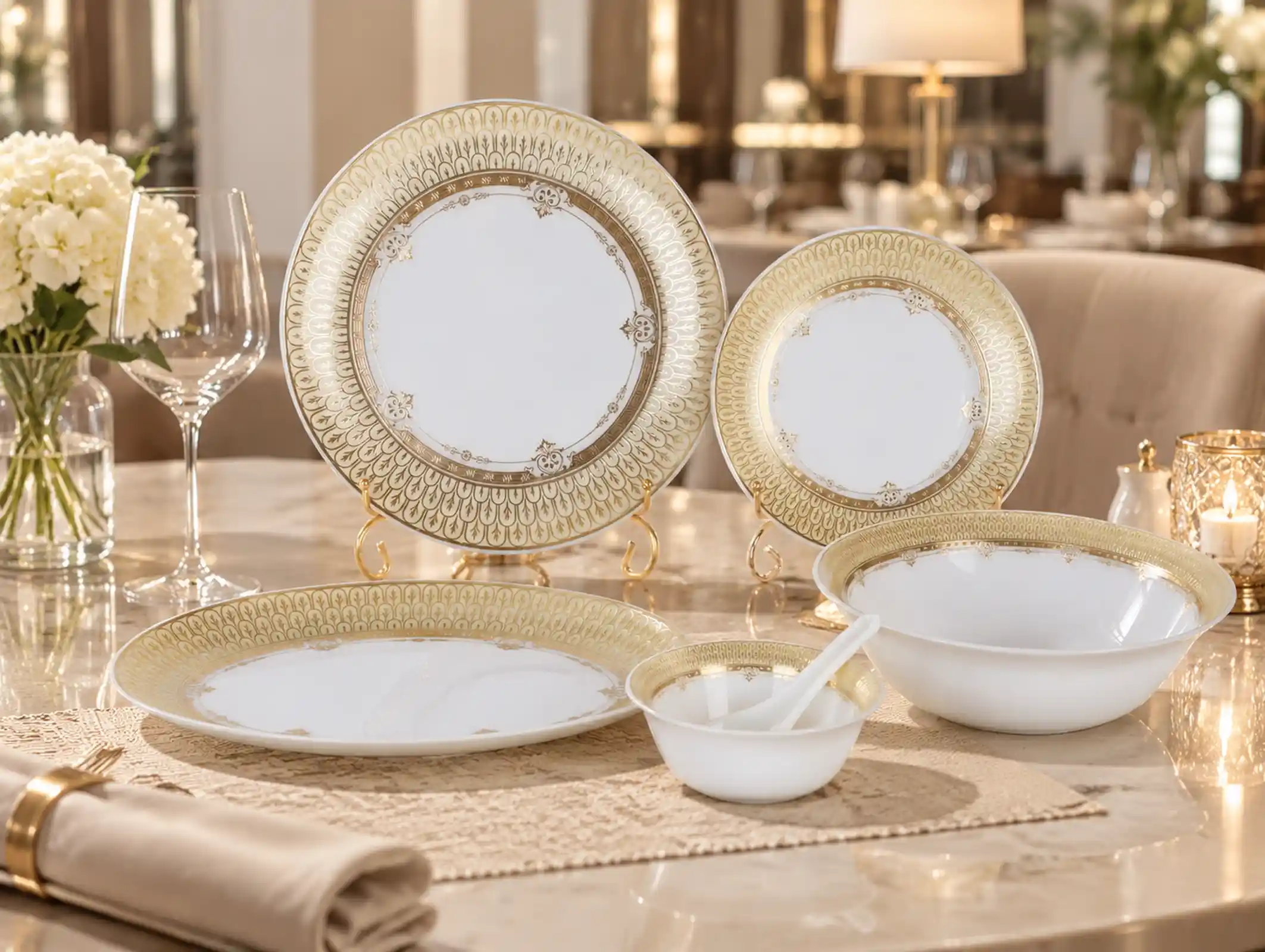
If you are not sure where to start, list the pieces your menu needs first, then compare the available sizes and set configurations in Jointion’s opal glass dinnerware collection. That makes quantity planning easier.
Which Dinnerware Material Is the Most Durable for Daily Restaurant and Hotel Use?
Glass Offers the Best Overall Durability: It Resists Knocks, Washing, and Odor Absorption
Start with the definition. For restaurant and hotel tableware, “durable” does not mean unbreakable. It means doing five things well:
- Impact resistance: surviving table turns, stacking, and dishwasher racks
- Dishwasher resistance: dozens of hot wash cycles a day
- No odor or stain absorption: curry, tomato, and soy sauce leave no trace
- Food safety: food-contact surfaces pass testing
- Low replacement cost: low breakage and infrequent restocking
By that standard, glass earns the highest overall score.
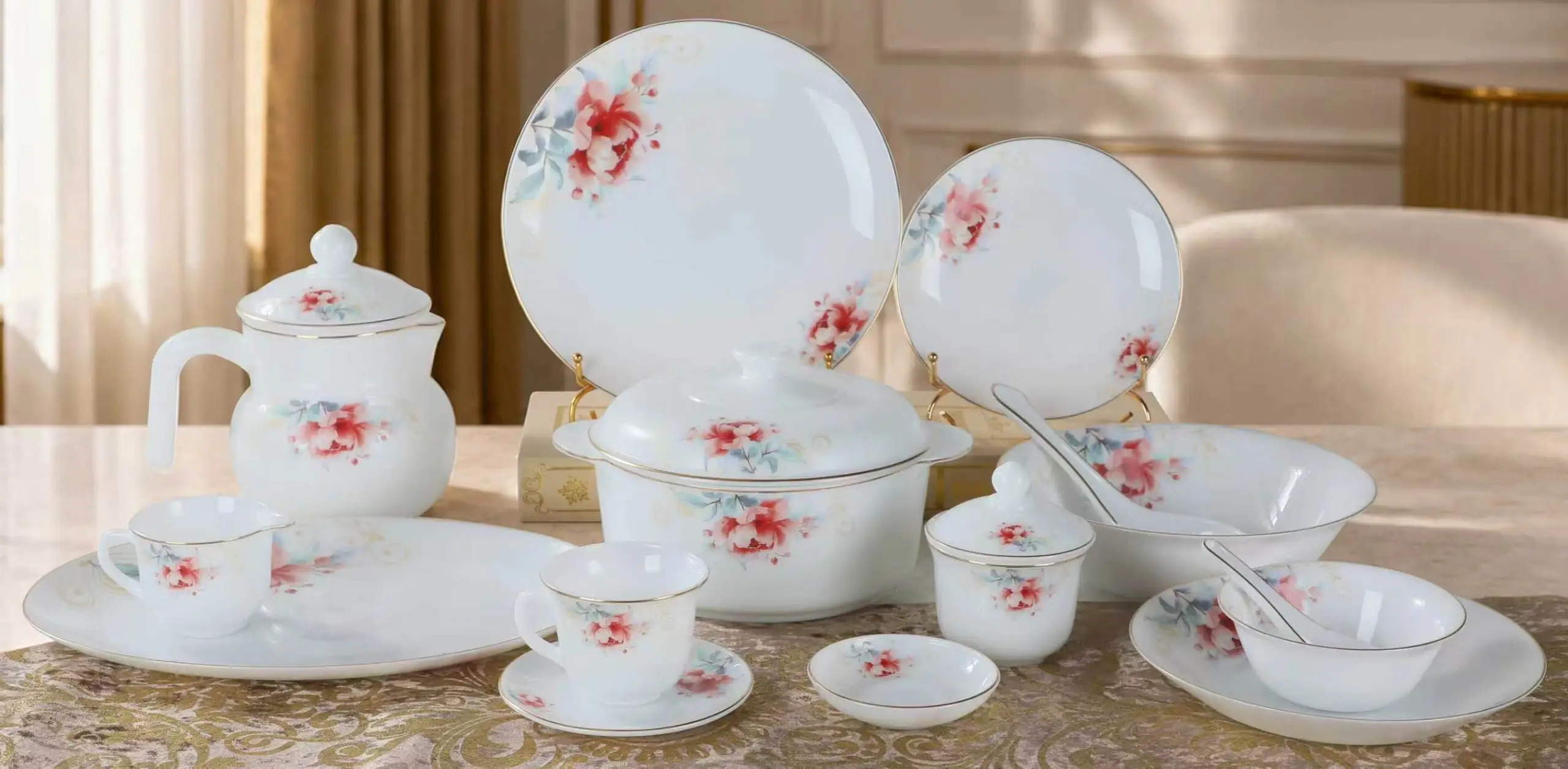
Opal glass has a non-porous surface, so oily broths and pigments cannot seep in, and it resists discoloration after repeated washing. Glass itself is non-porous and does not alter the flavor of food (GPI: non-porous glass). A plate that held curry comes out clean and does not pass that flavor on to the next dish.
After tempering, annealing, and edge polishing, it holds up better than ordinary glass through normal table turns, stacking, and dishwasher cycles. At the same size, it is usually lighter than thick-walled ceramic, which can reduce the weight a server carries on a tray.
Reinforced Porcelain Is Hard but Heavy, and Its Edges Can Chip on Impact
Reinforced porcelain has real strengths: a hard surface, good scratch resistance, and a look close to traditional formal tableware. Many restaurants assume it is the most durable option by default.
The issue is that hardness handles scratching, not impact. Ceramic is a brittle material, and materials research treats edge chipping and fracture toughness as separate from hardness (Coatings: ceramic edge chipping). A fork may not scratch it, but that does not mean the rim will survive a knock. Once it chips, both appearance and hygiene suffer, and the plate usually has to be replaced.
Then there is weight. Reinforced porcelain bodies are often thicker and feel heavier, which adds strain to carrying, dishwasher racks, and shipping. It is hard, but in a restaurant with frequent knocks and handling, it is not the most durable overall.
Melamine Resists Impact Best, but Heat Can Damage It, and It Shows Wear Over Time
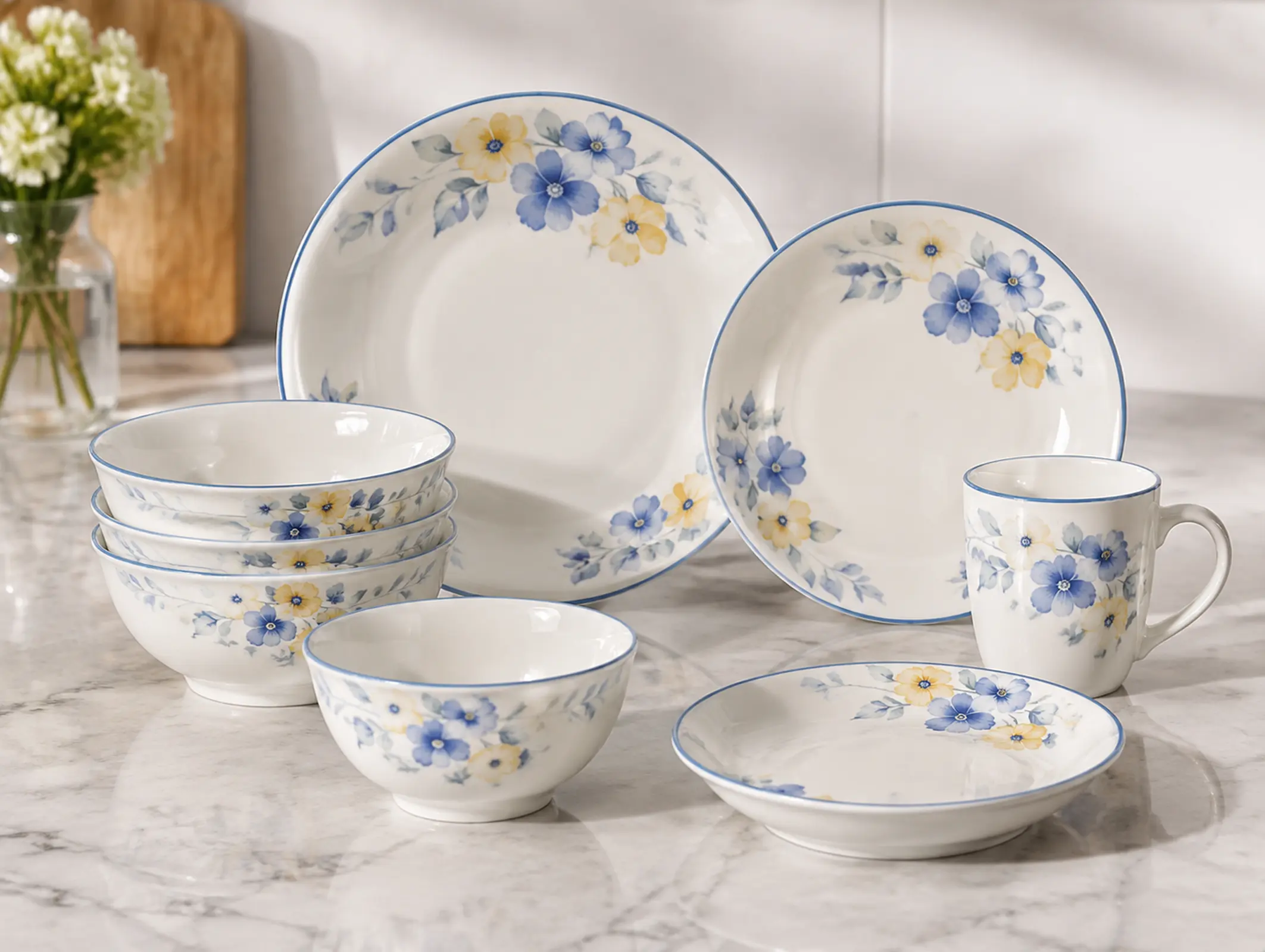
Melamine has obvious strengths: it is light, impact-resistant, and inexpensive per piece. It is a common choice for buffets, outdoor service, and children’s meals, where dropping is a regular risk.
But its limits are just as clear:
- Best for: buffets, outdoor dining, children’s meals, and high handling volumes
- Watch for: ovens, open flames, and prolonged high heat; restaurants with hot food or frequent reheating should follow the manufacturer’s temperature guidance
Melamine is a thermoset resin. In one study, melamine dinnerware was exposed to an acidic food simulant, with the test temperature raised from 60°C to 95°C; formaldehyde and melamine migration both increased as the temperature rose (PubMed: melamine heat migration). Hot food, reheating, and microwave use should therefore be checked against the product’s temperature guidance. Melamine is not a replacement for oven-safe or flame-safe ware.
The surface behaves the same way. Fine scratches appear with use, and dark sauces leave marks more easily. Quality melamine has a reference service life of around 1,500 washing cycles, or roughly two years (PubMed: melamine service life). After that point, inspect the surface closely; noticeable scratches, discoloration, or worn edges mean it is time to replace it.
In short: choose it where impact is the main risk, and think twice where hot food dominates.
Earthenware Is Thick and Impact-Resistant, but Its Weight Drives Up Handling and Breakage Costs
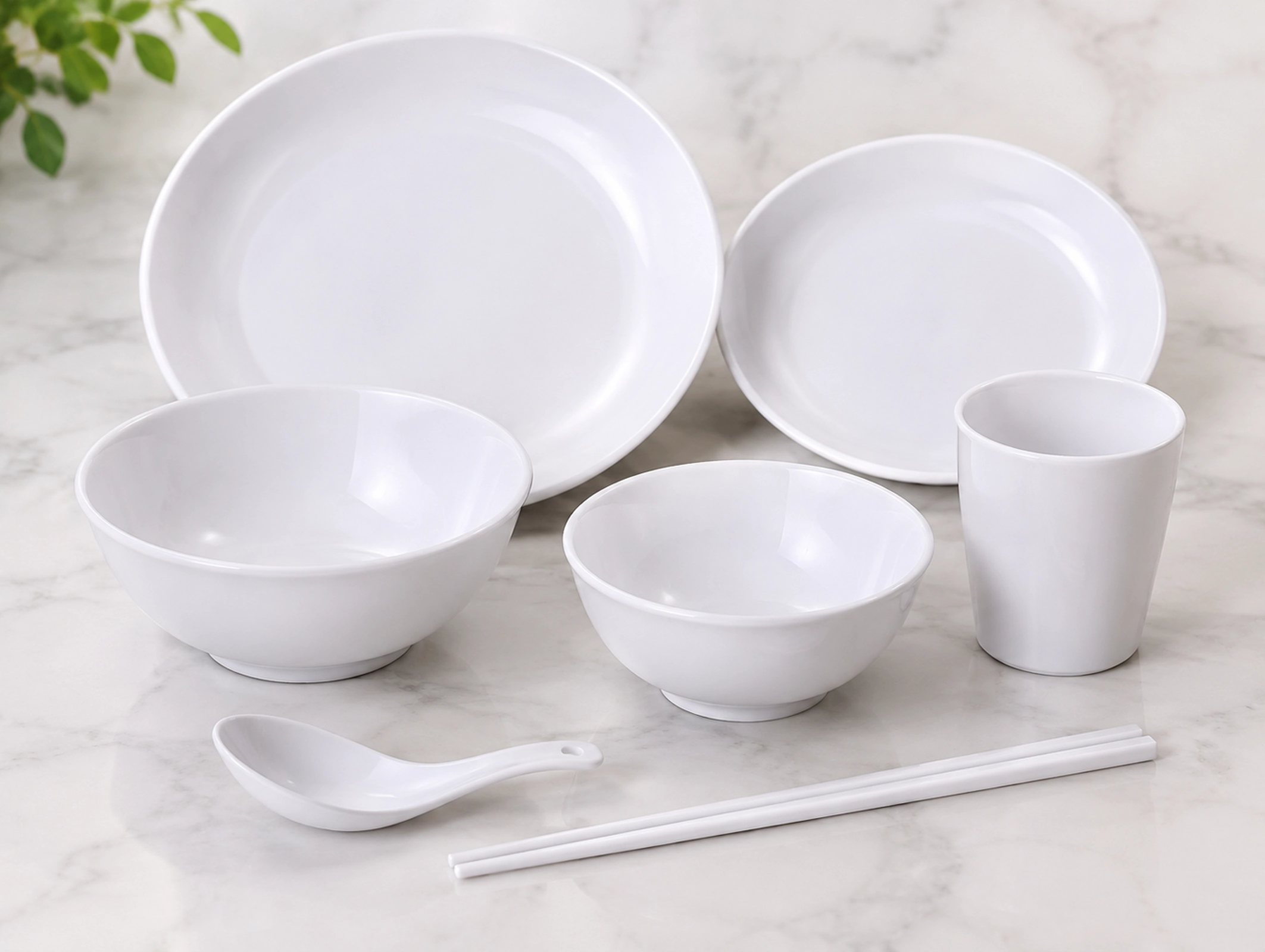
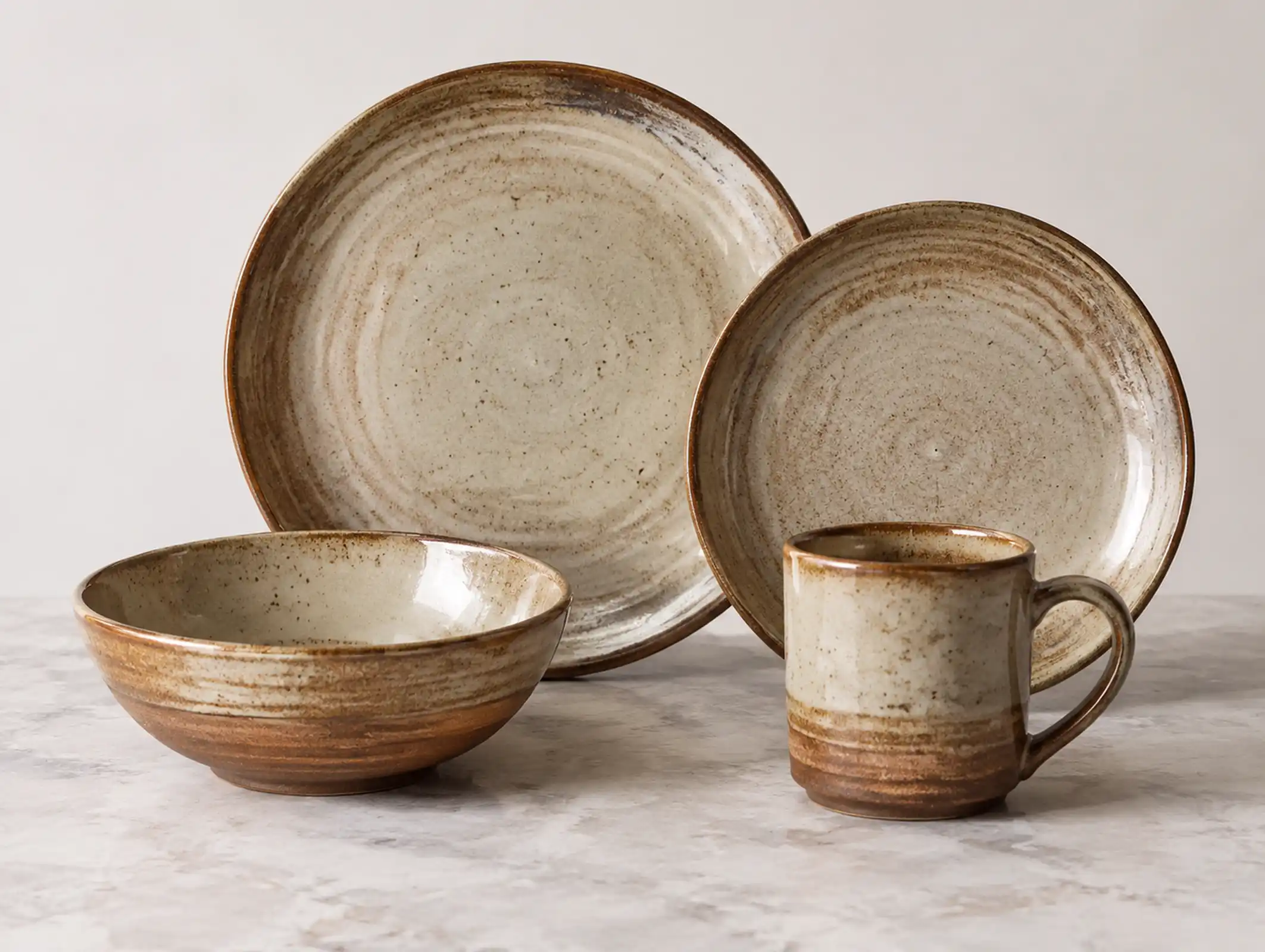
Earthenware has its place: a thick body, a weighty hand, and a handcrafted, rustic look. Themed restaurants, guesthouses, and specialty restaurants often use it to set the scene.
The trade-off is weight. A thick body means more effort to carry a full table, and higher load requirements for dishwasher racks, shelving, and shipping. No matter how thick the rim is, earthenware is still brittle and can chip after a hard knock; damage also shows up more clearly on a dark glaze than on a light one.
In hotel banquets and group catering, where dinnerware is stacked in large numbers and moved frequently, that weight adds up. It may resist impact, but handling, energy use, freight, and breakage make it expensive over the long run.
Why Does Wholesale Buying Make More Sense for Restaurants and Hotels?
High Order Volumes Bring Down the Unit Price
Wholesale prices are lower not because suppliers are being generous, but because the cost structure genuinely changes at volume.
Dinnerware is priced by the piece, but fixed costs such as molds, color matching, and packaging are spread across the order:
- Molds and color matching: the larger the run, the less each piece carries
- Packaging and cartons: standardized batches lower per-piece handling costs
- Logistics: loose shipments become full containers, cutting the unit cost again
Restaurants and hotels are exactly the kind of stable buyer that benefits from bulk dinnerware pricing. Front-of-house dinnerware is washed and knocked every day, so annual usage can be calculated from seat count, table-turn rate, and breakage rate. Predictable volume gives you room to negotiate and helps you secure a lower wholesale tier.
When you look at the total cost, add restocking frequency, freight, and breakage replacement for the year. That is closer to the real cost than the unit price alone.
Consistent Production Batches Keep Replenishment and New Openings on Track
The bigger headache than price is receiving replenishments from a different batch. If the same plate arrives in a different shade or with a slight size difference, the mismatch is obvious when it sits on the same table. For a hotel chain opening a new property, the problem only gets bigger.
A factory can address this:
- Retain the molds: dimensions stay the same
- Lock the color code: color stays consistent
- Hold stock from the original batch: replenishments match
Retail channels often mix batches as stock arrives, so the next replenishment may not match the last one. Wholesale gives you more than product; it gives you the certainty that the next order will still be the same item. Consistent batches keep the table setting uniform and protect the brand image. Chain restaurants and hotel groups value this in particular.
Dinnerware Can Be Customized to Your Menu and Brand
The reasons for customization are practical: the menu determines the shape, while the brand determines color and marking. Hotels also need separate sets for guest rooms, buffets, banquets, and restaurants, and standard stock rarely fits every setting.
| Customization | What can change | Problem it solves |
|---|---|---|
| Size and shape | Plate diameter, bowl depth, cup capacity | Matches menu presentation |
| Color and pattern | Color code, decals, gold rim | Brand recognition |
| Marking | Logo, text | Exclusive to the hotel or chain |
| Packaging and cartoning | Sets assembled to order | Ready to use on arrival |
Retail focuses on existing designs; a factory can adjust production to the requirement. The value of customization is that the dinnerware follows the operation, rather than forcing the operation to fit ready-made stock. Before ordering, confirm the menu, logo placement, and packaging; this often removes one round of sampling. Spell out all of this at once, and scheduling and inspection will also run more smoothly.
How Should You Match Plates, Bowls, Cups, and Trays?
Choose Plate Sizes Based on Portion Size and Service Style
Plate diameter is not a case of bigger is better. It depends on portion size, plating style, and the order of service.
Leave some rim space, but too much makes the portion look small. A study of dessert presentation found that when plate diameter increased from 24–27 cm to 31 cm, diners perceived the same dessert as smaller (PubMed: plate size and portions). Leave too little space, and the food looks crowded and sauces spill over.
| Plate type | Common size | Use |
|---|---|---|
| Appetizer plate | 18–23 cm | Appetizers, sides, salads |
| Main course plate | 25–30 cm | Single-serving main courses |
| Sharing plate | 28–33 cm | Shared dishes, banquet entrees |
| Dessert plate | 13–18 cm | Desserts, bread |
A la carte restaurants match plates dish by dish; banquets match them to the number of dishes served at the table and the pace of service. Hotel buffets need a separate decision on plate size: in a field study of buffet dining, the large-plate group took 52% more food, ate 45% more, and wasted 135% more than the small-plate group (PubMed: larger plates, more waste). Buffet service and plated service are two different situations.
On the same table, appetizer, main course, and sharing plates should differ clearly in size so the visual hierarchy reads well. Use Jointion’s opal glass plate collection to match specifications: start with the main course plate, then extend to appetizers and sharing dishes.
Pair Bowls Separately for Soups, Staples, and Desserts
One bowl cannot do every job. Soups, rice, and desserts place three different demands on the design:
| Bowl type | Key point | Use |
|---|---|---|
| Soup bowl | Deep with a slightly narrowed rim | Heat retention, spill control |
| Staple bowl | Generous capacity, wide rim | Rice, noodles, mixed rice bowls |
| Dessert bowl | Small, shallow, clean lines | Highlights portion size and presentation |
If the same bowl holds soup and rice, flavors transfer, rice sticks, and bussing and dishwasher sorting become confusing. Once capacity, depth, and rim shape are settled, the bowl lineup is set; when the menu is fixed, the table setting becomes consistent too. The capacity and size chart in Jointion’s opal glass bowl collection gives you a direct reference.
Pair Cups Separately for Water, Wine, Cold Drinks, and Hot Drinks
The role of a cup follows the drink.
| Cup type | Key point | Use |
|---|---|---|
| Water glass | Clear, moderate capacity | Shows color and supports hydration |
| Wine glass | Tapered rim | Concentrates aroma and controls the sip |
| Coffee cup and teacup | Handle, slightly thicker wall | Insulation and thermal shock resistance |
Mixing them creates problems: an ordinary cold-drink glass may crack when hot tea is poured in; a hot-drink cup filled with ice can develop condensation and become slippery; and serving water in a wine glass disrupts the table setting.
Build the cup lineup by drink, cup type, and temperature tolerance. You do not need many shapes; a few core styles matched to the restaurant’s positioning are enough. Jointion’s opal glass cup and pot collection can serve as a reference, then confirm capacities for cold drinks, hot drinks, and wine service one by one.
Choose Trays Based on Service Flow and Table Space
Choose trays by service flow, not by the idea that bigger is better.
- Serving tray: light with a non-slip rim, easy for one hand to carry several plates
- Buffet tray: wide enough and stable under load for a dinner plate, bowl, and drink
- Bussing tray: resistant to grease, easy to clean, and stackable in the dishwashing area
If a tray is too large, it catches cups when you turn between narrow tables; if it is too small, one trip becomes two. Once serving, buffet, and bussing each have a smooth route, the tray lineup is right.
Where Can You Find a Reliable Wholesale Dinnerware Supplier?
Local Foodservice Suppliers Are Best for Viewing Stock and Handling Urgent Orders
Local suppliers solve two problems: seeing the product and saving time.
You can feel the weight and compare colors in person, and urgent orders may arrive the same or next day. They are the best fit for a new restaurant opening, a few boxes of emergency stock, or a last-minute need before a trade show.
But their stock is mostly general-purpose. Opal glass shapes and colors may not be complete, unit prices are higher than direct factory sourcing, and batches follow whatever inventory they have. Local suppliers are therefore best for “needed now” and “want to see it first” orders; large, long-term orders can go to the factory, with each channel doing what it does best.
Online B2B Marketplaces Are Best for Comparing Prices and Finding Ready Stock
The value of a marketplace is filtering. With many suppliers and transparent pricing, you can screen candidates by shape, size, and color, and samples can arrive quickly.
Factories and trading companies are mixed together on these platforms. Photo-to-product color differences, unstable batches, and unclear after-sales responsibility are all common. A marketplace is therefore good for narrowing the field, not for placing a large order directly. Check four things when screening:
- Factory credentials: business license and factory audit information
- Test reports: matched to the specific model
- Samples: get a sample before discussing volume
- Batch commitment: will replenishment come from the same batch?
When all four check out, the marketplace becomes an efficient price-comparison tool. Before committing to a long-term partnership, verify the sample and the factory one more time.
Direct Factory Sourcing Suits Large Volumes, Customization, and Long-Term Partnerships
Direct factory sourcing has four advantages:
- Price: no intermediary markup, with more room to negotiate at volume
- Customization: shape, color, print, logo, and packaging can all be changed at the production stage
- Batches: the same molds and color codes can carry over to future orders
- Lead time: transparent scheduling and traceable replenishment
The barrier is also clear: there is a minimum order quantity, and sampling and scheduling take time. Align these points in advance, and communicate directly with production, quality control, and export teams; long-term cooperation will be much smoother.
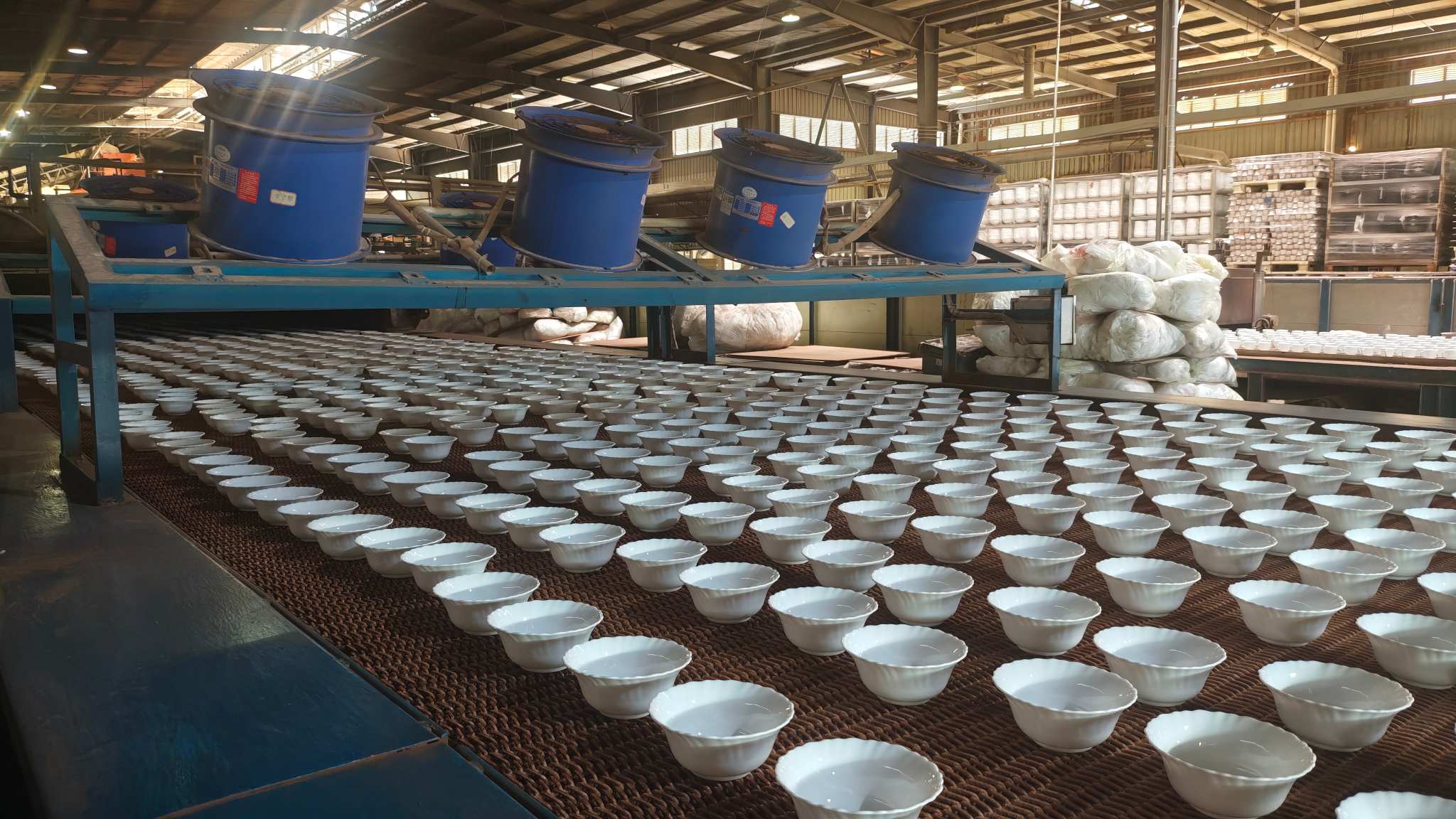
The real question in direct sourcing is not one quote, but whether the factory can deliver consistently over time. Start with the product range on Jointion’s website, then ask the factory for samples, test documents, and lead-time confirmation for the specific model. That moves the conversation to an executable order faster.