
This dinner plate size guide explains the standard plate sizes used at home, in Western place settings, restaurants, banquets, and buffets, along with the dishes each size suits best. You’ll see how 10-, 11-, and 12-inch plates actually differ, and how dinner, salad, dessert, and charger plates work together as a set. Whether you’re buying for a household, stocking a restaurant, or planning a hotel banquet, you’ll know how to set the dinner plate first, then fill in the other sizes based on portions, menu items, and plating style. No jargon—just practical size ranges you can apply to real settings, with fewer wrong purchases and less excess inventory.
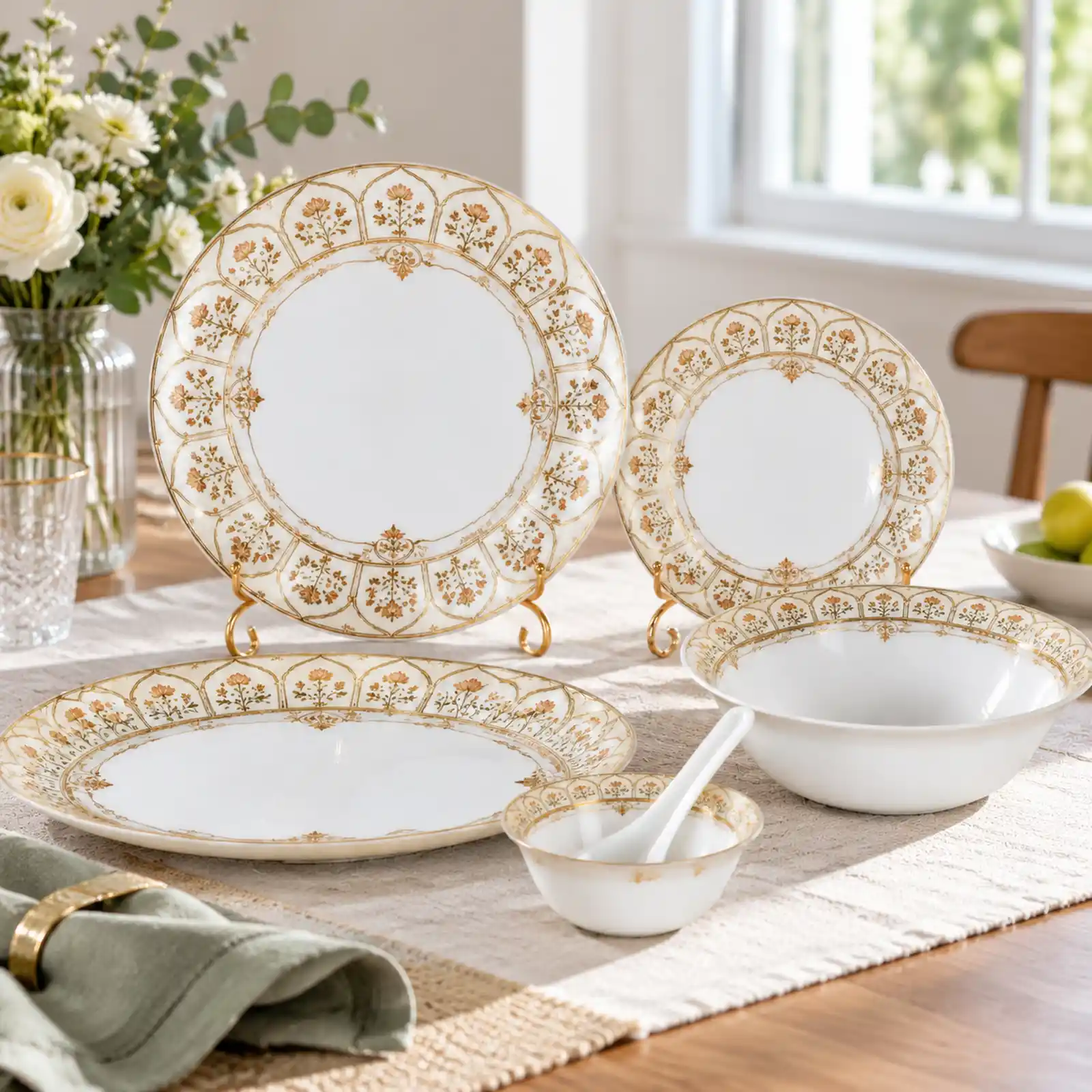
Dinner Plate Size Chart: Common Sizes and Uses
Start with the role each of these four plates plays in a place setting. The sizes below are common selection ranges, not mandatory standards.
| Plate type | Common diameter | Role in the place setting | Main use |
|---|---|---|---|
| Dinner plate | 10–12 inches | Main course plate and size baseline | Entrées and single-serving meals |
| Salad plate | 7–9 inches | One size down from the dinner plate | Salads, appetizers, and sides |
| Dessert or side plate | 5–7 inches | Small-portion plate | Desserts, bread, and small bites |
| Charger | 12–14 inches | Base layer | Frames the dinner plate; not used for serving food |
Standard Dinner Plate Size: 10–12 Inches, the Main Plate in a Full Place Setting
Plate size starts with the dinner plate. It holds the entrée and is the most frequently used serving plate in the set. Once it’s set at 10 to 12 inches, the salad, dessert, and charger plates have a stable point of reference, so the setting doesn’t fall out of proportion.
The range comes from long-standing hotel, restaurant, and Western table-setting practice rather than a mandatory regulation. EHL’s table setting guide lists dinner plates at 10 to 12 inches and uses them for the main course. A typical entrée includes protein, a starch, and vegetables, so the plate must fit all three while leaving room for sauce and a clean rim. Ten inches is compact, 12 inches is more generous, and 11 inches sits in between.
Starting with the dinner plate also makes sense when buying a matching set. When you shop for Jointion glass dinnerware, check the actual outer diameter of the dinner plate first, then pair it with salad and side plates. The set will hold its proportions better, and there’s less risk of mixing the wrong sizes.
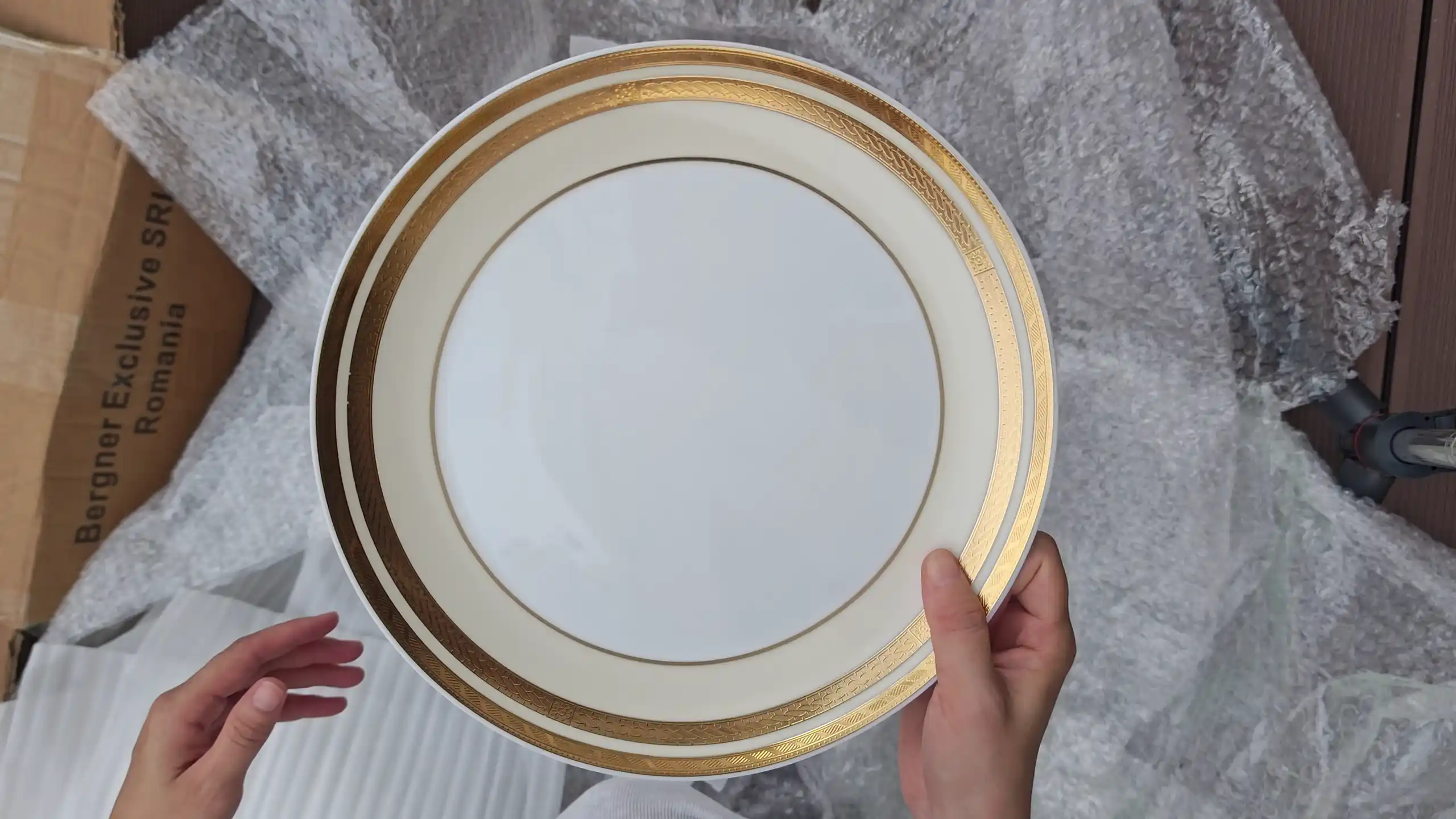
Salad Plates: 7–9 Inches, About 3 Inches Smaller Than Dinner Plates
With a 10- to 12-inch dinner plate, a salad plate falls around 7 to 9 inches—about 3 inches smaller. That gap isn’t arbitrary; it gives salads, appetizers, and sides a clear visual hierarchy at the table.
A salad plate holds only a small portion of greens, dressing, and a few garnishes, so it doesn’t need the full zones of a dinner plate. A smaller surface makes the food look fuller, rather than scattered. A 7-inch plate suits a single appetizer or small side; 9 inches works better for a larger salad or a salad that needs room to be tossed. EHL’s table setting guide also lists salad plates at 7 to 9 inches, one step below the dinner plate.
A 10.5-inch dinner plate with a 7.5-inch salad plate, or a 12-inch dinner plate with a 9-inch salad plate, both look balanced. The 3-inch difference is easy to see, yet the smaller plate still has enough room for a normal serving.
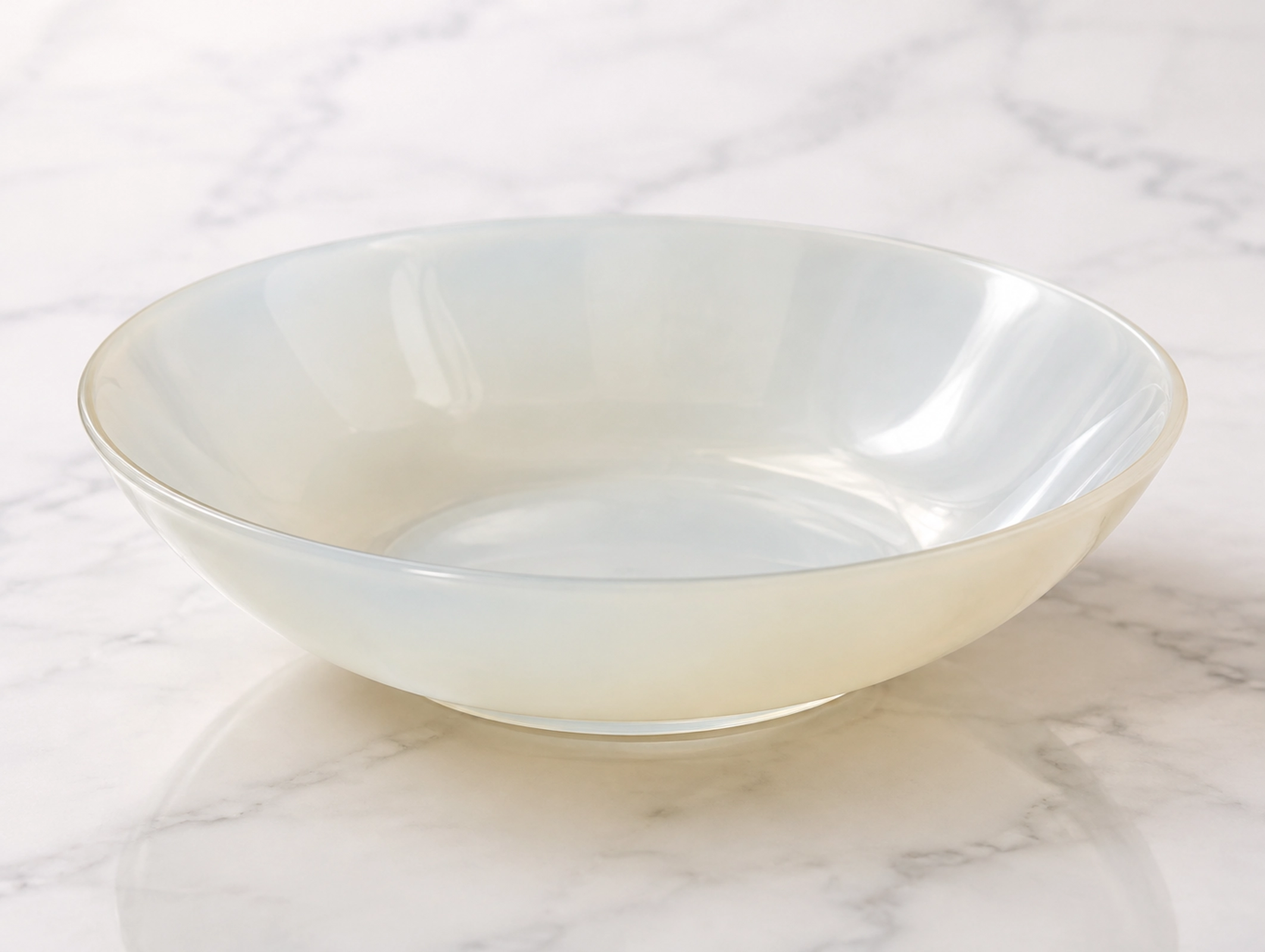
Dessert Plates: 5–7 Inches, About Half the Diameter of a Dinner Plate
Dessert plates are commonly 5 to 7 inches, roughly half the diameter of a 10- to 12-inch dinner plate. They’re smaller because desserts, bread and butter, and small bites are smaller portions; the plate only needs to hold the food and a light garnish.
Five inches suits bite-size desserts, macarons, or a small serving of fruit; 6 to 7 inches gives a slice of cake, pie, or fruit tart more room for sauce and decoration. EHL’s table setting guide places 5- to 7-inch plates in the small-plate category, often used for bread and butter. In home settings, using the same small plate for dessert and bread is common—just keep the purpose and position clear.
For a full slice of cake or a tall fruit tart, move up to 7.25 to 8.5 inches, the dessert plate range cited by formal table-setting references. Keep small desserts at 5 to 7 inches and size up only when the portion calls for it; the place setting still looks balanced. If you’re buying a full set, matching Opal Glass dinnerware sets make it easier to check the dinner, salad, and small-plate sizes together instead of pairing each piece on its own.
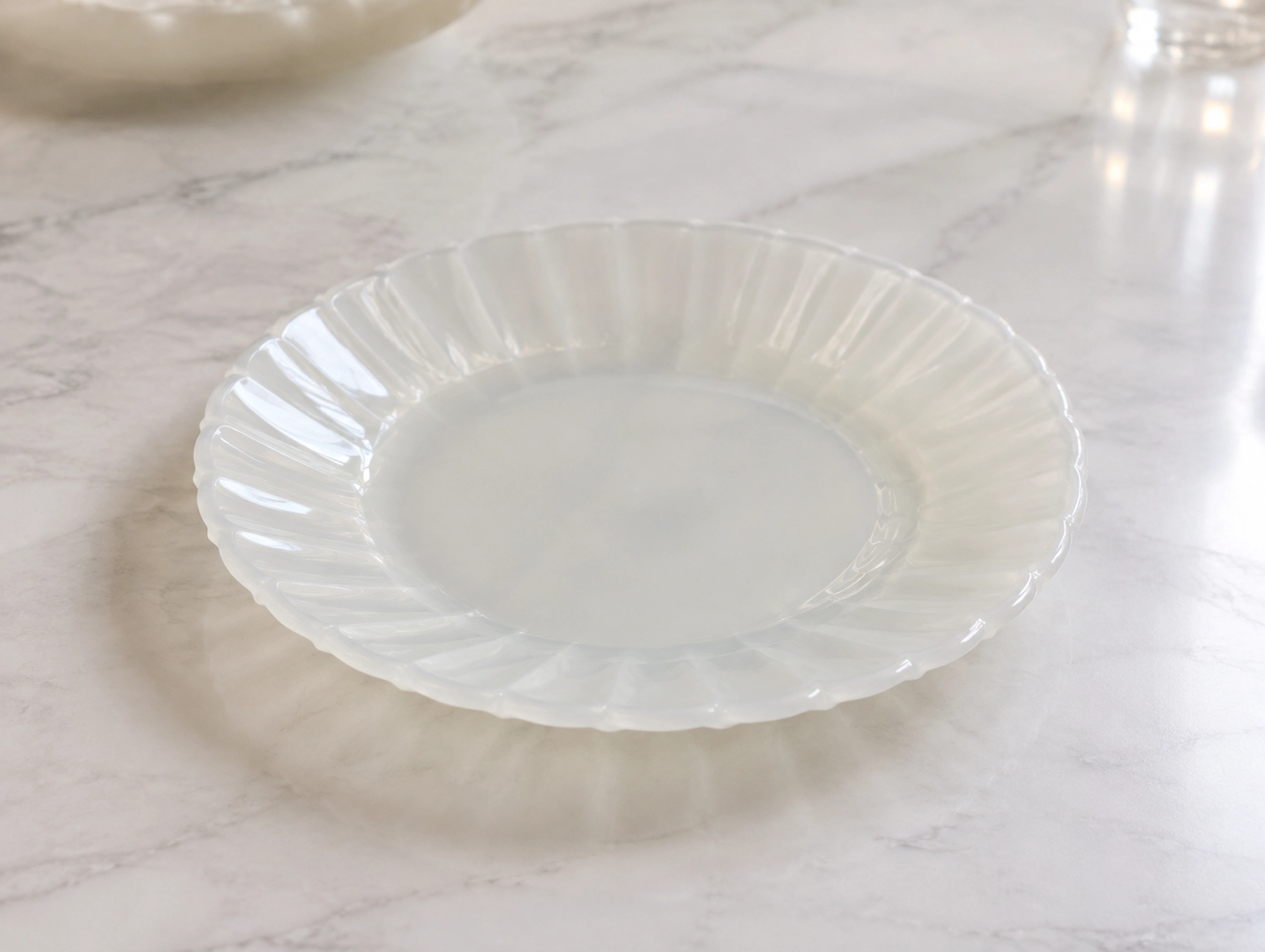
Chargers: 12–14 Inches, Usually 2–4 Inches Larger Than the Dinner Plate
Chargers measure 12 to 14 inches because they sit beneath the dinner plate and create a visible border; they are not used to serve food. The dinner plate sits in the center, leaving an even ring of the charger exposed, which adds depth to the place setting.
Etiquette Scholar’s plate size guide lists service plates at 11 to 14 inches and specifies that a formal charger should show at least 1 inch around the appetizer plate. The 12- to 14-inch range fits comfortably within that formal range. A 2- to 4-inch difference in diameter leaves about 1 to 2 inches exposed on each side, so the two plates read as layers without crowding the place setting.
A 10-inch dinner plate on a 12-inch charger leaves 1 inch on each side; an 11-inch dinner plate on a 14-inch charger leaves 1.5 inches. The charger must look visibly larger than the dinner plate, or the border serves no purpose. Its size is set by the proportions of the place setting, not by the portion of food.
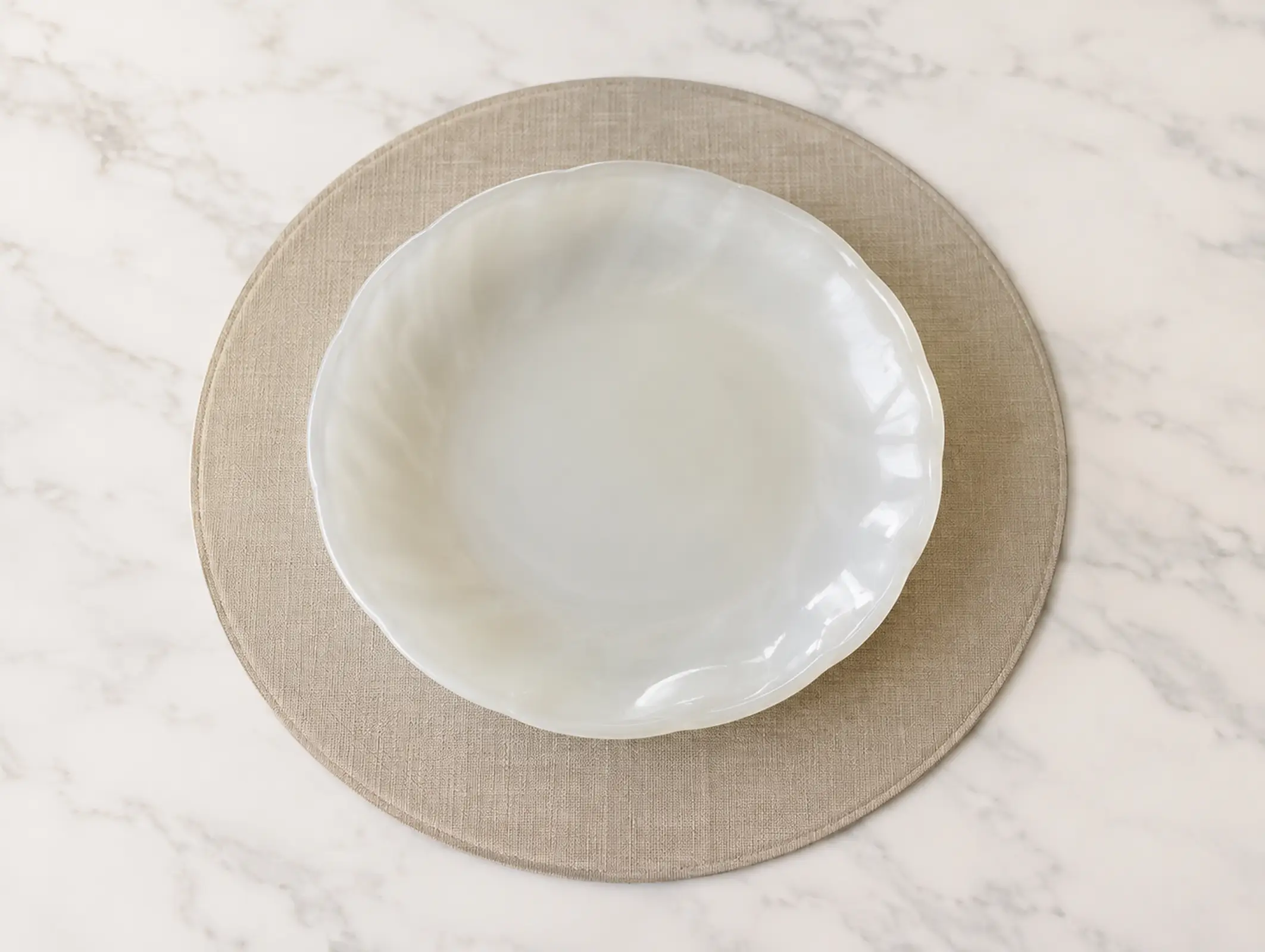
What’s the Difference Between 10-, 11-, and 12-Inch Dinner Plates?
The difference between these sizes may sound small, but the surface-area gap is significant. The dinner plate dimensions below assume round plates with similar profiles; the usable food area still depends on rim width.
| Nominal size | Actual diameter | Round surface area (10 inches = 100) | Best suited to |
|---|---|---|---|
| 10 inches | 25.4 cm | 100 | Single-serving entrées and light meals |
| 11 inches | 27.9 cm | 121 | Medium entrées, sauce, and multiple sides |
| 12 inches | 30.5 cm | 144 | Large entrées, bone-in dishes, and shareable plates |
A 10-Inch Plate Is About 25 cm and Fits a Single-Serving Entrée
A 10-inch plate is about 25 cm across and suits a complete but restrained single-serving entrée. A chicken breast or fish fillet, a portion of rice, and a little veg fit with enough space left for sauce.
Its advantage is compactness. The rim doesn’t take over the place setting, leaving more room for a soup bowl, bread plate, and glassware. Cbhoreca’s dinnerware sizing guide pairs 9- to 10-inch plates with smaller 4- to 6-ounce protein portions and allows 30% to 40% of the plate to remain visible as part of refined plating. When the portion is modest and the presentation is deliberate, a 10-inch plate keeps the entrée focused instead of spreading it across the center.
Don’t judge capacity by the weight of the protein alone. If the protein, starch, vegetables, and sauce can be separated and there’s still room at the rim, 10 inches is the right fit.
An 11-Inch Plate Is About 28 cm and Suits Medium-Sized Entrées
An 11-inch plate is about 28 cm across, roughly 2.5 cm more than a 10-inch plate. That small jump in diameter adds about 21% more surface area—enough for sauce, garnish, and a second side.
That’s why 11 inches is the safer middle ground. It’s more forgiving than 10 inches, so the entrée doesn’t crowd the rim, yet it takes up less space than a 12-inch plate and doesn’t make a standard single serving look sparse. Place the protein slightly below center, set the starch and vegetables on either side, and leave a clean band at the rim; the plate already looks complete.
For menus built around 5- to 7-ounce protein portions with a starch and vegetables, an 11-inch plate covers most hot entrées. It strikes a balance between “fits comfortably” and “doesn’t look oversized.” If you’re torn between 10 and 11 inches, compare the actual outer diameter and profile in Jointion’s Opal Glass plate collection; that’s more reliable than shopping by nominal size alone.
A 12-Inch Plate Is About 30 cm and Offers the Most Surface Area
A 12-inch plate is about 30 cm across and offers roughly 44% more surface area than a 10-inch plate. It suits large entrées, bone-in dishes, and shareable plates. Tomahawk steaks, whole fish, seafood platters, and mixed grills all have room for bones, shells, sides, and sauce.
The extra space matters most with shareable dishes. Put the main item in the center, serving utensils on one side, and sides on the other, so guests don’t have to pile everything together. Cbhoreca’s guide also pairs 6- to 8-ounce large protein portions with 11- to 12-inch plates.
The value of a 12-inch plate is size and sharing, not a higher level of presentation. A small, delicate appetizer will get lost on it. Bring it out when there are bones, shells, layers, or a serving action that needs to be seen.
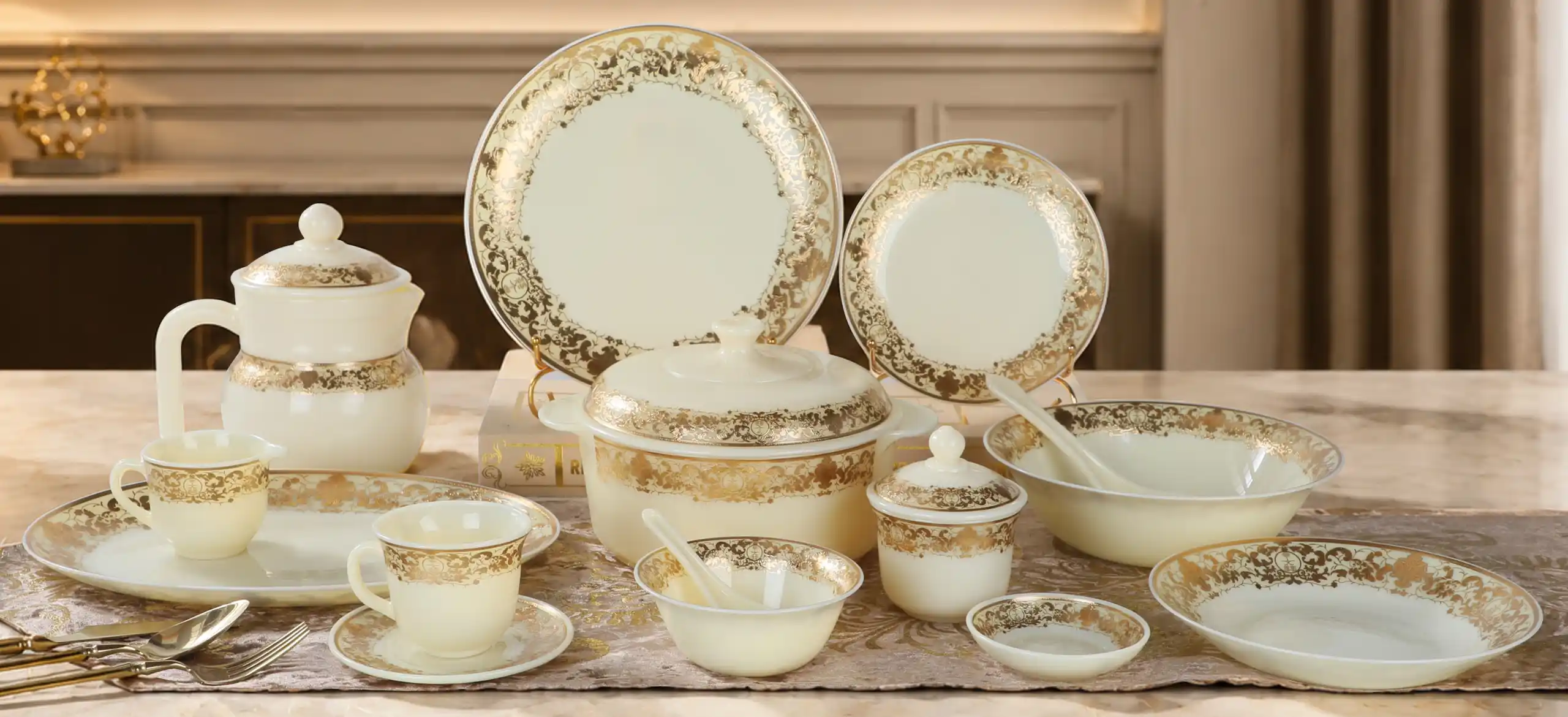
Restaurant Dinner Plate Sizes: What Do Most Restaurants Use?
Restaurants Most Often Use 10.5- to 11-Inch Dinner Plates
Restaurants most often use 10.5- to 11-inch dinner plates because that range balances portion size, place-setting space, and kitchen output. It holds a standard entrée without making every table feel crowded by oversized plates.
Cbhoreca’s hospitality dinnerware sizing guide gives a specific casual-dining formula: 5 to 7 ounces of protein, 3 to 4 ounces of starch, and 3 to 4 ounces of vegetables on a 10.5- to 11-inch plate, with about 20% to 30% of the surface still visible. That ratio does real work:
- The protein has a clear center and isn’t buried by sides.
- The starch and vegetables can sit apart, so the plate looks complete.
- There’s enough clean rim to keep sauce away from the tablecloth.
- One size can cover lunch, dinner, and most entrées.
At service, the difference between 10.5 and 11 inches is barely noticeable; the choice usually comes down to plate profile and menu style. A flat plate exposes its usable area more directly, while a wide-rim plate uses more of its diameter on the border. For chains and hotels, standardizing restaurant dinnerware sizes simplifies purchasing, stock, and breakage management. When you need to evaluate size, stacking, and turnover together, the commercial kitchen guide to Opal Glass tableware is a useful next step.
12-Inch Plates Are Used for Large Entrées and Shareable Dishes
The 12-inch plate is a supplemental size in restaurants, mainly for large entrées and shareable dishes. The issue isn’t making an ordinary entrée bigger; it’s accommodating a dish that takes up more physical space.
Bone-in steaks need room for the bone and carved edge, whole fish need room for the head and tail, and seafood platters need space for shells and dipping sauce. Once a protein portion reaches 6 to 8 ounces, 11 to 12 inches is more comfortable, and the sizing guide matches that range to larger protein portions. Tableside serving also needs extra room.
Restaurant buyers can keep 10.5- to 11-inch plates as the default and add a smaller quantity of 12-inch plates only for dishes that need them. Give the extra size to the shareable dishes, not the whole menu. You keep the visual impact of a shareable plate without upscaling every entrée.
10-Inch Plates Are Often Used for Appetizers, Light Meals, and Kids’ Meals
A 10-inch plate works for appetizers, light meals, and kids’ meals because these portions are smaller than a standard entrée and don’t need the full surface of a dinner plate. A small portion looks more complete on a 10-inch plate.
A salad, sandwich, small pasta dish, or kids’ set can look lost on a 12-inch plate. On a 10-inch plate, the main item is more focused and the sides can sit around it. It also takes up less space than a full dinner plate, which helps at lunch, afternoon tea, and tables with tight seating.
Kids’ meals especially shouldn’t default to an 11- or 12-inch adult dinner plate. Children’s portions are usually smaller than adult entrées, and the larger the plate, the thinner the food looks. If a kids’ set includes a main, a starch, and sides, 10 inches can be a more compact option than the adult plate; for smaller portions, confirm the surface area against the actual serving.
Banquet Dinner Plate Sizes: What Works for Plated Service and Buffets?
Choose 10- to 11-Inch Dinner Plates for Plated Banquet Service
Choose 10- to 11-inch dinner plates for plated banquet service because the kitchen controls each portion and the plate must look complete while remaining easy for servers to carry and clear. Modern formal table-setting references also list 10 to 11 inches as a dinner plate size.
Banquet menus often combine protein, starch, vegetables, and sauce, but each portion is weighed or portioned in advance. A 10- to 11-inch plate gives those elements a stable composition without making a fixed portion look sparse. The rim also leaves servers room for their fingers when carrying, setting, and clearing plates.
If the banquet follows a standard three-course menu, build the main plate around 10 to 11 inches. Add a 12-inch plate only for large presentation dishes or shareable items; the whole banquet doesn’t need to scale up.
Choose 11- to 12-Inch Dinner Plates for Buffets So Guests Can Take Several Items at Once
Choose 11- to 12-inch plates for buffets because guests need to fit a main, sides, salad, and sauce on one plate with enough room to separate them. Eleven inches suits a standard buffet menu; 12 inches is better for carving stations, seafood, and items that need to be served whole.
Plate size also affects how much food people expect to take. The Appetite plate-mapping study found that participants drew an average of 26% more food on 11-inch paper plates than on 9-inch plates. The study measured drawn food, not actual buffet intake, but it’s a useful reminder to operators that bigger isn’t automatically better. The choice between 11 and 12 inches should reflect both separation needs and how service is run.
When the buffet leans toward light meals, salads, and portioned hot dishes, 11 inches helps keep the line orderly. When it includes carved meat, whole fish, sushi, and multiple sides, 12 inches gives guests more room. Offering both sizes is often closer to real serving behavior than using one size across the board.
Formal Banquet Chargers Are Usually 2–4 Inches Larger Than the Dinner Plate
For banquet tableware sizes, the charger is scaled around the dinner plate, usually 2 to 4 inches larger. A 10- to 11-inch dinner plate pairs with a 12- to 14-inch charger, leaving about 1 to 2 inches exposed on each side and keeping the border and dinner plate in clear proportion.
Table-setting references set the service plate at 11 to 14 inches and require at least 1 inch of the charger to show around the edge. The rule is about visual framing: the dinner plate sits centered, the exposed border is even, and the layering reads at a glance.
A 10.5-inch dinner plate on a 13-inch charger shows 1.25 inches on each side; an 11-inch dinner plate on a 14-inch charger shows 1.5 inches. The charger only frames the dinner plate and doesn’t hold food, so its size follows the dinner plate. When Jointion quotes glass chargers as a set by outer diameter, buyers can use this difference to calculate the setting before samples arrive instead of guessing at the proportions.
How Should You Choose Plate Size Based on the Dish and Plating Style?
Bone-In and Shell-On Dishes Need Room for Bones and Shells, So Choose 11–12 Inches
Choose 11- to 12-inch plates for bone-in and shell-on dishes because the edible portion isn’t the only thing taking up space. Bones, shells, and trimmed edges need room too. If you choose the plate by meat weight alone, it will almost certainly feel crowded.
A tomahawk’s bone handle, a whole fish’s head and tail, and crab claws or lobster shells all have length and width. On a 10-inch plate, they push against the rim and leave nowhere for sauce or sides. An 11- to 12-inch plate can separate the eating area, the bone-and-shell area, and the sauce area, while still leaving guests room to maneuver.
- Bone-in steak: check the length of the bone handle first, then the weight of the meat.
- Whole fish: the inner diameter must exceed the length of the fish so the head and tail don’t hang over the rim.
- Crab and lobster: leave rim space for shells so they don’t pile back beside the food.
These dishes call for a larger plate because of their footprint, not simply their portion size. The more bones and shells, the more open surface you need. Boneless, sliced versions of the same dishes can move back down to 10 to 11 inches.
Choose 10–11 Inches for Small, Refined Plating
Choose 10 to 11 inches for small, refined plating so the food has breathing room without being swallowed by empty space. A contained surface lets the main ingredient, sauce dots, and garnish become the focal point.
The Obesity Science & Practice plate study found that when the same dish was shown on a smaller plate, participants estimated greater satiation and lower intake. That helps explain why small, refined dishes don’t benefit from a 12-inch plate: there isn’t much food to begin with, and expanding the surface weakens the focal point.
Ten inches suits appetizer-style portions or simple entrées; 11 inches suits entrée-style portions that need more sauce and garnish. Negative space should serve the presentation, not signal luxury by default. Too little looks crowded; too much leaves the plate feeling empty.
Wide-Rim Plates Should Be Chosen by Usable Surface—Usually One Size Larger Than a Flat Plate
Choose wide-rim plates by usable surface because the nominal diameter measures the full outer edge, while only the inner well holds food. The wider the rim, the greater the gap between outer diameter and usable surface. If you choose the same nominal size as a flat plate, the food may not fit.
At the same nominal size, a wide-rim plate usually has a smaller inner well than a flat plate. Going up one outer size often just restores the area lost to the rim. Measure the flat, usable center first, then compare it with a plate you already use. If a 10-inch wide-rim plate doesn’t have enough inner surface, look at 11 inches; rim widths vary, so “one size up” is a useful starting point, not a fixed formula.
Rim width also changes how people judge portion size. The International Journal of Obesity rim-width study found that a wide rim made the food’s diameter appear about 5% larger and its visual area about 10% larger. A wide-rim plate is therefore not simply a flat plate with a bigger outer measurement; it changes both usable space and perception. When requesting a quote from a supplier such as Jointion, put the outer diameter, inner diameter, and usable surface in the specification, then compare them using the same dish. That makes the selection far more reliable. To compare flat and wide-rim plates within the same white Opal Glass range, see Simply White Opalware’s guide to sets and sizes.