
What is the best dinnerware material for a restaurant? It’s a question many people ask before opening their doors. This article covers common questions about ceramic, glass, bone china, opal glass, and melamine, including where each material works best.
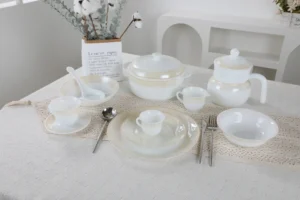
What Are the Most Common Restaurant Dinnerware Problems?
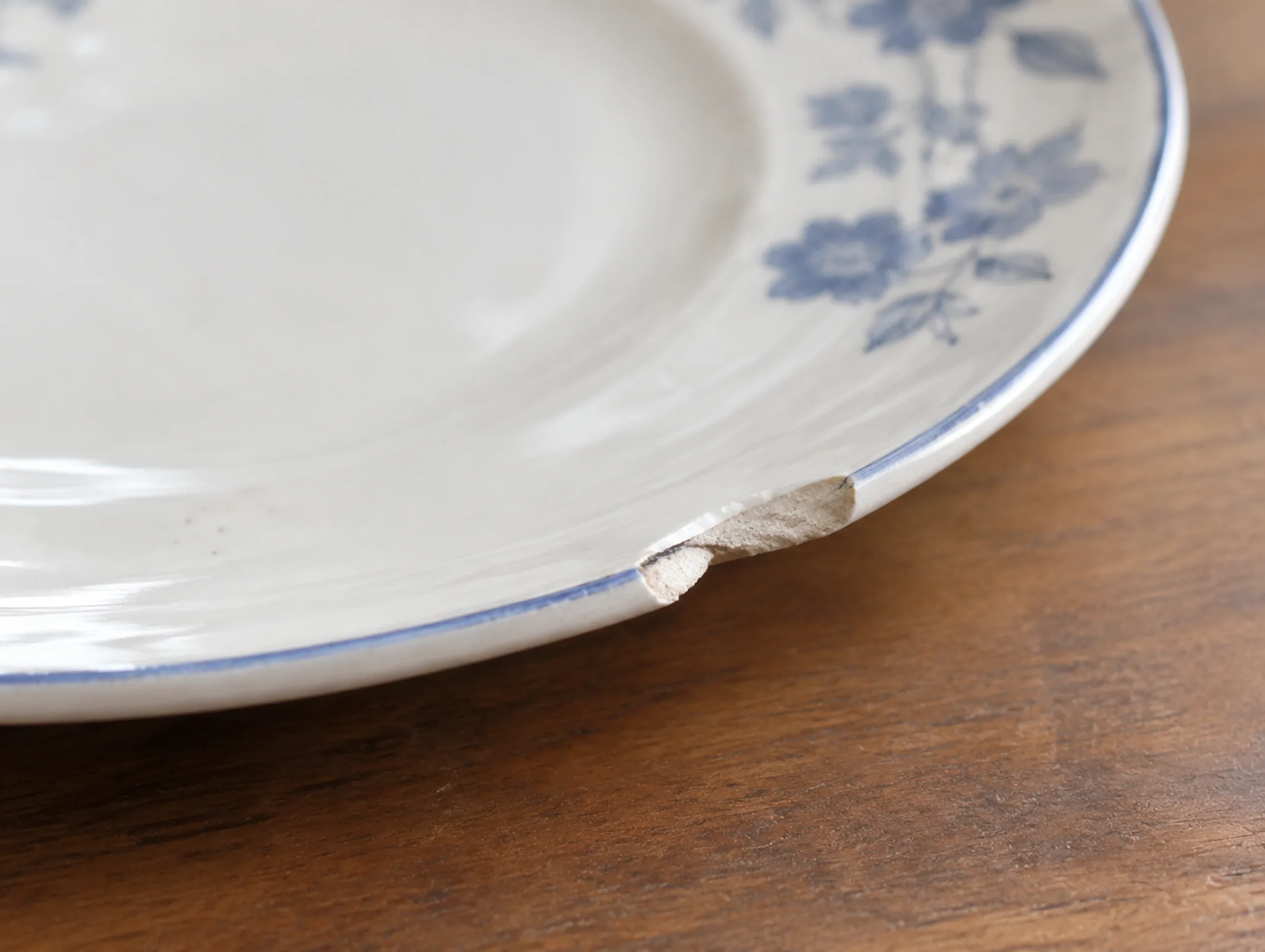
Breakage and Chipped Edges Lead to Frequent Replacements
Restaurant dinnerware takes knocks when it’s cleared, stacked, washed, and moved. Servers carry several plates at once, while kitchen staff load them into dishwasher racks and stack them after washing. Repeated impacts on plate rims and bowl edges can cause chips or cracks.
Beyond the cost of the plates themselves, breakage can also mean:
- Taking chipped pieces out of service, leaving too few during busy periods.
- Color differences between replacement and older batches, making the set look mismatched.
- Fragments entering work areas, increasing the risk of cuts to staff or contact with guests.
- Higher unit prices, shipping fees, and coordination costs for small replacement orders.
Restaurants already have ongoing costs for ingredients, labor, and rent. Replacing dinnerware frequently adds to those expenses.
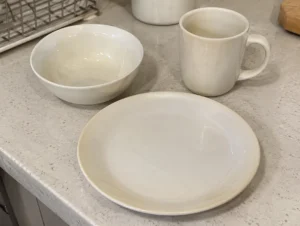
Yellowing and Stains Make Dinnerware Look Worn After a Few Washes
Dinnerware that still looks yellow or gray after washing may be affected by surface wear, food residue, or cleaning conditions. Coffee, tea, curry, and tomato sauce can leave stains, and tiny scratches can make those stains harder to remove. Plates that don’t look clean can also affect a guest’s first impression.
Some common examples include:
| Common issue | Possible cause |
|---|---|
| A gray or black ring around the rim | Friction from stacking and wear on the edge |
| Persistent tea or coffee stains inside bowls | Fine scratches or rough areas on the surface |
| The entire piece gradually turns yellow | A poor match between the material, glaze, or cleaning detergent |
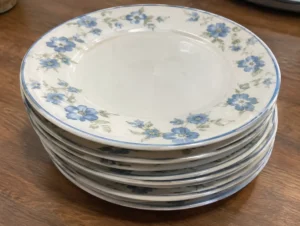
Heavy Plates and Unstable Stacks Slow Down Table Clearing
Heavy plates limit how many employees can carry at once. Unstable stacks slow them down and make collisions between pieces more likely. During busy periods, these small delays add up across clearing, washing, and resetting tables.
Ceramic, Glass, Bone China, and Melamine: What Problems Does Each Solve for Restaurants?
Ceramic: Heat-Resistant and Easy to Clean for Full-Service and Home-Style Restaurants
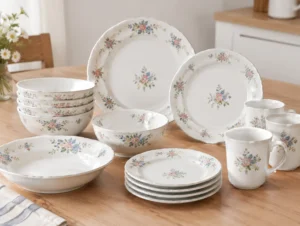
Ceramic works well for hot dishes, soups, rice, and noodles. When the glaze is intact, the smooth surface makes grease and sauces easier to clean and is less likely to retain food odors. Its familiar appearance also suits the way most hot meals are served in home-style and everyday full-service restaurants.
For full-service restaurants, ceramic’s two most practical benefits are serving hot food and making daily cleaning easier. Casserole dishes, ordinary porcelain plates, and porcelain bowls don’t all have the same heat resistance, so follow the instructions for each product. For oven use, open flames, or sudden temperature changes, rely on the supplier’s stated temperature range and thermal shock test results.
If you’re still weighing the differences between ceramic, bone china, and glass, read the comparison of opal glass, ceramic, and bone china, then consider how intensively your restaurant will use each material.
Glass: Clear and Clean-Looking for Cafés and Dessert Shops
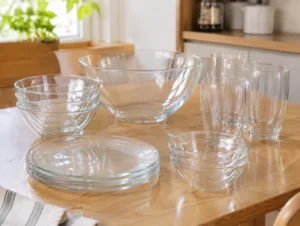
Clear glass puts the food itself in focus. It shows off the layers of a coffee drink, the colors of a dessert, or the fresh look of a salad. Glass that remains clear after washing can also give guests a clean, light impression.
These qualities are especially useful in cafés, dessert shops, brunch venues, and restaurants serving lighter meals. Customers often look at a product before deciding whether to photograph or share it. Clear cups and plates leave food colors visible and pair easily with wood, metal, or light-colored tabletops.
When buying glass dinnerware, restaurants can focus on:
- Whether cup rims and plate edges are even and smooth to the touch.
- Whether the glass stays clear after repeated washing, without noticeable water marks or clouding.
- Whether cups and plates sit securely in commercial dishwasher racks.
- Whether the supplier provides information on rim strength, thermal shock, and dishwasher compatibility.
Bone China: Lightweight and Refined for Fine Dining and Banquets
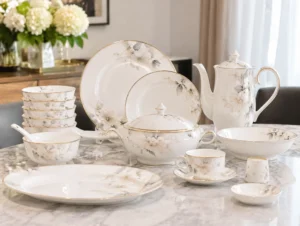
Bone china’s strengths are most apparent on the table. Its thin walls, whiteness, and translucency create a more refined setting. Fine dining, banquets, wedding receptions, and afternoon tea often place value on a sense of occasion, making bone china a good match.
It also complements the food. A light-colored plate brings out sauces, garnishes, and plating details, while its lighter weight lets servers carry and clear dishes with greater ease. For higher-priced restaurants, dinnerware is also part of the brand experience, so its value isn’t measured by the purchase price of a single piece alone.
Melamine: Durable and Drop-Resistant for Fast Food, Buffets, and Outdoor Dining
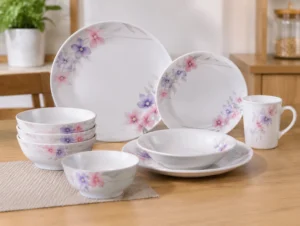
Melamine helps address breakage and turnover in high-turnover settings. It’s lightweight and less likely than ceramic to chip or crack during everyday bumps. Fast-food restaurants, buffets, cafeterias, and outdoor venues clear tables quickly, and staff often carry many pieces at once. Melamine can reduce replacement needs and make trays easier to carry.
Melamine is suitable for serving a variety of fast-food and buffet meals at the table. When food needs reheating, use a microwave-safe container first, then transfer it to melamine dinnerware for service. The FDA’s guidance on heating melamine tableware also recommends using another suitable container for heating rather than putting melamine dinnerware directly in the microwave.
What Is the Best Dinnerware Material for Different Types of Restaurants?
The best choice depends on the menu, serving temperatures, table turnover, presentation requirements, and replacement budget. Use the table to narrow down the options, then make a final decision after testing samples.
| Restaurant type | Material to consider first | Main reason | What to check when buying |
|---|---|---|---|
| Everyday full-service and home-style restaurants; soup, rice, and noodle shops | Ceramic | Heat-resistant, easy to clean, and a natural fit for serving hot dishes | Rim strength, weight, and glaze condition |
| Fine dining, banquets, and afternoon tea | Bone china | Lightweight, white, and refined on the table | Consistency between batches, replacement lead times, and sorting for dishwasher racks |
| Cafés, dessert shops, and light-meal venues | Glass | Clear, showing the layers in drinks and food | Clarity, rims and edges, thermal shock, and dishwasher compatibility |
| Mid- to upscale full-service restaurants, hotel buffets, and restaurant chains | Opal glass | A porcelain-like appearance, with strengthened commercial products available | Strengthening method, drop tests, thermal shock, and dishwasher cycles |
| Fast food, buffets, cafeterias, and outdoor dining | Melamine | Lightweight, drop-resistant, and efficient to handle | Raw materials, surface condition, temperature range, and food-contact compliance |
Ceramic: Heat-Resistant and Easy to Clean for Everyday Full-Service Dining
Ceramic is often a leading choice for everyday full-service restaurants, home-style eateries, neighborhood restaurants, and soup, rice, and noodle shops. Their menus typically include hot dishes, soups, rice, and noodles, served hot with an emphasis on practical, familiar presentation. When the glaze is intact, grease is easier to clean. There are also plenty of shapes to choose from, so bowls, plates, soup bowls, and small dishes can form a coordinated set.
Ceramic works especially well in restaurants with moderate table turnover and a steady kitchen workflow. With established clearing and washing routines, staff can sort plates and bowls into racks by size, making breakage easier to manage. If stacks are particularly high, the restaurant has many outdoor seats, or tables are frequently cleared quickly at peak times, consider pieces with thicker edges that stack securely, and test them in actual service first.
Bone China: Lightweight and Refined for Fine Dining
Bone china is well suited to fine dining, banquet halls, wedding receptions, and afternoon tea. Guests in these settings pay attention to the table setting, service, and details of each dish. Bone china’s thin profile, whiteness, and translucency make the table look more formal and complement intricate plating.
For higher-priced restaurants, the purchase price is only one part of the decision. Also consider how many pieces each guest uses, stock for peak banquet service, replacements for breakage, and the risk of a pattern being discontinued. When servers can carry dishes steadily, the dishroom can sort them into racks, and matching spare pieces are on hand, the investment in bone china is more likely to support a consistent dining experience.
Glass: Clear and Clean-Looking for Cafés and Dessert Shops
Clear glass is often a better fit for cafés, dessert shops, light-meal venues, brunch service, and hotel afternoon tea. It shows the layers of coffee, the colors of iced drinks, the cut surface of a cake, and the colors in a salad. The more a product relies on its visual appeal, the more directly glass can show it off.
Glassware also makes it easier to create a consistent look. For example, drinking glasses, dessert bowls, and cake plates with similar clarity and lines can help menu photos, social media images, and items served in person look more consistent. Guests see colors close to those of the food itself, along with a clear impression of cleanliness.
Opal Glass: A Ceramic and Bone China Look with Better Drop Resistance for Restaurants
Mid- to upscale full-service restaurants, hotel buffets, banquet venues, and restaurant chains that want a white porcelain-like look while reducing everyday breakage can try strengthened commercial opal glass. It resembles ceramic or bone china; choosing a product suited to the demands of restaurant service can help balance table presentation with everyday use.
Opal glass gets its white appearance from the glass itself. The Corning Museum of Glass definition of opal glass describes it as milky white, translucent glass. Made into plates and bowls, it can create a white tabletop look similar to porcelain. Resistance to impacts depends on the manufacturing process and design of the specific product.
Opal glass is especially suited to restaurants that want to:
- Reduce replacements because their current ceramic dinnerware chips frequently.
- Keep a white, upscale table setting when bone china is too costly.
- Find a more porcelain-like option when melamine’s look and feel don’t match the restaurant’s price point.
- Keep shapes, colors, and batch consistency more uniform across a restaurant chain.
For coordinated plates, bowls, and other pieces, explore the available styles in the opal glass dinnerware collection, then confirm matching replacements and bulk-order terms with the supplier.
Melamine: Durable and Drop-Resistant for Fast Food and Buffets
Melamine is often a better fit for fast food, buffets, cafeterias, institutional catering, outdoor venues, and children’s restaurants. These settings have fast turnover and large volumes of dishes, making it difficult to handle every piece gently when clearing tables. Lightweight and resistant to everyday knocks, melamine can make carrying and turnover more efficient.
The menu determines how best to use it. Room-temperature dishes, fast-food platters, and food served for short periods are a good match; high-temperature heating can be done in suitable heat-resistant containers. For highly acidic sauces or hot soups, the supplier’s guidance can help determine a more suitable way to serve them.
Which Well-Known Brands and Production Areas Should You Consider When Buying Dinnerware from China?
A practical way to explore China’s dinnerware supply chain is by material and production area. The regions below have relatively concentrated groups of brands and factories in each category.
Ceramic Production Areas: Brands Are Concentrated in Chaozhou and Jingdezhen
Chaozhou and Jingdezhen are common starting points for sourcing hotel ceramics and everyday porcelain tableware. Chaozhou has a concentration of everyday ceramics, hotel dinnerware, and supporting export services. Its wide selection of shapes suits full-service chains, hotels, and wholesale orders. Jingdezhen is better known for porcelain craftsmanship, design, and cultural identity, making it suitable for restaurants that emphasize brand identity and table style.
For an initial brand shortlist, consider Songfa Ceramics in Chaozhou and Hongye Ceramics in Jingdezhen. Songfa offers everyday porcelain and tableware, making it worth considering for large-scale supply and coordinated collections. Hongye is part of the Jingdezhen Ceramic Group and may appeal more to buyers interested in high-white porcelain, bone china, and Jingdezhen style. Their positioning differs, so restaurants should request samples based on the shapes, minimum order quantities, and replacement lead times they need.
Production areas help buyers narrow the supplier search, but the final decision still comes down to the product and the factory’s capabilities. Check:
- Whether the glaze is even and free of pinholes, black spots, and noticeable color differences.
- Whether plate rims, bowl edges, and bases can withstand the restaurant’s stacking and dishwashing demands.
- Consistency across batches of the same product, and the ability to reorder after six months or a year.
- Food-contact material tests and compliance documents required for the target market.
Glazes and decorations can come into direct contact with food, so food-contact compliance belongs in the factory audit. The FDA’s guidance on lead-glazed traditional pottery notes that some traditional pottery glazes or decorations may contain lead, which can migrate into food and drinks if the pottery is improperly manufactured. When sourcing from Chaozhou or Jingdezhen, check glaze and firing controls as well as the test documents required for the target market. Compliance documents should also correspond to the products actually ordered.
Bone China Production Areas: Brands Are Concentrated in Zibo and Tangshan
Zibo and Tangshan are common places to explore when sourcing bone china and hotel porcelain. Both have well-established industries. Suppliers are familiar with requirements for whiteness, shapes, decorative patterns, and coordinated hotel ranges, and have experience with banquet, wedding, and fine-dining orders.
Candidates in this category include Hualight in Zibo and Red Rose Bone China and Longda Bone China in Tangshan. Hualight is known for its premium tableware collections. Red Rose and Longda have long offered bone china products, making them useful options for comparing banquet sets, custom patterns, and future replacements. Brand names help narrow the list; evaluate the bulk order against samples from the same batch.
Melamine Production Areas: Brands Are Concentrated in Fujian and Guangdong
Melamine dinnerware suppliers are concentrated in Fujian and Guangdong, where mold development, color selection, and new shapes move relatively quickly. Fast-food restaurants, buffets, institutional caterers, and restaurant chains looking for a consistent visual identity can find established suppliers in these areas for standard products or custom development.
Among Guangdong’s commercial melamine businesses, consider MJM and Thousand Perfection, and confirm each company’s current commercial collections, minimum order quantities, mold development, and customization capabilities. Many Fujian suppliers take orders as OEM/ODM factories, and their publicly visible brands are more dispersed. It can therefore be more useful to assess them individually by raw-material information, food-contact testing, mold capabilities, and export history.
When screening factories, check these three areas in order:
- Materials and compliance: Confirm raw-material information, food-contact tests, and the product’s suitable temperature range.
- Molds and surfaces: Check that edges are even and look for burrs, color differences, and misaligned prints.
- Scale and replenishment: Ask about mold storage, peak-season capacity, and future replacement lead times to help keep batches consistent across chain locations.
Glass Production Areas: Brands Are Concentrated in Shandong and Anhui
For clear glass dinnerware, Shandong and Anhui are worth exploring. The Zibo and Boshan area of Shandong has an established base in everyday and heat-resistant glass, while Anhui is home to glassware and export-processing businesses. Both areas offer a range of products for cafés, dessert shops, beverage shops, and hotels looking for coordinated cups, plates, and bowls.
Potential brands and companies include DELI Glass in Anhui and Heishan Glass and Linuo Glass in Shandong. DELI offers a broad range of everyday glass tableware; Heishan Glass covers general everyday glassware; and Linuo is more relevant for heat-resistant glass and food containers. Each has a different focus, so check whether the collection you’re considering is clearly suited to foodservice and commercial dishwashing.
Glass dinnerware is relatively straightforward to assess. Look at clarity and bubbles, feel the rims and edges, and check whether the base sits steadily. For hot drinks or temperature changes, also confirm the glass type, suitable temperature range, and thermal shock information. With frequent commercial dishwasher use, check rack compatibility, clouding after washing, and wear around the rims and edges.
Opal Glass Production Areas: Brands Are Concentrated in Chaozhou and Jiangsu
Chaozhou and Jiangsu are places to look for opal glass dinnerware suppliers. Chaozhou has an established base in supporting everyday tableware production and experience with hotel, restaurant, and export orders. Jiangsu has glass manufacturing and processing capabilities suited to developing white plates, bowls, and matching tableware. Both are worth exploring for buyers seeking a porcelain-like appearance alongside greater commercial durability.
Potential suppliers include opal glass dinnerware manufacturer Jointion and Arc, which has a production and supply operation in Nanjing. Arc’s Luminarc brand also offers opal glass dinnerware collections. Restaurants and wholesalers seeking custom or bulk orders can review Jointion’s product range, then compare samples of matching specifications and supply terms with other suppliers.