
The Canton Fair is full of attractive dinnerware samples. What buyers really need to determine is whether the supplier behind the booth is a direct manufacturer, whether the selected products can be adapted to the local market, and whether the goods delivered after the fair can remain consistent with the approved samples. The booth creates the first impression. Continued product communication, sampling, and production capability determine whether the cooperation can move forward.
Since 2008, Jointion has specialized in opalware dinnerware manufacturing, providing plates, bowls, cups, tea sets, and dinnerware sets for overseas importers, wholesalers, and retail brands. Customers can review existing products at the booth or discuss customization based on pictures, sketches, or market requirements. Jointion organizes the on-site discussion into product requirements that can be evaluated, then confirms the details through post-fair sampling. This article does not provide a general introduction to dinnerware manufacturing. Instead, it follows the actual purchasing process at the Canton Fair: first reviewing booth products, then confirming factory and customization capabilities, and finally assessing how to move from initial contact at the fair to sampling and bulk orders.
What Kind of Dinnerware Manufacturer Is Jointion?
Jointion Is a Manufacturer Specializing in Opalware Dinnerware
Jointion is a Chinese manufacturer specializing in opalware dinnerware. Since 2008, it has operated in Chaozhou, Guangdong, mainly serving overseas importers, wholesalers, retail brands, hotel-supply buyers, and foodservice channels. Our core products include plates, bowls, cups, tea sets, oval platters, lidded dinnerware, and dinnerware sets in different combinations.
What Dinnerware Products Will Jointion Display at the Canton Fair?
Jointion Will Display Common Individual Dinnerware Items Such as Plates, Bowls, and Cups
Jointion will display common individual opalware dinnerware products for Canton Fair buyers, including plates, bowls, cups, tea sets, and serving pieces. Customers can directly examine the shapes, proportions, rim designs, and collection combinations, then select the products that need further quotation or sampling based on their sales channels.
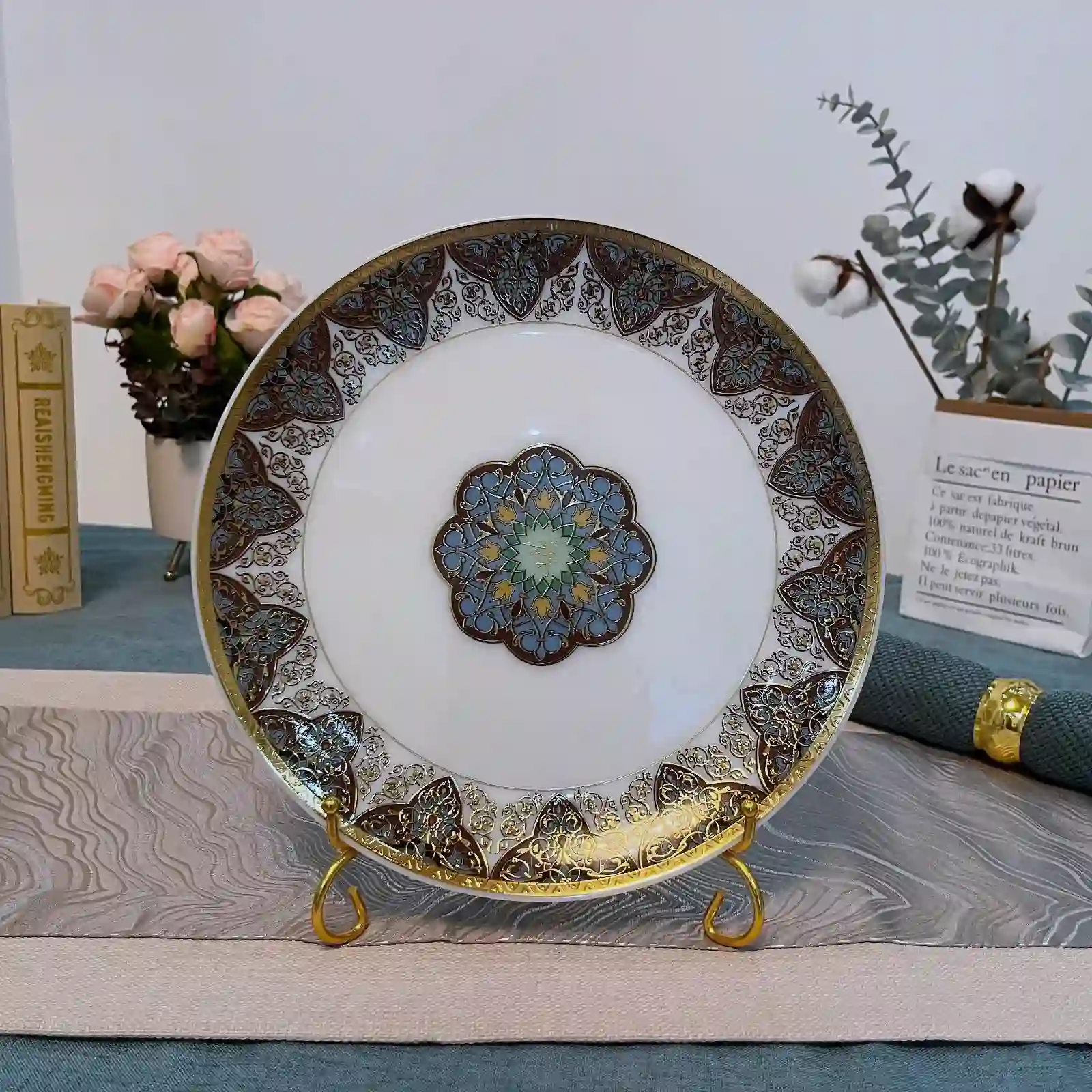
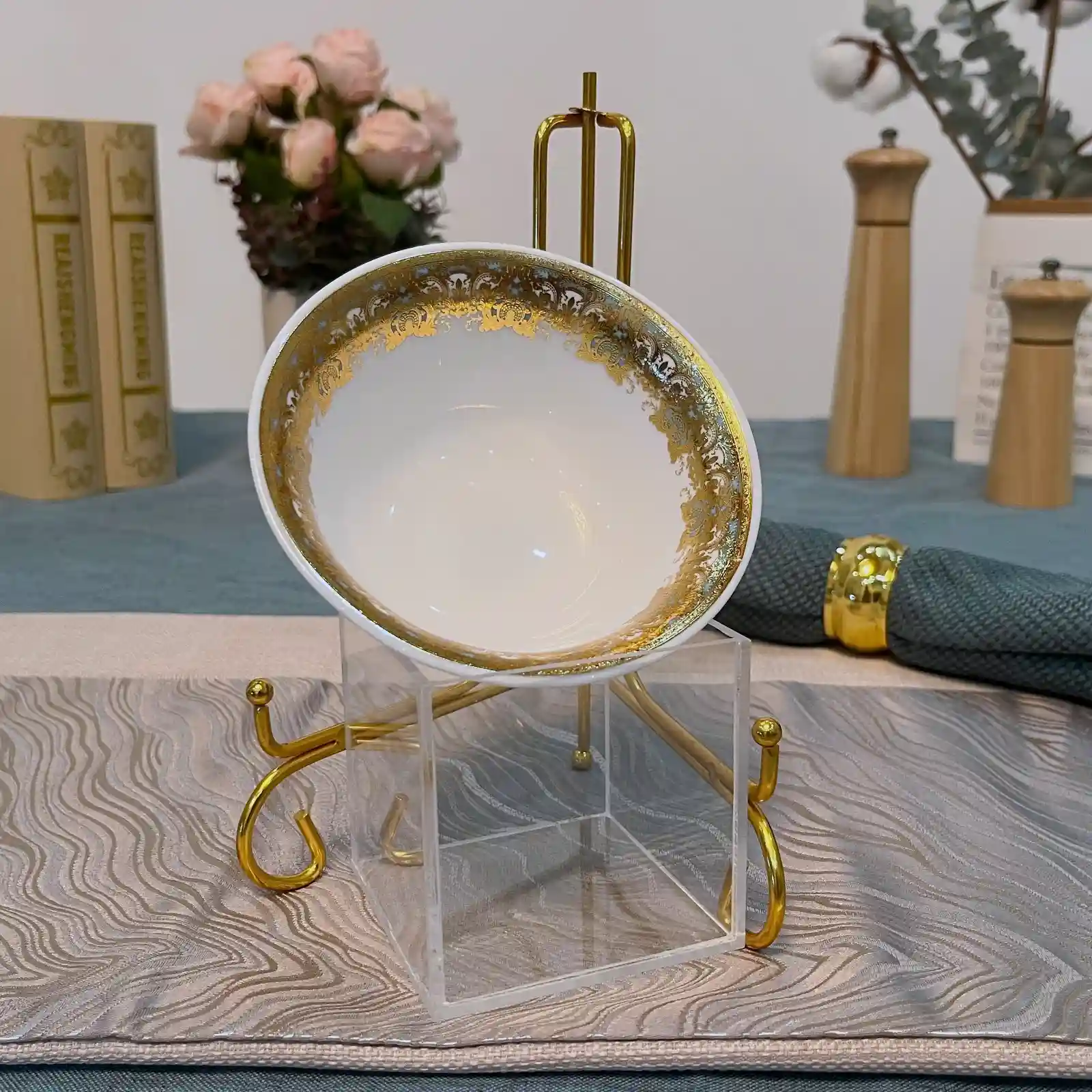
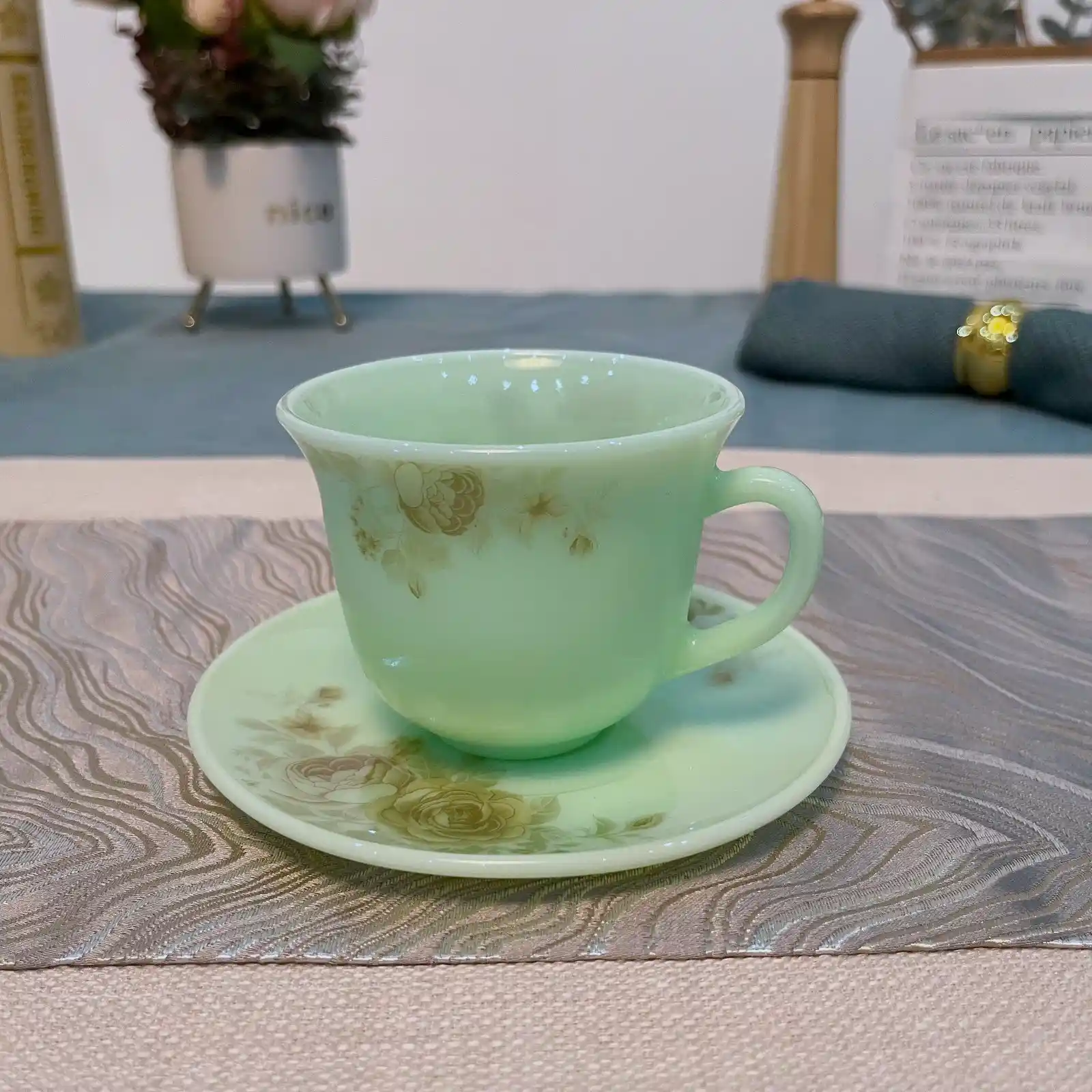
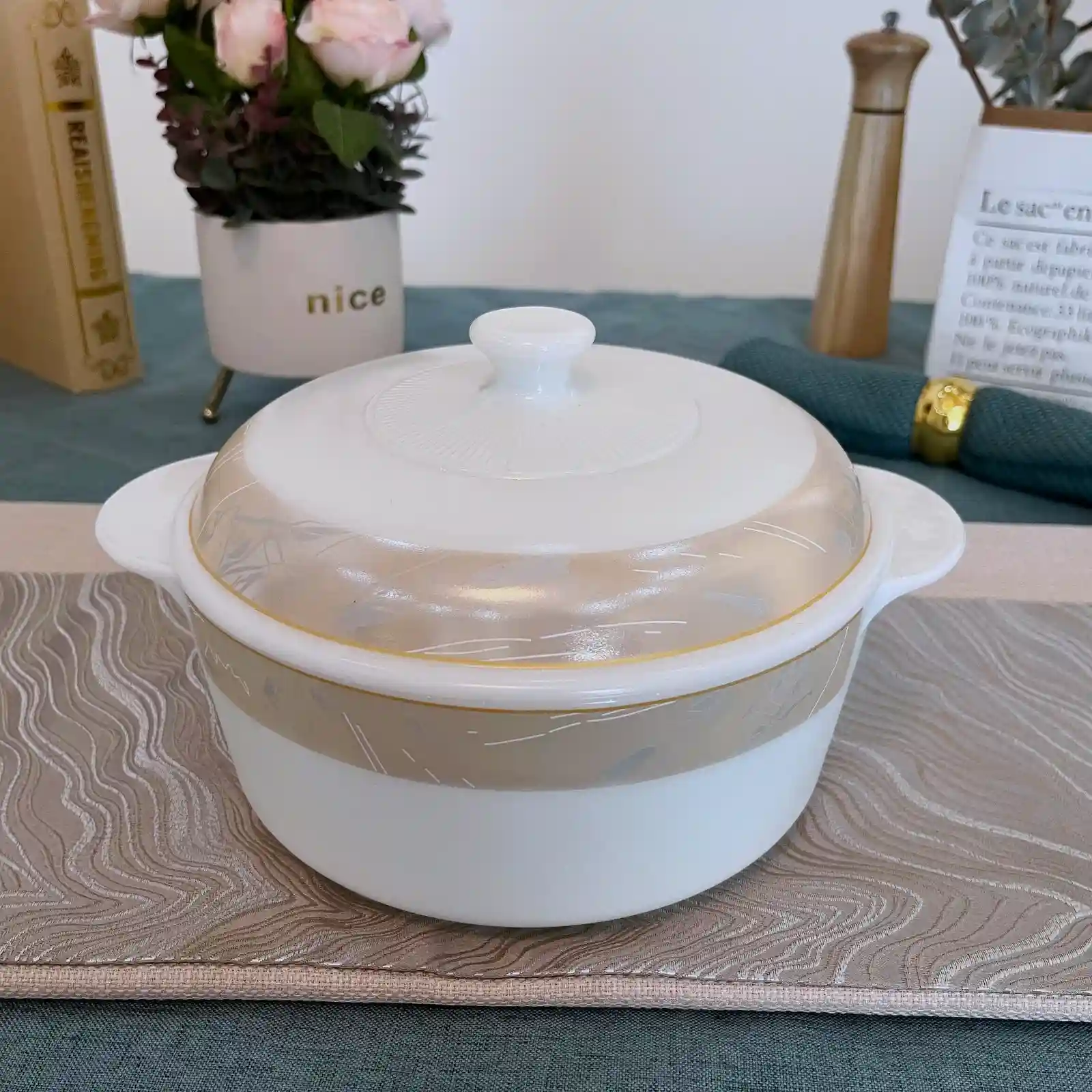
| Booth product category | Common products | What to confirm at the fair |
|---|---|---|
| Plates | Dinner plates, side plates, deep plates, oval platters | Diameter, depth, rim design, and stacking performance |
| Bowls | Rice bowls, soup bowls, noodle bowls, salad bowls | Capacity, intended use, base stability, and matching plate shapes |
| Cups and tea sets | Water cups, coffee cups, cup-and-saucer sets, teapots | Capacity, grip, and collection coordination |
| Serving dinnerware | Fish platters, sharing plates, lidded dinnerware | Use scenarios, table space, and relationship to the dinnerware set |
Product selection at the fair should not be recorded only as “which item do I like?” A more effective approach is to record the product number, target quantity, destination country, and intended use at the same time. This allows Jointion to identify the products the customer viewed when preparing quotations and samples after the fair, reducing the errors caused by relying only on photographs and memory.
Individual items are suitable for supplementing an existing collection and for testing the market with a small number of priority products. If a customer wants to build a complete product line, the plates, bowls, and cups should also be reviewed together at the booth to confirm whether they coordinate with one another. Select the key shapes first, then add matching products. The product selection process becomes clearer.
Jointion Will Display Dinnerware Sets Suitable for Bulk Purchasing
Jointion will provide dinnerware sets suitable for wholesale, retail, and private-label projects at the Canton Fair. Customers can review existing sets or use booth samples as a starting point to adjust the quantities and combinations of plates, bowls, cups, and serving pieces.
Here are some of the styles of tableware sets that we will be exhibiting.
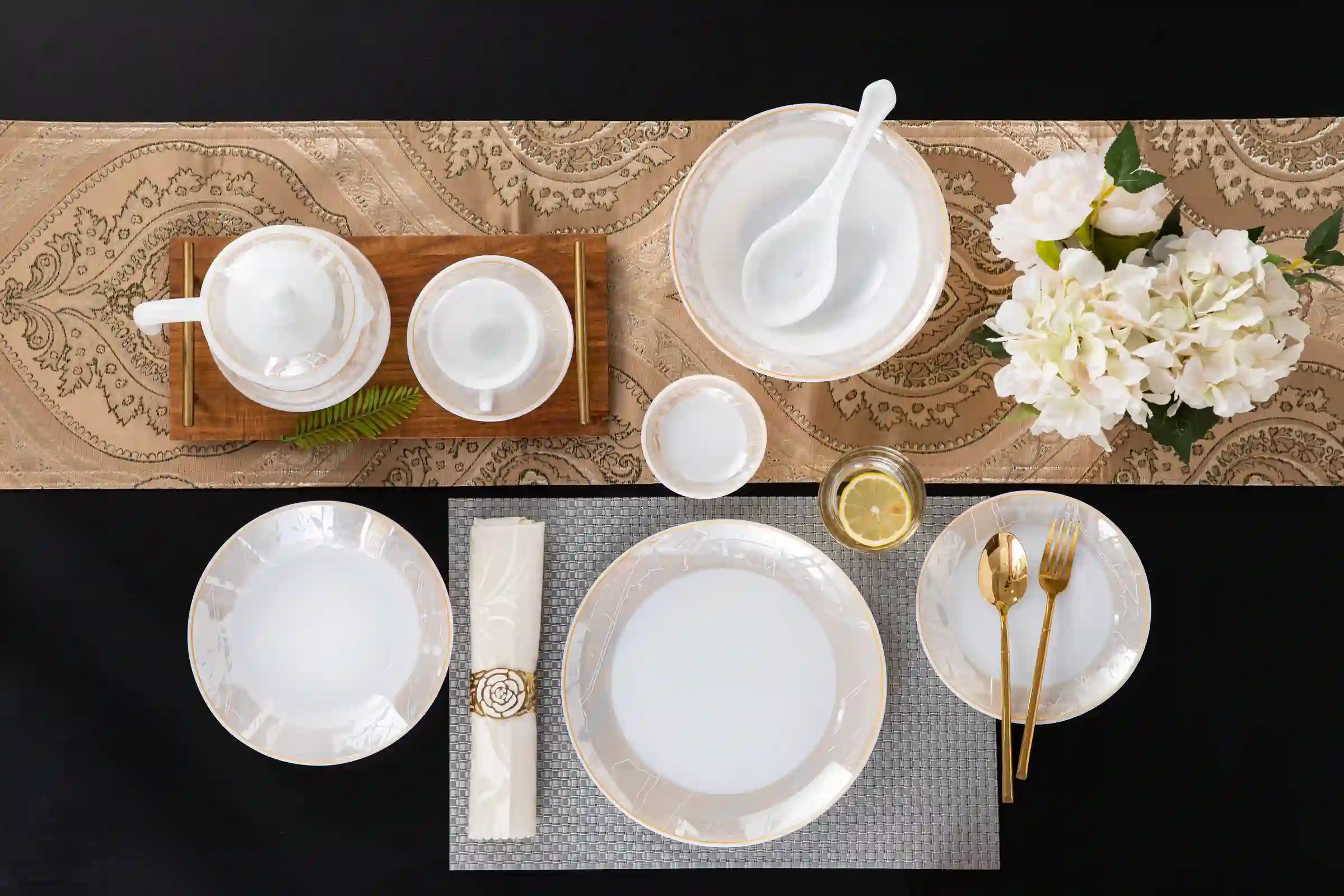
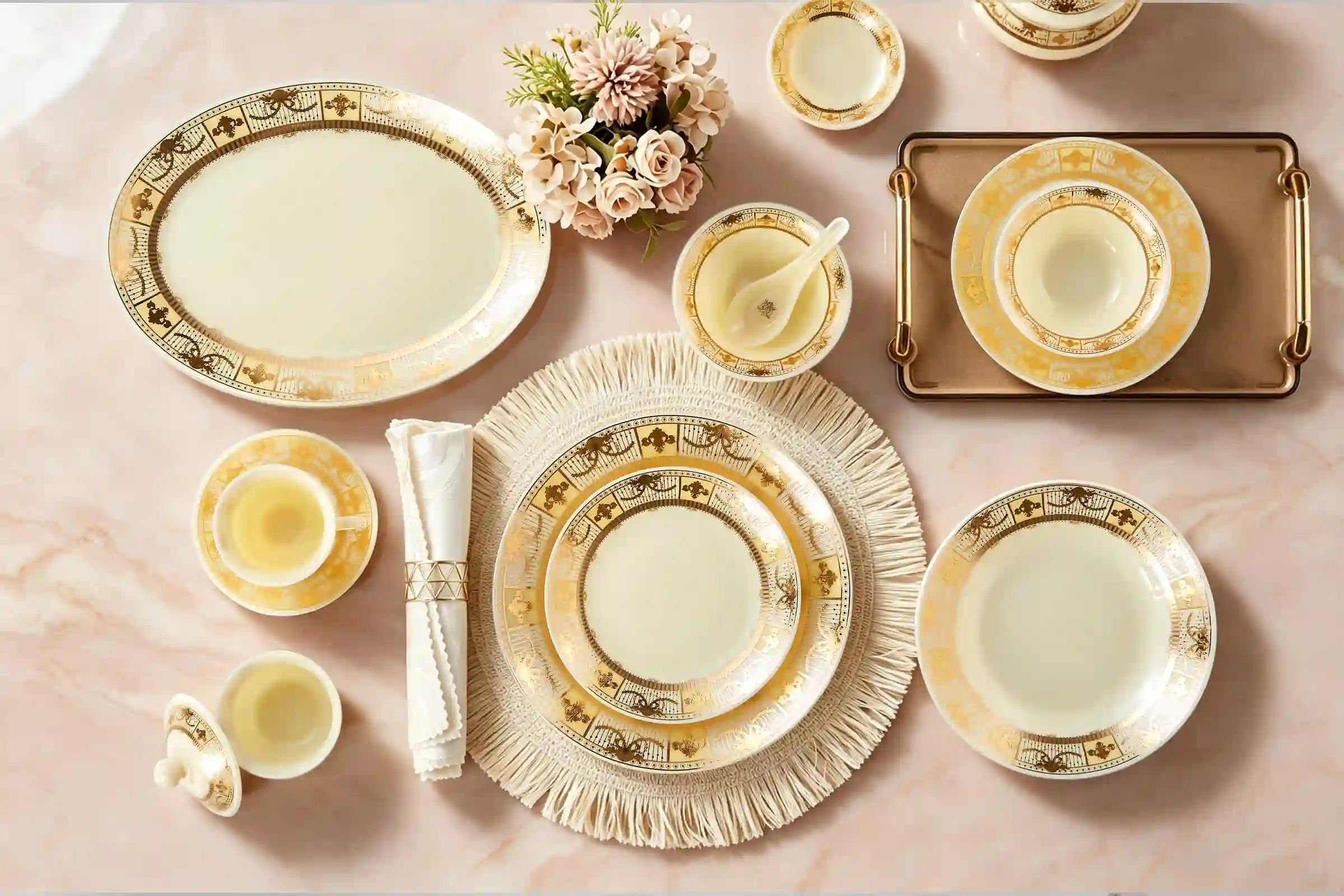
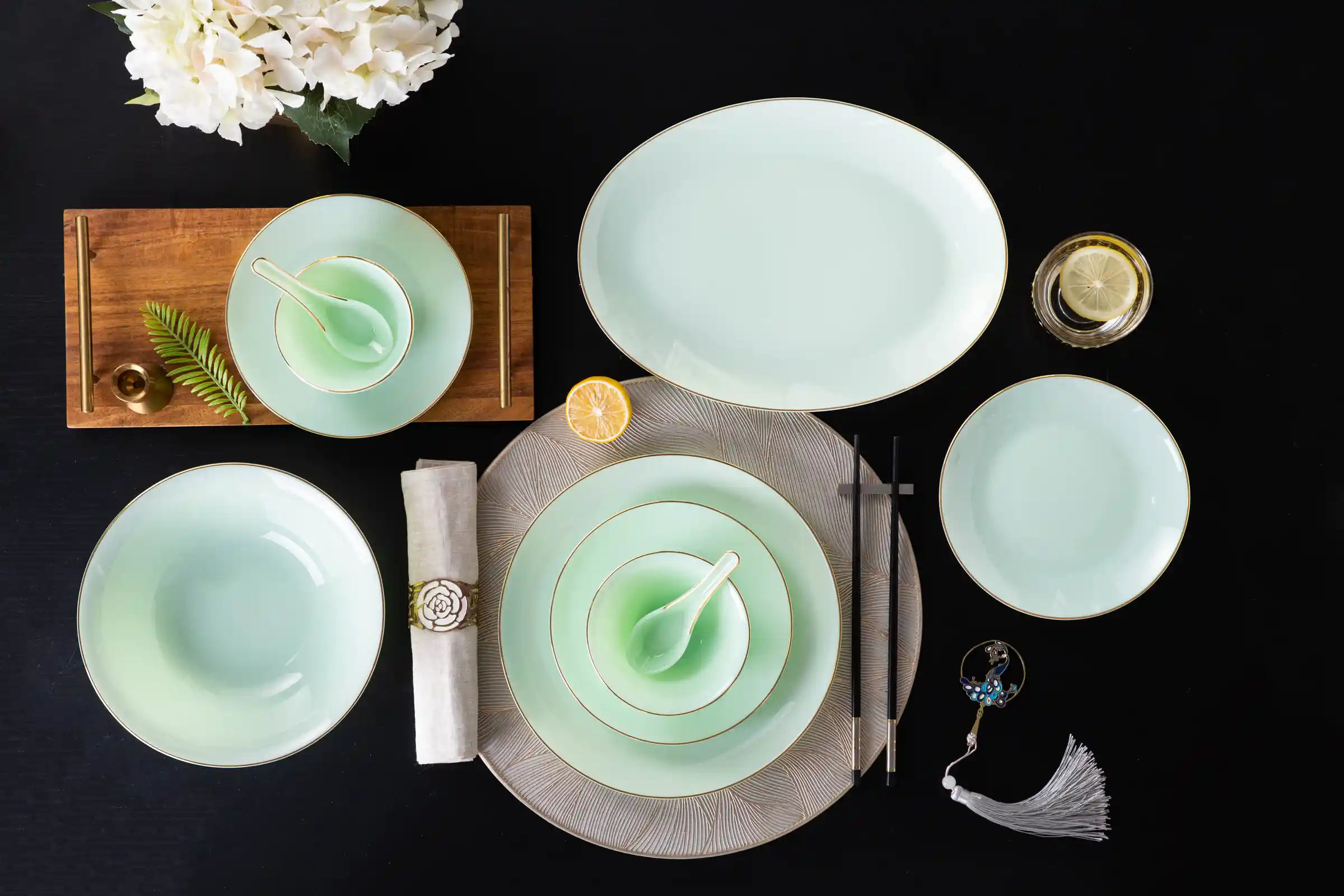

A set should not be evaluated only by its total number of pieces. The same number of pieces may be designed for different numbers of diners and different eating habits. During the on-site discussion, buyers should tell Jointion about their target market, sales channel, and customers’ typical dining habits before deciding whether a four-person, six-person, eight-person, or another combination is appropriate.
GDToday’s report on the second phase of the 137th Canton Fair stated that, by the end of that phase, 224,372 overseas buyers from 219 countries and regions had attended, while 10,313 exhibitors had displayed products including home goods. These are the exhibition figures confirmed in the report. For dinnerware buyers, the practical recommendation we draw from them is clear: when comparing a large number of exhibits, keep a complete product list rather than saving only a photograph of a dinnerware set.
At the booth, buyers should focus on confirming the following points about dinnerware sets:
- How many pieces are included for each shape?
- How many complete place settings does the set cover?
- Can a particular plate, bowl, or cup be replaced?
- Can the color and pattern be applied across the entire set?
- Is the packaging suitable for the target retail channel?
- After the fair, should the entire set be sampled, or should key individual items be confirmed first?
Clarifying the combination logic at the exhibition makes post-fair quotations easier to compare. Otherwise, two quotations may both describe “the same set” while containing different products.
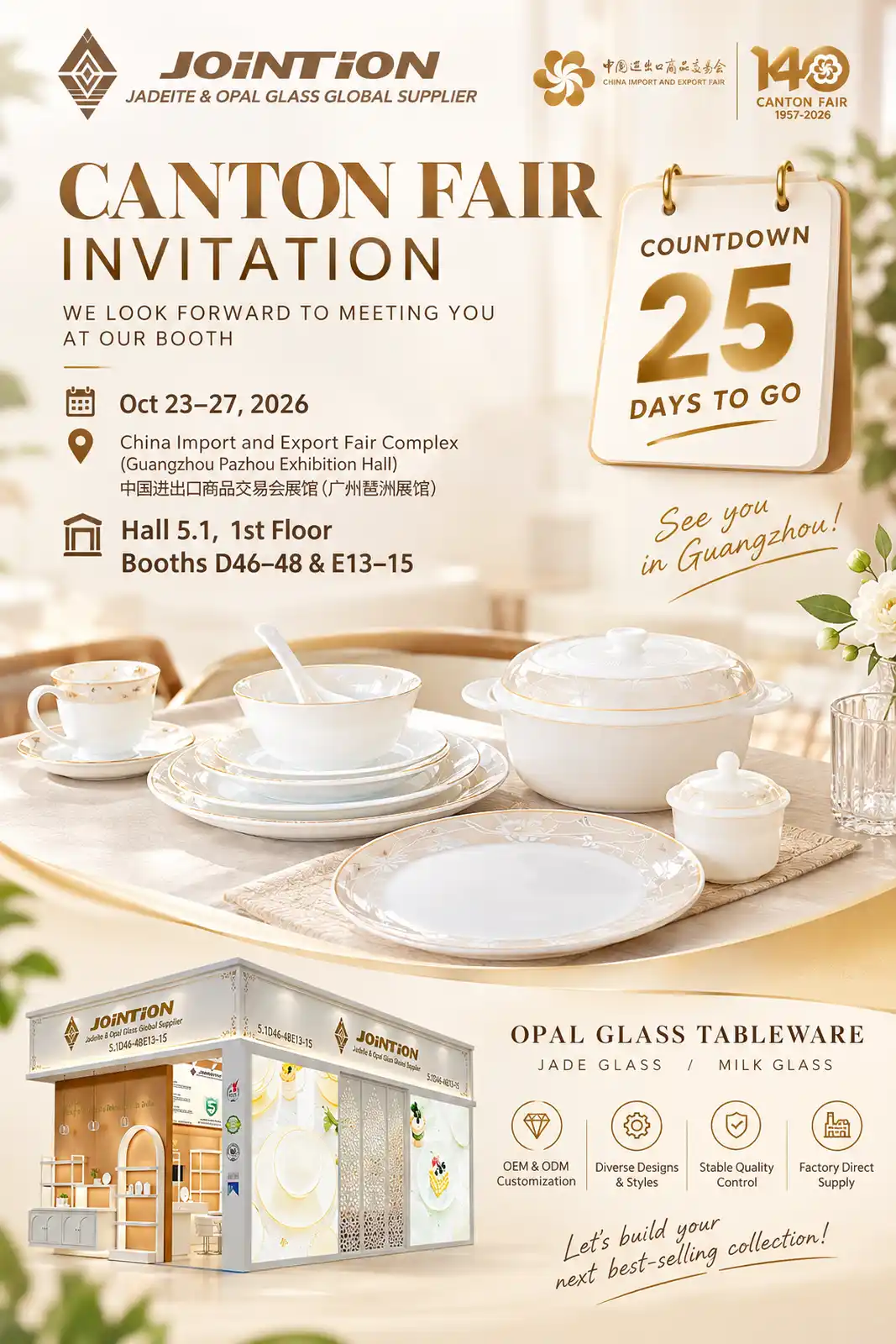
If you are interested in our products at the exhibition, we also participated in the 140th Autumn Canton Fair this year. Here are our invitation letter and detailed information about the exhibition for your reference.
How Does Jointion Handle Custom Dinnerware Requests from Canton Fair Customers?
Dinnerware Shapes and Styles Can Be Customized to Customer Requirements
Jointion can turn shape ideas raised by customers at the Canton Fair into opalware product proposals that can be evaluated and sampled. Customers may bring sketches, reference samples, dimension sheets, or product images. They may also request modifications based directly on existing shapes displayed at the booth.
The purpose of the on-site discussion is not to immediately answer “Can it be made?” The first step is to clarify the product’s intended use and the scope of the requested changes. The curve of the rim, the depth of the vessel, the base structure, and the stacking method can all affect the mold and bulk production. Some questions can be assessed preliminarily at the booth. Structural and mold-related details need to be evaluated further by the product and production teams after the fair.
Shape customization usually follows this process:
- Booth discussion: Confirm the product use, target dimensions, reference shape, and estimated quantity.
- Post-fair organization: Combine the sketches, images, and on-site notes into one set of requirements.
- Feasibility assessment: Evaluate the structure, mold, and conditions for bulk production.
- Physical sampling: Check the dimensions, curves, feel, and stacking performance.
- Sample approval: Freeze the final requirements before quotation or production preparation.
This process keeps modifications at the sample stage instead of leaving them until bulk production. The Canton Fair helps both parties see the direction quickly. What makes the shape workable, however, is the post-fair evaluation and physical sample approval.
Dinnerware Colors and Patterns Can Be Customized to Customer Requirements
Jointion can customize the colors and patterns of opalware dinnerware based on the products selected by the customer at the booth and the desired decoration direction. Booth samples can help customers assess the style, but formal sampling still requires clear color references, pattern files, and the specific shapes on which the decoration will be applied.
At the Canton Fair, customers can first complete three tasks: select decoration samples close to the target style, explain which market the products are intended for, and confirm which plates, bowls, or cups will carry the pattern. Submitting complete files after the fair usually makes the follow-up communication more efficient.
Recommended materials include:
- A color code or a close physical reference.
- A pattern file suitable for production.
- The position and scale of the pattern on different shapes.
- Requirements for gold rims, silver rims, or other edge decorations.
- The acceptable range of color variation.
- A complete list of products that will use the same design.
Jointion adjusts the pattern according to each shape rather than applying the same flat design directly to every product. The curves of a plate surface, bowl wall, and cup body are different, so the pattern position must also be assessed separately. For this reason, the physical sample made after the fair is an important reference before mass production. A computer rendering can confirm the direction, but it cannot replace approval of the final product.
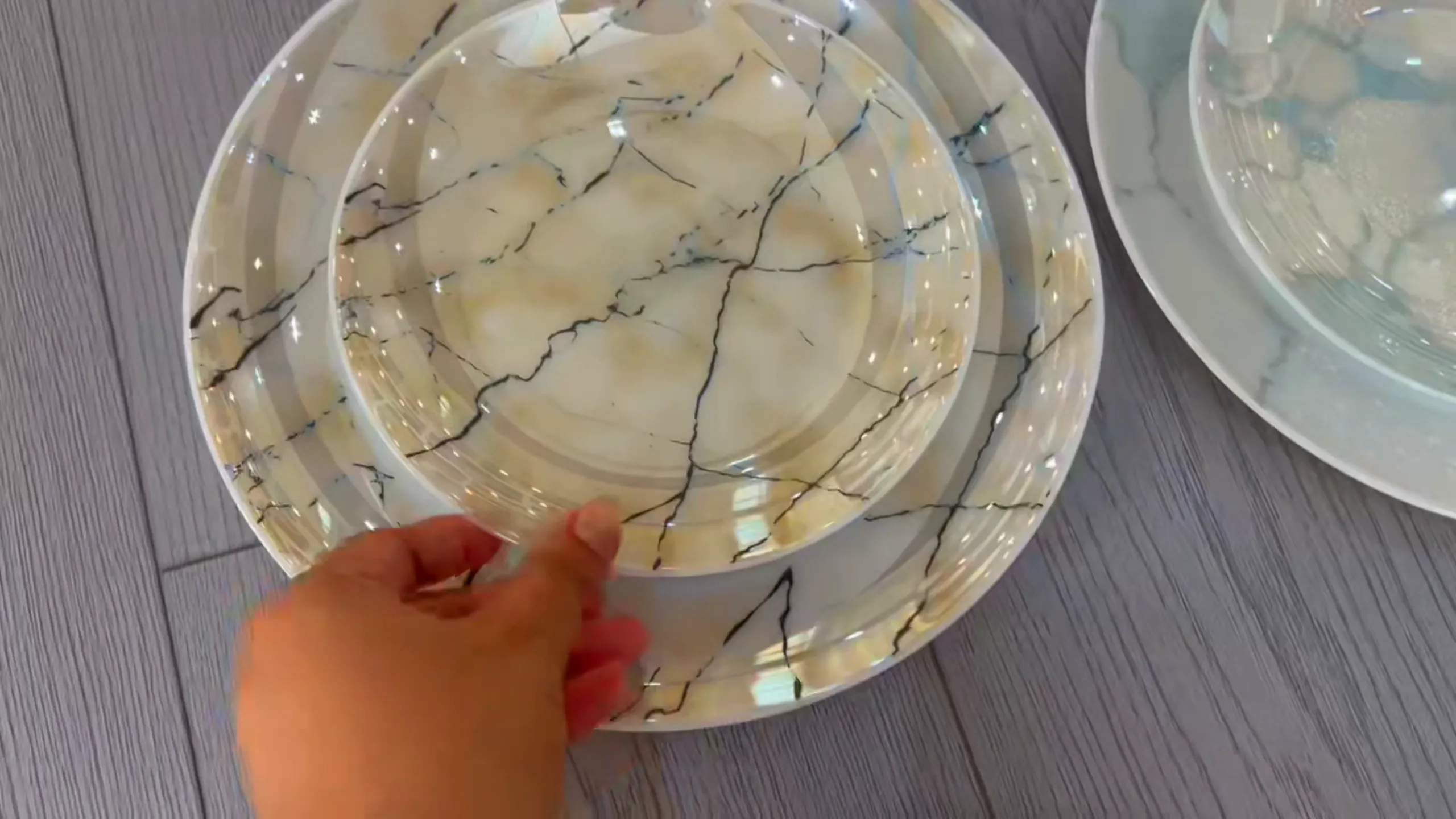
The following color scheme is one of the customer’s OEM design. We can accept any style of sticker design.
Jointion Can Produce Branded Logos to Customer Requirements
Jointion can apply a Canton Fair customer’s brand logo to opalware dinnerware or related packaging, providing private-label products for importers, retailers, hotel-supply companies, and foodservice brands. Customers can discuss the logo’s approximate position and presentation at the booth, then submit the official brand files after the fair.
| Information provided by the customer after the fair | What Jointion confirms | Purpose of confirmation |
|---|---|---|
| Original logo file | Graphic clarity, lines, and colors | Preventing details from becoming unclear after production |
| Logo position | Front, back, or base of the product, or the packaging | Maintaining recognition and overall coordination |
| Target size | Actual proportion on different shapes | Preventing the logo from being too large or too small |
| Brand guidelines | Standard colors, clear space, and layout | Maintaining consistency across the product collection |
If a customer has only a business card or a low-resolution image at the Canton Fair, it can be used to explain the direction, but it is not suitable as a production file. Before formal sampling, both parties still need to confirm the logo’s size, color, position, and applicable products.
When trademarks or licensed artwork are involved, the customer should confirm that it has the legal right to use them. Jointion evaluates the production plan based on the confirmed files, while the commissioning party is responsible for verifying brand rights in advance. Confirming this in the post-fair project materials can prevent the project from being suspended because of authorization issues after sampling has begun.
How Can Canton Fair Buyers Verify Jointion’s Factory Production Capabilities?
Jointion Has Its Own Opalware Production Line
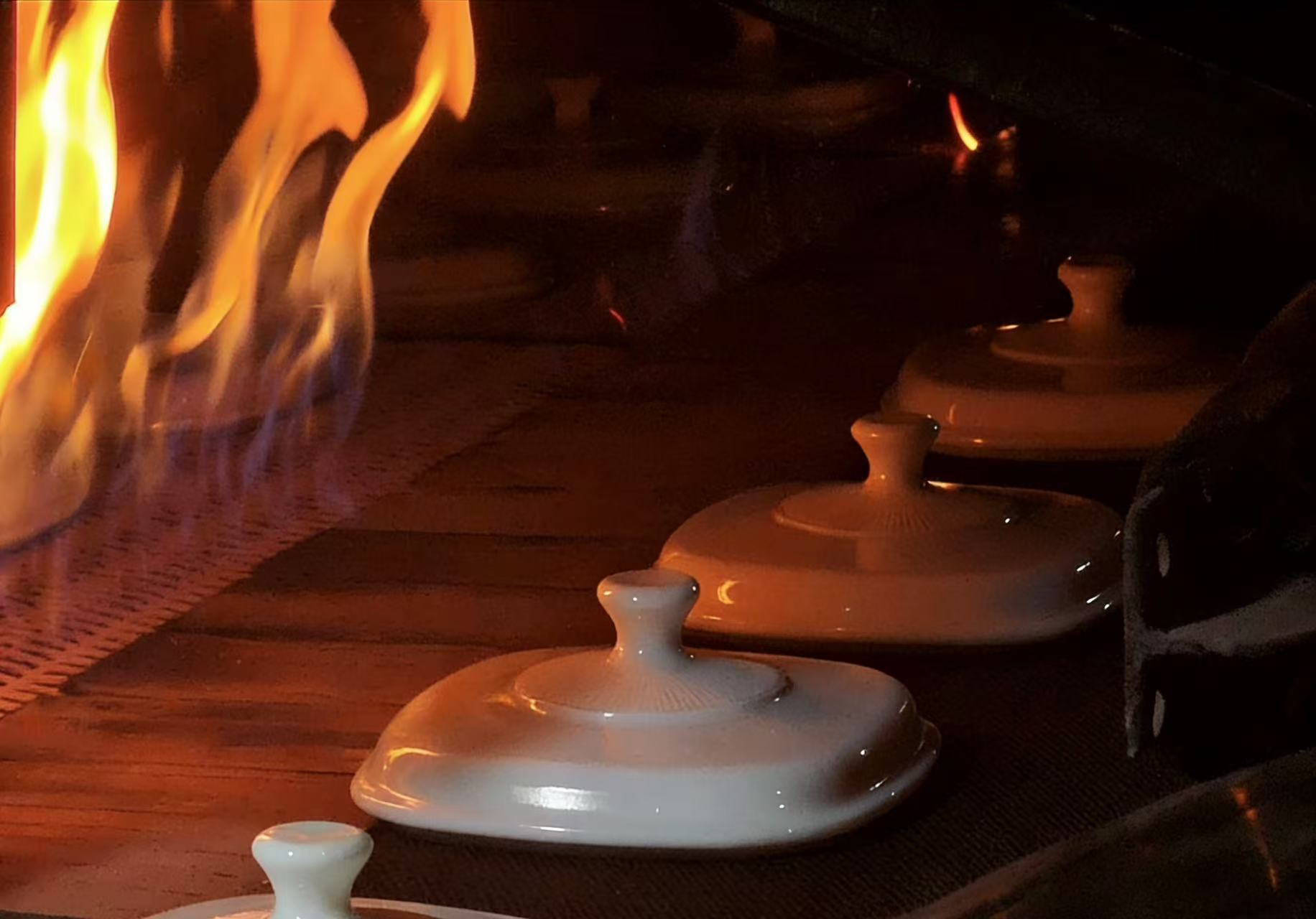
Jointion has its own opalware production line, allowing the shapes and decoration requirements confirmed at the Canton Fair to be taken directly into its manufacturing system for further evaluation. The products go through raw-material melting, pressing and forming, annealing, decoration, and inspection. For buyers, this means that information collected at the booth does not have to be repeatedly relayed through several outside suppliers.
At the booth, customers can first assess whether the supplier understands production by asking about product collections, sample details, and manufacturing issues. When further verification is needed, buyers can request project-related factory information, product specifications, sample arrangements, or inspection requirements after the fair. The goal is not to collect as many documents as possible. It is to confirm whether the commitments made at the booth correspond to actual production steps.
Direct factory connection brings three main benefits to a Canton Fair project:
- On-site questions can enter factory evaluation: Shape, mold, and decoration questions can continue to be assessed by the relevant team after the fair.
- Sample modifications can be traced: Customer changes can be linked to specific products and versions.
- Booth samples can enter the order process: Selected products can continue through quotation, sampling, approval, and production scheduling.
Therefore, assessing Jointion’s production capability should not stop at asking, “Are you a factory?” Buyers should also observe whether Jointion can explain how a product moves from a booth sample to sampling, and then from an approved sample to bulk production. The clearer this process is, the lower the uncertainty of the cooperation.
Jointion Can Reliably Handle Bulk Orders from Overseas Customers
Jointion can continue developing purchasing interest generated at the Canton Fair into bulk orders according to the product combination, customization complexity, order quantity, and delivery requirements. Reliable order handling does not mean immediately promising one standard lead time at the booth. It means first turning the booth records into complete and executable order information.
Post-fair follow-up usually includes:
- Checking the product numbers and samples selected at the booth.
- Confirming the shapes, dimensions, colors, patterns, and brand logos.
- Reconfirming the quotation based on the actual product combination.
- Making or sending the samples that require approval.
- Freezing the product and packaging versions.
- Arranging the production schedule according to the quantity and manufacturing requirements.
If buyers need split shipments, want multiple sets to share certain shapes, or plan to place repeat orders later, they should explain this during the quotation and sampling stages. This allows Jointion to assess how the production and packaging of different products should be coordinated.
The Associated Press report from the Canton Fair on April 16, 2025 recorded that tariff changes had caused some exporters to experience stalled shipments and lower sales forecasts at that time. The report confirmed the trade uncertainty faced by the businesses interviewed during that specific period; it does not mean that every market or product category experienced the same situation. The practical lesson for Canton Fair dinnerware orders is that both parties should clarify the destination country, planned shipping time, and trade conditions that may affect the order as early as possible. A clear production plan does not mean that external conditions will never change. Keeping communication points open gives both parties more room to adjust.
Why Do Canton Fair Buyers Choose Jointion as a Dinnerware Manufacturer?
Jointion Has Been Exporting Dinnerware Overseas Since 2008
Jointion has been serving overseas markets with opalware dinnerware since 2008. The value of this experience for Canton Fair buyers is that we understand booth communication is only the first step. The materials brought by different customers vary in completeness, and market requirements also differ. After the fair, commercial ideas still need to be organized into clear product, sample, and order information.
When first meeting Jointion at the booth, buyers can prepare:
- Images of existing products or reference products.
- The types of plates, bowls, cups, or sets they plan to purchase.
- The sales country and sales channel.
- An initial purchasing quantity.
- Whether shape, pattern, logo, or packaging customization is required.
- The preferred time to receive a quotation or samples.
These materials do not need to be finalized entirely at the booth, but they help both parties determine whether the project is a good match. Compared with simply exchanging business cards, a communication record containing product numbers and requirement notes is more likely to support continued follow-up after the exhibition.
Long-term export experience cannot eliminate every external change, but it can make communication more specific. The customer brings the market objective, while Jointion needs to continue asking about the shapes, quantities, decoration, packaging, and order volume. The clearer the questions are, the closer the post-fair proposal will be to the actual purchasing need.
Jointion Has Overseas OEM Customization and Product Development Experience
Jointion has experience in OEM customization and product development for overseas markets. For buyers who meet Jointion at the Canton Fair, the value of this capability is that concepts, reference samples, or market requirements collected at the booth can continue through shape evaluation, decorative adjustments, physical sampling, and mass-production specifications. This type of development is not about adding unnecessary complexity. It is about determining whether a design can be produced consistently, whether the products can form a collection, and whether the sample can become the standard for bulk production.
The Canton Fair is suitable for quickly confirming the direction of a potential cooperation, but an OEM project is usually not completed at the booth. The customer brings brand and market information, while Jointion brings knowledge of materials and production conditions. Both sides need to combine their information after the fair before an executable proposal can be formed.
| Canton Fair project stage | Jointion’s main work | What the customer needs to confirm |
|---|---|---|
| Initial booth discussion | Understanding the product, market, and customization direction | Target products, sales country, and estimated quantity |
| Post-fair requirement organization | Assessing the feasibility of the shapes, decoration, and set | Design files, specifications, and revision comments |
| Sample production | Turning the confirmed proposal into a physical product | Dimensions, appearance, feel, and combination |
| Production preparation | Finalizing the product and packaging requirements | Final version, quantity, and delivery arrangements |
If a design is suitable for display but not for stable mass production, Jointion will explain what needs to be adjusted during the evaluation or sampling stage. Pointing out limitations directly can sometimes be more valuable than quickly saying “yes.” For OEM buyers, an executable product proposal is more valuable than a verbal promise made at the booth.
From booth selection to post-fair sampling and then to bulk production, this path runs through Jointion’s cooperation with Canton Fair buyers. If you plan to look for an opalware dinnerware manufacturer at the Canton Fair, you can first prepare the product types, target market, estimated quantity, and customization requirements. Based on this information, Jointion will confirm whether its existing products are a match, which parts require further development, and whether the next step should be a quotation, product selection, or formal sampling.
After reading this article, if you still have the interest in finding a suitable manufacturer of tableware for screening, you can read the article “How to Prepare & Find the Right Manufacturer“.