
This dinnerware buying guide helps you choose a set that truly fits your lifestyle — with minimal trial and error. Whether you are choosing plates and bowls for home for the first time or replacing an aging collection, we cover material safety and durability, practical details on shapes and sizes, and long-term cost of ownership across different budgets. The result is a decision-making framework you can apply directly to your next purchase.
How to Choose Dinnerware by Material: Real-World Differences Between Porcelain, Bone China, and Opal Glass
Any meaningful dinnerware material comparison starts with how each option actually performs under daily use — not what it looks like on a shelf. Porcelain is hard but shatters easily on impact, and its glaze can stain over years of use. Bone china is lightweight and elegant but less impact-resistant, and styles with metallic trim cannot go in the microwave. Opal glass, tempered during production, offers significantly higher impact resistance, a non-porous body that never stains or absorbs odors, is naturally free of lead and cadmium, and is fully compatible with both microwaves and dishwashers — making it the most all-around practical material for high-frequency daily use.
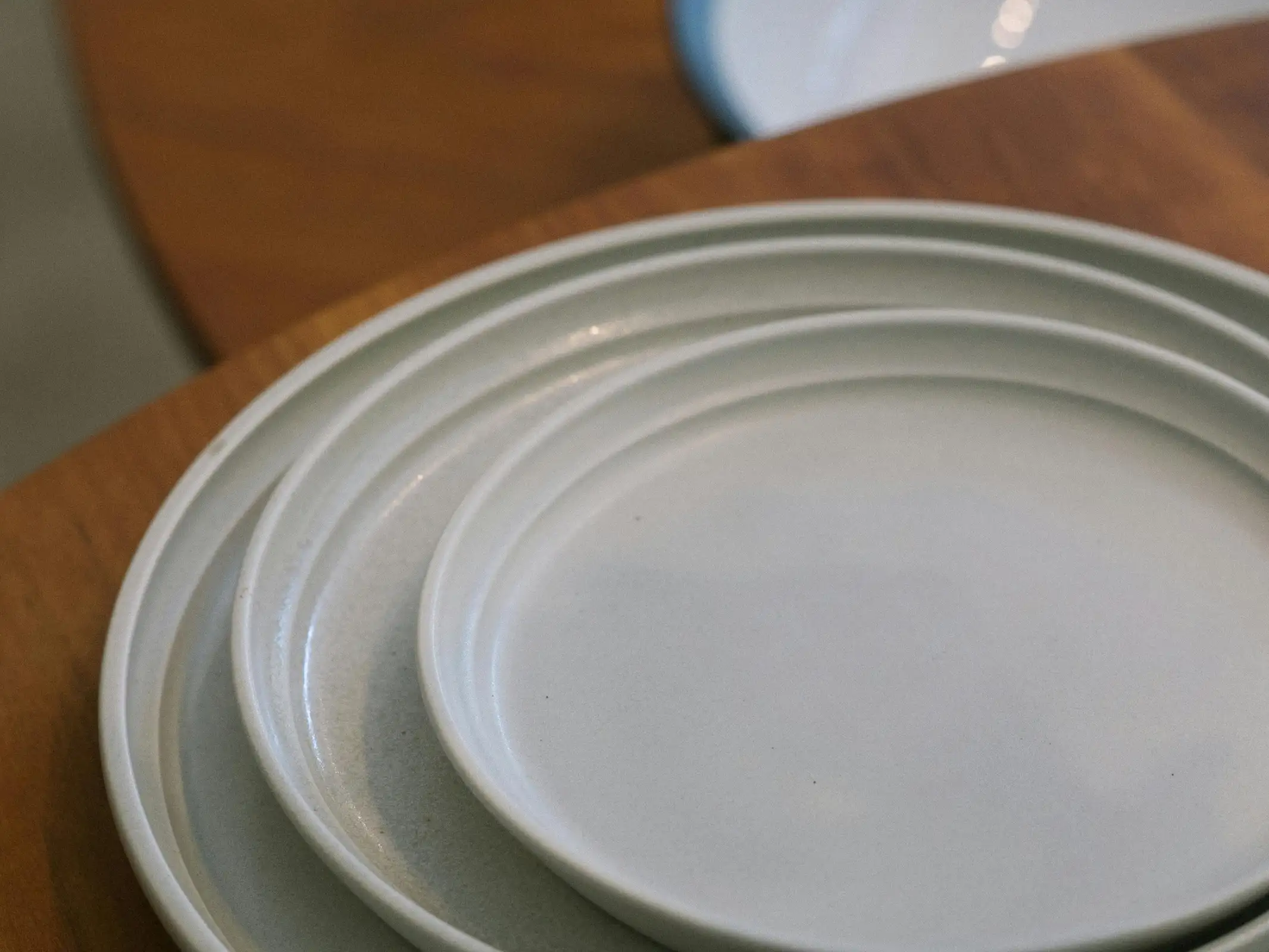
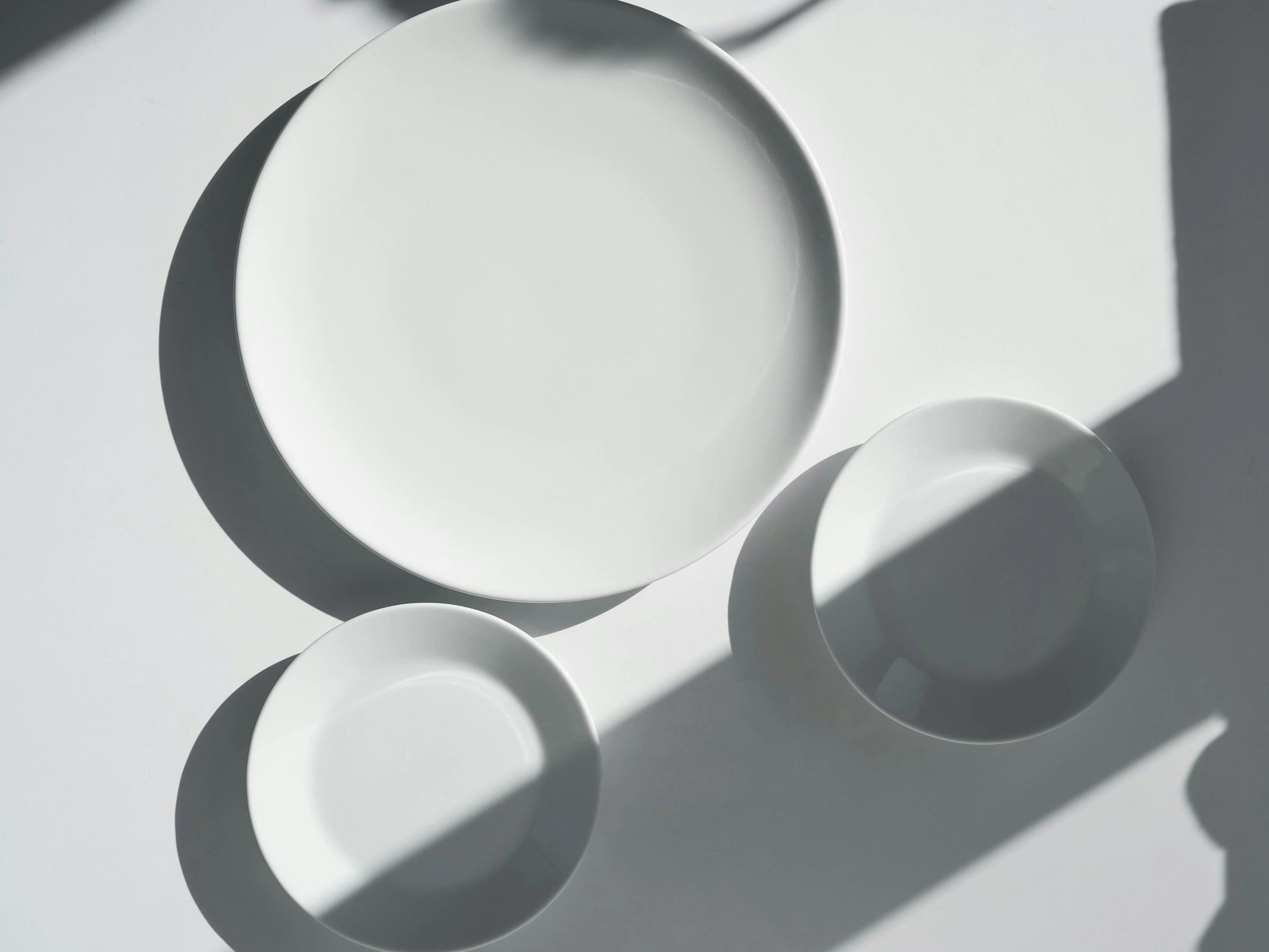
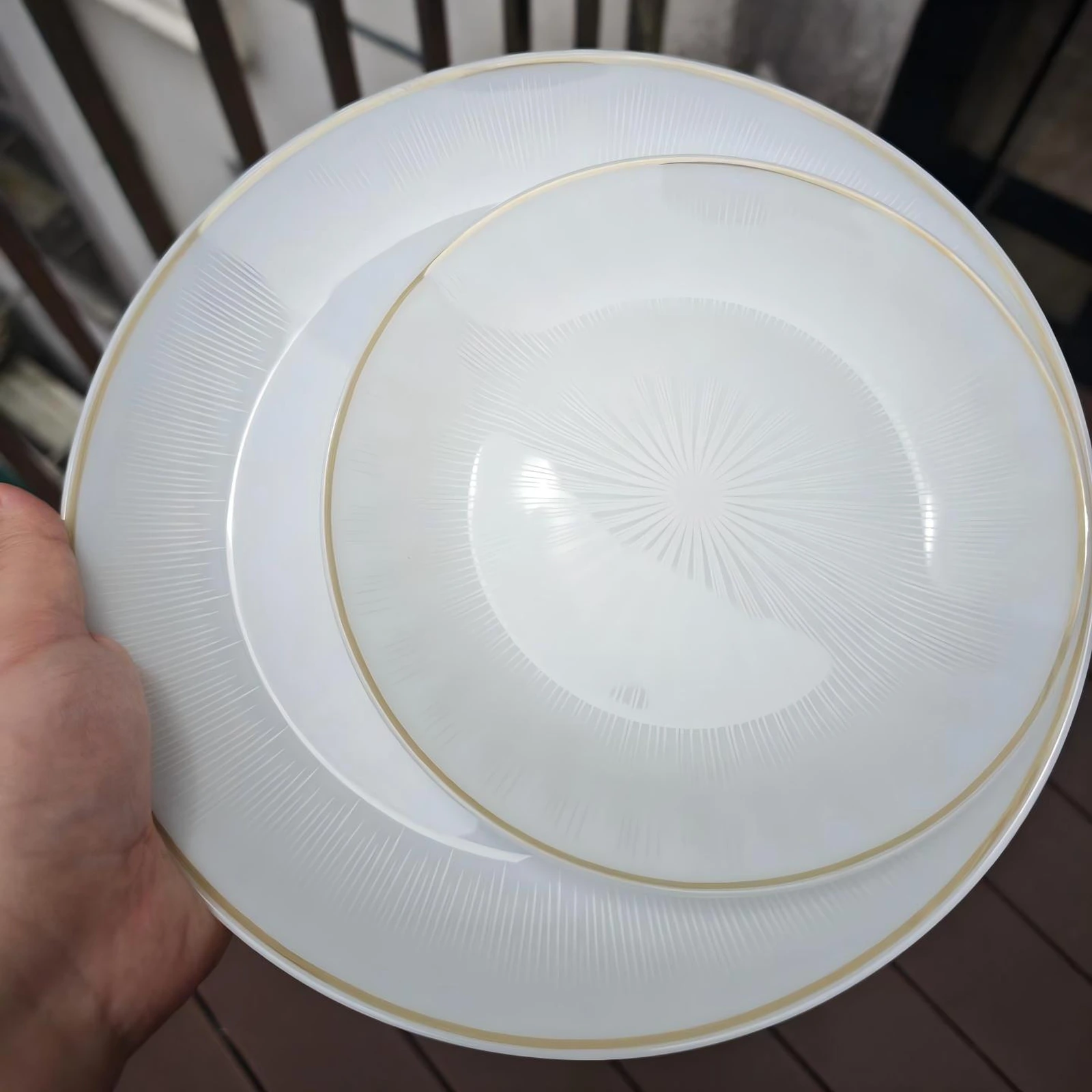
Below, we break down each material’s real-world performance in detail — essentially a full porcelain vs bone china vs opal glass comparison — so you can match the right one to your lifestyle.
Durability, Safety & Daily Maintenance Compared Across Materials
1. Porcelain — High Hardness but Also High Brittleness; Watch for Glaze Aging Over Time
Porcelain is made primarily from kaolin clay and fired at temperatures above 1,200°C, producing a dense, vitrified body with high hardness and a smooth surface that resists scratching from cutlery. Plain white porcelain without decorations is generally safe for the microwave and dishwasher. However, a large proportion of porcelain on the market features gold rims, silver lines, or other metallic accents — and placing these in a microwave can produce electrical arcing. You need to check each piece individually before use.
Porcelain’s biggest weakness is its brittleness. A slip off the counter or a knock against the sink easily results in sharp, dangerous shards — the piece is destroyed, and cleanup carries a real risk of cuts. As for long-term maintenance, high-quality porcelain glaze does not stain when intact. But over years of use, the glaze inevitably develops micro-abrasions. Once the glaze layer is compromised, the rougher clay body underneath begins absorbing oils and pigments — this is exactly why old porcelain plates yellow and coffee cup interiors develop stubborn stains.
Regarding safety, porcelain from reputable brands typically complies with food-contact standards. However, low-cost or unbranded products may contain lead or cadmium in their glazes. Always look for FDA or EU food-contact material certification when purchasing.
2. Bone China — Lightweight and Elegant but with More Usage Restrictions; Better Suited for Occasional, Refined Settings
Bone china adds bone ash to the porcelain formula, creating a thinner, more translucent body with an unmistakably refined feel — visually and tactilely a step above standard porcelain. But that elegance comes with conditions. The thinner body means lower impact resistance, making it more vulnerable to chips and cracks in daily use.
The more critical limitation is that a significant proportion of bone china features gold rims or hand-painted gilt decoration. These pieces explicitly cannot go in the microwave, and some brands even advise against the dishwasher to protect the decorative layer. If you are buying bone china for everyday use rather than occasional entertaining, pay close attention to choosing undecorated styles — otherwise your usage scenarios will be significantly restricted.
In terms of cleaning and hygiene, bone china performs similarly to porcelain: both rely on the surface glaze to prevent absorption, working well when intact but susceptible to staining as the glaze wears over time. On safety, bone china from reputable brands undergoes multiple high-temperature firings, keeping heavy-metal leaching risk low — but you should still verify that glazes and decorative materials have passed food-safety testing.
3. Opal Glass (Tempered White Glass) — Homogeneous Body with No Glaze Layer; the Best Dinnerware Material for Everyday Use
Opal glass is made from silica, soda ash, and limestone, melted at approximately 1,500°C with an opacifying agent added to create its signature milky-white appearance. It then undergoes a tempering process that creates a uniform compressive stress layer on the surface, raising impact resistance to two to three times that of ordinary glass.
In daily use, opal glass’s standout advantage is total versatility. Its homogeneous, non-porous body has no glaze to wear down, so it never stains and never absorbs odors — no matter how long you use it. Curry, tomato sauce, or hot-pot broth washes off with standard cleaning, and the surface looks brand new every time. It goes straight into the microwave or dishwasher with no precautions needed, unlike bone china, which often demands careful handling.
Its main limitation is aesthetic range: opal glass is predominantly milky white with clean, simple shapes. It offers less variety in patterns and forms than porcelain or bone china, making it best suited for those who prefer a minimalist, modern look.
This point deserves special attention for families with children. In reviewing food-contact material regulations across countries, we noted that the U.S. FDA has published ongoing monitoring guidelines specifically addressing lead and cadmium leaching risks from dinnerware. The guidelines explicitly identify ceramic glazes as a known pathway for lead and cadmium to enter food, while glass materials perform better within that risk-assessment framework due to their chemical inertness (source: FDA — Lead in Food and Foodwares).
The comparison table below summarizes the three materials across the most critical everyday dimensions, helping you make a quick, apples-to-apples judgment:
| Dimension | Porcelain | Bone China | Opal Glass (Tempered White Glass) |
|---|---|---|---|
| Impact / Chip Resistance | Hard but brittle; shatters into sharp shards on impact | Thinner body; lower impact resistance than porcelain | Tempered; 2–3× the impact resistance of ordinary glass; fractures into blunt chunks |
| Microwave Safe | Plain white: yes; metallic trim: no | Undecorated: yes; gilt/gold-rim: no | Yes (no metallic decoration) |
| Dishwasher Safe | Most pieces: yes | Some brands advise against it to protect decorations | Yes |
| Staining / Odor Absorption | No staining while glaze is intact; stains once glaze wears | Similar to porcelain; depends on glaze condition | Non-porous body; never stains or absorbs odors; no glaze to degrade |
| Lead / Cadmium Safety | Compliant from reputable brands; budget products require certification check | Compliant from reputable brands; check glazes and decorations | Naturally lead- and cadmium-free; no glaze needed; risk eliminated at the material level |
| Cleaning & Maintenance | Easy day-to-day; long-term glaze care needed | Easy day-to-day; decorated pieces need handwashing and careful handling | Easiest to maintain; standard washing only; no special care required |
| Aesthetic Variety | Widest range of patterns, colors, and shapes | Refined translucency; standout premium feel | Primarily milky-white minimalist styles; relatively limited shape range |
If you want a deeper comparison of all three materials across additional technical dimensions — including water absorption rates, thermal stability, and performance differences in commercial settings that this article does not cover — see this more comprehensive material review: Opal Glass vs Ceramic vs Porcelain: Ultimate Comparison Guide.
Which Material Suits Your Lifestyle Best
1. Families with Young Children or Elderly Members — Safety and Low Maintenance Come First; Opal Glass Is the Top Choice
Young children inevitably bump and knock things during meals, and older adults with reduced grip strength are more likely to drop dishes. In these households, you need a material that resists breakage, is safer when it does break, and requires no special maintenance.
Opal glass dinnerware has the clearest advantage in this scenario. Its tempered construction dramatically reduces the chance of accidental breakage. Even under extreme impact, the blunt-chunk fracture pattern is far safer than the sharp shards produced by porcelain. Its body is naturally lead- and cadmium-free with no glaze-aging hygiene concerns, so you can confidently use it to serve baby food or children’s meals. And because it is microwave- and dishwasher-safe, busy families save real time every single day.
In parenting forums overseas, some parents have specifically mentioned that after switching to opal glass, their household breakage rate dropped noticeably within a year, and their children occasionally knocking a bowl onto the floor no longer resulted in a shattered piece — consistent with the impact resistance delivered by proper tempering.
2. Frequent Home Entertaining with a Focus on Table Atmosphere — Bone China or Premium Porcelain Sets the Tone
If you regularly host dinners and care about the ceremony of the table, bone china or premium porcelain is the more refined choice. Bone china’s translucency and delicate gilt craftsmanship visibly elevate the overall dining atmosphere, making it ideal for formal dinners, holiday gatherings, and occasions that call for an impressive table. High-quality porcelain offers an equally rich selection of patterns and shapes to match everything from Chinese to Western table settings.
In these scenarios, dinnerware is typically used less frequently — more “reserved for the occasion” — so the everyday drawbacks of bone china and porcelain (fragility, microwave restrictions) matter much less when usage is occasional.
3. Young Adults Setting Up a New Home or Looking for a One-and-Done Solution — Best Value and Total Versatility Make Opal Glass the Smart Choice
If this is your first time buying dinnerware, or you simply want one set that works for every occasion, value for money and all-around practicality should be your top priorities. Opal glass typically costs less per piece than bone china or premium porcelain of comparable quality. It works in any scenario without worry — no fretting over chips, no need to remember “this one can go in the microwave, that one can’t.”
A single set handles everything from reheating weekday leftovers to a casual weekend gathering with friends, eliminating the need to own multiple sets for different occasions. For anyone with a limited budget who still refuses to compromise on quality, opal glass is a genuinely efficient one-and-done choice.
Dinnerware Set Size Guide: From Piece Count to Shape and Size
Choosing a dinnerware set comes down to two things: piece count that matches your household size and dishwashing rhythm (a couple needs just a 4-piece set for rotation; a family of four should aim for 16–24 pieces), and shapes and sizes that fit real usage scenarios (dinner plates at 10–11 inches with narrow rims, everyday bowls with a depth of at least 2.5 inches for true multi-purpose use).
Buying a set is typically 15–25% cheaper than assembling the same pieces individually and guarantees a unified look. However, buying individual pieces offers more flexibility for households whose needs may change. Opal glass, with its pure-white, batch-consistent color and a weight roughly 20–30% lighter than porcelain of the same size, offers clear practical advantages for both flexible restocking and daily handling.
Below, we break this down across two dimensions: how to determine the dinnerware set pieces needed for your household, and shape and size selection.
How Many Pieces Do You Need — and Should You Buy a Set or Individual Pieces?
The underlying logic for choosing how many pieces to buy is simple: you need enough to get through two meals without rushing to do the dishes. For a two-person household, a 4-piece set (two plates and two bowls, or a basic combination with mugs) is sufficient for daily rotation — anything more just takes up cabinet space. But for a family of four, go straight to 16–24 pieces. That gives each person four to six different pieces to rotate through, so you are not standing at the sink washing bowls after breakfast just to have something clean for lunch.
More is not better. The right number matches your actual eating rhythm and dishwashing frequency.
Buying a set versus assembling individual pieces involves trade-offs across several dimensions:
- Price and consistency. Buying a complete set is typically 15% to 25% cheaper than purchasing the same items individually, and the style and color are guaranteed to match right out of the box — saving you the effort of coordinating pieces yourself. The common frustration with sets, however, is bundled items you will never use: a mug too small to hold a proper cup of coffee, or a salad bowl so shallow it can barely hold a few leaves. These pieces inevitably end up on the highest shelf in the cabinet, never to be touched again.
- Flexibility and color-matching risk. The advantage of buying individual pieces is flexibility — you buy only the exact shapes and quantities you actually need. But watch out for a hidden risk: ceramic and colored-glaze dinnerware often varies in shade between production batches, and a pattern you love may be discontinued at any time, making it impossible to complete your collection later. One of our North American retail clients with eight years of experience shared a case study: her best-selling grey-blue glazed ceramic bowl saw a glaze-formula change in the third year of production. The new batch placed next to the old batch showed a visible color difference, leading to a flood of returns and complaints. This problem is especially pronounced with solid-color glazed and handmade-look dinnerware.
- Opal glass’s restocking advantage. Opal glass comes in a classic pure white. White is white — there is no “this batch runs warm, that batch runs cool” color-shift problem, and you will never find a beloved series discontinued by the manufacturer. You can start with a basic set to meet your current needs, then six months later add a few deep bowls or a couple more dinner plates, and the new pieces will match the originals seamlessly. For households whose size may change, or for anyone who prefers not to invest a large sum all at once, this “expand anytime, always unified” flexibility is genuinely useful.
Plate & Bowl Shapes and Sizes: How to Choose Without Regret
Shape and size are the most underestimated factors in dinnerware shopping. Many people choose based on looks alone, then discover constant annoyances once they start using the pieces. On Reddit’s home and kitchen boards, the most frequently complained-about issues are almost all size-related: a plate with rims so wide that a nominally 10-inch plate has barely 7 inches of usable surface — one serving of pasta fills it to the edge; a stylish shallow salad bowl that nearly overflows the moment you add soup or noodle broth; a mug handle with an opening so narrow you cannot fit two fingers through it, leaving you gripping an unstable, scalding cup.
None of these are quality defects — they are purely the result of choosing the wrong shape. Similar real-world feedback is abundant in Reddit’s r/BuyItForLife community. For a particularly useful thread with user opinions on bowl depth, plate diameter, and stacking experience, see this discussion on opal glass dinnerware (Corelle or Luminarc).
For practical guidance, keep a few simple principles in mind. Choose dinner plates in the 10- to 11-inch range, and pay attention to the rim — narrow rims or rimless designs maximize the usable serving area. For everyday bowls, prioritize multi-purpose bowls with real depth: a single bowl that handles salads, soups, noodles, and rice bowls is far more space- and cost-efficient than buying separate shallow bowls and dedicated soup bowls.
Another detail many people overlook is stacking stability — whether bowls and plates wobble or slide when stacked in the cabinet, and whether a tall stack stays firm. This directly affects your everyday storage and retrieval experience.
The table below consolidates recommended sizes, use cases, and the most common pitfalls for standard dinnerware shapes, so you can quickly match them to your needs:
| Shape | Recommended Size | Best For | Common Pitfall | Opal Glass Bonus |
|---|---|---|---|---|
| Dinner Plate | 10–11 in. diameter, narrow rim | Main courses, Western-style meals | Rim wider than 1.5 in. shrinks the usable center area | 20–30% lighter than same-size porcelain; easier to handle one-handed |
| Multi-Purpose Deep Bowl | 6–7 in. diameter, ≥ 2.5 in. deep | Soups, noodles, salads, rice bowls — all in one | Choosing a shallow salad bowl that overflows with soup or noodle broth | Lightweight and stacks stably; 6–7 bowls high without wobbling |
| Side / Dessert Plate | 7–8 in. diameter | Bread, dessert, appetizers, side servings | Going below 6 in. — even a single slice of cake feels cramped | Pure white pairs seamlessly with dinner plates; no color-mismatch risk |
| Mug | 12–16 oz capacity; handle fits two fingers | Coffee, tea, everyday beverages | Handle opening too narrow; grip is unstable and the cup feels hot | — |
When shape and size are held constant, opal glass is roughly 20% to 30% lighter than porcelain of the same specification. The benefits of that weight difference are very tangible. A stack of six or seven plates is noticeably lighter and has a lower, more stable center of gravity. Pulling a stack from an upper cabinet shelf with one hand takes less effort and is less likely to result in a slip.
If your cabinet space is limited and you need to stack dishes high, or if elderly family members or children regularly reach for their own bowls and plates, lightweight construction is a practical advantage that should not be overlooked. It is not a premium selling point — it simply makes every day of use a little easier.
Dinnerware Budget Guide: Spending Smart Beats Spending More
You do not need the most expensive dinnerware — you need to put your budget toward the things that actually determine your daily experience. Sets under $50 cover the basics but have a limited useful life. The $50–$150 range is the sweet spot for balancing durability, safety, and appearance, especially for opal glass sets. Above $150, you are primarily paying a premium for brand identity and design.
The right way to judge whether a dinnerware set is worth the money is to divide the set price by the number of years you will actually use it — giving you an annual cost — rather than looking at the sticker price alone.
Below, we expand on what each price tier delivers, and how to think about long-term cost.
What Each Price Tier Actually Gets You
1. Under $50 — Functional, but Don’t Expect It to Last
This tier is represented by brands like Amazon Basics and typically gets you a basic 16-piece porcelain set. These are dishwasher-safe, microwave-safe, and perfectly acceptable in appearance — fine for basic everyday use. But constrained by cost, the material tends to be thinner, with less consistent wall thickness, and the feel in your hand is noticeably below that of mid-range products. Serious Eats, in their hands-on test of 19 dinnerware sets, also noted that products in this range “get the job done, but don’t impress.”
If you are in your first apartment, in a transitional rental, or simply need a set to “get by for now,” this tier is perfectly adequate. There is no need to stretch your budget higher.
2. $50–$150 — The Optimal Choice for Most Households
This is the core price band for everyday dinnerware, and the selection opens up considerably. You can get a quality-consistent white porcelain set like Open Kitchen by Williams Sonoma (roughly $7.50 per piece), or a complete opal glass set. At this price point, glaze evenness, scratch resistance, and overall feel all improve noticeably.
Opal glass sets stand out in this tier because the material itself has no glaze layer, does not absorb water, and will not develop surface degradation from repeated machine washing — delivering exceptional value at a moderate price. If you want a set you can rely on for years of solid daily use, anchoring your budget in this range is the safest strategy.
3. Above $150 — Paying for Design and Brand
Brands like Le Creuset (roughly $16.25 per piece), Dansk, and East Fork undeniably deliver more in terms of design detail, color palettes, and brand narrative. Le Creuset’s signature triple-ring texture, Dansk’s blue stripe accents, East Fork’s distinctive handmade glazes — these all genuinely add visual and emotional value.
But objectively, in terms of the material’s core functionality, they do not represent a qualitative leap over high-quality products in the $50–$150 range. The extra spend goes primarily toward design language and brand identity. If you have a clear aesthetic vision for your table and the budget to support it, these are absolutely worthwhile. But if your core priorities are “works well, lasts long, and is safe,” the mid-range tier already delivers in full.
How to Use Replacement Cost and Lifespan to Judge True Value
Most people decide based on the sticker price alone, but the sticker price only tells you what you spend today — not how long that spend will last. Whether a dinnerware set is truly a good deal depends on a number very few people bother to calculate: annualized cost of use. The formula is simple — total set price divided by actual years of use.
A $50 budget ceramic set that only survives two years due to thin material and poor impact resistance has an annual cost of $25. An $80 opal glass set, which leverages its tempered construction for high impact resistance and its glaze-free structure for zero surface aging, can easily last five years or more without cracking or hazing — for an annual cost of just $16. The sticker price is 60% higher, but the long-term cost is actually 36% lower.
Jointion’s engineering team has previously recorded data from comparative testing: standard ceramic dinnerware showed a glaze crazing rate of approximately 11% after roughly 1,500 commercial dishwasher cycles, while opal glass samples that completed the same number of cycles exhibited virtually no visible surface change — because there is simply no glaze layer to degrade. If you are evaluating dinnerware options for a high-frequency commercial environment such as a restaurant or hotel, this guide provides a more detailed procurement decision framework: Opal Glass Tableware Commercial Guide.
In household settings, it is far from unusual for ceramic dinnerware to develop a grey haze, foggy dullness, or faded patterns after years of machine washing. Once that happens, it is irreversible. The dish has not broken, but its effective useful life is already over.
The table below puts the long-term cost differences between the most common material tiers side by side. Numbers tell the story more clearly than instinct:
| Dimension | Budget Ceramic Set | Mid-Range Opal Glass Set | Brand-Name Porcelain Set |
|---|---|---|---|
| Typical Set Price (16 pc.) | ≈ $40–50 | ≈ $70–90 | ≈ $150–260 |
| Expected Effective Lifespan | 1.5–2 years | 5+ years | 3–5 years |
| Annualized Cost | $20–33 | $14–18 | $30–52+ |
| Glaze Durability Under Machine Washing | Poor; prone to hazing and crazing | No glaze layer; no aging issue | Moderate; depends on glaze quality |
| Individual Piece Replacement Available | Usually not | Supported by select brands | Supported by most brands |
| Best Suited For | Transitional use; short-term rentals | Families seeking long-term value | Those prioritizing brand design and table aesthetics |
So the next time you are choosing dinnerware, ask yourself one extra question: will this set still look the way it does today three years from now? If the answer is uncertain, turn your attention to options that avoid those problems at the material level. True value is not buying the set with the lowest price tag — it is buying the set you will need to replace the least.
Choosing dinnerware is ultimately choosing a daily-use item you are willing to live with every day. It does not need to be the most expensive — it needs to hold up to the real rhythm of your life. If you do not want to keep second-guessing material safety, daily maintenance, or replacement frequency, opal glass is currently the choice with the highest overall margin for error. If you value table atmosphere and design expression above all else, porcelain and bone china remain irreplaceable in the right setting. Knowing your own core priorities matters more than following any recommendation list.
If you have already figured out what you need, you can browse the current opal glass dinnerware collections and choose the right configuration for your household: View All Products.
Common Questions People Ask
Q1: I already have a porcelain set that still works fine. Is there any reason to switch to opal glass?
No need to switch just for the sake of switching. If your current porcelain has an intact glaze with no visible staining or cracking, there is nothing wrong with continuing to use it.
The signals that genuinely warrant considering a change are: bowl or plate interiors with yellow or tea stains that will not wash out, a glaze surface that no longer feels smooth to the touch, or frequent chipping when pieces are stacked. These all indicate the glaze layer has entered its aging phase, and both cleaning performance and food-contact safety are declining. Rather than waiting until the entire set needs to be discarded and replaced at once, consider gradually swapping in opal glass for the most heavily used bowls and plates when these signs appear. The transition is smoother and the expense is spread out.
Q2: Some opal glass sets online cost only $20–$30. What is the difference compared to sets priced at $70–$80?
The price gap comes mainly from the completeness of the tempering process and quality-control standards. Low-cost products often cut corners on the tempering stage — compressing cycle time or using less precise temperature control — resulting in an uneven compressive stress layer across the surface. The practical consequence is that impact resistance falls short of the stated specification, and fracture patterns are more likely to produce sharp edges rather than the blunt chunks you would expect from properly tempered glass.
Additionally, cheaper products are more prone to residual internal stress from inadequate annealing, which raises the risk of spontaneous cracking under repeated hot-cold cycling over time. Look for brands that cite a specific tempering standard (such as ISO 7759) or have passed third-party laboratory impact testing. This is the most straightforward criterion for distinguishing “fully tempered” from “partially tempered” products.