⚡Short note: Jade vs White Dinnerware – Key Differences in Table Look, 1-Year Use and Home Lighting Performance
- Table visual: Jade creates a soft light green table backdrop, white brings a bright, clean base that makes food stand out on any dining surface.
- Stain display: Jade’s tone masks slight oil and water marks after daily use, white’s pure surface shows these tiny food residues clearly on its finish.
- Scratch visibility: Jade’s colored surface lessens metal utensil marks from 1-year daily use, white’s plain base makes these fine lines more noticeable on plates.
- Lighting performance: Jade stays gentle in warm home dining lights, white keeps consistent brightness across all common residential lighting setups.
Jade Dishes vs White: What They Actually Look Like Side by Side on a Real Table
When people compare Jade Dinnerware vs White Dinnerware, the most intuitive question is often not the material description, but a very realistic scenario: what exactly is the difference when the two sets of tableware are placed on the same dining table? The display pictures on product pages are usually taken against a pure white background and look clean, but the real dining environment is not a photo studio. The dining table may have a wooden surface and warm lighting, or kitchen fluorescent lights; the plates may hold rice, vegetables, or main courses. When these real elements appear together, the difference in the color of the tableware becomes very obvious.
Many families have an intuitive feeling when placing two colors of tableware on the table for the first time: the overall atmosphere of the table changes. For example, during dinner time, a bowl of rice, a serving of vegetables, and a plate of main course are placed on an ordinary wooden dining table. If the plates are Jade-colored, the table will have an extra layer of soft light green background; if replaced with White tableware, the entire table will look brighter and fresher. The food remains the same, but the visual experience is significantly different.
From the perspective of a real dining table, the differences between the two types of tableware can actually be understood in several very intuitive ways:
- Different background colors of the dining table: Jade tableware forms a soft light green background on the tabletop, while White tableware forms a pure white background with higher overall brightness.
- Different color contrasts with food: White plates usually make food colors more prominent, while Jade plates make the overall picture softer.
- Different dining table atmospheres: Jade tableware makes the dining table look more gentle and natural, while White tableware presents a cleaner and neater visual effect.
- Different matching effects with the tabletop: On wooden or dark-colored tabletops, Jade tableware is easier to form natural layers, while White tableware forms a clear bright color contrast.
These differences do not require professional knowledge to notice. As long as you place two plates on the same table, most people will notice this visual change within a few seconds. If you further understand the origin of this light green tableware, you will find that it usually belongs to a reinforced glass tableware system. Many families refer to it as jade opal glass dinnerware. This material has gradually become common on family dining tables because of its soft color, light weight, and resistance to daily use, making jade plates everyday use a practical choice for many households.
Jade dinnerware on a real dining table
Jade tableware usually presents a light green or jade hue. When it is placed on the dining table, the tabletop looks like it has an extra layer of soft colored background. Many people find that their dining table looks milder than before when they use this color at home for the first time. The plate is no longer just a container for food, but like a part of the table scene.
For example, in an ordinary family dinner scene, the tabletop has rice, stir-fried vegetables, and a main course. If these foods are placed on Jade plates, the picture will look relatively soft. There will be no strong contrast between the green vegetables and the light green plates, and the visual transition is natural. White rice will not appear too harsh against this background, but will maintain a balance with the overall color of the dining table.
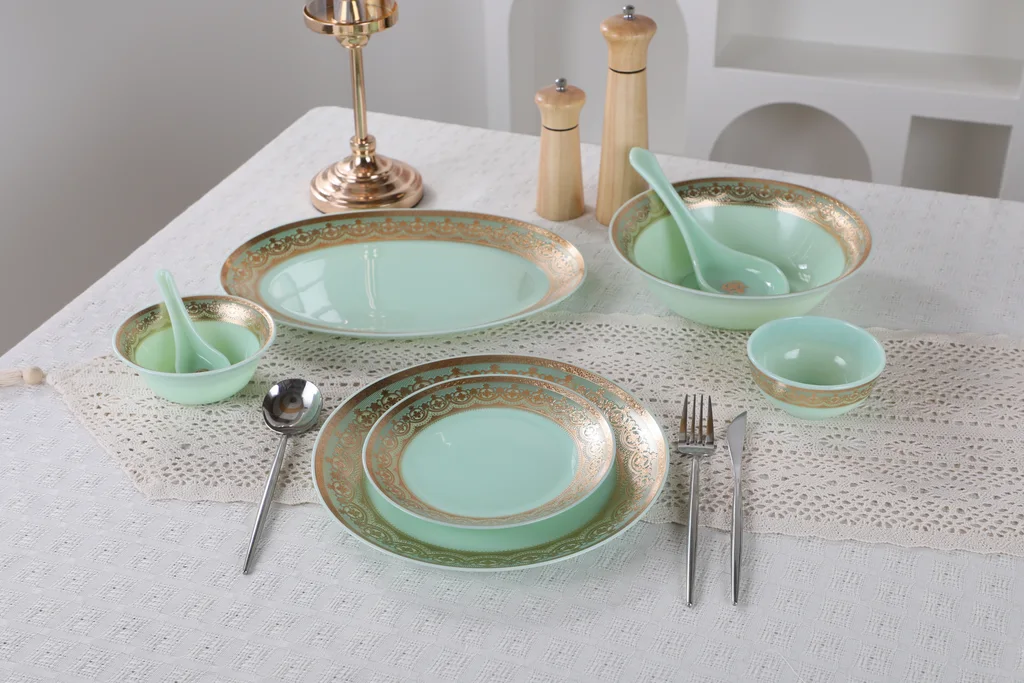
Lighting also affects this effect. Under warm lighting, Jade tableware will appear slightly warm and moist, making the table scene softer; under natural daylight, it presents a fresh light green hue. The tableware itself does not change the food, but it changes the visual atmosphere of the dining table. Many people choose Jade tableware precisely because this color looks more lifelike in a real dining environment and does not appear as overly formal as restaurant plating.
White dinnerware on a real dining table
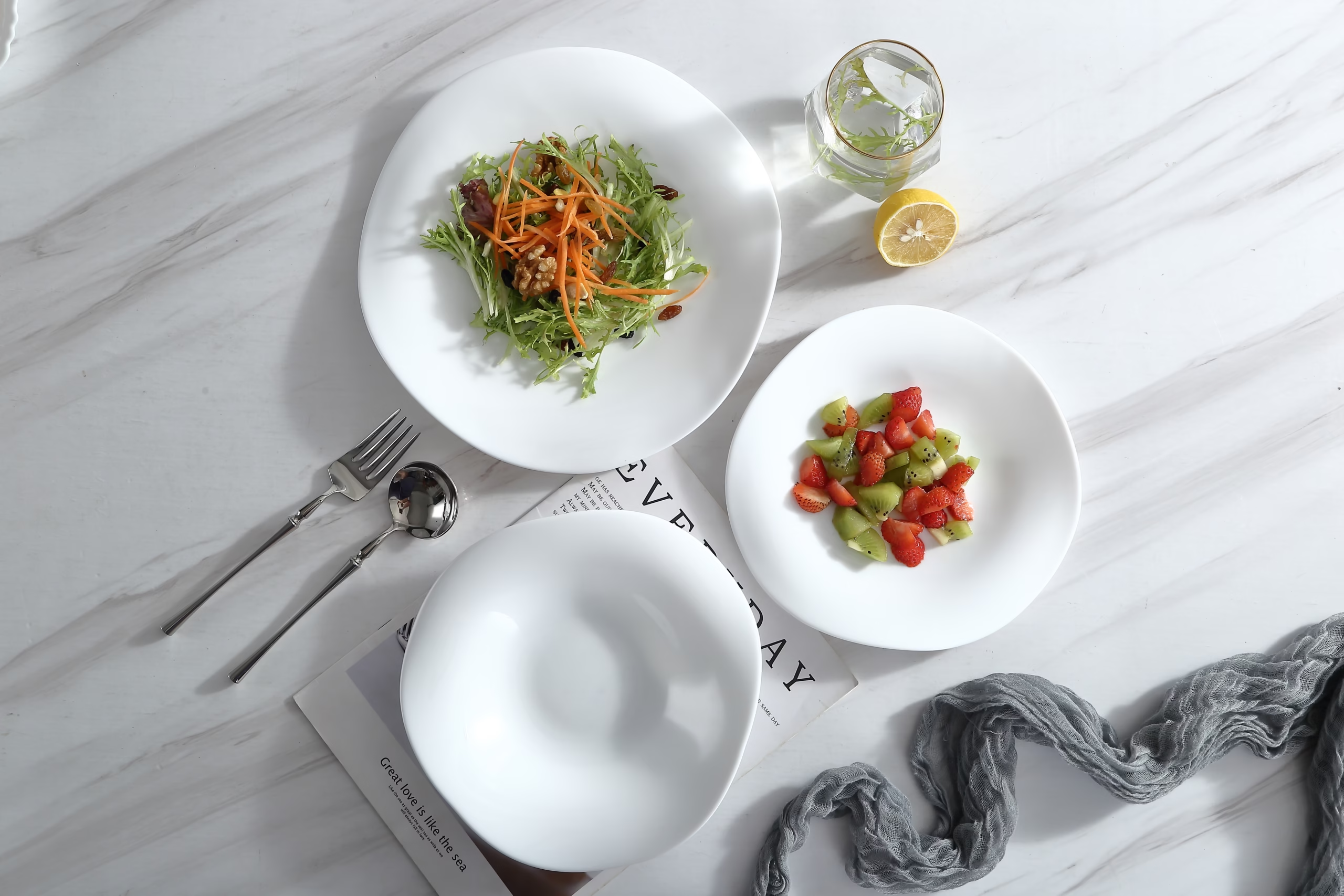
White tableware takes a completely different visual approach. A white plate on the dining table is like a clean background board; it does not add extra color to the tabletop, but makes the food the center of the picture.
For the same family dinner, if the plates are changed to White, the tabletop will immediately look brighter. The rice looks whiter, the green of the vegetables is more obvious, and the color of the main course is also clearer. Many restaurants use white tableware because this background can make food plating more prominent.
The situation is similar on family dining tables. White tableware does not change the color layers of the tabletop, but maintains a uniform bright visual effect. The table looks neat and simple, without extra color interference. For some people, this effect appears cleaner and fresher.
From a visual perspective, if Jade tableware is like adding a soft background color to the dining table, then White tableware is more like maintaining a pure blank picture, focusing all attention on the food.
Visual difference between jade and white dinnerware on the table
When Jade tableware and White tableware are placed on the same dining table at the same time, the difference will be very obvious. Suppose there are two plates on the table with the same dish. One plate is Jade-colored, and the other is White. People tend to notice the food on the white plate first because the color contrast is stronger; while the food on the Jade plate looks softer and the entire picture is more balanced.
This difference actually comes from the different background colors. White tableware provides a high-contrast background, so food colors are more prominent. Jade tableware provides a softer background, creating a natural transition between food and the dining table.
The tabletop material also affects this effect. On a wooden dining table, Jade tableware forms a relatively natural layer with the tabletop color, looking milder; White tableware forms an obvious bright color contrast, making the tabletop look cleaner. Even if the food is exactly the same, the pictures presented by the two plates are different.
Therefore, when people discuss Jade Dinnerware vs White Dinnerware: Which One Should You Actually Buy?, many judgments actually come from a very direct observation: what kind of visual background does the tableware provide for the entire table when it is placed on a real dining table? Jade tableware makes the table scene softer and more lifelike, while White tableware makes the table look brighter and simpler. The difference between the two is not in the material, but in the visual effect presented in a real dining environment.
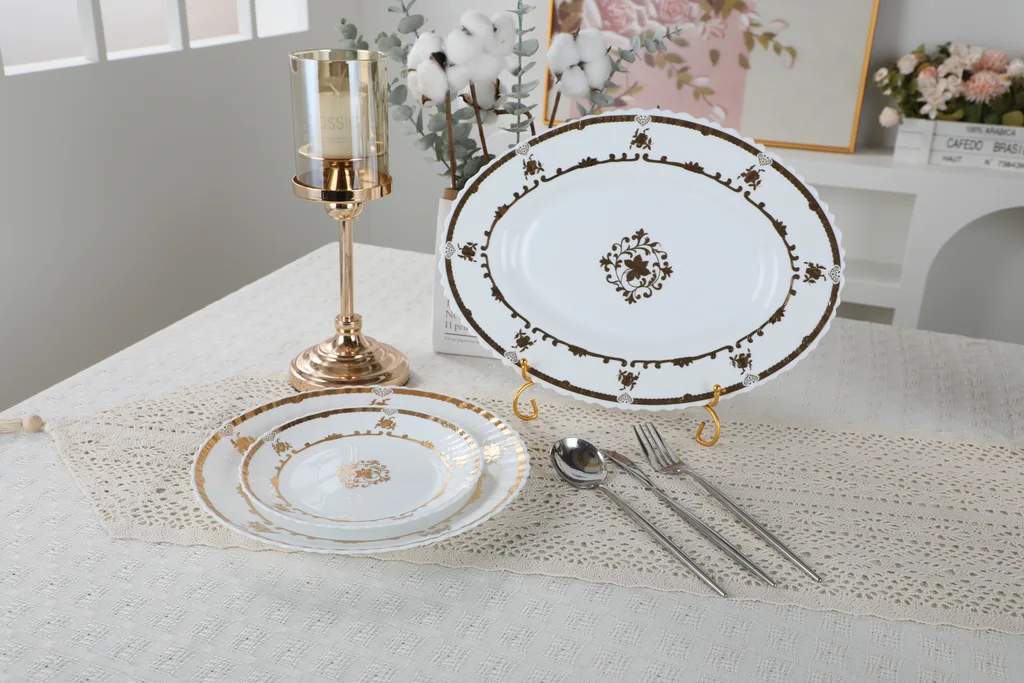
Which one gets dirtier, scratches more, and ages worse after a year of daily use
When comparing Jade Dinnerware and White Dinnerware, many people first focus on color and style, but what really affects the purchasing decision is often the change in state after a year of daily use. Tableware comes into contact with oil, sauce, friction from metal tableware, and cleaning processes every day, and these ordinary usage behaviors will gradually change the appearance of the tableware. Some tableware has almost no difference when first bought, but when the time stretches to a year, the difference becomes very obvious.
Many families encounter similar situations after using it for a period of time: the freshly washed plates still show water marks or oil stains under the light; some plates have thin metal lines on the surface; some dinner plates on the table do not look as clean as when they were first bought. It seems to be a cleaning problem, but in fact, it is often related to the way the tableware color is visually expressed.
When discussing the real experience after a year of daily use, the questions users care most about can actually be summarized into three very specific aspects:
- Dirt visibility: Whether oil stains, water stains, or sauce residues are easily visible after the tableware is used.
- Scratch visibility: Whether metal marks caused by friction between knives, forks and tableware are obvious.
- Aging state after one year: Whether the tableware is prone to looking old after long-term use, such as color changes or visual wear.
After understanding these three observation points, it will be more intuitive to look at the differences in the actual use performance of Jade dinnerware and White dinnerware.
Which dinnerware shows stains more easily after daily use
In daily dining scenarios, tableware often comes into contact with dark-colored foods, such as tomato sauce, curry, soy sauce, or tea stains. These foods usually do not really stain after cleaning, but the visual effect is completely different on tableware of different colors.
The surface color of White dinnerware is very pure, so any slight residue will be amplified. For example, a little sauce edge or a slight oil film will form an obvious contrast on a white background. When the tableware is placed under the light, these marks tend to be more obvious, which is why many families think white tableware “easily shows dirt”.
In contrast, Jade dinnerware usually has a soft jade or light green hue. This color reduces the contrast on the surface, so slight oil stains or water marks are not so prominent. In actual use, even if the tableware has been used for a whole day, as long as it is cleaned, the surface still looks relatively neat.
In the dining table environment, this difference will be further amplified. For example, under kitchen lights or natural light, the surface details of white plates are easier to see, while jade-colored tableware looks more uniform. After long-term use, this visual difference often makes Jade dinnerware look more durable.
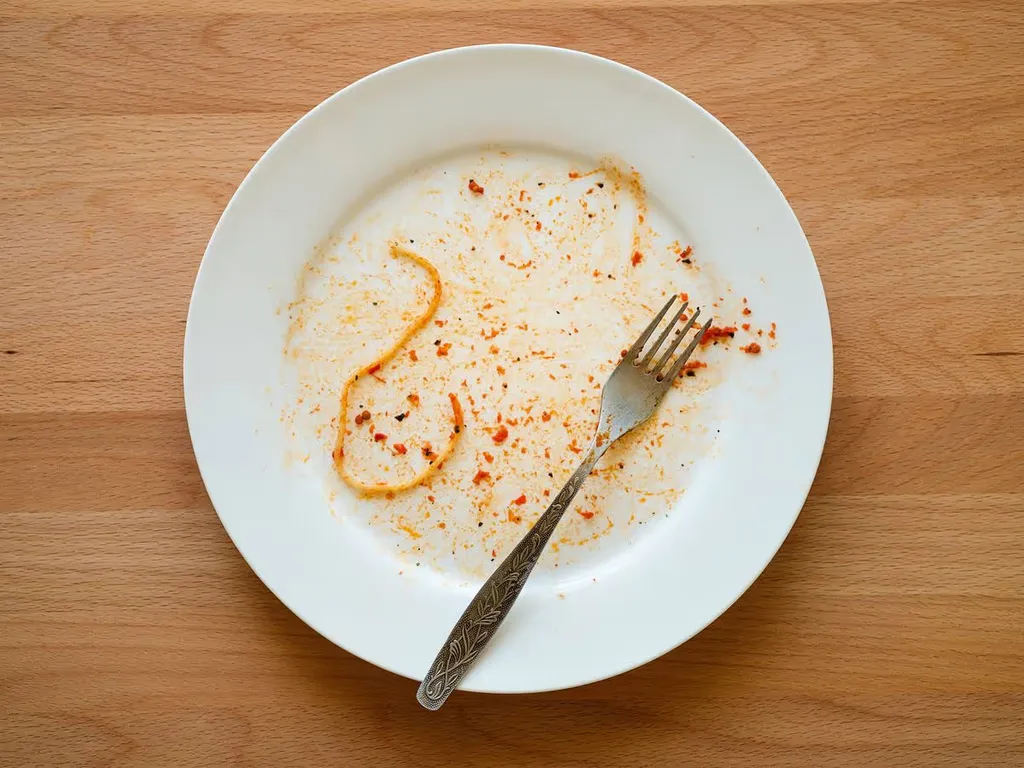
Which dinnerware shows utensil scratches more clearly
Another common change comes from tableware friction. During daily meals, forks scratching the plate surface, knives cutting food, and spoons repeatedly touching the plate bottom all leave fine metal marks on the surface. This phenomenon occurs on almost all tableware, but the degree of manifestation is different.
On White dinnerware, these metal friction marks are usually more obvious. The gray metal marks form a strong contrast with the white background, so even thin lines may look clear under light.
Jade dinnerware usually performs more softly. Since the surface of the tableware itself has color, the contrast between the metal marks and the background is low, so the same degree of friction is not visually prominent.
In many family kitchens, such a contrast can be seen: two plates have been used for the same amount of time, among which the surface of the white plate can already see several thin lines, while the jade-colored plate still looks relatively smooth. It is not that the scratches do not exist, but the color reduces the visual emphasis.
Which dinnerware looks older after one year of daily use
As the use time increases, subtle changes will gradually occur on the surface of the tableware, such as decreased luster, slight wear, or changes in color stability. These changes are usually normal phenomena, but they are presented differently on tableware of different colors.
White dinnerware is more prone to visual aging after long-term use. Once slight yellowing or color difference appears on the white surface, it will be relatively easy to notice. Especially when frequently using a dishwasher or contacting high-temperature oil, the surface changes will be more obvious.
Jade dinnerware is usually more stable in this regard. Due to its soft hue, even if there is slight wear or luster change on the surface, it will not form an obvious color difference, so the overall visual state remains more uniform.
When the tableware has been used for about a year, this difference will be more obvious. A set of white tableware may already show signs of use, while jade-colored tableware still maintains a relatively consistent color performance. In a daily family environment, this visual stability often makes Jade dinnerware look newer and more durable. When using it for a long time, some people will also notice whether the color of the tableware will change, such as slight hue changes in light-colored glass tableware under frequent cleaning or high-temperature environments. If you are also curious about jade opal glass plates change color, you can learn more about the real performance of this tableware in long-term use.
| Feature | Jade Dinnerware | White Dinnerware |
|---|---|---|
| Dirt Visibility | Low (soft hue reduces contrast with stains) | High (pure white background amplifies slight residues) |
| Utensil Scratch Visibility | Low (color reduces contrast with metal marks) | High (gray metal marks contrast sharply with white) |
| Aging Performance (1 Year Use) | Stable (soft hue hides slight wear/color changes) | Prone to visual aging (yellowing/discoloration is obvious) |
| Light Reflection | Moderate (absorbs partial light, soft visual effect) | High (strong reflection, bright visual effect) |
| Food Color Contrast | Soft (natural transition with food colors) | High (food colors are highly prominent) |
| Best Suited For | Warm-lit homes, home-cooked meals, daily high-frequency use | Bright-lit homes, Western-style meals, gatherings/formal use |
Solid Color Dinnerware in Jade vs White: Which Holds Up Better Under Home Lighting
A seemingly simple thing on the family dining table is often overlooked — whether the color of the tableware changes under home lighting. Many people see the effect under store lights, natural light, or in product pictures when buying tableware, but when using it every day, most of the time it is under restaurant lights or kitchen lights. At around seven o’clock in the evening, when the lights are turned on, the dining table atmosphere will be completely different. Some people will find that white tableware suddenly looks brighter, while others feel that certain colors are a little darker under the lights. The relationship between tableware color and home lighting is an important factor determining the daily visual experience, and this solid color dinnerware comparison highlights key variations in light interaction.
In a typical family environment, the common lights in the restaurant are usually warm-colored chandeliers, ceiling lights, or extended lighting from the kitchen. These lights shine directly on the surface of the tableware, and different colors reflect light in different ways. White is a highly reflective color, so light is more easily reflected after falling on the surface, making the overall look brighter; jade-colored tableware usually has a light green or pale cyan hue, forming softer layers under the lights and not looking so strong. This is why some dining tables look fresh and bright, while others look mild and quiet.
- In a home lighting environment, the actual visual performance of the two colors can be simply understood as:
- 1. Under warm-colored restaurant lighting: White tableware is usually brighter and cleaner, while jade-colored tableware looks softer, making the dining table atmosphere milder.
- 2. Under bright ceiling lights or kitchen lighting: White tableware still maintains a clear visual effect, while jade-colored tableware absorbs part of the light slightly, looking softer.
- 3. In families with frequently changing lighting environments: White tableware has little color change under different lights, so it has higher visual stability; jade-colored tableware performs better under warm light, but is slightly darker under white-toned light.
- 4. Overall daily dining table perception: White tableware makes the dining table easier to look bright and tidy, while jade-colored tableware makes the dining table atmosphere softer.
How home lighting affects dinnerware color
Many families have similar dining experiences: the tableware placed on the table during the day looks simple and fresh, but when the lights are turned on at night, the feeling of the dining table changes. If it is white tableware, it usually maintains a relatively bright visual effect after being illuminated by lights, with clear plate edges and food colors; if replaced with jade-colored tableware, the light falling on the surface will become softer, and the overall atmosphere of the dining table will also appear quieter. It is not that one is better, but that the color interacts visually with the light in different ways.
White dinnerware under different home lighting
From the perspective of daily family use, it is not accidental that many tableware choices are white. White tableware is relatively stable under various lighting conditions, whether it is restaurant chandeliers, kitchen ceiling lights, or extended lighting from the living room, and will not produce obvious visual changes. This stability makes the overall dining table look clean and clear at all times, and also makes it easier to set off the color of food.
Jade-colored tableware emphasizes the atmosphere more. In a warm light restaurant environment, it presents soft visual layers, making the dining table look more warm and natural. Some families like this kind of dining table atmosphere that is not so bright and slightly soft, so jade-colored tableware often looks more lifelike in a warm light environment.
When comparing Jade Dinnerware vs White Dinnerware: Which One Should You Actually Buy?, if you focus on the stable performance of tableware under home lighting, white tableware is usually easier to adapt to different lighting environments; if the restaurant lighting is warm and you want a softer dining table atmosphere, then jade-colored tableware will also present a different visual effect under home lighting.
Who should buy which — a straight answer based on your home setup and eating habits
When many people compare Jade dinnerware and White dinnerware, their first reaction is often to look at pictures or the effect of other people’s dining tables. But when the tableware is really placed in their own homes, many people will suddenly find: the tableware that looked beautiful originally may not be so coordinated on their own dining tables. The problem is not with the tableware itself, but with the different family environments and daily eating habits. The same set of tableware will present a completely different feeling in different families. Jade dinnerware will look warm and natural in some families, while White dinnerware will look clean and neat in others. Therefore, when choosing, instead of repeatedly comparing colors, it is better to first look at your own family environment and eating habits, which often makes it easier to get a clear answer.
Many families have similar experiences: some people only look at the appearance when buying tableware for the first time, but after using it for a period of time, they find that the overall feeling of the dining table is not coordinated. Later, after changing to a different color, the dining table atmosphere becomes much more natural. This is not a sudden change in aesthetics, but the tableware begins to match the family environment. When the tableware matches the environment, food, and usage habits, the dining table will look much more pleasing to the eye.
- • If the restaurant lighting at home is warm, the tabletop material is natural, and you mainly eat home-cooked meals daily, Jade dinnerware is usually easier to integrate into the dining table environment, looking softer and more lifelike.
- • If the restaurant or kitchen has bright light, the overall style is modern or simple, and the diet is mainly Western-style light meals or light food, White dinnerware will usually look fresher and cleaner.
- • If the tableware is daily tableware used for three meals a day, many families will prefer Jade dinnerware because the soft hue is more durable for long-term use.
- • If the tableware is mainly used for gatherings, friends visiting, or occasional formal meals, White dinnerware is often more versatile and also easier to highlight food colors.
When the selection logic changes from “which one looks better” to “which one is more suitable for your lifestyle”, many people will find that the answer is actually very straightforward. For those weighing a green dinnerware set vs white, the core distinction lies in how each complements the daily dining environment rather than material quality.
How home environment affects the look of dinnerware
The family restaurant environment is often an important factor affecting tableware selection. The tabletop material, light color temperature, and space style will all change the visual effect of the tableware in actual use. Some family restaurants have warm lighting, and the tabletop may be wooden or dark-colored, which is closer to the lifelike family dining table atmosphere. In such an environment, Jade dinnerware is often easier to integrate into the background. Jade color appears soft and stable under warm light, does not produce obvious reflections, and the overall dining table looks more natural. Many families find after long-term use that this kind of tableware does not attract too much attention, but becomes part of the dining table environment.
If the restaurant environment is bright, such as an open kitchen, light-colored tabletop, or white lighting environment, White dinnerware is usually more coordinated. White tableware presents a clean and neat visual effect in a bright environment, and the overall dining table also looks tidier. Many families with modern kitchen or minimalist restaurant styles will feel that the overall space is more unified when using white tableware. In such an environment, the tableware is like a clean background, keeping the dining table vision fresh.
Eating habits affect dinnerware choice
Tableware is not only related to the environment, but also affected by eating habits. The presentation effect of different types of food on tableware of different colors will be different. If the family diet is mainly Chinese home-cooked meals, such as stir-fries, stews, soups, and rice combinations, Jade dinnerware is more suitable for daily use in many cases. The jade-colored background will not make the food colors appear too strong, and the overall dining table looks more natural, which is also more in line with the atmosphere of family meals. During long-term use, the dining table vision will maintain a stable and comfortable feeling.
If the eating habits are more Western-style, such as salads, steaks, pasta, or light food, White dinnerware is usually easier to highlight food colors. A white dinner plate is like a neutral background, and food colors will be clearer. For example, green salads, red sauces, or dark steaks will be more obvious on white plates. This is why many Western restaurants use white tableware for a long time, because it can make food the center of the dining table vision.
When evaluating jade dishes vs white dishes in the context of eating habits, the key is how each color interacts with the visual presentation of common household foods.
Daily use affects long-term dinnerware comfort
In addition to the environment and eating habits, the frequency of tableware use also affects the choice. Some families use tableware as daily necessities and use the same set of tableware for breakfast, lunch, and dinner every day; while other families are more used to laying out a full set of tableware only on weekends or during gatherings. Different usage methods lead to different experiences of tableware colors.
If the tableware is used frequently every day, many families will gradually lean towards Jade dinnerware. The soft hue is easier to adapt to in long-term use, and will not make the dining table vision too bright. As the use time increases, the tableware will slowly integrate into the family dining table environment and become part of daily life. Many families find after continuous use that this kind of tableware is more suitable for a stable daily dining rhythm.
If the tableware is used more for gatherings or occasional formal meals, White dinnerware is often more versatile. White tableware can adapt to different food types and is also easier to match with different table settings. In scenes where friends come to visit or gather, white tableware will make the dining table look tidier, and at the same time, food is easier to become the visual focus.
When family environment, eating habits, and frequency of use are considered together, most people will clearly know which kind of tableware is more suitable for them. Choosing tableware that is consistent with the family lifestyle is often more important than simply comparing colors, and also more in line with the needs of long-term use.
Frequently Asked Questions (FAQ)
Q1: Is jade dinnerware more durable in terms of material compared to white dinnerware?
A1: The durability difference between jade and white dinnerware is not in the material itself (both are often made of reinforced glass), but in visual performance. Jade dinnerware appears more durable because its soft color hides dirt, scratches, and aging signs better, while white dinnerware’s pure background makes these signs more noticeable. Both have similar physical durability under daily use.
Q2: Can jade dinnerware maintain its color over long-term use, such as turning yellow?
A2: Jade opal glass dinnerware generally has good color stability. Unlike white dinnerware that may show yellowing after frequent dishwasher use or exposure to high-temperature oil, jade dinnerware’s soft green hue masks slight color changes, making it less likely to appear yellowed or discolored visually. However, proper care (avoiding harsh cleaning agents) can help prolong the color stability of both types of dinnerware.