
You searched for milk glass dinnerware, and the results were full of antiques and collectibles. You searched for opal glass dinnerware, and what came up were modern products actually for sale right now.
Two terms. They look like two different things. But are they?
This article answers one question: is milk glass the same as opal glass? If you’re shopping for milky-white glass dinnerware and these two names are making your head spin, a few minutes here will sort it out.
Are Milk Glass and Opal Glass Actually the Same Glass?
Short answer: yes.
Milk glass and opal glass are two names for the same material. Milk glass is the consumer-facing, everyday term. Opal glass is the standard term used in manufacturing and trade.
Both refer to that opaque or semi-translucent glass with a milky-white look. The white color comes from opacifying agents mixed into the glass batch itself. These agents scatter light passing through, creating the creamy appearance. Nothing is painted on. No film is applied. The color is built into the material.
Wikipedia’s Milk Glass entry puts it plainly: “Some 19th-century glass makers called milky white opaque glass ‘opal glass’.” So when you see these two terms in different places, don’t overthink it — same glass. The Wikipedia Milk Glass article has a fuller account of how the naming evolved.
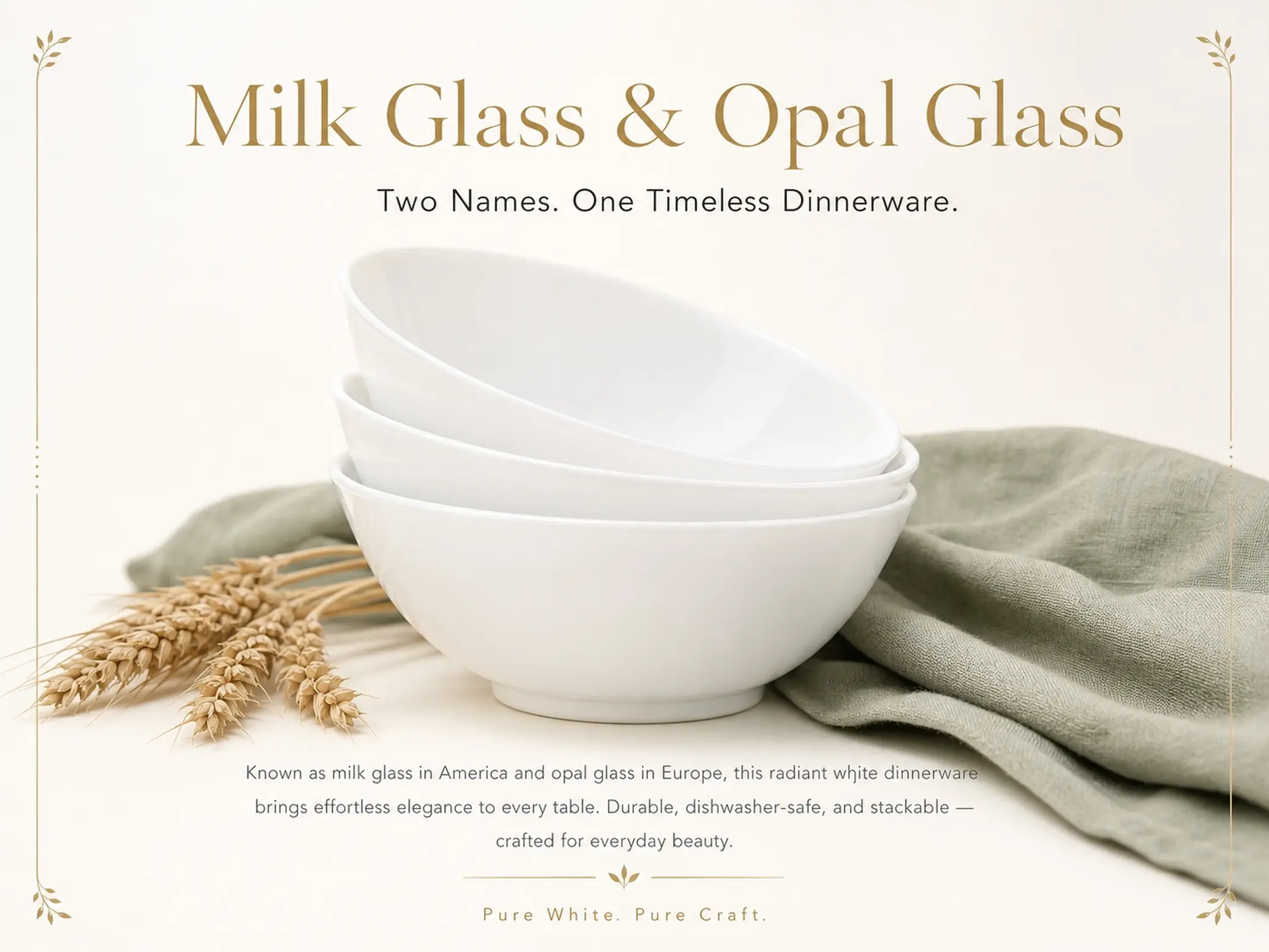
Same Glass — So Why Two Different Names?
The era changed, and the name changed with it.
From “Opal Glass” to “Milk Glass” — How the Name Shifted
This milky-white glass first appeared in 16th-century Venice. Glassmakers there called it opal glass — its soft, milky sheen reminded them of the opal gemstone. That name stuck across Europe’s glass industry for centuries.
In the 19th century, Victorians in Britain took a strong liking to this glass. They thought it looked white as milk and started calling it milk glass. The name was catchy. It spread fast through consumer markets.
Then came the golden age in America. Fenton, Westmoreland, Indiana Glass — these brands mass-produced milk glass dinnerware and home décor from the 1940s through the 1970s. By then, milk glass was the name every American shopper knew.
But on the factory floor and in international trade, the picture was different. Manufacturers have always used opal glass on spec sheets, export documents, and B2B platforms. Corelle, for example, writes “our Opal/Milk glass” right in its FAQ — both terms side by side, referring to the same product line.
The pattern is simple. Consumers and collectors say milk glass. Factories, traders, and procurement teams say opal glass. That’s also why searching milk glass pulls up mostly antiques, while searching opal glass shows you modern dinnerware currently in production.
Same Material — Does Vintage Milk Glass Perform the Same as Modern Opal Glass?
Not exactly. The core material hasn’t changed, but the specific formulas and processes have kept evolving over the centuries.
Same Principle, Updated Recipe
The idea behind milk glass and opal glass has always been identical: add an opacifier to glass to get that milky-white look.
What’s changed is which opacifier gets used. Early batches relied on bone ash, tin oxide, and other materials common at the time. Modern production has switched to food-grade fluoride compounds across the board.
It’s like cars. A car is still a car, but the fuel in today’s engines has nothing in common with what was burned a century ago. The material’s essence is the same; only the formula version has been updated — the kind of natural iteration every industrial material goes through. The Taste of Home identification guide also traces how milk glass ingredients changed across different eras.
For details on today’s formula and production workflow, see this full walkthrough of the opal glass manufacturing process.
What Is Milk Glass Called Now? In the Industry, It’s Opal Glass.
The milk glass dinnerware still in production today is opal glass. It’s no longer a collectible or artisan craft — it’s a standardized industrial dinnerware line.
When we help overseas clients with product selection, we see this all the time: North American retail buyers open with the keyword milk glass dinner set. But when they get into specs, every reference link they share points to an opal glass product.
Search “milk glass dinnerware set” on Target — the Gibson and Corelle products near the top list opal glass in their material descriptions. Search “milk glass dishes” on Amazon — the Martha Stewart Opalton series right up front reads “Chip and Break Resistant Opal Glass Plates and Bowls” in the title.
Microwave safe, dishwasher safe, food-contact certified — every label you see on an opal glass product page applies equally to any modern dinnerware marketed as milk glass. Same product. Two names.
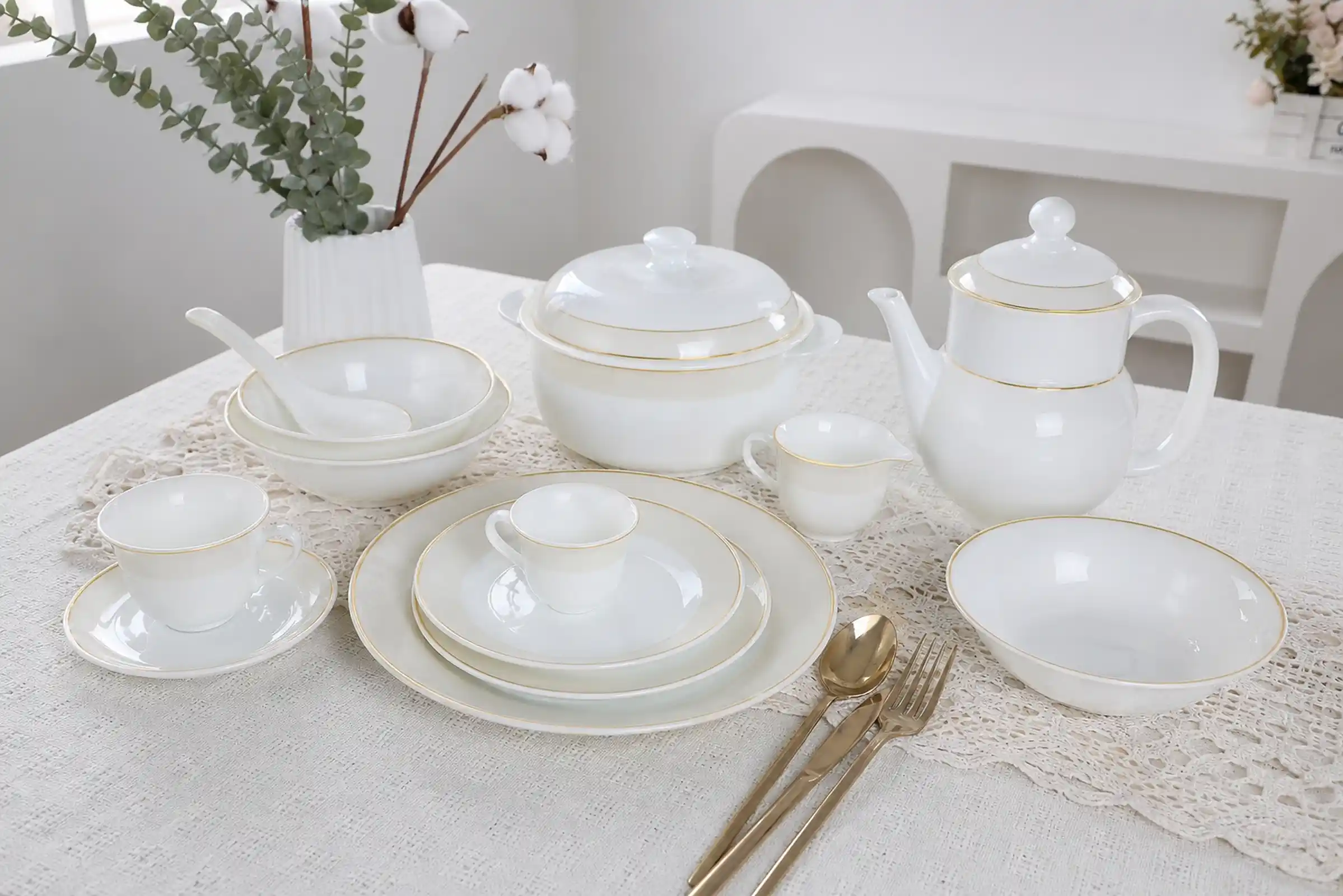
Is Milk Glass Still Made Today?
Yes, and there’s no shortage of options.
But here’s something worth knowing: if you search milk glass dinnerware directly, most results are vintage secondhand pieces on eBay, Etsy, and Chairish — Fenton’s Hobnail, Westmoreland’s Paneled Grape, and other lines discontinued decades ago.
The brands and factories actually mass-producing milky-white glass dinnerware today all use the name opal glass. A few you may already recognize:
| Brand | Product Line | Material Label |
|---|---|---|
| Corelle | MilkGlass Series | Opal/Milk glass |
| Gibson | Modern Opal Series | Tempered Opal Glass |
| Bormioli Rocco | White Moon Series | Tempered Opal Glass |
| Martha Stewart | Opalton Series | Opal Glass |
All of these are available now on Amazon, Target, Walmart, and Wayfair — in 4-person sets, 6-person sets, and 24-piece commercial packs.
So whether you’re looking at milk glass or opal glass dinnerware, the real question isn’t “does anyone still make this?” It’s “which keyword are you using to search?” Want antique collectibles? Search milk glass. Want modern dinnerware? Search opal glass. A Reddit thread in the glass collecting community asked this exact question — and the answers line up with what we’ve outlined here.
For a broader look at what opal glass dinnerware is, how to choose it, and whether it’s safe, our beginner’s guide covers it all. Start with this opal glass beginner’s guide for material basics, performance specs, and safety info.
Common Questions People Ask
Q1: I told the factory I wanted milk glass dinnerware, but the quote says opal glass. Did they get it wrong?
No. Modern dinnerware factories use opal glass across the board — in production systems, quotes, and QC reports. Say milk glass and they understand you perfectly. The product they ship is the same thing. Industry paperwork just doesn’t use milk glass. It’s like asking for a “stainless steel pot” and getting a quote that says “SUS304” — same product, different label.
Q2: I’m listing a product online. Should the title say milk glass or opal glass?
Depends on who you’re selling to. For North American end consumers browsing for home dinnerware, milk glass has stronger recognition and gets more searches. For commercial buyers, hotel and restaurant channels, or B2B procurement, opal glass is the standard term and matches how professional buyers search. Many brands use both — Corelle writes “Opal/Milk glass” right on its product pages.
Q3: My customer wants milk glass but requires it to be dishwasher and microwave safe. Is that possible?
Yes. If you’re sourcing modern, in-production opal glass dinnerware, dishwasher and microwave safety come standard out of the factory. The milk glass your customer is asking for and the opal glass the factory ships are the same product line. No material swap or extra processing needed. Just confirm your supplier has the relevant food-contact test reports.
To browse specific products, specs, and styles, head to our opal glass dinnerware product catalog.