
Ordering opal glass bowls in bulk sounds straightforward — until the wrong bowls show up. This guide helps you avoid the most common selection mistakes before they become expensive ones. It covers how bowl shapes match different service styles, why capacity matters more than diameter, why decorative decals face tougher durability demands on bowls than on plates, and how a bowl’s curved surface can amplify batch-to-batch color differences enough to ruin your table presentation. This is the kind of operational knowledge most buyers only pick up after a bad order. You’re getting it upfront.
Understanding Bowl Categories by Food Type
Picking bowls for a commercial kitchen is not just about big versus small. Soup is liquid. Salad is loose and leafy. Cereal sits in milk. A shared entrée needs to feed a whole table. Each of these foods puts different demands on a bowl’s diameter, depth, and wall angle. Getting clear on these differences is the first real step before placing a bulk order.
If this is your first time sourcing opal glass for commercial use, start with our opal glass tableware commercial guide. It covers material properties, comparisons with ceramics and melamine, and how to evaluate suppliers. Come back here once you have that foundation.
Soup Bowls, Salad Bowls, Cereal Bowls, and Serving Bowls — Structural Characteristics of Four Bowl Types
Soup Bowl — Narrow mouth, deep belly, built for liquids.
Everything about an opal glass soup bowl is designed around one thing: keeping liquid in. The opening is relatively narrow. The belly is deep. The profile tapers slightly inward. That shape is not decorative — it’s functional. A narrower mouth means less sloshing and spilling when servers carry the bowl. A deeper cavity means enough room for a proper portion of broth-based dishes. For opal glass specifically, the smaller exposed surface also slows heat loss, so soup stays warmer longer.
Salad Bowl — Wide mouth, shallow belly, built for display and tossing.
The salad bowl is almost the opposite of a soup bowl. It’s wide, shallow, and the walls angle outward gently. That shape does two things. First, it gives enough room to toss and mix ingredients without flinging leaves and dressing over the edge. Second, the broad, open floor lets colorful ingredients spread out naturally — creating that visual “abundance” effect that makes a salad look generous and layered.
Cereal Bowl — Moderate depth, the all-purpose workhorse of breakfast service.
Think of the cereal bowl as the middle ground. It’s deep enough to hold cereal and milk without spilling, but not so deep that it only works for one thing. Yogurt, porridge, a small dessert — it handles all of these. That versatility is exactly why cereal bowls end up being the most-used bowl type in commercial kitchens, especially at breakfast.
Serving Bowl — Large capacity, built for communal sharing.
The opal glass serving bowl is bigger than the other three in every dimension — wider and deeper. It’s made for buffet stations and family-style meals where one bowl feeds multiple people. The design goal is simple: load it once, and keep refills to a minimum.
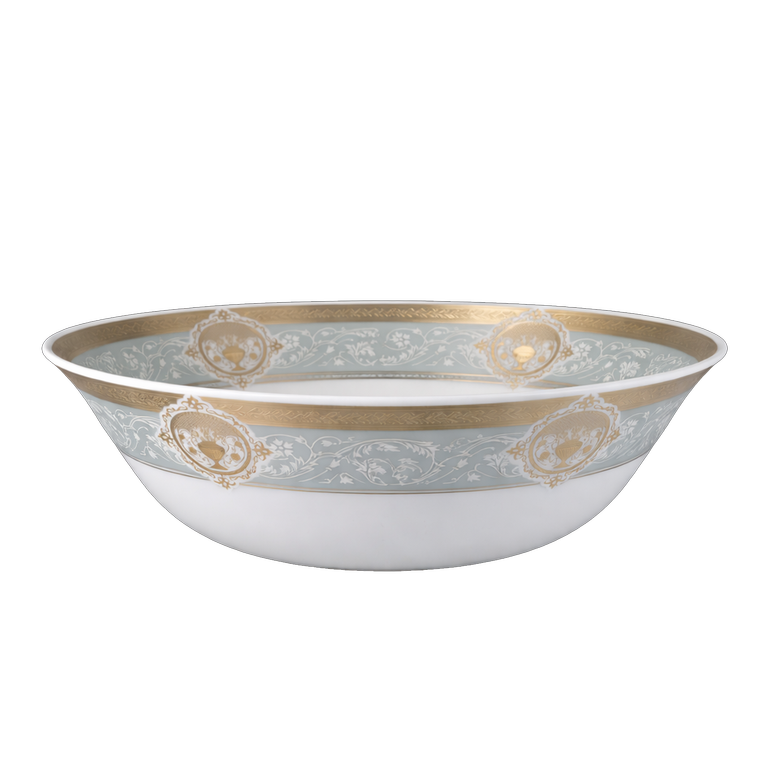
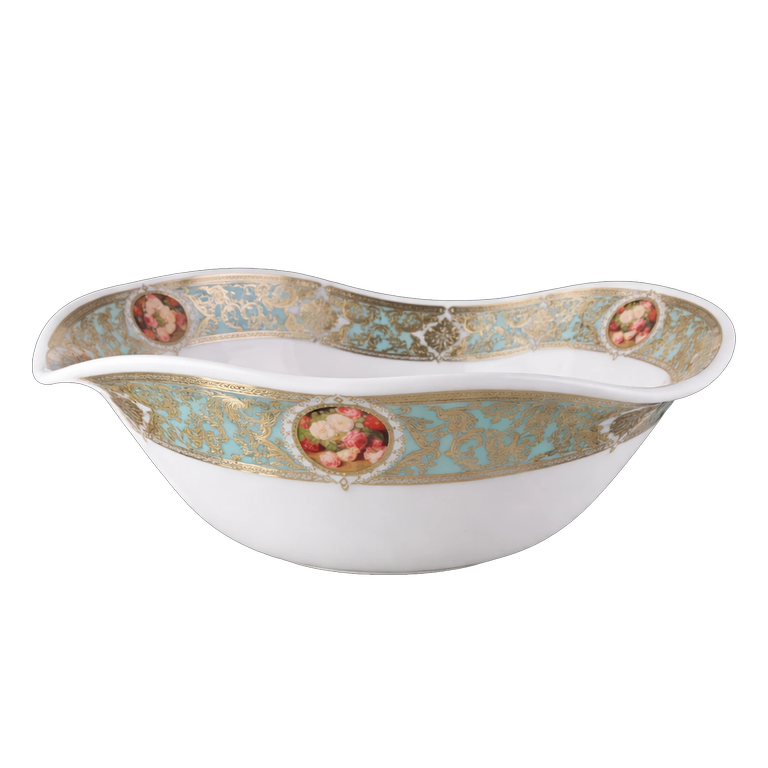
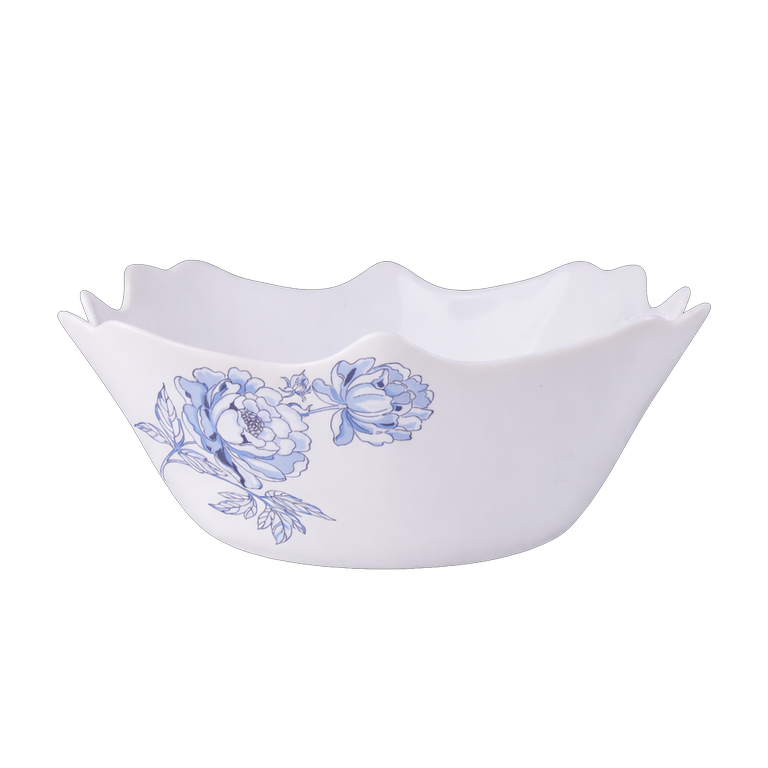
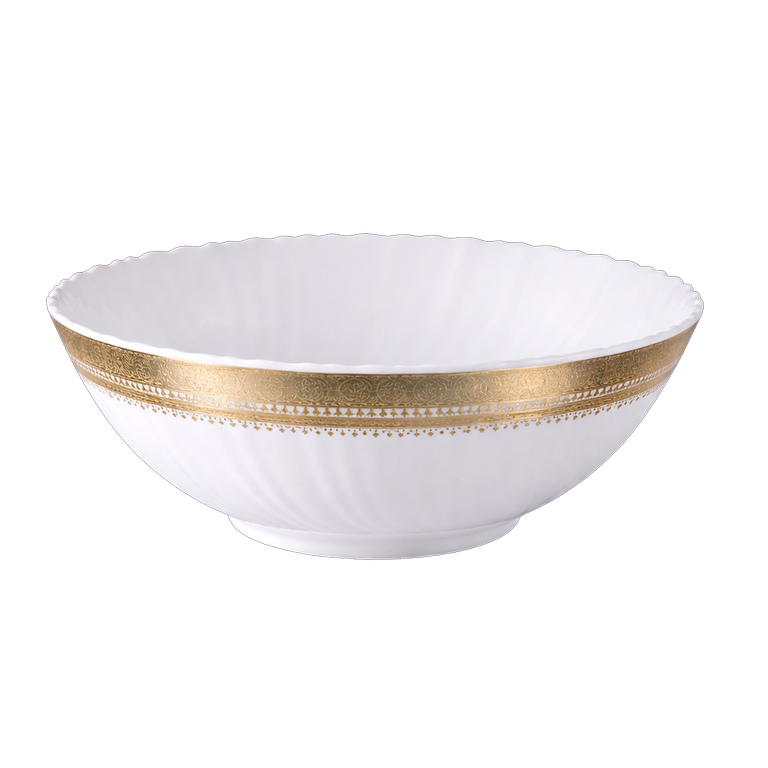
At trade shows, hotel buyers almost always ask the same thing when they pick up a serving bowl: “Is this big enough to look impressive on my buffet line, and will it cut down on how often my team has to refill it?” That question perfectly captures what a serving bowl needs to do — balance visual presence with practical volume.
Rim Bowl, Coupe Bowl, Footed Bowl — How Bowl Structure Affects Service Style
The edge and base of a bowl determine how your staff will physically handle it. Before choosing a shape, answer one question: do your servers carry bowls by hand, or do they use trays? That single answer narrows your options dramatically.
| Bowl Structure | Core Physical Feature | Carrying Experience | Stacking & Storage | Best-Fit Service Style |
|---|---|---|---|---|
| Rim Bowl | A flat flange extends outward from the bowl’s lip | The rim keeps fingers away from the hot interior — much safer for carrying hot soup | The rim adds a bit to the footprint, but bowls still nest and stack reasonably well | Hand-carry service, especially when servers frequently transport hot soups and porridges |
| Coupe Bowl | The wall curves smoothly from base to lip — no flanged rim at all | Clean, modern look, but the lip gets just as hot as the food inside — bare-hand carrying is uncomfortable with hot dishes | No rim means tighter nesting — best stacking efficiency of all three types | Tray-based service, or menus focused on room-temperature and cold dishes |
| Footed Bowl | A raised pedestal at the base lifts the bowl off the table | The foot works as a grip point, but it’s small — less stable for one-handed carrying | The pedestal prevents tight nesting — takes up noticeably more storage and shipping space | Presentation-focused settings, suited for tray service or pre-set table placement |
Here’s a quick rule of thumb: decide how your team serves first, and the bowl shape follows. Hand-carrying hot dishes? The rim bowl is the only shape that’s both safe and efficient. All tray service? The coupe bowl stacks better and looks cleaner. The footed bowl is for operations that are willing to trade storage space for elevated presentation.
No bowl shape is universally better. It just has to match your service flow. And when you’re buying a complete opal glass bowl set, getting this right upfront saves you from a costly mid-contract switch.
Capacity vs. Diameter: Which Matters More?
Diameter is the first thing most buyers look at. Supplier catalogs are organized by it — 5″, 6″, 7″, 8″ — and it’s easy to compare. But diameter doesn’t tell you how much food a bowl actually holds. Two bowls with the same 7″ opening can differ by nearly double in volume, depending on depth and wall curvature. That’s why commercial bowl procurement should treat capacity as the primary spec and diameter as the secondary one.
8 oz to 60 oz — Capacity Ranges and Menu Mapping
Each capacity range maps to a fairly clear set of menu items. Building this opal glass bowl capacity-to-function baseline before you order saves a lot of trial and error.
| Capacity Range | Typical Menu Items | Common Use Scenarios |
|---|---|---|
| 8–12 oz | Dipping sauces, condiments, small desserts, appetizers | Buffet stations, Japanese set meals, tapas restaurants |
| 14–16 oz | Cereal + milk, yogurt granola bowls, light meals | Hotel breakfast, brunch, fast-casual |
| 16–20 oz (sweet spot) | Single-serve soups, salads, rice bowls | Primary dinner bowl — broadest menu coverage |
| 24–32 oz | Large pasta, mixed rice, noodle soups | QSR, casual dining, noodle counters |
| 40–60 oz+ | Communal serving bowls, salad bar vessels | Family-style shared service, buffet display |
The 16–20 oz range is widely considered the sweet spot. If budget limits you to one primary bowl spec, this range covers the most menu items with the highest turnover efficiency. But keep in mind: a shallow 7″ bowl might hold only 12 oz, while a deep 7″ bowl can exceed 20 oz. Same opening, nearly double the volume.
Always match your dishes to the capacity number, not the diameter. At Jointion, our product sheets list both capacity (oz) and diameter (inch) side by side for this exact reason. Picking bowls by diameter alone is one of the most common sizing mistakes in commercial procurement.
Why Same-Diameter Bowls Can Differ by Double in Capacity — Depth Is the Critical Variable
Same diameter, very different volumes. Two opal glass dinnerware bowls, both 7″ across. The shallow salad version holds about 12 oz — low profile, open mouth, ingredients spread flat for visual appeal. The deep soup version holds around 20 oz — taller walls, tighter curvature, broth stays put. Identical diameter. Nearly 100% difference in what they can hold.
What goes wrong when you only specify diameter. If your team’s internal order says “get the 7-inch bowls” without nailing down capacity, you won’t know there’s a problem until the shipment arrives. Too shallow, and a standard soup portion barely fits — or overflows. Too deep, and a delicate dessert disappears at the bottom where diners can’t see it.
We’ve seen this play out firsthand. A Middle Eastern client came to our Canton Fair booth after his previous supplier delivered bowls that matched the diameter spec perfectly — but the depth was wrong. The entire batch couldn’t hold his restaurant’s signature soup portions. He ended up placing an emergency reorder, losing weeks and absorbing the extra cost.
What to do about it. On every selection sheet and purchase order, list capacity (oz) and diameter (inch) together. Diameter tells you how much table space the bowl takes up and whether it looks proportional next to your plates. Capacity tells you whether it can actually hold the dish you need to serve. You need both numbers to avoid a mismatch after thousands of bowls land at your door.
How Bowl Decoration Logic Differs from Plates
Where to Place Decoration on a Bowl — Prioritizing the Outer Wall, Rim, and Inner Base
A plate is flat. After food goes on, there’s still plenty of visible surface for decoration to show. A bowl is different — it has depth. Once you pour in soup, porridge, or sauce, any decoration on the inner wall disappears underwater. That changes the entire decoration strategy. On opalware bowls for commercial use, the question isn’t “where looks best in a catalog photo” — it’s “where will the decoration still be visible when the bowl is full of food.”
Outer Wall — always visible, first priority. No matter what’s inside the bowl or how full it is, the outer wall is on display. For any operation that wants brand presence on the table, this is where your decoration budget goes the furthest.
Rim — visible even when the bowl is full, second priority. The rim is the first contour line a diner’s eye lands on. A single color band or subtle pattern here creates quick brand recognition without adding much to production cost.
Inner Base Center — a hidden detail revealed at the end, third priority. Food covers this area throughout the meal. It only appears once the bowl is empty. Good for a small brand logo or minimalist motif — a closing touch, not a primary decoration area.
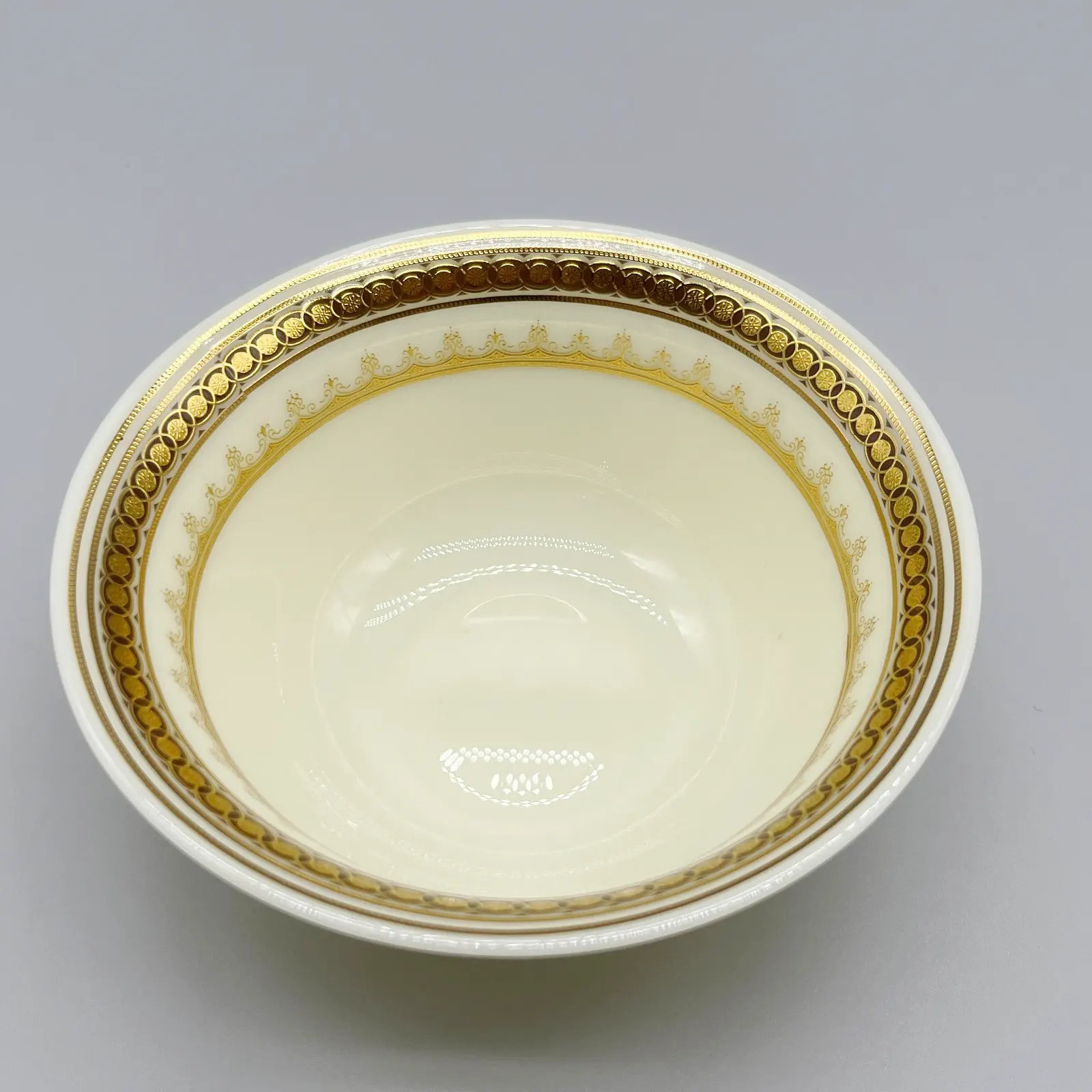
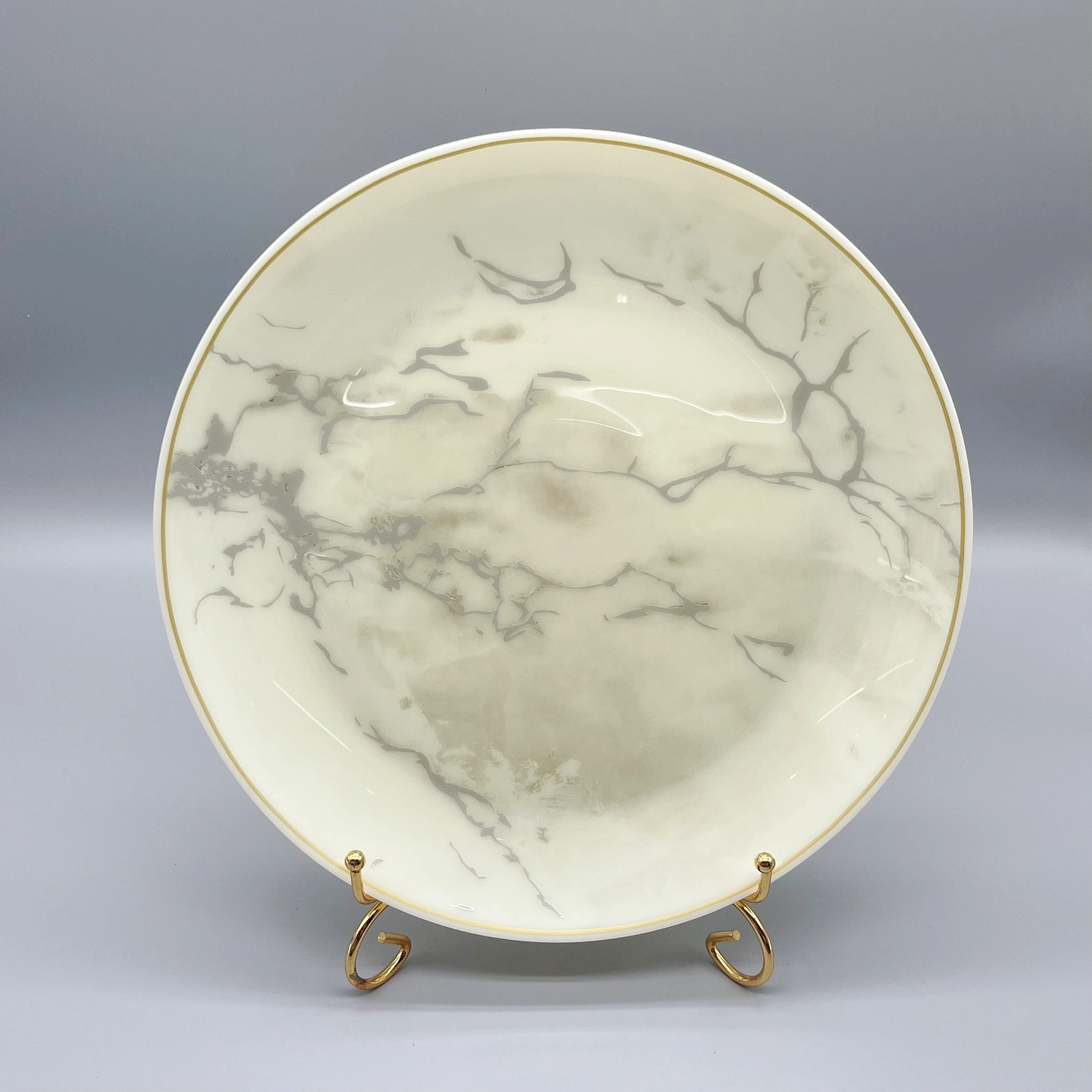
For bulk orders, “plain white interior + outer wall decoration” delivers the best return on investment. The white opal glass interior already has a warm, jade-like luster that provides a clean backdrop for any dish. Put your decoration money on the outside, where it’s always working.
Decal Durability on Bowls — Why Bowl Decoration Durability Demands Are Higher Than for Plates
Plates mostly hold solid food at moderate temperatures for short periods. Bowls deal with something much harsher — hot soups, stews, and broths soaking the walls at 70–90°C for extended stretches. Acidic foods like tomato soup or vinegar-based sauces add chemical erosion on top of that. The same decal that lasts years on a plate can start fading, lifting at the edges, or peeling on a bowl within months.
If you’re planning custom decoration on tempered opal glass bowls, bowl decoration durability is a spec you need to take far more seriously than you would for plates.
The core rule is simple: require high-temperature fired decals (580°C or above), not low-temperature adhesive application. High-temperature firing fuses the decoration into the glass surface — they become essentially one material. That bond holds up against prolonged hot liquid soaking and thousands of machine wash cycles. Low-temperature decals just sit on the surface with adhesive. Under the heat and moisture that bowls face daily, they break down much faster.
Our internal testing at Jointion showed a stark difference. Same batch of decal paper, applied to both bowls and plates. After 500 dishwasher cycles, low-temperature decals failed on bowls at nearly three times the rate they failed on plates. That gap is why we only recommend high-temperature firing for bowl orders.
When inspecting deliveries, ask your supplier for hard test data — not verbal promises. These two tests are the ones that matter most:
| Test Dimension | Simulated Scenario | Key Metrics | Acceptable Benchmark |
|---|---|---|---|
| Hot liquid immersion test | 70–90°C hot water / acidic liquid in sustained contact with bowl walls | Decal color fastness, edge adhesion strength | No visible fading or edge lifting after 24-hour immersion |
| Commercial dishwasher cycle test | High-temperature (≥80°C) high-pressure water jets in repeated cycles | Decal surface cracking, peeling, gloss change | Pattern intact with no visible degradation after ≥500 cycles |
If a decal can’t pass both tests, it doesn’t belong on a commercial bowl.
Breakage Patterns of Bowls in Commercial Environments
Every type of tableware breaks differently. Plates crack at the edges. Cups slip from grips. Bowls have their own two failure modes: liquid payload shifts the center of gravity in ways that cause drops, and the curved shape creates vacuum-lock jamming during stacked storage. Knowing how bowls actually break is what lets you pick the right specs — and the right handling procedures — before you place the order.
Liquid Payload and Breakage Risk — Carrying and Clearing Are the Highest-Risk Moments
Bowls almost always hold liquid or semi-liquid food. That changes everything about how they behave in a server’s hands. A full soup bowl has its center of gravity shifted high — up near the middle of the bowl, well above where the hand grips it. That top-heavy weight distribution makes opal glassware bowls far more prone to tipping and slipping during transport than a plate carrying the same weight in solid food.
The numbers back this up. Restaurants typically replace 10–15% of their tableware inventory each year due to breakage. Bowl drops during carrying make up a disproportionate share. Every step a server takes causes the liquid inside to slosh, generating inertial forces that are far stronger than anything solid food produces. The bowl literally fights the server’s grip with every stride.
The second danger zone is table clearing. Used bowls usually still have residual soup or sauce inside. That leftover liquid acts as an impact amplifier — when bowls collide during stacking, the liquid’s momentum adds force on top of the bowl’s own weight. The actual shock hitting the bowl wall is significantly harder than an empty-bowl collision. Stack several wet bowls quickly into a bus tub during a rush, and the odds of chipping a rim spike fast.
Three rules that consistently reduce these losses:
Use rim bowls for hot soup. The wide flange gives servers a grip zone that’s physically separated from the hot liquid. A Southeast Asian congee chain we work with reported that hand-scalding drops accounted for nearly half their bowl losses when using rimless deep bowls. After switching to wide-rim models, that figure dropped dramatically.
No more than two bowls in one hand. That’s the practical ceiling for maintaining control when liquid is shifting the center of gravity. A third bowl has no real support structure — it’s balanced entirely on wrist strength, and the drop rate jumps.
Pour out residual liquid before stacking. Emptying leftover liquid into a waste bucket before nesting bowls eliminates the inertia-amplified impact entirely. This is the step most likely to get skipped during a lunch rush — and it’s the single biggest variable in clearing-stage breakage.
Nesting and Stacking — Balancing Space Savings Against Jamming and Cracking
Bowls nest. That’s a real storage advantage over plates. One bowl fits inside another, stacking vertically and using shelf space far more efficiently. For operations that go through a lot of bowls — noodle shops, soup counters, buffet lines — the space savings are obvious and significant.
But the same curved shape that makes nesting possible also creates a risk. When one bowl’s base curvature matches the rim curvature of the bowl below too closely, the two form a near-airtight seal. Air gets pushed out. A vacuum forms. And the bowls lock together.
What happens next is predictable. A busy line cook or dishwasher grabs the top bowl and pulls hard. The sudden, uneven force concentrates at the rim-to-base junction — exactly where the glass is most vulnerable. The result is a cracked lip or a fractured base. This forced-separation damage is the number one cause of nesting-related breakage in commercial kitchens.
At Jointion, we address this at the mold stage. During development, we verify that the gap between the base arc and the rim arc leaves a sufficient air channel. That way, bowls produced at scale can nest and separate without vacuum lock.
But regardless of what any supplier tells you, run your own nesting test before committing to a bulk order. Take five identical bowls. Stack them one by one, then pull them apart one by one. What you’re looking for:
| Test Item | Normal Signal | Risk Signal |
|---|---|---|
| Nesting feel when inserting | Bowl slides in under its own weight — no pressing needed | You have to push it down with your palm |
| Feel when separating | Lifts out with one hand, no resistance | Needs two hands and a twist, or makes a suction-cup pop |
| Nesting gap | Visible space between walls — air flows through | Walls press flush with no visible gap |
| Safe stack height | 8–10 bowls, bottom bowl shows no strain | Stack wobbles past 10, bottom bowl under visible pressure |
| Wet-bowl nesting | Still separates smoothly when damp | Suction multiplies when wet — bowls won’t come apart easily |
Opal Glass Bowls — Commercial Scenario Overview
How opal glass bowls get used in real restaurants is far more segmented than most first-time buyers expect. A hotel breakfast buffet, a noodle chain, a banquet hall, and a QSR franchise all need bowls — but their requirements for depth, diameter, stacking performance, and pattern consistency are completely different. Picking the wrong model shows up fast, either as high breakage or as a mismatched table look.
Before getting into product-level details, it helps to see where your business sits on the map — and to understand the one replenishment rule that applies to every operation regardless of type.
Quick Navigation by Scenario — Which Type Is Your Restaurant?
What you need from a bowl depends entirely on your service format. Here’s a fast breakdown of the main scenarios and what to prioritize when sourcing wholesale opal glass bowls for each.
Hotel Breakfast Buffet. Cereal bowls dominate. Guests take, eat, return, and the bowls cycle through washing nonstop. Stock at least four bowls per seat to avoid running dry during the morning rush. Pay close attention to stacking stability — a toppling stack on the buffet line is a safety incident.
Soup & Noodle Restaurants. Deep opal glass soup bowls in the 16–20 oz range will make up the bulk of your order — often 60% or more. The walls need to handle prolonged exposure to near-boiling broth without stress cracking. And the rim profile directly affects how quickly and safely your team can plate and serve.
Banquets & Events. Pattern-matched rim bowls are essential for visual consistency across a large table setup. Build in a 15–20% breakage buffer per order. When hundreds of bowls are served simultaneously, chipping is unavoidable — the buffer keeps your sets complete.