
- What Type of Opal Glassware Manufacturer Is Jointion?
- What Opal Glassware Products Can Jointion Supply?
- Jointion’s OEM and ODM Customization Capabilities for Opal Glassware
- Jointion’s China Factory and Bulk Production Capabilities
- Jointion’s Quality Control and Export Support
- Why Choose Jointion as an Opal Glassware Manufacturer?
What Type of Opal Glassware Manufacturer Is Jointion?
Jointion focuses on opal glassware and related tableware, supplying existing designs in bulk while also handling product revisions and new OEM/ODM projects. For buyers, this product focus means that shapes, colors, decoration, set configurations, and packaging can be confirmed within one project rather than divided among several suppliers with no direct coordination. Public information from Jointion states that its production base covers approximately 70,000 square meters and that its business serves more than 50 countries and regions. These figures provide buyers with an initial view of the manufacturer’s scale and market reach.
Focused on Opal Glassware Production
Jointion’s product direction includes:
- Opal glass plates, bowls, cups, and pots;
- Opal glass dinnerware sets;
- Opal glass casseroles, oval plates, and other serving ware;
- Products in milky white, black, jade green, amber/yellow jade, white jade, and other colors;
- Regular decals, low-temperature embossed decoration, gold-rim decoration, and other decorative options;
- Sets and packaging developed for retail and wholesale channels.
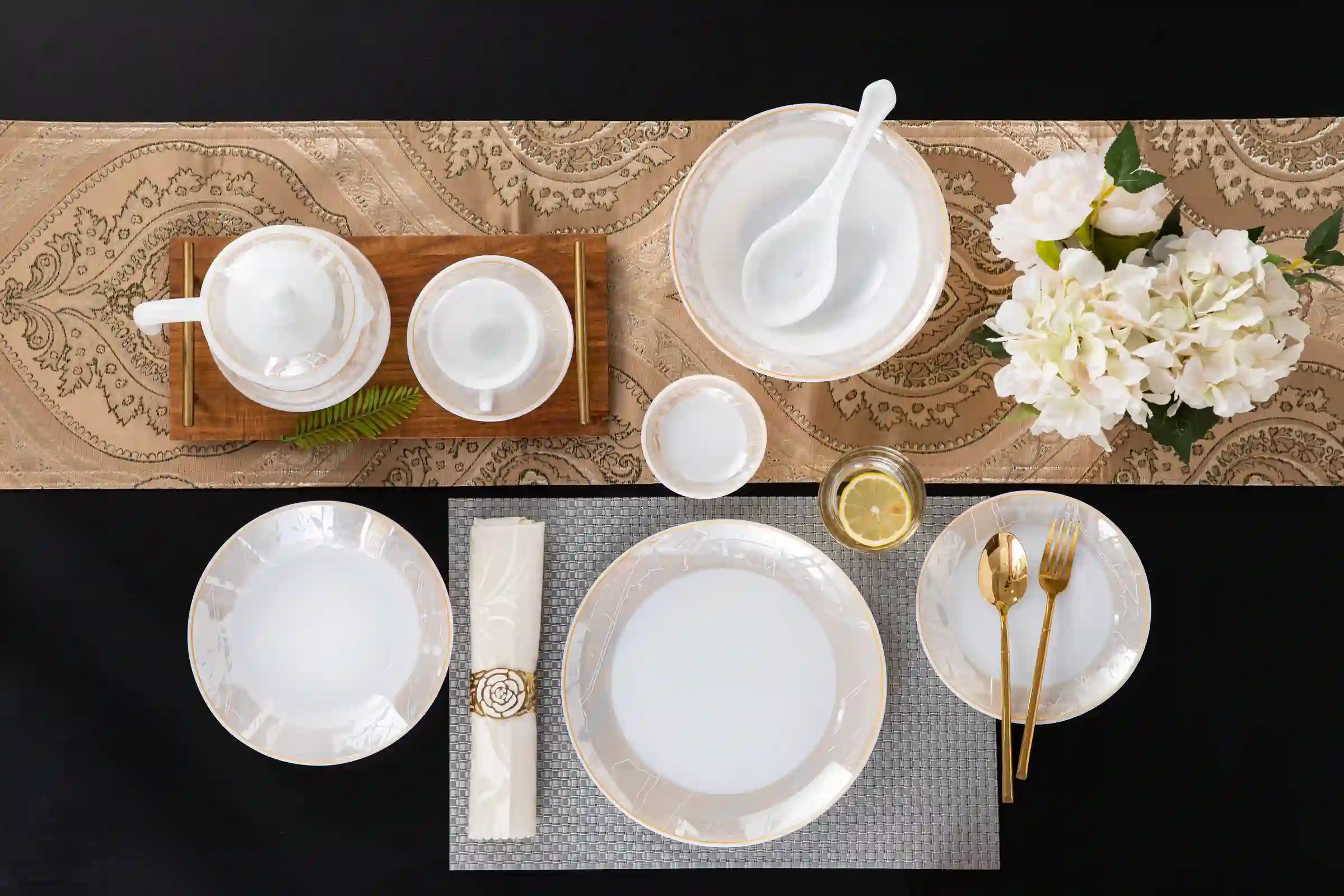
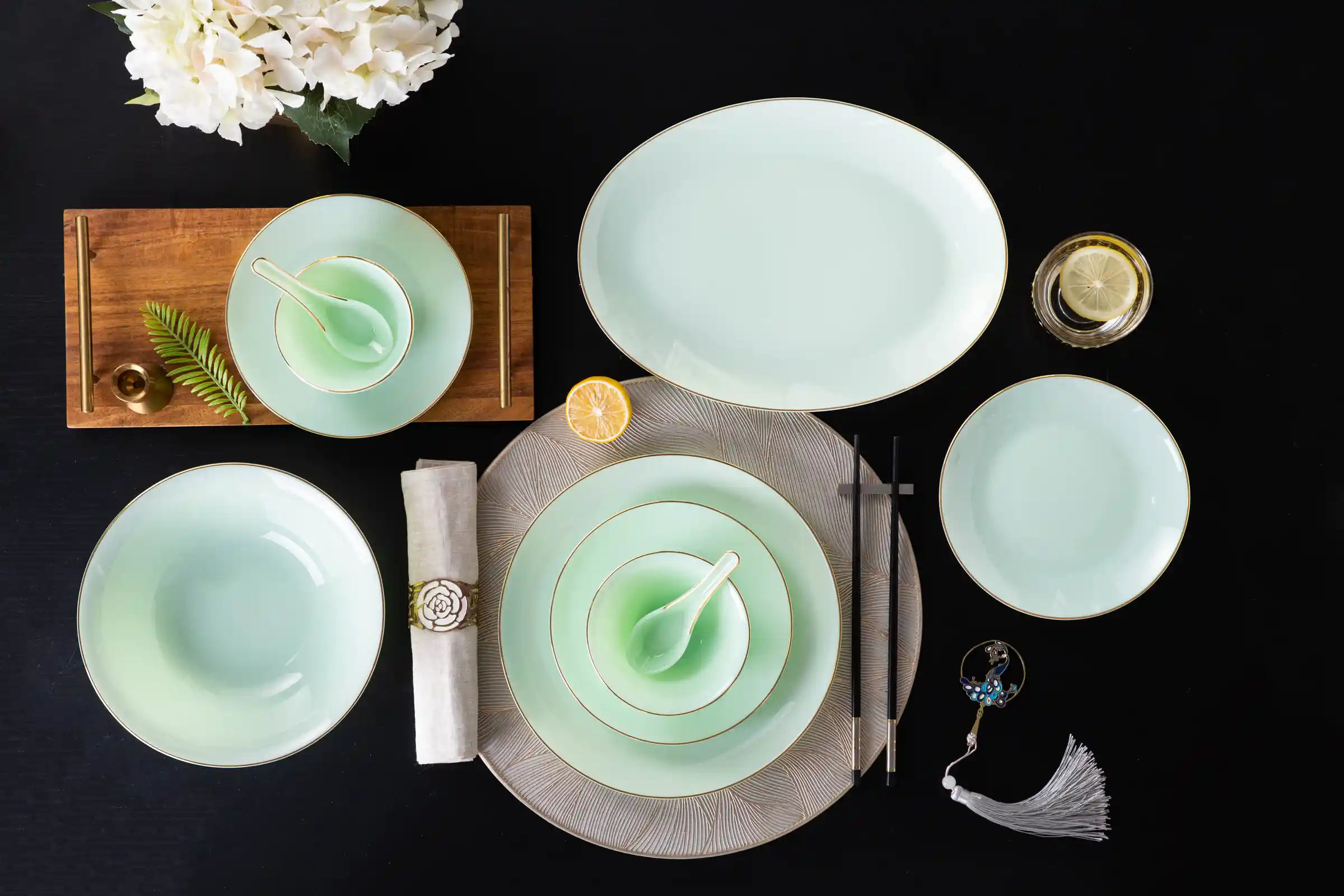
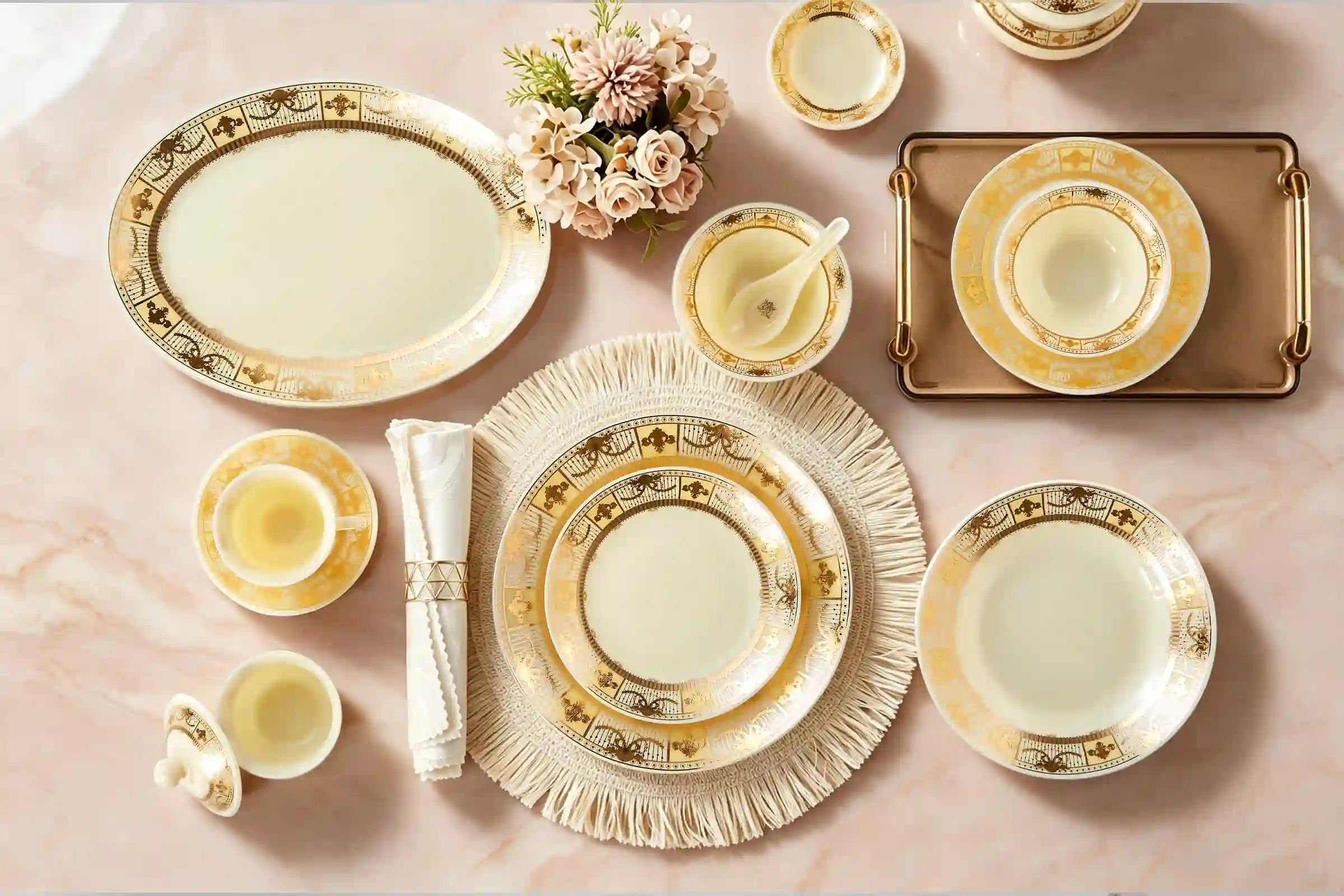

Among Jointion’s accumulated projects, milky white dinnerware with low-temperature embossed decoration and jade green dinnerware are frequently considered by wholesalers and brand buyers. Low-temperature embossing is not simply a change in print color. It applies a specific visual and tactile effect to a particular piece of tableware. Jade green products also require coordination between color, shape, set configuration, and market preference. For that reason, sampling these products should not be based on a design image alone. Buyers should also check the physical color, decorative finish, and whether the complete set looks coordinated when displayed together.
Serving Importers, Wholesalers, and Brand Buyers
Jointion’s main customer groups are currently wholesalers and brand buyers seeking OEM or ODM production. Wholesalers usually focus on product combinations, whether different designs can be mixed in one shipment, carton data, and reliable replenishment. Brand buyers place more emphasis on whether the products can be developed according to their designs and whether approved samples can be transferred consistently into mass production.
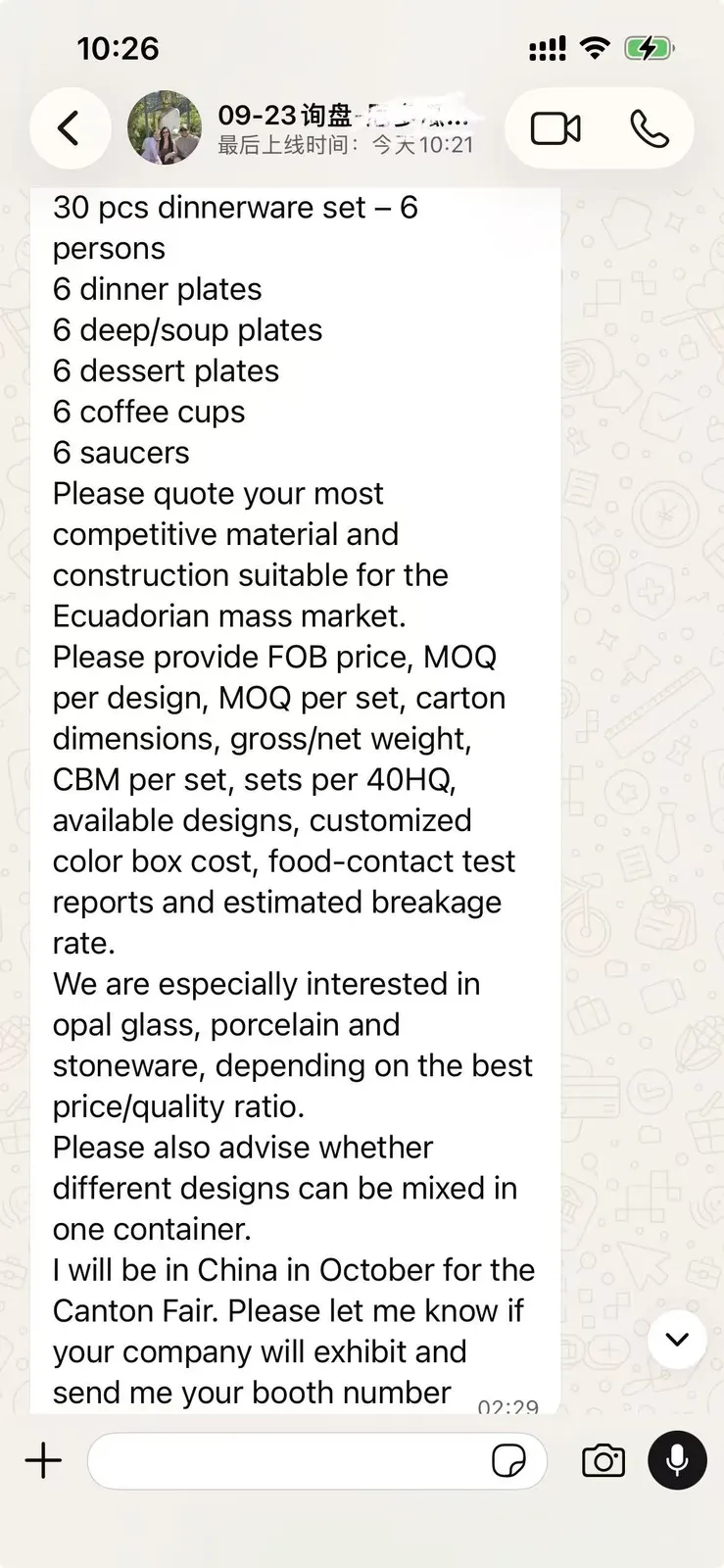
A real inquiry from an overseas buyer shows what this process involves. The customer wanted a 30-piece dinnerware set for six people, consisting of six dinner plates, six soup or deep plates, six dessert plates, six coffee cups, and six saucers. At the same time, the customer asked about the MOQ per design and per set, carton dimensions, gross and net weight, CBM per set, the number of sets that could be loaded into a 40HQ container, a customized color box, food-contact test documents, the estimated breakage rate, and whether different designs could be mixed in one container. The customer also planned to visit the Canton Fair in October 2026 and asked for Jointion’s booth number.
What Opal Glassware Products Can Jointion Supply?
Jointion’s opal glassware range covers individual tableware pieces, dinnerware sets, cooking products, and serving ware. Buyers can select from existing designs or redefine the color, pattern, set quantity, and packaging format for their local market.
Opal Glass Plates, Bowls, and Cups
Plates, bowls, and cups form the foundation of an opal glassware range. They are also the pieces most commonly used by wholesalers building a collection and by brand buyers developing coordinated tableware. In addition to round plates and standard bowls and cups, actual projects may include oval plates, soup plates, dessert plates, cups and saucers, and pots. Product development should therefore begin with the required shapes rather than with the pattern.
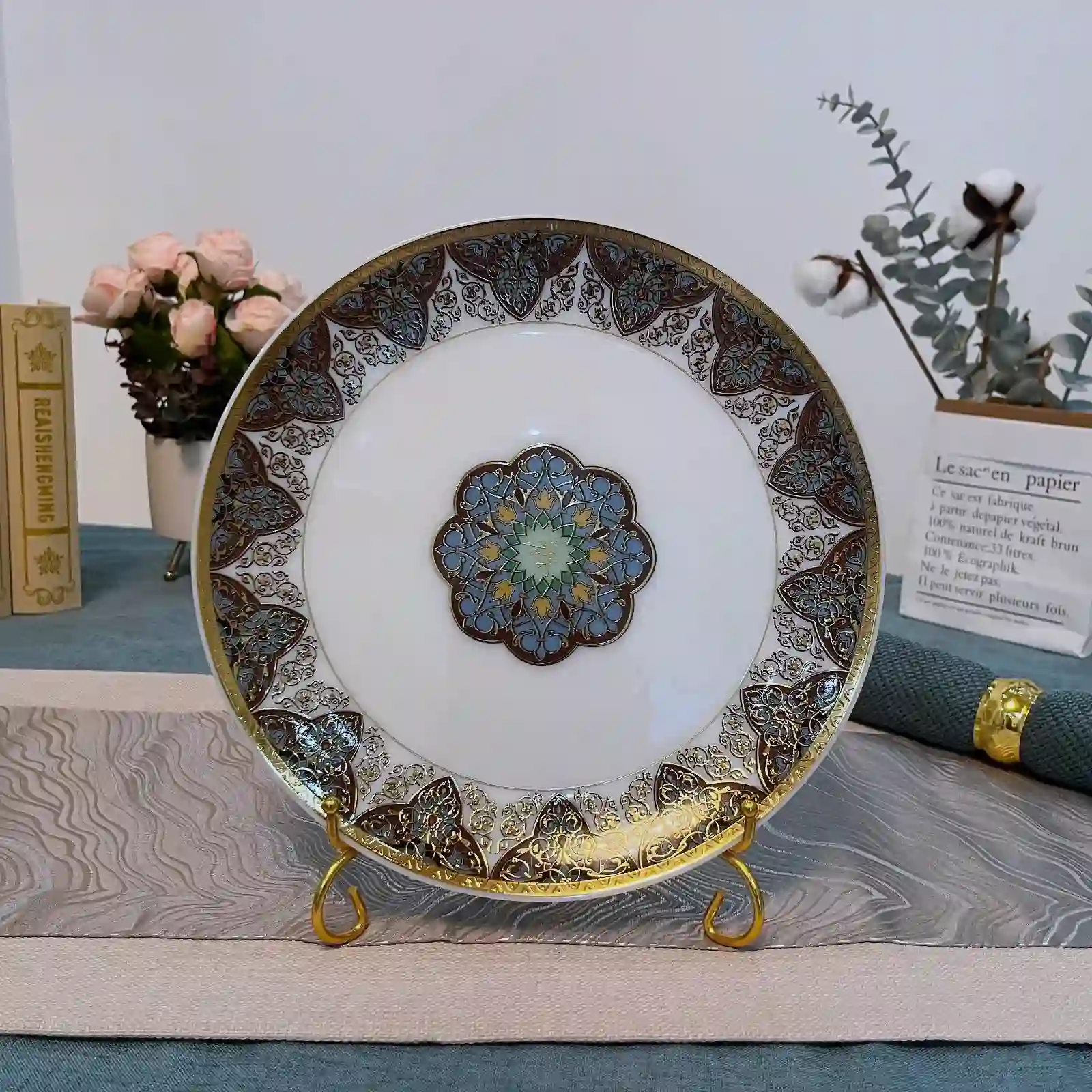
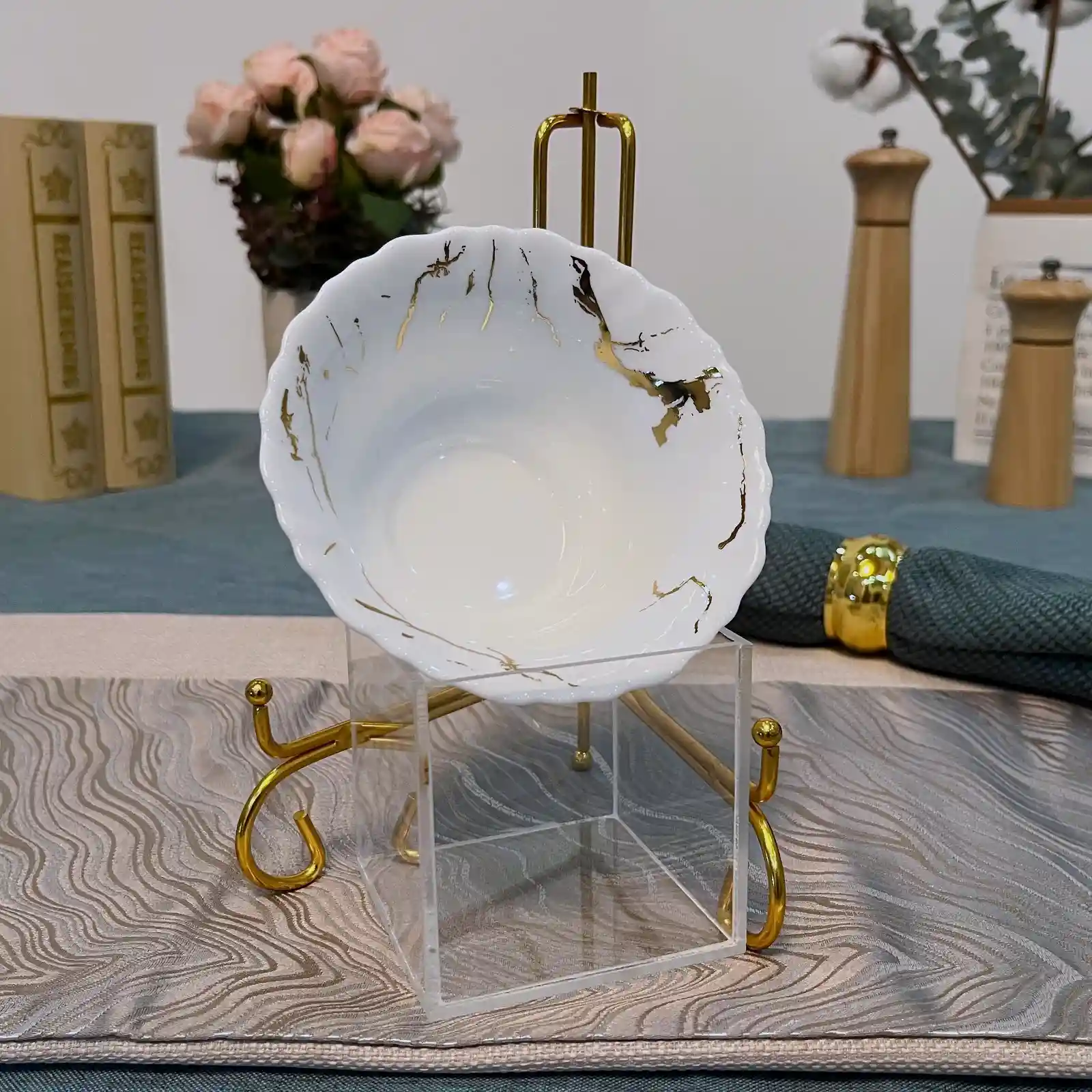
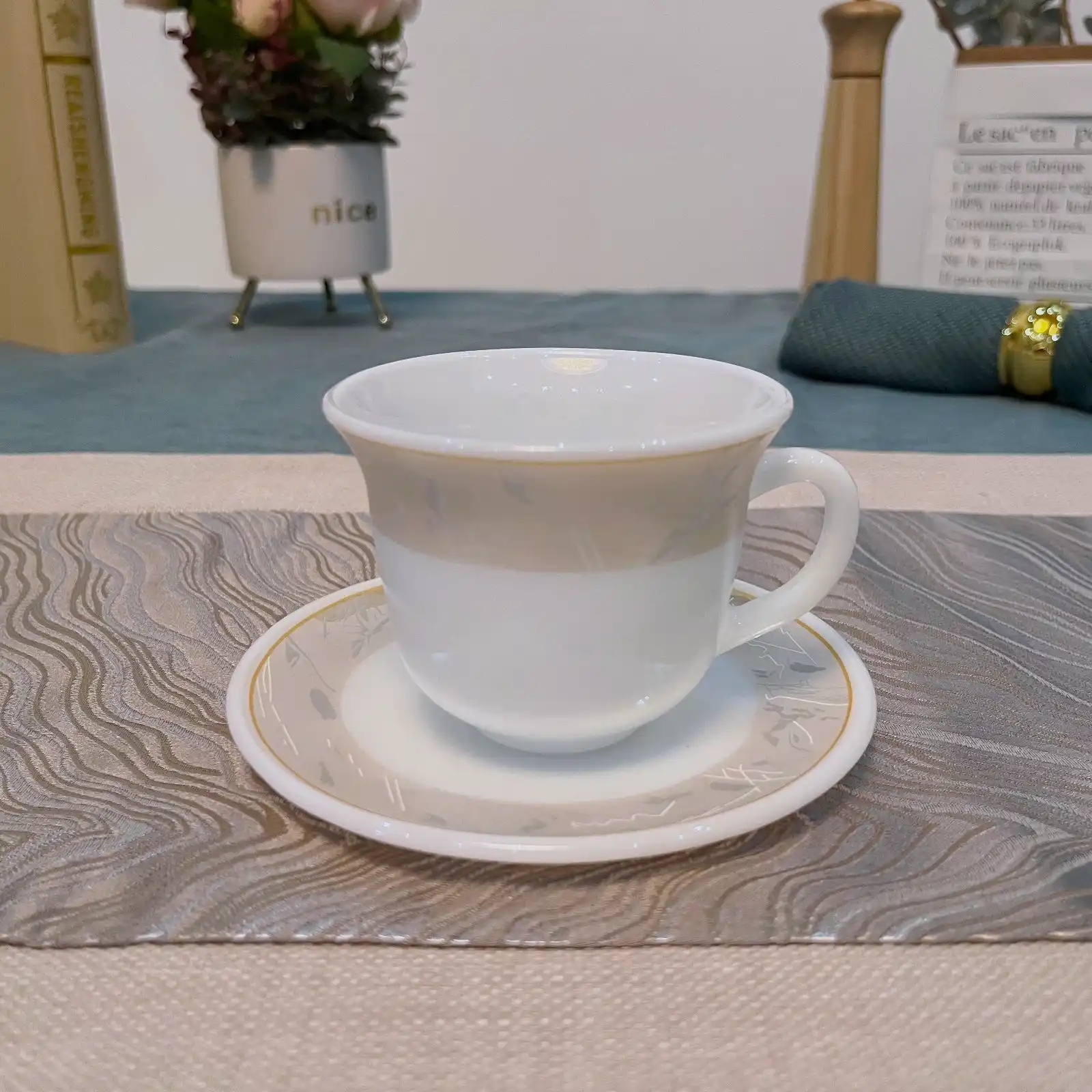
Jointion’s sample approval process usually follows a clear sequence. First, the buyer confirms whether the project requires plates, bowls, cups, pots, or other pieces. Next comes the color, such as milky white, black, jade green, amber/yellow jade, or white jade. The buyer then confirms the decoration, including low-temperature embossing, regular decals, or gold-rim decoration. Finally, the quantities of each piece in the set and the packaging plan are confirmed. This order is based on practical project experience. The shape and color directly affect how the decoration appears, while the set composition affects the inserts, color box, and outer carton dimensions.
Opal Glass Dinnerware Sets
The value of a dinnerware set is that it turns several individual pieces into a complete product for a defined household size, price range, and sales channel. A typical project may combine dinner plates, soup plates, dessert plates, bowls, cups, and saucers. There is no single standard number of pieces. The final configuration should reflect local dining habits and channel requirements.
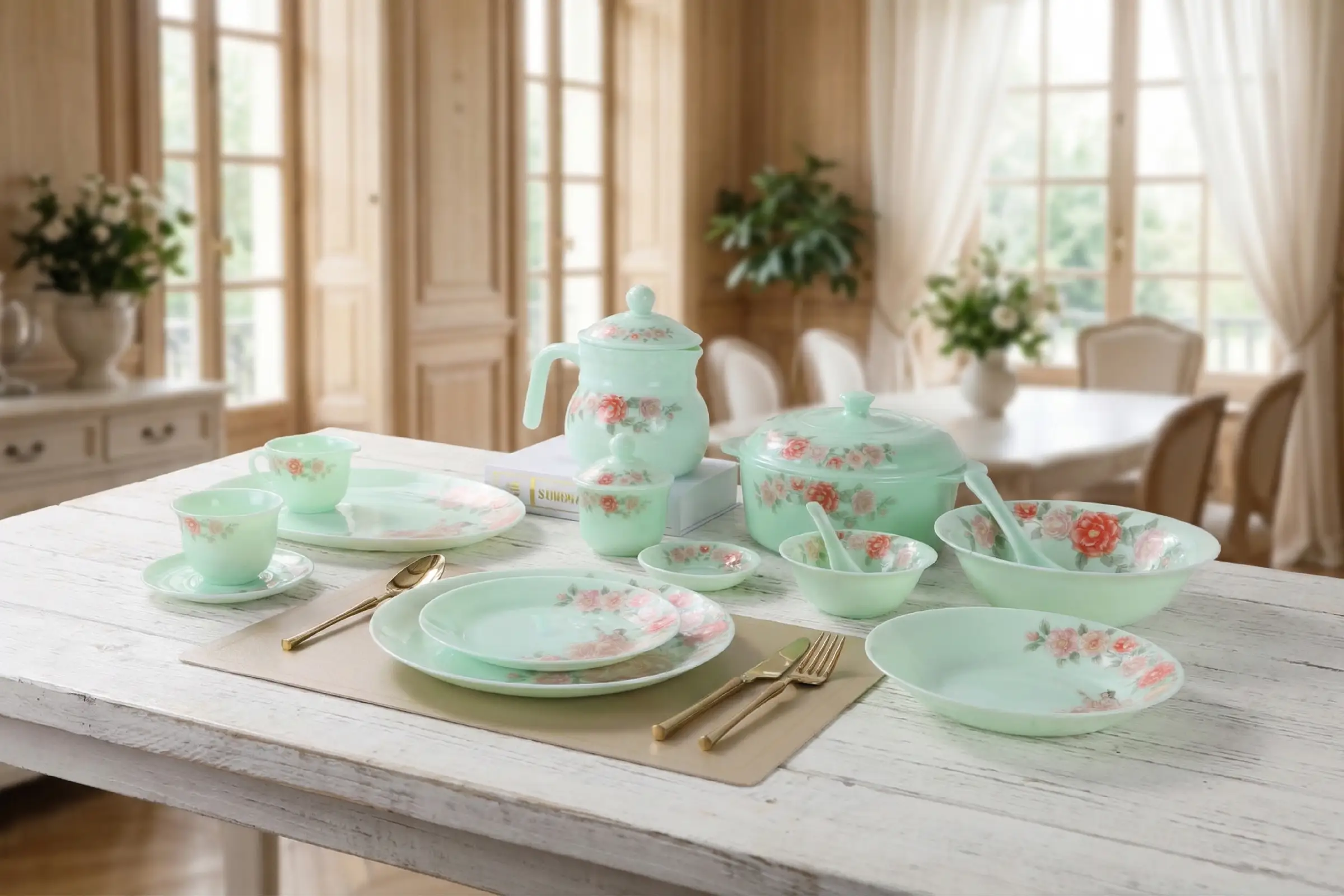
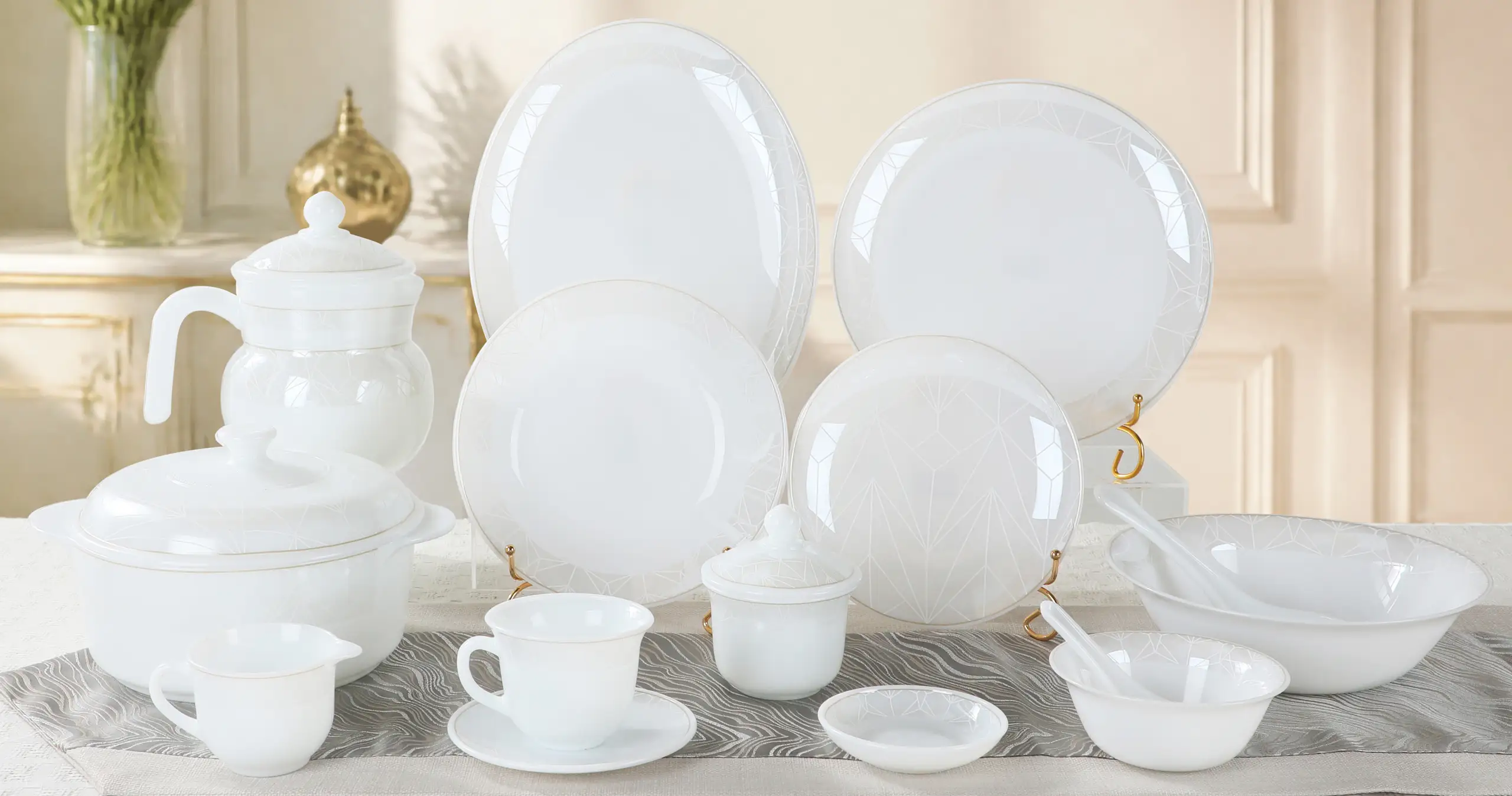
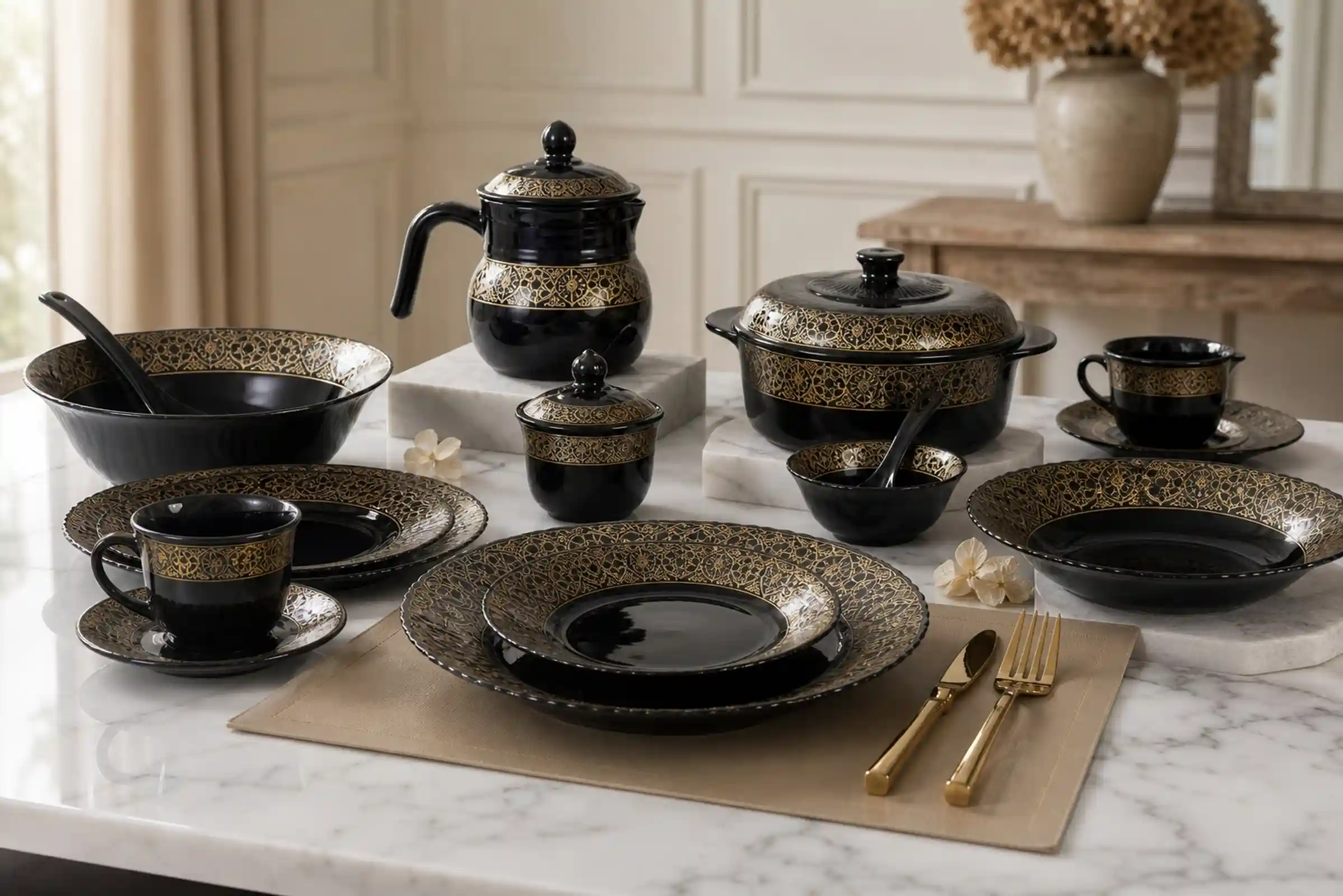
Jointion can configure sets according to the buyer’s selected shapes and quantities, then continue with pattern and packaging customization. To reduce repeated adjustments after sampling, it is recommended to finalize the item list, quantity of each piece, color, decoration, target sales channel, and packaging format at the same time.
Opal Glass Casseroles and Serving Ware
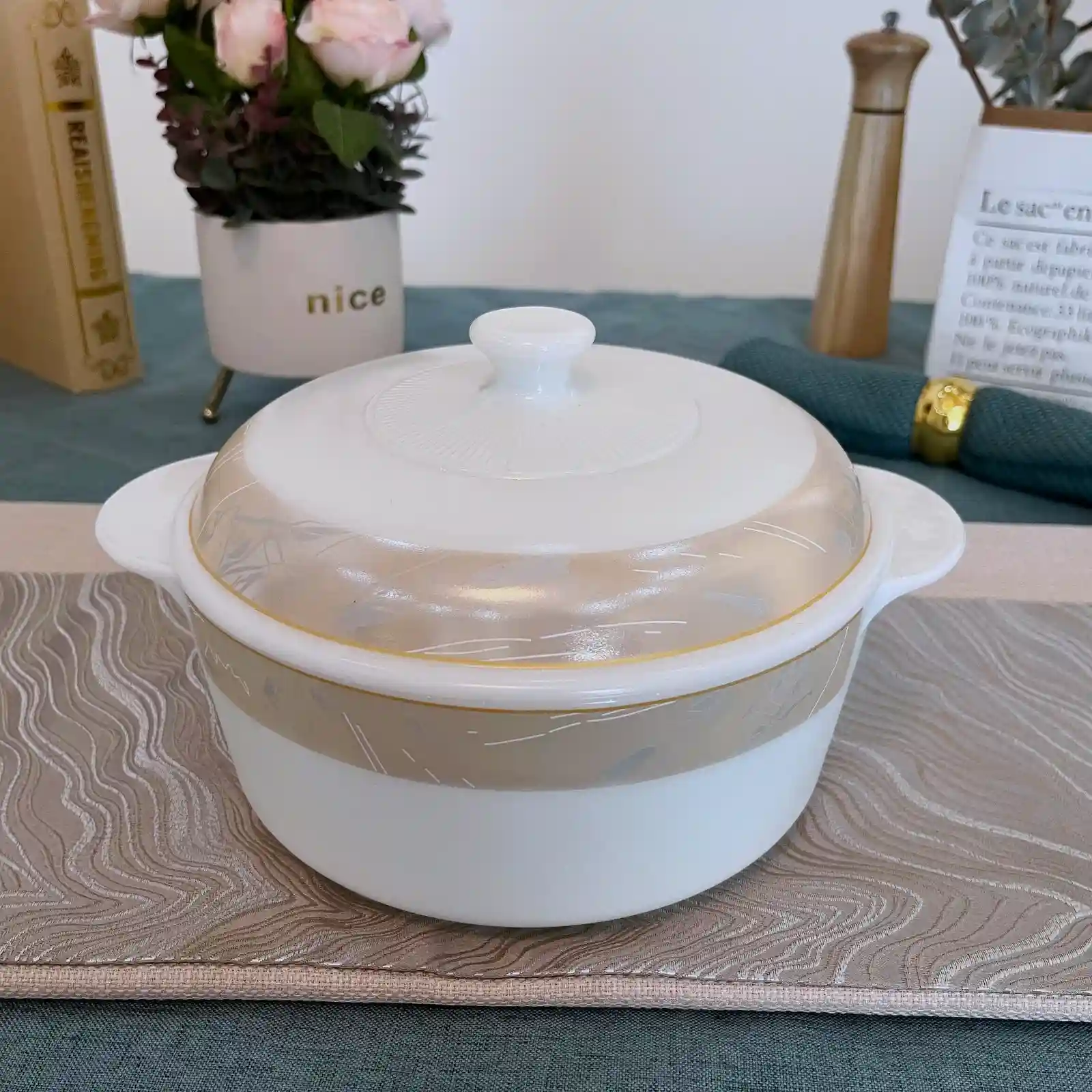
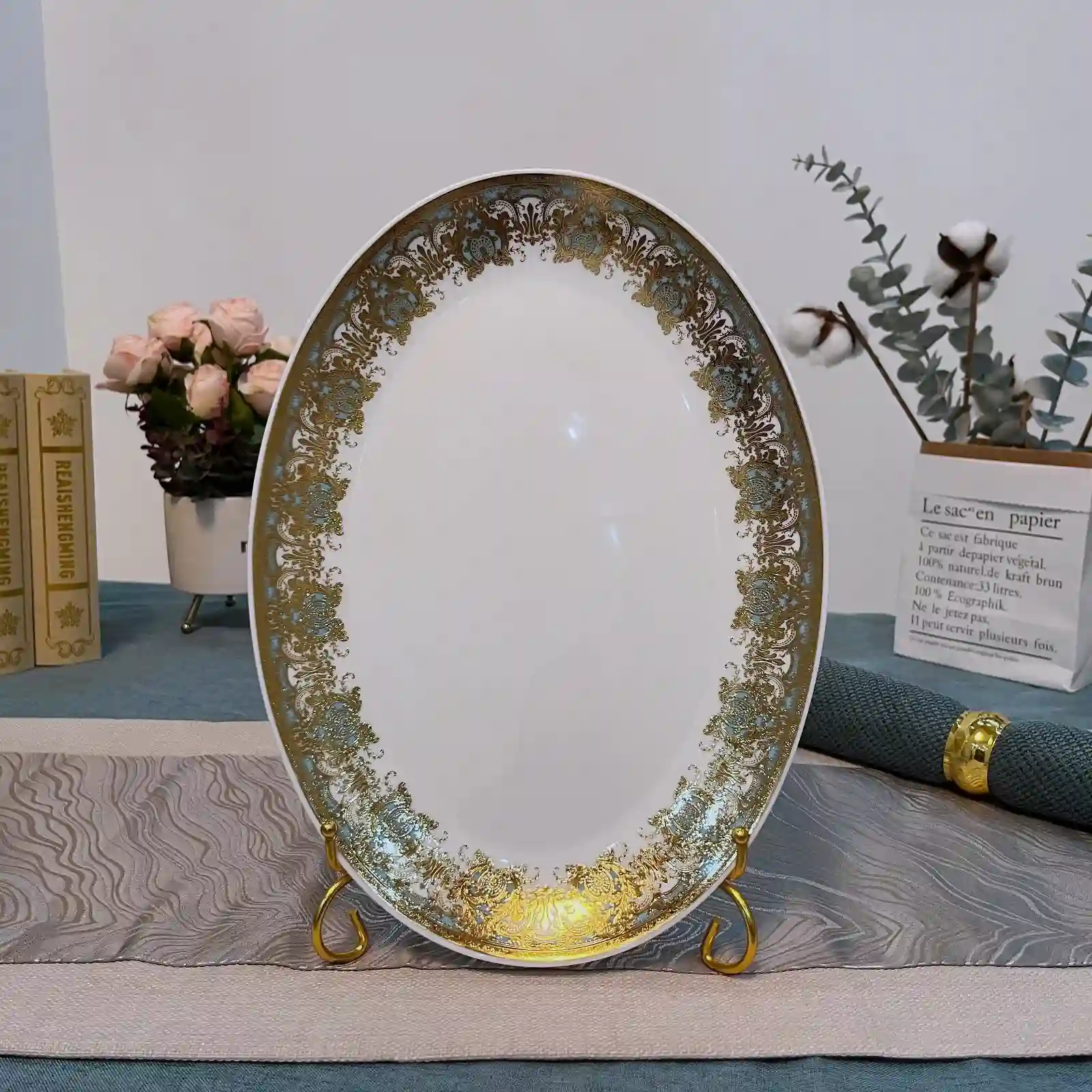
In addition to everyday plates, bowls, and cups, Jointion also supplies opal glass casseroles, baking dishes, oval plates, and other serving ware. These products are suitable for buyers who want to combine tableware, serving pieces, and selected heat-use products within one collection.
Jointion’s OEM and ODM Customization Capabilities for Opal Glassware
Jointion’s OEM/ODM work does not start with adding a logo. It starts with the shape, color, and intended market use. For a brand project, the manufacturer first needs to turn the design requirements into specifications that can be sampled, inspected, and reproduced before moving into mass production.
Shape, Size, Color, and Decoration Design
Jointion’s customization confirmation usually follows five consecutive steps:
- Confirm the shape: plates, bowls, cups, pots, casseroles, or other tableware;
- Confirm the color: milky white, black, jade green, amber/yellow jade, white jade, or a project-specific direction;
- Confirm the decoration: low-temperature embossing, regular decals, gold-rim decoration, or another specified finish;
- Confirm the set: the quantity of each piece and the composition of the complete set;
- Confirm the packaging: gift boxes, color boxes, inserts, and shipping cartons.
This sequence helps prevent common development problems. A pattern may have the right proportions on a flat plate but require adjustment when applied to a deep bowl or the body of a cup. Gold-rim products and products without metallic decoration also require different use instructions. If the shapes in a set change, the original insert and outer carton may no longer work. Design approval therefore needs to consider both appearance and final delivery.
One real customization case provided by Jointion comes from a cooperation project with the Corelle brand. The customer asked Jointion to create tooling according to its own design. Jointion then completed product development and delivered customized products for the local market. Jointion’s website publicly describes the relationship as an OEM partnership dating back to 2014. This case demonstrates practical experience in developing products from a customer’s design. It does not mean that other projects can skip tooling evaluation, sample approval, or mass-production confirmation.
Packaging for Retail, Wholesale, and Foodservice Channels
Packaging is part of the OEM/ODM specification. Retail projects may require color boxes, gift boxes, product information, and an attractive presentation. Wholesale projects pay more attention to carton dimensions, gross and net weight, loading quantity, and whether different designs can be mixed. Hotel and foodservice projects generally place greater emphasis on transport protection, set consistency, and convenient replenishment.
Jointion can discuss gift boxes or color boxes, insert structures, branded outer-carton information, packing quantities, and mixed-loading arrangements. The final solution should be based on physical dimensions, decoration protection requirements, transport method, and the buyer’s sales channel rather than on appearance alone.
Jointion’s China Factory and Bulk Production Capabilities
For wholesalers and brand buyers, factory capability means being able to transfer approved samples into stable mass production while maintaining consistency across forming, decoration, inspection, and packaging. Public information from Jointion states that its production base covers approximately 70,000 square meters and includes processes related to glass melting, forming, decorative printing, and quality inspection.
Buyers can view the production environment in Jointion’s factory production line video. Video footage is more useful than a factory exterior photo alone because it allows buyers to see how products move through different stages. However, whether a specific order uses a particular production line, process, or inspection item should still be confirmed separately during product approval.
From Glass Forming to Export Packaging
Jointion’s publicly described production process includes raw-material preparation, glass melting, mold pressing, annealing, decoration, strengthening treatment, inspection, and export packaging. Different products require different points of attention at each stage:
- Standard milky white products are mainly checked for shape, dimensions, weight, edges, and surface condition;
- Jade green, amber/yellow jade, and other colored products also require batch-color verification;
- Decal and low-temperature embossed products require checks on pattern position and decorative effect;
- Gold-rim products require inspection of the rim decoration and clear instructions about microwave-use restrictions;
- Dinnerware sets require verification of every piece and quantity;
- Export products also require confirmation of the inserts, packaging condition, and outer-carton information.
These checks are not formalities. They help ensure that the bulk shipment remains within an acceptable range of the approved sample. This is especially important for sets with multiple shapes and projects that mix several designs. A change in one part of the specification can affect production, packaging, and loading data at the same time.
Trade Show Experience
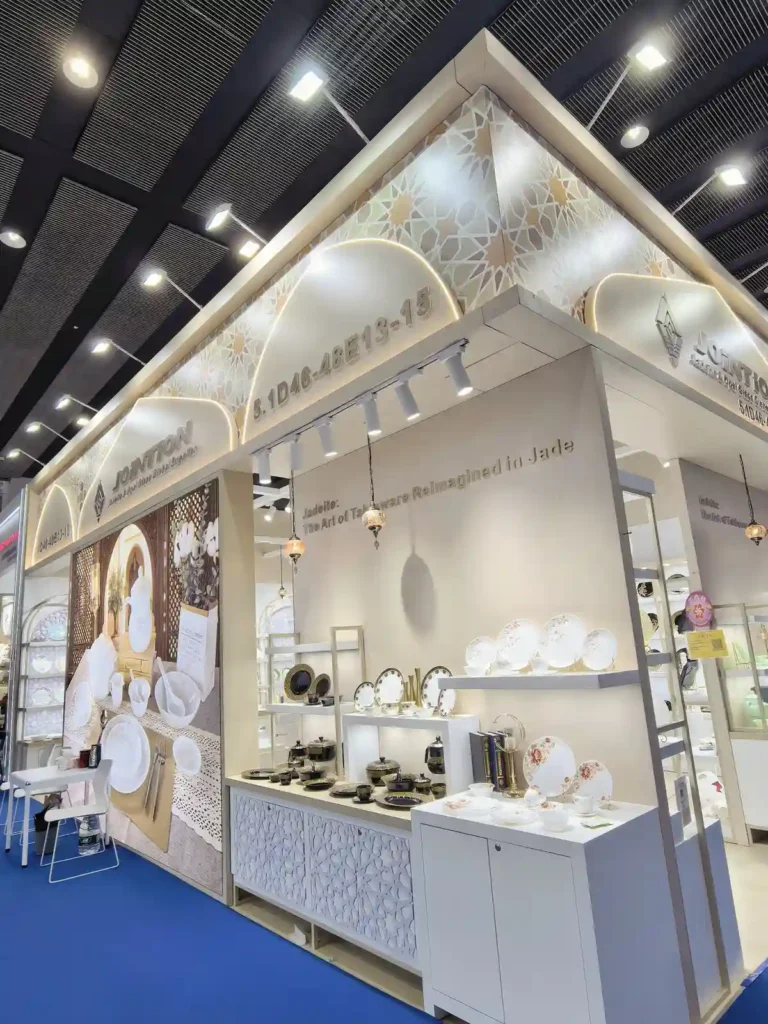
Our brand has attended the Canton Fair every year since 2012. In 2026, Jointion has continued to present its products and meet buyers through domestic and international trade events, including the Spring Canton Fair, an exhibition in Indonesia in August, and activities related to the Autumn Canton Fair. Trade-show photos show milky white, black, jade green, amber/yellow jade, and various floral designs. They also record buyers discussing tableware samples in person. This type of direct feedback helps a business understand market interest in different colors, decorations, and set configurations. Trade-show inquiries, however, are not in themselves proof of an order or long-term product use.
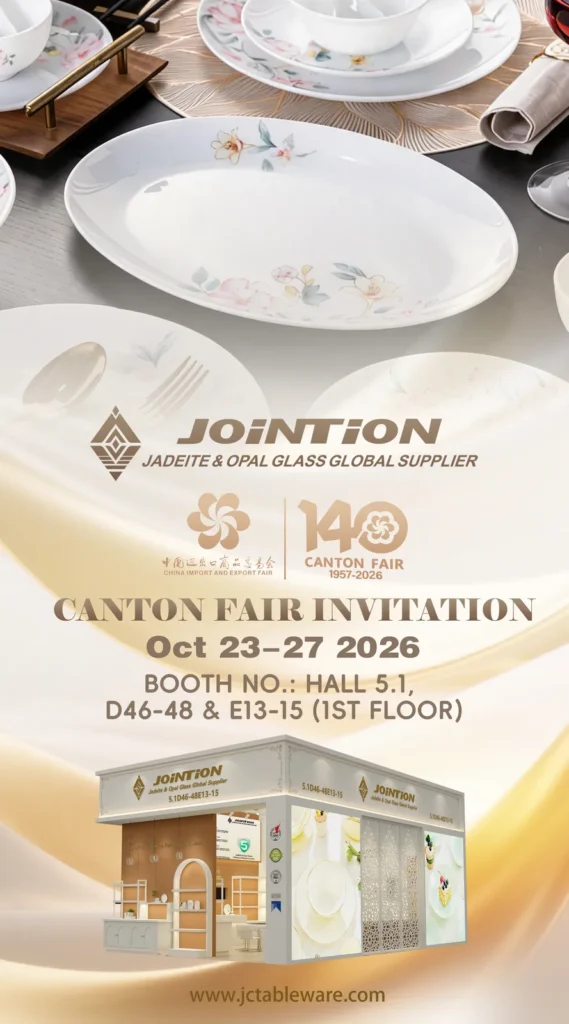
The 140th Canton Fair in October 2026 also provides a direct opportunity to observe purchasing demand. According to the official schedule of the China Import and Export Fair, Phase 2 will take place from October 23 to 27, 2026, and will cover related household and kitchen product categories. Jointion has confirmed its participation, with booths at Hall 5.1, D46–48 and E13–15. Because this article was completed before the fair, this information should be presented only as a confirmed exhibition arrangement, not as a result that has already taken place. Buyers can view the products, decoration, and set samples in person and discuss the documentation, packaging, and testing requirements for their target markets.
Jointion’s Quality Control and Export Support
Quality management for opal glassware cannot stop at “good appearance.” For a bulk order, dimensions, weight, edges, color, pattern position, surface defects, set quantity, and packaging condition can all affect whether the shipment can be delivered according to the approved requirements.
Quality Checks from Raw Materials to Finished Products
According to the factory inspection information provided by Jointion, bulk production involves checks on dimensions, weight, edges, color, pattern position, surface defects, set quantity, and packaging condition. The process also involves lead and cadmium testing for products. It is important to distinguish internal factory checks from formal reports that can be used as external compliance evidence. The inspection list shows which quality points the factory monitors. Whether a particular batch has a third-party test report, and which product and decoration the report covers, still needs to be confirmed for the order.
The drop-test and dishwasher videos help explain how the factory observes product performance, but they do not replace formal food-contact-material documentation or lead-and-cadmium migration test reports. A more reliable approach for buyers is to treat public videos as preliminary evidence, ask the supplier to identify the test samples, conditions, and scope, and then decide whether third-party laboratory testing is required for the target market.
For buyers who need to review everyday-use performance, we provide a machine drop-test video for opal glassware and a Jointion dishwasher test video. These two specific videos allow buyers to review how the products are tested as part of the broader export process.
Why Choose Jointion as an Opal Glassware Manufacturer?
Jointion’s product range, experience with colors and decoration, in-house production processes, and brand OEM/ODM projects give buyers several practical points for evaluating its manufacturing capability. These facts do not mean that every inquiry will have the same MOQ, lead time, or testing conclusion. They show that Jointion has a practical foundation for handling opal glassware products, customization, and bulk delivery within one project.
Product Range and Customization Capability
Jointion can supply plates, bowls, cups, pots, dinnerware sets, casseroles, and serving ware. Its development experience includes milky white, black, jade green, amber/yellow jade, and white jade, together with regular decals, low-temperature embossing, and gold-rim decoration. The Corelle project, in which Jointion developed tooling according to the customer’s design, and the new jade green designs developed in response to market demand over the past year provide more specific evidence than simply saying that the company “supports OEM/ODM.”
For buyers, it is best to confirm the shape, color, and use scenario first, then discuss decoration, set configuration, and packaging. This can reduce design revisions and identify practical issues at an early stage, such as the fact that gold-rim products should not be used in a microwave and that changes in packaging can affect container loading.
China Factory and Long-Term Bulk Supply
Jointion’s production-line footage, public testing videos, trade-show samples, and real buyer inquiries together show the practical stages involved in moving from product development to bulk delivery. Wholesalers and brand buyers can start with existing designs or develop low-temperature embossed milky white dinnerware, jade green collections, or other customized products for their local markets.
If you are looking for an opal glassware manufacturer, it is best to provide the manufacturer with the required shapes, colors, decoration, set quantity, packaging, target market, and estimated purchase volume at the first contact. Only when these details are clear can the manufacturer further confirm samples, MOQ, lead time, loading method, and the testing documents that may be required. For B2B projects, this evidence-based discussion around a specific product is closer to a real purchasing decision than comparing catalogues and prices alone.