
This article is for wholesalers and importers who already buy TSG opal glass tableware and are now thinking about adding a Chinese backup supplier. If you are searching for a Thai Soojung Glass alternative, this does not mean you need to stop working with TSG. The real question is simpler: when do you need a second supplier, how should you test the first order, and how can you use both sources without creating extra risk?
What Kind of Opal Glass Factory Is TSG?
TSG (Thai Soojung Glass) is the only opal glass tableware manufacturer in Thailand. It was founded in 1984. The company is best known for its gold rim decoration technique, also called Glass Gold Rim. Its main export markets include Vietnam, Bangladesh, and the wider South Asian market.
In the opal glass category, TSG is known for stable quality and refined workmanship. Many wholesalers in South and Southeast Asia have worked with it for years. A factory that has focused on one product line for around 40 years is worth taking seriously.
TSG’s most recognized feature is its gold rim decoration. Many factories can make white opal glass. TSG was one of the earlier factories to combine gold electroplating with opal glass. That created a look that many buyers in South and Southeast Asia can recognize quickly. For importers who have built their product lines around Thai Soojung opal glassware, this look is not just decoration. It is part of their market positioning.

Why Do Some Wholesalers Look for a Second Supplier Beyond TSG?
There are usually three reasons. Some buyers need extra capacity during peak season. Some need lower-priced products for mid-to-low-end markets. Others want more custom designs and faster sampling, especially for decal patterns.
In most cases, buyers are not unhappy with TSG. Their business has simply grown. At a certain point, one supplier cannot cover every product, price level, and delivery schedule.
These are the situations we hear about most often from real customer inquiries. Let’s go through them one by one.
A Backup Factory Helps You Stay Calm During Peak Season or Large Orders
Opal glass tableware orders are seasonal. Before Eid, before Christmas, and during New Year gift seasons, order volumes can rise fast. In some markets, demand may reach two to three times the normal level.
If TSG is your only supplier, peak-season planning becomes difficult. Their production lines may already be full. Your order may need to wait, or it may be pushed into a tighter schedule. When the lead time gets too tight, quality control also becomes harder to manage.
One of our customers in Bangladesh had bought opal glass gift sets from TSG for three years in a row. He sold them mainly during Eid. Before Eid in 2024, he received a supermarket chain order that was twice as large as his previous orders. But TSG’s schedule was already full. The delivery date had to move back by three weeks.
The goods arrived, but they arrived five days after the supermarket’s required shelf date. He missed the best selling window. In 2025, he prepared a China opal glass alternative to TSG in advance. TSG handled his regular order volume, and the Chinese factory handled the extra peak-season order. That year, delivery was no longer a problem.
This is not only a TSG issue. Any single supplier can face capacity pressure during peak season. The real difference is whether you already have a second option ready.
Chinese Factory Pricing Can Help You Cover Mid-to-Low-End Markets That TSG May Not Fit
TSG is positioned more toward the mid-to-high-end market. Its gold rim craft, clean packaging, and stable quality all require cost support. So its FOB prices are usually in the mid-to-high range.
If all your customers are in mid-to-high-end channels, TSG pricing may work well. But not every market buys the same way.
In Africa, some buyers want daily-use tableware that is good enough, affordable, and available in large quantities. In the Middle East, supermarket buyers may set a strict cost limit for promotional gift sets. In Southeast Asia, budget restaurant chains may care about every small difference in unit price. If a chain rolls out tableware to 200 locations, even a small price gap can become a large total cost.
In these segments, TSG products may not always be price-competitive. When you put similar opal glass tableware specifications on the same quotation sheet, Chinese factories are often 15%–25% lower in FOB price.
This does not automatically mean lower quality. Much of the price difference comes from China’s supply chain structure. Raw materials, molds, packaging, and supporting suppliers are often located close to each other. That reduces the cost of many middle steps.
In simple terms, TSG helps you keep higher-end customers. A Chinese factory can help you enter more price-sensitive channels. It is not a replacement plan. It simply gives your product range more price levels.
Need New Patterns or Custom Designs? China’s Decal Supply Chain Makes Sampling Faster
TSG’s product line is built around the classic white opal glass and gold rim style. Its pattern range is relatively stable. There is nothing wrong with that. A classic product does not need to change every season.
But sometimes you need more variety. You may want to test a few decal designs outside TSG’s classic range. You may want to launch colored opal glass tableware in a new sales channel. For that, you need more than one factory. You need a full customization supply chain.
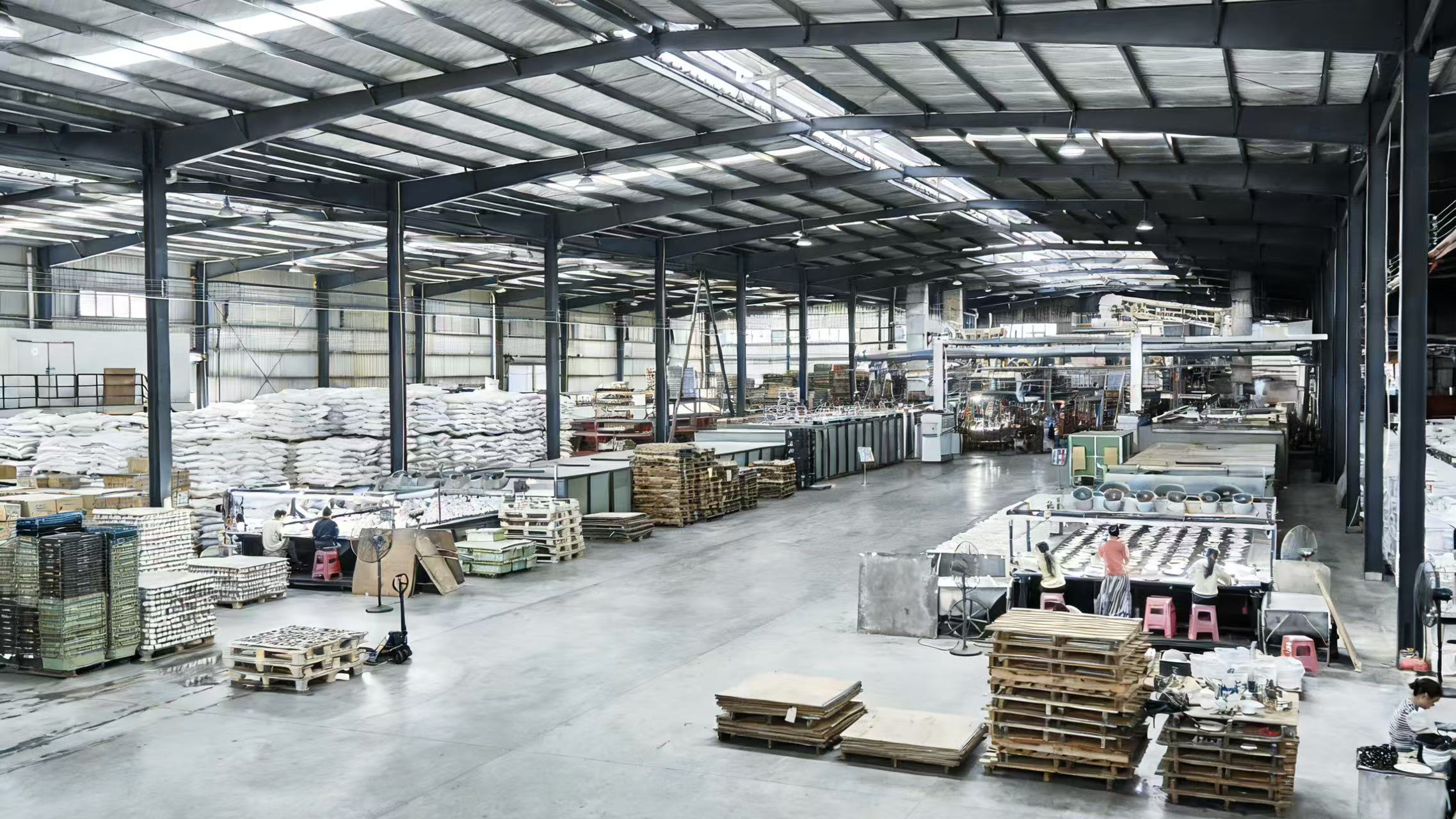
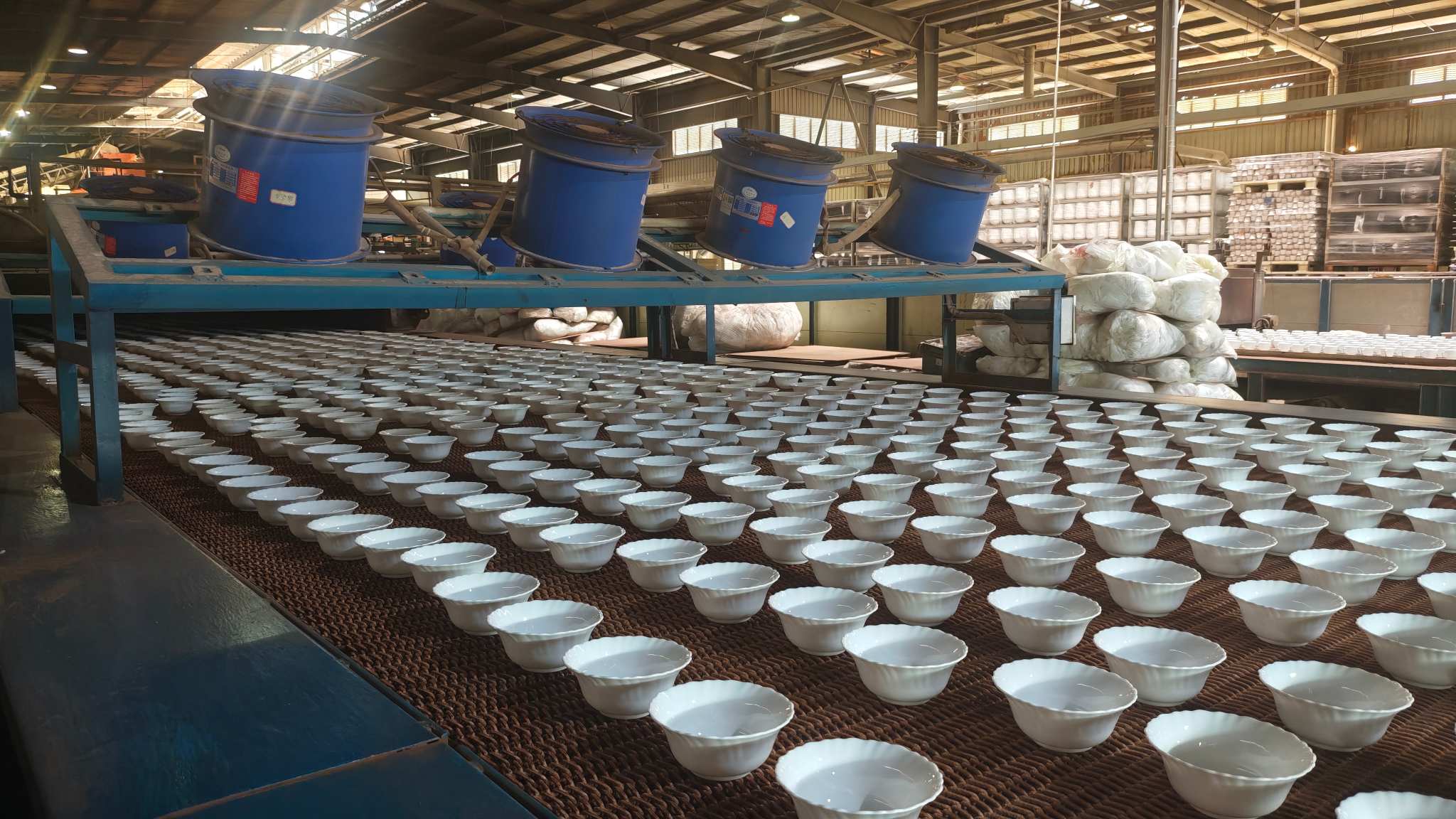
This is where Chinese factories have an advantage. It is not only about one factory being capable. It is about the nearby supplier network. In Guangdong and Hunan alone, there are many decal printing suppliers. You can send an image to a Chinese factory, and they can often find a suitable decal printer quickly. Sampling can start from small trial quantities, such as 500 sheets, and finished samples may be ready in 7 to 15 days.
That is a supply chain advantage. It does not mean TSG cannot do customization. It means China’s supply chain density is better suited to fast sampling, many patterns, and small-batch testing. This is why many importers look for a Thai opal glass alternative supplier specifically for custom-pattern orders.
How Can You Lower the Risk of Your First Order With a Chinese Opal Glass Factory?
You have decided to test a Chinese supplier. The next question is simple: how do you test without wasting money?
Before You Order, Send Your TSG Products to the Chinese Factory as Reference Samples
This is the most practical step. Do not only describe the quality you want in words. Phrases like “good whiteness,” “smooth edges,” and “solid hand feel” sound clear, but every factory may understand them differently.
The better method is direct comparison. Take one plate and one bowl from your current TSG inventory. Send them to the Chinese factory. Then tell the factory: “This is my quality baseline. Please match this level in your samples.”
When you send the samples, also explain which details matter most to you.
| Comparison Dimension | What to Check | How to Compare With TSG |
|---|---|---|
| Whiteness | Place the new sample and the TSG product side by side. Check for visible color difference. | Use natural light. If there is no clear difference to the naked eye, it passes. |
| Edge Finish | Check for burrs, rough areas, or uneven thickness. | Touch both products by hand. The feel should be close to the TSG sample. |
| Weight | Weigh products of the same size. | The difference from the same TSG product should stay within ±5%. |
| Gold Rim Craft | Check whether the electroplating is even. Look for broken gold lines or color variation. | Place it next to a TSG gold rim piece. The finish should not look lower in precision. |
| Packaging | Check whether the packaging can handle long-distance ocean freight. | Compare it with your past breakage experience from TSG shipments. |
Ask the factory to send benchmark samples back to you. Then place those samples next to your TSG products. You do not need professional equipment for the first check. Your eyes and hands can already catch most visible problems.
How Big Should the First Order Be? Start From Your Current TSG Order Volume
The first order is not mainly about saving money. It is about checking whether the factory is reliable.
A useful rule is this: take your normal order volume from TSG, then place only one-tenth to one-fifth of that volume with the Chinese factory for the first trial.
| Your Current Per-Order Volume From TSG | Recommended First Order Size | Why This Size Makes Sense |
|---|---|---|
| 1–2 containers | Half container or LCL | Enough for side-by-side comparison with TSG. If the result is not ideal, the loss is still manageable. |
| 3–5 containers | 1 full container | Enough to see whether bulk quality can stay close to TSG’s level. |
| 5+ containers | 1–2 containers | Helps you test whether the factory can handle extra demand beyond your TSG orders. |
This keeps your TSG supply stable. The Chinese factory order becomes a separate test. Even if the trial is not ideal, the risk stays under control.
For payment terms, the common first-order structure is 30% deposit and 70% balance before shipment. We will not go deeper into payment terms here.
After the Goods Arrive, Compare Them With TSG Products Before You Scale Up
When the goods arrive, do not send them straight into warehouse stock. Check three things first.
First, sample and compare. Randomly open 3–5 cartons. Take 2–3 pieces from each carton. Place them next to the same type of TSG products from your inventory. Check whiteness, gloss, and edge finish. You do not need instruments for this first check. Use your eyes and hands. If your end customers cannot easily tell which product is from TSG and which is from the Chinese factory, the basic appearance test is passed.
Second, compare breakage rates. Count the broken pieces in this shipment. Then compare that number with your past TSG shipment records. If the Chinese factory’s breakage rate is not higher than your normal TSG receiving level, the packaging is likely acceptable. If the breakage rate is clearly higher, work with the factory to find the cause. It may be a packaging design issue, or it may be a product strength issue. These two problems need different fixes.
Third, compare lead times. Check how long the Chinese factory actually took from order confirmation to delivery. Then compare it with your TSG ordering experience. If your market is in South Asia, TSG usually has a shorter ocean transit time from Thailand. So a Chinese factory may naturally take longer. That is normal.
The key is whether the factory kept its promised timeline. If the actual arrival date is more than 7 days later than promised, and there was no early communication, treat it as a warning sign.
If all three checks match or beat your TSG baseline, you can increase the second order to 2–3 containers. If the third order is still stable, you can formally add this factory to your supplier system.
If you want to start with a Chinese opal glass factory that already understands TSG-level benchmarking, Jointion can be one option to review. It has focused only on opal glass since 2008. It served as an OEM manufacturer for Corelle for ten consecutive years, has a daily capacity of 70,000 pieces, and holds FDA and LFGB food-contact certifications. You can send your TSG samples for benchmark sampling before placing a larger order.
Can You Use TSG and a Chinese Supplier Together? How Should You Split Orders?
Yes. This is the approach many wholesalers finally choose.
The easiest way is to split by target market. TSG products already have strong customer recognition in Southeast Asia and South Asia. The shipping distance is also shorter. So it can make sense to keep those markets with TSG.
For Europe, the Middle East, and Africa, Chinese factories may offer more pricing room, more shipping route options, and better landed costs. For importers buying TSG products and China opal glass in parallel, this market split is often the most natural starting point.
You can also split by product line. TSG’s gold rim white opal glass can remain your profit anchor. Customers know it, and the market is stable. There is no need to change what already works.
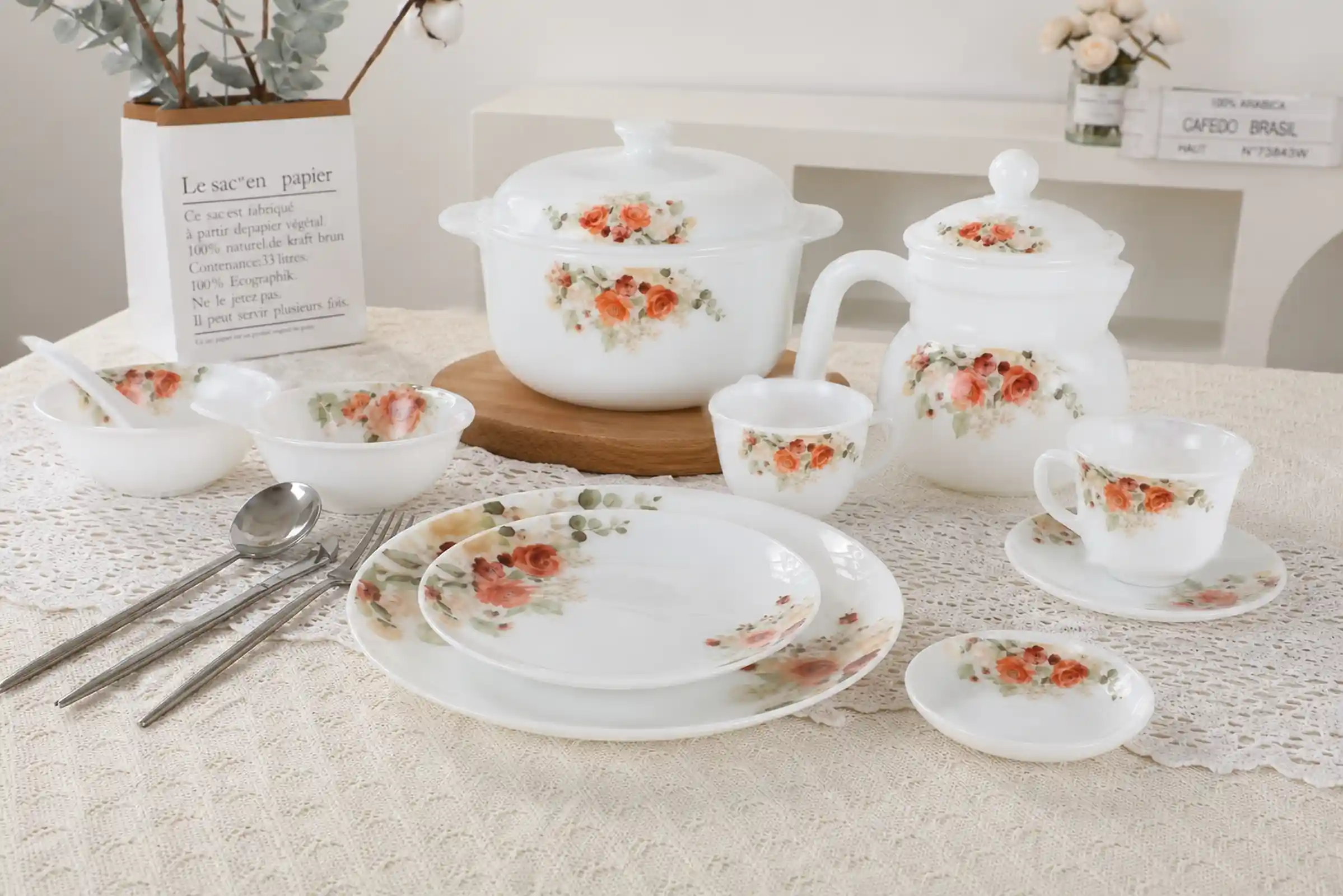
The Chinese factory can handle decal designs, colored variations, and embossed patterns. These products can help you open new channels, attract new customers, and make your catalog more complete.
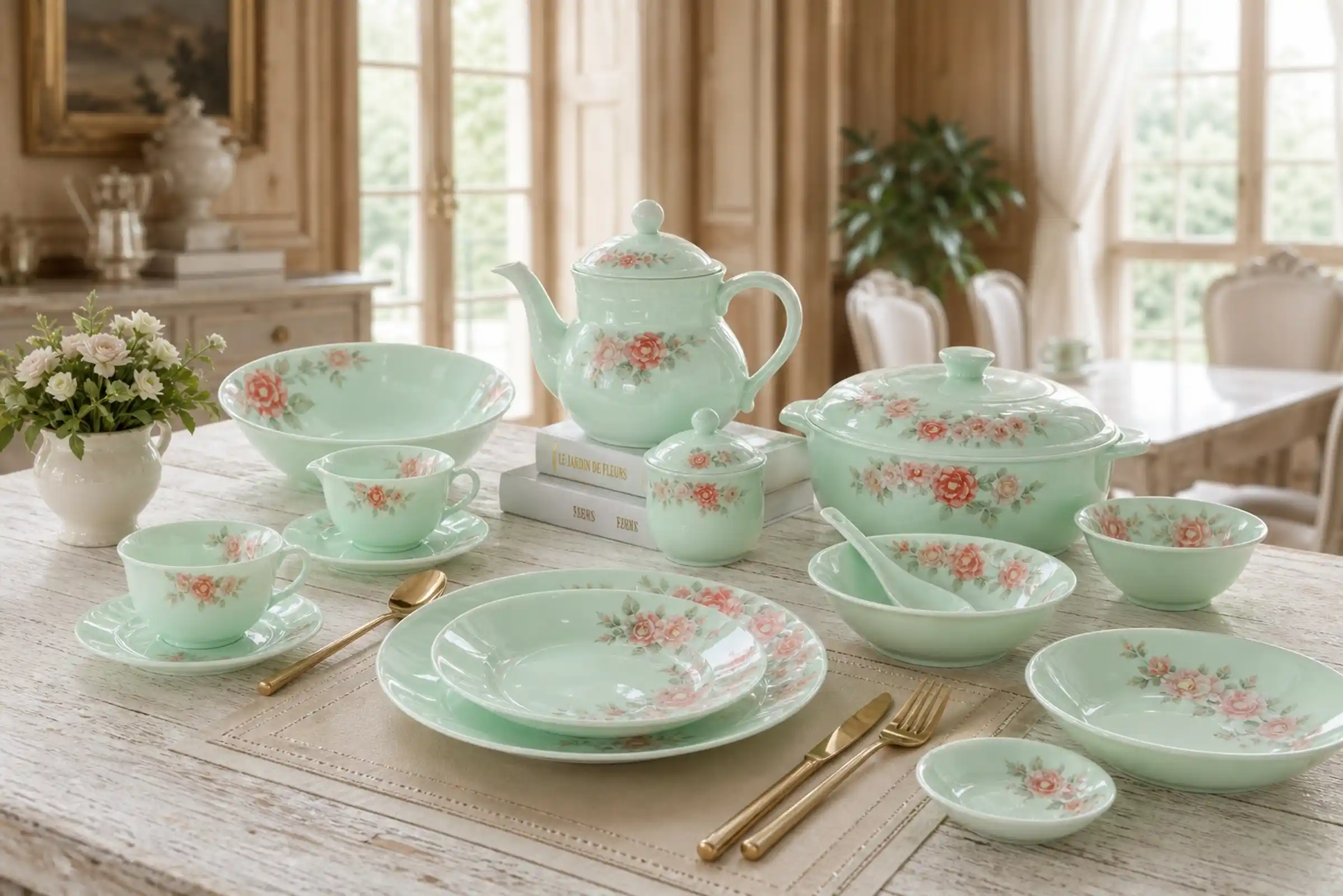
For example, Jointion’s jade green opal series and full-decal decoration line have a different position from TSG’s classic gold rim products. They can sit in the same catalog without competing directly with each other.
You can also split by order rhythm. TSG ships from Thailand to South Asia, so ocean transit is often one to two weeks shorter than shipping from China. That makes TSG useful for urgent restocking orders.
Chinese factories are usually better for larger stock orders planned two to three months in advance. These orders often need higher volume, better pricing, and enough time for production and shipping. Each supplier then has its own role, and the two sides do not conflict.
The smartest move is not to replace TSG. It is to let TSG and a Chinese factory each do what they do best. A Chinese factory can work as a TSG alternative for overflow orders, cost-sensitive channels, and custom designs. This gives your supplier system two legs instead of one. That is what a practical Thai Soojung Glass alternative strategy looks like: not switching blindly, but expanding your options.
Questions You May Still Have After Reading This Article
After requesting samples from a Chinese factory, you may want to know how opal glass products are actually made. The Complete Production Process of Opal Glass Tableware explains the process step by step, from raw material formulation to finished products. It can help you judge whether a factory’s production level is reliable.
When your first order arrives, you may also want to know how a factory controls quality internally. Jointion’s Opal Glass Quality Control System covers AQL sampling standards and inspection details at each stage. It can help you align acceptance standards with the factory before scaling up.
If you are ready to request samples, you can visit the Jointion Opal Glass Product Catalog and choose the models you want to compare with TSG. Products are organized by category and decoration style, so it is easier to find the right benchmark direction.