
This guide is for buyers sourcing wholesale dinnerware from China. It covers the product categories China wholesale dinnerware suppliers commonly offer, how consistently each material can be produced at volume, which options fit restaurants, hotels, and other service settings, and how to negotiate price, MOQ, sampling, and lead times.By the end, you should be able to judge a supplier’s range, match production methods to the intended use, and put the purchase terms in writing.
What Dinnerware Types Do Wholesale Suppliers in China Usually Offer?
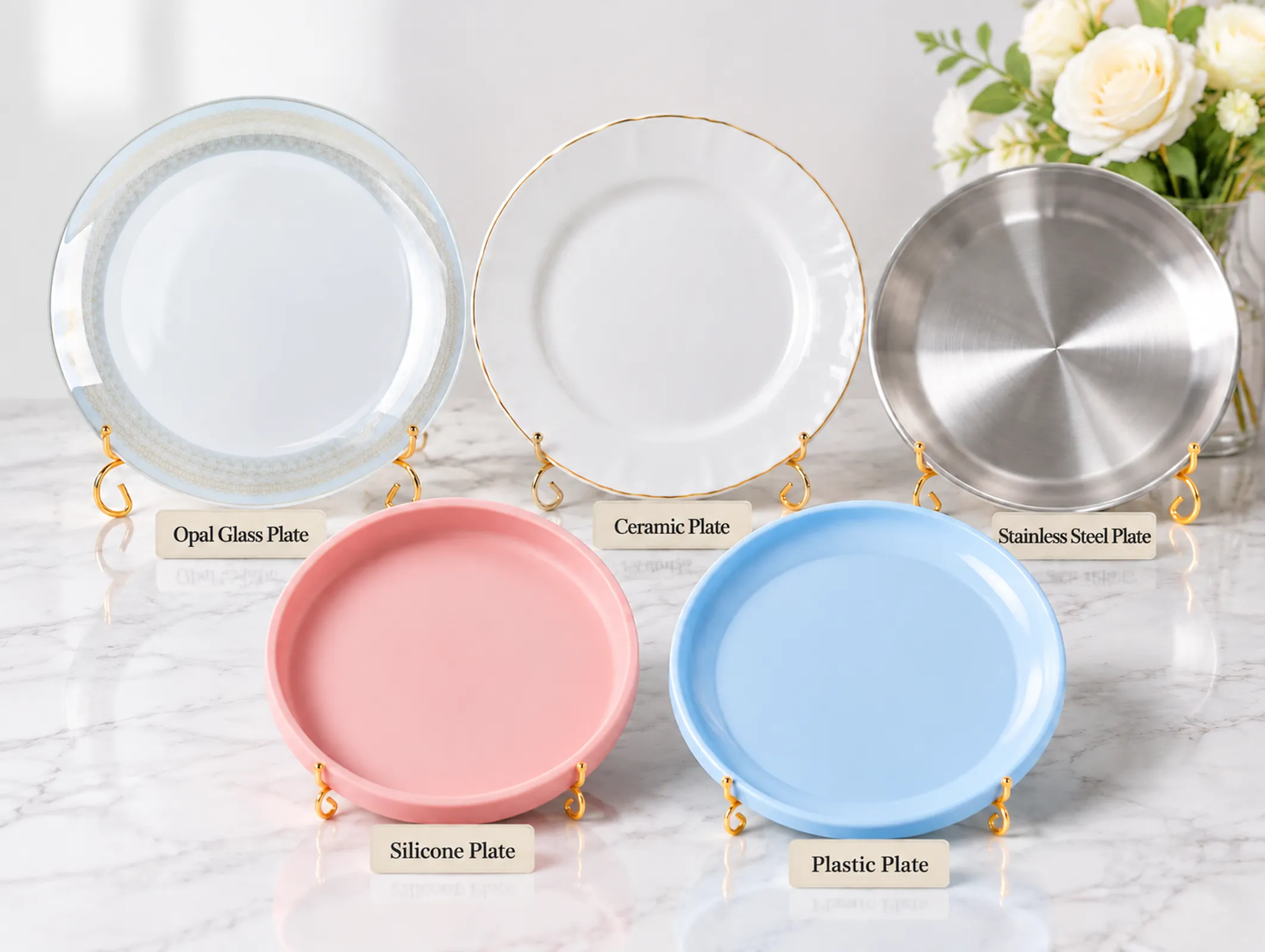
Ceramic, Glass, Bone China, Stainless Steel, and Melamine Are the Common Wholesale Dinnerware Options
Wholesale dinnerware suppliers in China rarely handle just one material. Their standard catalogs usually include ceramic, glass, bone china, stainless steel, and melamine. These are the most common categories and the easiest to buy as a coordinated range.
| Material | Common wholesale products | What buyers notice most |
|---|---|---|
| Ceramic | Plates, bowls, cups, saucers, soup bowls | Heat- and oil-resistant, with a wide choice of shapes for everyday dine-in service |
| Glass | Plates, bowls, cups, jugs, salad bowls | Easy to clean and visually clear; opal glass can also give the tabletop a consistent base color |
| Bone china | Banquet plates, coffee cup and saucer sets, soup bowls | Light, thin, and translucent, making it suitable for formal banquets |
| Stainless steel | Dinner plates, bowls, cups, trays | Impact-resistant and easy to clean, making it suitable for frequent centralized washing |
| Melamine | Fast-food trays, serving trays, bowls, cups | Lightweight, shatter-resistant, and reusable |
All five can sit within one wholesale tableware range because each category has a mature supply chain behind it. Take ceramic tableware as an example. UN Comtrade 2024 data on China’s HS 6911 ceramic tableware exports shows an export value of approximately USD 6.598 billion and a net weight of approximately 2.2169 million metric tons. These dinnerware types already benefit from highly mature technology in China and have long been exported on a stable basis.
Can Chinese Factories Produce These Dinnerware Types Consistently?
Ceramic Dinnerware Has Mature Forming, Glazing, and Firing Processes for Consistent Bulk Quality
Ceramic dinnerware can be produced in China in stable volumes. Bulk quality depends on whether three processes—forming, glazing, and firing—can be repeated reliably. The export data offers a useful baseline.
UN Comtrade 2024 data on China’s HS 6912 exports of other ceramic tableware shows an export value of approximately USD 578 million and a net weight of approximately 186,700 metric tons. The figure confirms that this category has a stable export supply base. Batch quality can then be checked against the factory’s process controls and inspection standards.
Each of the three processes controls one part of the result:
- Forming determines whether the shape is regular and whether the rim and base are consistent.
- Glazing determines glaze color, thickness, and pinhole control.
- Firing determines shrinkage, distortion, and finished strength.
Problems in bulk orders tend to appear when the glaze color changes, the kiln position changes, or the delivery date is rushed. Without proper first-article approval, production may show differences in color depth, warped rims, or glaze pinholes. Acceptance checks should cover kiln stability, glaze-batch management, and outgoing sampling. Consistent production has to hold across every batch, with these three factors kept within an acceptable range. Chinese dinnerware manufacturers are now fully experienced in these processes.
Glass Dinnerware Has Mature Pressing and Blowing Processes for Consistent Bulk Quality
The production stability of glass dinnerware can also be assessed through export data.
UN Comtrade 2024 data on China’s HS 7013 glassware exports shows an export value of approximately USD 5.735 billion and a net weight of approximately 2.155 million metric tons. This HS code covers a wide range of shapes and uses, so a quotation still has to be checked against the specific product. Even so, the export figure confirms that China’s glassware sector already has a large-scale supply base.
Pressing suits plates, bowls, and other products with a defined mold shape. Blowing suits cups, jugs, and other hollow forms. Forming is followed by annealing. The Corning Museum of Glass definition of annealing notes that glass cooled too quickly retains high internal stress. It may break during cooling or later, and it becomes more vulnerable to mechanical or thermal shock. A dinnerware manufacturer in China also check light transmission, along with forming method, annealing or tempering capability, and breakage rates. This is how product quality is controlled.
Common problems in bulk glass dinnerware are specific: uneven wall thickness, bubbles, chipped rims, and batch color variation. They may not appear in a sample, yet they become more visible during ocean freight and restaurant replenishment. Whether a customer is reviewing samples or we are controlling quality ourselves, these items go into the acceptance criteria, and samples are used to confirm the standard. With opal glass plates, for example, differences in forming and annealing control affect rim strength, batch color variation, and shipping breakage. Jointion’s opal glass product and process information can serve as a reference for specifications, forming methods, and batch control.
Bone China Has Mature Thin-Wall Forming and High-Temperature Firing Processes for Consistent Bulk Quality
Bone china has established production regions in China, but consistent volume production depends more heavily than ordinary ceramics on thin-wall forming, glazing, and high-temperature firing control.
A thin body distorts easily, and the firing-temperature window is narrow. If mold precision is insufficient, rims tend to warp. If kiln temperature is unstable, the glaze and color will vary from batch to batch. With hotel bone china, uneven rim heights affect stacking and tabletop presentation. These problems are hard to spot in a single sample and become obvious once the pieces are assembled into sets.
Most Chinese factories buying bone china check bone ash content, along with translucency, weight, glaze, rim strength, and batch color variation. For premium orders, the key is that bulk production remains consistent with the sample. Detailed acceptance standards are what create a stable basis for repeat orders.
Stainless Steel Dinnerware Has Mature Stamping, Welding, and Polishing Processes for Consistent Bulk Quality
The mature capabilities in stainless steel dinnerware are stamping, welding, polishing, and surface finishing. The material resists impact, but bulk quality still depends on whether these processes are properly controlled.
Bulk purchasing in China usually checks four things:
- The material grade, which determines baseline corrosion resistance.
- Thickness and edge finishing, which determine whether the item deforms or cuts the user in service.
- Welding and polishing, which determine whether joints are smooth and surfaces are easy to clean.
- Dishwasher compatibility and stacking method, which determine wear under frequent use.
Cafeterias and high-frequency foodservice expose these differences quickly. Insufficient thickness, edge burrs, or poor weld finishing become more obvious after centralized washing. Stable supply depends on batch inspection and process records, with samples used to set the standard. When these standards are met at every level, the product can generally meet international quality requirements.
Melamine Dinnerware Has Mature Mold-Forming and Surface-Finishing Processes for Consistent Bulk Quality
Melamine dinnerware has a mature mold and forming industry in China. Its advantage is that it is reusable, not disposable.
Consistent production depends on mold precision, pressure and temperature control, and surface finishing. If mold temperature or pigment control is unstable, color variation, shrinkage, and slight deformation can appear between batches. Poor edge finishing makes chips and burrs more likely when customers handle the product or stack trays. Repeated washing can also make the surface dull. We take each of these factors into account at every stage of production.
If you still have concerns, ask about raw-material grade, mold ownership, edge finishing, scratch resistance, and dishwasher compatibility when requesting a quote. The cost of melamine should be calculated by spreading it over the number of reuse cycles. For quick-service dine-in operations, that matters more than the fact that it looks lightweight.
What Dinnerware Fits Restaurants, Hotels, Banquets, Cafeterias, and Quick-Service Restaurants?
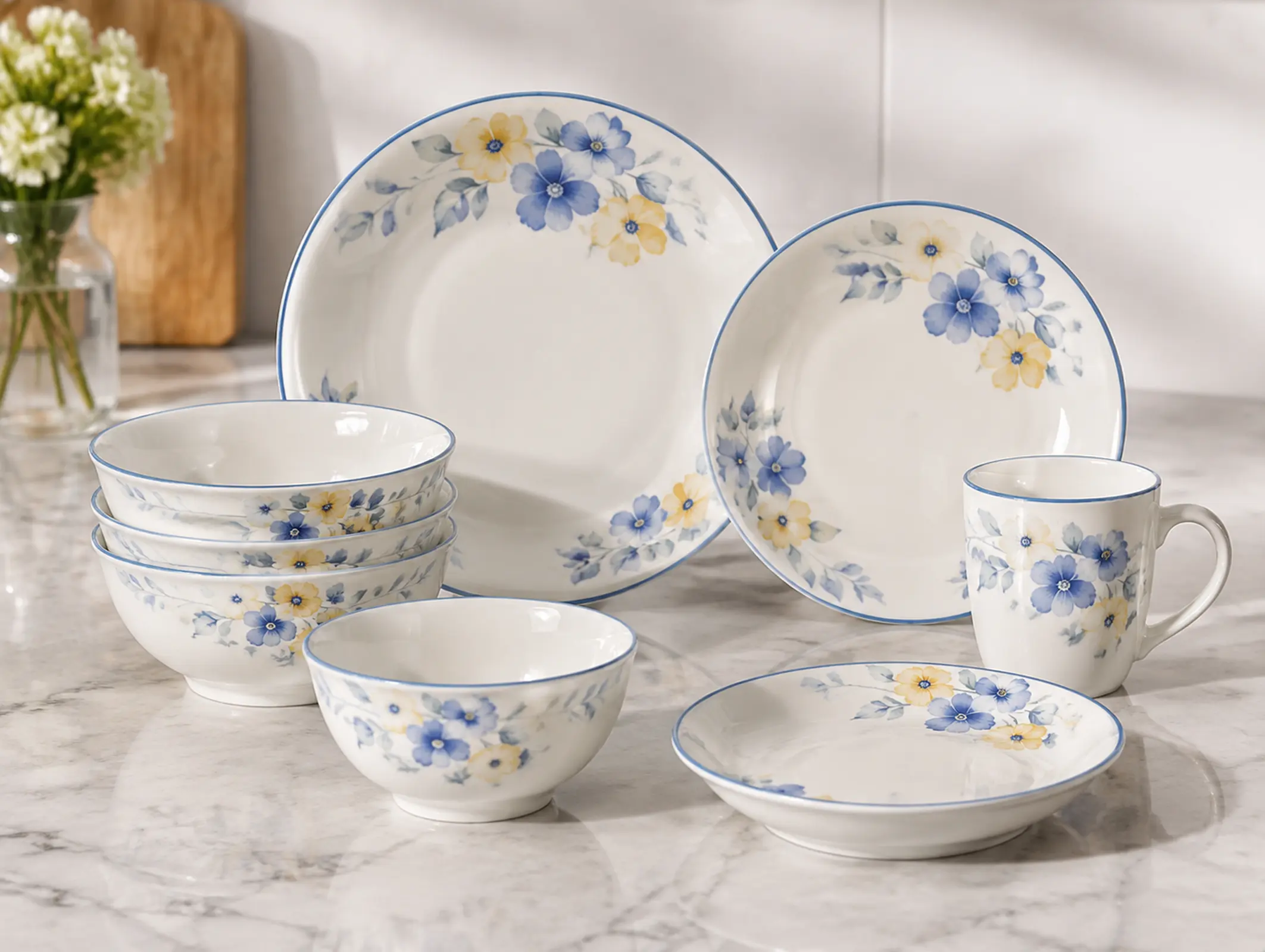
Restaurants Can Consider Ceramic Dinnerware
Ceramic is one of the most dependable choices for everyday restaurant dine-in. Its strengths are heat resistance, oil resistance, and easy cleaning, all of which suit frequent use.
Restaurants turn tables quickly and wash dishes often, while hot dishes still need to stay warm. Ceramic shapes and wall thickness can be adjusted to suit different cuisines, and plates, bowls, and dishes are easy to coordinate. The usual problems start with selection: rims that are too thin are more likely to break during carrying and washing, while shapes that are too shallow let sauces spill. In the end, everything comes back to breakage rates and replacement cost.
Three conditions are useful when evaluating options:
- The cuisine determines shape and depth.
- Table turnover determines thickness and rim strength.
- The washing method determines glaze choice, stacking, and replenishment cycles.
Cost pressure in foodservice reinforces this judgment. Restaurant Dive, citing National Restaurant Association cost data, reports that restaurant food and labor costs have risen 35% over the past five years, while menu prices rose 31%, leaving margins at roughly 5%. When costs are tight, breakage, replacement intervals, and dishwasher wear need to be included in total cost. Only then does the invoice price reflect the real cost.
Hotels Can Consider Bone China Dinnerware
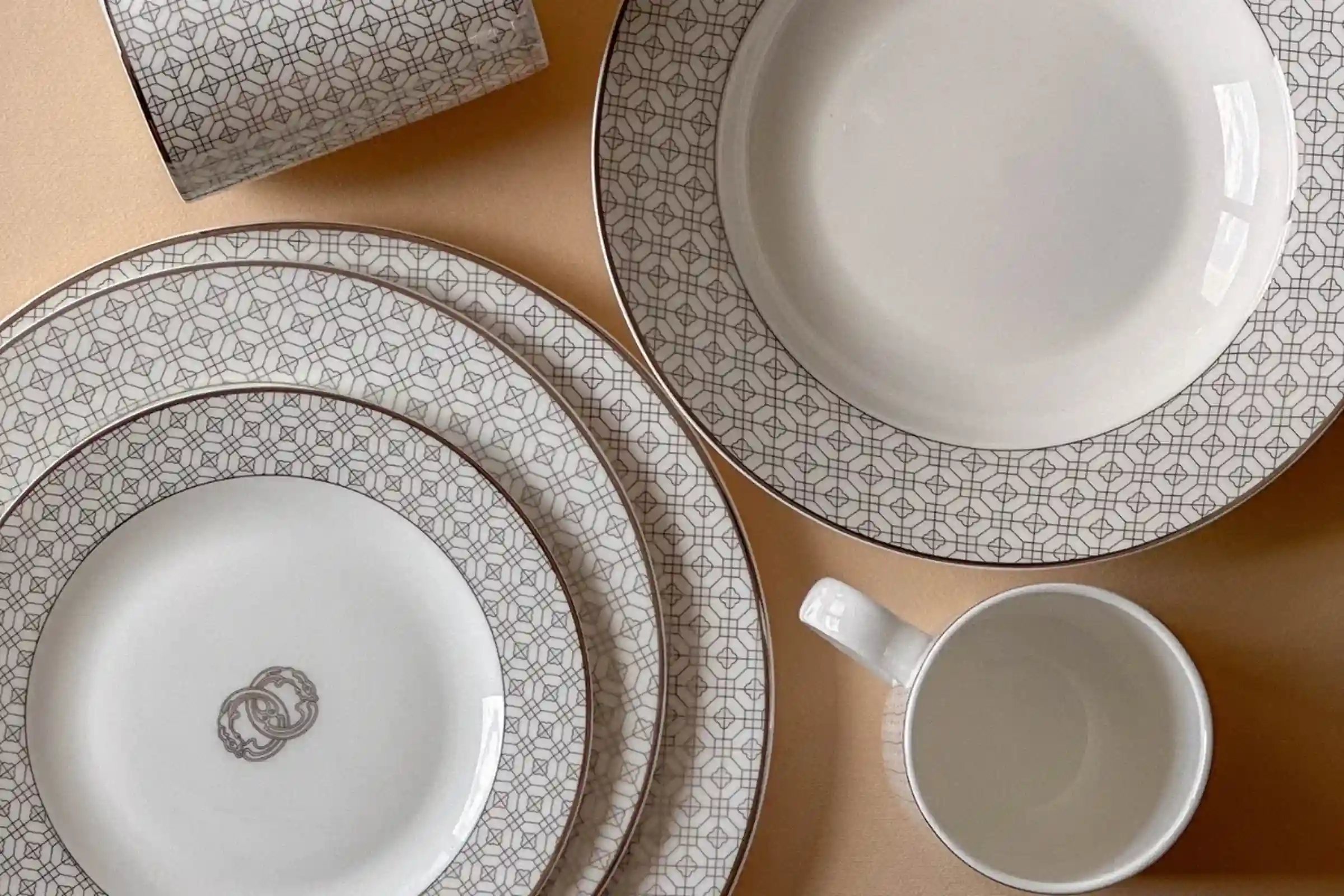
Bone china suits formal hotel banquets, particularly where the priorities are a light, thin, translucent look and a coordinated table setting.
For restaurant and hotel tableware, the full-table effect matters, but a hotel also needs dinnerware that can withstand repeated washing. Translucency matters, as do rim strength, glaze durability, and replenishment consistency. Warped rims or batch-to-batch glaze variation make stacked plates uneven and immediately affect the tabletop presentation. When calculating total cost, include banquet standards, washing conditions, set proportions, and breakage rates. That preserves the tabletop look while keeping replenishment stable.
Banquets Can Consider Opal Glass Dinnerware
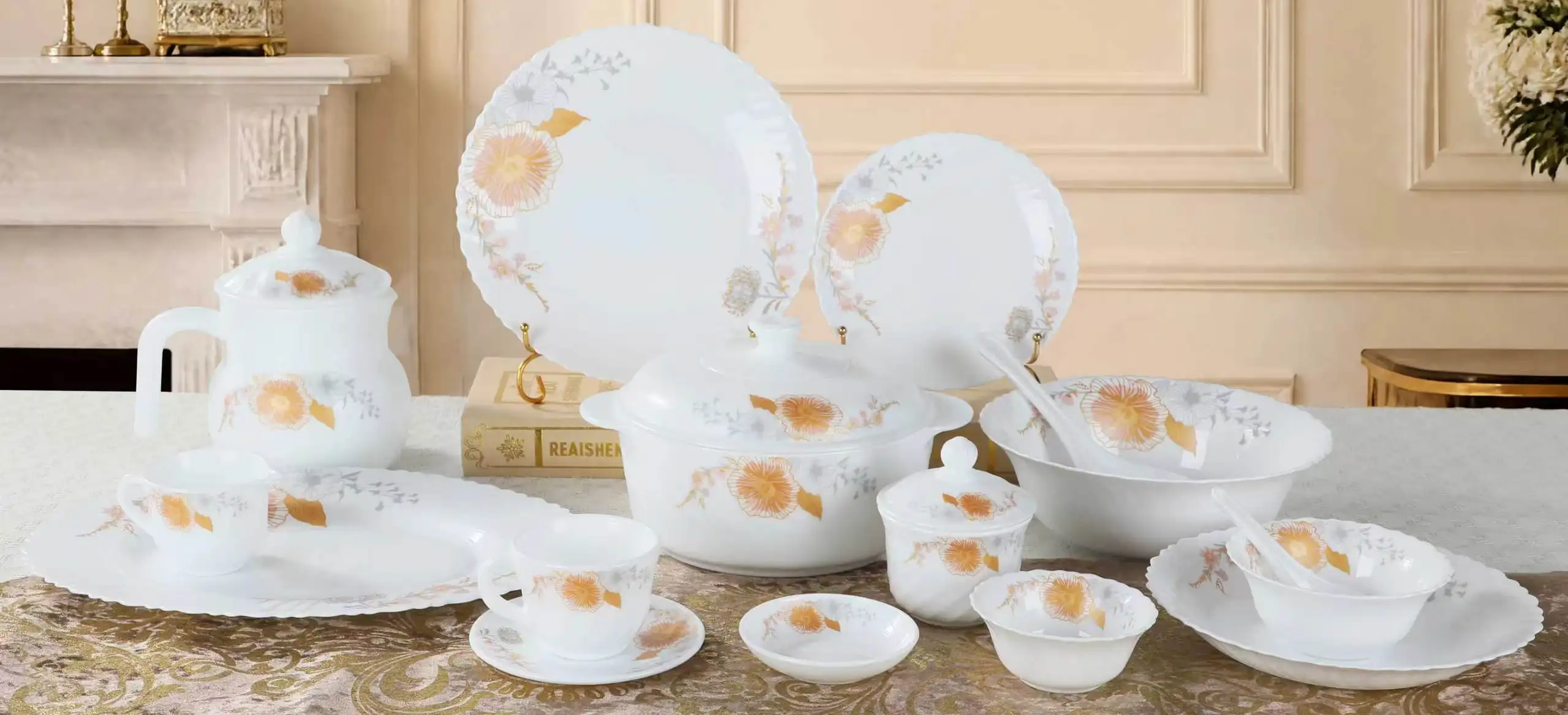
Banquet halls are a natural fit for opal glass dinnerware because it solves two problems at once. It gives the table the clean white look of ceramic, while tempered opal glass handles impact and breakage better than standard ceramic. That matters when staff stack hundreds of plates, carry them through busy service, and reset tables between events.
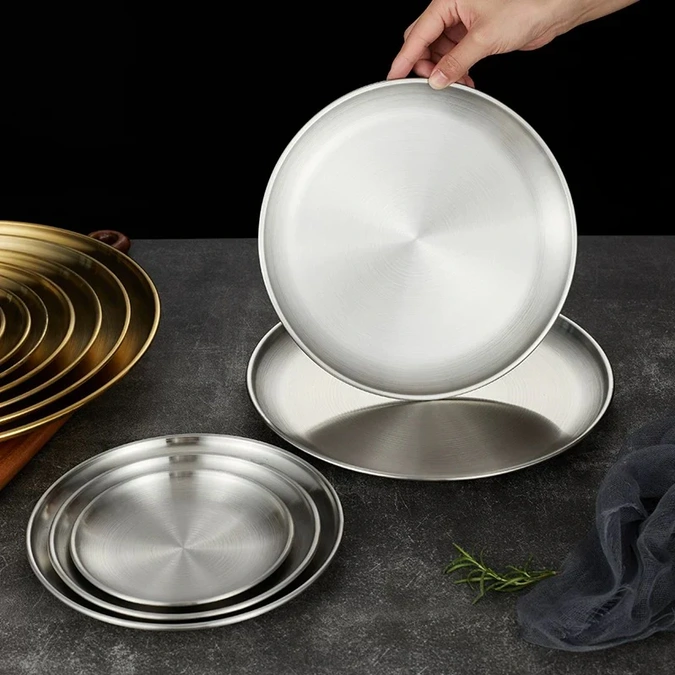
Cafeterias Can Consider Stainless Steel Dinnerware
Stainless steel fits cafeterias for a direct reason: it resists impact, tolerates heat, and is easy to clean.
Cafeterias move quickly, wash in centralized batches, and see a lot of accidental impact. Ceramic and glass carry higher breakage costs in this environment, while stainless steel is more durable. Material grade, thickness, edge finishing, and weld polishing still need to be checked. Insufficient thickness or poor welding can lead to deformation after centralized washing, while burred edges create handling risks.
Factor in the dishwasher, stacking method, and high-frequency wear. A low price is only worthwhile if the product can keep performing over time.
Quick-Service Restaurants Can Consider Melamine Dinnerware for Dine-In Service
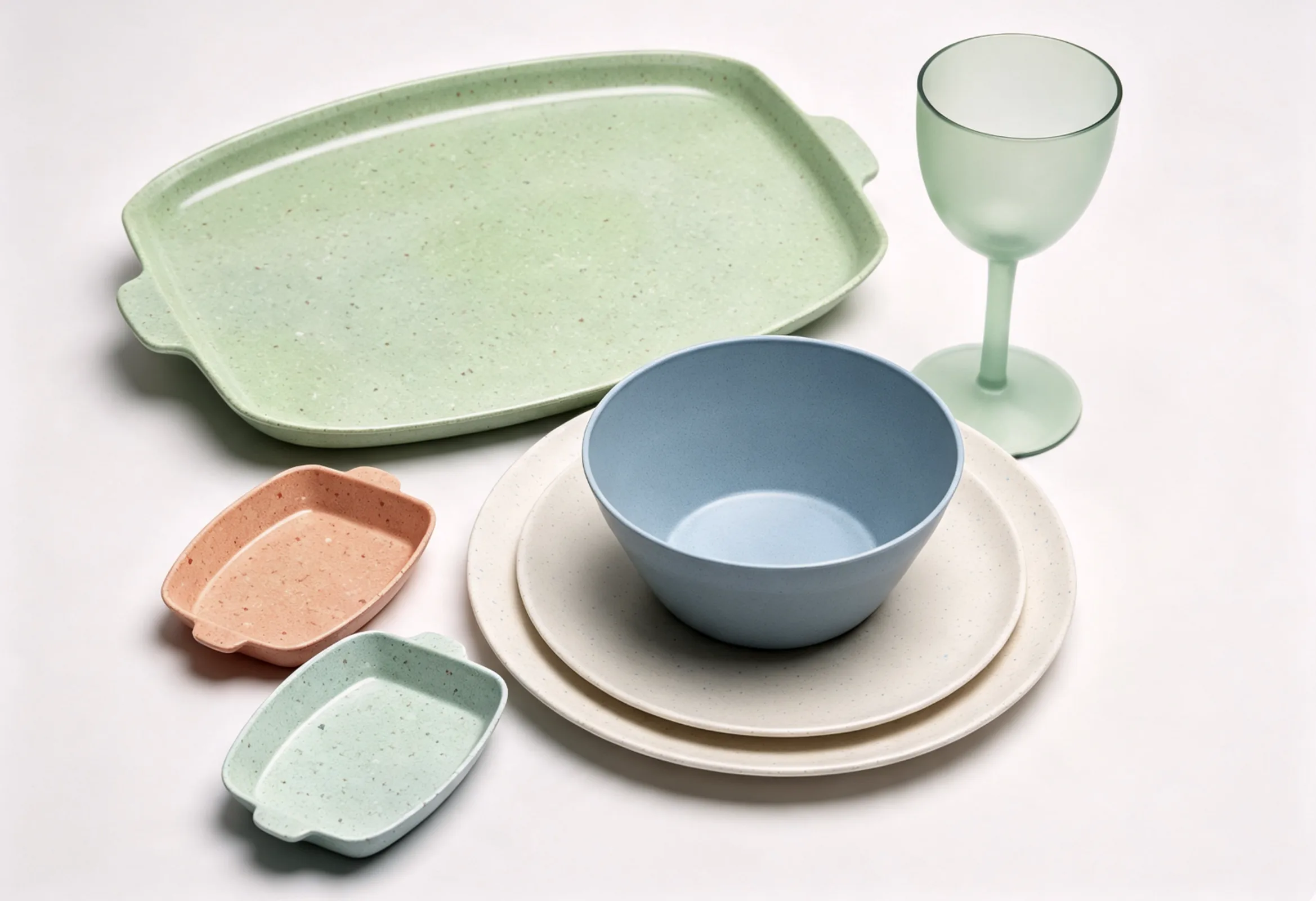
Melamine fits quick-service dine-in because it is reusable tableware for on-premises service, a separate category from disposable takeout containers.
Quick-service restaurants focus on service speed, tray stacking, and washing efficiency. Melamine is lighter than ceramic, so customers can carry it with less effort, and it resists dropping better. Because it is reusable, cost should be spread across the number of uses. Raw-material grade, thickness, edge finishing, scratch resistance, and dishwasher compatibility all affect how long it will last.
If a batch of trays has poor edge finishing, chips and burrs are more likely when customers handle them or stack trays. Surfaces that turn dull after washing also make the trays look worn very quickly. Estimate how long the product will hold up first, then decide whether the price is right.
How Should Buyers Negotiate Wholesale Pricing, MOQ, Sampling, and Lead Times in China?
Ask the Supplier to Quote Unit Price, MOQ, and Sampling Fees by Material, Volume, and Process
A quote needs to be broken down before the cost structure is clear. Material, shape, quantity, printing, and packaging all affect the total price.
The OpenStax managerial accounting explanation of fixed-cost allocation notes that as output rises, fixed costs are spread over more units and the fixed cost per unit falls; as output falls, the fixed cost per unit rises. In dinnerware orders, setup, molds, plate-making, and preparation charges therefore need to be allocated across the order quantity.
A quotation should answer at least the following:
| Quote item | What the supplier should state | Why it affects comparison |
|---|---|---|
| Material and shape | Material, size, thickness, edge finishing | Two items both called “plates” can have different cost structures |
| Quantity and MOQ | MOQ per item per color; whether mixed colors and mixed sizes are priced separately | Quantity directly changes the fixed cost per unit |
| Sampling fee | Amount, whether refundable, number of revisions | A low unit price may later be followed by a sampling charge |
| Process and decoration | Printing, gold decoration, frosting, or other surface finishing | Different processes carry different loss rates and operation counts |
| Packaging | Whether inner boxes, outer cartons, labels, and pallets are quoted separately | Separately charged packaging changes the true landed cost |
| Quote validity | Validity period, trade terms, applicable taxes | A clear validity period lets you recheck a repeat order on the same basis |
Two bulk dinnerware suppliers can quote the same unit price using two different cost structures. One may charge packaging separately, make sampling fees non-refundable, and calculate MOQ by a single color; another may include everything. The real procurement cost will differ. Once the quote is broken down, those differences become clear.
Confirm Sampling Fees, Revision Limits, and Approval Standards to Avoid Later Surcharges
Sampling should lock down dimensions, color or glaze, edge finishing, and weight standards—not just produce a sample to look at.
- Write the dimensions, color or glaze, edge finishing, and weight into the sample approval sheet.
- Confirm the sampling fee, the number of revisions allowed, and how each additional revision is charged.
- Sign and retain the approved sample, and record the acceptable tolerances.
- Inspect bulk production against the same standard rather than switching to a different set of criteria.
Photos are useful for an initial look; the signed sample and accepted tolerances are the basis for judging production. If the lighting changes, the retained standard can still be checked. Setting clear standards at the sampling stage avoids one rework cycle later—and one later price increase. For glass products, pay particular attention to batch color variation and dimensional measurement, and use data to define the visual standard.
Specify Three Lead-Time Milestones in the Contract: Deposit, Bulk Production, and Shipment
Lead time should be broken into three milestones. Thirty days is only a total; the deposit, production, inspection, and shipment dates need to be tracked separately.
| Milestone | What to specify in the contract | Purpose |
|---|---|---|
| Deposit received | Amount, arrival date, and what happens if payment is late | Establishes a clear production start date and a reference for follow-up |
| Bulk production completed | Completion date, inspection date, and inspection standard | Problems can be resolved before shipment |
| Shipment | Space booking, estimated departure date, documents, and shipment notice | Shows which stage is responsible when a delay occurs |
Banquets and hotel projects are tied to fixed opening or wedding dates, so buffer time has to be built in. Put deposit receipt, bulk completion, inspection, and shipment on the schedule; the extra time created earlier will not then cut into inspection and sailing time later. Once the milestones are in the contract, responsibility for delays is also clearer.
If you are reading this and are also looking for a reliable Chinese tableware wholesaler, you might want to take a look at our JOINTION tableware wholesaler factory. We also offer various types of tableware for wholesale, with direct factory delivery.