
This article looks at how restaurant tableware is actually used. It explains why plates become damaged during table clearing, machine washing, and stacking, then compares three practical alternatives to ceramic plates: reinforced porcelain, Opal Glass, and bone china. The goal is practical: to determine which material best suits a restaurant’s table turnover, cleaning process, and purchasing budget instead of chasing an unverified promise that a plate will never break.
Why Do Ceramic Plates Break So Often in Restaurants?
Plates rarely fail because of a single event. More often, a small chip first appears on the rim. Temperature changes in the dishwasher and repeated stacking then allow the crack to spread. By the time the plate finally breaks, the damage may have been building for quite a while.
| Common Restaurant Process | What the Plate Is Exposed To | Common Result |
|---|---|---|
| Table clearing, sorting, and transport | The rim hits other plates, carts, or dishwasher racks | Chipped rims and small notches |
| Machine washing, sanitizing, and serving hot food | Rapid temperature changes | Hairline cracks and visible cracking |
| Stacking and storage | Pressure on the bottom plates and uneven contact points | Expanding cracks and damage to the plate base |
Repeated Rim Impacts Make Plates Prone to Chipping
The rim is usually the first part of a plate to suffer damage. Several plates are often stacked together when a table is cleared, and they knock against one another while being carried. In the dishwashing area, they are sorted, loaded into racks, and unloaded again. None of these movements needs to be forceful, but when they are repeated dozens of times a day, the rim becomes the part exposed to the most impacts.
The problem with a small chip is that the next impact becomes concentrated at the same weak point. The surface may still look intact even though a crack has already started spreading into the body of the plate. This creates a familiar situation in restaurants: a plate that was never dropped suddenly breaks while a dish is being carried or when it is removed from the dishwasher.
Excessive Temperature Changes Can Cause Plates to Crack
Plates are still hot when a commercial dishwasher finishes a high-temperature cycle. If they are immediately placed on a cooler metal counter or rinsed with cold water, the inside and outside of each plate will cool at different rates. A similar problem can occur during service when a plate taken from a cold storage area is immediately filled with hot soup.
Ceramic expands and contracts slightly as its temperature changes. When that change happens too quickly, thermal stress develops inside the plate. An undamaged plate may withstand it for the time being, while a plate that already has a hairline crack or chipped rim is more likely to split at the weakened area.
Which Plates Can Preserve the Look of Standard Ceramic While Reducing Breakage?
Restaurants looking for restaurant dinnerware alternatives usually do not want to redesign the entire table setting. The new plates still need to suit the existing menu and fit the current dishwasher, dish racks, and storage shelves. Reinforced porcelain, Opal Glass, and bone china can all preserve the appearance of white, rigid tableware, but each comes with different trade-offs.
| Alternative | Appearance and Feel | Durability Characteristics | Best Suited To |
|---|---|---|---|
| Reinforced porcelain | Retains the glazed surface and weight of traditional ceramic | Handles routine impacts better than standard ceramic but can still break | Restaurants that want to retain their existing ceramic style |
| Opal Glass | White, opaque, and visually similar to ceramic | Impact resistance, rim strength, and thermal shock performance can be compared | High-turnover restaurants with frequent machine washing and concerns about replacement costs |
| Bone china | Thin, refined, and slightly translucent | High-quality products offer good strength but can still be damaged by heavy impacts | Restaurants that prioritize refined table settings and a lightweight feel |
None of these three materials is completely unbreakable. A more realistic goal is to reduce routine chipping and cracking without making back-of-house handling more difficult.
Why Is Opal Glass Tableware Becoming the Latest Popular Alternative to Ceramic Plates?
Opal Glass has been in use for many years. What has changed more recently is the way restaurants evaluate tableware. A good-looking sample still matters, but buyers now place dishwasher compatibility, replacement needs, and long-term operating costs on the same purchasing checklist. Opal Glass sits between ceramic appearance, durability, and price, which is why it is receiving more attention.
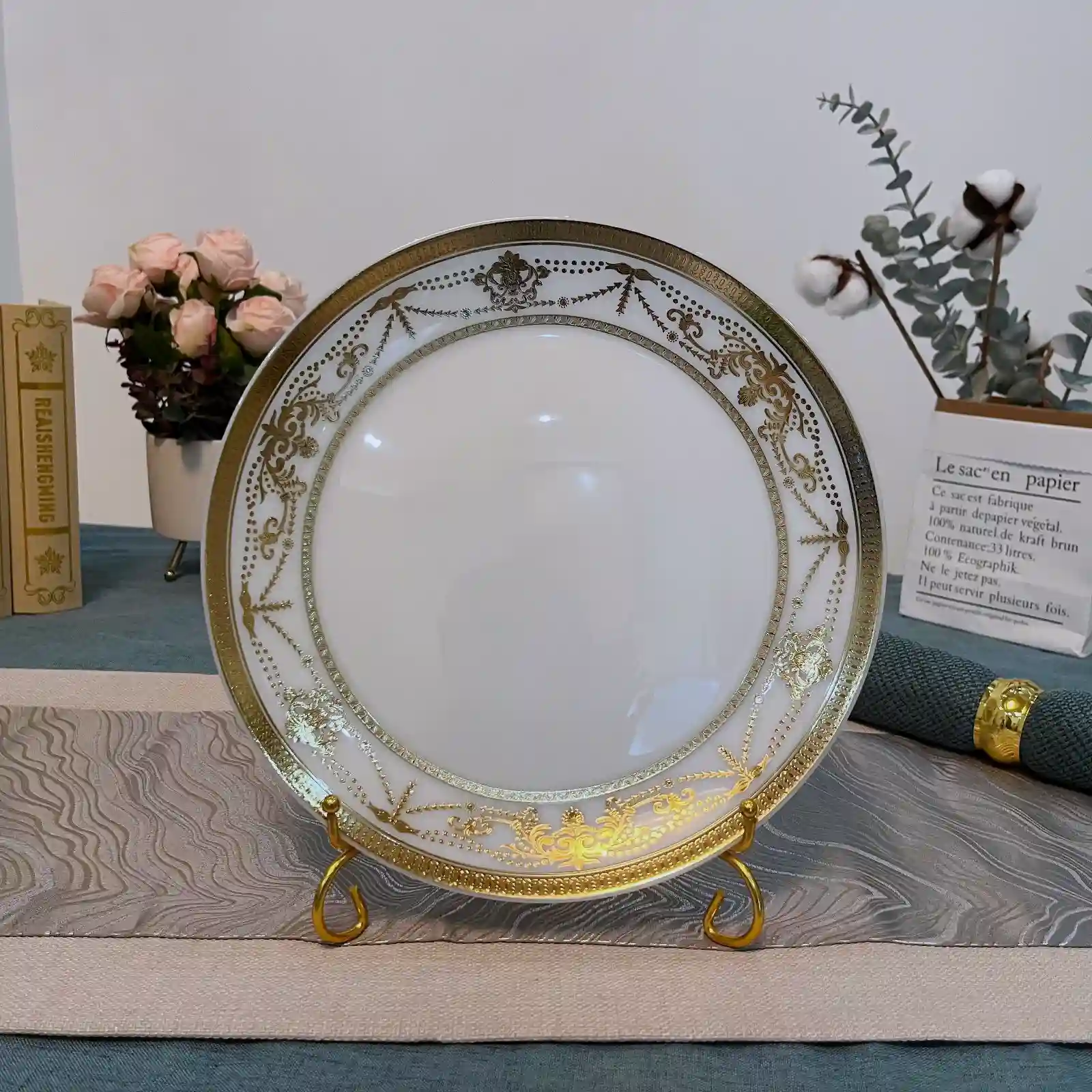
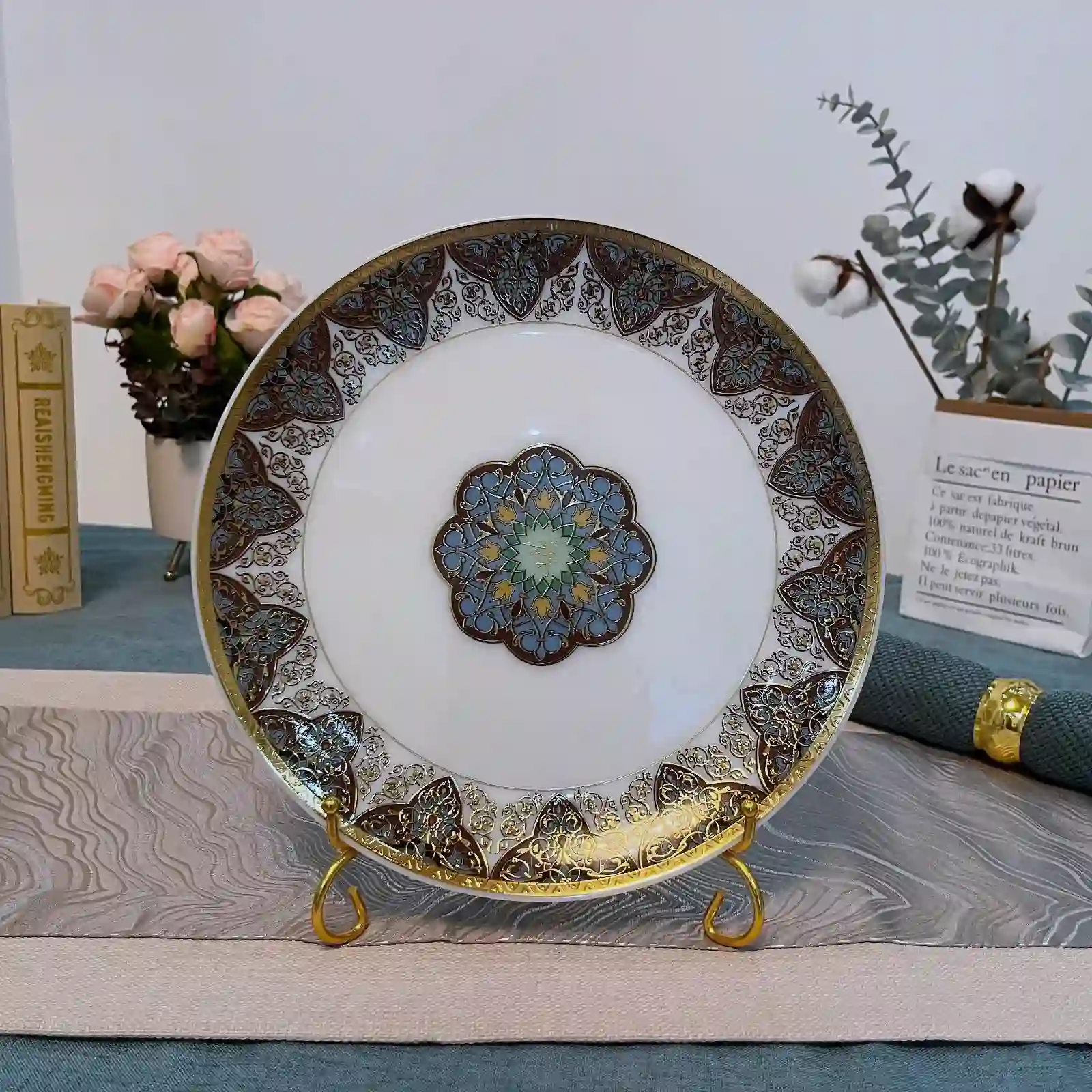
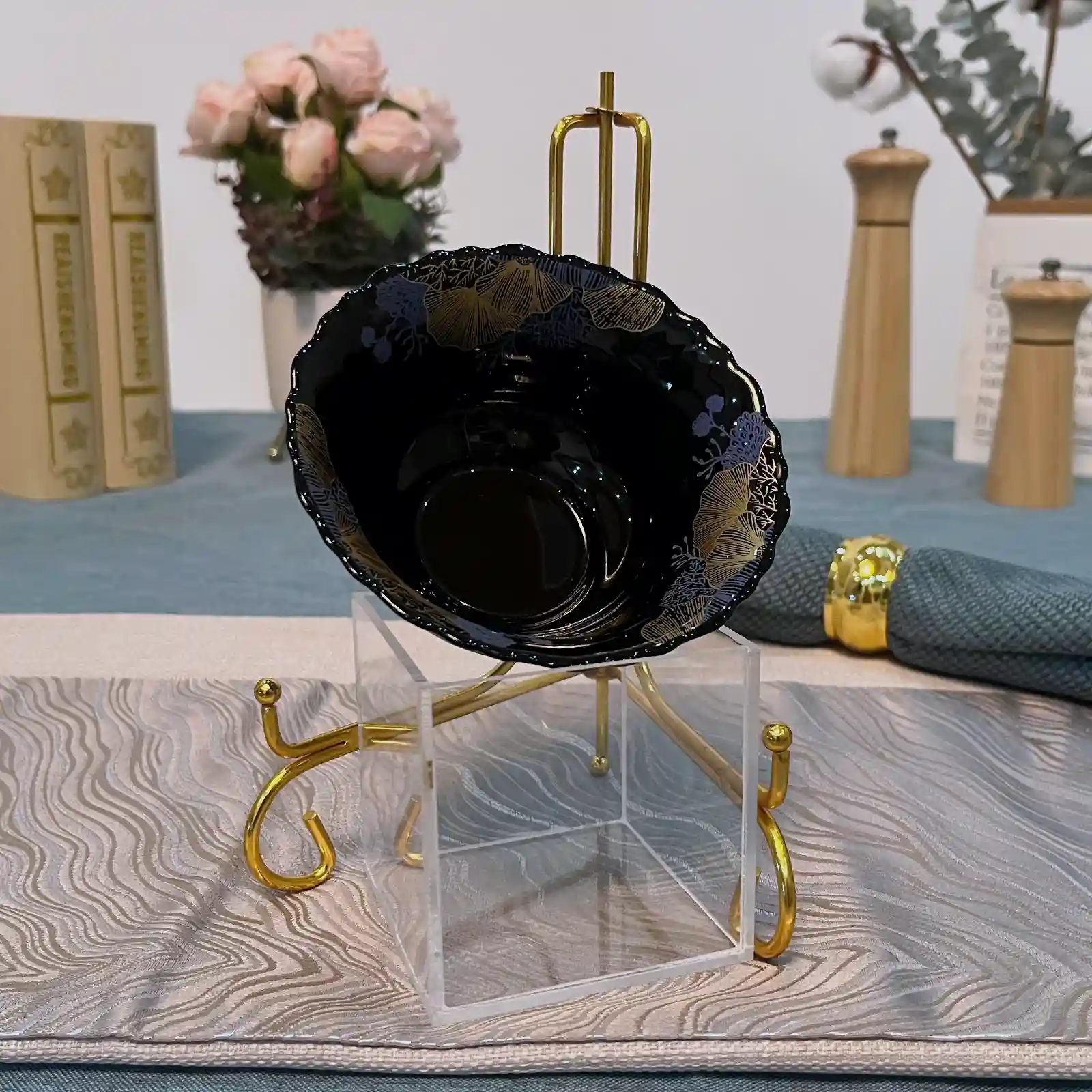
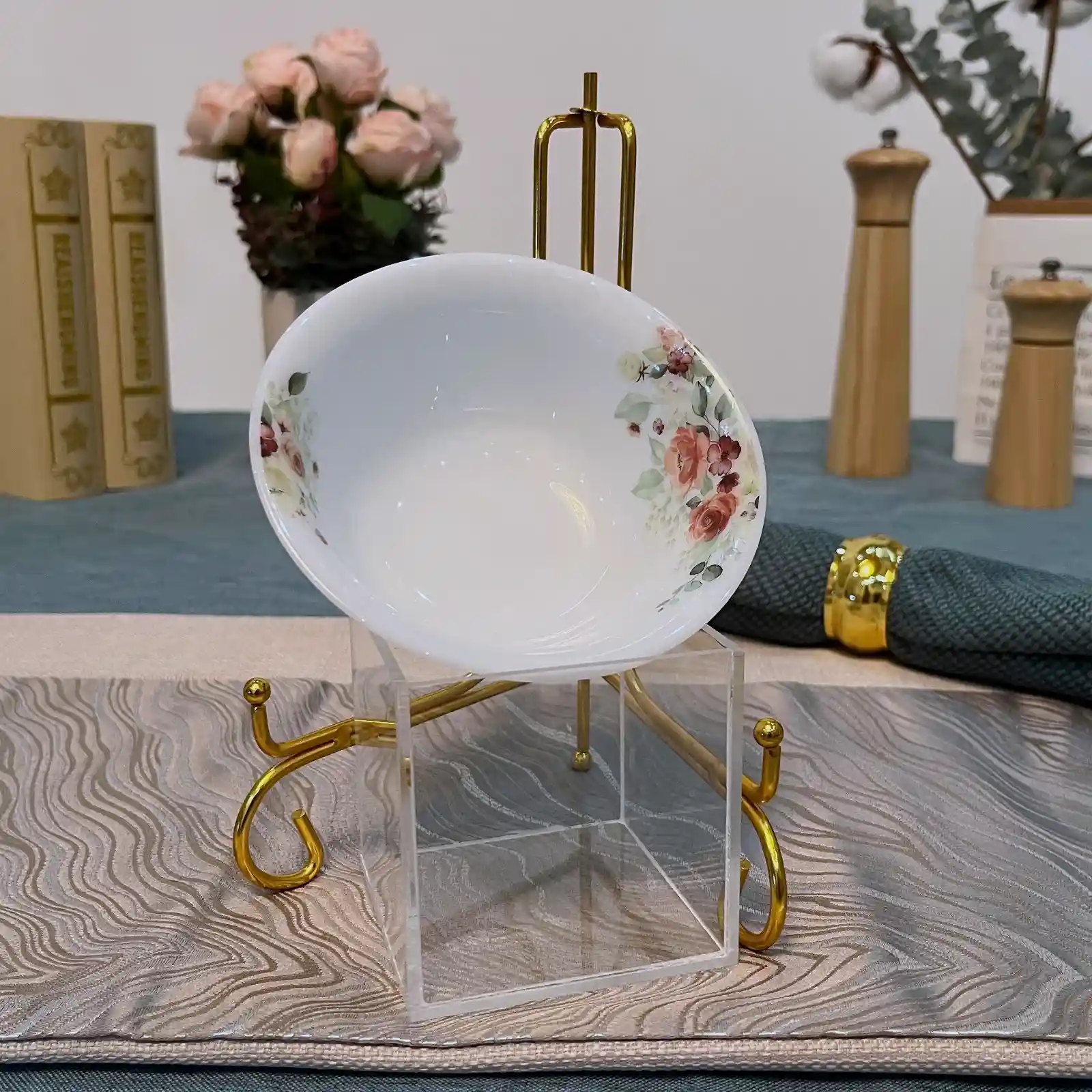
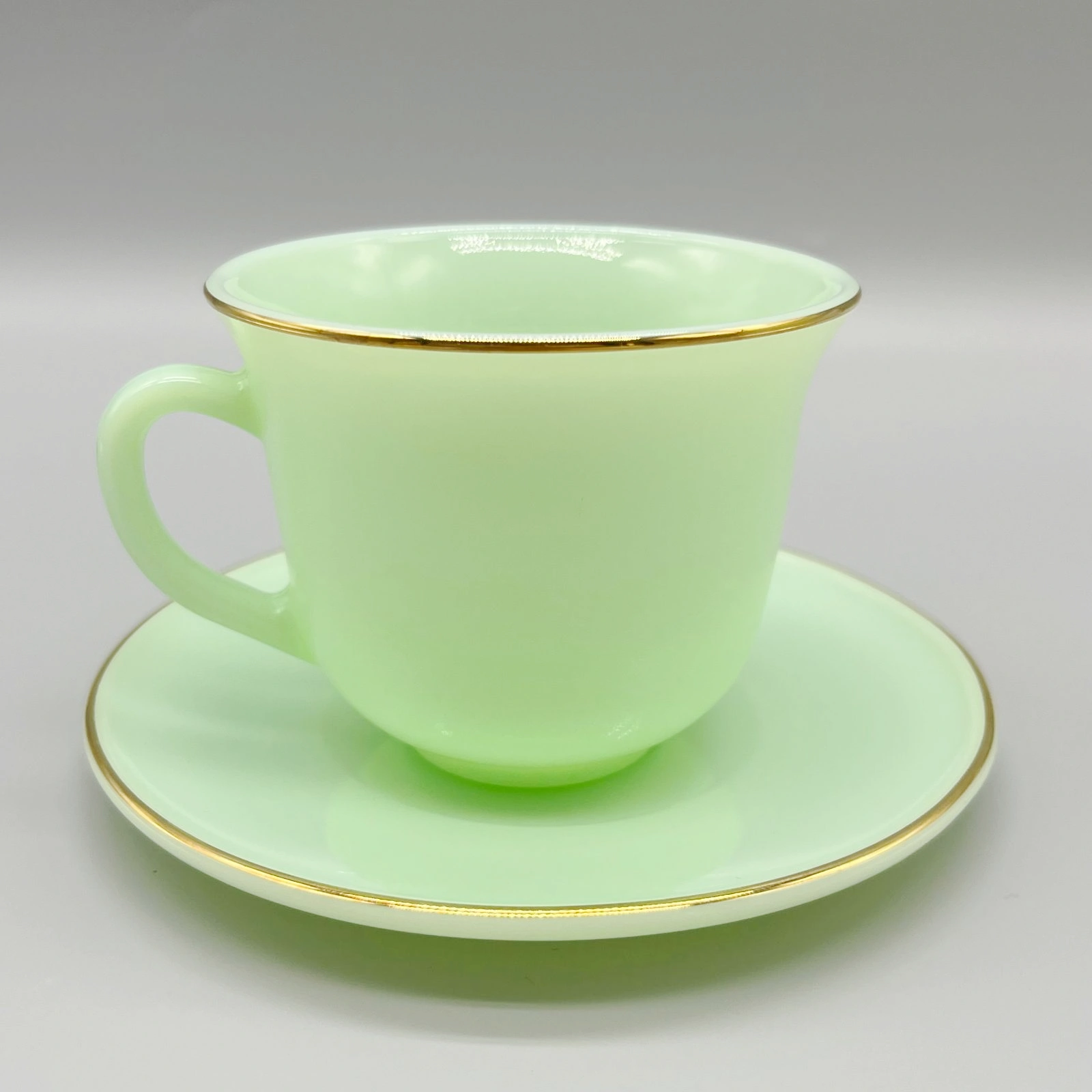
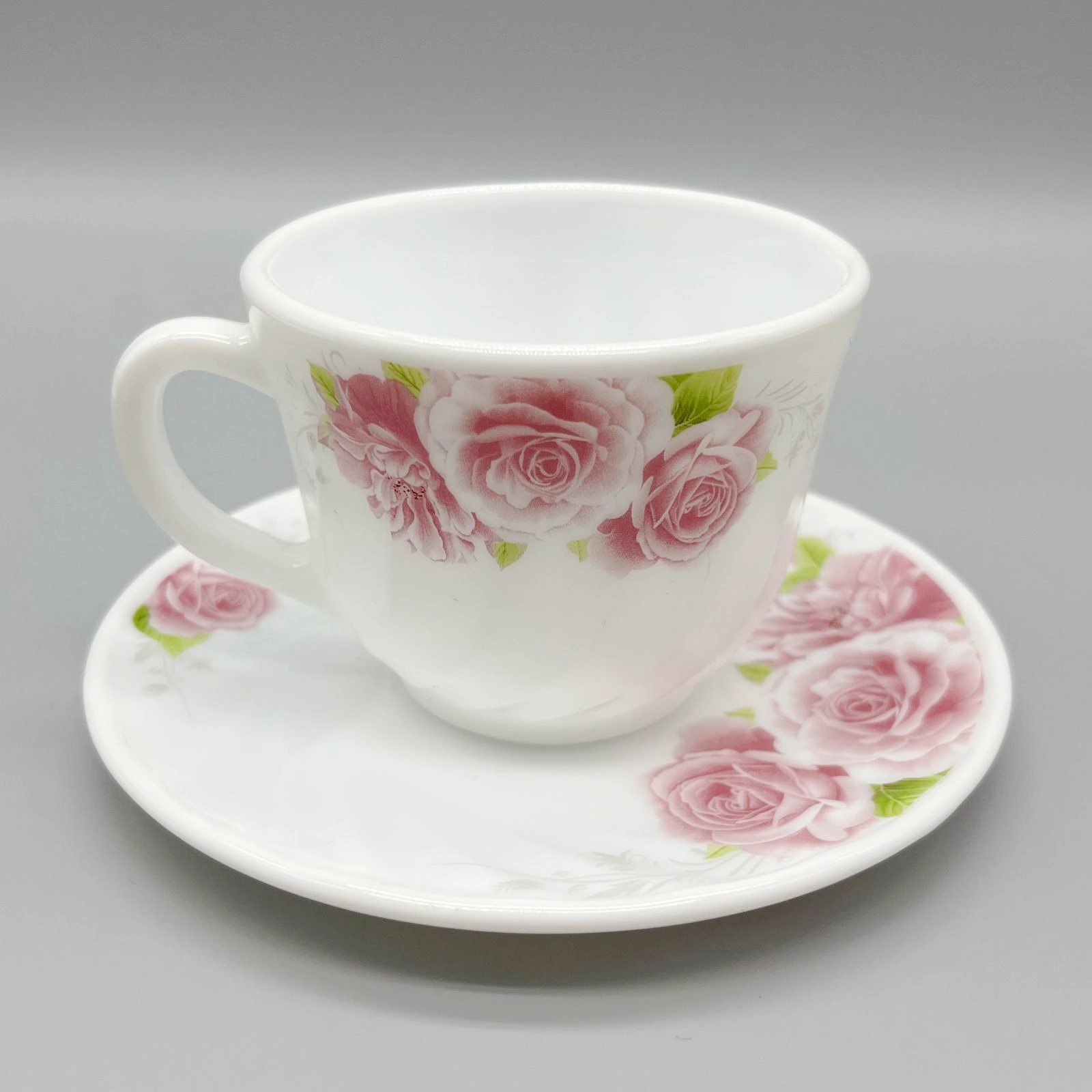
Opal Glass Has an Appearance Similar to Ceramic
One important reason white ceramic plates are so widely used is that they do not interfere with the colors of the food. Opal Glass provides the same complete, opaque white background. At a normal dining distance, a guest’s attention is usually drawn to the dish, and the glass composition of the plate is not immediately noticeable.
The difference from clear glass, stainless steel, and plastic is also easy to see. Clear glass allows the color of the table or tablecloth to show through, stainless steel produces stronger reflections, and plastic can change the impression of the table through its weight and feel. Opal Glass retains the basic appearance of a white porcelain plate while offering a softer surface luster.
Opal Glass Is Durable and Food-Safe, Making It Suitable for High-Turnover Restaurants
High-frequency use means the same plate repeatedly moves through the dining room, bussing cart, dishwashing area, and storage shelves. Durability has to be evaluated across that entire route. A plate surviving one drop does not show whether its rim will chip after repeated machine washing or whether it will keep rattling inside the restaurant’s existing rack.
When Jointion works with foodservice customers to approve samples, it usually recommends putting a small batch through the restaurant’s actual process first. The restaurant keeps its normal dishwasher temperature, dish racks, and stack heights, then records rim chips, cracks, and visible scratches. This simple method can reveal size mismatches, unstable stacking, or cleaning-process problems at an early stage. Laboratory reports confirm baseline performance, while a small-scale trial confirms whether the plate suits that particular restaurant. One cannot replace the other.
Opal Glass Costs Less Than Bone China While Offering a Warm, Jade-Like Appearance
Bone china and Opal Glass can both create a clean, refined table setting, but their visual qualities are not identical. Bone china is thinner, lighter, and more translucent. Opal Glass is generally opaque, with an even white color and a softer gloss. If a restaurant specifically wants the thinness and translucency of bone china, Opal Glass cannot fully replace it. If the goal is a warm white appearance that resembles ceramic, it is usually more than sufficient.
Price should not be judged only by the quotation for one plate. After the initial purchase, the restaurant must still account for breakage replacements, consistency across production batches, and inventory management.
| Cost the Restaurant Actually Carries | Bone China | Opal Glass |
|---|---|---|
| Initial purchase | Usually higher | Usually easier to keep within budget at a comparable grade |
| Table presentation | Thin, refined, and visibly translucent | Warm white appearance similar to ceramic |
| High-frequency use | Replacement pressure after breakage must be evaluated | Can be assessed through impact testing and in-restaurant trials |
| Primary priority | Premium service and refined table presentation | A balance of appearance, durability, and cost |
Actual pricing varies with size, manufacturing process, order quantity, and country of origin, so comparisons should use similar specifications and quality grades. For restaurants that do not require obvious translucency and need a large number of plates in circulation, Opal Glass usually makes the initial purchase and later replacements easier to budget than bone china. That is where its practical value lies, although it cannot fully reproduce the distinctive lightness and translucency of bone china.
What Specifications Should You Check When Buying Break-Resistant Plates?
Every plate looks new in a sample room, making long-term differences difficult to see. A restaurant needs to know how the plate performs after impacts, temperature changes, stacking, and repeated washing. The following four factors are more useful than comparing weight and thickness alone.
Impact Strength Determines How Well a Plate Withstands Collisions
Restaurant plates are exposed to several types of impact. Their rims may knock together while a server clears a table, they may hit a divider when a cart turns, or they may occasionally slip from someone’s hand. Impact-strength testing is used to assess how well a product withstands these sudden forces.
When comparing samples, keep the test conditions as consistent as possible:
- Choose plates of the same size or with similar specifications.
- Use the same impact location, direction, and force.
- Record rim chips, hairline cracks, and complete breakage.
- Test several pieces of each product instead of drawing a conclusion from a single sample.
One sample surviving one drop only describes that single test result. A restaurant buys plates in batches, so batch consistency is what matters.
Rim Strength Determines How Easily a Plate Chips
A small chip on the rim is one of the most common reasons a restaurant plate is taken out of service. The plate may still hold food, but the damaged edge affects presentation and can trap residue. If it remains in a stack, the area around the chip also continues to carry pressure.
Rim strength cannot be judged by thickness alone. Rim curvature, the transition between thick and thin sections, material uniformity, and forming consistency all affect how force is distributed. When comparing samples, apply a rim impact at the same location and then examine the size of the chip and the spread of any cracks.
Older plates can also provide clues. If many plates repeatedly chip in the same area, inspect the dish-rack slots and stacking contact points at the same time. Otherwise, even better plates may continue hitting the same location, and the reduction in breakage may fall short of expectations.
Thermal Shock Resistance Determines How Easily a Plate Cracks
After a commercial dishwasher completes a high-temperature rinse, plates quickly return to a room-temperature environment. The temperature difference becomes more pronounced in a cold winter kitchen or when a hot plate is placed directly on a metal counter. A plate with poor thermal shock resistance may crack immediately or develop a hairline crack that causes it to fail several cycles later.
Supplier documents should state the actual test conditions, including the starting temperature, ending temperature, transfer time, and number of cycles. “Heat resistant” is not enough because restaurants expose plates to rapid temperature changes rather than keeping them at one constant high temperature.
Even a plate with good thermal shock performance should be allowed to cool normally after leaving high-temperature equipment. Material performance provides a safety margin; it cannot replace a stable back-of-house process.
Surface Hardness Determines How Easily a Plate Develops Scratches
Scratches usually do not cause a plate to break immediately, but they affect how long it lasts and how clean it looks. Cutlery, plates dragged against one another, and abrasive tools such as steel wool can all leave fine marks on the surface. Gray lines become particularly noticeable on white plates when light-colored food is served.
Once the surface becomes rougher, oil and dark sauces also adhere more easily. Dishwashing staff then scrub harder to remove the residue, creating more wear. This is a common cycle in restaurant use.
To evaluate samples, subject each candidate to the same number of cutlery contacts, stacking cycles, and machine-washing cycles, then compare them under the same lighting. The important question is which plate remains easier to keep clean after a period of use. Its shine when first unpacked is only an initial impression.
How Can You Clean and Handle Plates to Extend Their Service Life?
Existing handling habits still affect the results after a restaurant switches to more durable restaurant dinnerware. The kitchen can begin by managing three areas—temperature changes, stacking, and cleaning tools—without adding a complicated process.
Avoid Exposing Plates to Sudden Temperature Changes
After high-temperature washing or sanitizing, allow plates to drain and cool according to the equipment’s normal process. Letting a hot plate cool naturally is safer than cooling it quickly with cold water. Plates taken from a cold environment can also be allowed to approach room temperature before they are used for very hot food.
The kitchen can focus on the following checks:
- Are hot plates placed directly on a cold or wet metal counter?
- Do employees use cold water on plates that have just been sanitized?
- Are plates taken from refrigerated areas used immediately for hot dishes?
- Are plates with hairline cracks or chipped rims removed from service promptly?
These adjustments add very few steps but reduce the stress that rapid temperature changes place on existing cracks.
Separate Plates by Type and Limit Stack Height
When round plates, deep plates, and irregular shapes are mixed in the same stack, their bases often fail to rest securely on the intended support points. The weight can then press against the rim of the plate below. Sorting plates by model creates more stable contact and prevents employees from having to pull one size out of a large mixed stack.
Stack height also needs to account for handling. When an entire stack is too heavy, employees grip it more tightly, increasing the chance that rims will knock together while turning a corner or placing the stack on a cart. Dividing the plates into several lower stacks takes up more space, but it makes handling easier and lowers the risk of breakage.
Before new plates arrive, confirm that they fit the restaurant’s existing dish racks, carts, and storage shelves. Plates rattle constantly when rack slots are too wide, while narrow slots place continuous pressure on the rims. If the dimensions do not fit the equipment, even a durable material will be repeatedly stressed by the daily workflow.
Avoid Scraping Plate Surfaces with Hard Tools
Steel wool and metal scrapers work quickly when sauce has dried onto a plate, but they also leave fine scratches. The damage may not be obvious at first. Over time, white plates begin to look gray, and oily residue adheres more easily.
A better approach is to soak dried residue first, then clean the plate with a neutral detergent and a soft cleaning tool. Commercial dishwashers should be operated with the detergent dosage recommended by the equipment and detergent suppliers. Adding more detergent does not necessarily improve cleaning and may place additional stress on the tableware surface.
A smooth plate surface releases residue more easily, so kitchen staff do not need to scrub as aggressively. Small handling habits like these often determine how long the plates retain their appearance and remain in service.