
This article is written for B2B buyers, importers, hospitality suppliers, and wholesalers looking for an Arcoroc dinnerware alternative. By the end, you will know when to begin an alternative-supplier assessment, when to stay with Arcoroc, and how to determine whether a factory can provide stable long-term supply.
What material are buyers usually looking for when they search for Arcoroc dinnerware?
Arcoroc dinnerware comes mainly in tempered glass and opal glass, and B2B replacement sourcing often starts with opal glass.
Here is the short answer: Arcoroc dinnerware is not made from a single material. Its public range includes both Fully Tempered Glass and opal glass products such as Opal Restaurant White and Evolutions White. The Evolutions series uses durable Opal and is classified as tempered glass (Arc Cardinal opal glass product page). The more accurate benchmark for a B2B replacement is therefore not ordinary white glass, but tempered opal glass: a close match in whiteness, shape, and stacking, with the strength required for foodservice use.
That is also why buyers searching for an Arcoroc tableware alternative often start with opal glass. The brand name stands for a complete white foodservice look: low light transmission, consistent color, smoothly rounded rims, and stable stacking. Tempering then determines how well the dinnerware holds up in heavy use. An alternative has to come close on both appearance and strength before it can truly be called a replacement.
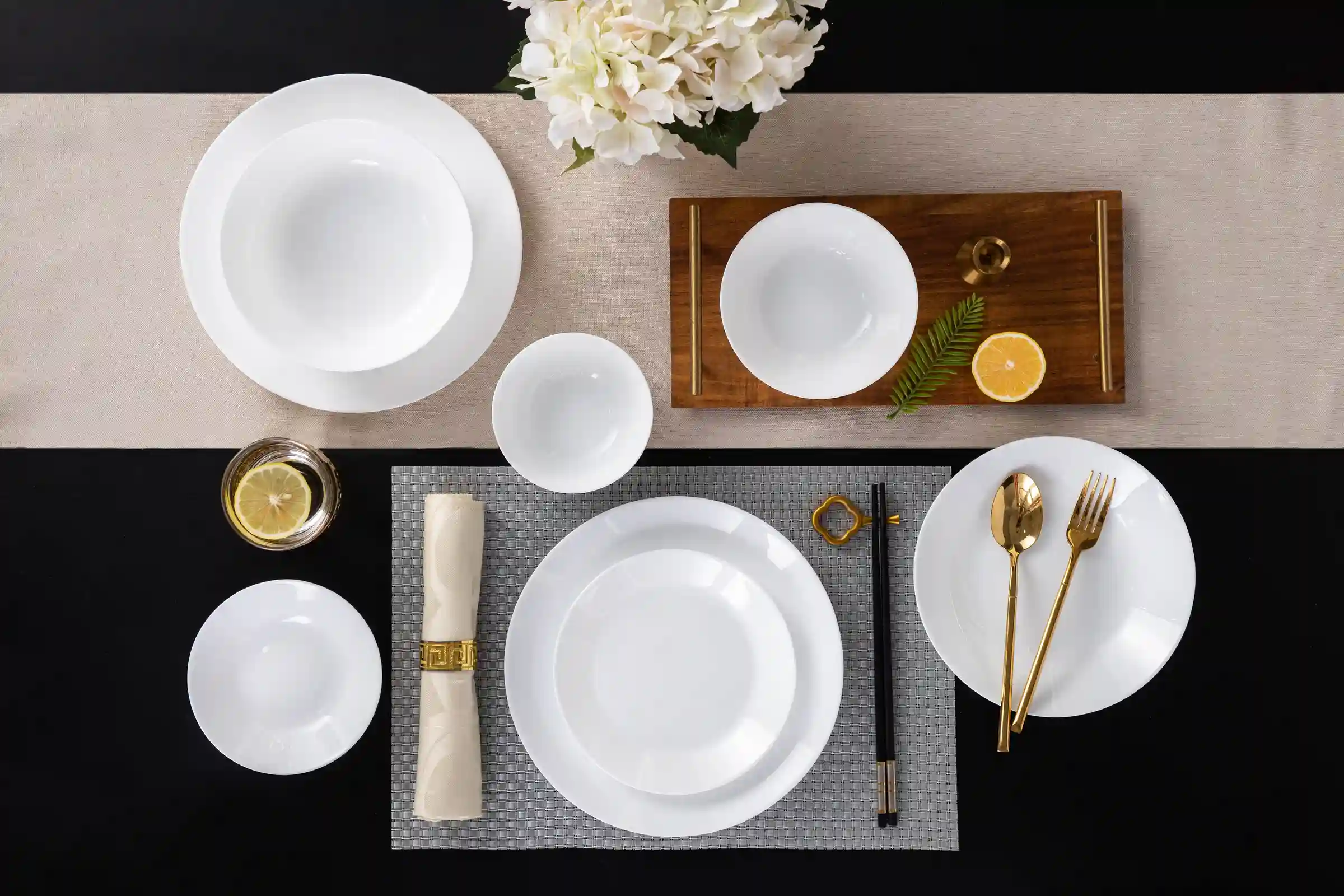
Can Chinese B2B opal glass dinnerware manufacturers replace Arcoroc?
Chinese manufacturers can already achieve an appearance close to Arcoroc.
Chinese manufacturers can achieve a close appearance because appearance is not one vague quality. It can be broken down and reproduced step by step on the production side.
| Appearance factor | Production stage | Why China can get close |
|---|---|---|
| Shape proportions | Mold making and pressing | Plate diameter, depth, and bowl-rim width are set by the mold and forming parameters. Proportions can be calibrated against a reference sample. |
| Rim profile | Mold finishing and annealing | A stable rim profile depends on a consistent mold and on the piece not distorting during annealing. Both can be documented and rechecked. |
| Base thickness | Blank weight, pressing, and annealing | Base thickness affects weight and stack height. By controlling blank weight and the press cycle, variation can be kept small. |
| White color variation | Opal glass formulation, colorants, and melting | The more evenly the opacifying phase is distributed, the more stable the white tone. Chinese production lines already handle formulation and melting-temperature control well. |
| Surface gloss and stacking | Mold surface, annealing, and dimensional tolerances | Consistent surface flatness and dimensional tolerances produce consistent gloss and stacking feel. |
These stages are already well established within China’s B2B opal glass tableware supply chain. Take Jointion’s opal glass dinnerware line as an example. Its opal glass dinnerware categories already include existing shapes for comparison. When a shape is close, sampling can begin directly.
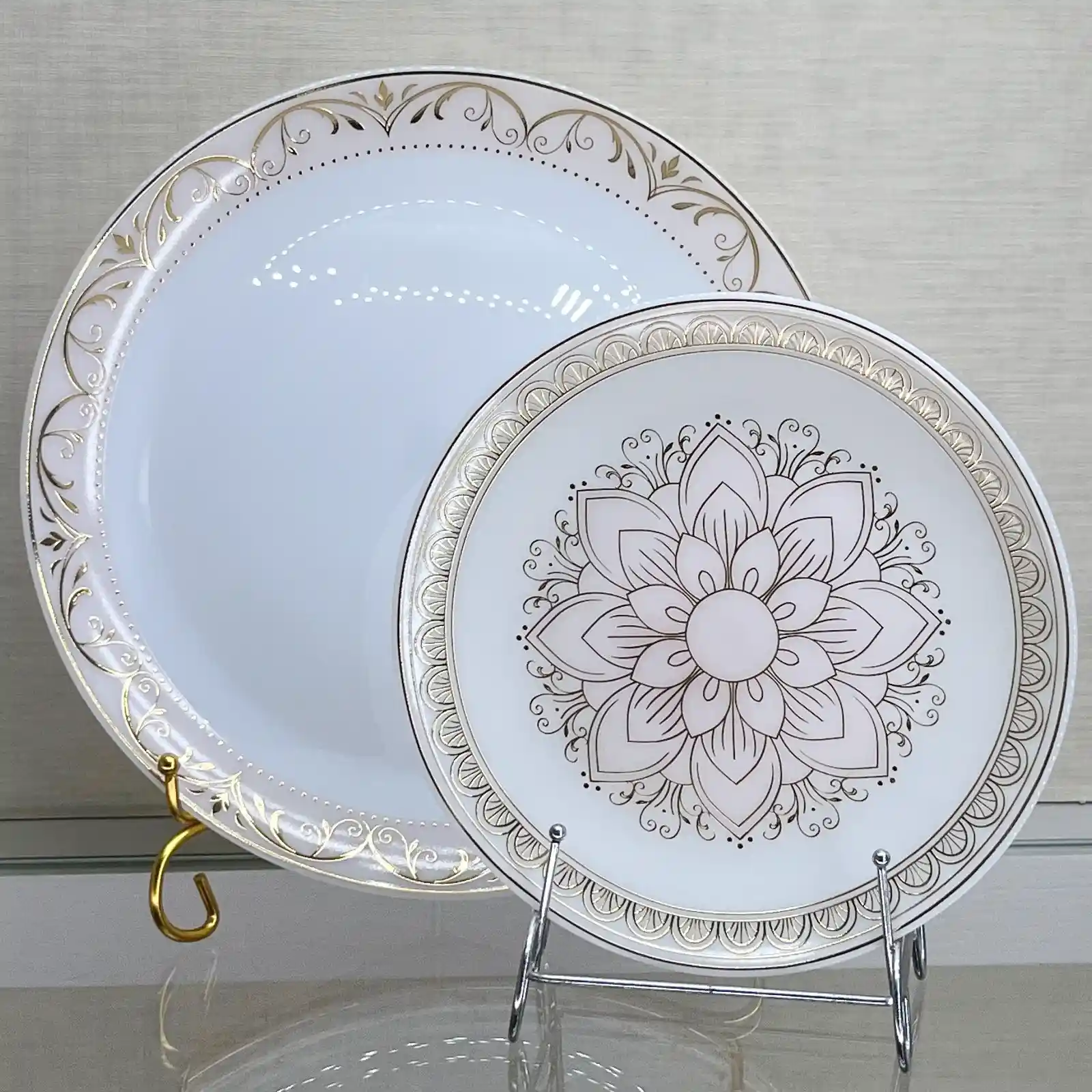
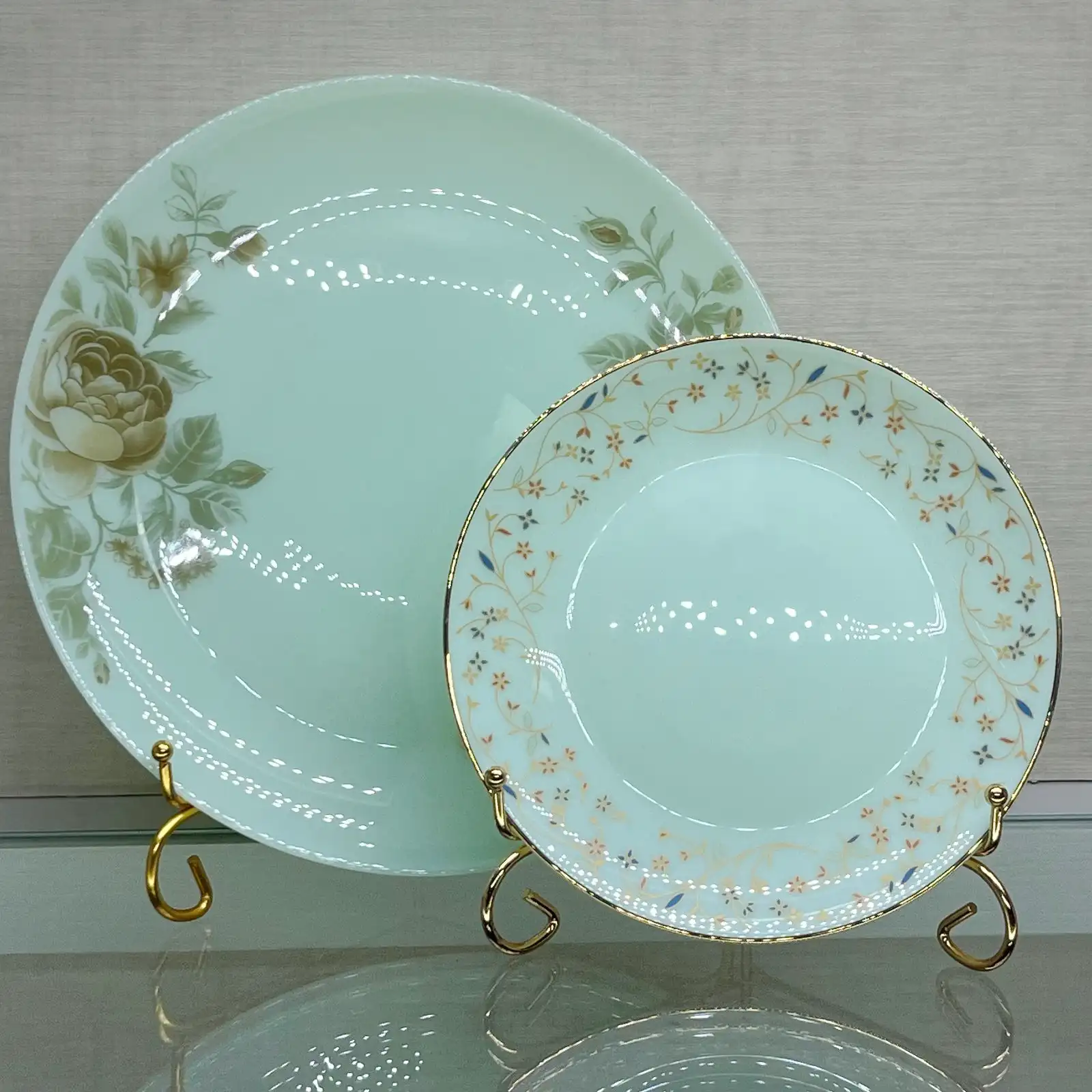
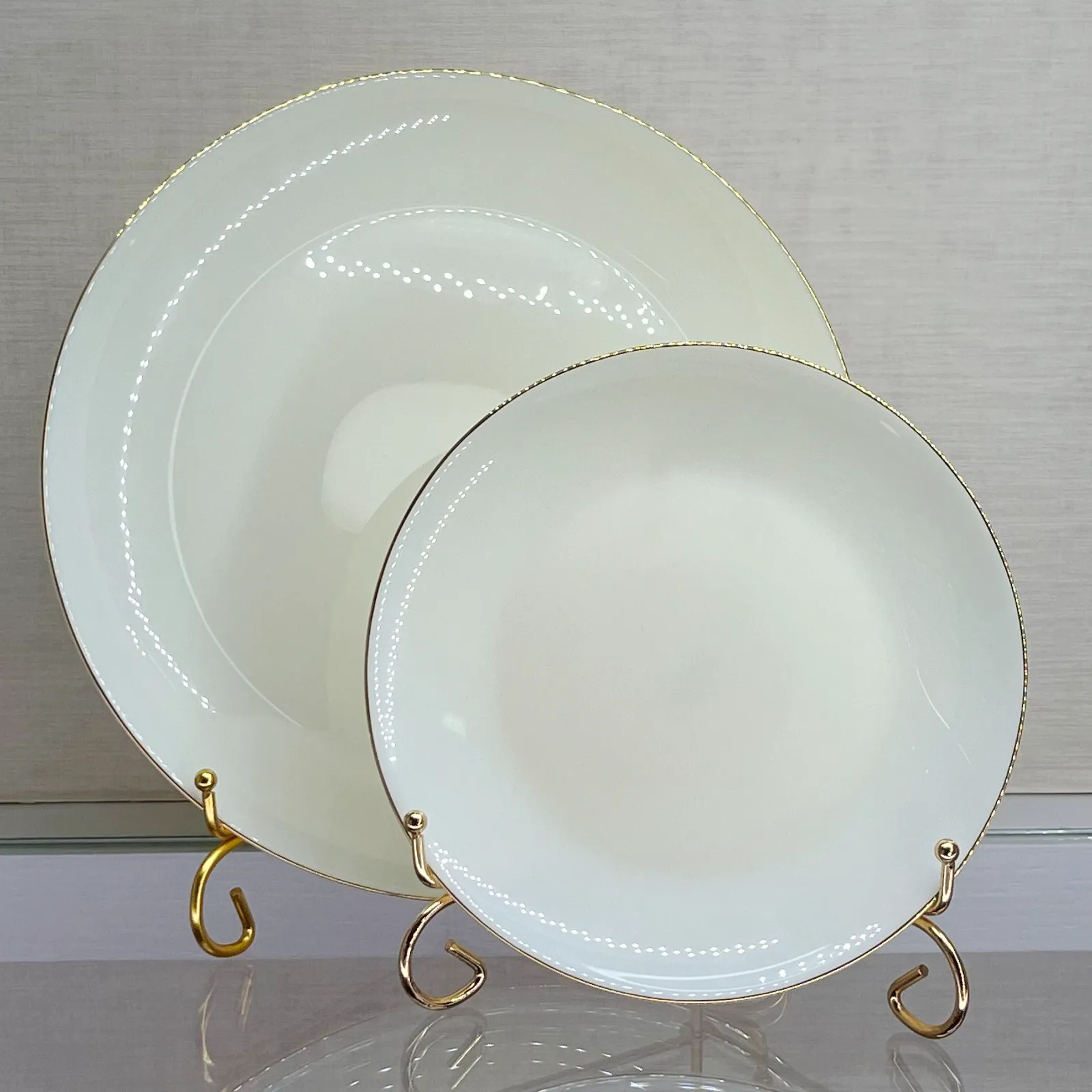
Opal glass formulations can meet international standards and deliver a genuine opal-glass look.
Opal glass gets its low light transmission from an opacifying phase that is evenly distributed throughout the glass. That phase remains uniform only when the formulation ratios, raw-material purity, melting temperature, and holding time are stable. If the temperature fluctuates too much, the white tone can become patchy and the surface may show ripples. Annealing controls internal stress and determines how well plates and bowls hold up during finishing and high-frequency use. A genuine opal look, therefore, is not a matter of adding more white colorant; it comes from keeping formulation, melting, and annealing stable together.
Jointion has long participated in Corelle-related OEM work and undergone supplier audits. The value of that experience is not simply that we have handled international orders. It is that formulation, melting, finished-product testing, and batch records all have to withstand review at the same time. Whether Chinese manufacturing can export and match international quality ultimately comes down to those records, not a claim based on country of origin. At the very least, this case demonstrates that we can achieve opal glass formulations that meet international standards and pass quality audits.
Common decal designs already have a complete supply chain and can be supplied consistently.
Common decals can be supplied consistently not because a factory simply “has a decal supplier,” but because common patterns have already formed a repeatable division of work: decal design, plate making and printing, application, firing, inspection, and replenishment each have stable processes. When an order arrives, the established parameters can be run again.
A decorated plate goes through artwork and color separation, decal printing, placement, firing and adhesion, and color-variation inspection from blank to finished product. For common patterns, the artwork files, screens, pigment formulas, and firing curves are already fixed, so the factory does not need to start development from scratch each time. Reusing the same parameters makes color, pattern position, and adhesion easier to control between batches and shortens repeat-order lead times compared with custom patterns.
Jointion’s decal, screen-printing, and OEM support connect these stages on the same production line. Common patterns can use existing programs, while custom patterns move into separate sampling and firing approval. For B2B buyers, this means a given pattern has a better chance of maintaining close color, placement, and adhesion in later replenishment orders.
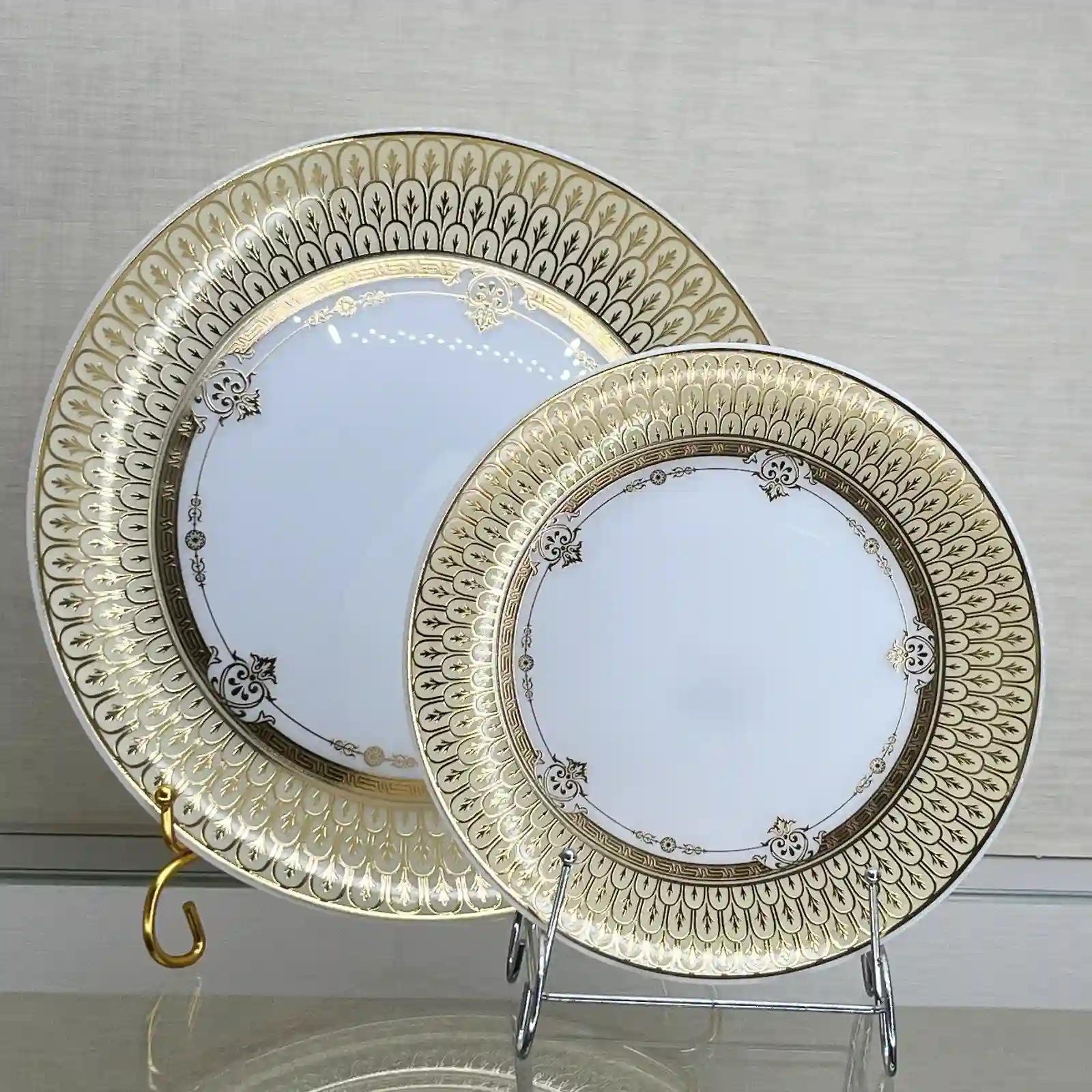
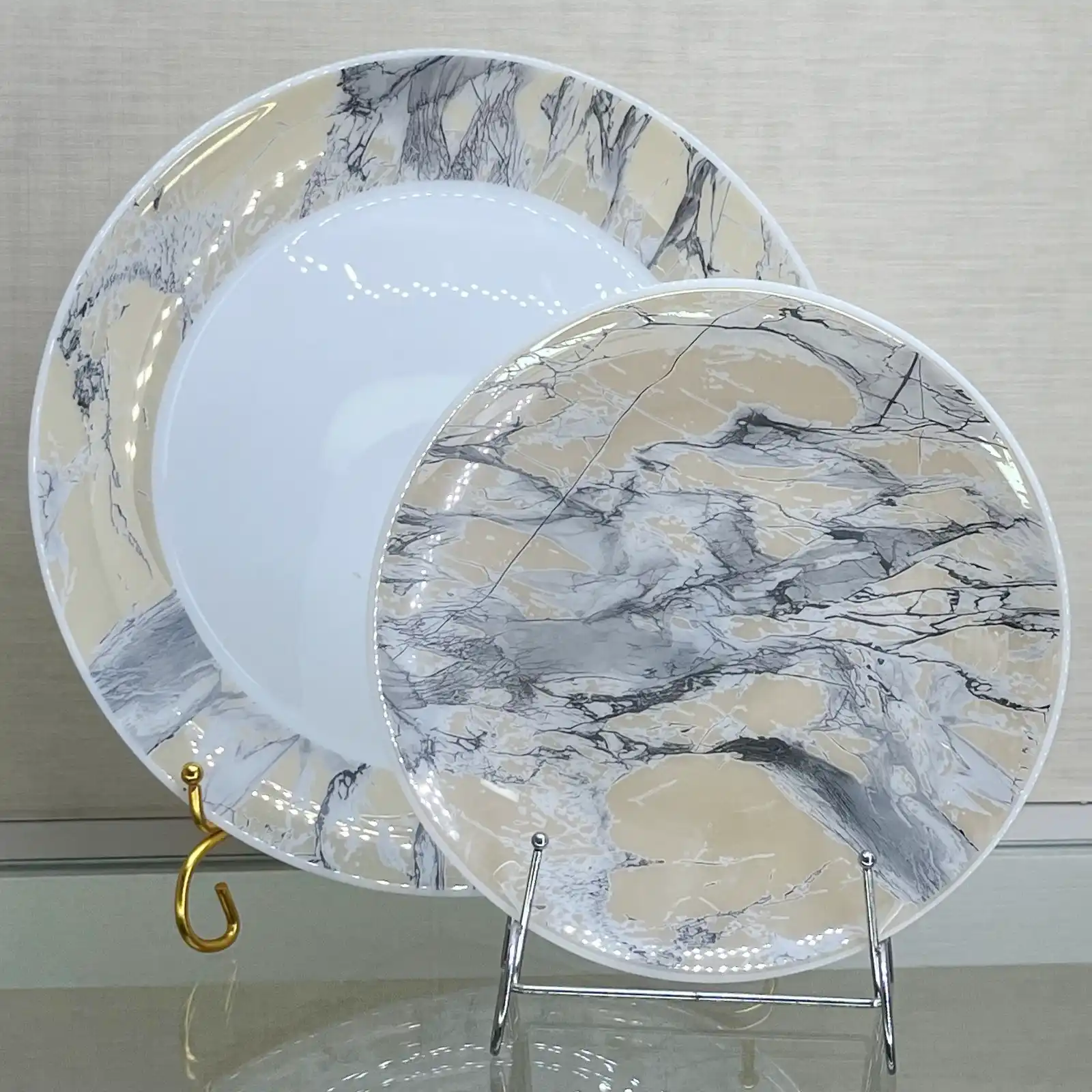
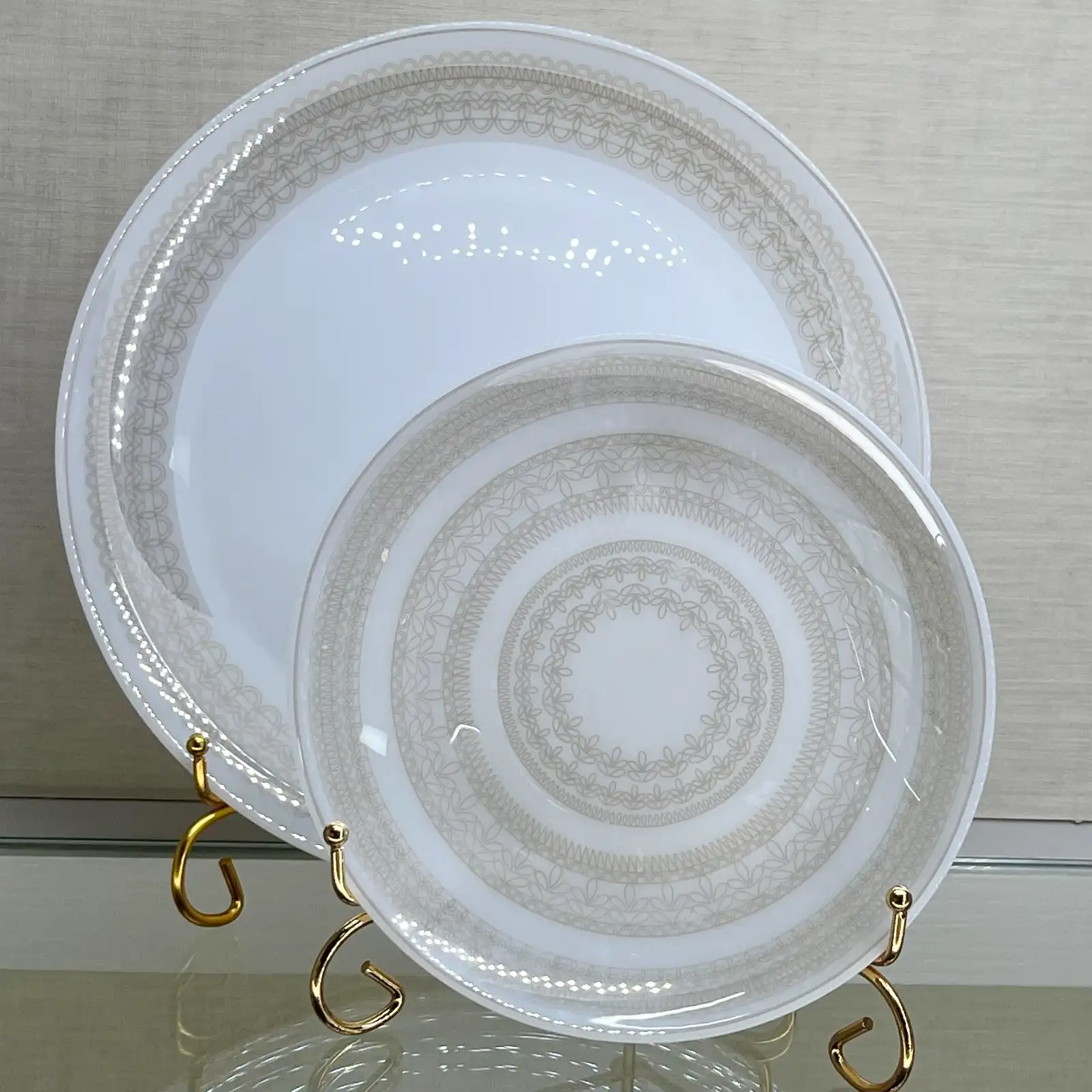
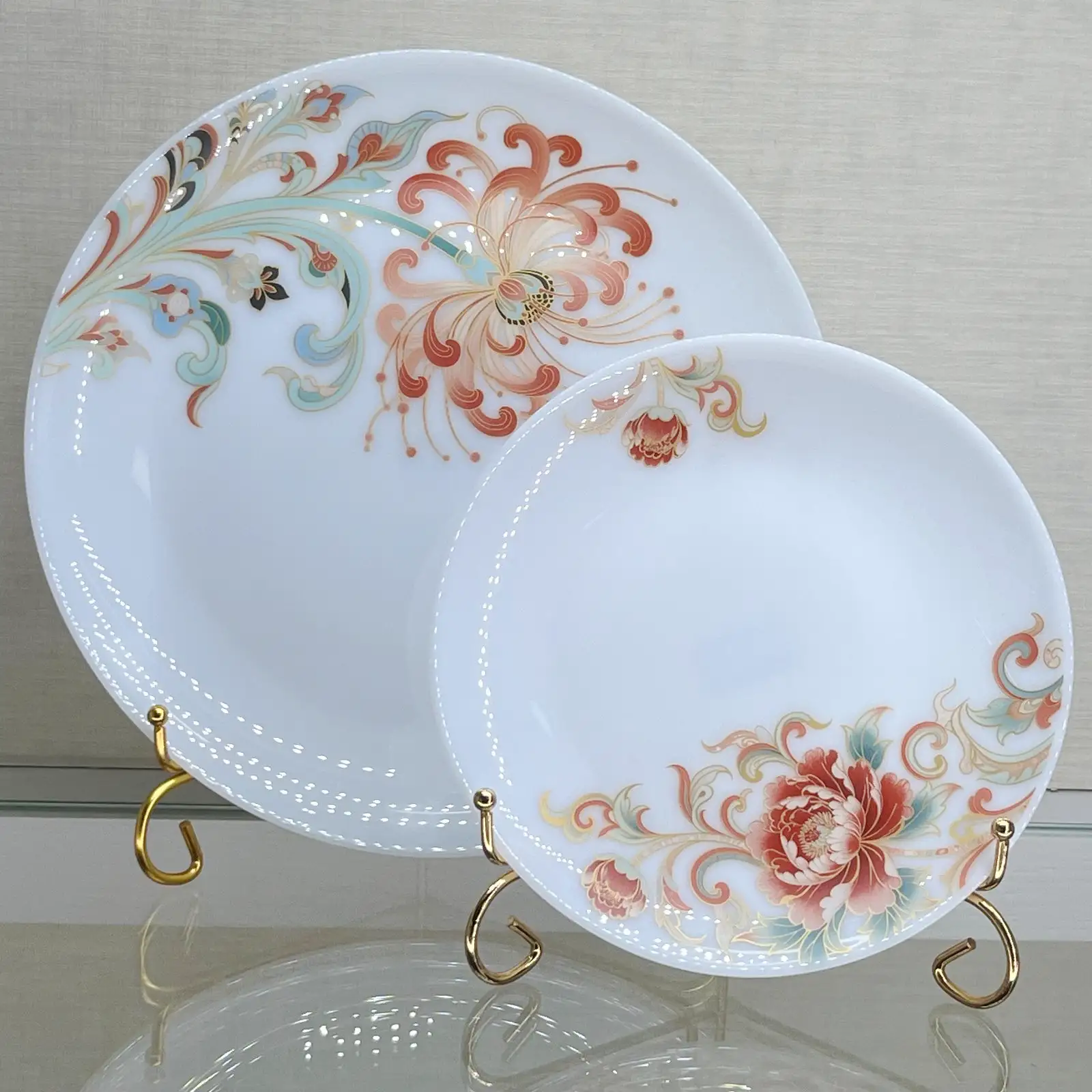
For decal design alone, Chinese wholesalers can now directly cover more than 95% of replacement needs. Chinese suppliers are also highly developed and powerful, with greater flexibility.For example, the following are some sticker designs for customer OEM. You can refer to them.
Why are more wholesalers now looking for alternative suppliers?
Relying on a single supplier increases the risk of stockouts and delivery delays.
The risk of a single supplier is not that the factory will necessarily fail. It is that if something does go wrong, the wholesaler has no alternative capacity to switch to. A dinnerware order has a long chain: raw materials, melting, forming, annealing, decoration firing, packing, and vessel booking. Any stage can fall behind. When orders are concentrated on one line, a scheduling delay, material shortage, or missed sailing cannot be absorbed by another factory. It simply travels down the lead time to the warehouse and the end customer.
In November 2025, a Reuters supply chain report said that repeated changes to U.S. tariffs on Chinese goods had thrown small U.S. retailers into holiday supply chaos, forcing small businesses to choose between paying high tariffs and restructuring their supply chains. The story is not specific to dinnerware, but the mechanism is the same: when external policy changes, single-source purchasing has no buffer, and the replenishment window disappears quickly.
At a hotel opening, during restaurant replacement, or in a peak-season stock build, the risk becomes even clearer. The front of house cannot wait when one shape runs out; an opening plan has to change when a shipment arrives late; and a single factory at full capacity has little room for a rush order. A second source shortens the time needed to restore supply; it is not just another quote.
When wholesalers look for alternative suppliers, they are therefore adding an executable backup layer to the supply chain. The search is no longer only about price; single-source risk has become too difficult to absorb.
Rising procurement costs squeeze wholesalers’ margins.
Wholesaler profit equals the selling price minus procurement, logistics, duties, breakage, and replenishment costs. When any procurement cost rises and the downstream selling price cannot rise at the same pace, the difference comes straight out of gross margin.
In July 2025, a Reuters cost report said the National Restaurant Association estimated that 30% tariffs on food and beverages from Mexico and Canada would add $15.16 billion in annual costs for U.S. restaurants. The figure is not specific to glass dinnerware, but it shows that foodservice operators are already under cost pressure. When restaurants tighten procurement budgets, the pressure returns to wholesalers: input costs are higher, while price increases are harder to pass through.
Glassware prices themselves are also rising. The Producer Price Index for “Other pressed and blown glass and glassware” rose from 168.6 in January 2019 to 233.587 in October 2026, an increase of about 38.6%. From January 2025 to October 2026, it rose about 12.3% (BLS glassware PPI). That is a more direct industry price signal than any single factory quote.
| Cost factor | Why it raises landed cost | Impact on gross margin |
|---|---|---|
| Raw materials and energy | Formulation, melting, and annealing consume energy continuously. | When quotes rise, purchase costs move first. |
| Labor and scheduling | Changeovers, firing, and quality inspection take time. | Unit costs are higher for small and rush orders. |
| Ocean freight and duties | Freight rates and policy change the landed price. | Landed cost cannot always be recovered through the selling price. |
| Packaging and breakage | Breakage creates replenishment, air freight, and scrap. | Hidden costs eat directly into profit. |
Once these costs stack up, looking only at the FOB unit price gives a distorted picture. For a more detailed breakdown, see tariff cost analysis, which deals with landed cost rather than a single factory quote.
Rising costs therefore squeeze margins not because one brand is necessarily more expensive, but because wholesalers sit between upstream price increases and downstream resistance to price increases. An alternative supplier improves profit only when it lowers total cost, reduces breakage, or improves replenishment.
Brand owners’ MOQs, customization requirements, and replenishment cycles do not always fit wholesalers.
Brand owners and wholesalers run different businesses, so their order structures are naturally different. The product may be fine; the supply model can be the first thing that fails to fit.
| Area | Typical brand-owner supply logic | Typical wholesaler order | Why the mismatch occurs |
|---|---|---|---|
| MOQ | Larger runs per SKU, aimed at stable scheduling | Multiple shapes and small trial orders | Every shape ties up inventory and cash. |
| Customization | Standard products first; longer development cycles | Fast response needed for logos, packaging, and patterns | Projects cannot wait through a full development cycle. |
| Replenishment | Fixed lead times and planned production | Sudden replenishment of bestsellers and seasonal add-ons | When scheduling has no flexibility, replenishment windows are missed. |
| Mixed loads | Standard packaging and full-container shipments | Multi-category consolidation or set purchasing | If mixed loads are unavailable, inventory and freight costs rise. |
One hotel project may need flat plates, deep plates, bowls, and cups at the same time, with quantities spread across shapes. If MOQ is calculated per item, the wholesaler has to overstock several slow-moving SKUs just to reach the threshold. If mixed loads are not accepted, freight costs rise. With fixed lead times, project changes and replenishment rush orders are also harder to place.
When should you consider opal glass from another supplier, and when should you stay with Arcoroc?
An alternative factory becomes an option when current Arcoroc supply falls short on cost, lead time, or customization.
When current supply is consistently unsuitable on cost, lead time, or customization, an alternative factory is a reasonable option. Brand loyalty has nothing to do with it.
| Trigger | What it looks like in practice | Why an assessment is warranted |
|---|---|---|
| Cost misses the target | Brand premiums, freight, or breakage push up total cost. | At the same selling price, gross margin is continuously squeezed. |
| Lead time cannot meet the project | Hotel openings or peak-season stock builds cannot be supplied in time. | The loss from a missed window may exceed the cost of changing factories. |
| Customization cannot be supported | Logos, packaging, or patterns cannot be produced. | Wholesalers struggle to differentiate and can lose customers. |
Continue with Arcoroc when the customer specifies the brand and current supply is stable at an acceptable total cost.
When a customer specifies Arcoroc, staying with Arcoroc is often the more reasonable choice, because the replacement is not just a piece of dinnerware. It also involves the brand the customer has accepted, the inspection standard, and the boundaries of responsibility.
A brand specification means the customer has already named the source in a contract, menu, or project specification. Switching to another opal glass, even one with a close appearance, may require renewed customer approval, inspection training, and even a new division of responsibility for complaints.
Where can B2B buyers find Arcoroc alternative suppliers?
There is no single global catalogue of Arcoroc alternatives. Buyers usually shortlist by manufacturing origin because each country offers a different mix of OEM flexibility, brand ownership, and export reach. Our opal glass manufacturers guide covers a wider field; the three manufacturers below are the most practical starting points for Arcoroc-style dinnerware.
| Country | Manufacturer | Best fit | Supply model |
|---|---|---|---|
| China | Jointion | OEM, private label, and custom decoration | Factory-direct manufacturer |
| India | La Opala RG | Brand distribution and South Asia-focused ranges | Own-brand manufacturer |
| Iran | Pars Opal | Middle East, Central Asia, and North Africa | Regional manufacturer |
China: Jointion for factory-direct OEM and wholesale opal glass dinnerware
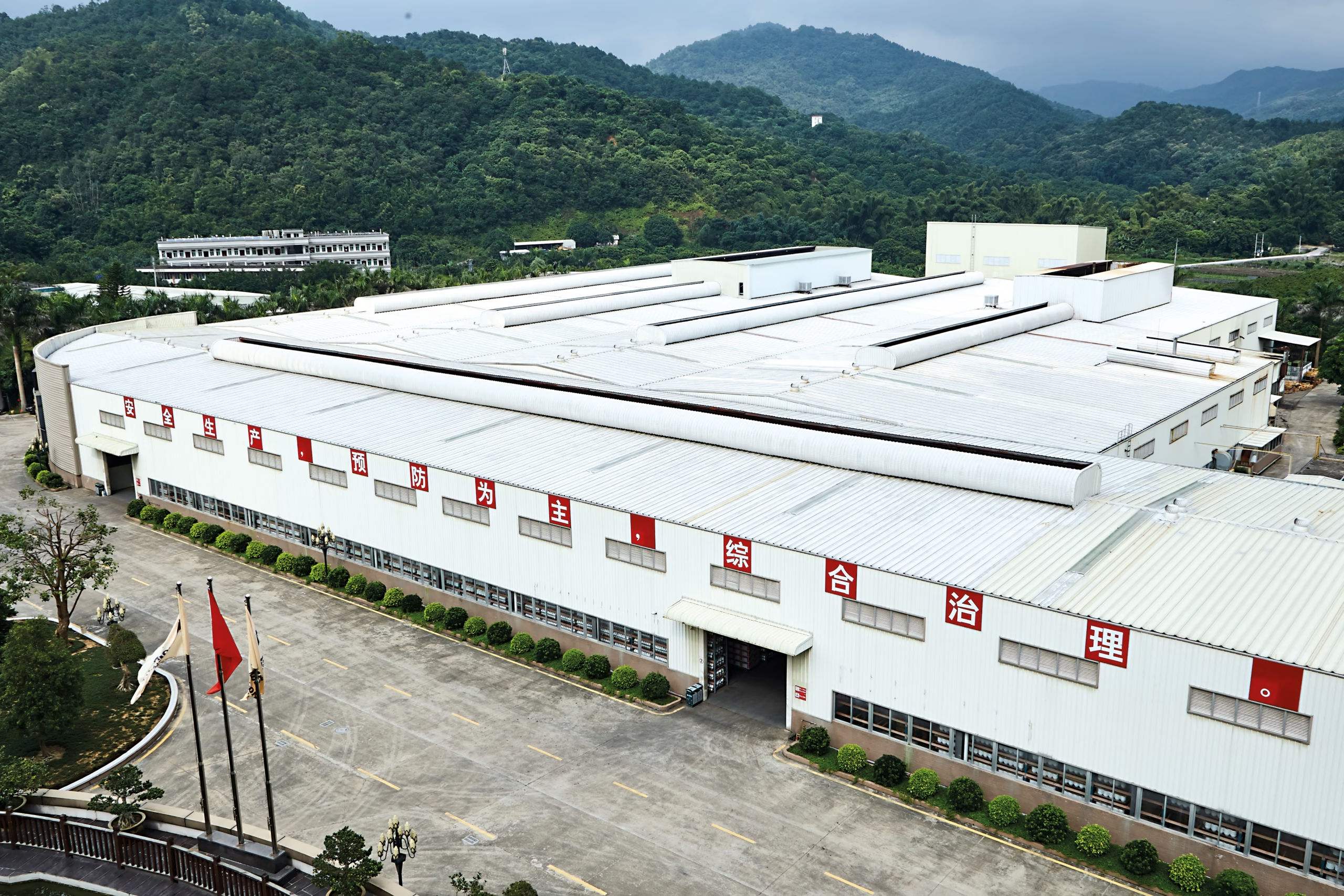
Jointion is a Chaozhou-based manufacturer focused on opal glass dinnerware. Its published profile lists a daily capacity of 70,000 pieces, FDA and LFGB certifications, and 10 consecutive years of Corelle-related OEM work. The product range covers plates, bowls, and dinner sets, with support for private labels and custom decoration.
For buyers replacing Arcoroc, Jointion is the most direct option when the requirement is factory-direct OEM, consistent bulk supply, or a custom decal program rather than an established consumer brand. It is also the strongest fit among these three manufacturers for private-label development and buyer-specific packaging.
India: La Opala RG for brand-led opal glass dinnerware
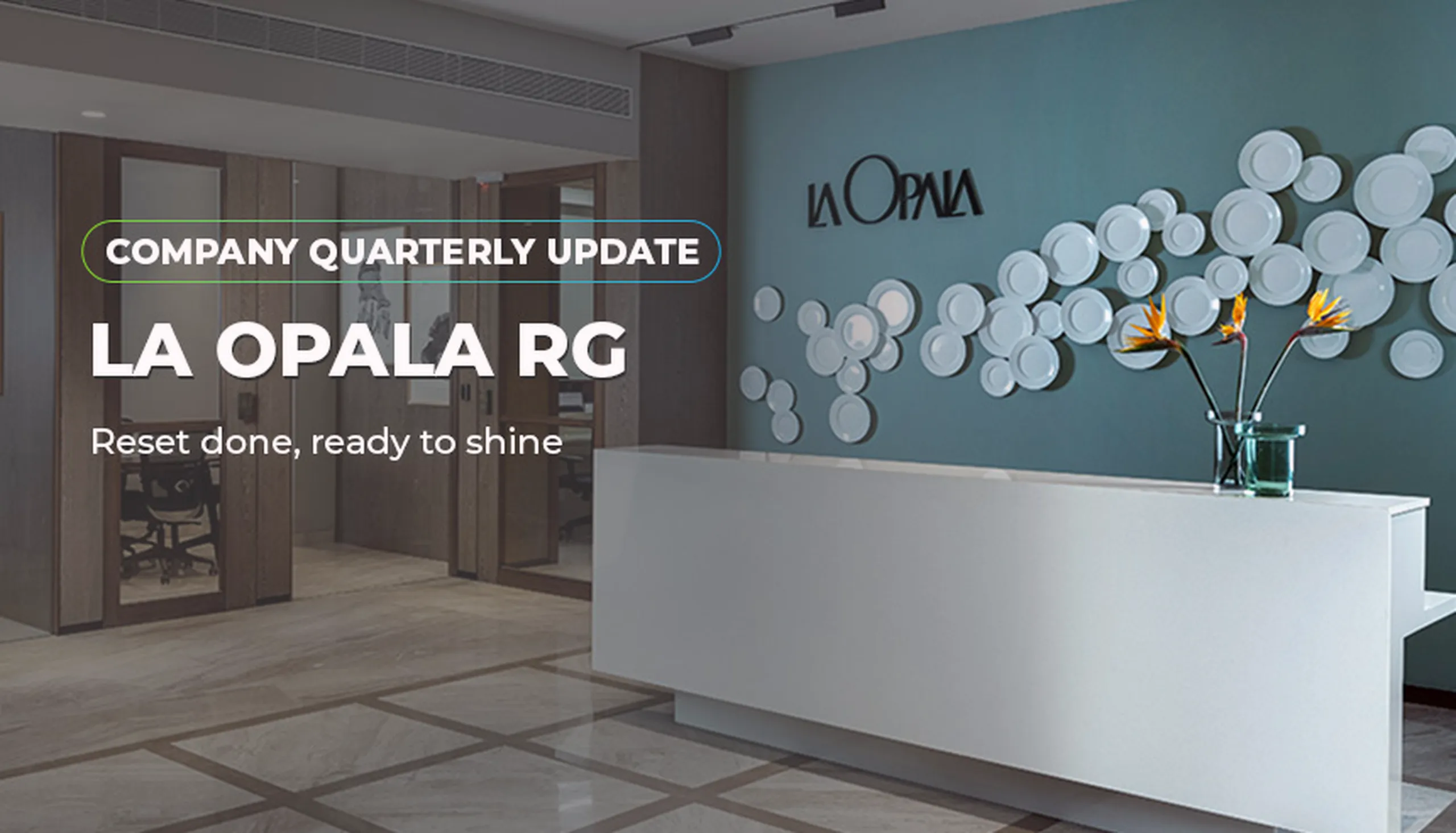
La Opala RG is India’s largest opal glass dinnerware producer, with 32,000 MTPA of capacity, listings on the BSE and NSE, and exports to more than 40 countries. Its La Opala and Diva brands are particularly strong in South Asia, with a product direction built around floral, festive, and gift-oriented designs.
The main distinction is its business model. La Opala runs primarily on its own brands and does not take on large-scale outside OEM work, so it is better suited to distributorship, licensing, or brand-partnership discussions than to a private-label factory search.
Iran: Pars Opal for Middle East-focused opal glass dinnerware sourcing
Pars Opal was founded in 1997 and operates four furnaces and eight production lines. It exports to more than 25 countries and holds ISO 9001, ISO 14001, and ISO 45001 certifications. Its dinnerware is designed around Middle Eastern shapes and patterns, making it a practical regional alternative for buyers serving the Middle East, Central Asia, or North Africa.
Before shortlisting Pars Opal, confirm payment channels, shipping routes, and sanctions compliance for the destination market. Once those commercial and compliance points are cleared, it offers a regional sourcing option that is closer to Middle Eastern aesthetics and shipping routes than either China or India.