
People searching for vegetarian tableware are usually looking for more than dinnerware that can hold vegetarian food. They also want to know whether the products contain animal-derived ingredients, whether they are suitable for food contact, whether they can withstand frequent everyday use, and whether environmental claims are supported by clear evidence.When choosing tableware, it is not enough to rely on labels such as “vegan,” “eco-friendly,” or “plant-based.” A more reliable approach is to review the material composition, glaze or surface decoration, food-contact information, care instructions, and suitability for the intended dining environment.
Vegetarian Tableware vs. Vegan Tableware: What Is the Difference?
“Vegetarian tableware” is generally a broader term. It emphasizes use in vegetarian or vegan dining settings and alignment with the user’s expectations regarding safety, environmental responsibility, and animal ethics. “Vegan tableware” places greater emphasis on the absence of animal-derived ingredients in the material and manufacturing process.
Bone china is a common material that requires careful checking. Traditional bone china typically uses bone ash as part of its formula and therefore does not meet strict vegan material requirements. The body material of Opalware belongs to the glass family. Based on the product information currently provided by the manufacturer, the body material naturally contains no bone ash, bone meal, animal glue, or other animal-derived ingredients. However, this statement applies primarily to the body material and does not replace item-by-item confirmation of pigments, decals, metallic decoration, and other surface treatments.
Which Materials Are Best for Vegetarian Tableware?
No single material is suitable for every vegetarian dining situation. The decision should take into account the absence of animal-derived ingredients, food-contact suitability, weight, impact resistance, appearance, cleaning requirements, and service life.
For consumers who want to balance practical performance with vegan principles, Opalware and vegan ceramic tableware are two common options. The Opalware discussion below draws on the manufacturer’s product information and practical test videos. The manufacturer currently produces Opalware only and does not produce vegan ceramic tableware, so the vegan ceramic section is a category-level purchasing reference rather than a laboratory comparison between samples from the same manufacturer.
Opalware Tableware
Opalware is generally based on a glass system and is formed through a specific formula and manufacturing process to create lightweight, white tableware suitable for everyday use. The absence of bone ash and other animal-derived ingredients from the body material is part of why it may meet the screening requirements of some vegan consumers. However, whether a complete product can be described as vegan should still be assessed together with its decoration and surface treatment.
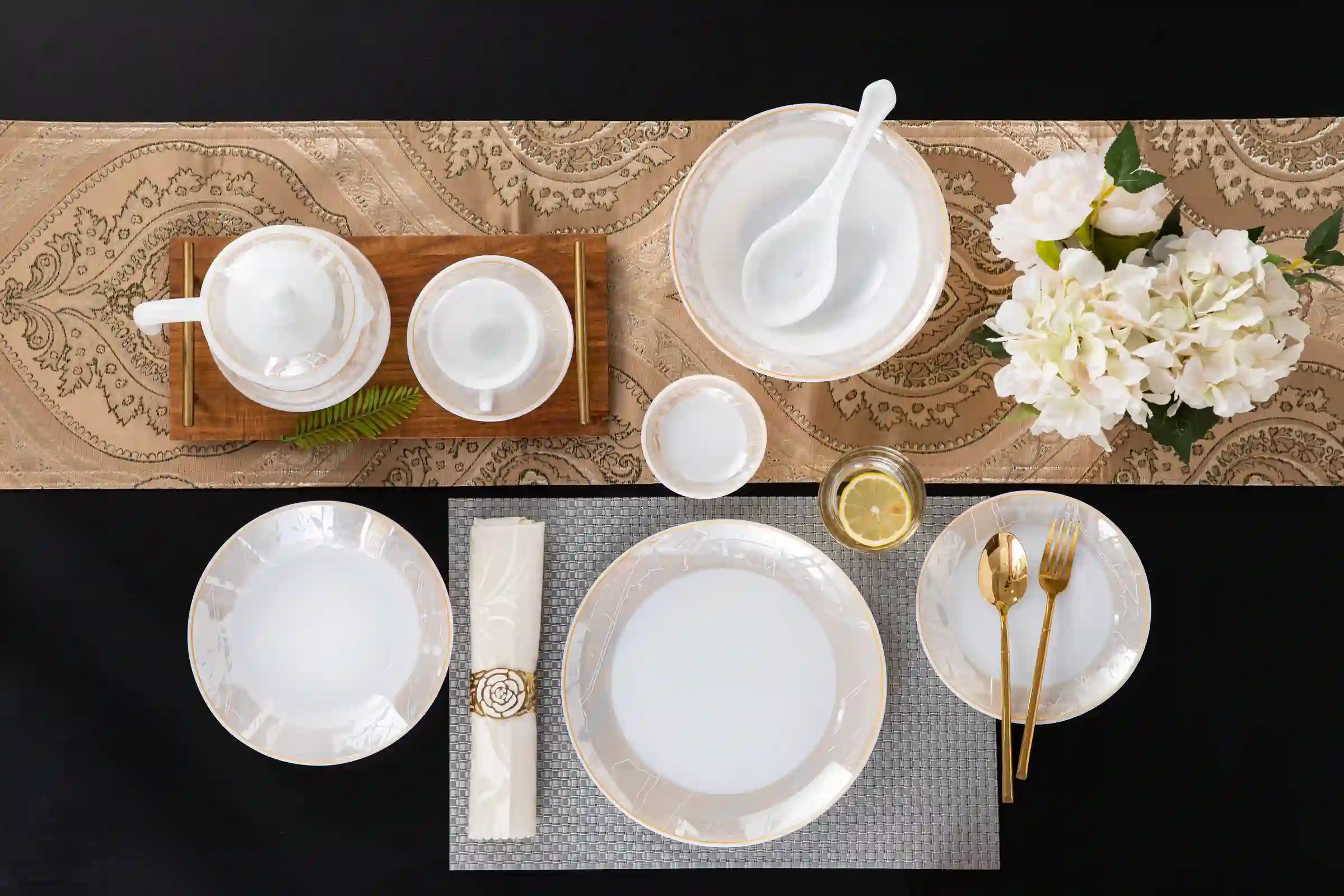
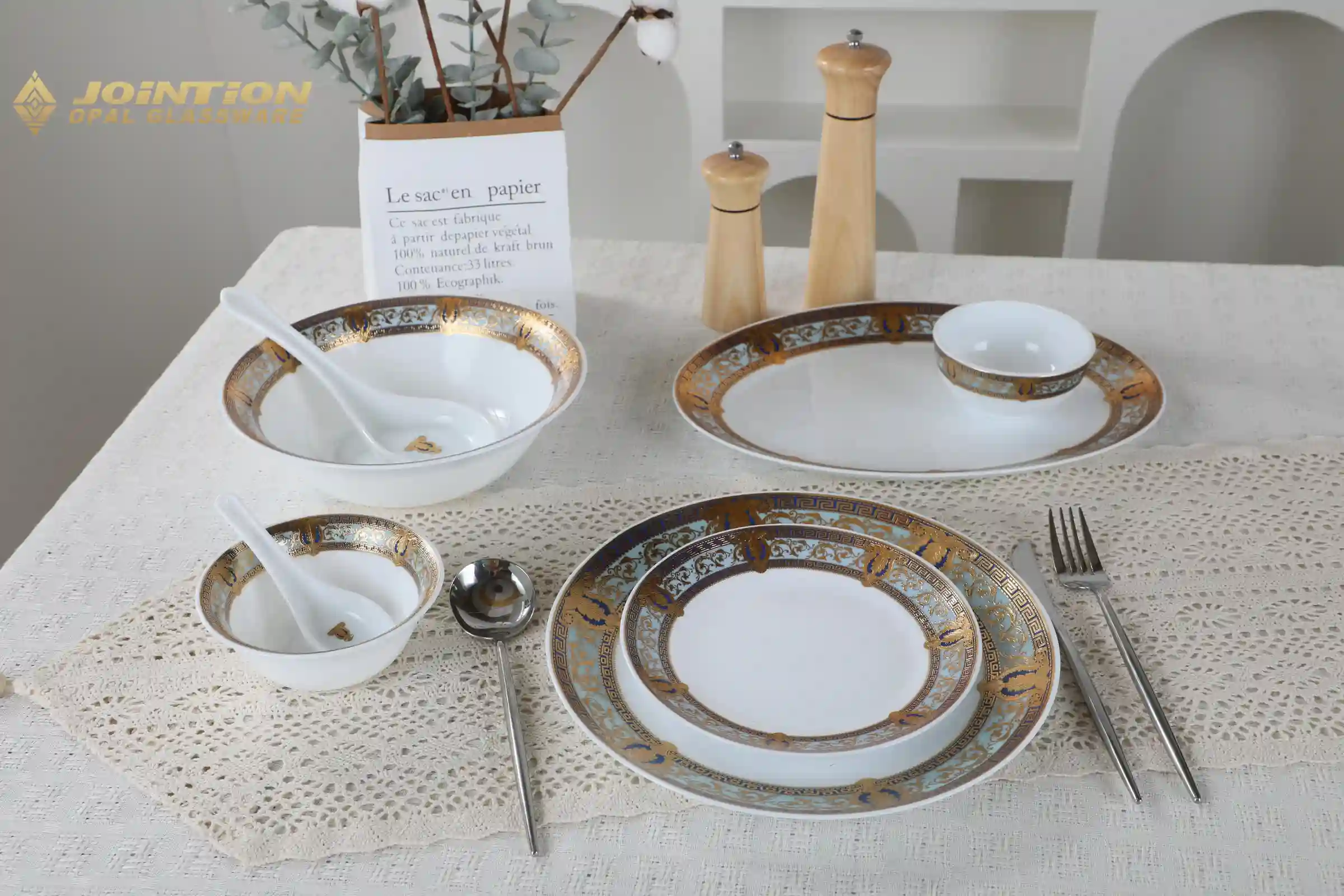
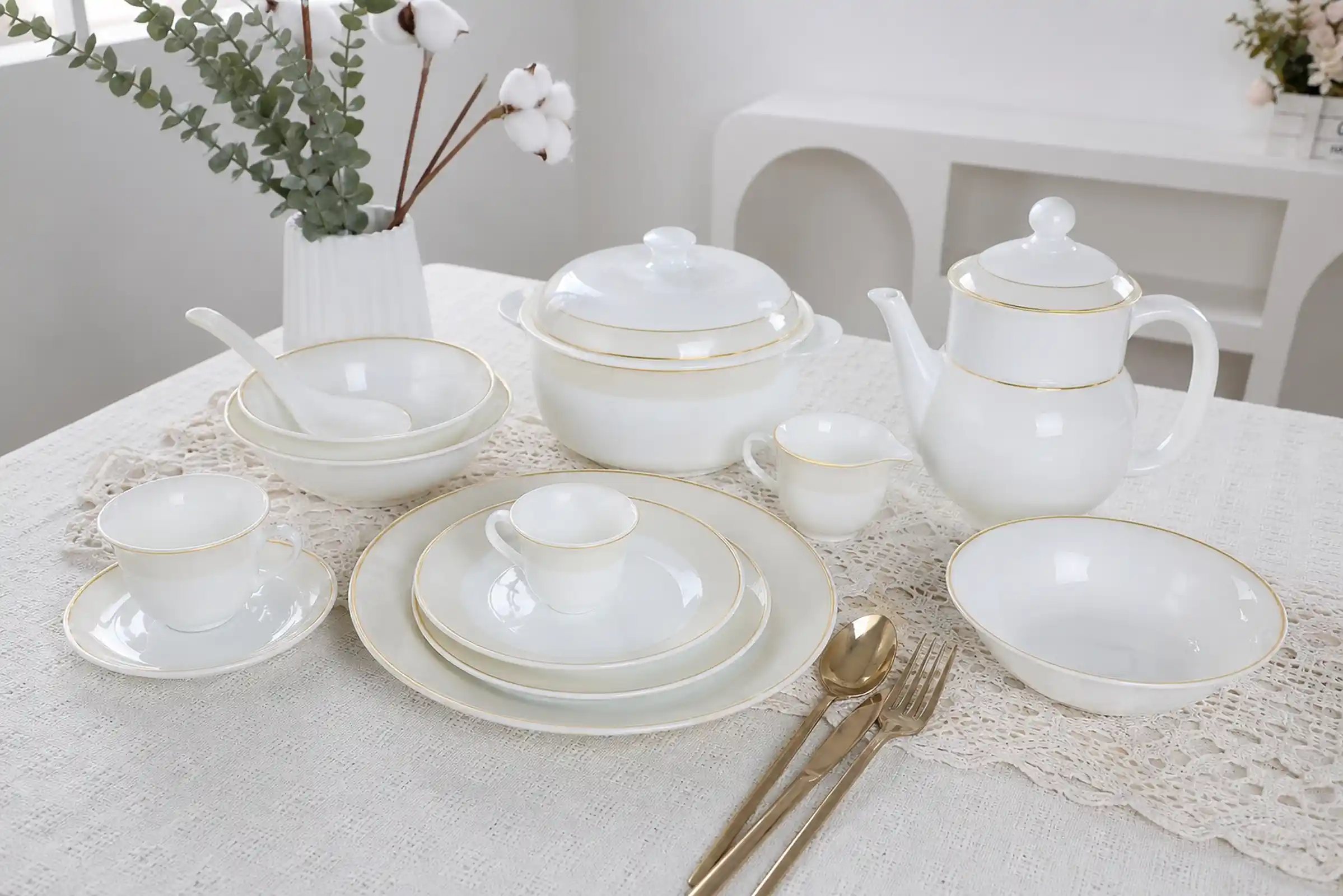
Based on the manufacturer’s available product information, the main value of Opalware lies in everyday handling efficiency:
- Lightweight handling: Easier to carry, store, and arrange in larger quantities, making it suitable for environments where tableware is moved frequently;
- Easy-to-clean surface: The manufacturer has provided a cleaning and thermal-resistance comparison between Opalware and traditional ceramic, which consumers can review in the cleaning and thermal-resistance test;
- Consistent appearance: A white or simple surface helps highlight the color of food and supports consistent table settings in foodservice environments;
- Suitable for frequent turnover: The manufacturer’s main sales markets include the Middle East, Central Asia, and Southeast Asia, and its products are also used in halal restaurants and markets with religious dietary requirements. This indicates an established connection with those dining environments, but the market or restaurant type itself does not prove that a product is made from vegan materials;
- Impact performance can be assessed through specific tests: The manufacturer provides a drop-height and breakage-resistance test video and an impact-resistance comparison between Opalware and traditional ceramic. These videos show performance under specific products and test conditions; they should not be used to conclude that every Opalware product has exactly the same durability.
below are two videos for opalware vs Ceramic Tableware video for above information.
Consumers should distinguish between “lightweight” and “fragile.” A lighter product is not automatically less durable, but its actual impact resistance, edge strength, and thermal-shock resistance should be evaluated in light of the product design, specifications, and test conditions. The category name alone cannot replace product-level evidence.
Vegan Ceramic Tableware
Vegan ceramic tableware generally refers to ceramic dinnerware made without bone ash or other animal-derived ingredients. It can retain the texture, color, and design qualities commonly associated with ceramic tableware while addressing some consumers’ concerns about animal-derived materials.
Common characteristics of vegan ceramic tableware include:
- A broad choice of shapes and colors: Suitable for different interior styles and table settings;
- A consistent ceramic feel: Able to create a more formal dining atmosphere;
- Formula and surface treatment require verification: Names such as “ceramic,” “porcelain,” or “high white” alone cannot prove that a product contains no animal-derived ingredients;
- Food-contact safety still requires verification: Even when the material meets vegan requirements, appearance alone cannot prove that a product is lead-free or suitable for long-term food contact. Glazes and decoration deserve particular attention.
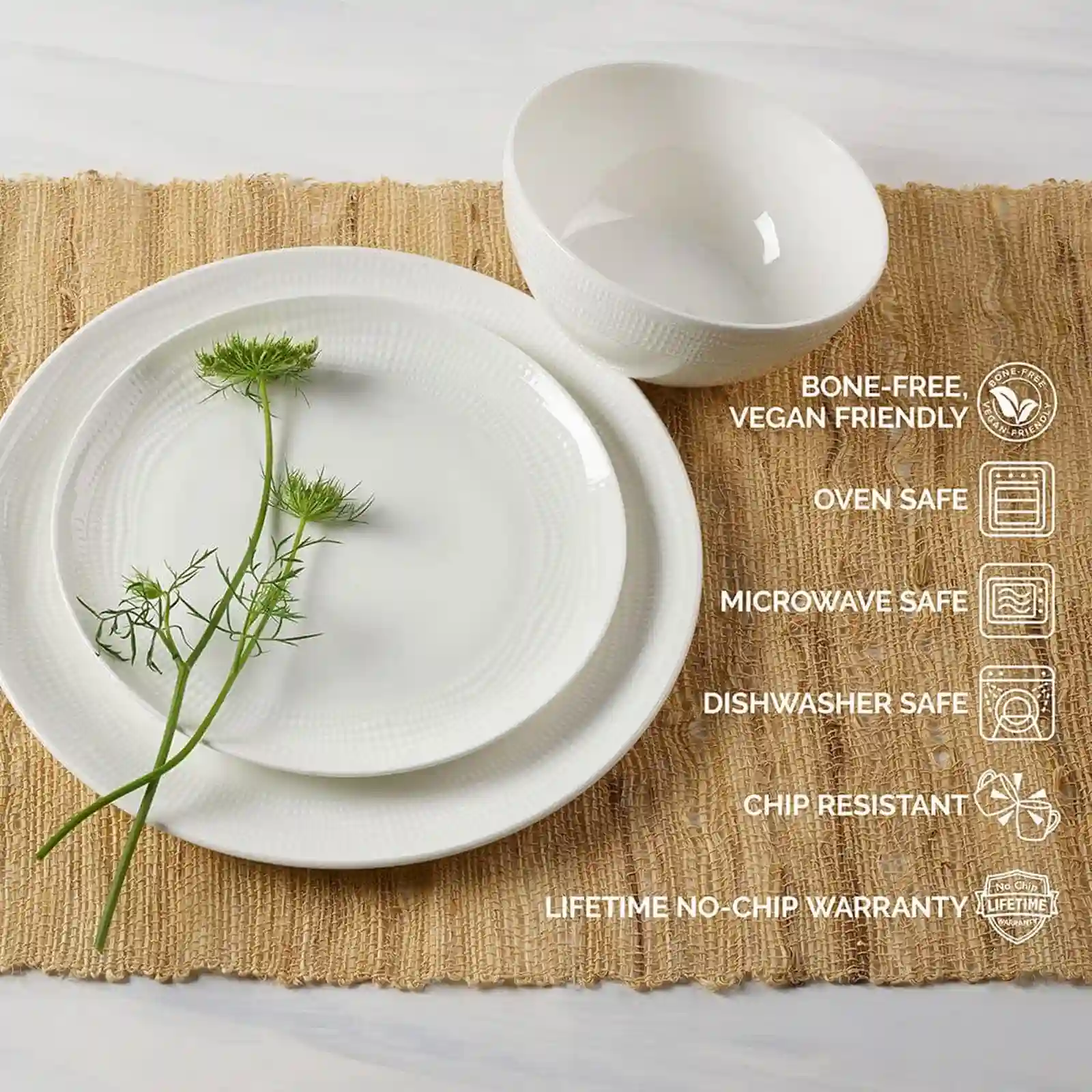
If a consumer values a formal table setting, distinctive shapes, and coordinated colors, vegan ceramic tableware may better match those preferences. If the priority is efficient bulk handling, centralized washing, and high-frequency turnover, the buyer should compare the weight and test information of specific Opalware products.
Opalware vs. Vegan Ceramic Tableware: The Benefits of Each
Both types of tableware may meet the material-screening requirements of vegetarian or vegan consumers, but their practical strengths are different. Start by identifying the main use case, then review the product documentation instead of making a decision based only on the label “ceramic” or “Opalware.”
| Comparison Factor | Opalware | Vegan Ceramic Tableware |
|---|---|---|
| Body material | Glass-based; the manufacturer states that the body material naturally contains no bone ash, bone meal, or animal glue | Confirm with the specific manufacturer that the formula contains no bone ash or other animal-derived ingredients |
| Handling and table setting | Generally lighter, making it suitable for bulk handling and centralized table setting | Actual weight depends on the shape, thickness, and formula |
| Assessing impact resistance | Refer to specific drop and impact-resistance test videos | Review the specific product’s edge-strength and impact-resistance information |
| Appearance and texture | Suitable for a simple, consistent table presentation | Often better suited to formal presentations that emphasize ceramic texture, color, and shape |
| Cleaning and appliance use | Confirm microwave, dishwasher, and decoration suitability for the specific series | Likewise confirm suitability based on the glaze, printing, and product instructions |
The table above is intended to provide a comparison framework. It should not turn the advantages of one category into a universal conclusion about all products. The manufacturer has not provided same-size laboratory weight data for Opalware and vegan ceramic tableware. The comparison in this article should therefore be understood as a purchasing framework rather than a performance ranking verified under uniform conditions.
Which Vegan Dining Situations Are Suitable for Opalware?
Opalware is particularly suitable for settings that require lightweight handling, consistent table presentation, frequent washing, and centralized tableware management, such as everyday family dining, foodservice outlets, group catering, and environments where tableware must be moved in larger quantities.
According to the manufacturer’s current market information, Opalware is sold widely in the Middle East, Central Asia, and Southeast Asia, and is also used in halal restaurants and some markets with religious dietary requirements. This demonstrates a practical connection between the products and those dining environments. Whether a particular customer uses the products specifically as vegan tableware still requires explicit customer feedback or project documentation and should not be assumed.
If tableware will frequently go through a dishwasher or be moved repeatedly between restaurants, canteens, and event venues, focus on three types of evidence: the weight of the specific product, its impact-resistance testing, and dishwasher testing. The manufacturer provides a dishwasher-use test video, but the current information does not state the number of dishwasher cycles, the degree of fading, or the extent of loss of gloss. Buyers should therefore confirm the test conditions for the relevant series with the supplier.
The manufacturer of Jointion opalware has provided a video of the dishwasher test, which you can refer to.
Which Vegan Dining Situations Are Suitable for Vegan Ceramic Tableware?
Vegan ceramic tableware is better suited to homes and foodservice settings that prioritize ceramic texture, shape design, coordinated colors, and formal presentation. It can be used in vegetarian restaurants, for entertaining at home, and at tables where the presentation of the dishes is important. Before purchasing, however, confirm the absence of bone ash in the material and obtain food-contact safety information for the glaze and decoration.
For occasional entertaining or formal dining, appearance and shape may matter more than bulk-handling efficiency. Where the use case involves frequent turnover, weight, edge durability, dishwasher suitability, and ease of replenishment should also be considered.
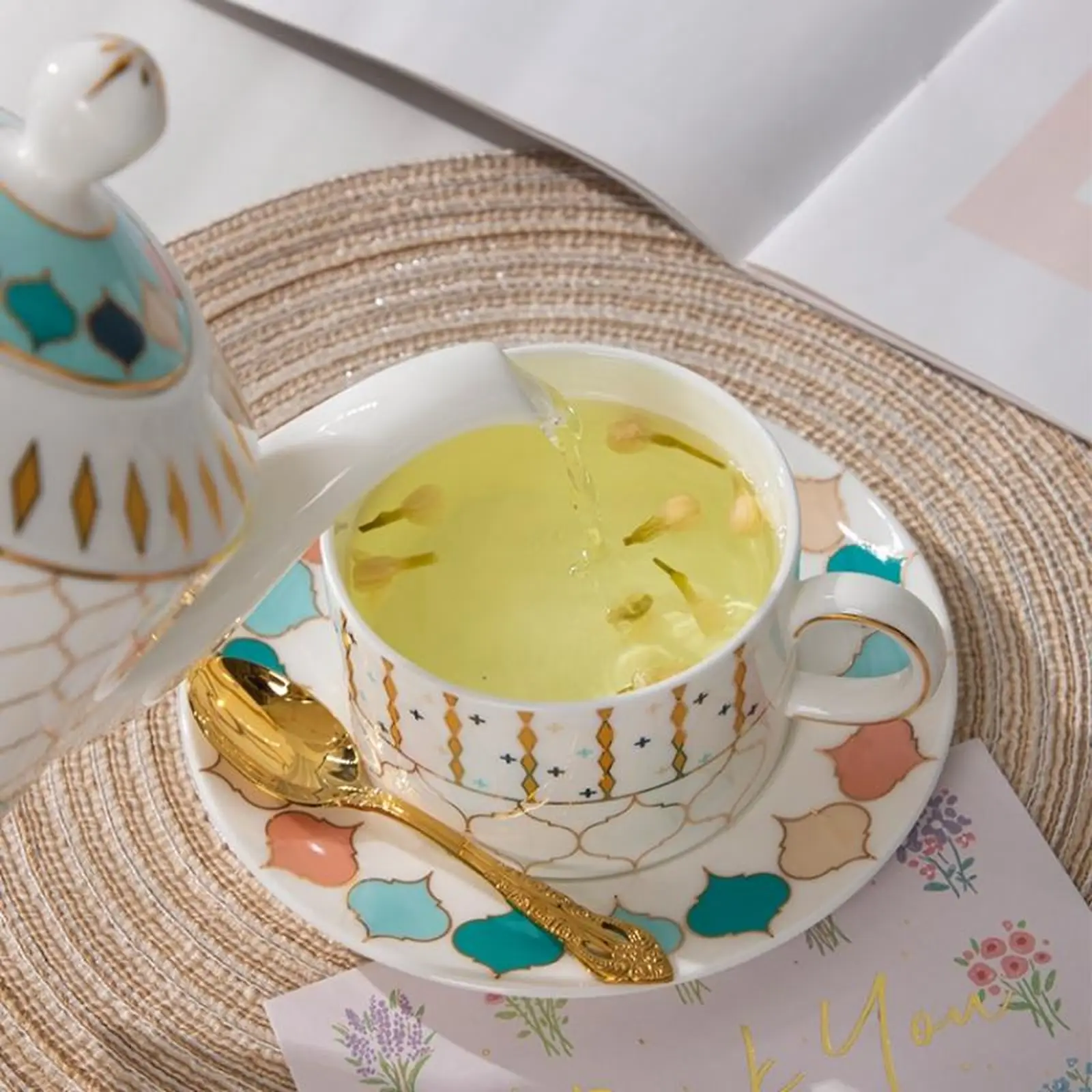
How Sustainable Is Vegetarian Tableware?
To assess whether vegetarian tableware is sustainable, do not rely only on terms such as “reusable” or “eco-friendly.” A more practical approach is to consider whether the product can remain in service in the intended setting, whether it is easy to maintain, whether it can reduce unnecessary replacement, and whether the manufacturer can provide relevant material and production information.
As reusable tableware, the actual environmental value of Opalware depends on factors such as frequency of use, product life, washing method, transportation, and end-of-life treatment. The current manufacturer information does not provide the proportion of production waste that is recycled, packaging-reduction data, or a complete life-cycle assessment. This article therefore does not present those outcomes as proven environmental benefits.
For environmental claims such as “eco-friendly,” “non-toxic,” and “compostable,” refer to the Green Guides summary published by the U.S. Federal Trade Commission. Such claims should be supported by clear and reliable evidence. The fact that a product is reusable does not automatically mean that it is more environmentally beneficial in every situation.
Care, Durability, and Everyday Safety
Whether you choose Opalware or vegan ceramic tableware, service life depends on more than the material name. Proper cleaning, storage, and temperature management can reduce surface wear, edge damage, and unnecessary replacement.
Always follow the instructions supplied with the product. Different products may have different decoration, glaze, thickness, and heat-treatment characteristics, so the care habits for one type of tableware should not be applied automatically to another.
Care and Storage Practices That Help Extend Service Life
First, avoid exposing tableware to sudden and severe temperature changes. For example, do not place a product taken directly from a refrigerator into a high-temperature environment unless its suitability has been confirmed. Similarly, do not place tableware that has just held hot food directly into cold water. The manufacturer’s cleaning and thermal-resistance test video can help readers understand the performance of a specific product, but the test conditions shown cannot replace the instructions for each series.
Second, use the cleaning method specified in the product instructions.
When storing tableware, avoid severe impacts between individual pieces. Keep plates neatly stacked and do not place heavy or unstable stacks in high positions. Bowls, plates, and cups should preferably be organized by size to reduce collisions during handling.
If tableware develops visible cracks, chips, breakage, or surface abnormalities, it should no longer be used to hold food. Even when the product still appears usable, damaged areas may make cleaning more difficult and increase the risk of further damage.
Frequently Asked Questions About Vegetarian Tableware
Is Ceramic Vegan? How Is It Different from Bone China?
Ceramic is not automatically vegan; the specific formula must be checked. Ordinary ceramic or porcelain is not the same as bone china, but the raw materials and manufacturing information can vary by product.
Bone china generally uses bone ash as part of its formula and therefore does not meet strict vegan material requirements. Vegan ceramic tableware should be clearly described as containing no bone ash or other animal-derived ingredients. The body material of Opalware belongs to the glass family, and the manufacturer’s information indicates that it naturally contains no bone ash, bone meal, or animal glue. However, consumers who need to make a strict vegan assessment of a complete dinnerware set should also confirm the decoration, decals, and other surface treatments.
When purchasing, review the manufacturer’s material statement rather than judging a product only by terms such as “ceramic,” “porcelain,” “high white,” or “glass.”
How Can You Tell Whether Tableware Is Lead-Free?
Start with the product label, test reports, compliance statement, or food-contact safety information supplied by the manufacturer. Do not automatically equate “white,” “natural,” “vegan,” or “eco-friendly” with lead-free, because these terms alone do not prove that a product contains no lead.
Glaze and decoration also require attention. The FDA’s questions and answers on lead-glazed pottery explain that food-contact safety requires attention to lead migration, not simply a statement that lead was not added to the raw material. The European Union is also continuing to revise its rules for ceramic and glass food-contact materials; the relevant direction can be reviewed in the European Commission’s information on the revision of EU food-contact-material rules.
The manufacturer information used for this article does not include a third-party laboratory report or publicly available migration data for lead, cadmium, or other elements in Opalware. It is therefore more responsible to distinguish between “the body material naturally contains no animal-derived ingredients” and “the product has completed third-party lead-free testing.” The former is part of the material information currently provided; the latter cannot be confirmed without a report.
If tableware develops glaze loss, cracks, or visible damage, it should no longer be used to hold food. A lead-free assessment should be based on the specific product, its surface treatment, and available testing information rather than marketing language alone.
Is Opalware Tableware Really Suitable for Food Use?
Opalware products intended for food use should be manufactured in accordance with applicable food-contact material requirements and should clearly state their intended use. Opalware is a product category, and its specific safety still depends on the raw materials, formula, surface treatment, manufacturing process, and quality control.
The manufacturer’s current product information indicates that the relevant Opalware products can be used in a microwave. In actual use, check the labeling and instructions for the specific series, especially to confirm whether it has metallic rims, metallic patterns, or other decoration that is unsuitable for microwave use. For operating guidance, see the Opal glass tableware microwave-safety instructions.
Consumers should check whether the product is clearly identified as tableware or intended for food contact and whether the manufacturer provides relevant material information and testing evidence. Follow the instructions and do not use products without confirmed suitability over an open flame, at extreme temperatures, or in other conditions beyond their intended design range.
For manufacturers, clearly stating the product’s intended use, material composition, and microwave and dishwasher suitability helps consumers make better decisions than simply emphasizing that a product is “safe,” “premium,” or “eco-friendly.”
Are Vegetarian Tableware Sets Microwave- and Dishwasher-Safe?
Microwave or dishwasher suitability cannot be determined solely from terms such as “vegetarian tableware,” “vegan ceramic,” or “Opalware.” It should be based on the instructions and markings for the specific product.
The manufacturer has provided a dishwasher test video, but the current information does not include a complete record of the number of dishwasher cycles, temperature conditions, or quantified changes in color, gloss, or scratching. Before purchasing, users should confirm which series was tested and ask whether any decoration restrictions apply.
Pay particular attention to the following:
- Tableware with metallic rims, metallic patterns, or metallic decoration requires separate confirmation of microwave suitability;
- Different glazes, prints, and surface treatments may have different levels of dishwasher resistance;
- Sudden temperature changes may increase the risk of breakage;
- Tableware with cracks, chips, or other visible damage should no longer be used in a microwave or for holding food;
- If the product instructions do not clearly state the permitted uses, ask the manufacturer or supplier rather than making assumptions.
Ultimately, choosing vegetarian tableware means confirming that the materials meet your ethical requirements, that the products suit the intended dining environment, and that the manufacturer is willing to provide clear, verifiable information. The body material of Opalware contains no bone ash or other animal-derived ingredients, and the manufacturer has also provided videos relating to drop, impact, cleaning, thermal-resistance, dishwasher, and production-inspection tests. These materials can help consumers assess the products from a practical-use perspective. However, videos and material statements cannot replace a third-party migration test report that has not been provided. The final decision should be based on the specific product instructions, the real use case, and evidence that can be checked.