
The material, glaze, additives, metal migration, and wear after repeated use matter far more. This guide compares glass, ceramic, stainless steel, silicone, and plastic under one set of criteria, making it easier to choose a food-safe dinnerware material suited to your daily meals. It also looks at which materials to choose for hot food, acidic food, and microwave heating, and explains how to check packaging, test reports, and the condition of the product.
What Are the Safest Tableware Materials?
The Safest Options Are Glass, Lead-Free Glazed Ceramic, and Food-Grade Stainless Steel
Among common dinnerware materials, glass deserves first consideration, followed by lead-free glazed ceramic and food-grade stainless steel.
The ranking reflects stability in contact with food: whether harmful substances can migrate, whether the material can handle normal temperatures, acidity, and repeated use, and whether product documentation can substantiate the claim. Feel, breakage resistance, and price matter, but they answer a different set of questions.
- Glass: Its structure is dense. Most undecorated glass dishes do not require an organic coating, making them more stable in contact with food.
- Lead-free glazed ceramic: The ceramic body is stable, and a compliant glaze fired to the proper temperature can form a dependable food-contact surface.
- Food-grade stainless steel: A compliant alloy with an intact passive layer keeps nickel and chromium migration at a low level under normal use.
Cross-material data supports this order. A systematic review covering 69 studies and 2,053 migration measurements found that among results involving metal and metalloid migration, exceedance rates were approximately 5.6% for glass, 10.0% for ceramic, 11.0% for stainless steel, and 12.5% for plastic. Measured by the same indicator, glass performed best, while compliant ceramic and stainless steel also outperformed ordinary plastic. Read the systematic review.
Here, “safest” refers only to food-contact safety, not resistance to breakage or how a product feels. It is also a relative result. Choosing the right material is only part of the equation. Material and use conditions together determine the safest dinnerware material for a particular setting, and the finished product must still be intended for food contact.
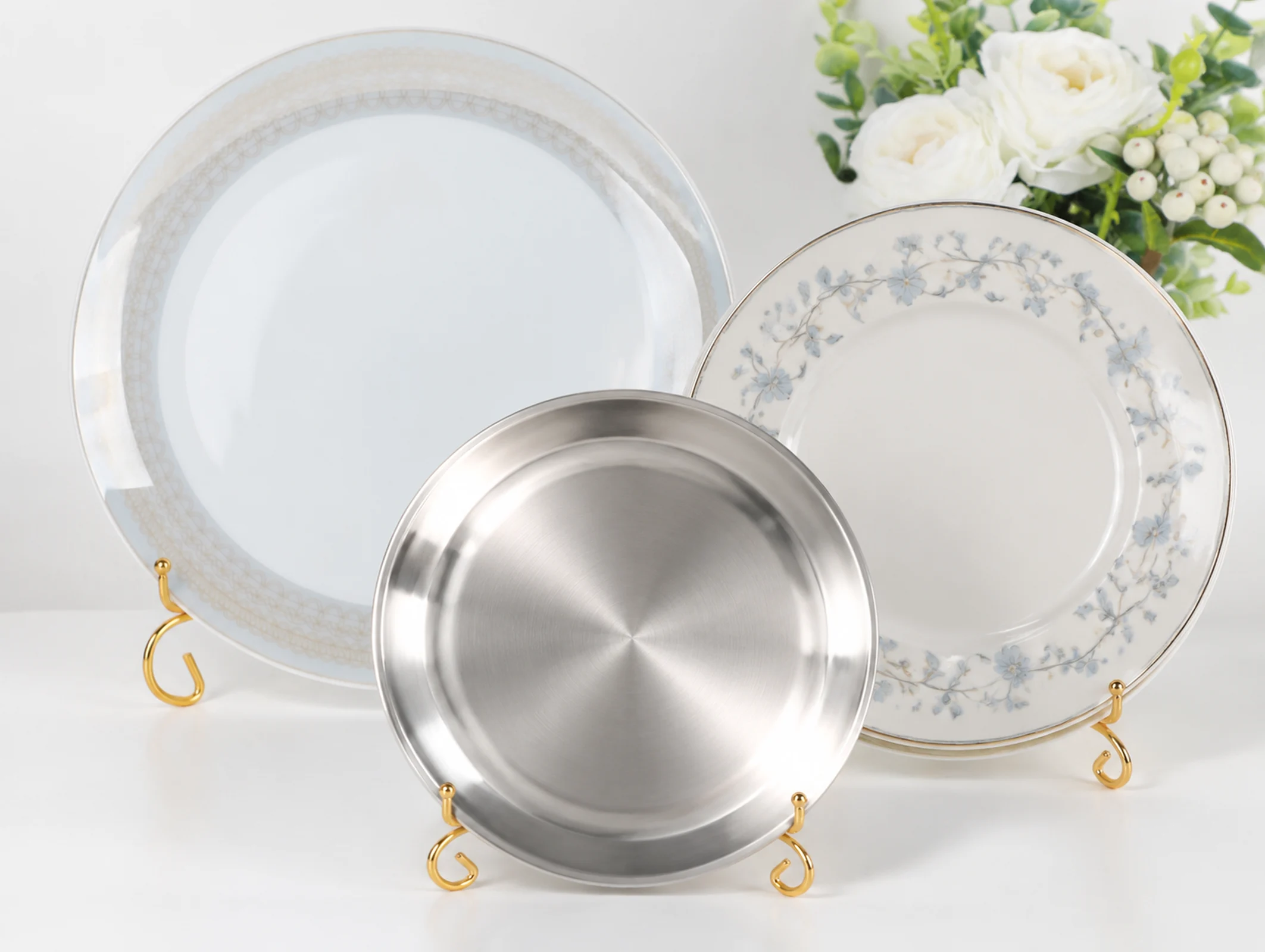
Glass, Ceramic, Stainless Steel, Silicone, or Plastic: Which Is Safer?
At the same meal, a glass bowl may hold hot soup, a ceramic plate may be filled with stir-fry, a stainless steel spoon may have just touched an acidic sauce, and a child’s soft spoon may be sitting nearby. That is why food-safe dinnerware cannot be judged by appearance alone; what matters is the surface that actually touches the food.
| Material | Food-contact safety | What to verify |
|---|---|---|
| Glass | Top tier; low migration risk | Whether it is compliant food-contact glass |
| Lead-free glazed ceramic | Top tier; dependent on the glaze | Whether the glaze and decoration pass migration testing |
| Food-grade stainless steel | Top tier; low migration under normal use | Alloy grade and intended use conditions |
| Food-grade silicone | Safer under normal use | Raw material, cure, and temperature range |
| Ordinary plastic | Greatest uncertainty | Resin type, additives, and intended use |
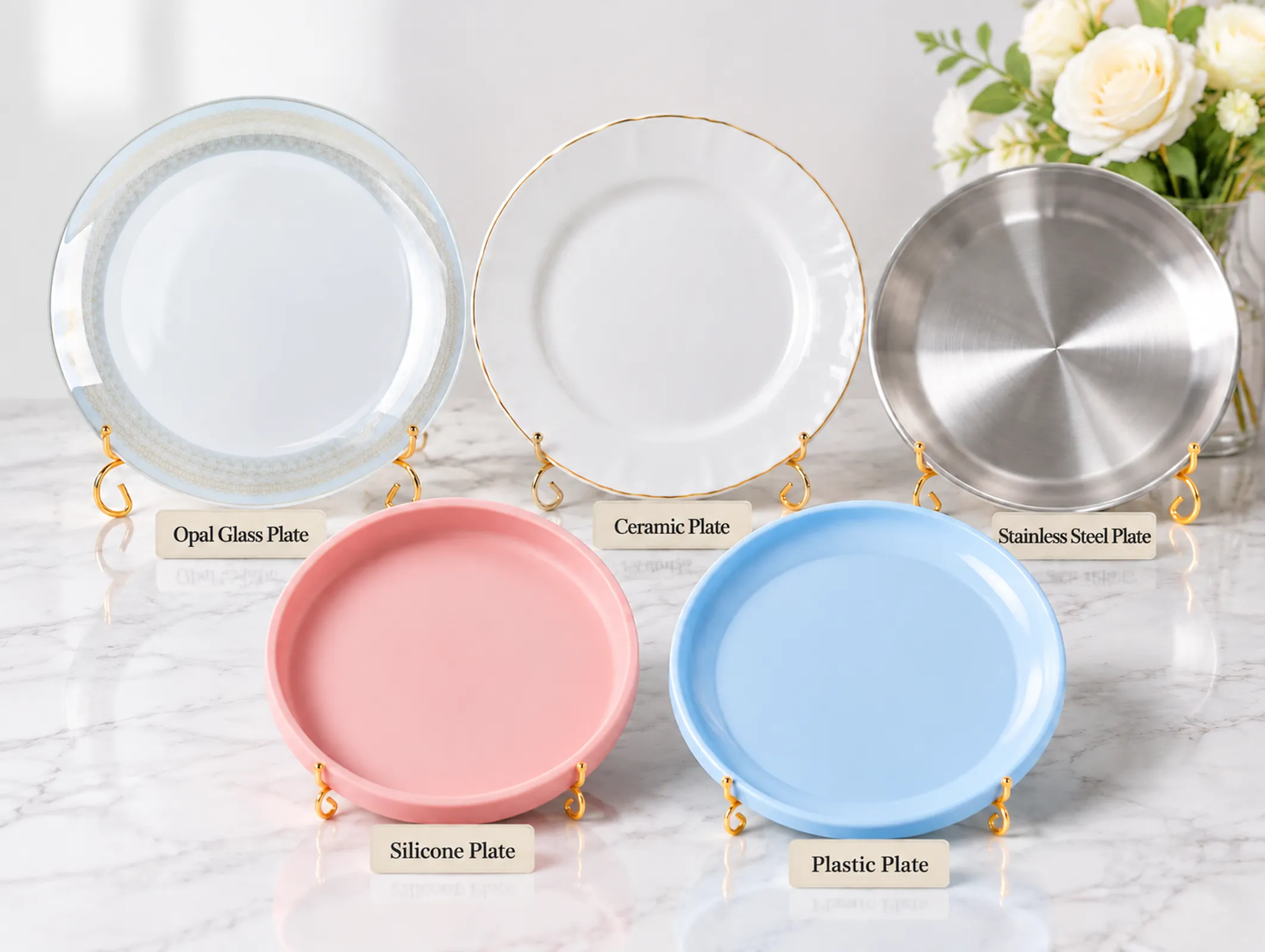
Glass Is the Safest and Releases Almost No Harmful Substances
Glass leads first because of its structure. Food-contact glass typically consists of a stable network of inorganic oxides. Its surface is dense, and unlike plastic, it does not need plasticizers or stabilizers to achieve its performance. Food meets a comparatively stable surface, leaving fewer components available to migrate.
Hot soup, tomato sauce, and lemon water make differences between materials more apparent. Proper food-contact glass retains good acid and heat stability. Most undecorated glass tableware also does not rely on an organic coating for water resistance, color, or strength, so there is no additional coating layer that can age.
A study tested 172 ceramic and 52 glass tableware samples in food simulants. The ceramic samples were tested with 4% acetic acid, while the glass samples also underwent testing with 0.5% citric acid. Apart from one nickel result of 0.04 mg/L, all nickel and chromium migration results were below the quantification limit of 0.02 mg/L. The researchers concluded that the tested products presented very low nickel and chromium exposure. Review the glass and ceramic migration study.
These results apply to compliant food-contact glass with no lead-containing decoration. Chemical stability is one of glass’s strengths, but the product must still be manufactured for food-contact use.
If your glass tableware is Opal Glass, the raw materials, firing temperature, and decoration method can still affect its final performance. You can read more in Is Opal Glass Food Safe? and then check the details against the specific production batch.
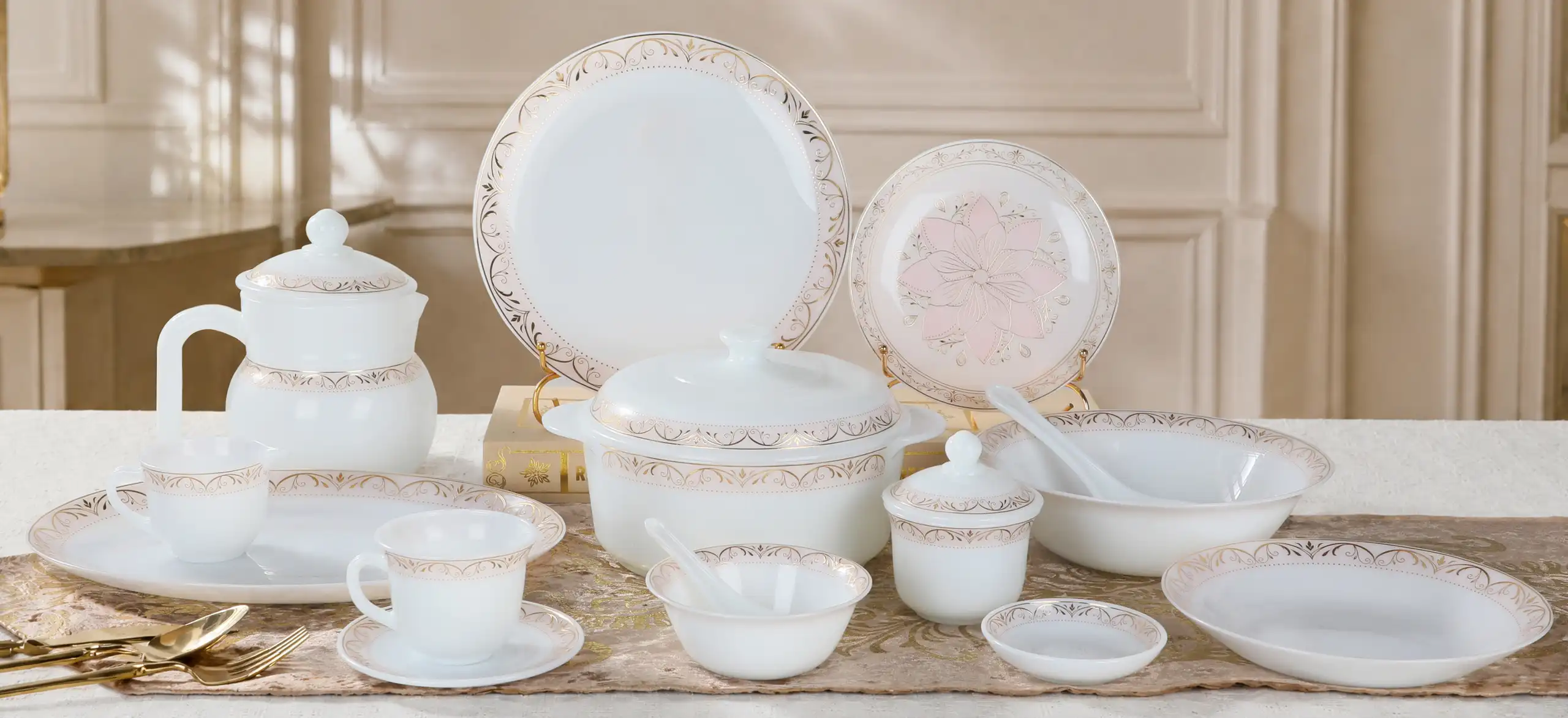
Lead-Free Glazed Ceramic Is Safer, but Poor-Quality Glazes May Contain Lead and Cadmium
The surface that usually comes into contact with food is not the ceramic body itself, but the outer glaze. A lead-free glaze, compliant pigments, and sufficient firing together form a dense surface that separates food from the body. When the glaze is stable, lead and cadmium are less likely to enter food.
Two ceramic bowls can look similar while differing in their colored glaze or gold rim. Low-temperature glazes, handmade glazes, metallic decoration, and poor-quality pigments may introduce lead or cadmium. Once the glaze wears, that barrier also weakens. Plates encounter knives, forks, washing, and stacking every day, so glaze durability matters as much as the formula.
A study of 1,273 pieces of ceramic and glass tableware found that lead and cadmium migration was below the detection limit in most samples. The small number of ceramic samples that exceeded the limits were mainly imported or decorated products, making the glaze and decoration key factors in ceramic safety. Read the lead and cadmium migration study.
Lead-free glazed ceramic belongs in the top tier under clear conditions: an intact glaze, compliant decoration, and verified lead and cadmium migration. “Natural ceramic” may sound reassuring, but an intact glaze and test results are what actually support the claim.
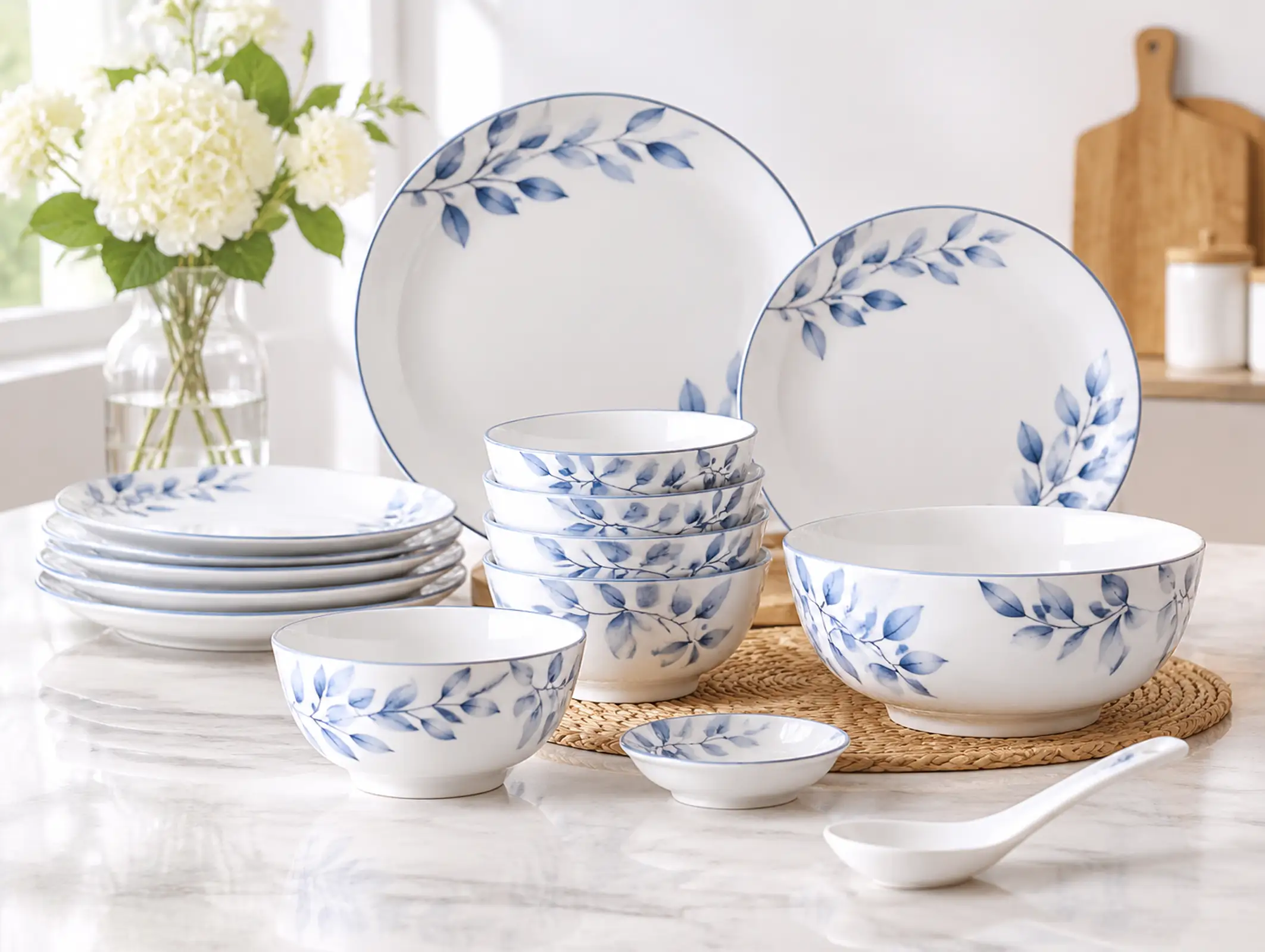
Food-Grade Stainless Steel Is Safer, with Very Low Nickel and Chromium Release
Stainless steel’s ability to remain stable in contact with food depends on its passive layer. Common food-grade grades such as 304 and 316 form a dense oxide film under normal conditions, separating the metal substrate from food and keeping nickel and chromium migration low.
Put hot noodle soup or tomato stew into a stainless steel bowl and the surface may look unchanged, but it is being exposed to heat, acidity, and contact time at once. A smooth, intact surface without deep scratches is better able to maintain the passive layer. When the product is used as intended, its performance is also more predictable.
A study of 316 stainless steel cookware used tomato sauce, lemon marmalade, and solutions at different pH levels during cooking. Nickel and chromium release remained below known allergy-triggering thresholds, and the researchers considered 316 stainless steel safe for most people under common cooking conditions. Review the 316 stainless steel migration study.
Stainless steel does release trace amounts, but normal levels remain very low. Its mechanism differs from glass, yet both rank high for food-contact safety.
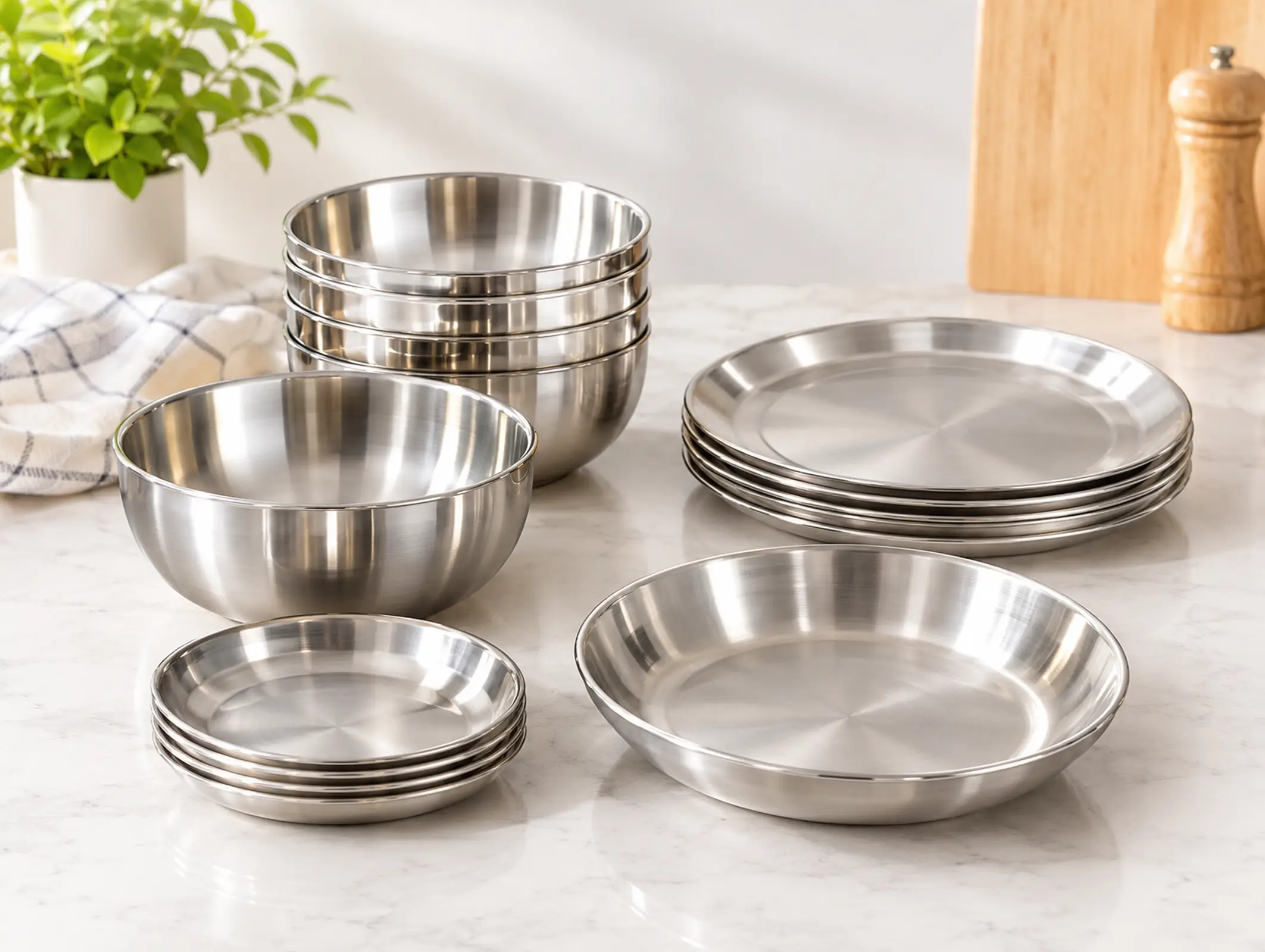
Food-Grade Silicone Is Safer, but Poor-Quality Products May Retain Volatile Compounds
Not all silicone products are alike. Compliant silicone gets its flexibility from a stable cross-linked structure. Within its stated temperature range, it bends without cracking and is easy to clean, without requiring the high levels of plasticizers common in ordinary plastics.
Soft baby spoons, collapsible lunch boxes, and suction bowls are common silicone applications. Pleasant colors and a nice feel do not prove food-contact suitability. Food-contact raw materials, sufficient curing, and tests for volatile organic compounds and extractables provide stronger evidence. Germany’s BfR Recommendation XV requires silicone elastomers to release no more than 0.5% volatile organic compounds and no more than 0.5% extractable components. Read the BfR silicone standard.
The problem is usually not the name “silicone,” but unclear raw materials, incomplete curing, or noncompliant fillers. These products are more likely to retain volatile compounds and may also have inconsistent heat resistance.
Used normally within the stated temperature range, compliant food-grade silicone can offer excellent food-contact safety. The raw material and finished product still need test support; a “food-grade” claim alone is not enough.
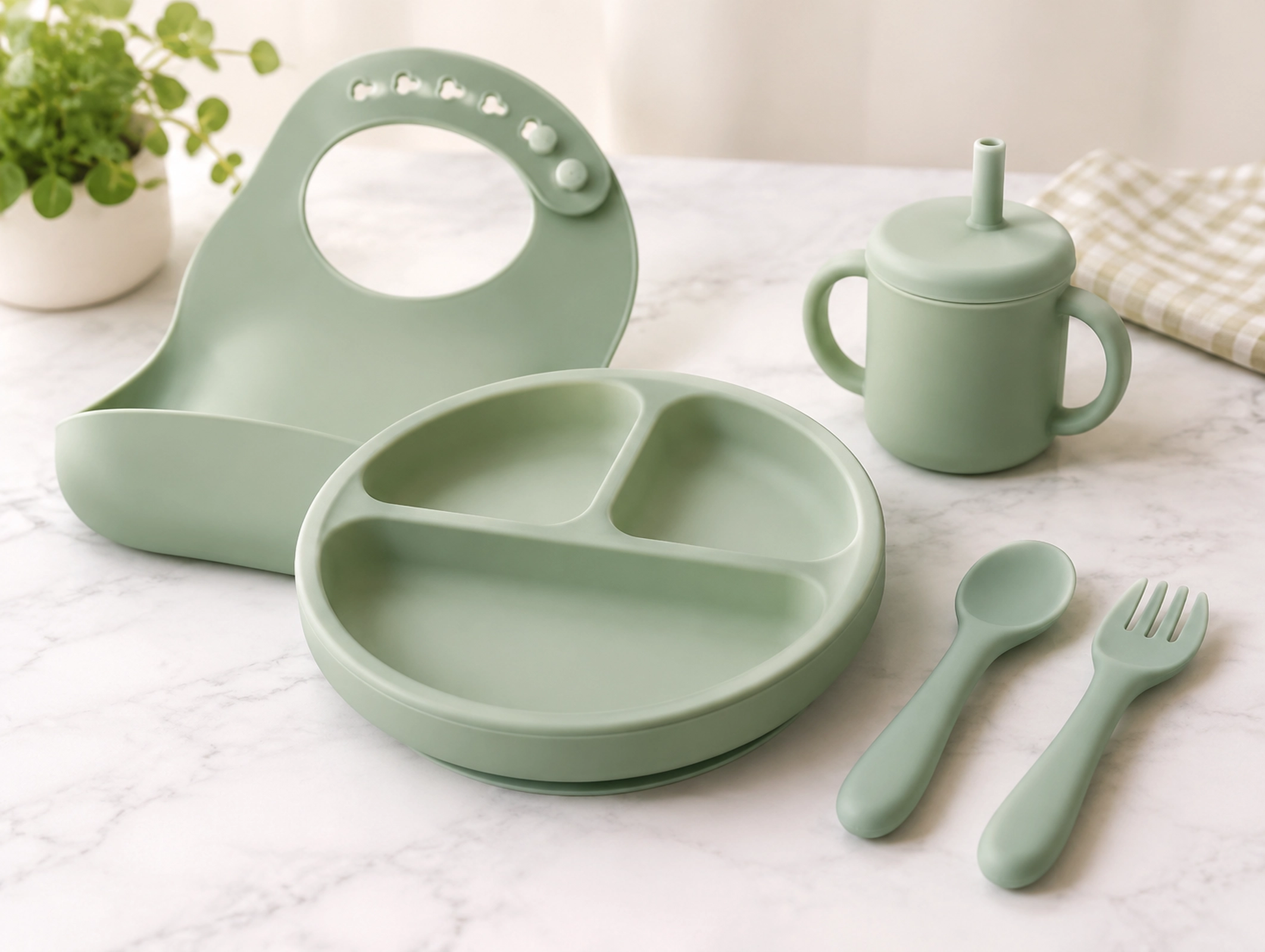
Ordinary Plastic Poses a Higher Risk and May Release Additives When Heated or Exposed to Acidic Food
Many people wash a takeout container and use it for hot food again. It is a common habit, and it lands right on the conditions where ordinary plastic is most likely to struggle: heat, oil, acidity, and repeated use.
Plastic risk comes from the number of variables. Resin type, additives, colorants, processing residues, temperature rating, and aging can all change migration results. PP, PE, and melamine perform differently and cannot share one broad safety conclusion.
Many ordinary plastic containers also do not clearly state the resin type, temperature range, and suitable foods. Heat increases molecular movement, acidic food and oil change the contact environment, and scratches and aging increase the contact area. When these conditions stack, the chance of additives and other small molecules migrating rises.
“BPA-free” addresses one concern; it does not cover every migration risk. Ordinary plastic ranks lower because it is harder to control, not because every plastic product deserves the same warning label.
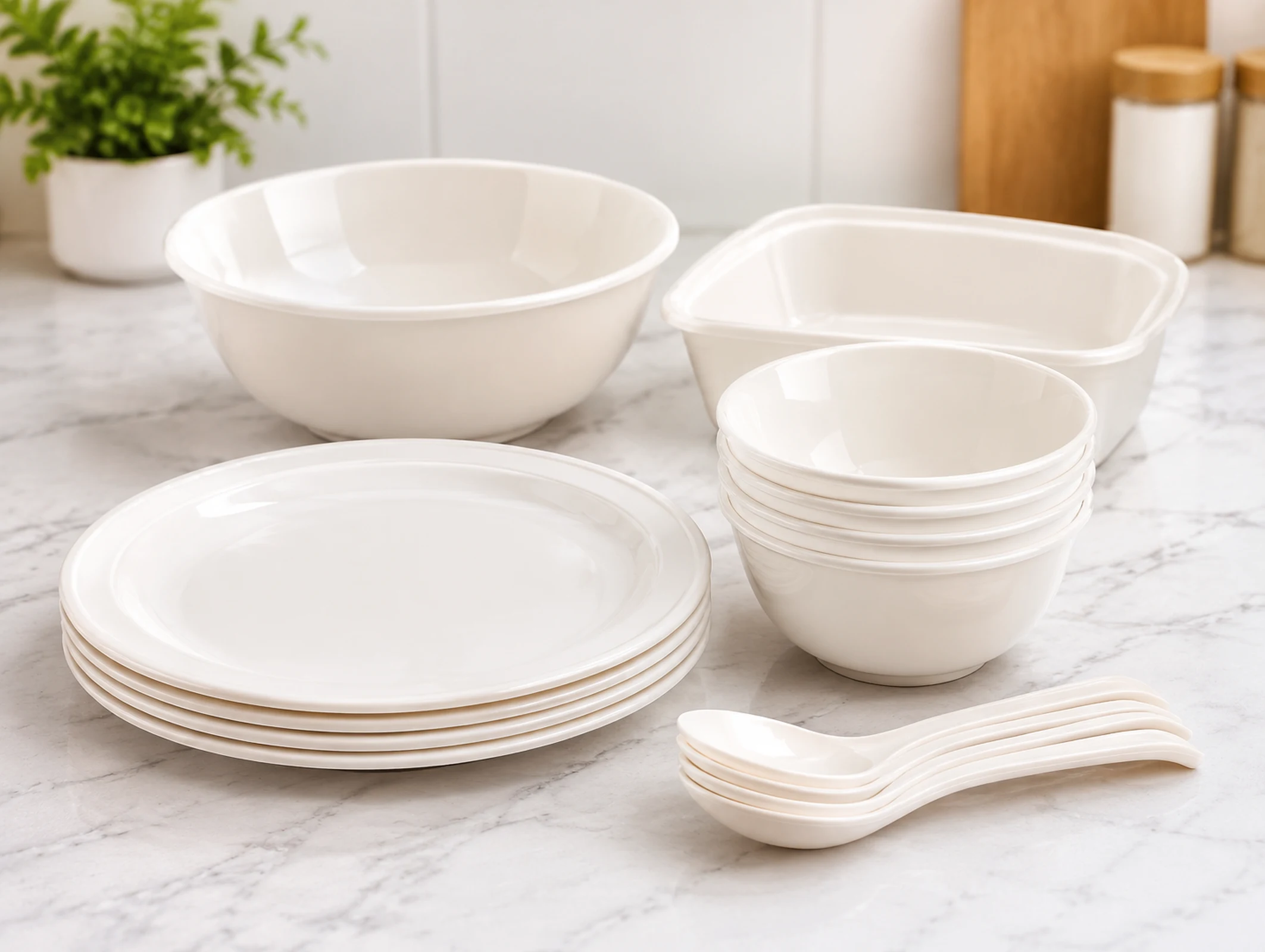
Which Material Should You Choose for Hot Food, Acidic Food, or Microwave Heating?
Hot soup and lemon water place different demands on food-safe dishware. Change the temperature, acidity, or heating method, and the contact conditions change with it.
For Hot Food, Choose Glass or Stainless Steel First
For hot soup, porridge, and stews, choose heat-resistant food-contact glass or food-grade stainless steel first.
Food-contact glass has a dense surface and maintains low migration when heated. It also does not gain an organic coating problem simply because it comes into contact with hot soup or hot oil. The condition is specific: the product must state a heat-resistant temperature range.
Stainless steel depends on its passive layer. A compliant alloy with an intact surface can maintain low nickel and chromium migration under normal hot-food conditions. Hot soup, hot dishes, and short-term contact are its more suitable applications.
The higher the temperature and the longer the holding time, the harsher the conditions become. Glass and stainless steel rank first because they are better able to remain stable under this combination.
For Acidic Food, Choose Glass, Lead-Free Ceramic, or Stainless Steel First
Sweet-and-sour ribs, tomato beef stew, and lemon water all create a more acidic contact environment. Passing a plain water test does not mean a container is suitable for these foods.
| Material | Why it suits acidic food | Recommended position |
|---|---|---|
| Glass | The dense inorganic surface is relatively stable against common food acids | First choice |
| Lead-free glazed ceramic | An intact, compliant glaze separates food from the ceramic body | Suitable alternative |
| Food-grade stainless steel | The passive layer reduces metal migration | Suitable alternative |
For long-term storage of acidic food, glass is the most reliable choice. Lead-free glazed ceramic and food-grade stainless steel can handle everyday acidic meals, but they should still be used within the stated purpose and contact time.
With acidic food, the material name alone is not enough. Temperature, duration, food simulant, and final migration level are the relevant evidence.
For Microwave Heating, Use Only Heat-Resistant Glass or Microwave-Safe Ceramic
For microwave heating, use only heat-resistant glass or ceramic that is clearly labeled microwave-safe.
A gold-rimmed ceramic plate or gold-decorated glass tumbler may look ready for the table, but it is not necessarily safe for the microwave. Microwaves heat food quickly from within, and the container can develop hot spots. Metal decoration may also arc.
Before heating, confirm four things:
- Check whether the container or packaging clearly states that it is microwave-safe.
- Confirm that the heat-resistance rating covers the actual heating conditions.
- Check for metal rims, metallic prints, or other metal decoration.
- Follow the heating time in the product instructions, and do not interpret “microwave-safe” as safe for unlimited heating.
If the product is specifically Opal Glass, also check whether the manufacturer states the microwave-safe temperature, time, and product formats. For more detail, see Is Opal Glass Microwave Safe? The product label and instructions remain the final reference.
Do Not Use Ordinary Plastic for Hot Food, Acidic Food, or Microwave Heating
Ordinary plastic without a clearly stated resin type, temperature range, or microwave-safe mark is not suitable for hot food, prolonged contact with acidic food, or microwave heating.
Plastic is difficult because of its variables. Heat increases the migration rate, acidic food changes the contact environment, and microwaves can create local hot spots. Aging, scratches, and repeated use can also change how the same item performs.
Melamine tableware is a clear example. In one study, melamine samples were repeatedly microwave-heated with 3% acetic acid as the food simulant. In the group heated for one minute per cycle, overall migration exceeded the EU limit of 10 mg/dm2 after 25 cycles. The main migrants were low-molecular-weight methylol melamine derivatives. Read the melamine microwave migration study.
That result demonstrates a specific risk for melamine under microwave heating and acidic conditions; it should not be extrapolated to all plastics. For household use, the conclusion remains practical: if the intended use is unclear, do not make the same item handle hot food, acidic food, and microwaves at once.
What Is the Safest Tableware Material for Children?
Children drop, tap, and sometimes bite their tableware. When parents look for the safest dishes for young children, food safety has to come first, but durability, size, and grip cannot be overlooked.
If your household is choosing between Opal Glass and melamine tableware for children, start with this comparison of the two materials for children’s tableware, then use the material differences below to guide the decision.
Glass Has the Highest Food-Safety Performance, but It Must Be Handled Carefully Around Children
Glass still leads on food-contact safety. Compliant glass has a dense surface and usually no organic coating on the food-contact side. Migration under normal use is low. Families that prioritize chemical safety can put it near the top of the list.
On a highchair tray, the focus shifts to physical risk. A glass piece with rounded edges and a size a child can grip, used under adult supervision, can be part of everyday meals. When a child is first learning to eat, it is more practical to keep them from carrying a glass bowl around on their own.
Whether a product is tempered, heat-resistant, or drop-tested should be confirmed in its specific product documentation. Raw-material information, edge finishing, and migration testing carry more weight when they appear in the same file. At Jointion, for example, these three areas are worth more attention than a vague “made for children” claim.
Food-Grade Stainless Steel Is Also Very Food-Safe and Better Suited to Everyday Use by Children
Food-grade stainless steel is well suited to daily use by children. It is food-safe, resistant to breakage, and easy to clean.
Compliant 304 and 316 stainless steel rely on a passive layer to keep nickel and chromium migration low, with no glaze or organic coating on the surface. When children learn to self-feed, spoons hit the rim and dishes fall from the highchair. Stainless steel handles that everyday wear better.
Glass offers greater chemical inertness; stainless steel combines high food safety with greater durability. Neither replaces the other. Frequent use and occasional drops make stainless steel the easier choice.
Used as intended for everyday meals, with an intact food-contact surface, food-grade stainless steel maintains stable, low migration.
Food-Grade Silicone Is Also Safe Under Normal Use
When children first learn to use a spoon, their grip is still developing. Food-grade silicone is soft and slip-resistant. Soft spoons, suction bowls, and divided plates are easier to hold and reduce the hard impact when a child bumps a tooth or taps the table.
Silicone safety comes from food-contact-grade raw materials, sufficient curing, and volatile compounds and extractables that meet established limits. The stated temperature, contact time, and intended use also need to be followed. That is what “normal use” means.
It should not be treated as an unconditionally safe, universal material. Persistent odor, stickiness, or surface aging means the product has changed. Keeping it odor-free, non-sticky, and intact, and using it within the stated temperature range, allows silicone tableware to remain suitable for the child’s table.
Glass wins on food-contact safety, stainless steel on everyday durability, and food-grade silicone on grip. Once use conditions are part of the decision, all three can be suitable children’s tableware.
If you decide on glass, the next questions are shape, capacity, and cleaning routine. You can explore Jointion’s Opal Glass tableware collection by plates, bowls, cups, or sets.